


INDEX
+
-
Latest
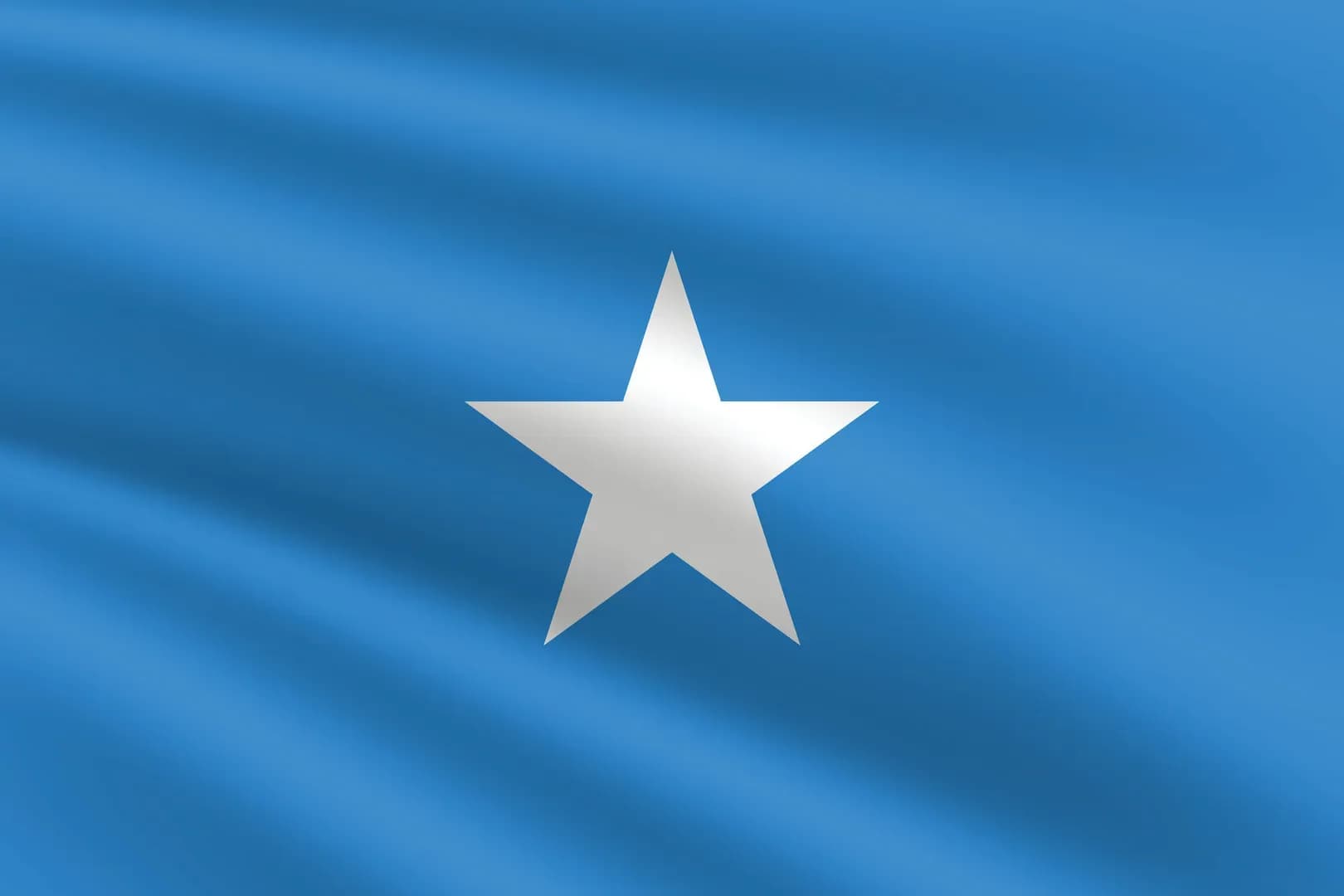
Somali Sovereignty Index (Burke Index), 2024-2025
03.09.2025 16:24
indexAfrican Studies: One-Year master’s degree Thesis 15 Credits. Second Cycle Level1After Berlin Conference in 1884 to 1885, Somalia was partitioned into five parts by Britain, Italy, and French. In 1960 two parts gained independence and formed the Somali Republic, and since then successive Somali governments sought to incorporate the other three parts of Somali territories under Ethiopia, Kenya and French Somaliland known as Djibouti into Greater Somalia.
The Failure of Peacebuilding in Somalia: The 'Myth' of the Nation-StateThere is a growing consensus in International Relations that the sovereign nation state, particularly in sub-Saharan Africa, is a ‘myth’ because of the several nations that can be found within one sovereign entity, made so by the Berlin conference of 1885 that partitioned Africa. Regardless of this consensus, international peacebuilding theory and practice is biased towards maintaining these sovereign arrangements. Through a decolonial lens, peacebuilding in Somalia is explored as an example of how these biases affect peace in a multiethnic, multiclan, and diverse society.

The Effect of Foreign Intervention on Domestic Politics in SomaliaThis research attempts to answer the question, "What is the long-term impact of international intervention on the political stability of post-conflict countries?" Somalia is used as a case study, and it is expected that the findings can be generalized to other post-conflict countries. This is a critical issue in the international relations and foreign policy fields; the 1990s alone saw an enormous increase in international intervention in post-conflict countries. Intervention began in Somalia with a humanitarian mission but soon transformed into nation-building and peace-enforcement operations. These operations were massive: 30 countries were involved at some point, and there were significant material and personnel costs. Intervention did not cease after the US-UN mission ended in 1995, but instead took on a new face with the involvement of neighboring countries such as Ethiopia and Kenya. Oftentimes the justifications for intervention, as well as the successes and failures of the missions, are tied to the intervening countries' interests, or the interests of the international organizations involved, and are thus far removed from the welfare of the intervened-upon country. Given the prevalence and wide range of these operations, it is of utmost importance to understand their long-term effects. The world has not reached a consensus on the value of such interventions, and they are likely to continue in the foreseeable future. An understanding of their long-term effects can be used to shape future policy and increase the efficacy of intervention operations.
Why Has Somaliland Not Been Recognised as A Sovereign State?After the collapse of the Somali state, civil war followed, leading people to turn to their ancestral homeland. Consequently, rudimental local administrations were formed with a provision of becoming part of a decentralised governance system in Somalia. However, one region stood differently by declaring itself a separate state, Somaliland, within the boundaries of the former British Somaliland Protectorate. To overcome the objections of African countries about the session, Somaliland claimed that its declaration of independence in 1991 was supposed to be a dissolution of the union rather than a declaration of separation. This idea follows in the footsteps of other failed federations, such as the United Arab Republic, which included Egypt and Syria from 1958 to 1961, or the Senegambia Confederation, which existed between Senegal and the Gambia from 1981 to 1989. These failed political unions symbolized the breakup of that union and the restoration of the protectorate's original, pre-1960 borders. (Gordon, 2023) Britain granted Somaliland independence on June 26 1960, and after four days, it joined with the former UN Italian Somaliland Trusteeship Territory to form the Republic of Somalia. Thus, Somaliland's case differed markedly from the other regions as it wanted to stand as a separate nation-state within Africa. Yet, over thirty years have passed, and Somaliland has not been recognised as a sovereign entity. To answer why it happened, we have to look at the historical factors on state formation in Africa and how newly independent countries treated colonially inherited boundaries.
How the Somali government works with the traditional clanbased systems: literature reviewSomalia, located in the Horn of Africa, has a complex history influenced by tribalism, colonialism, and internal conflict. During the colonial era, European powers collaborated with clan leaders, resulting in Somalia's division along clan and tribal lines. This division led to the creation of artificial borders, which fragmented the land and fostered regional and clan-based identities. After gaining independence in 1960, Somalia initially aimed to establish a strong, centralized state. The Siad Barre regime, which came to power through a military coup in 1969, tried to suppress clan and regional identities in favor of a communist ideology. However, the regime's downfall in 1991 plunged Somalia into a prolonged period of violence and state collapse. Warlords and clan-based factions fought for power, leading to a protracted civil war. This paper analyzes the intricate relationship between Somalia's traditional and modern governance systems. It examines the potential for collaboration, the challenges faced in nation-building efforts, and the lasting impact of clan-based structures. The study begins by exploring traditional governance, highlighting the important role of customary law, elders, and religious clerics in consensus-building mechanisms and maintaining social harmony. It emphasizes the historical significance and contemporary relevance of these institutions. The paper then delves into the challenges involved in establishing a modern state in Somalia. It examines the obstacles that hinder the realization of democratic ideals and the establishment of a centralized administration. A key focus is evaluating the potential synergies and conflicts between traditional and modern systems.