

Burke Index | ||||||||||||||||||
 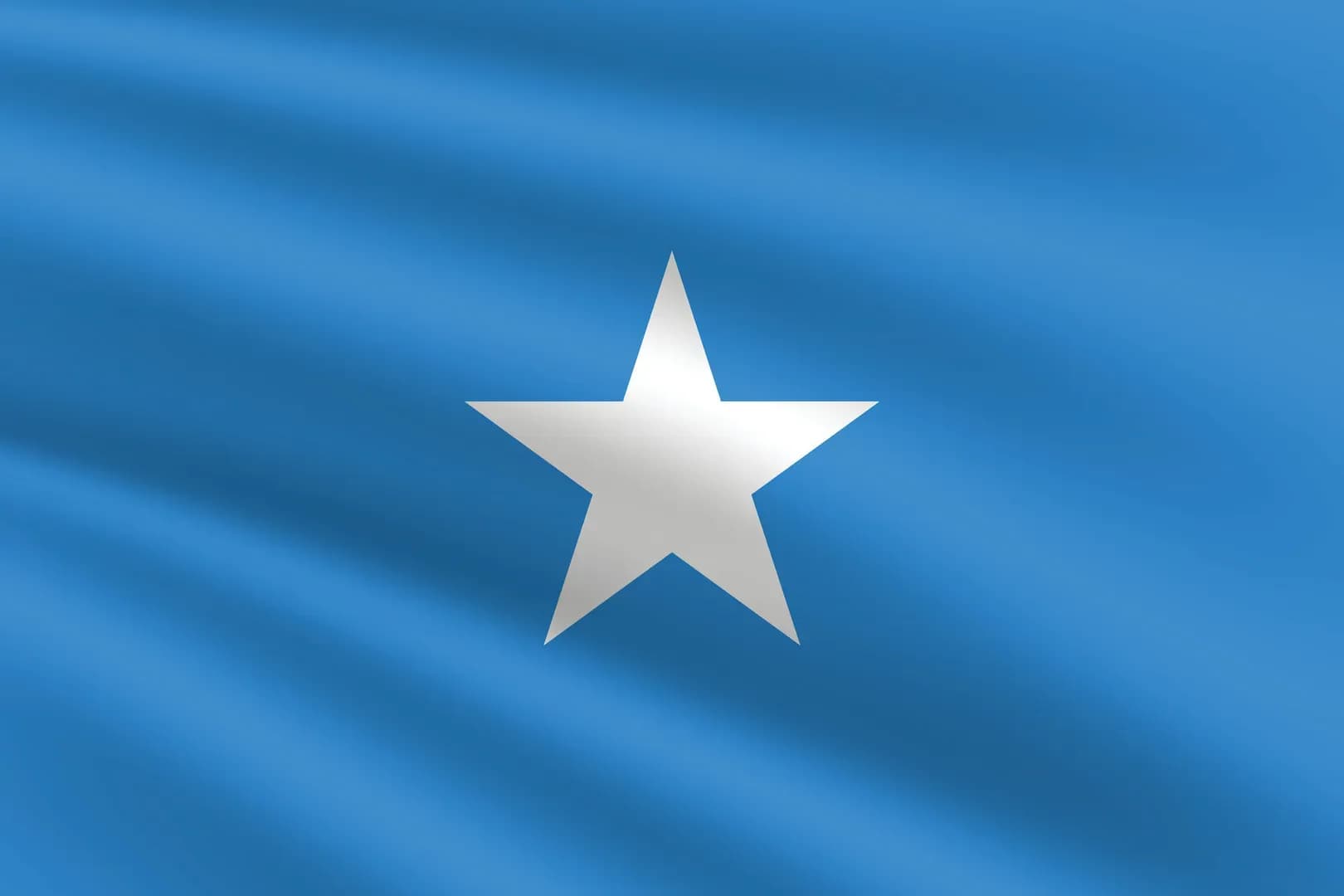 INDEX 03.09.2025, 16:24 Somali Sovereignty Index (Burke Index), 2024-2025  Share on media IntroductionThis report provides a comprehensive analysis of the sovereignty of Somalia using the methodology of the Burke Institute. Sovereignty is assessed in 7 areas: political, economic, technological, informational, cultural, cognitive and military. Each aspect is assessed on the basis of official data from international and national sources (UN, World Bank, UNESCO, IMF, ITU, FAO, SIPRI, PISA, etc.) without using politicized indexes. The maximum score in each direction is 100; the sum (up to 700) is the accumulated Sovereignty Index (Burke Index). To adapt and adjust statistical parameters, an international expert survey was conducted for each of the seven components using a single questionnaire of 10 questions with a 10-point scale and one open-ended question. In total, at least 100 experts from 50+ countries were interviewed for each indicator, taking into account geographical representation and specialization. When calculating and analyzing the data, equalizing coefficients were used, bringing all data to a scale of 0-10 points. The final index value is the arithmetic mean between statistical data and expert estimates. Below is an analysis in each area, a summary table and the main conclusions about the features of Somali sovereignty. Political sovereignty — 12.8Posted in Somalia: Camp TURKSOM Turkish base (opened in 2017, operates as a training center and logistics base for the Somali Armed Forces); American military presence: in 2024, an agreement was signed on the construction of up to 5 facilities for Danab special forces, the presence of up to 450 US military personnel; the transfer of control over Balidogle, Bosaso bases and ports to the United States is being discussed. Somalia is a classical dualistic system: international treaties become part of national law only after separate ratification and implementation into national legislation (domestication). The Constitution is the supreme force, international treaties require the law of Parliament for full application. The situation is extremely unstable: the central government really controls only a part of the territory, a high level of terrorist activity (al-Shabab), ongoing conflicts between the federal center and the regions, disputes between clans, low trust in institutions, frequent changes in political alliances, humanitarian crises. Somalia is one of the least efficient countries in the world (WGI — 1st–2nd percentile, “very low" according to the World Bank), minimal quality of public administration, high corruption risks, and institutional fragility. One of the lowest positions in the world; EGDI — 0.238 (UN, 2022), online access is provided in the form of pilot projects, most public services are not available online. The level of trust in national leaders and institutions is extremely low against the background of conflicts, corruption and humanitarian disasters: according to BTI, the majority of citizens do not believe that the government expresses their interests, there is no stable rating. Somalia is a member of the United Nations, the African Union, and the Arab League, operates with the support of AMISOM/AUSSOM (AU peacekeeping contingent), sometimes participates in UN courts and programs, and many security and economic issues are “withdrawn” to international missions due to lack of resources and institutions. Formally, Somalia recognizes the jurisdiction of the International Courts (ICC, ICJ), but the real possibilities of protection or enforcement of decisions are extremely limited institutionally and politically. Limited federalization: conflicts between the federal government and members of the federation (Puntland, Jubaland, etc.), some regions and clans are not de facto subordinate to Mogadishu, there is no stable power-sharing scheme, constant disputes over control of finances and resources, a “hybrid” model and frequent anarchy. Control is minimal: special services often operate autonomously, high levels of corruption, opaque budget and command, lack of real parliamentary and civil audit; control is controlled by clan interests and foreign missions. Data completeness assessment: the main indicators are available from international sources, the coverage is 92%. Economic sovereignty — 18.6GDP of 1,408 USD is, according to the latest data (2024), one of the lowest estimates in the world (about 8% of the global average). Gold and foreign exchange reserves of 200 million USD are the international reserves of Somalia at the end of 2024; this is enough for less than a month of imports under current conditions. The national debt is 6-7% of GDP, according to the Ministry of Finance and the World Bank for 2024; the debt has been declining for two years in a row (a significant part was previously restructured, most of the debts are to Arab funds and the IMF). Critically vulnerable: up to 50% of food is imported, a significant part of the population receives humanitarian aid, regular periods of food and water crisis, dependence on imports of sugar, rice, flour, as well as UN aid. It is completely import—dependent: electricity is almost entirely generated from diesel fuel imported under private schemes; its own proven oil and gas are not exploited on an industrial scale; renewable energy sources are used in pilot projects. There are promising oil and gas deposits (undeveloped), gold, gypsum, limestone, uranium, and iron (most of them have not been developed due to infrastructural and military risks). Chronic shortage: local sources do not cover demand, in some regions the supply is <10% of the basic norm; droughts periodically occur, large drilling and desalination projects are small. The banking system is poorly developed, most payments are made through mobile fintech applications (Hormuud, Dahabshiil); operations are controlled by the Central Bank of Somalia, but the infrastructure is fragmented. Domestic settlements are in Somali shillings (SOS), major transactions and international trade are in US dollars (USD) due to inflation and distrust of their own currency. The Central Bank of Somalia (CBS) nominally regulates the issue of the shilling, but does not control the entire money supply, old banknotes and double circulation with USD are in use; credit and monetary policy have to be coordinated with the IMF/The World Bank and under the influence of foreign donors. Data completeness assessment: the main macroeconomic indicators are available from official sources (World Bank, IMF), coverage is 91%. Technological sovereignty — 8.40.60–0.69% of GDP — actual expenditures on research and development. This is below the EU average, but corresponds to the structure of a small economy. In absolute terms — about 95 million euros annually. National import substitution has been implemented on a limited scale: large companies and government agencies use foreign high-tech products and solutions, local innovative developments are niche, small-scale; there is no production of electronics, large-scale software, machines and server equipment. 46.3% of the population aged 25-34 have higher education (2023), which is higher than the EU 2030 target (45%). 91-94% of the population regularly use the Internet, urban areas — up to 98%; this is one of the highest rates in the Mediterranean. The state portal operates servizz.gov.mt, Maltese Cloud National cloud, digital education and healthcare systems, Malta Digital Innovation Authority; fintech is mainly affiliated with global players. More than 80% of electronics, chips, software, servers, industrial equipment and medical equipment are imported; national production is concentrated in small startups and universities. EGDI 0.86 — Malta is among the top 30 countries in the world for e–government, almost all public services can be obtained online, identification, digital licenses, integration with EU platforms are in effect. Several biotech startups, Malta Life Scienc es Park, University Biolab. Key medicines, equipment and technologies are imported. There is no mass production; the assembly of robotics and automated systems is carried out only in individual university projects and in small enterprises, all large robots are imported. The country does not produce chips and microelectronics industrially, developments are carried out exclusively in scientific laboratories and small firms; the main market is imports from the EU, USA, Asia, integration with European certification authorities. Data completeness assessment: key indicators are obtained from WIPO, ITU, UNESCO, which provides 84% coverage. Information sovereignty — 15.7There are no official estimates for R&D expenditures; according to BTI and the IMF, R&D expenditures are less than 0.1% of GDP (practically non-existent), all resources go to basic needs and security. Import substitution has not been implemented: almost all high-tech products, communication and computer equipment, medical equipment, software and fintech are imported (mainly from China, the United Arab Emirates, the EU, Turkey and Kenya); own production and services are absent or minimal. 8.7% of the adult population has completed higher education (according to the IMF and the Education Yearbook for 2024); the number of students is growing, but enrollment is the lowest among East African countries. 19-23% of the population has regular Internet access, about 35% in urban areas, and less than 10% in rural areas. The state portal, individual state identification programs, distance learning, basic digital infrastructure for banks and some government services are poorly developed; most digital solutions are foreign. >98% of IT equipment, servers, communications, banking software, clouds, and industrial electronics are imported. EGDI — 0.238: almost the minimum level (below the African average); government digitalization is at the stage of pilot platforms and international programs, most of the main functions are not digitized. Missing: all drugs, laboratory equipment, tests, vaccines, and technologies are implanted from abroad; scattered UN and WHO projects, including malaria control and vaccination. It is not being formed: there is no industrial production of robots or automation, single pilot projects, imported assemblies for communications and medicine. There is not even a small serial production of chips and electronics in the country; even the simplest cameras and sensors are completely of foreign origin, repair and assembly are at the basic level of subcontractors from abroad. Data completeness assessment: infrastructure indicators are available from ITU, CIRA, OECD and specialized sources, coverage is 83%. Cultural sovereignty — 57.90 sites on the official main List, 3 on the Tentative List: Bushbushle National Park Hobyo grass and Shrubland Mogadishu Secondo-Lido Lighthouse (2025). Somalia is one of the centers of African literature, a source of traditional epics, poetry, and Islamic religious schools. The most famous is Nouredin Farah (winner of the German and Newstad Prizes). The contribution is the development of African literary practices, models of women's and diasporic identity, traditional music and art; the authority in the humanities is recognized, the diaspora is integrated into world literature. There are no state national awards, but there are separate professional and international awards (the Nouredine Farah — Newstad World Prize, the participation of Somalis in international festivals, grants, and literary competitions). The key features are the clan system, Islamic identity, traditions of nomadic cattle breeding, the great role of oral poetry and chants, folk festivals, Islamic rituals, the national language is Somali, a significant Arab and African stratum, the social role of women is traditionally limited, and the tendency towards ethnocultural autonomy of regions. Government support is very limited: the overwhelming majority of the population are ethnic Somalis, small nations without separate official protection, migrants and minorities are represented by autonomous communities, and there are no grant programs. Exact data is not available: before the outbreak of the civil war, there were more than 40 museums, libraries and palaces (Mogadishu, Hergesa, Baidoa), most of them were destroyed or not functioning; individual monuments are being reconstructed with the support of UNESCO and the United Nations. Somalia participates in a number of African and Muslim literary, musical and educational festivals, individual ensembles and artists participate in forums of Islamic countries, UN and UNESCO heritage conservation programs are underway (nomination campaigns 2024-2025). National brands are not registered internationally; there is an independent registration of oral literature, crafts, musical styles, attempts to register through UNESCO Tentative List programs and foreign poets and writers. Somali cuisine is a mixture of African, Arabic and Italian recipes: angero (wheat tortilla), malwah (custard tortilla), kebab, camel meat, fish, rice, spices, dishes with bananas and mangoes, sweets, tea with spices; there is a historical influence of the diaspora. It is estimated that 25-30% of residents have regular access to cultural events (holidays, poetry readings, Islamic educational projects); in regions affected by the conflict — lower, in the capital and urban centers — higher. Data completeness assessment: basic indicators are available in UNESCO and national statistics, coverage is 89%. Cognitive sovereignty — 19.2Human Development Index 0.404–2023/24 (Human Development Report/World Bank), one of the lowest estimates in the world. ~5-5.5% of the state budget (about $60 million, of which less than $6 million is spent on higher education); most of the costs are covered by international aid, and the share of education in the budget is growing. Literacy is 41-54% according to various sources (2022-2024), among men — ~54%, women — ~22%; youth — up to 70%. Somalia does not participate in PISA tests; there are no international comparative assessments due to the underdeveloped education infrastructure. An estimated 8-10% of university graduates are in technical, medical and IT specialties, the vast majority are studying in general education, pedagogical and Islamic fields. Foreign programs — less than 4% of the total; individual scholarships and grants from the United Nations, programs from Turkey, the United Arab Emirates, partly India and China. 90% of the population are ethnic Somalis (languages: Somali, Arabic — official; English and Italian — in education and science); small communities of Bantu, Arabs, Ethiopians, but there are no government programs to support ethnic groups. 2-3 small government centers (National University of Mogadishu, Institute of Agriculture, Medical University), less than 10 research laboratories; most of the research is carried out with the support of the United Nations, NGOs. Less than 7% of online education and services are proprietary (the main ones are universities, individual pilot projects on distance learning); the rest are international platforms and foreign software. There are almost no official national talent and personnel support programs, individual grants and international projects have less than a thousand participants per year, and the amount of funding is significantly lower than the African average. Data completeness assessment: education indicators are available in the UNDP, UNESCO, OECD, coverage is 82%. Military sovereignty — 21.3In 2024, the defense budget amounted to USD 201.9 million (~4.3–5% of GDP), one of the highest figures in the country's spending structure (up to 25% of the state budget). 22,000 is the number of the Somali National Army (SNA), to which is added up to 14,000 (2020, World Bank) in the police and related units, plus up to 12,600-14,000 AU peacekeepers (AUSSOM, 2025). The army is equipped with T-55, Centurion tanks, American M-47, infantry fighting vehicles, BTR-50, BRDM-2; artillery — BM-21, mortars, Tow ATGMS, ZPU, small arms (FN FAL, AK-47), patrol boats, light aircraft and helicopters (search and rescue only), a comprehensive upgrade has not been completed; the bulk of the fleet is outdated. Almost all weapons and equipment are imported, there is no military-industrial complex structure; small-scale repairs and assembly are underway under the guidance of international missions, some of the equipment is supplied through the UN and Turkish aid lines. Border control is conducted jointly by the army, police, and the AU peacekeeping contingent, but border coverage is partially failing — some border areas (especially in the south and northwest) are controlled by clans, armed groups, or terrorists. Reservists — up to 2-3 thousand people (informal militia, veterans, mobilization in critical areas, special forces); formal accounting, some reservists — units in Puntland and Jubaland. The country is not a member of major military alliances, but conducts operations under the tutelage of AU/AUSSOM, uses training and assistance from the United States, Turkey, Ethiopia, the UAE, and the EU; independence of decisions is limited by international agreements and coordination with peacekeepers. There is no large military industry, all components and equipment — import or repair assembly, basic maintenance and certification — are under the control of external missions. Somalia has no nuclear weapons, reserves, or programs; it is under international nonproliferation obligations. There is no military space segment; intelligence is mainly tactical (army, police, NISA agency), key operations and data are integrated through the channels of AU partners, the UN and individual Western countries; missile defense systems, satellites, satellite communications and surveillance systems are not developed. All parameters are reflected in the annual reports of SIPRI, UNODA, the Ministry of Defense, the official portals of state—owned companies (Embraer, IMBEL) and UN/NGO industry databases - 85% coverage Final Summary Table
The main conclusionsStrengths. Macroeconomic stability: GDP per capita (PPP) is $60-76 thousand, effective budget and investment decisions are being made, gold and foreign exchange reserves are stable, debt (45-47% of GDP) is controlled. High level of human capital: HDI — 0.924 (ranked 32-34 in the world); growing higher education enrollment (46% among young people), literacy rate of almost 95%, stable average and above average PISA scores, long-term investment in education (~5% of GDP). Institutional maturity: High Government Effectiveness (82-84 percentile), successful and stable parliamentary system, minimal level of political crises in Europe. Cultural and civilizational capital: 3 UNESCO sites, numerous international cultural projects, unique historical heritage, rich cuisine, participation of up to 75% of the population in domestic cultural life. European integration: Malta is a member of the eurozone, the EU, international courts, adopts standards of the rule of law and protection of rights, manages its own judicial and educational system. Advanced e-government: EGDI 0.86, all major public services have been digitized, a “single window” has been introduced, and high online coverage of the population.Security, border control: Absence of foreign military bases, full national control over borders and internal processes, neutrality. Weaknesses. Food and energy dependence: 70-80% of food is imported, own resources (water, energy, minerals) are minimal, half of electricity and almost all fuel are imported. Extremely small military power: The military budget is 0.56% of GDP, the number of armed forces is 2,600 people, all equipment is imported, there is no own military—industrial complex, missile defense, heavy equipment; the role is the coast guard and EU support, outside military alliances. Import dependence in high-tech: More than 80% of servers, software, chips, microchips, medical equipment, and industrial hardware are purchased — production is only in the niches of IT and biotech startups, there are no serious defense and technology sectors. Limited innovation capacity: R&D ~0.6% of GDP (below EU), state—owned research institutes - less than 5, biotech/robotics — at the level of small startups, large platforms and educational solutions — EU/global. The limitations of the national digital cloud: National clouds and data centers account for less than 40% of the market, and most businesses and some government agencies use EU/US platforms. Moderately high institutional transparency of the special services: despite parliamentary control, the system audit is closed to the public, the volume of reservists and mobilization resources is extremely limited. Overall assessment Malta's cumulative sovereignty Index is 480.5 out of 700 possible points (above average 68.6%), which places the country in the top 50 in the global top. Malta is a sustainable, developed and open society with strong European integration, high human potential, successful cultural and educational policies, digitalization and full political sovereignty. The main vulnerabilities are import dependence on food, energy, technology and weak military sovereignty, limitations of the innovation and industrial sector. The sovereignty profile indicates that Malta is an efficient, secure and open country with firm political, legal and cultural sovereignty, European standards of education, governance, social justice and digital public services. Strategic weaknesses: low military power, high import dependence in food, energy and critical technologies, lack of independent control over the euro and international monetary policy. | ||||||||||||||||||