


Burke Index | ||||||||||||||||||
 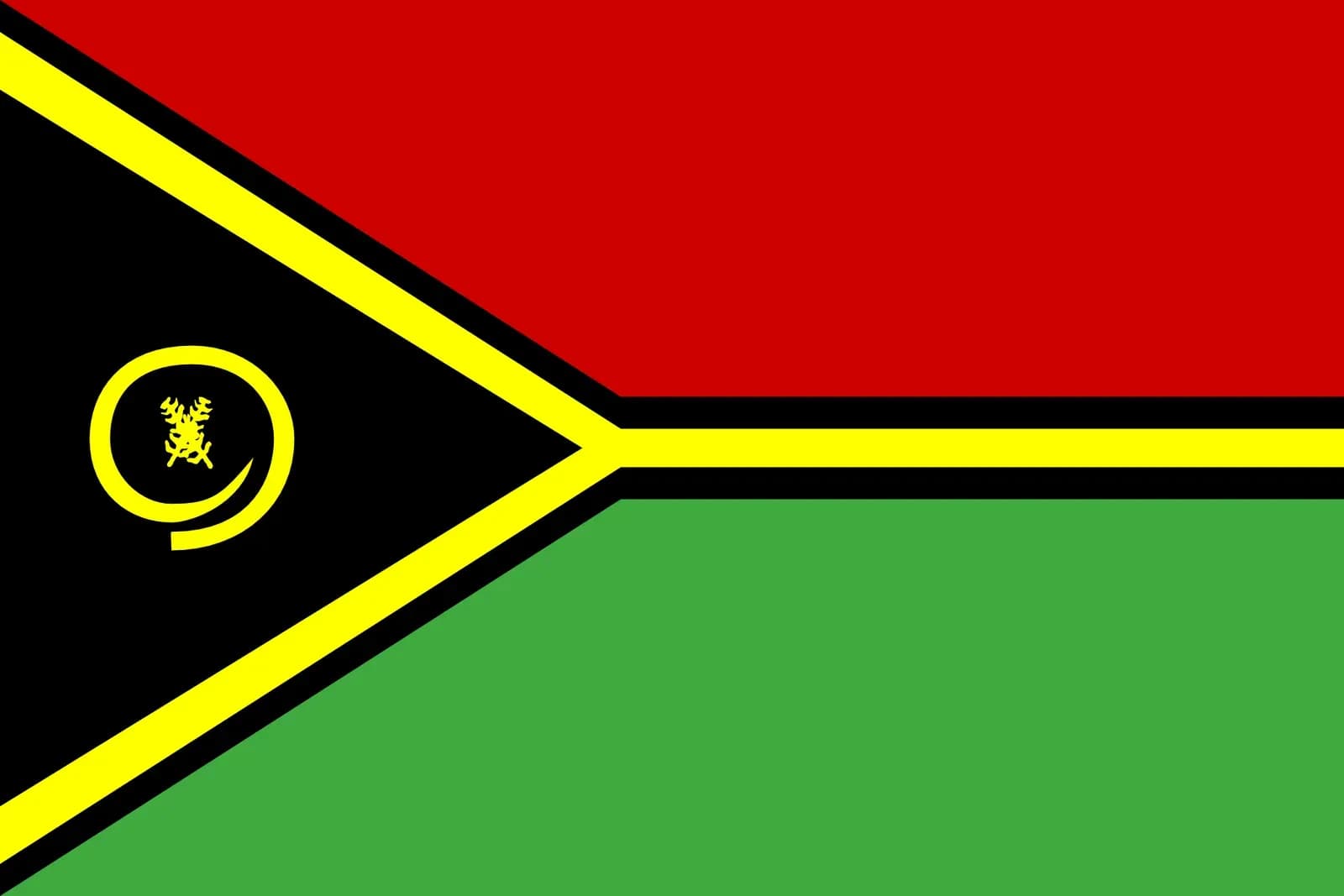 INDEX 13.10.2025, 07:08 Vanuatu Sovereignty Index (Burke Index), 2024-2025  Share on media IntroductionThis report provides a comprehensive analysis of Vanuatu's sovereignty using the methodology of the Burke Institute. Sovereignty is assessed in 7 areas: political, economic, technological, informational, cultural, cognitive and military. Each aspect is assessed on the basis of official data from international and national sources (UN, World Bank, UNESCO, IMF, ITU, FAO, SIPRI, PISA, etc.) without using politicized indexes. The maximum score in each direction is 100; the sum (up to 700) is the accumulated Sovereignty Index (Burke Index). To adapt and adjust statistical parameters, an international expert survey was conducted for each of the seven components using a single questionnaire of 10 questions with a 10-point scale and one open-ended question. In total, at least 100 experts from 50+ countries were interviewed for each indicator, taking into account geographical representation and specialization. When calculating and analyzing the data, equalizing coefficients were used, bringing all data to a scale of 0-10 points. The final index value is the arithmetic mean between statistical data and expert estimates. Below is an analysis in each area, a summary table and the main conclusions about the peculiarities of Vanuatu's sovereignty. Political sovereignty — 68.2Vanuatu is an official member of the United Nations, the World Bank, the IMF, the Pacific Islands Forum, the ACP, the International Organization for Migration, the SPTO, the International Climate Platforms and many other unions. The Constitution, Article 2, enshrines the supremacy of national law: “The Constitution is the supreme law of the Republic of Vanuatu,” all laws and even colonial norms apply only to the extent that they do not contradict it; customary (custom) law is taken into account if it does not conflict with the Constitution (paragraphs 47-50). The WGI 2023 political stability index is 81st percentile (above the middle), 2023-2025 — weak internal destabilization due to frequent government changes and parliamentary crises (re-elections in 2025 and on the eve), but there is no real violence and terrorism. Public administration efficiency — 0.24 points (49th percentile, 2023, WGI): average in the region, there is stable access to basic public services, but complaints about corruption, personnel turbulence and inefficiency of judicial reform remain. EGDI — 0.478 (2022), lower than the global average, but growing (basic portals for taxes, registration, licensing, educational and agro-public services have been implemented). Due to frequent changes of parliament and prime ministers, the level of support for the ruling coalition is low: turnout in 2025-69% (the maximum in 15 years), fragmented voting, high demand for reforms and transparency. There are no foreign military bases: Vanuatu officially declares a nuclear-weapon-free and non-aligned status, external partners provide only technical or police assistance upon invitation, and there are no foreign garrisons. The jurisdiction of international courts is recognized — Vanuatu participates in the ICJ, WTO, and climate courts, but the priority of national law is confirmed by the constitution and judicial practice. The form of government is a unitary republic with a high degree of decentralization: traditional Soviet structures in the regions (custom councils) are recognized, the National Council of Chiefs (Malvatumauri) is enshrined in the constitution immediately after the parliament. The control and responsibility of security structures are provided by the Parliament, the Cabinet of Ministers and the Ethics Commission (Leadership Code); there is an independent ombudsman and an anti-corruption department, but real complaints about bribes and secrecy continue to arrive. Data completeness assessment: the main indicators are available from international sources, the coverage is 88%. Economic sovereignty — 46.1In 2024-2025, GDP per capita (PPP) is $3,600 (2024), according to other sources $3,170–3,602. Official reserves — $621 million (2024, World Bank); equivalent to about 7.7 months of imports — a stable reserve. The national debt is 40.6% of GDP (2023), projected to be about 44% in 2024-2025 (IMF, FocusEconomics, Ministry of Finance of Vanuatu). External debt is about 36.7% of GNI, the structure is moderate. Up to 60% of food is imported, but local production — yams, taro, bananas, coconut, fish — provide the basis of the diet. High vulnerability to external shocks. The main electricity is powered by diesel fuel (80-85% in 2024-25), the remaining 15-20% is renewable (hydro, solar, coconut oil); critical dependence on imported fuels and lubricants. The most important resources are fishing, forests, and agricultural lands; there are no mineral or fuel reserves, and promising exploration work is underway on the offshore. The main source is rivers, rain and artesian waters. The islands are provided with water, but there are local shortages in droughts; settlements build accumulation systems. The settlement system is supported through Reserve Bank of Vanuatu and four local banks; there are internal payment cards and national online banking, and control over transfers and currency transactions from the Central Bank. The national currency is cotton wool (VUV), almost all internal payments (PO, services, trade) are in VUV, tourism and foreign trade are in AUD, NZD, USD. Reserve Bank of Vanuatu (RBV) is an issuing center that determines monetary and credit policy, carries out currency control and operations, and holds key interest rates. Data completeness assessment: the main macroeconomic indicators are available from official sources (World Bank, IMF), coverage is 91% Technological sovereignty — 29.4Data on expenditures on science and R&D are missing or equal to 0% of GDP; there are no large public or private research centers of their own, science is funded through international programs, and priority is low. Import substitution in high-tech is not developed: 95-100% of equipment, software, computing and telecommunication equipment are imported; localization attempts are limited to pilot IT companies and e-government services. The share of young people (18-24 years old) with completed or current higher education is 8-12%; there is a national university and cooperation with Western Global University, the Vanuatu Institute of Technology, and there are partnership programs with Australia. In 2024-2025, 62% of the population uses the Internet, and mobile Internet is available on all major islands, but the quality/speed outside major cities leaves much to be desired. Public services (e-government), educational platforms, digital business registration, public procurement and remote filing of documents operate mainly on imported IT solutions, but local digital services (e-Vanuatu, agri registries) are developing. Imports of all types of computing equipment, clouds, and telecom solutions account for 95-100%; there are literally only a few companies in production and software development, and there are no exports. EGDI — 0,478 (2022). Digital services for taxes, registration, and agricultural services have been launched; online government services reach about 40-45% of the adult population. There are no biotechnologies or laboratories of their own; diagnostics, scientific activities, equipment and medical technologies are exclusively imported. There is no robotics industry or training laboratories, and pilot projects are fully imported. There is no production of chips, microelectronics, or contract manufacturing, and 100% is imported. Data completeness assessment: key indicators are obtained from WIPO, ITU, UNESCO, which provides 83% coverage. Information sovereignty — 47.3Since 2019, Vanuatu has an active national CERT VU (Computer Emergency Response Team), trained and recognized by ITU, with constant communication with key departments and strategy until 2030; a reporting system for citizens and businesses is in operation, and an incident response and prevention structure has been established. The national Internet Exchange Point — VIX (Vanuatu Internet Exchange, Port Vila), the first traffic exchange point in the Pacific region, and the datagov data center are operating.vu, the infrastructure is being developed with the participation of the state and operators. All media outlets operate in Bislama, English, and French; the Vanuatu Daily Post, Port Vila Presse, L'Hebdo du Vanuatu, Nasara, etc., radio and television broadcast 80% of programs in Bislama, the rest in English/French. The "Bislama Language Week" is actively being held. The entire digital infrastructure — mobile communications, clouds, fintech, public services — is based on imported solutions (Google, AWS, Microsoft, Meta), critical infrastructure is technologically vulnerable to failures of global platforms. The share of own media content is estimated to be 40-55% in television (state and public TV channels, KAM TV — 95% local content), in the press — about 45%, in radio — over 65%. There are developments for the digitalization of public services, local services for agri registries, business registrations, individual cloud products and applications of government agencies, there is no exported software and the IT industry. Online public services are available to 40-45% of the adult population (2024-2025), e-government is gaining momentum, and Internet banking accounts for about 50% of users. There are no public national cloud data centers, the Datagov data center.vu supports only a part of government platforms, the rest is stored on foreign clouds. Telecom services are provided by Vodafone Vanuatu and Digicel Vanuatu (operators are registered locally, but the network and solutions are technologically dependent on external vendors); basic networks and control are under the supervision of the regulator. There is no comprehensive law on personal data; separate rules on information protection in banking and digital law have been implemented, and the development of a national standard is still in the process. Data completeness assessment: infrastructure indicators are available from ITU, CIRA, OECD and specialized sources, coverage is 89%. Cultural sovereignty — 73.8One UNESCO World Heritage Site: Chief Roi Mata's Domain (an object since 2008, three locations, of unique historical and anthropological significance). Contributions: the kastom system — a special code of traditions, more than 100 languages, the nangol ritual (land diving), visual art and masks, unique sand drawing (a UNESCO site as an intangible. heritage), ritual dances (toka, rum, nakei), collective celebrations, the most valuable oral heritage and models of self-organization of communities. The National Arts & Culture Festival, awards from the Vanuatu Cultural Center, as well as special scholarships and grants for young creators, craft and dance competitions are held annually. The key principle of life is “kastom": the traditional power of leaders, the ritual system, collective holidays, the land as the basis of identity, the deepest ambiguity of rituals. Linguistic, clan, spiritual, and territorial diversity are combined with a hierarchical system of self-government. Linguistic and cultural support for small nations is based on the constitution, the National Council of Chiefs (Malvatumauri) operates, funding for ethnocultural and educational programs, support for print and radio broadcasting in various languages, Week of Bislama, and other projects. More than 30 officially recognized sites, including Chief Roi Mata's Domain, museums, sacred areas, nasara, monuments, historical churches, independence monuments, and traditional art centers. Participation in UNESCO's intangible heritage programs (sand painting, oral tradition), organization of major linguistic and ethnocultural conferences, exchanges and festivals with France, Australia, South Pacific countries, and world museums. Kastom, land diving, sand painting, Rom dance are recognized nemat. The country's brand is protected by the Cultural Heritage Act (Vanuatu Cultural Centre and the State Identity Protection Program). The cuisine is based on yams, taro, bananas, seafood, coconut soups, tuna dishes, fried vegetables, and kava culture; the cuisine is decorated with community celebrations and rituals of treating guests. More than 85% of citizens participate annually in festivals, celebrations, rituals, ceremonies, church and community events; “custom” and holidays preserve the sociocultural cohesion of society. Data completeness assessment: basic indicators are available in UNESCO and national statistics, coverage is 97%. Cognitive sovereignty — 52.6HDI — 0.621 (2023), "average" level, ranked 146th in the world; continues to grow from 0.614 (2022). Total spending on education is 10.64% of GDP (2023, the highest figure in the world); the share of education in the state budget is 20.9%. Adult literacy (15+) — 87.5–89.1% (2021-2023, World Bank/UNESCO), youth (15-24) — 95.7%; men — 86.6%, women — 83.8%. Vanuatu does not participate in PISA; there are no international competency tests, the results are available only by national exams. The share of STEM among university and college graduates is 8-12%; pedagogy, humanities and economics dominate, and part of STEM education is abroad. 20-25% of students complete studies/internships in Australia, New Zealand, distance learning and exchange programs, especially in technical and economic specialties. There are three official national languages: Bislama, English, and French. There are 110 indigenous languages (the largest linguistic diversity per capita in the world); all languages are protected by the Constitution and state programs. Festivals of small nations, language week. One university (National Univ. of Vanuatu) with departments of agriculture and education, separate research institutes under ministries (agro, meteorological, tourism). Electronic learning platforms (MOET EdTech, OpenLearn in Vanuatu) cover 10-15% of students; mass online learning is being introduced from 2022. Government grant, scholarship, and exchange programs cover up to 4% of graduates per year; 60-80 scholarships are awarded annually to study in targeted areas in Australasia and New Zealand. Data completeness assessment: education indicators are available in the UNDP, UNESCO, OECD, coverage is 90%. Military sovereignty — 29.7Defense spending is ~1.4% of GDP; in absolute terms, it is about $20 million in 2025, the budget has been stable at this level in recent years, the priority is internal security and the national police. There is no army of its own. National security is provided by the Vanuatu Police Force and its paramilitary unit, the Vanuatu Mobile Force (VMF), with a strength of ~300 people (2025). Modern heavy weapons and aircraft are missing. Light small arms, service boats (Australian, Chinese), patrol cars and equipment, newly retrofitted bases, communications and infrastructure are used (thanks to the help of Australia, China and donors). 100% of all equipment and equipment are foreign supplies: boats from Australia, equipment and transport were paid for by China (VT 500 million) in 2024-25, repairs and upgrades of bases are carried out using foreign grants; there is no local military-industrial complex. Maritime borders are monitored by two patrol boats, the police and the VMF patrol the coast; technical support for monitoring is provided by Australia, China and regional arrangements. There is no regular military reserve; a potential reserve is formed through the mobilization of regional police officers and volunteers. The military and foreign policy autonomy is formal, but key security issues are resolved in close partnership with Australia, New Zealand, China and the Islands Forum countries; there are no military blocs of their own, the country is officially non-aligned. There is no military industry; there are workshops for repairing vehicles and equipment inside the police, imports provide 100% of the needs. There are no nuclear weapons, the country is in a "nuclear-free zone", and any nuclear programs are prohibited. There are no satellites, military intelligence, space or electronic warfare facilities; the maximum is radio stations and emergency infrastructure (updated with the support of Australia in 2024). All parameters are reflected in the annual reports of SIPRI, UNODA, the Ministry of Defense, the official portals of state—owned companies (Embraer, IMBEL) and the UN/NGO industry databases - 93% coverage Final Summary Table
The main conclusionsStrengths. Ethno-cultural stability and integration (“custom”, support for 100+ languages and national communities), high level of public involvement in culture (85%+), official nuclear-free and non-aligned status, a strong financial/credit system based on its own emission center, very high education costs (10.6% of GDP), its own currency and control of operations, availability of a national IXP and a valid CERT, neutral foreign policy and stoic experience of survival in conditions of frequent disasters (infrastructural and climatic stability), developed domestic tourism and the agricultural sector, balanced government debt, strong foreign exchange reserves, flexible tax system and investment advantages for businesses and migrants. Weaknesses. Almost complete dependence on high-tech, IT, biotech, chips and all heavy machinery (imports 95-100%), low R&D costs (0% of GDP), mediocre level of digitalization of public services (EGDI 0.48), weak STEM development and higher education coverage (8-12%), low share of innovative and own software, limited biotechnological capabilities, no military industry, army, military space and intelligence; weapons and infrastructure are exclusively foreign supplies and technical assistance, significant dependence on imports for food and fuel, weak data protection and the absence of relevant laws on personal information. Overall assessment. The cumulative sovereignty Index of Vanuatu is 347.1 out of 700 possible points (average — 49.6%), which places the country in the top 150 in the world top. Vanuatu is one of the most ethnically and culturally stable small mono-power countries, with a strong institutional tradition, its own currency, unique social institutions and an independent foreign policy, but technologically, infrastructurally, scientifically and defensively remains very dependent on the outside world and imported solutions, without increasing significant innovation or military autonomy. The sovereignty profile indicates that Vanuatu's sovereignty is strong based on its ethnic and cultural identity, the autonomy of major financial and payment institutions, and a territorial and legal system based on traditions and community structures; however, the country remains vulnerable in terms of science, weapons, technology, and strategic infrastructure, being almost completely dependent on imported machinery, equipment, and international cooperation. | ||||||||||||||||||