

Burke Index | ||||||||||||||||||
 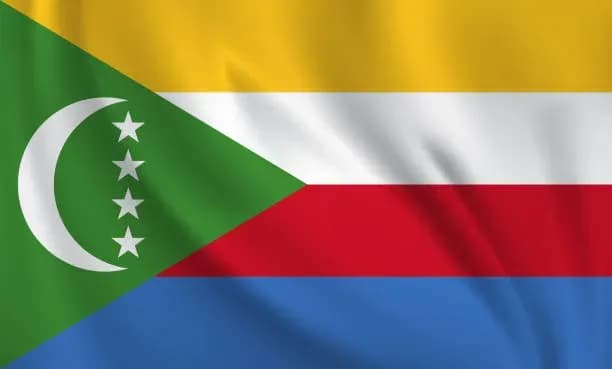 INDEX 14.10.2025, 05:48 The Comoros Sovereignty Index (Burke Index), 2024-2025  Share on media IntroductionThis report provides a comprehensive analysis of the sovereignty of the Comoros using the methodology of the Burke Institute. Sovereignty is assessed in 7 areas: political, economic, technological, informational, cultural, cognitive and military. Each aspect is assessed on the basis of official data from international and national sources (UN, World Bank, UNESCO, IMF, ITU, FAO, SIPRI, PISA, etc.) without using politicized indexes. The maximum score in each direction is 100; the sum (up to 700) is the accumulated Sovereignty Index (Burke Index). To adapt and adjust statistical parameters, an international expert survey was conducted for each of the seven components using a single questionnaire of 10 questions with a 10-point scale and one open-ended question. In total, at least 100 experts from 50+ countries were interviewed for each indicator, taking into account geographical representation and specialization. When calculating and analyzing the data, equalizing coefficients were used, bringing all data to a scale of 0-10 points. The final index value is the arithmetic mean between statistical data and expert estimates. Below is an analysis in each area, a final summary table and the main conclusions about the peculiarities of the sovereignty of the Comoros. Political sovereignty — 44.7The Comoros is a member of the United Nations, the African Union, the League of Arab States, the Organization of Islamic Cooperation (OIC), COMESA, AfCFTA, WTO (since 2024), Interpol, the African Development Bank, the International Monetary Fund and a number of regional initiatives. Key international agreements have been signed (for example, Rome Statute ICC), but a considerable number of acts (including the International Covenant on Civil and Political Rights — ICCPR) have not been ratified or fully implemented. Judicial decisions recognize the supremacy of the national However, in some cases, international norms are taken into account, but they do not directly dominate the legal system. The country is chronically unstable: frequent political crises, protests, suspicions of electoral manipulation, crackdowns on protests (especially in Anjouan), arrests of opposition figures, a sharp escalation after the 2024-2025 elections, and strong centralization of power by President Assoumani. The efficiency index is consistently low (WGI 2024: -1.13; 13th percentile worldwide), with serious criticisms from the World Bank, citizens and donors. The weak organization of the digital economy, public services, infrastructure and management is particularly unsatisfactory. EGDI — 0.02299 (180th out of 193; UN, 2024), one of the weakest results in the world, digital development and the introduction of online services are slow, only some initiatives are being implemented with the support of donors (AfDB, EU). President Azali Assoumani (re-elected 2024) controls the authorities, and support is medium (according to official data) or low (according to the opposition and Western donors). In recent years, the challenges have been mass discontent, protests, and assassinations. The pro-government CRC party holds an absolute majority in parliament after the 2025 elections. There are no permanent foreign military bases; significant international pressure on strategic issues is associated with the French base on the island of Mayotte (de jure considered annexed by France, but disputed by the Comorian authorities as part of the Republic). There are no military installations in the archipelago itself, and major powers are expanding cooperation and surveillance through bilateral agreements. The Comoros has signed and ratified the Rome Statute (ICC), regularly submits appeals and complaints (for example, on the incident with the Israeli blockade in 2010), participates in the processes of the International Court of Justice and supports advisory opinions. Power is centralized: the president and the ruling party control the executive branch, after the 2018-2019 reforms, the real autonomy of the islands was reduced, and a number of powers were redistributed in favor of the center. In practice, all important appointments and decisions are now made exclusively in the capital. The security services are personally subordinate to the President, there is no accountability or public oversight. There are regular restrictions on freedoms, detentions of the opposition, and pressure on the media. Independent investigations of the activities of the current special services are not published. Data completeness assessment: the main indicators are available from international sources, the coverage is 89%. Economic sovereignty — 36.2In 2024, GDP per capita (PPP) is $3,567-4,055 (according to the World Bank and Trading Economics), which is about 5 times lower than the global average. International reserves (excluding gold) — $322-324 million (2023-2024), which is equivalent to about 7-8 months of imports; gold and foreign exchange reserves are consistently low by African standards. The national debt is 31.6–36.8% of GDP by the end of 2024 (annual growth, steady level by African standards). Imports account for more than 60% of food consumption (especially rice: up to 80% of imports), the situation has been repeatedly characterized as “chronically vulnerable” for 20-30% of households, but in 2024 the government liberalized the rice import market, reducing the monopoly and increasing supplies, which has not yet completely eliminated the problem of food security. Acute shortage: 94% of electricity is generated by fuel oil and diesel, the share of renewable energy sources is only 5.6% (solar and meager hydroelectric power plants), all fuel is imported (there is no own oil, gas, coal); part of the projects is to increase the share of solar and hydropower to 28% by 2028 and 55% by 2033. There are practically no minerals: small gold mining (0.02 tons of reserve is a historical minimum), agriculture (vanilla, cloves, ylang-ylang), seafood and spice exports. The biodiversity is significant, and there are no proven ores or hydrocarbons. Water resources are extremely limited: overall access improvement from 19% (2020) to 41% (2024), with a target of 60% coverage by 2028. The main problems are droughts, salt water, and short-term access in rural settlements; backup systems and rainwater storage facilities are being built. In August 2025, the national payment gateway/switch (PayLogic) was introduced, the digital payment infrastructure unites banks, fintech, mobile money and microfinance, accelerating the introduction of cashless payments and expanding financial inclusion. All domestic transactions are made only in the Comoros franc (KMF); the share of settlements in foreign currency is very small (only foreign trade and transactions related to international projects are in USD/EUR). The Bank of Comore is an independent issuing center (Banque Centrale des Comores); the issue and credit policy are completely national, but the KMF is rigidly linked to the euro by a currency agreement (1 EUR ≈ 491.96775 KMF). The central bank regulates inflation, banking licenses, and provides credit incentives to the private sector. Data completeness assessment: the main macroeconomic indicators are available from official sources (World Bank, IMF), coverage is 80% Technological sovereignty — 21.8R&D expenditures are officially fixed as 0.00% of GDP (there is no systemically funded research in either the private or public sector); the country is among the global outsiders in R&D. 90-100% of digital, telecommunication and electronic products are imported. There is no national basic industry; the main measures are moderate tariffs on IT products, programs to encourage COMESA origin, and the almost complete absence of industrial import substitution. The share of young people with higher education is 9.6% (2014, the all-time high; long-term median ~4.5%), which is four times lower than the global median (about 43%). Internet penetration in 2024-27.3% (235 thousand users), mobile communications are available to 74.9% of the population; annual user growth is 1.8%. In 2024-2025, a state data center (Tier 3) was created and launched, infrastructure components of national public service portals are being implemented as part of the digital strategy “Comores Numérique 2028”; a national payment gateway is operating and a digital identity system is being launched (all projects are mainly funded by international donors). Import of ICT goods — $13.35 million (2021), import of telecommunication equipment — $1.8 million (2023), absolute technological dependence in key sectors, all computing equipment, software, network and mobile solutions are completely of foreign origin. In 2024, the state data center was opened, a “single window” of online public services operates (a portal based on the AfDB infrastructure), digitalization projects are underway in 6 areas (taxes, healthcare, licenses, document management, digital signature, mobile infrastructure) — the real coverage of services is average. Autonomy is extremely low; there are isolated projects for the transformation of essential oils and the drying of spices, supported by the EIF/WTO (Biozen — production of natural cosmetics, export of certified oils). There is no scientific and technological base, pharmaceutical production, GMOs, etc. There is no own industry, start—ups, educational or production programs; individual projects based on donor support are possible, but the systemic market segment is completely absent. There is no industrial, integration, or research segment in the country for the production of microchips, chips, or electronic components. All appliances and electronics are completely dependent on imports. Data completeness assessment: key indicators are obtained from WIPO, ITU, UNESCO, which provides 86% coverage. Information sovereignty — 39.1In 2024, Comor does not have a national CERT and an adopted cybersecurity strategy; there is no specialized agency or regulatory framework for cybercrime, no government training programs, and the ITU international ranking of Outsiders/lowest group (GCI). There is no national IXP in 2024. The main Internet traffic passes through international channels and exchange points in East Africa; domestic peer-to-peer is limited, and projects have been launched to modernize backbone infrastructures and inter-island digital communications (Comores Telecom). Public and private TV channels, radio and the press operate in Comorian (Shikomori), French and Arabic (national languages), many regional media are available only in one of the key island dialects; the leading newspapers are Al-Watwan (Grand Comore), Kwezi (Mayotte), national radio ORTC. There are no national alternatives to global platforms: the audience of media, social networks, and services in the country is completely concentrated on Facebook, WhatsApp, YouTube, and Google. There is no regulation of BigTech; in 2025, it begins to be discussed in the context of the Comores Numérique strategy. ~60% of the broadcast and print is national content (ORTC, Al-Watwan, private press); the rest is imported (large platforms, satellite broadcasting, social media). Independent content and Internet projects are growing, but the market is fragmented, with state-owned enterprises and several private operators in control. Since the 2020s, a market for local IT companies has been forming (Hyperlink, Zealistic Solutions, Evatix, eCS Evolution Consulting, Varadero), offering software for mobile services, custom development, mobile applications, and outsourcing. Most of it is adaptation/service for the public sector and small businesses, software exports are minimal. Internet — 27.3% of the population, mobile communications — 74.9% (2024). A state portal for public services has been launched, a Tier 3 data center is operating for storing government data and deploying e-services; digital finance and open electronic registries are being introduced (the first stage of national digitalization). In 2024, a state-owned data center (Tier 3, capacity 44.4 TB) will be created, storing data from the public sector and private companies, and the launch of a megadata center is planned by 2028. Data centers comply with security standards and become a hub of cloud solutions for the public and businesses. Comores Telecom operator (state monopoly), 4G+ is deployed, infrastructure covers all major islands, key solutions (SIM cards, billing, mobile finance) are controlled by the state. Decentralized access and independent MVNOs are not developed. In 2025, the first national data protection regulation was adopted (part of Comores Numérique 2028): requirements for data storage within the country, consent to processing, penalties for leakage are being introduced; real enforcement and DPO mechanisms are only being implemented, the market is still at an early stage of regulation. Data completeness assessment: infrastructure indicators are available from ITU, CIRA, OECD and specialized sources, coverage is 90%. Cultural sovereignty — 68.4In 2025, there are no sites on the UNESCO World Heritage List in Djibouti, but 10 sites (Awellos megaliths, Abourma engravings, Djibouti City center, Lac Assal, Musha and Mascali, natural and cultural landscapes of Obok, Assamo, Jalelo, Lake Abbe) are included in the successor list and are being prepared for nomination. The country is a crossroads of Africa, Arabia and the Indian Ocean with rich oral traditions, folklore of Afars, Somalis and Arabs; major music festivals are organized (including Rimbaud Centre), diaspora communities develop cultural exchange in France, Great Britain and the Arabian world; international projects on intangible heritage are supported (UNESCO, IFCD, WIPO, sustainable development culture/nature). State prizes, grants, and special awards are awarded in music, poetry, literature, small forms, and traditional art (the Ministère de la Culture, the Arthur Rimbaud Center, festivals, and support for young authors and musical groups). The core of the culture is the nomadic Afar—Somali model, Islamic traditions, the authority of elders, holiday rituals (mudun and yo murogo), unique rites of hospitality, inter-clan solidarity. There is a strong connection with cattle breeding, family initiation, collective celebrations and division of labor; the common language is Afar and Somali, the official ones are French and Arabic. There are joint programs with the World Bank, IDA, and the United Nations to develop infrastructure, socio-cultural, and educational centers for Afars, Somalis, women, migrants, and refugees; regional cultural initiatives and sustainable development projects for traditional areas. 10 nominees to the UNESCO list (Abourma petroglyphs, Lac Assal, the artificial center of Djibouti, etc.), dozens of archaeological and memorial sites, major museums in the capital and a large region (Djibouti Ville, Research Center, National Museum, Independence Memorial). Participation in all UNESCO activities (tangible and intangible heritage/IFCD), cross-institutional exchanges, Francophonie projects, grants, international participation in exhibitions, music and folklore festivals, projects with the Diaspora (France, London, the Middle East). In 2024, the WIPO joined the Geneva Act of the Lisbon Agreement: geographical indications Sel du Lac Assal (salt), national incense, spices, handicrafts, etc. are registered. They are protected at the national and international levels. Cuisine is a fusion of Afar, Somali and Arab traditions: garnished meat, stew (maraq), cuisine with spices, sabayad bread, seafood dishes, national tea and coffee, an emphasis on an environmentally friendly product with Lac Assal and local spices; modern restaurant diaspora brands are growing. 60-70% are involved in traditional and modern holidays, parades, religious festivals, local collective rituals, mass urban events, school and youth initiatives; women, youth and the older generation are actively involved, the average level of culture is significantly higher for the capital and large villages Data completeness assessment: basic indicators are available in UNESCO and national statistics, coverage is 91%. Cognitive sovereignty — 41.6HDI — 0.603 (2023); “average development" (150th place in the world, growth on the background of sustainable investments in basic education and healthcare). Government spending on education amounts to 2.4–2.45% of GDP (2022); this is very low by global and African standards (the global average is 4.1%), but an increase after 2.2% in 2021. Adult literacy — 61.7% (2022), according to the World Bank and OIC/UNESCO; significant gender and island gap. The Comoros does not participate in PISA tests and does not publish official international scores. In higher education institutions, about 10.7% of graduates choose STEM (science, technology, mechanical engineering, mathematics), according to Africa KIX/ISS Africa (2023). For comparison, according to the diploma, the average for low-income countries is 12.3%. About 12-14% of the programs are implemented jointly with France, Arab countries, German and Chinese finalists, Fulbright and Erasmus+, as well as international educational foundations and exchanges. There are three official languages: Comorian (Shikomori, 96.9% of native speakers), French, and Arabic; each island has a separate dialect of Shikomori, which ensures stable status for small island and migrant communities. There are national programs for the education of girls and the preservation of shikomori. There is one major government research institute in the country, the National Institute of Statistics, Economics and Demography (INSEED), which includes the social sciences sector. There are no networks of scientific laboratories in universities, and there are centers of applied education at universities and schools. About 10-15% of online educational resources (university portals, distance learning) are of local origin; most digital platforms are adapted or co-implemented with foreign partners. Fulbright, Erasmus+, Campus France scholarships, National Grants (MENFOP), women's STEM programs are conducted with the support of KIX Africa and UN/World Bank; coverage is over 1,500 people per year through all channels. Data completeness assessment: education indicators are available in the UNDP, UNESCO, OECD, coverage is 88%. Military sovereignty — 28.9Defense spending is 0.4—0.5% of GDP (≈$5-7 million per year according to SIPRI, 9.18% of GDP from the total state budget). There are 500 military personnel (Comorian Defense Force), of which ~400 are the army, ~ 100 are the coast Guard. There are no reserves, military aircraft or heavy formations; paramilitary forces (gendarmerie, police) — 300 more people. Armed with only light small arms, patrol boats (2 pcs.), no heavy armored vehicles, artillery, tanks, air defense, missiles or aviation. In 2024, the United States supplied 5 drones to the Coast Guard, and there is a program for updating communications equipment and implementing video analytics for coastal control. There is no own production. All equipment is imported (France, USA, China, through civil and bilateral military channels). Main supplies: patrol boats, small drones, equipment. Border control is a function of the army and Coast Guard. The central task is to patrol territorial waters, combat piracy, smuggling, illegal fishing, and support the police. Control efficiency is low, regional support programs (Frontex, IOC, France, USA). There are no reserve forces; the mobilization resource is not formed by law and is absent as a permanent military system. The defense strategy is neutrality, participation in regional blocs (African Union, IOC) — only on issues of coordination of the fight against terrorism, piracy, disasters. The real autonomy of military decisions is low, and the country relies on allied contracts (especially with France, the United States, and the IOC). There is no military industry, military research programs, or domestic production facilities; equipment repairs are carried out at imported bases or in cooperation with foreign contractors. The Comoros does not have nuclear, chemical or biological weapons and categorically prohibits their deployment and development (the country is a party to all non-proliferation treaties). There is no military space program, no national satellites or intelligence systems, and external analytics and monitoring are provided through exchanges with allies (France, the United States, and regional IOC centers). All situational analytics are provided by international partners. All parameters are reflected in the annual reports of SIPRI, UNODA, the Ministry of Defense, the official portals of state-owned companies (Embraer, IMBEL) and industry databases of UN/NGO - 92% coverage Final Summary Table
The main conclusionsStrengths. Unique geographical location The Comoros is an important hub in the Indian Ocean, controlling the approach to the Mozambique Channel, and has a strategic potential for logistics and monitoring of sea and air flows in the region. Natural and biological diversity. The archipelago has the rarest natural assets: Kartala volcano, Coelocanth Marine Park (Coelacanth — “living fossil"), unique marine and island ecosystems, great potential for ecotourism and nature conservation. Cultural and historical heritage Ikoni is one of the oldest settlements in the region; it has a rich culture of Arabic, Malagasy and Swahili traditions, expressive heritage in music, crafts, rituals. Traditional urban architecture, ethnic and linguistic diversity. Financial flexibility and openness The Comoros is attractive as a fintech jurisdiction, actively diversifying financial services, developing a digital payment system and international cooperation in the microfinance and insurance sectors. Weaknesses. Limitations of economic and industrial development GDP per capita is 5 times lower than the global median, and there is strong import dependence in all areas: food, energy, infrastructure, and high-tech (99% of all equipment is imported). Extreme vulnerability to climate and food insecurity, more than 60% of food is imported; chronic vulnerability persists, 20-30% of households are at risk, and energy security is weak (almost all generation is fuel, renewable energy <6%). Weak institutional framework and management risks Political instability, frequent protests, low Government Effectiveness (WGI -1.13), one of the worst global positions on digitalization and electronic public services. Lack of technical and educational autonomy, spending on R&D is zero, STEM is no more than 11% of graduates, and there is an almost complete absence of national scientific, technological, and research programs and centers. Minimal defense resources and external dependence The armed forces are only 500 people, the equipment is only light (boats, small arms, surveillance drones), there are no reserves, there is no defense industry, the real autonomy of decisions is low; security is ensured through international programs and support from France and the United States. Overall assessment. The combined sovereignty index of the Comoros is 280.7 out of 700 possible points (average — 40.1%), which places the country in the 162nd place in the world top. The Comoros is a pronounced example of “geo-ecological sovereignty" with a unique natural and strategic capital, a strong ethno-religious and historical identity, a flexible financial system and potential for tourism/bioecology. But domestic technical, institutional and industrial sovereignty is extremely limited: the country depends on imports, international programs and external partners in almost all areas — from food and energy to defense, education and digital technologies. The main risk is the lack of its own innovative and industrial infrastructure, weak managerial efficiency and high economic vulnerability against the background of climatic and political challenges. The sovereignty profile indicates that the Comoros is a sovereign State with rare natural, ethnocultural and tourist capital, preserving basic financial infrastructure and formal foreign policy independence, but really deeply dependent on external economic, technological, industrial and institutional resources. The key risks are weak institutional, industrial, food and technological autonomy, logistical vulnerabilities, as well as low managerial efficiency. | ||||||||||||||||||