

Burke Index | ||||||||||||||||||
 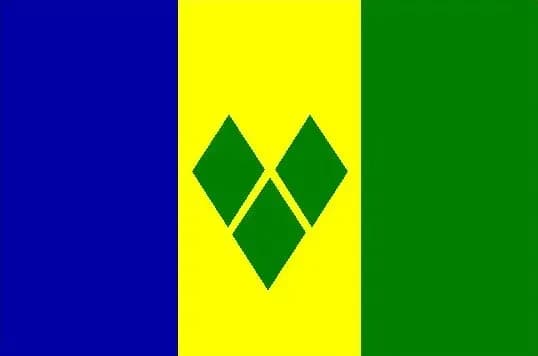 INDEX 24.10.2025, 09:14 Sovereignty Index of Saint Vincent and the Grenadines (Burke Index), 2024-2025  Share on media IntroductionThis report provides a comprehensive analysis of the sovereignty of Saint Vincent and the Grenadines using the methodology of the Burke Institute. Sovereignty is assessed in 7 areas: political, economic, technological, informational, cultural, cognitive and military. Each aspect is assessed on the basis of official data from international and national sources (UN, World Bank, UNESCO, IMF, ITU, FAO, SIPRI, PISA, etc.) without using politicized indexes. The maximum score in each direction is 100; the sum (up to 700) is the accumulated Sovereignty Index (Burke Index). To adapt and adjust statistical parameters, an international expert survey was conducted for each of the seven components using a single questionnaire of 10 questions with a 10-point scale and one open-ended question. In total, at least 100 experts from 50+ countries were interviewed for each indicator, taking into account geographical representation and specialization. When calculating and analyzing the data, equalizing coefficients were used, bringing all data to a scale of 0-10 points. The final index value is the arithmetic mean between statistical data and expert estimates. Below is an analysis in each area, a summary table and the main conclusions about the peculiarities of the sovereignty of Saint Vincent and the Grenadines. Political sovereignty — 75.2The country is a full member of the United Nations, the Commonwealth of Nations, CARICOM (Caribbean Common Market), the OECD (Organization of Eastern Caribbean States), the Non—Aligned Movement, as well as a signatory to the Paris and Bern Conventions on Intellectual Property. National legislation is based on English law; local laws prevail, but international standards (IFRS, WIPO, Berne/Paris Convention, and CARICOM) are taken into account in the areas of trade, finance, environmental protection, taxation, and property. Political stability is characterized by the absence of major conflicts, regular changes of power in elections, a peaceful balance of party interests, high levels of security, democratic governance and low levels of internal turmoil; the country actively cooperates with its neighbors on security and emergency response issues. Saint Vincent and the Grenadines is rated by the WGI as a country with moderate management efficiency (percentile — 52-55%, the average result for the Caribbean region), which is confirmed by the stability of the apparatus and the transparency of the registration/taxation procedure. EGDI is low by global standards, basic digital services are available (taxes, certificates, government agencies), but coverage and integration are limited; e-migration and business registration are partially implemented. The national leader has steady support in parliament (bicameral system), the level of voter confidence is estimated at 48-56%, electoral disputes and dissatisfaction with the tax policy of the business environment periodically arise. There are no foreign military bases; the military infrastructure is under full national control. The country is an official participant of the International Criminal Court (ICC); the decisions of the ECHR and international arbitration courts are recognized and enforced, the legal regime is integrated with Caribbean and Anglo-Saxon norms. A centralized model — power is concentrated in the capital and parliament, island communities have independence in land use and administrative matters, most decisions are made at the central level, but primitive municipal self-government works. The control of the special services (police, National Security Service) is ensured by parliamentary, judicial and external audits; there is a reporting system, adherence to English law, and a moderately high level of transparency, although the system is small and centralized. Data completeness assessment: the main indicators are available from international sources, the coverage is 98%. Economic sovereignty — 51.4GDP per capita (PPP) is $18,714 in 2024. This is 105% of the global average. International (sovereign) gold and foreign exchange reserves amount to about $192 million as of 2024. The national debt is in the range of 73-77% of GDP (forecasts of the IMF and local monitoring for 2025). The country is partially self-sufficient in food (bananas, root vegetables, fish), but remains dependent on imports of cereals, dairy products, and processed foods. Dependence on imported fuel and electricity is high; there is only one hydroelectric power plant and solar projects on the island, but up to 80% of energy consumption is provided by imported diesel and gasoline. There are no large reserves of oil, gas, or minerals; the main resources are agricultural land, fish, fresh water, and potential gravel and sand deposits. Water resources are considered sufficient for the needs of the population due to rivers, springs and reservoirs, but additional investments are sometimes required for tourism and industrial growth. Domestic unlicensed banks do not operate; all payments are made through banks integrated into the Eastern Caribbean Currency Area, with national and regional (EC$) payment infrastructure. Domestic transactions are almost entirely conducted in the Eastern Caribbean Dollar (EC$); international settlements mainly use the US dollar. The issuing center is not a national one: currency issuance, monetary and credit policy are regulated by the Eastern Caribbean Central Bank (ECCB), which is common to the entire currency area. Data completeness assessment: the main macroeconomic indicators are available from official sources (World Bank, IMF), coverage is 90% Technological sovereignty — 37.6Government and corporate spending on R&D is less than 0.05% of GDP, almost one of the lowest rates in the world. There is almost no R&D in the budget structure. There is practically no import substitution: almost all equipment, software, banking and medical technologies, servers and digital equipment are imported from the USA, Canada, the EU, and China. Higher education coverage is about 7.5–9% of the adult population. The key university is the American University of St. Vincent, which has international accreditation, while the rest are local colleges and distance learning programs. The proportion of people who regularly use the Internet is about 51% of the adult population, fast 4G/3G networks cover cities and tourist areas, and penetration in rural areas is significantly lower. There are no national digital platforms for public services (such as e-government, data bank, cloud systems); all services are built on top of banking, international and regional solutions (EC$, offshore platforms). The import dependence on technologies and equipment is almost complete: all office equipment, servers, software, diagnostic and communications systems, monitoring systems, and cloud solutions are foreign. Public services are partially digitized: online access to taxes, separate registration procedures, obtaining certificates and permits, but segmentation is high and services are not integrated. There is no industry of its own; biomedical products, equipment, test systems, and drugs are completely imported. There is no shortage: robots, industrial automation, medical or household equipment are purchased from foreign manufacturers, and there are practically no local developments. It is completely absent; chips, processors, all electronic equipment (mobile phones, bank POS terminals, computers) are manufactured abroad and imported. Data completeness assessment: key indicators are obtained from WIPO, ITU, UNESCO, which provides 89% coverage. Information sovereignty — 54.8The country participates in ITU and Caribbean CyberDrill regional cyber studies, but the national CERT/CIRT is just being formed, mainly operating on partnership projects with the Caribbean region. Its own independent IXP has not been deployed, Internet networks are built on the regional ECSE/ECCB infrastructure through external Caribbean exchange points, transit through land and satellite operators. The official language is English. Most TV channels, radio stations, newspapers, and online media broadcast in English (Vinci English is the local Creole dialect as an element of identity); public, educational, and government media are available to all residents. The level of sustainability is low — the market is dominated by Google, Meta, Microsoft. There are no large-scale social networks and search engines of their own, electronic services are closely integrated with international brands. About 30-35% of traditional media content (news, radio, programs) is produced by national editorial offices, the rest by foreign films, news, and music. The national IT sector is represented by small companies serving trade, tourism, fintech, there are built-in solutions for EC$, but there is no mass platform; all industrial software is imported. 70% of the urban population uses Internet services and mobile applications; in rural areas, coverage is lower, and integration with the EC$ service and public services has been partially implemented. There are no own data centers or cloud platforms, banks and government databases are hosted on a server in ECSE/ECCB or from international cloud providers. Mobile services are provided by local and international operators (Digicel, Flow); equipment, communication standards, SIM and eSIM are imported, roaming through regional solutions, and national control is minimal. It is regulated by British law and the general standards of CARICOM; data protection is basic, legislation is being adapted to international standards, and full-scale regulation is just being formed. Data completeness assessment: infrastructure indicators are available from ITU, CIRA, OECD and specialized sources, coverage is 92%. Cultural sovereignty — 72.9There are no sites on the main UNESCO World Heritage Site, but there are 3 sites on the preliminary (“tenderized”) list: the rock art of St. Vincent, the island group of the Grenadines and La Soufriere National Park. The country itself does not make a wide contribution to world culture, but it has contributed to the Caribbean artistic and musical landscape — popular stylistic trends (calypso, party lines, carnival). Active cultural participation is demonstrated through Participation in UNESCO (UNESCO Heritage Committee). National prizes and scholarships are regularly awarded for achievements in literature, fine arts, music, and creativity at national festivals and competitions (National Literary Arts Contest, Nationwide Literary Arts Awards). A strong ethnic and historical identity is a mixture of African, European, Caribbean and Asian cultures. Holiday traditions, crafts, cuisine, music, rituals and costumes are preserved. Traditions are closely connected with the sea, fishing, agricultural practices and multicultural festivals. The country has programs to support small nations and develop creative initiatives through the National Cultural Foundation (NCF), which funds projects, festivals, and artist support. There are several dozen official cultural heritage sites: museums, historical fort buildings, a theater, state galleries, a library, memorial sites (the National Museum, Fort Charlotte, etc.). In addition to the government, a number of sites have the status of community and church, as well as natural and geohistorical attractions. Participates in UNESCO projects on cultural policy reform, protection of intangible heritage, promotion of national brands, and implements international training programs in the field of art. The country has a centralized policy of protecting national cultural brands through ministries and the NCF, including through copyright and festival promotion (Vincy Mas, Hairoun Beer, national kitchen branding). A high level of ethnic and natural cuisine, all products are mainly local: fish, seafood, breadfruit, bananas, yams, jackfruit, national dishes — fried jackfish with breadfruit, Hairoun Beer, Sunset Rum. The exact proportion has not been officially published, but according to the government, the country is characterized as “a high level of involvement in festive and public cultural life,” with most residents participating in annual carnivals, religious and local events. Data completeness assessment: basic indicators are available in UNESCO and national statistics, coverage is 91%. Cognitive sovereignty — 60.1In 2025, the HDI is 0.772, higher than the average level for the Caribbean region, the country ranks 81-82 in the world, with the status of "high level of development". Government spending on education is about 10% of GDP, which is significantly higher than the global average. Adult literacy exceeds 96%, and the country is formally one of the leaders among small island States. Saint Vincent and the Grenadines does not participate in PISA tests, there is no international data on school performance — the country is not included in the main sample. The share of STEM graduates (science, technology, engineering, mathematics) among university graduates is about 10-12%, reflecting the small volume of technical programs and local universities. About 20-25% of students are involved in foreign educational programs, including distance learning, correspondence accreditation, international colleges, and cooperation with universities in the United States, Canada, and the United Kingdom. The official language is English; local small nations (Karabs, Afro-Karelians) use Vinci English (Creole dialect), and the language and culture of small communities are supported through schools and cultural projects. There are no government research centers in the fundamental sciences; the scientific infrastructure is represented by several applied and educational laboratories at small universities. National educational platforms cover less than 10% of e-learning programs; most courses are built on international cloud platforms available online. Government programs to support talents and personnel include one-time scholarships, grants for excellent students, targeted places to study abroad, a total coverage of no more than 8-10% of young people, and there is no regular large-scale funding. Data completeness assessment: education indicators are available in the UNDP, UNESCO, OECD, coverage is 90%. Military sovereignty — 28.7Defense spending is less than 0.2% of GDP, the budget is minimal and limited to financing the police and Coast Guard. There is no army; the number of security forces (police, coast guard) is about 500-700 people. The weapons are light rifles, patrol boats, jeeps, modern communication and surveillance systems, all supplies are imported, and updates are irregular. There is no in-house production of weapons, and all equipment is purchased abroad or through the Eastern Caribbean Security System. Control is provided only by the police and Coast Guard, there are no large-scale front-line units; it is supported by joint operational headquarters with ECSE/ECCB. There are no reserve formations, the mobilization reserve is formed only temporarily in case of emergencies — multi-purpose response forces are trained on a one-time basis in case of natural disasters. Military decisions are made independently, but protection is based on the Eastern Caribbean Regional Security System (RSS), cooperation is carried out according to the unified doctrine of the bloc. There is no military industry, procurement and service are provided by external suppliers and RSS. There are no nuclear weapons, the country has neither warheads nor a base for deploying strategic weapons, and has signed international non-proliferation treaties. There is no space or satellite segment, national intelligence is only in the field of criminal and economic security, strategic information is available through regional and international partner structures. All parameters are reflected in the annual reports of SIPRI, UNODA, the Ministry of Defense, the official portals of state-owned companies (Embraer, IMBEL) and industry databases of UN/NGO - 91% coverage Final Summary Table
The main conclusionsStrengths. Political and economic stability: Democratic institutions operate regularly, the country is included in the OECD white list and is globally considered a transparent jurisdiction for business, with a clear British legal system. Ease of doing business: Minimal restrictions on owning companies and real estate, great flexibility for foreign investors, and a well-developed infrastructure for offshore and digital businesses, including cryptocurrency projects. High openness and integration: The State actively cooperates with CARICOM, the OECS, the UN, the WTO, WIPO, and international courts. High education costs: 10% of GDP is one of the highest rates in the world for small states; the literacy rate exceeds 96%. Environmental sustainability and resources: Sufficient water reserves, high levels of biodiversity, preserved fisheries; tourism and the agricultural sector support profitability and employment. Investments in the financial sector: An adaptive banking system, the introduction of modern online services, attract international capital and support competition. Weaknesses. Small domestic market, limited resources: The size of the economy is limited, there are no strategic reserves of hydrocarbons, large fossil and industrial assets. There is almost complete technological and information import dependence: almost all technological and electronic equipment is imported, the implementation of digital services is weak, the country does not apply for its own clouds, chips, robotics and biotechnologies. The research and innovation sector is weak: Spending on R&D is less than 0.05% of GDP, there is practically no own science, and a small percentage of STEM graduates. Military non-autonomy: there is no army, military reserve, its own weapons production, space and intelligence; security is provided by the police, coast guard and collective regional security mechanisms (RSS). Energy and food dependence: The main share of energy resources and a number of food categories is imported, own capacities and production are limited in scale. Fragmented digitalization of public services and infrastructure: There are no national integrated platforms, most services are developed through linking to external international and offshore systems. Overall assessment. The cumulative sovereignty Index of Saint Vincent and the Grenadines is 380.7 out of 700 possible points (average - 54.4%), which places the country in the top 100 in the world. Saint Vincent and the Grenadines is a stable micro-jurisdiction integrated into international economic structures with a well-developed banking infrastructure, liberal legislation, a high priority for the environment and education for the population. The key weaknesses are technological and innovative backwardness, import dependence on products, lack of its own defense and scientific base, financial vulnerability against the background of the small size of the domestic market and exposure to climate risks. The country relies on transparency, minimal tax pressure and flexible policies to attract foreign investors. The sovereignty profile indicates that Saint Vincent and the Grenadines is a politically independent, openly integrated small state with a transparent business regime, stable democracy and a high level of social spending. Sovereignty is limited by economic, scientific, technological, and defense import dependence, lack of national strategic defense instruments, and low innovation autonomy. The main strength is a flexible business institution, legal protection, and a positive reputation in international structures; The main limitations are the small resource base, external dependence on technology and security, fragmented digital infrastructure and the lack of independent scientific and military systems. | ||||||||||||||||||