

Burke Index | ||||||||||||||||||
 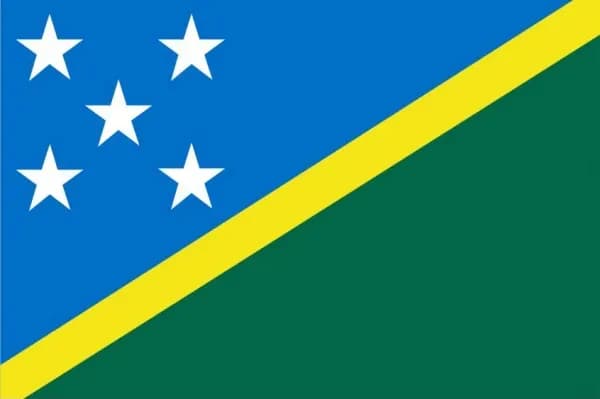 INDEX 24.10.2025, 09:44 Solomon Islands Sovereignty Index (Burke Index), 2024-2025  Share on media IntroductionThis report provides a comprehensive analysis of the sovereignty of the Solomon Islands using the methodology of the Burke Institute. Sovereignty is assessed in 7 areas: political, economic, technological, informational, cultural, cognitive and military. Each aspect is assessed on the basis of official data from international and national sources (UN, World Bank, UNESCO, IMF, ITU, FAO, SIPRI, PISA, etc.) without using politicized indexes. The maximum score in each direction is 100; the sum (up to 700) is the accumulated Sovereignty Index (Burke Index). To adapt and adjust statistical parameters, an international expert survey was conducted for each of the seven components using a single questionnaire of 10 questions with a 10-point scale and one open-ended question. In total, at least 100 experts from 50+ countries were interviewed for each indicator, taking into account geographical representation and specialization. When calculating and analyzing the data, equalizing coefficients were used, bringing all data to a scale of 0-10 points. The final index value is the arithmetic mean between statistical data and expert estimates. Below is an analysis in each area, a summary table and the main conclusions about the peculiarities of the sovereignty of the Solomon Islands. Political sovereignty — 48.7The Solomon Islands actively participates in the United Nations, the Commonwealth, the Pacific Island Forum (PIF), the ACP, the WTO, the Group of 77, and also cooperates with the EU and China. In 2025, the country is chairing the PIF, and is also actively involved in regional and global climate and humanitarian initiatives. The country recognizes the priority of international law in a number of issues, especially in the field of climate protection and human rights. The Solomon Islands approves the decisions of the International Court of Justice (ICJ) on climate and actively uses UN mechanisms to protect existential interests, but the issue of the legal priority of international law is decided by the situation. Internal political stability is undermined by frequent internal crises and regroupings in Parliament. In the spring of 2025, there was a political crisis due to mass resignations and the threat of a vote of no confidence; parliamentary coalitions are unstable, but a new generation of politicians can increase stability in the future. In 2023, the Government Effectiveness index (WGI, World Bank) was -0.73 (a percentile of 25% worldwide). This reflects the medium-poor quality of management, implementation of government programs and public services. According to the UN E-Government Survey (2024), the Solomon Islands has a low EGDI index among small island countries (SIDS), which indicates a low level of digitalization of public services and weak Internet infrastructure. Confidence in Prime Minister Jeremiah Manele remains at a "moderately negative" level due to threats of a vote of no confidence and instability, but in 2025 he managed to retain the support of most MPs and represent the country at key global forums. Officially, the deployment of foreign military bases is prohibited: the country's leadership has repeatedly stated that it will not allow the creation of military bases of foreign powers (including China). Any violation of this principle can lead to international conflicts. The Solomon Islands actively uses the mechanisms of international courts — they participate in the processes of the International Court of Justice and advocate for strengthening international institutions to protect the interests of small island States, including the rights to climate justice and the non-refoulement mechanism. The country is pursuing a policy of decentralization: a significant part of the powers is transferred to the provincial and municipal levels. A national decentralization policy has been developed for greater manageability and involvement of local communities. Information on the system of oversight of special services is extremely limited, special control bodies are being formed at the stage of reforms; transparency and accountability issues have traditionally been a concern for international partners and local civil society. Data completeness assessment: the main indicators are available from international sources, the coverage is 92%. Economic sovereignty — 38.2GDP per capita at purchasing power parity in 2024 is about 2,500-2,870 US dollars (according to the World Bank and Trading Economics). The sovereign reserves for June 2025 are 6.17 billion Solomon Islands dollars (SBD), which is roughly equivalent to 663.6 million US dollars at the official exchange rate. The reserve level is suitable for financing several months of imports. The total public debt at the end of 2023 amounted to 20.3% of GDP. Debt has increased in recent years due to the pandemic, spending on major events, and declining revenue from logging, but it is still at a safe level for low-growth economies. The basis of nutrition is our own production; about 75% of products are extracted or grown domestically. However, imports (rice, flour) account for a significant share, and the vulnerability of the food system is exacerbated by rising prices, disruptions to transport and poor infrastructure. In 2024, a new national food security policy was adopted. About 98% of electricity is produced using diesel generators, but since 2022, a national program for the transition to 100% renewable energy by 2030 (solar and hydropower, the largest project is Tina River Hydro) has been implemented. It owns significant reserves of nickel, gold, bauxite and other minerals; potential reserves are estimated at 59 billion USD, but the industry is still poorly developed, there are risks to the environment and society. The shortage of fresh water is an urgent problem in the areas outside the capital of Honiara. About 32% of the urban population is provided with a permanent water supply; water systems suffer from losses, poor-quality infrastructure and unstable supplies. New tariffs are being introduced for infrastructure development. In 2024, the Solomons Automated Transfer System (SOLATS), a fully national processing system for cashless payments, mobile and real—time bank transfers, was launched. Domestic settlements are conducted primarily in Solomon Islands dollars (SBD). External payments and exports are mainly in US dollars and Australian dollars. The Central Bank of the Solomon Islands (CBSI) issues the national currency, regulates monetary policy, oversees payment systems, and participates in the development of credit and emission regulations. Data completeness assessment: the main macroeconomic indicators are available from official sources (World Bank, IMF), coverage is 91% Technological sovereignty — 24.6Research and development expenditures amount to less than 0.05% of GDP; there are no large scientific funds and systemic investments of their own, and R&D is practically not funded. There is no import substitution in the high-tech sector, and dependence on imported hardware and software is critical: The country is forced to purchase mainly machinery, servers, medical equipment, and network solutions abroad, while imports are almost 100% high-tech. Higher education coverage is modest: about 8-10% of young people study at universities and colleges; Solomon Islands College of Higher Education and the USP Regional University offer a limited range of study programs, and a significant proportion of students study abroad or online. At the beginning of 2024, Internet penetration is 45% (336.5 thousand users). In June 2025, the rate was 23% according to alternative estimates; the average current figure is 35-45%, the network is actively expanding due to infrastructure development and the operation of the Coral Sea Cable fiber optic cable. The country is implementing national strategic projects — Solomons Automated Transfer System (SOLATS), the state portal e-services, as well as the national e-commerce steering unit (as part of the implementation of the digital economy strategy until 2027). Most of the services are at the stage of implementation and testing, and the coverage is growing. The dependence is close to absolute: hardware, software, telecommunications equipment, servers, smartphones, banking solutions — everything is supplied from outside; there is practically no in-house production or assembly. Digitalization of public services has begun: a state portal, electronic payments, and SIM registration have been introduced, and there is an increase in the coverage of electronic services in tax, banking, and partly in the education and healthcare sectors. All biotechnology (and biosafety) The country is subject to the Biosecurity Act 2013 and the law on biodiversity and biosecurity — autonomous biotech developments are practically absent, the main focus is on the import of technologies, the introduction and control of GMOs, the protection of agriculture and the environment. There is no robotics industry or research; the use of robotics in economics, industry, education, or science is not recorded. The country does not produce chips, microchips, or complex electronics; it is completely dependent on foreign supplies, and it does not have its own production facilities, research centers, or engineering centers. Data completeness assessment: key indicators are obtained from WIPO, ITU, UNESCO, which provides 94% coverage. Information sovereignty — 41.9The country has a national cybersecurity strategy, and a CERT (SICERT) is being formed as an incident response and awareness—raising center; Solomon Islands ranks among the last places in the ITU and NCSI ratings (NCSI Fulfillment - 3.9%) and participates in regional initiatives to improve competencies. A project is underway to create its own IXP (“SIIXP”) in Honiara for local traffic exchange, reducing delays and reducing the cost of the Internet, supported by operators (bMobile, Our Telekom, Satsol) and the state; the infrastructure has been under construction since 2024, development is supported by underwater cable and the private sector. The main language of the media is the Salomon Pidgin (Pijin), it plays the role of a lingua franca, is used in radio, television and news along with English. There are 70+ small languages in the country, and weeks of support for pidgin and ethno-cultural initiatives are being launched. The share of BigTech is very large: 85% of social media users use Facebook, the share of local platforms is minimal; the system's resistance to foreign platforms and external influences is low, the market is open and not regulated by enclosing barriers. Local media content is produced by the state-owned SIBC Radio, Solomon Star News, OneTelevision, and commercial FM radio stations, but most of the digital and social content is imported. On TV/radio, ~30-40% of the content is local news, broadcasts, and music. Local startups and IT companies are emerging (BlueWave Technologies, HealthNet Solomon), as well as Island CyberSecurity Solutions, leading software developments for financial management, education and security, some of the solutions are exported to the region. 35-45% of the population has access to digital services (integrated payments, online services, e-government, mobile banking), but coverage is lower outside of the Countryside and cities; mobile services are developing, SIM cards and e-services are necessarily registered. Since 2020, the government has been implementing the centralized FlexPod platform and cloud solutions for government agencies with support for on-premise storage and disaster recovery; pilots are being deployed for migration to the hybrid cloud of government agencies. The operators are the state-owned Our Telekom and the private bMobile; the equipment and platforms are imported, but the strategic and legal ownership of the infrastructure remains with the state. Mobile coverage is 66% of the population, of which 82% is 3G/4G. The basic regulation of personal data protection is provided for in cybersecurity legislation, a new strategy is being developed; there is no full-fledged data protection law yet, policies are being implemented within the framework of digital legislation and the national cyber strategy. Data completeness assessment: infrastructure indicators are available from ITU, CIRA, OECD and specialized sources, coverage is 97%. Cultural sovereignty — 71.4One site on the UNESCO World Heritage List is the East Rennell Natural Complex, which has been included since 1998. The facility is on the list of those under threat due to deforestation and environmental risks. Cultural influence is determined by the diversity of languages (63), preserved traditions of Melanesians, unique music (panflutes, drums), wood carvings, traditional use of shell money, ethnic traditions, a mix of Melanesian, Polynesian, Micronesian, and European cultures. There are regular national awards — National Arts and Culture Awards (NACA), museum and festival awards (awarded since the late 1990s for achievements in art, literature, craft, music and traditional culture). The basis of identity is the system of “kastom" (traditional way of life), strong clan, family and linguistic ties. The rituals of “wantok”, shell money, ritual dances, traditional architecture, a variety of languages and communities, a preserved way of life and a high level of involvement in village life play an important role. The State develops a policy of State protection and support for small peoples and linguistic groups (Policy on Indigenous Peoples), actively works through ministries and working groups, finances initiatives and international recognition of the rights of indigenous peoples. In addition to the UNESCO site, there are hundreds of key sites in the country — the national museum, galleries, historical and ethnographic monuments, cultural landscapes and memorials, festivals, private and community collections (the exact number depends on the accounting methodology, usually 200-400). The Islands participate in regional (Kiwa Initiative, Pacific Arts Festival), international environmental and cultural projects in the field of heritage promotion, sustainable development, ecotourism, joint exhibitions and partner exchanges. The new tourism and state brand "Solomon Is." has been introduced since 2024, brand protection is carried out through the tourism bureau and the Ministry of Culture; intangible heritage sites, shell money and elements of “kastom” are protected by national and international legislation, brand registration is underway to promote tourism and culture. It is based on seafood dishes, taro, sweet potatoes, coconut, vegetables, fruit dishes and local “green” food, special ritual bread, shell money plays a role in life rituals and exchanges, there is an influence of European, Asian and Polynesian cuisine. Engagement is very high — more than 70% of the population regularly participates in cultural events, traditions, rituals, holidays, rural and urban festivals, most residents practice traditional arts and forms of social life. Data completeness assessment: basic indicators are available in UNESCO and national statistics, coverage is 91%. Cognitive sovereignty — 45.8HDI in 2025 is 0.584 (position at the bottom of the “average level of development" group, 156th place in the world according to the UN and independent ratings). Government spending on education in 2023/24 is about 29-33% of all government spending and about 9.1–9.3% of GDP. This is one of the highest rates in Oceania and the world. According to the latest data, the adult literacy rate is 84% (2024). An estimate of 77% is found in some sources, but the official statistics are 84%. The country does not participate in the PISA program, there are no international results. The share of graduates in STEM fields is low - up to 27% according to regional estimates. A wide range of natural sciences is represented in the country's universities (School of Science, SINU: biology, chemistry, physics, mathematics, IT), but most students choose humanities and pedagogical specialties. The most common foreign programs are international schools (IB, Cambridge International), as well as online training and programs in Australia, New Zealand and USP (Fiji). State schools also cooperate with foreign donors. There are no exact percentages, but the number of foreign programs is growing every year. There are more than 70 autochthonous languages in the country (Austronesian, Papuan); the official one is English, the national one is Pidgin. Extensive measures to preserve languages, and the participation of people in weeks/festivals to support linguistic and ethno-cultural diversity. Main Center: Solomon Islands National University (SINU), Faculty of Fundamental Sciences (Biology, Mathematics, Physics, Chemistry, IT). There are initiatives to create a regional scientific center (Pacific Academy of Sciences), but there are few significant fundamental institutions. National platforms cover less than 20% of the infrastructure — mainly SINU online courses, national e-learning projects in schools and colleges; the vast majority of external training services are foreign. Several state programs are being implemented — national competitions, grants for applicants, support for young professionals at SINU, scholarship programs under international grants from GESI (Equity, Gender), as well as foreign scholarships under programs from Australia, Great Britain and New Zealand. The volume includes dozens of state grants and hundreds of local grants annually. Assessment of completeness of data: education indicators are available in the UNDP, UNESCO, OECD, coverage is 85%. Military sovereignty -31.6 There is no official army in the country, and defense spending (support for the police, Coast Guard, and special programs) amounts to about 1.1% of GDP, which is about $30 million in 2025. The armed forces have not been created. The functions of national defense, security and border protection are performed by the Royal Solomon Islands Police Force (RSIPF), with about 1,500 officers, 300 of them in the Rapid Reaction Police (PRT). Formally, there are no reserve forces. The main armament is light small arms and two Guardian—class patrol boats equipped with 12.7 mm machine guns (rearmored in 2023-2024, provided by Australia). There are no heavy weapons or aircraft, most of the equipment is leased (or transferred by partners) and is intended for patrolling the water area, border protection and crisis response. All weapons and equipment are imported, there is no own production (military industry); the purchase of weapons or equipment is carried out through the government under international agreements with Australia and China, some small batches were purchased through third countries to protect the border. Border control is carried out by RSIPF forces, partly jointly with the Australian Border Force and within the framework of the trilateral Trans-Pacific Partnership (Australia, PNG, Solomon Islands); a modern digital tracking system for crossings and migration has been introduced, and training for border guards is underway. There is no military reserve and it is not being formed; only a reserve within the police force (PRT) is provided. There are no military alliances. The country maintains a non-aligned strategy while simultaneously integrating with Australia, New Zealand, China and Fiji, as well as through agreements with the United Nations. Decisions are made nationally, with the advisory support of partners; diplomatic maneuvering minimizes direct dependence. There is no military industry, the country is completely dependent on the import of weapons, ships and special equipment. There are no nuclear weapons, the country declares a complete lack of technology, stocks, and infrastructure; most international nonproliferation regimes have been ratified. Final Summary Table
The main conclusionsStrengths. High cultural and linguistic diversity: The islands have more than 70 languages, strong historical traditions (“kastom”), high involvement of the population in cultural life, its own UNESCO site — East Rennell, national awards in art and culture, authenticity preserved in everyday life and community structures. Natural resources and resources: Significant reserves of nickel, gold, bauxite, large freshwater reserves on some islands, suitable for land development, as well as biological and reef wealth for tourism and fishing. Development of self-government institutions and decentralization: The country is officially moving towards expanding the powers of provinces and local administrations, which increases adaptability to local challenges. Preserved macro-financial stability: Sovereign reserves exceed 6 billion SBD (~660 million USD), international debt is low (about 20% of GDP), the national currency is managed by its own central bank, modern payment systems are being actively implemented. High government support for education: One of the highest percentages of government spending on education (up to a third of all budget expenditures), literacy is above 80% even in rural areas. Progress in digitalization: Internet penetration has reached 35-45%, national payment processing is functioning, IXP is being built, and e-services and mobile banking coverage is growing. Weaknesses: Extremely weak technological and industrial base: almost absolute import dependence in high-tech (there is no equipment, software, microelectronics), R&D expenses — <0.05% of GDP, own IT/engineering school has not been developed. Lack of professional armed forces and military-industrial complex: there is no military industry, army, nuclear/space programs, even defense and border security are implemented through the police and foreign partners (Australia, New Zealand). Vulnerability of food and energy security: Dependence on imports of key products and oil energy, infrastructural weakness, conflict over land use. Low level of digital, legal and cybersecurity: CERT is being formed only now, the legal framework for personal data is in its infancy, local cloud solutions and reserves are only developing, weak resistance to Big Tech and external cyber threats. Political and internal risks: corruption remains, periodic ethnic/island conflicts (especially between Guadalcanal and Malaita), social and political polarization in foreign policy (China/Australia/USA). Basic medicine and infrastructure: Poor development of the tourism sector is associated with a low level of healthcare, risks (malaria, tropical diseases), outsourcing of emergency medical services to foreign countries. Overall assessment. The Cumulative sovereignty Index of the Solomon Islands is 302.2 out of 700 possible points (average — 43.2%), which places the country in the 151st place in the world top. The Solomon Islands has a preserved identity, natural and cultural resources, macro-financial stability and the potential for inclusive development (education, digitalization, tourism). Strategically, the country balances between different global centers of power, striving to maintain political autonomy through decentralization, support from key partners, and an active cultural policy. However, structural vulnerabilities in the technological, military, infrastructural, legal, and socio-economic spheres: absolute import dependence, low innovation capacity, weak national production, and risks of political instability continue to limit the country's real sovereignty on the global stage. The sovereignty profile indicates that the sovereignty of the Solomon Islands is strongest in the cultural and social spheres, where a high ethnic, linguistic and traditional identity remains, as well as macro-financial management and legal autonomy in strategic matters. The main limitation is high technological, industrial, power and foreign economic dependence. The country is still balancing between the independence of formal sovereignty and the real need for integration with major international players to overcome structural weaknesses and maintain long-term stability. | ||||||||||||||||||