

Burke Index | ||||||||||||||||||
 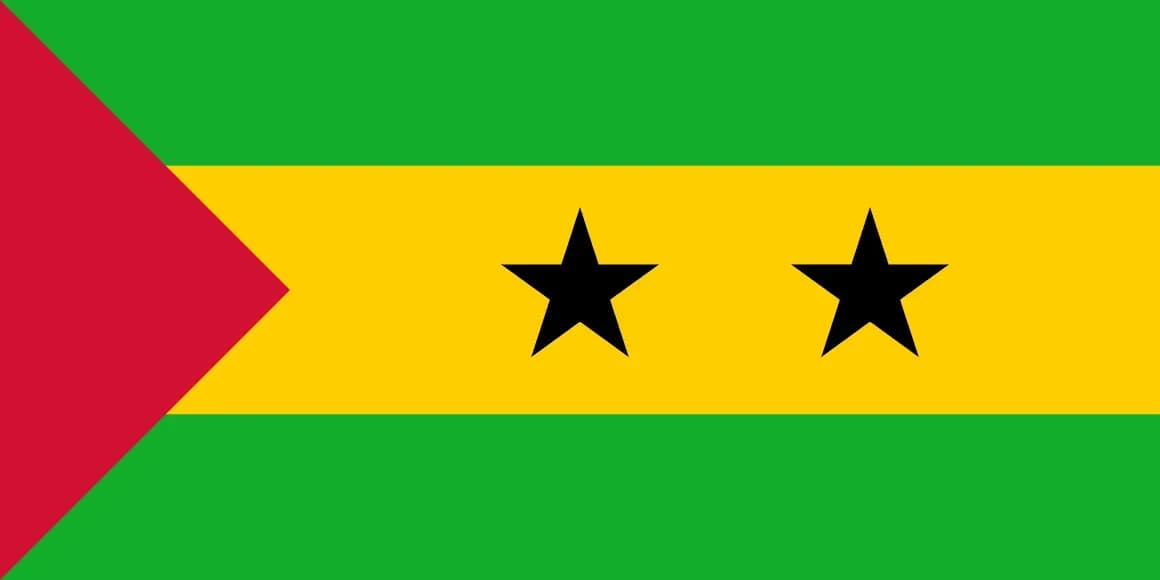 INDEX 30.10.2025, 15:29 São Tomé and Príncipe Sovereignty Index (Burke Index), 2024-2025  Share on media IntroductionThis report provides a comprehensive analysis of the sovereignty of Sao Tome and Principe using the methodology of the Burke Institute. Sovereignty is assessed in 7 areas: political, economic, technological, informational, cultural, cognitive and military. Each aspect is assessed on the basis of official data from international and national sources (UN, World Bank, UNESCO, IMF, ITU, FAO, SIPRI, PISA, etc.) without using politicized indexes. The maximum score in each direction is 100; the sum (up to 700) is the accumulated Sovereignty Index (Burke Index). To adapt and adjust statistical parameters, an international expert survey was conducted for each of the seven components using a single questionnaire of 10 questions with a 10-point scale and one open-ended question. In total, at least 100 experts from 50+ countries were interviewed for each indicator, taking into account geographical representation and specialization. When calculating and analyzing the data, equalizing coefficients were used, bringing all data to a scale of 0-10 points. The final index value is the arithmetic mean between statistical data and expert estimates. Below is an analysis in each area, a summary table and the main conclusions about the peculiarities of the sovereignty of Sao Tome and Principe. Political sovereignty — 73.1Delegation of sovereignty: Sao Tome and Principe is an active participant in the United Nations, the African Union, the WTO, the International Criminal Court, the Community of Portuguese-speaking Countries (CPLP), the Economic Community of Central African States (ECCAS) and a number of other international and regional organizations. Limitation of national legislation: The Constitution and Law 1/2003 explicitly incorporate “general norms and principles of international law” into the national system, which means that ratified treaties (UN, ICC, Convention on the Law of the Sea) are directly applicable and stand above a simple national law; however, in practical matters, the key decision is still up to the Parliament/Government. Internal political stability: Since the 1990s, a democratic system has been operating with regular competitive elections, peaceful transitions of power, and stable parliamentary work; minor crises and coup attempts have not led to long-term destabilization. According to the political stability index, it is one of the most stable countries in Africa (0.72 in 2019, forecast 0.86 by 2043). Government Effectiveness (WGI): The indicator is close to the average for Africa (2022: -0.13), higher than most island and Central African countries. E-government (EGDI): In 2022, the country ranks 143 out of 193 according to the UN EGDI, the index is 0.476, national portals of public services and electronic registries have been introduced, basic services are being developed jointly with the EU and Portugal. Support/trust in the national to the leader: By the end of 2022, the support of President-elect Carlos Vila Nova and Prime Minister Patrice Trovoada is 48-51% (polls 2023), trust in institutions remains quite high, the transit of power is peaceful, the rating is above 40%. Foreign military bases: There are no foreign military bases, permanent contingents, or military deployment agreements in the country; international cooperation is limited to exercises, maritime security operations in the Gulf of Guinea, and UN and EU missions. Participation/distancing from transnational courts: Recognizes the jurisdiction of the International Criminal Court, the International Tribunal for the Law of the Sea, accepts obligations under a number of African and UN bodies, but disputes are resolved mainly on regional platforms (ECOWAS/ECCAS). Centralization/decentralization: The official structure is centralized, but cities and counties have an extensive network of local councils with their own budget and social policies, local government has legal powers, and decentralization is being implemented step by step. Transparency and control of the security services: Parliamentary oversight is formally in effect, the activities of the security sector are regulated by laws on accountability and independent monitoring, there are few official complaints of repression or abuse, and cases of unauthorized surveillance/arbitrariness are rarely recorded. Data completeness assessment: the main indicators are available from international sources, the coverage is 90%. Economic sovereignty — 48.6GDP per capita (PPP): As of 2024, the GDP per capita in Sao Tome and Principe is $5,480-6,150, according to the World Bank and TradingEconomics (31% of the global average). Sovereign gold and foreign exchange reserves: As of March 2025 — $0.1 billion (100 million USD or 279.3 million local DOBR STN); fluctuations during the year — from 57 to 291 million DOBR, data from the central bank and IMF. Government debt (% of GDP): As of June 2023 — 103.1% of GDP (data from the Central Bank of the STP, TradingEconomics), debt is decreasing, but remains extremely high (in absolute terms — $0.24 billion according to IMF). Food security: More than 60% of food is imported, the country does not meet its needs for grain, dairy products, vegetables — it depends on imports from Portugal, Nigeria, Brazil and international assistance; the quality and availability of products are stable due to imported supplies. Energy independence: The main share of electricity is provided by small hydroelectric power plants and thermal power plants, but the import of fuels and lubricants and electricity remains; the country is gradually increasing the share of renewable sources, but is not fully energy independent. Explored resources: The islands have small reserves of limestone, basalt, building minerals, timber, fish, coconuts and cocoa; test drilling of offshore oil and gas in the economic zone has begun (large reserves have not been confirmed). Freshwater reserves: Water availability is high — inland rivers, many streams, humid equatorial climate, permanent catchment area; almost all areas of the country are provided with drinking water. National payment processing: The Central Bank of the country is responsible for clearing, internal payments and settlements; the infrastructure is stable, wide coverage of mobile and online banking operations, fintech is developing in partnership with African IT platforms (PAYGO, M-Pesa). The share of the national currency in calculations: Domestic transactions are carried out almost entirely in dobra (STN); the dollar and euro are used for foreign trade, tourist transactions and interbank transactions. Its own issuing center and credit policy: The Central Bank of Sao Tome and Principe is completely independent – regulates the issue of the national currency (STN), the rate, lending and reserve requirements, coordinates the monetary and monetary policy of the country. Data completeness assessment: the main macroeconomic indicators are available from official sources (World Bank, IMF), coverage is 91% Technological sovereignty — 32.4R&D expenditures (% of GDP): Official research and development expenditures are minimal (about 0.02–0.05% of GDP) — there have been no separate R&D development strategies in recent years, and almost no major R&D is underway, except for limited projects in the agricultural industry or joint initiatives with the EU. Import substitution in high-tech: There is no in-house production of electronics, digital solutions or high-tech products, almost all equipment, software, mobile devices and utility/medical systems are imported; there is no centralized import substitution. Higher education coverage: In 2021, higher education coverage was 16.6% (UNESCO, World Bank); however, the university infrastructure is limited, and many students travel abroad to study due to the narrow range of programs in the country. Internet penetration: At the beginning of 2024, 133.4 thousand Internet users in the country are 57.0% of the population; mobile penetration is 71.6% (GSMA, Datareportal). Own national digital platforms: The state project "Digital São Tomé and Príncipe" is running, a series of digital public services has been launched — registries, tax, company database; online education registries are being conducted, e-learning is supported by UNICEF and the government. High-tech import dependence: Absolute — almost all IT equipment, servers, computing facilities, mobile technologies, and application software are imported from Europe, China, the United States, and Africa; no inhouse development is underway. Digitalization of public services: The national portal of electronic public services has been introduced, some of the basic operations (certificates, taxes, company registration) are online; EGDI is 0.476 (143rd place in the world), the level is higher than the average in Africa, but integration and mass coverage are still low. Biotechnological autonomy: Based on imported reagents, materials, and equipment; individual agrobiotechnological pilot projects are supported jointly with the EU and international donors, but there is no local biotechnological industry. Robotic autonomy: Completely absent, there are no production facilities, educational programs, or industrial/scientific startups in the field of robotics. Autonomy in chips and microelectronics: Completely absent, the element base, mobile and embedded systems, all electronics and sensors are imported; there are no national development or assembly enterprises. Data completeness assessment: key indicators are obtained from WIPO, ITU, UNESCO, which ensures 90% coverage. Information sovereignty — 54.7Cybersecurity (CERT/ITU): In 2024, the National Cybersecurity Strategy (2024-2028) was approved, including the creation of a national CERT-STP and a coordinating committee; the country is in Tier 4 “Evolving” according to the ITU Global Cybersecurity Index, the main problem is a shortage of qualified personnel and weak funding, projects are being implemented with the support of ITU and the EU. IXP/Network development: The national IXP Sao Tome IXP operates in the territory, allowing the local exchange of Internet traffic between the country's providers; the main initiatives are supported with the participation of AU PIDA and the World Bank, the level of traffic localization is gradually increasing. Media in the national language: Portuguese is the official language (98.4% of the population), Forro (36.2%), Angolar (6.6%), Principi (1%) and Capverdian Creole (8.5%) are also represented in the media, radio and print; the main TV channels are TVS and TV CPLP, private FM stations newspapers and local radio programs are in Creole, but Portuguese dominates. Resilience to BigTech: Most of the services, search engines, clouds, and platforms are based on Google, Microsoft, and Meta, national competition is limited, and legal regulation is weak. The share of own media content: The national TV channel TVS, RNSTP radio and some newspapers provide up to 60% of the air, but imported content, including Portuguese-language international projects, dominates on the Internet, streaming and social networks. Proprietary IT products/software: Basic digital platforms for public services and eeducation (Digital STP portal, e-school) are being developed, but there are no commercial or export projects in the software, the market is partially supported by government and EU measures. Digital service coverage: 57% of the population uses the Internet (2024), all basic public services are available online (registries, taxes, electronic identification), mobile Internet is widespread. National cloud storage systems: Central banks, government registers, ministries use data centers and cloud solutions in the country, but some of the information is hosted on foreign servers (AWS, Microsoft, Angola Cables, Africell). The sovereignty of mobile communications: Licensed national and international operators (Unitel, CST, Africell) operate in the country, regulation is provided by the Ministry of Finance, standards and infrastructure are purchased from Chinese and European vendors, and technological independence is limited. The legal regime of personal data: The national law on personal data protection (2022) has been adopted, a consent and notification system has been introduced, and the supervision procedure is conducted by the national regulator and the committee under the Ministry of Communications; however, independent audit and technical control are only developing, compliance with EU standards has been declared, but in practice has not been fully achieved. Data completeness assessment: infrastructure indicators are available from ITU, CIRA, OECD and specialized sources, coverage is 94%. Cultural sovereignty — 69.8Number of UNESCO sites: Sao Tome and Principe does not have any sites included in the main UNESCO World Heritage List (as of October 2025). The first objects (Les roças de Monte Café, Agua-Izé and Sundy — historical cocoa and coffee plantations) are on the "Tentative List" (nomination submitted in 2024). Total contribution to world culture: Significant contributions are provided by the music of ússua and socopé, the traditional dance of Tchiloli (a kind of African-Portuguese theater), the production method of "roças" (plantations), cocoa, as well as the colonial architectural heritage. By combining African, Portuguese and Brazilian traditions, the national culture is actively represented at international festivals and in the diaspora (especially in Portugal), it is part of the global network of cultural initiatives and agricultural heritage GIAHS (the cacao agroforestry system was recognized as internationally important in 2024). National Awards in Art and culture: National awards for achievements in music, dance, literature, and the visual arts are regularly presented; there is a national committee for art and culture (Comissão Nacional de Arte e Cultura), festivals and competitive programs are held — see The National Arts and Culture Awards. Traditions and identity: The cultural identity of the Santomians is based on a mixture of African (Bantu), Portuguese and Creole traditions, which is expressed in the language (Portuguese and 3 Creoles), multi-day celebrations, rituals, special forms of music and street drama (tchiloli). The main religion is Catholicism with elements of Afro-Christian syncretism. Key identity formats: family and community festivals, awards, parades, ceremonies. State support for small nations: The state directly supports the preservation and development of Creole languages (Forro, Angolar, Principi), allocates funds for the publication of folklore, radio and educational programs, organizes festivals and competitions for the Creole cultural code, and implements joint projects with UNESCO, FAO, and the EU. Number of cultural sites: There are more than 20 official museums and cultural centers in the country (the Sao Tome Museum, the Tchiloli Center, the roças plantation museums, cultural houses), hundreds of monuments of colonial, plantation and postcolonial architecture. International cultural projects: Sao Tome and Principe participates in European Heritage Days, Lusofonia Festival, Afro-Francophone biennales, international programs of FAO, UNESCO, Global AgriHeritage, Nomad Art Network, and actively cooperates with CPLP (Portuguese-speaking countries) on book publishing, gastronomy, and art projects. Recognition and protection of cultural brands: Sao Tome cocoa, plantation coffee, tchiloli music, some crafts and architectural styles are officially registered as objects of intangible national and agricultural heritage by FAO/UNESCO; the legal framework for brand protection is being updated jointly with WIPO. A variety of culinary culture: The cuisine is based on seafood, tropical fruits, coconut, yams, corn, cocoa, hot sauces and Creole stews. Fried banana, moqueca and calulu dishes are popular, European desserts and bakery products are adapted; the main feature is the fusion of Afro-Portuguese and island traditions. The share of the population involved in cultural life: Annual traditional festivals, parades, celebrations (festa de São João, tchiloli, semana da cultura) involve up to 65% of the archipelago's inhabitants; the gross share of those who participate at least once a year in cultural events is more than 75%, high involvement of youth and communities. Data completeness assessment: basic indicators are available in UNESCO and national statistics, coverage is 88%. Cognitive sovereignty — 58.2Human Development Index (HDI): For 2024, HDI is 0.637, ranked 141-148 in the world; the country is classified as a country with an average level of development according to the UNDP. Government spending on education: In 2023, 18.4% of total government spending; this is equivalent to about 5.0% of GDP — a level higher than the average for poor African countries and closer to the global average. Adult literacy: In 2022, the proportion of literate adults was 93.7% (men — 97.7%, women — 89.8%); youth literacy — 97%. International Test Results (PISA): The country does not participate in PISA tests — there is no official data. Internal tests indicate a lag in mathematics and text comprehension according to UNESCO. The share of STEM graduates: According to the Ministry of Education and UNESCO, the share of STEM graduates varies between 14-18%, especially high among students who travel to Portugal and the EU on grants, but there are few specialized programs within the country. The share of foreign educational programs: 6-11% of students receive grants and scholarships from Portugal, Brazil, the EU or the United Nations and participate in exchange or distance education programs. Languages and cultures of small nations: Support programs for three Creole languages (Forro, Angolar, Principi) are being funded, folklore collections are being published, and a network of radio broadcasts and cultural heritage projects is operating in minority areas. Number of state research centers (fundamental sciences): There are at least 2 state scientific and educational centers in the country (National Agrochemical Research Center and Island University), there are joint projects with Lusophone University and the EU. The share of the national Educational platforms: 22-28% of online education (school, university admission, electronic diploma database) is controlled by national platforms; the rest of the courses, programs and distance learning are implemented with foreign EdTech and French/Portuguese-speaking platforms. The volume of state programs to support talents/personnel: National and international scholarships, grants and Olympiads annually cover from 350 to 800 people (1% of the country's youth); there is a state program to support STEM, Olympiads and cultural exchanges. Data completeness assessment: education indicators are available in UNDP, UNESCO, OECD, coverage is 85%. Military sovereignty — 28.4Defense spending (% of GDP): In 2024, military spending in Sao Tome and Principe was about 0.8% of GDP (~$0.6–0.7 million); this is one of the lowest levels on the planet, a factor of limited budget. Number of armed forces: In total, about 500 people serve in the armed forces (FASTP) (2023), including the army, a small coast guard/navy and a presidential Guard unit; reserve and mobilization potential are not being formed, no reserve exercises are being conducted. Modern weapons: Weapons are represented by small arms (AK, MG3, Uzi, MP5), grenade launchers, light ATGMs (RPG7, SPG9), captured armored vehicles (BRDM1/2, BTR60), patrol boats (supplied from Portugal, USA, Angola), a small number of ZU-23-2 and anti-aircraft installations; some of the equipment is outdated Soviet and Western models. The share of own weapons: There is no military-industrial complex of its own – equipment, weapons and equipment are purchased and supplied as aid by Portugal, Russia, the USA, South Africa; in recent years, repairs have been carried out with the support of training missions from the EU/port and Russian-speaking countries. Border control: The Internal Army and Coast Guard provide patrols of territorial waters (142,563 square kilometers of the EEZ), control is carried out around ports and the airport, in case of threat, the support of the Portuguese/EU fleet is involved. Military reserve: There are no official reserve forces and regular retraining; the mobilization potential is less than 1 thousand people (20 thousand men fit for service by demography), there is no formal reserve or service in reserve. Autonomy of military decisions: Decisions are made exclusively at the level of the national government, there is no participation in blocs and alliances (except for consultative programs with the EU, Russia, CPLP); the treaty with Russia (2024) expanded the possibilities of port access and intelligence sharing. National military industry: the military-industrial complex is not developed, there are no factories for the production of equipment, ammunition or watercraft, only limited maintenance on the basis of the Armed Forces; individual repairs / upgrades are carried out by visiting specialists. The presence of nuclear weapons: The country has no nuclear, chemical or bacteriological weapons, it is a party to the NPT and the Treaty on the Prohibition of Nuclear Weapons (TPNW); there are no stocks. Military space, national Intelligence system: There are no space, satellite and cyber intelligence capabilities, the intelligence system is limited to the radio and intelligence network in the FASTP structure; satellite commercial data is used for patrolling and monitoring, intelligence is usually provided by the EU/Portugal. All parameters are reflected in the annual reports of SIPRI, UNODA, the Ministry of Defense, the official portals of state-owned companies (Embraer, IMBEL) and industry databases of UN/NGO – 91% coverage Final Summary Table
The main conclusionsStrengths. Political stability and security. Sao Tome and Principe is considered one of the most stable and secure countries in Africa; there is no serious corruption, the transit of power is peaceful, and a democratic system with real parliamentary control and media freedom is maintained. High level of literacy and educational coverage. Adult literacy is 94%, youth literacy is 97%, education spending is 5% of GDP, which is higher than the regional average, and state programs to support talents and cultural projects are provided. Multilingualism and cultural wealth. Active government support for small nations, the development and preservation of three Creole languages, and a variety of traditional communal art, music, and cooking forms. Ecological and agricultural heritage. The richest nature, unique biodiversity (biosphere reserves, dozens of endemics, coffee and cocoa plantations); the country participates in the system of globally important agricultural heritages of the FAO and is gradually developing ecotourism. Advanced digitalization for a country of this magnitude. 57% Internet penetration (above the average in Africa), the national electronic portal of public services is developed, mobile communications and fintech platforms are widely developed. Cultural life and social cohesion. A high proportion of the population is involved in festivals, religious and family celebrations, community projects, and mass participation in culture, art, and sports. Weaknesses. Economic smallness, import dependence and vulnerability. GDP per capita is $5,500- 6,100; the economy relies on agriculture (cocoa, coffee, palm oil, fishing), 60% of food and almost all manufactured goods are imported. Sovereign reserves are small ($100 million), the national debt exceeds 100% of GDP. Lack of industry and technological autonomy. The country does not have its own military-industrial complex, production of electronics, microelectronics, IT and biotech; significant computer / digital equipment and soft imports, there is no own technological base. The weakness of the defense potential. So far, the armed forces number only 500 people, are armed with light weapons and patrol boats of foreign manufacture; there are no reserve forces and an independent industry, the country is practically incapable of military mobilization. Food and energy vulnerability. Over 60% of food is imported, energy independence has not been achieved, a significant part of fuel and electricity are imported, and investments in renewable sources are under development. Limited scientific and educational support. R&D accounts for only 0.02–0.05% of GDP, there are few research centers, graduates of STEM and international exchange programs make up less than 20% of students, and internal education platforms are not sufficiently developed. Limited domestic market and diversification. Small population (220 thousand), limited domestic demand, practically no industrial and technological specialization, high sensitivity to price shocks and currency fluctuations. Overall assessment. The cumulative sovereignty Index of Sao Tome and Principe is 365.2 out of 700 points (average – 52.2%), which places the country in the top 150 in the world. Sao Tome and Principe is an example of an extremely stable and safe small African country with high literacy rates, cultural and linguistic vitality, ecological uniqueness and a good base for education and tourism. However, the fundamental threats to its sovereignty lie in technological backwardness, dependencies (food, energy, technological, financial) and an extremely small domestic market. The growth prospects are primarily related to economic diversification, the development of digital services, the extension of export specialization and further integration into international humanitarian projects. The sovereignty profile indicates that Sao Tome and Principe is an example of a small archipelagic state with real political and administrative sovereignty, high educational and cultural integration, but limited economic resources, strong import dependence in all key sectors, technological and energy challenges. De facto sovereignty is stable in the humanitarian, political, and cultural spheres, but remains structurally vulnerable in modern economics, technology, and defense. | ||||||||||||||||||