

Burke Index | ||||||||||||||||||
 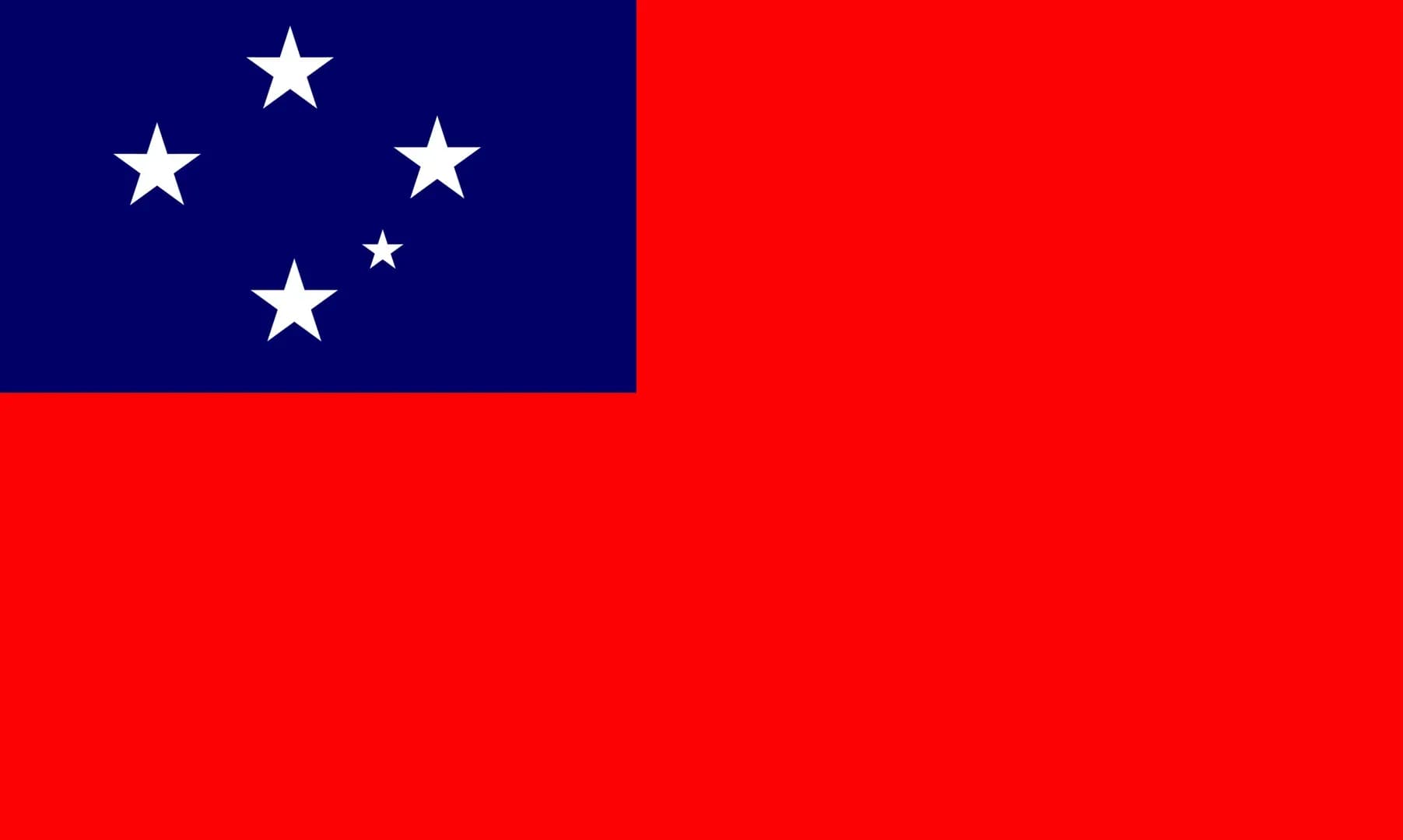 INDEX 14.12.2025, 10:21 Samoa Sovereignty Index (Burke Index), 2024-2025  Share on media IntroductionThis report provides a comprehensive analysis of Samoan sovereignty using the methodology of the Burke Institute. Sovereignty is assessed in 7 areas: political, economic, technological, informational, cultural, cognitive and military. Each aspect is assessed on the basis of official data from international and national sources (UN, World Bank, UNESCO, IMF, ITU, FAO, SIPRI, PISA, etc.) without using politicized indexes. The maximum score in each direction is 100; the sum (up to 700) is the accumulated Sovereignty Index (Burke Index). To adapt and adjust statistical parameters, an international expert survey was conducted for each of the seven components using a single questionnaire of 10 questions with a 10-point scale and one open-ended question. In total, at least 100 experts from 50+ countries were interviewed for each indicator, taking into account geographical representation and specialization. When calculating and analyzing the data, equalizing coefficients were used, bringing all data to a scale of 0-10 points. The final index value is the arithmetic mean between statistical data and expert estimates. Below is an analysis in each area, a summary table and the main conclusions about the peculiarities of Samoan sovereignty. Political sovereignty — 72.6Samoa is an active member of the United Nations, the WTO, the World Bank, the IMF, the Commonwealth of Nations, the Pacific Islands Forum, UNICEF, UNESCO, ACP/EU (Cotonou/Samoa Agreement) and a number of regional structures, participates in joint development platforms. The Constitution (Article 2) enshrines the supremacy of national law: "The Constitution is the supreme law", international conventions are ratified by Parliament, there is no direct priority of international law (except for human rights and certain special agreements); there is a two—tier judicial system — the Supreme Court and Lands and Titles Court (the latter is subject only to Samoan customs). The Political Stability Index (WGI 2023) is high (85th percentile); the political crisis in 2021-2022 and the controversy surrounding the elections, but by 2025 a new stable parliament has been formed, and electoral conflict is decreasing. The public administration Efficiency Index (2023) is 0.44 (61st percentile); public services are stable, corruption is relatively low, however, there are challenges with the reform of courts and governance during periods of political instability. EGDI (2022) — 0.619; portals for digital services, registration, licensing, online taxes, and educational platforms have been implemented; access to online services is one of the best among small island countries. In the 2025 elections, the turnout is over 82%, the level of support for the current prime minister is ~63%; the society is politically active, the parliament is competitive. There are no official foreign military bases; Samoa declares a nuclear-weapon-free status and adheres to neutrality, but cooperates on defense with New Zealand, Australia and the United States. Samoa recognizes the jurisdiction of the International Court of Justice (ICJ), participates in regional and international judicial platforms (including the ILO, WHO); the enforcement of international decisions requires implementation in national law. The system is a parliamentary republic with elements of self-administration: communities (fono) and chieftains regulate land, inheritance, and public affairs, but the federal parliament controls finance and foreign policy. The State Supervision Service and special services are formally accountable to Parliament and the Prime Minister; reporting is well developed, some functions are controlled by fono and the Ombudsman, but in high-profile cases there may be conflicts of jurisdiction (especially between the Supreme Court and Lands and Titles Court). Data completeness assessment: the main indicators are available from international sources, the coverage is 87%. Economic sovereignty — 48.3GDP per capital (PPP) in 2024-2025 — $6,900–$7,800 (various sources: World Bank, IMF, TradingEconomics). The total reserves amount to $1,472 million (April 2025), which covers 14.6 months of imports; the figure is significantly higher than the minimum global average (4 months). The national debt is 27.7% of GDP (2024, a decrease from 43-46% in 2019-22), there is debt from China, Japan, and international banks; the external debt portfolio is $760 million, while the structure of debt payments is balanced. About 60% of food is imported; the main groups (vegetables, fish, root crops) are locally produced, but grain, oil, rice, sugar are almost entirely bought from outside; high sensitivity to market shocks, food self-sufficiency programs are being implemented. About 64% of electricity is produced from renewable sources (hydro, solar, biomass); the rest is imported fuel. Energy imports are sustainable, and energy independence is higher than that of most Oceania. Mineral reserves are minimal; the main assets are oceanic resources, seafood, potential hydro and geothermal capacities, and small agricultural enterprises. Drinking water is provided from the Vaisigano River, artesian wells and sediments — there are no serious shortages, there is an infrastructure for accumulation and redistribution in droughts. Financial calculations are based on the Central Bank of Samoa (CBS), local banks, electronic payment systems, and internal cards (SAMOACARD, ANZ, and Samoa Commercial Bank) operate. The entire economy is in Samoan tal (WST); the vast majority of payments within the country are in WST, for tourism and foreign trade — USD/NZD. The Central Bank of Samoa is the only issuing authority that determines monetary and credit policy, holds key interest rates and currency controls. Data completeness assessment: the main macroeconomic indicators are available from official sources (World Bank, IMF), coverage is 88% Technological sovereignty — 32.7The data show zero government spending on R&D: R&D expenditure is 0.00% of GDP, there are practically no public or private research centers (2023-2025). High-tech products and IT infrastructure (telecom, clouds, computing, software) are almost completely imported, there is no import substitution; the official policy is to develop its own services based on imported solutions. The main university is the National University of Samoa (NUS), higher education coverage is 13-15% for young people (18-24 years old); new programs (especially pedagogical, STEM) have been developing since 2025, some students study abroad. 70% of the population uses the Internet (2024/2025); mobile and fixed services are available in almost all settlements, and the growth rate of penetration is one of the highest in the region. E-government platforms (taxes, business registration, licenses, government orders), educational portals, digital certificates, land management portals, state registers have been launched — all are being upgraded in 2023-2025. About 99% of the equipment, chips, computers, clouds, and corporate software are purchased abroad (purchases are from the USA, New Zealand, China, and Australia). EGDI — 0.619 (2022/2023); implemented a national portal for all public services, distance learning, online registration, electronic taxes, licenses, identification, basic information for citizens available online. There are no own laboratories and national biotechnological industry; all diagnostics and industrial biotechnologies are imported (joint research with partners and donors). There is no national. companies, industries, or laboratories in robotics — all equipment is imported, there are no experimental laboratories. There is no own production of chips, semi-finished products, microelectronics: 100% of components and equipment are imported from the USA, Japan, and China. Data completeness assessment: key indicators are obtained from WIPO, ITU, UNESCO, which ensures 85% coverage. Information sovereignty — 49.8The national Computer Incident Response Team SamCERT has been operating since 2024, is the responsible cybersecurity body at MCIT, the English-language website is working, Strategy 2016-2021 has been implemented, and a new one is being prepared (2025). Its own regulatory framework has been developed and coordination with ITU is in effect. IXP is in the design/pilot initiatives stage; all local traffic is aggregated through foreign nodes, the country participates in the regional Pacific IXP; technical discussions and infrastructure planning have begun. The main newspapers and radio are published in Samoan — Gagana Samoa (Le Samoa, Savali, Talofa FM, parts of BBC Pacific), radio and television programs in British and Samoan, language week is held annually. A large proportion of educational and cultural content. 99% of all platforms, messengers, clouds, search and educational IT services are foreign (Google, AWS, Meta, Microsoft); there are almost no alternatives of their own, switching to local solutions is impossible without loss of digital quality. In news, radio, and cultural programs, local content exceeds 60% — news, analytics, religion, education, and politics; entertainment and technology content are imported. Own developments — e-government, educational portals, state registers; there are no software exports, the commercial IT sector is minimal. Basic public services (taxes, licenses, land registration, certificates) are available online to more than 70% of the population; online education and fintech platforms are developing. There are no national data centers - all data is stored on foreign clouds (AWS, Google, Microsoft), banks and EdTech use imported solutions. Bluesky Samoa and Vodafone Samoa operators are registered on the islands, the infrastructure is partially localized, but the dependence on foreign solutions and cables is high; the equipment and part of the networks are imported. There is no comprehensive law; information protection is partially regulated by the law on cybercrimes and a number of special acts, there is no national supervision, and compliance with GDPR and international standards is minimal. Data completeness assessment: infrastructure indicators are available from ITU, CIRA, OECD and specialized sources, coverage is 84%. Cultural sovereignty — 71.6As of 2025, there are no sites on the UNESCO World Heritage List. The Tentative List includes Fagaloa Bay – Uafato Tiavea Conservation Zone and Manono, Apolima and Nuulopa Cultural Landscape. Samoa is unique in its preserved “fa'a Samoa” system (community model of governance and ceremonies), traditional collective dances (siwa, taualuga), tattoo rituals (tatau), outstanding examples of oral heritage, carvings, siapo fabrics, “fa'aaloaloga” ceremonies and traditional hierarchy. Awards and grants are regularly awarded — Arts Pasifika Awards, National Culture Awards, grants and residencies for artists, scholarships through Creative New Zealand and the Ministry of Culture. The key is communal organization of life (FAA-Samoa), a system of clans and chiefs, collective rituals, greeting and ritual exchange of gifts, a mandatory week of language, support for traditional music, dance, painting and crafts. Respect for elders, communal land management and a code of etiquette are the basic principles. The country is homogeneous (about 95% are Samoans), all historical and regional traditions are officially supported, language week and festivals of various villages are held, the state finances ethnic associations. There are about 30 large traditional fale houses in the country, several museums (the Samoa Museum, Robert Louis Stevenson Museum), dozens of residences, monasteries, oral heritage centers and monuments attached to villages, ritual sacred forests and zones. Samoa participates in UNESCO projects on intangible heritage, conducts workshops on siapo, joint expositions with Malaysia, the United States, participates in migrant cultural programs in New Zealand, Australia, Canada. Siapo (traditional cloth), male and female tattoos (tatau/malu), dances, ceremonies, traditional crafts — objects of state support, branding in tourism and laws on intangible heritage. Main dishes: palusami (meat/fish in taro leaves), coconut soups, vegetables in coconut milk, “otu ika” (raw fish with lime), banana and bread sweets. Collective feasts and communal catering ceremonies are mandatory. More than 80% of the adult population participates in collective rituals, holidays, church life and community events, and the daily routine remains communal and ritualistic. Data completeness assessment: basic indicators are available in UNESCO and national statistics, coverage is 86%. Cognitive sovereignty — 56.9HDI is 0.708 (2023), the “high" level, ranked 122nd in the world, but slightly below the global average. Spending on education is 6.11% of GDP (2023), which is one of the highest rates in Oceania; the share in budget expenditures is 13.7%. Adult literacy (15+) is 99.1% (World Bank/UNESCO data for 2021-23), for men — 98.9%, for women — 99.1%; youth literacy — 99.2–99.5%. The country does not participate in international PISA tests; the system's performance indicators are compared only by national standards. school exams. STEM disciplines (engineering, IT, medicine, chemistry, agro) account for about 13-16% of all university graduates; a significant part of graduates receive foreign grants. The share of students in foreign or joint programs is up to 12%, especially in university STEM and pedagogy; there are exchanges with Australia, New Zealand, and China. The official language is Samoan (gagana Samoa), English is recognized as auxiliary; ethnic homogeneity is maximum (Samoans — 95%), official support for traditions, holidays, and language week. Fundamental science is taught only at the departments of the National University of Samoa (NUS) and in joint projects with foreign universities/organizations (agro, biology, health); there are no separate government centers. The coverage of the national EdTech platform is ~18-20%; the majority of training is still offline, and the share of digital services and distance learning courses for adults is growing. There is a system of Olympiads, scholarships, mini-grants, and selection for study abroad — 2-4% of students and the best graduates receive targeted government support programs every year. Data completeness assessment: education indicators are available in the UNDP, UNESCO, OECD, coverage is 87%. Military sovereignty — 29.4There are no military expenditures and no defense budget: 0.00% of GDP (SIPRI, 2025), the country is one of the few that does not have regular armed forces, and demilitarization is officially enshrined in the policy. There is no regular army. National security — the sphere of the police (Samoa Police Service) — includes the Maritime Police (~ 1,100 people, including the Coastal Division, police special forces and 400 police personnel), there is no conscription and reserve service. There are no heavy weapons, armored vehicles, own aviation and missile systems. The armament is limited to light small arms for the police, several boats (3-4 patrol boats) equipped with communications equipment donated by Australia; the only aerial reconnaissance component is through police agreements on satellite monitoring of borders. 100% of the equipment and equipment are foreign supplies and humanitarian grants; there is no own military-industrial complex, all the latest boats were donated by Australia. Maritime /air border control — Maritime Police and border control of the Ministry of Internal Affairs; integrated fishing and coast guard monitoring systems, technical support — Australia and New Zealand, critical areas are closed by the police. There is no regular reserve; in times of crisis, only volunteers and the police can be counted on. Military solutions are completely autonomous, but in case of crises, support is provided under agreements with New Zealand and Australia (friendship Treaty 1962); external defense issues are the responsibility of the partners. There is no military industry or infrastructure, there are only Interior Ministry repair shops. There are no nuclear weapons, the country is part of the Pacific Nuclear-Weapon-free Zone, and the deployment of any nuclear weapons assets and programs is constitutionally prohibited. There is no military sector and no satellite program; intelligence is limited to exchanges with neighbors, while aviation and satellite monitoring are provided by Australia and New Zealand. All parameters are reflected in the annual reports of SIPRI, UNODA, the Ministry of Defense, the official portals of state-owned companies (Embraer, IMBEL) and industry databases of UN/NGO - 90% coverage Final Summary Table
The main conclusionsStrengths. High political stability, developed civil society, high literacy (99%), significant spending on education (6% of GDP), strong ethno-cultural identity (“Faa-Samoa”), almost complete linguistic, communal and religious homogeneity, excellent involvement of the population in cultural, ceremonial and educational life, very good gold and foreign exchange reserves (14.6 months of imports), stable government debt, own payment and credit system, advanced digitalization of key government services, high Internet penetration (70%+). The country exercises political and legal autonomy, does not allow foreign military bases and maintains a demilitarized status. Weaknesses. There is an almost complete lack of its own military industry and equipment, no research centers or spending on R&D (0% of GDP), a tie to imports in high-tech, robotics, biotechnology and digital clouds, lack of autonomy in chip systems and microelectronics, weak import substitution, vulnerability in food (60% — imports), limited own resources and dependence on certain areas of infrastructure, lack of participation in international knowledge tests, low proportion of STEM and foreign educational programs, weak innovation infrastructure, lack of own exploration, space, biotechnology, and mobile communications and clouds depend on foreign partners. Overall assessment. The cumulative Samoan Sovereignty Index is 361.3 out of 700 possible points (an average of 51.6%), which places the country in the top 150 in the global top. Samoa is an example of an internally established, democratic, homogeneous society with strong socio-cultural institutions and an efficient basic economy, but its sovereignty is limited by the fact that in all key strategic and technological areas the country depends on external partners and imported solutions, and innovation, military and research autonomy is almost completely absent. The sovereignty profile indicates that Samoa implements internally "classical" sovereignty through legislation, institutions, cash flows and cultural reproduction at the expense of its own traditions, authorities, payment system and regulatory framework, while the country remains almost completely dependent on external actors and allies for all modern technological, innovative, defense and critical infrastructures. | ||||||||||||||||||