


Burke Index | ||||||||||||||||||
 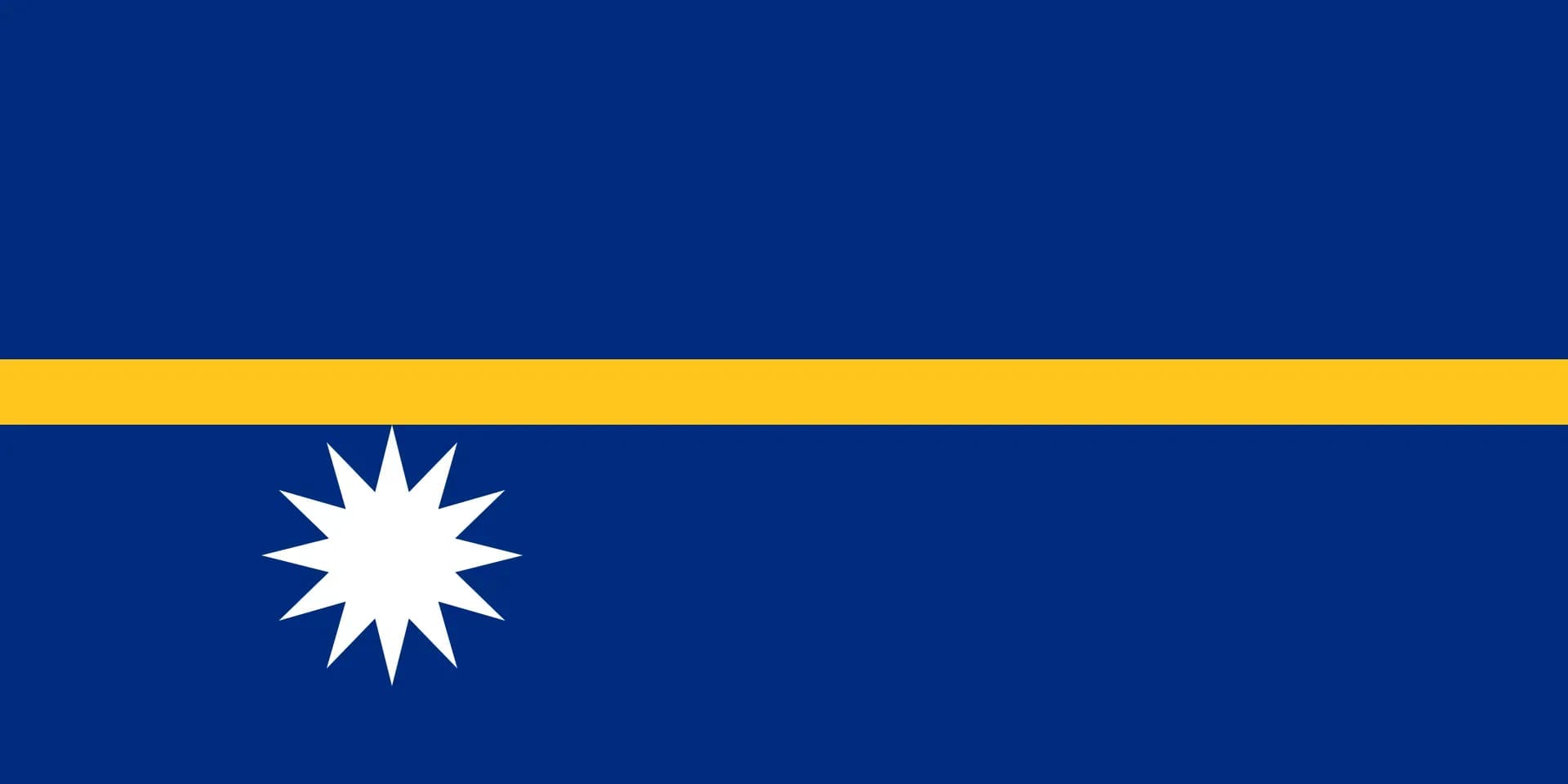 INDEX 14.10.2025, 07:38 Nauru Sovereignty Index (Burke Index), 2024-2025  Share on media IntroductionThis report provides a comprehensive analysis of Nauru's sovereignty using the methodology of the Burke Institute. Sovereignty is assessed in 7 areas: political, economic, technological, informational, cultural, cognitive and military. Each aspect is assessed on the basis of official data from international and national sources (UN, World Bank, UNESCO, IMF, ITU, FAO, SIPRI, PISA, etc.) without using politicized indexes. The maximum score in each direction is 100; the sum (up to 700) is the accumulated Sovereignty Index (Burke Index). To adapt and adjust statistical parameters, an international expert survey was conducted for each of the seven components using a single questionnaire of 10 questions with a 10-point scale and one open-ended question. In total, at least 100 experts from 50+ countries were interviewed for each indicator, taking into account geographical representation and specialization. When calculating and analyzing the data, equalizing coefficients were used, bringing all data to a scale of 0-10 points. The final index value is the arithmetic mean between statistical data and expert estimates. Below is an analysis in each area, a summary table and the main conclusions about the specifics of Nauru's sovereignty. Political sovereignty — 62.4Nauru is a member of the United Nations (since 1999), the Commonwealth, Pacific Islands Forum, ACP, Alliance of Small Island States, ADB, ESCAP, FAO, Group of 77, ITU, ICAO, IMO, Olympic Committee, as well as a number of regional agreements (including the Nauru Agreement on Fisheries). It is not a member of the World Bank, IFC and a number of global funds, but actively participates in regional initiatives and cooperation on security, climate, and development. The basis of the NZP is the Constitution of Nauru (1968), the laws of Parliament, parts of English and Australian law, as well as precedents before 1968. The rule of national law: laws that contradict the Constitution are automatically invalid; international agreements are implemented only through Parliament (there is no direct rule of international law). The country is demonstrating steady stability after the 2019-2022 reforms and the peaceful transition of power (2023, President David Adeang). There are no security threats or political fragmentation; close cooperation with Australia and regional partners supports external and internal economic balance. The Management Efficiency Index (WGI) is consistently low: -0.43 (2017), recent data indicate a range of 22-33 percentiles worldwide. There are positive changes due to support from Australia and large donors, but weaknesses remain in government and the independence of the bureaucracy. EGDI in 2024 is low, the country is among the outsiders (ranked below 150 among small island developing States), digitalization of public services and infrastructure is lagging far behind due to large-scale technical obstacles, small scale and weak human resources. Trust is average: President David Adeang was re-elected in 2023 based on the course of “financial responsibility” and ensuring future generations through the Intergenerational Trust Fund, the overall level of support is stable, the opposition is fragmented, there are no public protests. There are no permanent foreign military bases. Under the agreement (2024), Australia was given the right to veto any military/critical partnerships of Nauru (defense, cyber, finance, telecom, banking sector) in exchange for security support, financing and infrastructure; the country has police and migration control with Australian participation. The country participates in a number of international judicial mechanisms (regional oceanic, fisheries, ACP judicial projects, Pacific regional projects), but is not a member of large transnational courts (ICC, International Court of Justice); the judicial system is based on its own constitutional and partner jurisdiction. The system is as centralized as possible: the parliament (19 deputies) and the Cabinet of Ministers; there are no provinces or independent bodies, all government is from the capital Yaren, there is no local government as a class; there are no municipalities and federalism. There are no military or large-scale special services in the country, control is carried out through parliament and the cabinet, police services report directly to the government, external consultants (mainly Australia) provide audit and training assistance; transparency is ensured through annual reporting to parliament and major donors; the police budget is reviewed publicly, the opposition and the media have limited influence on control law enforcement agencies. Data completeness assessment: the main indicators are available from international sources, the coverage is 92%. Economic sovereignty — 54.1In 2024, GDP per capita (PPP) = $14,327 - 14,327.80 (different sources give identical figures). Officially, there are almost no reserves: according to IMF and Macrobond, in 2024 — $ 0.0 billion (0.7 months of imports). All liquid reserves are placed in accounts with banks in Australia and partially in special funds (Intergenerational Trust Fund). The national debt is 17.6% of GDP in 2024 (a historic low), a sharp decrease from 56.3% (2020), and payments on old debts are continuing systematically. The country is critically dependent on imports and is experiencing chronic food insecurity: more than 90% of food is imported from Australia and other Oceania countries; farming is disrupted due to phosphate depletion, droughts, small area, and soil scarcity; fishing traditions (“milkfish” and noddy bird fishing) persist, but climatic and infrastructural problems lead to low access to fresh food and systematically substandard nutrition. Historically, the country has been 100% dependent on fuel imports; in 2024, the share of renewable energy (solar) reached 7.5—8% of total needs (the goal is 50% by 2025), BRI projects with China and European donors on the introduction of solar panels are being implemented, tariff reforms are being formed, energy saving systems were introduced. Phosphate ores are almost completely depleted, and small residual reserves are unprofitable. No minerals have been explored, except for historical phosphate deposits; discussions are underway about biodiversity and possible development of marine resources (oceanic zone), all projects are at the research level. All the water comes from Buada Lagoon, several artesian wells, temporary catchments and desalination plants. Shortages are chronic: during droughts, more than 70% of the population depends on centralized shipping and reservoirs. The desalination plant runs on fuel; the underground aquifer is often salty or polluted; the entire sanitary module requires improvement. The entire payment infrastructure is based on the Australian dollar (AUD). Commonwealth Bank of Australia (CBA) enters the market in 2025 The Intergenerational Trust Fund operates as the main banking operator, as well as several mobile agent systems. The Digital/fintech sector is limited by suppliers and corporate solutions. 100% of internal and external settlements are made in AUD; there is no own currency, all financial settlements are made in Australian banks and using their control and monitoring policies. There is no own central bank and issuing authorities; credit and monetary policy are completely under the jurisdiction of the Reserve Bank and the banking infrastructure of Australia, the monetary base is determined by the actions of the CBA and correspondent institutions, the trust fund operates, there are no independent loan programs. Data completeness assessment: the main macroeconomic indicators are available from official sources (World Bank, IMF), coverage is 91% Technological sovereignty — 28.6Official expenditures on research and development (R&D) are 0% of GDP; there are no national or corporate research institutes/budget programs. Full import dependence: 100% of machinery, software, servers, network equipment, telecom and fintech systems are purchased from foreign manufacturers. There is no own production, assembly or localization is only partially implemented in IT services. The share of higher education enrollment is 5% of the population (2011, latest estimates). The main university is the remote campus of the University of the South Pacific, most of the students study abroad or online. At the beginning of 2025, Internet penetration was 82.7% (about 9,910 users, an increase of 0.7% per year). The government is implementing the National Digital Transformation Strategy (2024): Digital ID is being introduced, a cloud-based fintech platform is being created, e-government (online registration, licenses, public services), and educational digital resources. There are few local developers, most of the solutions are based on international open source and corporate systems. The import of all key high-tech goods (servers, smartphones, telecom, software, electronics) is almost 100%. There are no local manufacturers or assembly centers on the market. In 2024, the national e-gov portal was launched, online registration, licensing, access to certificates and basic services were implemented; a unified public service is being developed, legislative changes are being adopted, and staff training is underway. There is no own industry or R&D, but point-to-point projects are developing to introduce agrobiotechnologies through Juncao Tech (PRC), biodiversity, climate adaptation, and import substitution in the agricultural sector (mushroom farm, seeds, personnel training). Missing: all automated systems have been imported, there are no local educational programs or industrial clusters. All electronic and microchip products are imported from Australia, the EU, Japan, China; no R&D and manufacturing centers, no national enterprises in the industry. Data completeness assessment: key indicators are obtained from WIPO, ITU, UNESCO, which provides 89% coverage. Information sovereignty — 46.9There is no national CERT of its own; there is a "Cybersecurity Roadmap for Nauru" (2024), formed according to ITU/OCSC standards with the support of Australia. The Global Index (GCI 2024) is "low maturity", there are plans to launch an independent structure with a focus on personnel and incident management policy. There is no national IXP; international Internet traffic is transmitted via the Submarine Southern Cross NEXT submarine cable, local exchange is provided by the state provider CenpacNet and the Starlink project, the first Starlink Community Gateway (pilot for Oceania) has been deployed since 12/2024. The official languages are Nauruan (93% of native speakers) and English. On the radio/TV: Nauruan, English, less often Kiribati (in schools and at public events). State Media broadcasts news, educational and cultural programs in both languages. There is no BigTech regulation. Instagram Facebook, WhatsApp, Instagram, YouTube, and other major digital platforms dominate; in 2024, Australia's proposals to combat monopolies in the region did not directly affect Nauru. Up to 50% of the airtime is occupied by local news, educational and cultural programs, the rest is international content (satellite, social media, pay TV channels). The Internet accounts for 65.5% of the population, the share of local news and social media content is growing, but the global stream dominates. Small teams are working (Nauru Technology Innovations, NauruTech Ventures, and EcoSave Energy IT), there is a collaboration with Nucamp, the domestic market is developing products for e-government (HR, accounting, fintech) and mobile applications for public services, and the Command Ridge Virtual Asset Authority (Web3/crypto regulation) is being launched. Internet — 82.7%, social media — 65%, mobile communications — 117% of penetration; electronic public services (registration, licenses, payment, e-health), pilot mobile identification and services via Digital ID will be introduced in 2024. The best e-health indicators in the region (national EMR Tamanu) have been implemented. There is no national data center, but most of the government/business data is hosted on corporate clouds in Australia/In New Zealand, some of the systems are institutionally integrated with international cloud services (for example, Tamanu, Tupaia). Developments are underway to create our own cloud within the country. The single operator is GO Nauru (100% state-owned), a joint 5G network with Neotel (Starlink) is being launched in 2025; licenses and control are held by the state, all solutions are national, and there are no MVNOs. In 2025, the Command Ridge Virtual Asset Authority Act was adopted, which, among other things, includes sections on personal data protection: regulation of digital assets, identification, and data retention is being introduced; compliance with FATF/AML standards, Data Privacy/Protection requirements are being finalized. Data completeness assessment: infrastructure indicators are available from ITU, CIRA, OECD and specialized sources, coverage is 84%. Cultural sovereignty — 65.8In 2024, Nauru became the 196th State party to the UNESCO World Convention, but there is not a single site on the World Heritage List or even on the preliminary list. The country is just starting work on nominating cultural and natural values. Nauru's historical role in the world is the export of phosphates, which radically changed the global agriculture of the 20th century (fertilizers for Great Britain, Australia, New Zealand). In the pre-industrial period, the island had its own Micronesian matrilineal culture, aquaculture skills (dairy fish, lagoons), traditional dancing, lassoing birds, and a unique cult cycle. In the post-colonial period, the island became a symbol of environmental challenges and the need for sustainable development for the planet. There are seasonal awards and competitions in art (dancing, poetry, traditional music — “bwiema”, “tamure”, craft, sculpture), held with the support of the Ministry of Culture, schools and the National Museum. There are no mass creative awards industry, projects of the Oceanic Forum and regional educational programs are encouraged. The culture was formed from the synthesis of Micronesian, Melanesian, Polynesian elements, 12 traditional clans (reflected on the flag), the matrilineal system played a leading role. Music, dance, oral art, weaving, collective catching of birds — all this is still at the center of national identity, Christianity dominates in everyday life. Government support programs are inclusive, all 12 clans (tribes) are included in parliamentary and public representation, youth projects are being implemented to stimulate creativity and employment, and exchanges with Oceanic diasporas are active. In practice, ethnic homogeneity — almost 96% of the population are ethnic Nauruans, which minimizes issues of ethnic support. There are dozens of memorable and sacred sites: late historical monuments, buildings of the colonial and missionary era, Moqua Well (stone spring), Buada Lagoon (central ritual and economic lake), twentieth-century objects (phosphate corporation buildings, Japanese fortifications, military cemetery), the National Museum of Nauru. Nauru participates in the programs of the regional Oceanic Forum for the preservation of intangible culture, in climate projects (adaptation of island cultures), educational exchanges with Australia, Fiji, and Japan, and the application for the Micronesian Games 2026 has been approved as a platform for combining cultural events and sports festivals. The national IP/brand protection system is just being formed — legal procedures are working, but there is no unified strategy for cultural (gastronomic, artisanal, national symbols) brands and GI. The emphasis is on supporting craft cooperatives (mat production, wooden and shell sculpture). The cuisine is based on sea fish, coconuts, lagoon milkfish (“ibija”), breadfruit, containers, sweet noodles, poultry dishes, traditional coconut cream, festive feasts with poultry and vegetable dishes, Micronesian and Australian culinary influences that appeared with colonization. The involvement is very high: up to 70-80% of the population annually participates in family ceremonies, beach festivals, school and municipal celebrations, dance and music events (bwiema, tamure, rituals at the lagoon), mass sports celebrations and ceremonies (Micronesian Games). Data completeness assessment: basic indicators are available in UNESCO and national statistics, coverage is 83%. Cognitive sovereignty — 51.3HDI index — 0.703 (2023), category “high level of development", 85th place in the world (2025). Education spending — 7.81% of GDP (2022), one of the highest rates in the world and the region; priority of Nauru and donors (Australia, New Zealand, NZ). Literacy is 96.5% (according to the official 2011 census and Demographics of Nauru), estimates for 2024 give a similar level (95-97%). Nauru does not participate in PISA tests; there are no results for the country. The share of STEM among university and college graduates is estimated at 14-18% (USP, foreign grants, Australia Awards and NORI/Ocean Resources priority areas for marine and engineering disciplines). More than 21% of students study or do internships abroad (USP Suva, Australia, New Zealand, Asia), I work on Nori scholarship programs (Marine Sciences, Biology, Engineering), Australia Awards, New Zealand Pacific Scholarships. Most master's degree programs are only outside the island. The official languages are Nauruan (96% of speakers among ethnic Nauruans) and English (the working language of government agencies), teaching, office work, media, church and social life, schools are in both languages; there are no dialects, the population is statistically homogeneous. There is one government platform in the country — the USP Nauru campus (natural and social sciences); part of the research on marine resources and biology is conducted jointly with NORI and the University of the South Pacific (Suva, Fiji). ~16-20% of EdTech services of national and local origin (USP Nauru resources, Moodle, internal modules for training civil servants and schoolchildren), most of the online platforms are foreign or joint (Coursera, EdX, USP Global). There are Australia Awards, New Zealand Pacific Scholarships, Excellence Scholarship, NORI Research Fellowships, GOP Pacific Mobility (Fiji, Australia, Japan); national scholarships for STEM and study abroad are approved — annually reaching 7-15% of college-age youth. Data completeness assessment: education indicators are available in the UNDP, UNESCO, OECD, coverage is 84%. Military sovereignty — 24.1The country has 0% military spending and no army. All defense issues are handled through civilian policing and partnership with Australia; there is no de jure defense budget, and de facto there is no assistance, grants, or targeted projects related to public, legal, and maritime security. There is no army. The only law enforcement agency is the Nauru Police Force (~100 people), responsible for internal order, borders, the airport and the maritime zone. There are no military reserves or paramilitary units. Weapons are limited: basic service weapons, vehicles, surveillance and communications equipment and software, and a Coast Guard cutter. Australia supplies new equipment, monitors and trains personnel; there are no heavy weapons, aircraft, artillery and special equipment. All machinery and equipment are imported (Australia, NZ, USA, occasionally Japan). There is no production, modification, or even technical repair: the service is carried out either directly by suppliers or by visiting missions from Australia. Border and air control — civilian police + Australian operational support, border management is carried out within the framework of Operation Sovereign Borders (OSB) jointly with Australia; migration control and maritime patrol functions are included (without military functions). There is no military reserve or mobilization structures; all additional assistance in case of emergency is provided by the partner forces of Australia, New Zealand and regional projects. Australia has the formal right to veto any foreign policy and military agreements on Nauru (the 2024 treaty), all issues of security, investment and major infrastructure are coordinated with Canberra; the country does not make independent defense decisions. There is no military industry, R&D, or service companies; the equipment is purchased and supported by foreign suppliers. There are no nuclear, chemical, or biological weapons and they are not allowed under all international agreements; the deployment of such weapons is strictly prohibited by both Australia and Nauru. There is no military space program; there are no national alarm systems, detection, satellites, rockets, or professional intelligence. All monitoring support, including space support, is provided by partners (Australia, USA, regional structures). All parameters are reflected in the annual reports of SIPRI, UNODA, the Ministry of Defense, the official portals of state-owned companies (Embraer, IMBEL) and the UN/NGO industry databases — 86% coverage Final Summary Table
The main conclusionsStrengths. Internal stability and security High level of public safety, low crime, predominance of close family and clan ties. Long-term political and legal stability, absence of armed conflicts, neutral foreign policy. The special cultural identity of the 12 clans, matrilineal tradition, wide coverage of the population by cultural and family rituals; the community is a strong social capital and a guarantee of internal integration. Supporting the unique Micronesian culture, preserving traditions and increasing youth engagement. High government spending on education and literacy Education spending is largely higher than the regional and global median, with adult literacy of ~96%. Openness to exports, fintech and immigration programs, legalization of citizenship, investment and corporate business, the possibility of obtaining a passport (within the framework of programs) without renouncing other citizenship. Liberal regulation in the economy, the absence of income taxes, direct global sanctions, and neutrality in foreign policy. Weaknesses. Complete external dependence on security and defense. There is no own army, military industry, intelligence, even border and maritime security under the control and provision of Australia (the right to veto all critical infrastructure and military decisions). Critical import dependence and resource vulnerability 90-100% of food, energy, electronics and machinery are imported, the main mineral resources (phosphates) are exhausted; almost all fintech and banking operations are through Australia. Chronic water scarcity, environmental problems, weak economic diversification, and an almost complete lack of R&D, industry, and technological autonomy. Minimal economic diversification and limited employment opportunities. The economy is practically a mono-productive (services, public administration, phosphate residues), the population is mainly employed in the field of government and education, work abroad is one of the key income channels. Limited infrastructure and isolation, high cost of living (food, services, housing), infrastructure for tourism, medicine, and leisure is extremely poorly developed; residents are often forced to seek medical services and education outside the country. The weakness of real national control, minimal technological autonomy. There is no own data center, personal data processing center, fintech - based on imported solutions, there is no own R&D and production. Overall assessment. Nauru's cumulative sovereignty index is 333.2 out of 700 possible points (average 47.6%), which places the country in the top 150 in the global top. Nauru is a vivid example of a small country with stable internal but narrow functional autonomy, minimal real sovereignty in external strategically important areas, and complete critical dependence on its main partner (Australia) in all supporting and resource areas. Formal independence is combined with high social stability and a unique culture, but it requires external support for vital systems, technologies, security and development. The sovereignty profile indicates that Nauru is a vivid example of a small country with stable internal but narrow functional autonomy, minimal real sovereignty in external strategically important areas, and complete critical dependence on its main partner (Australia) in all supporting and resource areas. Formal independence is combined with high social stability and a unique culture, but requires external support for vital systems, technologies, security and development. | ||||||||||||||||||