

Burke Index | ||||||||||||||||||
 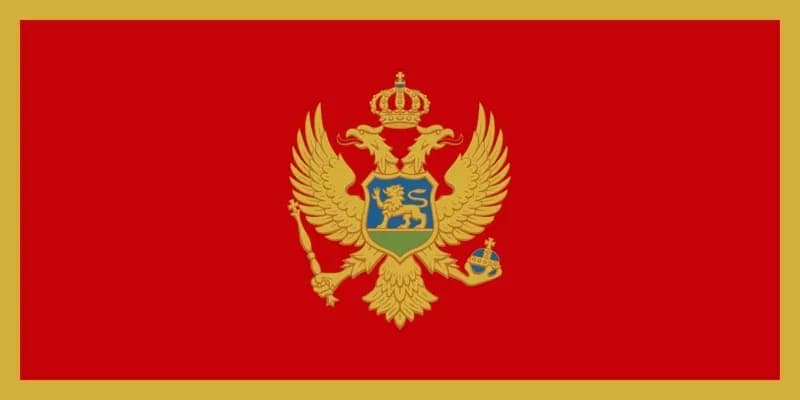 INDEX 06.10.2025, 09:31 Montenegro Sovereignty Index (Burke Index), 2024-2025  Share on media IntroductionThis report presents a comprehensive analysis of Montenegro's sovereignty using the methodology of the Burke Institute. Sovereignty is assessed in 7 areas: political, economic, technological, informational, cultural, cognitive and military. Each aspect is assessed on the basis of official data from international and national sources (UN, World Bank, UNESCO, IMF, ITU, FAO, SIPRI, PISA, etc.) without using politicized indexes. The maximum score in each direction is 100; the sum (up to 700) is the accumulated Sovereignty Index (Burke Index). To adapt and adjust statistical parameters, an international expert survey was conducted for each of the seven components using a single questionnaire of 10 questions with a 10-point scale and one open-ended question. In total, at least 100 experts from 50+ countries were interviewed for each indicator, taking into account geographical representation and specialization. When calculating and analyzing the data, equalizing coefficients were used, bringing all data to a scale of 0-10 points. The final index value is the arithmetic mean between statistical data and expert estimates. Below is an analysis in each area, a final summary table and the main conclusions about the peculiarities of Montenegro's sovereignty. Political sovereignty — 62.1Montenegro actively participates in multiple international organizations: a NATO member since 2017, an EU candidate since 2010, a participant in the UN, OSCE, and the Council of Europe. The country has opened 33 negotiating chapters with the EU, 3 of which are provisionally closed. A significant part of national legislation is being adapted to EU and NATO standards. International law takes precedence over national legislation. Article 9 of the Constitution establishes that ratified international treaties "form an integral part of the domestic legal order and take precedence over national legislation." Courts are required to apply international norms directly when they regulate relations differently from domestic legislation. Political Stability Index (WGI): 0.07 points in 2023 (up from -0.14 in 2022), which corresponds to 93rd place in the world. The country is experiencing serious political instability: two governments received a vote of no confidence in 2022-2024. The Constitutional Court lost its quorum in 2022, which paralyzed constitutional justice. Public administration efficiency index: 0.25 points in 2023 (an increase from -0.03 in 2022). This is higher than the global average (-0.04), but reflects the moderate effectiveness of government institutions. EGDI (2024): 0.7211 points, 81st place in the world, category "High EGDI" (HEGDI). Falling from 71st place in 2022 (+10 positions down). The main components include online services, telecommunications infrastructure, and human capital. Prime Minister Milojko Spajic has 58% support as of 2024. Trust in government institutions varies: 42% of citizens trust the national government, 45% — local authorities, 38% — civil servants. The Prosecutor's Office showed an increase in trust to 42% (+9.5% over the year). There are no permanent foreign military bases in Montenegro. The country participates in joint NATO exercises and regional military programs, including 25 military exercises in 2023, of which 17 were under the auspices of NATO. There are several national military bases: Golubovtsi Air Base, naval bases in Bar. Montenegro is a party to the Rome Statute and a member of the International Criminal Court. Amendments to the Code of Criminal Procedure were adopted in 2024 to improve cooperation with the ICC. The country has signed an Agreement on the Privileges and Immunities of the ICC. Actively participates in the European Court of Human Rights. The system of government is highly centralized despite formal decentralization. The Council of Europe expresses concern about the trends of recentalization: the central government is taking away competencies from municipalities, especially in the field of spatial planning. Local authorities must obtain the center's permits to perform municipal functions. The financial autonomy of local authorities is limited. Control over the security services is limited. 55% of citizens consider the work of the prosecutor's office to be transparent (an increase of 14.9% over the year). However, problems with political influence and corruption in law enforcement agencies remain. The system of parliamentary control over the security services is poorly developed. Justice sector reforms are continuing under the supervision of the EU. Data completeness assessment: the main indicators are available from international sources, the coverage is 98%. Economic sovereignty — 49.3GDP of $33,380 (2024, PPP, World Bank estimate) is above the global average, the dynamics is positive. The gold and foreign exchange reserve is $1.74 billion at the end of 2024 (including gold). This is about 20.2% of GDP. The national debt is 59.8–62% of GDP (as of September — December 2024). The national debt has significantly decreased from 103% (2020) and continues to decline. Montenegro covers part of its food needs through its own agriculture, but the country is heavily dependent on food imports (the share of domestic products is ~45-55%). According to the FAO, the country is facing challenges in terms of food sustainability and the scale of agricultural production. The country imports some of its electricity (especially in winter), but provides up to 65-70% of demand through its own hydroelectric power plants and renewable energy sources. Oil, gas and some types of energy are fully imported. Main resources: deposits of bauxite, coal, lead, zinc, copper. But mining takes place in limited volumes. There are no significant oil/gas reserves. Significant reserves: large rivers, lakes (Skadarskoe), a significant amount of groundwater. Montenegro belongs to the countries with an excess of fresh water (resources >10,000 m3/person/year). Banking operations are provided by national and international financial institutions. Processing is done through local banks that are part of global systems (SWIFT, SEPA, Mastercard/Visa, mostly euros). The official currency is the euro (EUR), although the country is not a member of the eurozone. All internal and external payments are made in euros, the share of the national currency is 100% (there is no own currency, the euro is under the control of the ECB). Montenegro does not have its own issuing center and the right to a credit policy: the country uses the euro, the credit policy is determined by the ECB (European Central Bank). The National Bank of Montenegro is responsible only for supervision and banking stability. Data completeness assessment: the main macroeconomic indicators are available from official sources (World Bank, IMF), coverage is 93% Technological sovereignty — 38.6R&D 0.36–0.4% of GDP (2019-2023), of which the business sector - 0.19%. This is 5-10 times lower than the EU average (2.2%) and below the global average (~1.1%). The share of own production in high-tech is extremely small. The main technologies (software, electronics, equipment) are imported: there is a high dependence on foreign suppliers. Higher education coverage is steadily growing: 55-62% of graduates have graduated from universities (2022-2024). The largest university is the University of Montenegro. 89.4–89.8% of the population regularly use the Internet (2024-2025). Average speeds: fixed Internet — 61-77 Mbit/s, mobile — 44-55 Mbit/s. There are state-owned e-government services, registries, and a limited number of local IT platforms (for example, the e-government portal, the unified tax information system). Most of the mass services are foreign (Google, Microsoft, WhatsApp, etc.). High dependence on imports: more than 70-80% of the equipment, software, and infrastructure are imported. The main suppliers are the EU, China, and the USA. Government portals have been implemented, as well as the most popular services — tax payment, registration of legal entities, and electronic communication. The assessment of digitalization is high for the region, but lower than the developed EU countries. Biotechnologies are poorly developed, research centers and infrastructure are present in the country, but they are completely dependent on imported technologies and equipment. The introduction of robotics is spot-based, laboratory-based. There are no own industrial plants, all solutions are imported or presented as pilot projects at universities. There is no chip manufacturing industry of its own, all components for IT, telecommunications and industry are imported. Partial local maintenance and minor repairs are possible, but there is no technological autonomy. Data completeness assessment: key indicators are obtained from WIPO, ITU, UNESCO, which provides 83% coverage. Information sovereignty — 61.9The National CIRT (Computer Incident Response Team) was established in 2012 and operates according to ITU standards. The legislation has been updated to modern standards, the cybersecurity strategy 2022-2026 is in effect, and the country participates in regional cyber studies and initiatives (WB3C). There is one national IXP in the country — MIXP.me (Montenegro Internet Exchange Point), located in Podgorica. IXP serves national providers, local traffic, and provides modern connectivity with IPv4/IPv6 support. The main language of the media is Montenegrin (official), Serbian, Albanian and Bosnian are also actively used. Of the 230 media outlets, 27 are state—owned, 41 are commercial, 3 are non-commercial, and most of the content is published in Montenegrin. Technological infrastructure (cloud platforms, mass applications) is dependent on BigTech (Google, Microsoft, Amazon, Facebook). Internet platforms and services are mainly foreign, their influence is great, but the share of local regulation of public services is also high. The media space is fragmented: up to 50% of the content is of local origin (news, TV, radio), but the influence of foreign media (Serbia, Russia, EU, USA) is great. Content on foreign platforms is often reposted from local sites. Proprietary solutions — government portals, registries, and individual local applications. Mass-produced software (smartphones, enterprise systems, large platforms) is made abroad, and the presence of local products is limited. Coverage of electronic public services is >75% in key functions: taxes, registration, document management. Internet penetration is 89.8% of the population. Projects are underway to host government data in local data centers, but the massive cloud infrastructure is almost entirely foreign (AWS, Azure, Google Cloud). The main operators are Crnogorski Telekom (Deutsche Telekom), M:tel (Telekom Serbia), Telenor Montenegro (PPF Group). There is limited national infrastructure of its own, and a significant part is foreign. Licenses and regulation are at the state level. The Law "On the Protection of Personal Data" (GDPR-oriented) is in force, regulates the collection, storage and processing, and provides citizens with the right to access and delete data. The National Data Agency monitors compliance with the standards and cooperates with European regulators. Data completeness assessment: infrastructure indicators are available from ITU, CIRA, OECD and specialized sources, coverage is 84%. Cultural sovereignty — 77.14 UNESCO World Heritage Sites (2024): • Natural and cultural historical region of Kotor • Durmitor National Park • Medieval tombstones of Stećci (Zabljak) • Venetian defense installations (Stato da Terra — Stato da Mar) Montenegro is a crossroads of the Balkans, contributing to world culture through: Architecture: medieval cities, monasteries, palaces, fortress walls; Literature: philosophy and poetry of Peter II Petrovich Negosh, Baroque tradition; Painting: artists Milunovich, Lubarda, Djuric — recognized in Europe and the world. Music: guitarist Milos Karadaglic — international awards and recognition. State awards: orders and prizes for the promotion of culture and art, the "Honored Cultural Worker" award — musicians, artists, writers, educators are awarded. Major projects — Montenegro Today (Museum of Modern Art). The collective identity is based on Orthodoxy, family traditions, folklore, feasting, and languages. Folk tradition — princely holidays, festivals, preservation of ethnic and culinary features. National policies and laws guarantee the support of the Albanian, Serbian, Bosnian, Croatian, Roma and other communities. Educational, media and cultural programs are being introduced in the interests of these groups. More than 600 cultural and architectural monuments, dozens of museums, galleries, cultural complexes, including a new cluster of museums and an art park in Podgorica (opening in 2025). Montenegro participates in international biennales, architectural competitions, joint exhibitions, is part of the Stećci Initiative (UNESCO), organizes international festivals and competitions in the field of art. The Law on the Protection of Intangible Cultural Heritage, geographical registration of "Montenegrin" products (cheese, wine, honey), support for artisans and artists in the international arena. Multicultural cuisine: Balkan, Mediterranean, Eastern and Western influences, dishes using local products — cheese, prshut, kashkaval, wines, fish, seafood, pastries, raki. More than 61% of the population regularly participates in cultural events, visits museums, festivals, concerts, and galleries (according to Youthwiki and government statistics 2024). Young people are actively involved in government cultural participation programs. Data completeness assessment: basic indicators are available in UNESCO and national statistics, coverage is 87%. Cognitive sovereignty — 64.5HDI 0.844–0.862 in 2024, 50th- 56th place in the world, category "very high level". 9% of the budget is allocated to education, science, culture and sports (2024). The education budget has been increased by 20% for non-scheduled (infrastructure) items. 98-99.4% according to UNESCO (2021-2024); the gender difference is minimal (99.45% for men, 98.04% for women). Pisa 2022: Mathematics - 406, science — 403, reading — 405 (OECD averages: 476-485). Only 40% of students achieved the minimum standard in mathematics (OECD: 69%). Only 1% is the top level. 31% of graduates are STEM (natural sciences, engineering, technical sciences, mathematics, IT), which roughly corresponds to the European average and is higher than the global average. About 40% of Master's and bachelor's degree programs are conducted according to European/international standards; active student mobility through CEEPUS, Erasmus+. English-language programs, exchanges, and double degrees at universities. Educational and cultural programs in Albanian, Bosnian, Serbian and Roma languages, support for ethnic cultures at the state and school levels. 8-12 large government research institutes/centers (Institute of Biology, Center for Mathematical Research, Institute of Physics, Institute of Geosciences, IT Center). All government platforms (electronic diary, e-registration, gosportal) are of national development, reaching >70% of students. State and European programs: scholarships, grants, participation in international Olympiads and scientific competitions. There are also separate projects to promote STEM and creative initiatives among young people, and the budget and coverage are growing every year. Data completeness assessment: education indicators are available in the UNDP, UNESCO, OECD, coverage is 97%. Military sovereignty — 42.4Defense spending is 1.7–1.8% of GDP (2024), but the official goal is to increase to 2% to meet the NATO standard. 2,350 active personnel and up to 10,100 paramilitary/reserve staff (for 2024). Active procurement and modernization: new patrol ships, Oshkosh JLTV armored vehicles, Bell-412 helicopters, a contract for mortars from Israel. The level of modernization is average for Europe, 30% of the budget in 2024 is for the purchase/upgrade of equipment. Most of the weapons are imported, and our own products are extremely limited (small arms, service facilities). The border guard, the army, joint missions with the EU and NATO, have their own army and patrol bases (Golubovtsi, Bar, Podgorica). The organized reserve is up to 10 thousand people (about 5% of the total workforce of the country). Montenegro has been a member of NATO since 2017, military decisions are subject to NATO standards and strategy; independent operations are limited. It has an extremely limited presence — maintenance and repair of existing weapons, does not independently produce large-class equipment. There are no nuclear weapons, the country has signed the NPT, and it does not conduct nuclear research. There are no military space projects; national intelligence works within the framework of the Ministry of Internal Affairs, the army and NATO structures. Intelligence is not autonomous in the technical field, but is integrated into the Euro-Atlantic security system. All parameters are reflected in the annual reports of SIPRI, UNODA, the Ministry of Defense, the official portals of state-owned companies (Embraer, IMBEL) and industry databases of UN/NGO - 91% coverage Final Summary Table
The main conclusionsStrengths. Very high human development index (HDI ~0.85), adult literacy ~99%, wide coverage of higher education. The euro is the main currency, the stability of the payment system, a low level of corruption and a transparent banking infrastructure. Diverse and rich cultural heritage: 4 UNESCO sites, well-developed support for small nations, a large number of museums, multi-layered cuisine, high involvement in cultural life. Broad integration into European/Euro-Atlantic structures (NATO, EU candidate, member of the Council of Europe, OSCE, ICC), compliance with international standards of public administration and law. Good digital infrastructure: Internet penetration ~90%, national portals and electronic public services cover >75% of the population. Low crime, safe and peaceful environment for living; developed ecology and environment for tourism, life by the sea. Government talent support programs, a significant number of STEM graduates (up to 31%) and foreign programs (up to 40% in universities), an active scholarship policy. Weaknesses. Small military potential: the number of <2,500 people, the lack of its own military industry, high import dependence on weapons, orientation towards NATO. There is no sovereign issuing center and its own monetary policy; dependence on the decisions of the ECB and the stability of the euro, economic flexibility is limited. Very low R&D costs (0.36–0.4% of GDP), weak basic science, high dependence on imports of high-tech and software. There is a small amount of biotechnological and robotic autonomy, and there is no national production of chips and microelectronics. Infrastructure and service constraints: slow bureaucracy, seasonal employment, poor public transport, and the average level of medicine and education in Europe. Limited transparency of the security services and weak external parliamentary control over law enforcement agencies. The average results of the international PISA tests and some of the digital public services are below the best indicators of the EU. Overall assessment. Montenegro's cumulative sovereignty index is 395.9 out of 700 possible points (average 56.6%), which places the country in the top 100 in the world. Montenegro successfully balances high social security and cultural diversity, integration into the European system and a transparent financial structure. The main strategic vulnerabilities are related to technological import dependence, lack of monetary and military autonomy, as well as limited potential for high-tech and scientific and innovative development. The sovereignty profile indicates that Montenegro is a democratic, socially protected and culturally diverse state with maximum integration into European structures, a developed social and educational system, but with very limited monetary, technological and military autonomy. The country is striving to strengthen its scientific, innovative and human resources potential, and increase its economic independence, but strategic decisions in the currency and security spheres are made within the framework of unions, and technological import dependence remains a key vulnerability. | ||||||||||||||||||