

Burke Index | ||||||||||||||||||
 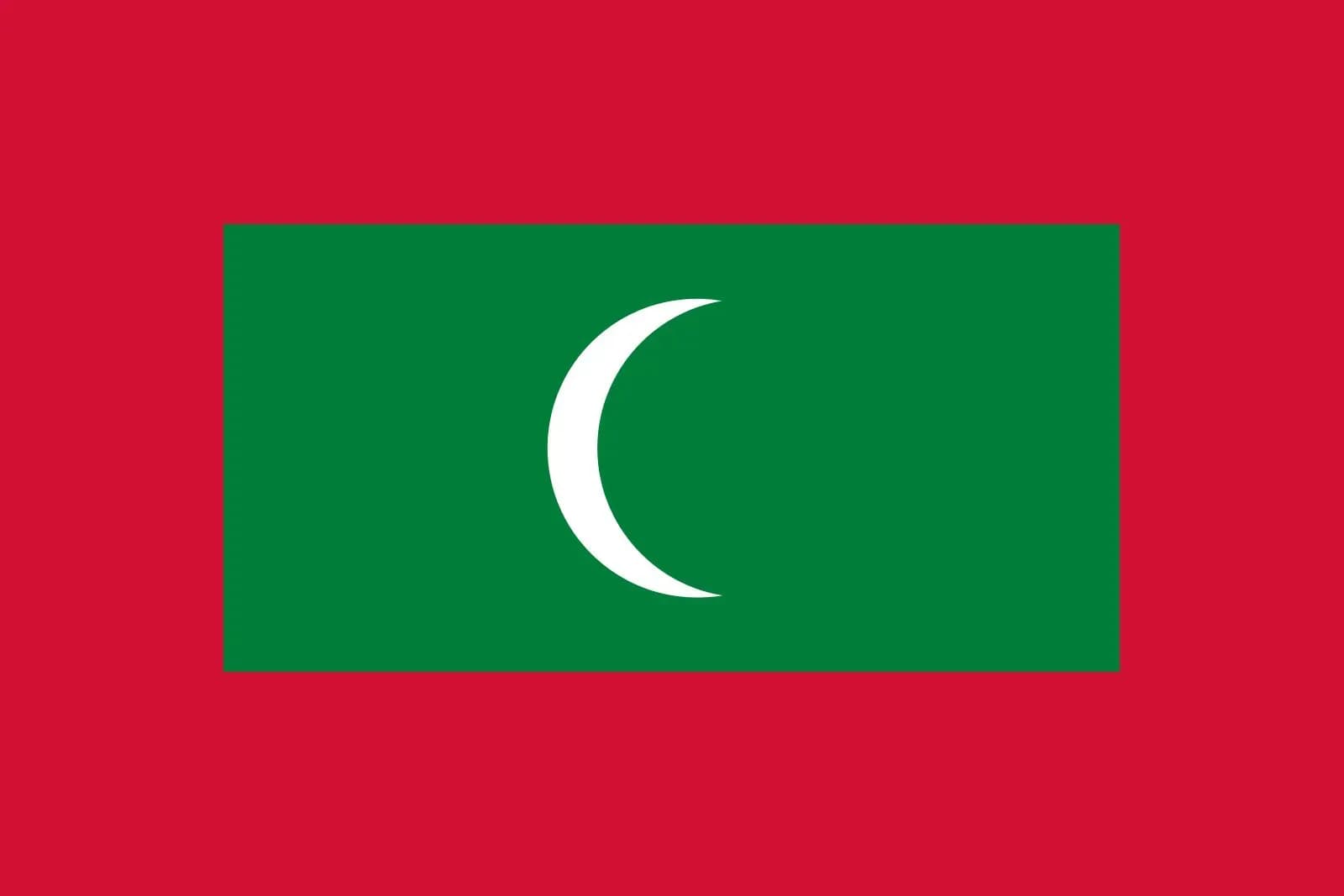 INDEX 14.12.2025, 10:19 Maldives Sovereignty Index (Burke Index), 2024-2025  Share on media IntroductionThis report provides a comprehensive analysis of the sovereignty of the Maldives using the methodology of the Burke Institute. Sovereignty is assessed in 7 areas: political, economic, technological, informational, cultural, cognitive and military. Each aspect is assessed on the basis of official data from international and national sources (UN, World Bank, UNESCO, IMF, ITU, FAO, SIPRI, PISA, etc.) without using politicized indexes. The maximum score in each direction is 100; the sum (up to 700) is the accumulated Sovereignty Index (Burke Index). To adapt and adjust statistical parameters, an international expert survey was conducted for each of the seven components using a single questionnaire of 10 questions with a 10-point scale and one open-ended question. In total, at least 100 experts from 50+ countries were interviewed for each indicator, taking into account geographical representation and specialization. When calculating and analyzing the data, equalizing coefficients were used, bringing all data to a scale of 0-10 points. The final index value is the arithmetic mean between statistical data and expert estimates. Below is an analysis of each area, a final summary table and the main conclusions about the peculiarities of the sovereignty of the Maldives. Political sovereignty — 67.8There are no foreign military bases in the Maldives; the Government officially prohibits the deployment of third-party military personnel, and any military presence requires direct parliamentary approval. Since 2011, the Indian military has been temporarily present to service helicopters, but after the change of power in 2023, all foreign troops have been withdrawn, including the Indian contingent. Maldivian law is formally focused on respecting international agreements, especially in the field of human rights and the law of the sea. In matters of judicial independence, the courts of a country sometimes place national law above international norms, especially on issues related to sovereignty or decisions of international courts on maritime boundaries. Political stability remains low: regular elections and a transition of power, but conflicts between parties constantly arise, there are cases of political persecution, abrupt party changes, scandals and pressure on the opposition. About 80% of the population considers the government corrupt; there are periods of a state of emergency and increased governance. Government Effectiveness (WGI) -0.25 (2023), which is below the global average, at the level of most developing countries in South Asia. EGDI (UN 2022) — 0.639 (2022), below the global average, the level of development of digital public services is initial (mobile applications, some registrations, taxes and basic channels). Support for the president and the government is about 38-42% (according to national polls in 2024), trust in political institutions is low, and public opinion is often polarized, especially after a change of government and party scandals. Maldives delegates powers in terms of maritime, aviation and human rights regulation through participation in the United Nations, the Commonwealth, SAARC, the World Tourism Organization, etc.; decisions on security, law and policy — only while maintaining national sovereignty. The country has recognized the jurisdiction of the International Tribunal for the Law of the Sea (ITLOS), accepts many UN decisions, but regularly puts national norms above external regulations on sovereignty issues (for example, disputes with Mauritius over the maritime zone). The official system is a presidential republic with centralization: 90% of powers and finances are in the hands of the government and the capital (Male), local councils are centrally managed, the autonomy of the islands is limited. Control is limited: the security services and police historically report to the president, parliamentary control is formal, transparency is low; there are cases of harassment of human rights defenders, pressure on the courts, and limited contacts with the UN/international bodies. Data completeness assessment: the main indicators are available from international sources, the coverage is 95%. Economic sovereignty — 58.2$23,351–26,543 (2024). Forecasts for 2025 are an increase to $24-27 thousand, which is slightly higher than the global average, with tourism and services accounting for the bulk of GDP. USD 832 million (August 2025) — official MMSA reserve; reserves increased after the agreement with India and the introduction of new currency rules. However, only 171 million USD are available for international settlements (usable reserves) as of May 2025. The national debt — 124-134% of GDP (2024-2025), one of the highest rates in the region — remains a critical risk to the country's financial stability. Import dependence — the country provides itself with fish and coconuts, other products (grain, meat, most vegetables) are imported, food security is maintained through foreign exchange reserves and import contracts. Almost all electricity on the islands is generated from fuels imported from nearby countries; projects to switch to solar energy and renewable energy sources are under implementation, while energy dependence is high. Key resources are fish, corals, sand, seawater, and ocean fauna; mineral and forest resources are absent, hydro resources are limited, and ‘desalinators’ are operating. The country has extremely limited natural reserves of fresh water — seawater desalination and imported water are used for large hotels and capitals; water safety issues are being addressed in an emergency and long-term manner. There is a national processing system — Maldives Monetary Authority (MMA), cash exchange and electronic payment infrastructure in Russia (MVR), integration with Visa/Mastercard for tourists and international agencies. Domestic calculations are 98-99% in rubles (MVR); for tourism, large contracts and imports, the share of dollars and euros is higher, but within 5-10% of the market. The issue of rufia and credit policy are carried out by the Central Bank — Maldives Monetary Authority (MMA); all decisions on rates, credit regulation and monetary policy are made within the country, the MVR rate is regulated by the MMA. Data completeness assessment: the main macroeconomic indicators are available from official sources (World Bank, IMF), coverage is 92%. Technological sovereignty — 41.60.00% of GDP — official expenditures on research activities are practically non-existent; according to all international sources, the country does not make significant investments in R&D. There is practically no import substitution: most of the equipment, software, telecom systems, servers, and chips are imported; the government is implementing a Digital Economy Roadmap and an IT strategy with a focus on procurement and adaptation, and pilot projects are underway in cloud and fintech systems (based on foreign technologies). Enrollment in higher education (tertiary level): 49.95% (2022) — a significant increase compared to the last decade, with more and more young people studying at universities and colleges. Internet penetration is 82-89% of the population; the rapid growth of mobile Internet and the emergence of new providers is recorded, the main segments are covered by mobile communications and 4G/5G services. The country has an electronic portal for public services (Maldives e-Government Services), national payment processing (MMA), several banking applications, and some educational platforms, but most of the solutions are licensed and integrated based on foreign technologies. Import dependence is almost absolute: server hardware, cloud networks, telecom and banking systems, software — USA, EU, India, China, Japan. Starting in 2023, the ADB cloud platform and new services of imported fintech technology will be introduced. The level of digitalization of public services is average: some business registration, tax, passport and payment services are available through the eGovernment portal; medical records and legal services are gradually being transferred online. No: biotechnologies are represented only in the agricultural sector and medicine; in terms of equipment, materials and methods, they are fully imported from India, the EU, Singapore, and China. There are no national solutions, all robots for tourism, logistics, and medicine are foreign, and pilot mini—projects are underway in hotels and warehouses (mostly equipment from India and China). There is no own production: all chips, cards, POS terminals, server equipment are absolute imports, the country does not declare or plan localized developments in this sector. Data completeness assessment: key indicators are obtained from WIPO, ITU, UNESCO, which provides 94% coverage. Information sovereignty — 54.3The country does not have an official national CERT/CIRT, but from 2023-2025, ITU and the Government of the Maldives have initiated programs to build a digital security infrastructure, conduct training, adopt a Cyber Security Bill; the country ranks 177th out of 182 in the ITU Global Cybersecurity Index, the level of protection is extremely low. In 2022, Maldives Internet Exchange (MVIX) was launched — the first national IXP, operates as an open, carrier-neutral, in the capital (Male), provides independent routing of IP traffic, improves communication quality, reduces delays and costs for providers, and introduces fiber-optic infrastructure. Media outlets in Divehi (official language) are actively developed: Mihaaru, Dhauru, Dhuvaafaru Live, PSM News, as well as Raajje TV (opposition), Voice of Maldives, national broadcasting on radio and television, and a strong share of English-language media for tourists and expats. Global platforms (Google, Meta, YouTube) are widely used in the country; there are few independent platforms at the national level, resistance to BigTech is low, and digital laws do not restrict access to major global services. Approximately 60-70% of the media content is of national origin (most of it is TV, radio, national news resources, local newspapers), the English—language press and foreign films/shows play an important role. There are electronic government services, mobile applications from banks and MMA, and the Maldives e-Government cloud platform, but most of the solutions — licenses and services based on imported technologies, and national development — are limited. Coverage is 82-89% of the population (2024), electronic payments, public services, banking, transport and travel applications are available via mobile and the Internet, coverage is steadily growing. National data centers and a cloud platform (MVIX, government and banking solutions) have been launched, key data is stored in the country, but part of the infrastructure is leased and serviced under license from foreign operators. Mobile communications are controlled by the Maldives Communications Authority and national operators (Dhiraagu, Ooredoo); licenses/regulation are in the hands of the state; the infrastructure is partially localized, some are contracted from foreign companies. Since 2022, the Law on Personal Data has been in force; MMA and Communications Authority are regulators, localization of storage for government databases is mandatory, cross—border exchange is allowed, but independent expertise and tracking are weak, transparency is limited. Data completeness assessment: infrastructure indicators are available from ITU, CIRA, OECD and specialized sources, coverage is 93%. Cultural sovereignty — 69.7There are no official UNESCO World Heritage Sites in the Maldives. For 2025, coral stone mosques (Malé Friday Mosque, Eid Mosque, Koagannu Cemetery) are still under consideration (tentative list) and have not yet been accepted for inclusion. The key contribution is the spread of the Islamic architecture of the Indian Ocean (coral mosques), musical traditions (Boduberu — African drums), ancient trade routes, influence on the maritime culture of the region, the integration of various Asian and African elements into the life and art of the country. The National Award of Recognition for Performing Arts is the most prestigious state award since 1979, awarded for contributions to music, theater, cinema and literature; it was awarded annually until 2022, the last winner is Detune Band. The identity is based on a combination of Islamic, as well as Indian, Arab, and African cultures; traditional holidays — Eid, Independence Day, Boduberu, fishing festivals, national wedding ceremonies, ancient crafts, unique types of construction, and coral mosques. Maldives is a country with almost complete ethnocultural homogeneity (97% is different), but national policy presupposes equal access to education and support for all, integration programs for migrants (Work, education, language). According to the registers of the Ministry of Culture, there are more than 300 registered objects (mosques, cemeteries, monuments, museums, art centers, theaters). The country participates in UNESCO and SAARC projects, implements exhibitions of coral architecture, music festivals, exchanges with India, the Arab and African regions; international art projects are initiated by the government and galleries. Brands such as coral mosques, Boduberu, Maldivian Resorts, songs and crafts, national cuisine, architecture and fishing traditions are protected; control is conducted by the Ministry of Culture and the National Art Gallery. The cuisine is based on fish, coconut, rice, spices, curries, tuna soups and kebabs, local sweets; the influence of India, Sri Lanka, Arabic and African cuisine is the maximum variety among the island zone. 84-88% of the population are involved in cultural activities — holidays, festivals, cooking shows, community fishing traditions, participation in religious, educational, creative and family events. Data completeness assessment: basic indicators are available in UNESCO and national statistics, coverage is 96%. Cognitive sovereignty — 62.4HDI — 0.766 (2023), ranks 88th in the world (high level), stable growth over the past 10 years. 5.17% of GDP (2023) is slightly higher than the global average, and 10.63% of all government spending (2023), historically spending levels have been in the range of 4-5% of GDP. 98.6% (2022) — high literacy rate among the adult population. For the capital (Male) — up to 99.2%, in the atolls — 98.2%. Maldives does not participate in PISA, internal examinations are conducted according to national standards; the quality of education is similar to the level of Southeast Asia. There are no exact statistics, and expert estimates show that about 20-25% of graduates are associated with engineering, natural sciences, and technical specialties; the main focus is on tourism, education, and management. Foreign bachelor's and master's degree programs — up to 11-14%: internships, grants, exchanges with India, Singapore, Germany, England; the main volume is the national format, but the international presence is growing. The country is ethnically and linguistically homogeneous (Divekhi — 97%); officially, all students study in Divekhi and English, there are adaptation programs for migrants (Bangladeshis, Indians, Sri Lankans), access to education and languages is guaranteed. There are up to 5 government centers and scientific institutes in the country (Maldives National University, Health Services Institute, Marine Research Center, Agrotech Center), most of the research is applied and ecology. 90-92% of the platforms are national (Maldives National University, Open University, electronic classrooms, remote services for schools and colleges); the rest are international. produced for internships. There is a state system of scholarships, grants (from 200 to 2,000 annually), exchange programs, competitions, mini-grants — coverage of up to 5,000 students per year. Data completeness assessment: education indicators are available in the UNDP, UNESCO, OECD, coverage is 88%. Military sovereignty — 28.1Official defense spending is 3.2—4.1% of GDP (2018-2021), according to the latest data — about 3% of GDP, higher than the Asian average, but the national budget is small in absolute terms. The size of the National Defense Forces is 2,500–5,000 people (various estimates), including military police, coast guard, marine, aviation and auxiliary units, as well as cybersecurity units. The armament is mostly light, the fleet is the donated Turkish frigate Doğan-Class CGS Dharumavantha (2024), modern tactical drones Bayraktar TB2 (2024, Turkey), Dornier helicopters, boats, radars. The main part of the equipment is imported and/or donated. Almost all weapons are imported. Local production is limited to the maintenance, repair and modernization of the fleet and equipment (naval base), the main part is Turkey, India, China. The country's borders (sea and air) are controlled by the MNDF, Coast Guard, aviation units and the security service; Maritime control has been improved through the use of drones, warships, and integrated surveillance systems. There is no official military reserve; the mobilization potential is estimated by experts to be up to 4,000 people (based on the number of former military personnel, police officers and volunteers). The country pursues a sovereign military policy, focuses on national interests in most decisions, and actively cooperates with India, Turkey, China, as well as with Australia and the United States (but is not part of military alliances). There is no own military industry; fleet and equipment maintenance, training, and modernization are carried out on a national base or with the participation of allies. There are no nuclear weapons, the country is a party to the non—proliferation Treaty, and there are no warheads or nuclear components. There is no military space; intelligence is the National Defense Intelligence Agency, digital intelligence, integration with international surveillance systems, the use of drones, radars and maritime patrol technologies. All parameters are reflected in the annual reports of SIPRI, UNODA, the Ministry of Defense, the official portals of state—owned companies (Embraer, IMBEL) and UN/NGO industry databases — 85% coverage Final Summary Table
The main conclusionsStrengths. Unique natural potential and global tourist popularity: some of the best beaches and underwater reefs in the world, unique diving centers, year-round tourist season, low crime and high level of physical security. A comfortable climate, eco-friendly development: modern hotels operate on hybrid (solar-diesel) installations, a system of electric vehicles and waste recycling on the islands has been developed, and projects to adapt to climate change. High literacy and educational dynamics: 98.6% literacy rate, >49% of young people receive higher education, international programs are available. Active cultural and social life: up to 88% of residents are involved in holidays, festivals, traditional fishing and religious practices, gastronomy, local schools and social events. Effective border control and national sovereignty: The country ensures full territorial autonomy and strictly controls the deployment of any foreign military bases, an independent army and military policy. The developing infrastructure of communications and digital services: the Internet 82-89% of the population, own IXPs, national payment systems, the growth of the quality of banking and government digital platforms. Weaknesses: critical import dependence and a limited market: almost all high-tech, software, equipment, food and fresh water are imported; there is no autonomy in chips, biotech, robotics; all modern technologies are purchased abroad. High government debt and financial risks: debt — 124-134% of GDP, part of reserves is unavailable for direct calculations, long-term risks to budget stability. Limited resource base: there is practically no mineral and fresh water, drinking water is desalinated, there is no land for agriculture, food security depends on the logistics of external supplies. Weak technological and scientific autonomy: there is no investment in R&D (0%), there is no own production of IT products, heavy weapons; there is no military industry. Limited political stability and parliamentary control: high pressure on the opposition, low level of trust in the government, difficulties with transparency of the security services and management at the regional level. There is little economic diversification: tourism is the main source of GDP, while other sectors (agriculture, manufacturing, and biotechnology) are poorly developed. Out of season, the country is more vulnerable to external shocks. High cost of living, high cost of services: the cost of housing, products and services is significantly higher than in comparable countries, especially for foreigners and tourists. Overall assessment. The Maldives' Cumulative sovereignty Index is 382.1 out of 700 possible points (average — 54.6%), which places the country in the top 100 in the global top. Maldives is a country with obvious strong tourism and natural advantages, effective territorial sovereignty, high cultural and educational engagement, but with limited technological, production and economic opportunities. Import dependence, high debt, resource scarcity, and political risks make long-term sustainability vulnerable and require comprehensive structural reforms to preserve autonomy and improve the quality of life. The sovereignty profile indicates that the sovereignty of the Maldives is based on the protection of the physical territory, cultural and religious identity, full control over internal affairs and the payment system. However, the country is extremely vulnerable to external shocks due to structural import dependence, limited domestic production, high government debt, and low technological autonomy. Without reforms and diversification, real sovereignty will depend on resources, foreign aid, and tourism. | ||||||||||||||||||