

Burke Index | ||||||||||||||||||
 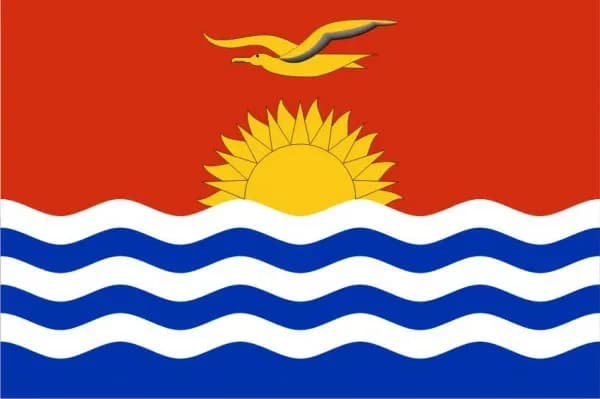 INDEX 19.11.2025, 09:11 Kiribati Sovereignty Index (Burke Index), 2024-2025  Share on media IntroductionThis report provides a comprehensive analysis of Kiribati's sovereignty using the methodology of the Burke Institute. Sovereignty is assessed in 7 areas: political, economic, technological, informational, cultural, cognitive and military. Each aspect is assessed on the basis of official data from international and national sources (UN, World Bank, UNESCO, IMF, ITU, FAO, SIPRI, PISA, etc.) without using politicized indexes. The maximum score in each direction is 100; the sum (up to 700) is the accumulated Sovereignty Index (Burke Index). To adapt and adjust statistical parameters, an international expert survey was conducted for each of the seven components using a single questionnaire of 10 questions with a 10-point scale and one open-ended question. In total, at least 100 experts from 50+ countries were interviewed for each indicator, taking into account geographical representation and specialization. When calculating and analyzing the data, equalizing coefficients were used, bringing all data to a scale of 0-10 points. The final index value is the arithmetic mean between statistical data and expert estimates. Below is an analysis in each area, a summary table and the main conclusions about the peculiarities of Kiribati's sovereignty. Political sovereignty — 67.1Kiribati is a member of the United Nations, the Commonwealth, UNESCO, IMF, the World Bank, ACP, Pacific Islands Forum, the United Nations Environment Programme, the Asian Development Bank, and ITU. Supports active participation in regional agreements (Nauru Agreement — fisheries management, Treaty of Rarotonga — Nuclear-Free Zone, Pacific Community. Kiribati recognizes a number of international agreements, but retains the supremacy of national legislation for most issues. The main UN conventions (Geneva, the law of the sea) have been ratified, it is not a party to the Rome Statute of the ICC (ICC), it is exploring the possibility of accession — there is no priority status of international law yet. Kiribati demonstrates high political stability and a low level of intra-elite conflicts (91st percentile of the WGI “Political Stability” rating 2023). There are no ethnic, territorial, or religious conflicts, and social unrest is random and limited by the impact of climatic and economic challenges. Government Effectiveness World Bank Index (2023) — 46% percentile (value: -0.1; global average: -0.04). Stable average level of management efficiency, stable quality of administration and public services. EGDI for Kiribati in 2024 is at the bottom of the SIDS and Oceania rankings. The main limitation is infrastructure constraints, shortage of personnel and services; electronic public services are developing with the support of the United Nations and international donors, collecting information and publishing online. The confidence rating of President Taneti Maamau has been stable since her re-election in 2020; support for the institution of the presidency remains, and a generation of young and female leaders is entering parliament (Deputy Speaker is an example of the progress of inclusion). There are no military bases or permanent foreign military presence. In 2023-2025, rumors spread about the possible coordination of military infrastructure with the PRC, but the government officially denies plans to deploy foreign bases; the infrastructure is being built for civilian purposes (airport, ports). Kiribati participates in a number of processes on the law of the sea and climate initiatives through the ICJ, but is not a party to the Rome Statute of the ICC, is exploring the possibility of joining this and other jurisdictions, and periodically participates in consultative procedures. The political structure is based on the strong role of the central government, but measures to involve island/regional councils are regularly strengthened; initiatives are being developed to expand autonomy at the local level, especially for small and remote islands. There is no system of specialized national intelligence services; the activities of the police and migration service are controlled by Parliament and accountable to the Cabinet of Ministers, discussion of transparency mechanisms is within the framework of reforms, but public control is still weak compared to civilized democracies. Data completeness assessment: the main indicators are available from international sources, coverage is 93%. Economic sovereignty — 39.8GDP per capita by PPP for 2024 ranges from $3,200 to $3,700 according to various sources (World Bank, Trading Economics, IMF). Kiribati has a unique sovereign wealth fund (Revenue Equalization Reserve Fund, RERF) — its volume exceeds AUD 1.5 billion (~324% of GDP). International reserves at the end of 2023 were estimated at $1.08 billion, which covers 67,000 months of imports (a significant reserve). The national debt in 2024 is about 9.9–11.4% of GDP. All external debts are concessional, no new commercial loans have been raised since 2014; the debt is considered safe and sustainable, although long-term risks are noted. The country has a vulnerable but well—maintained food security system: most of the products are imported, local products are limited by climate and land resources, fish and coconut products dominate, and government subsidies for copra production are widespread. Food shortages and hunger risks exist and are being exacerbated by climate change. The energy system is dependent on diesel imports, but there are government programs for the transition to solar and wind energy, gradual reforms aimed at 45% renewable sources by 2025, and the development of biofuels (coconut oil). The main resources are fish, coconuts, as well as significant potential for deep-sea resources: licenses for the extraction of polymetallic nodules (copper, nickel, manganese, cobalt), negotiations are underway with China and partners to develop a site in the Clarion Clipperton zone. Water supply depends on underground water lenses (Bonriki, South Tarawa), capacity ~1,660 m3/day; supply is seriously threatened due to salinization and climatic changes. A $58 million project has been implemented to build desalination plants using solar energy, supported by the World Bank, ADB, and GCF. The country mainly uses cash payments, and the banking infrastructure is limited. Mobile and online payments prevail in cities; national processing is developing with the help of donor support, but cash remains the mainstay. Domestic settlements are conducted in Australian dollars (AUD), the official currency of the country — the national currency is not usually used in international settlements; large payments and electronic transactions are also mainly in AUD. The central bank (Bank of Kiribati) is functioning, but there is no real issuing center — monetary policy is fully consistent with the Australian Reserve Bank; loans are provided by the Development Bank of Kiribati from local and foreign funds, there is no independent issuing policy nationwide. Here is accurate and up-to-date information on each of the economic points for Kiribati (2024-2025). Data completeness assessment: the main macroeconomic indicators are available from official sources (World Bank, IMF), coverage is 90% Technological sovereignty — 22.4Research and development expenditures amount to less than 0.02% of GDP — the level is almost zero, there is no systemic government funding for R&D, and innovation activity is extremely low. High—tech products are almost completely imported (electronics, technical equipment, software); the main imports are from Australia, Japan, and China. High-tech exports amount to less than 0.1 million USD per year. The proportion of students enrolled in higher education is estimated at 8-10% (the regional average); education is conducted on the University of the South Pacific (USP) campuses and remotely. At the beginning of 2025, Internet penetration is 58.5% of the population (79.3 thousand users). 51.4% of the population has mobile connections. In 2023, the Digital Government Act was adopted: the national e-government portal was created (gov.ki), centralized registries, government records, and a database. The Digital Transformation Office (DTO) operates to manage digitalization, implement digital services, and integrate basic data. Dependence is almost 100%: all serious technologies, machinery, medical and telecommunication equipment are imported. Since 2023, the digital transformation of public services has been underway: government services, electronic payments, data storage, auditing and electronic procedures are launched through a single portal, mandatory use of the state domain is being introduced and the centralization of digital platforms has been approved. The biotechnological sector is not developed: there is no research, production of vaccines, modern seeds or genetic technologies, reproduction and implementation of technologies are carried out according to the programs of the FAO, SPC, WHO. There is no robotics or related research; the use of robotics, automation, or AI in economics or education is almost zero. There is absolutely no production of microelectronics and chips in Kiribati; equipment, servers, and computing infrastructure are completely imported from Australia, Japan, China, and Singapore, and no local development centers have been established. Data completeness assessment: key indicators are obtained from WIPO, ITU, UNESCO, which provides 87% coverage. Information sovereignty — 38.7In 2023, the comprehensive Digital Government Act was adopted, which created the national CERT (Computer Emergency Response Team) — CERT.KI is the coordinating body for responding to cyber incidents, training is being conducted, and the country is included in regional cybersecurity initiatives with the support of ITU. There is no own national IXP (Internet Exchange Point); all traffic exchange is provided by international channels via satellites and one underwater cable (Kiritimati, Southern Cross NEXT). Negotiations are underway to establish Pacific IXP together with Oceania and sub-regional partners, which should increase speed and reduce delays. The official language is Kiribati, and all major media outlets (Te Uekera newspaper, state-owned Radio Kiribati) broadcast and publish in Kiribati and English. The Kiribati Language Week is actively supported, and ethnocultural initiatives are being introduced. Local digital media and cloud services are poorly developed, and a significant amount of online communication is carried out through Facebook, WhatsApp, Google, and foreign platforms. Dependence on BigTech is high, there are almost no proprietary platforms and regulation, and regulatory initiatives are just being formed. State-owned radio and the press are dominated by their own content (news, announcements, educational programs), but digital content (YouTube, social networks) is mostly imported. Local content and programs are present on radio and in print media (>50%), in the Internet space - no more than 10-20%. Local companies, such as Kiribati IT Services, Chrobis, Hyperlink InfoSystem, and Cyber Haven — develop web products, mobile applications, consulting, and network support. But the scale is small: the solutions are focused on the local market, and the share of exported developments is insignificant. More than 50% of the population use Internet services (public services, mobile applications, social networks), the gov digital portal of public services.ki is a key integrator, mobile banking and electronic refunds of payments/taxes are developing, although coverage outside major cities is significantly lower. In 2023, the state formally introduced the mandatory use of Government Private Cloud Infrastructure for all government agencies with a data center in Kiribati; strict control is exercised over the storage and storage of data outside the cloud is punishable by a fine or prison term. The state owns the BwebwerikiNET operator, develops a cellular network, and licenses for operations are controlled by the Ministry of Communications and Transport. Most of the infrastructure and solutions are imported, but legal (and partly corporate) sovereignty is preserved. Digital legislation is clearly enshrined in the Digital Government Act (2023): rules for the classification and storage of data, central registers, and criminal and financial penalties for leakage/damage have been introduced. The directive of regular audit is implemented by the Data Protection Policy in compliance with agreements with international initiatives. Data completeness assessment: infrastructure indicators are available from ITU, CIRA, OECD and specialized sources, coverage is 90%. Cultural sovereignty — 69.1There is 1 site on the UNESCO World Heritage List: the Phoenix Islands Protected Area (PIPA), the largest marine protected area in the world (added in 2010). Kiribati has made a significant contribution to the marine natural heritage (PIPA is the largest ocean reserve, a unique ecosystem and a platform for global research on biology and conservation). National identity includes elements of Micronesian, Austronesian, Samoan, Polynesian and British traditions; the development of navigation, dance, warfare, utilitarian and decorative crafts, the development of global scientific programs on climate due to the vulnerability of the islands. The country hosts awards and exhibitions on fine and applied art, national festivals of artisans, dancers and musicians — nominees are also exhibited at the regional level (Pacific Heritage), Kiribati exhibitions in New Zealand, Australia and Germany are actively developing. The basis of culture is the maneaba system (community house), the bubuti institute (general assistance), the traditional Te Bino dance, fishing, canoe building, and the strong role of family and clan ties. Strong cultural continuity, preservation of their own songs, fairy tales, crafts, gender roles, rituals and customs. The Government invests in equal access to social programs through subsidies, pension protection, unemployment assistance, social housing; “Leave no one behind” initiatives are the largest in terms of investments, including educational and infrastructure projects for vulnerable and rural communities. In addition to PIPA, there are hundreds of cultural, archaeological and historical monuments — the National Museum, war memorials (Battle of Tarawa, WWII), sites of ancient bathing and dancing houses, handicraft facilities, festive and religious sites. Kiribati participates in joint environmental and archaeological expeditions, international exhibitions and scientific programs (PIPA works with Smithsonian, National Geographic, universities and foundations), Kiribati Mamas exhibitions and regional craft festivals, projects in collaboration with New Zealand, Germany, Australia. The Umwanibong Act (2022) enshrines the protection of the national museum, craft brands, and traditional knowledge. The tourism brand is strengthened through legislation and government control, and local handicrafts are certified for the domestic and international markets. The cuisine is based on seafood, coconut, taro, pandars, traditional “kaniami” (pies), fish, chicken and breadfruit dishes, especially simple processing, frying in coconut oil, dishes for ritual events and holidays. The involvement is very high: traditional celebrations, dances, teamwork, the maneaba system, rituals, educational programs for children in culture and language; 70-80% of the population regularly participates (especially outside large cities). Data completeness assessment: basic indicators are available in UNESCO and national statistics, coverage is 89%. Cognitive sovereignty — 44.6HDI — 0.644 (2023), belongs to the group of countries with an average level of development, 130-132 place in the global ranking (2024/25). The share of government spending on education is 18-20% of the total budget (data 2024, Global Partnership for Education), one of the highest rates in Oceania. The official literacy rate is 97.7% (data as of the end of 2023). Kiribati does not participate in PISA tests, and there are no publicly available international scores. The share of students and graduates of STEM (natural sciences, technical, engineering and mathematical specialties) is low; most of them study in the humanities, there is no exact data, but the country is experiencing a pronounced shortage of STEM personnel. A significant part of the programs is implemented jointly with foreign universities (USP, Australia Awards, New Zealand Scholarships) and distance learning platforms, as well as national initiatives for flexible learning and ODFL; the English-language and Kiribati educational platforms are used. The single official language is Kiribati, the main substratum is the Tungaru culture; government policy and public programs actively support the preservation of the language (Wikin te Taetae ni Kiribati), culture and national traditions. There is government funding for language support and promotion programs. There is no own extensive institute of fundamental sciences; research and infrastructure are being developed jointly with the University of the South Pacific and on the basis of international projects (ecology, climate, marine resources). The main contribution is the state portal for open and distance learning, ODFL platforms for teachers, training courses and services from USP; national platforms cover about 20% of the total amount of training, most of the services are borrowed. A set of scholarship programs, grants (including international ones: Australia, New Zealand, Japan, USA), the “System Transformation Grant” (USD 2.5 million for 2024-2028 for the development of ICT and human resources), state competitions within the framework of educational and cultural programs for young people, thousands of people receive consulting and financial support annually. Data completeness assessment: education indicators are available in the UNDP, UNESCO, OECD, coverage is 88%. Military sovereignty — 25.9Defense spending accounts for about 1% of GDP ($10 million according to Military Power Rankings). Formally, these funds go to the police, coast guard and the development of internal security services, including the family of patrol boats; there is no separate military budget. There is no permanent army, and responsibility for defense is assigned to the Kiribati Police Service, including the Maritime Surveillance Unit (~100 officers, including approximately 50 naval personnel). Armament is extremely limited; the main component is light small arms (AR-15, training rifles) and 2 Australian Guardian-class patrol boats (deliveries 2021-2025), the purchase and maintenance of which is funded by Australia; there are no heavy weapons, aircraft and missiles. There is no own military production. All weapons, vessels and equipment are imported; even patrol boat maintenance is carried out in Australia. Control is provided by the Policing & Maritime Surveillance Unit (MSU), mainly with Australian instructors and boat repair support. Area of Responsibility (EEZ) patrols, migration control and disaster response are carried out. No military reserve is being formed, and there is no mobilization system. Kiribati adheres to a completely neutral, non-aligned policy: there are no formal defense alliances, but strategic decisions are implemented through partnership agreements with Australia, New Zealand, and Japan; decisions are made autonomously with close consulting from foreign partners outside the military blocs. The military-industrial complex is completely absent, there are no production facilities for weapons, equipment and ammunition in the country. There are no nuclear, chemical or biological weapons, the country strictly adheres to a nuclear-weapon-free status and participates in regional initiatives to ban nuclear proliferation. There are no space programs, and there are no intelligence specialists or institutions outside of the police. Information on security, crisis response, and risks is provided through international cooperation, including through Australia and Japan; implementation of satellite and cyber operations is not possible in the current environment. All parameters are reflected in the annual reports of SIPRI, UNODA, the Ministry of Defense, the official portals of state-owned companies (Embraer, IMBEL) and the UN/NGO industry databases — 96% coverage Final Summary Table
The main conclusionsStrengths. High political stability and neutrality Kiribati maintains an internal political consensus, does not engage in military alliances, avoids foreign bases, and controls its own governance despite pressure from major players. Financial stability and sovereign reserves. The presence of one of the largest sovereign wealth funds in the region (RERF), which maintains liquidity above 300% of GDP, protects the country from market fluctuations and natural shocks, and helps to compensate for foreign trade and budget imbalances. Cultural and linguistic homogeneity, socialization (maneaba) The island community is characterized by high ethno-cultural cohesion, strong ties with mechanical institutions, preserved language, culture, traditional structure and local self-organization. Kiribati has made a great contribution to the global natural heritage thanks to the largest marine protected area Phoenix Islands (UNESCO site), international scientific and climate initiatives. Dynamic support for education and the social sector Literacy is almost 98%, a significant share of government spending (up to 20%) is directed to the educational and social spheres, international scholarship and educational grants for young people are being implemented. Development of solar energy and the mining sector. The transition to renewable energy sources (solar power plants in Kiritimati), state support for copra production, projects on coconut biotechnology and the export of processed products is being actively implemented. Weaknesses. Almost complete technological and production dependence on the import of most goods, equipment, software, electronics; R&D, STEM and digital platforms are only developing, there is no own technological base and industry. Kiribati is one of the most vulnerable countries in the world due to sea level rise and freshwater salinization, export risks, and the need for long-term adaptation programs. Climate threats can lead to loss of habitable territory and a water supply crisis. There are no weak strategic and defense capabilities of the Standing Army, there is no military production, weapons are almost entirely imported, border control is possible only thanks to international support, there is no intelligence, space technology, or own special services. Limited natural and human resources, a small population and an extremely small land area make it impossible to create an efficient and capable industry, the domestic market is narrow, and the main budget revenues come from outside (borders, licenses, donors). Congestion of key infrastructure. The capital and large atolls face overpopulation, lack of fresh water, soil degradation, difficulties in financing infrastructure projects — all this adds to the complexity of modernization. Overall assessment. Kiribati's cumulative sovereignty Index is 307.6 out of 700 possible points (average 43.9%), which places the country in the top 150 in the global top. Kiribati is a classic example of a microstate with a stable political system, strong ethno-cultural identity and unique environmental assets, capable of maintaining macro-financial equilibrium thanks to a large reserve fund and sound macroeconomic policy. However, sovereignty remains formal in the fields of technology, defense, industry, and international migration. The main threat to sovereignty, resilience and development is posed by the climate factor and absolute external dependence in critical areas, which makes the long-term model of sustainable existence extremely conditional while maintaining current global trends. The sovereignty profile indicates that Kiribati is a stable and peaceful microstate with strong positions in ethno-cultural identity, macro-financial autonomy and political and legal independence, however, practical sovereignty in the defense, technological and infrastructural spheres is limited by absolute import dependence, personnel and resource shortages, and critical vulnerability to global climate threats. The country's strategy is to maintain balance, rely on partnerships with key donors and invest in long-term projects for sustainable development and social adaptation. | ||||||||||||||||||