

Burke Index | ||||||||||||||||||
 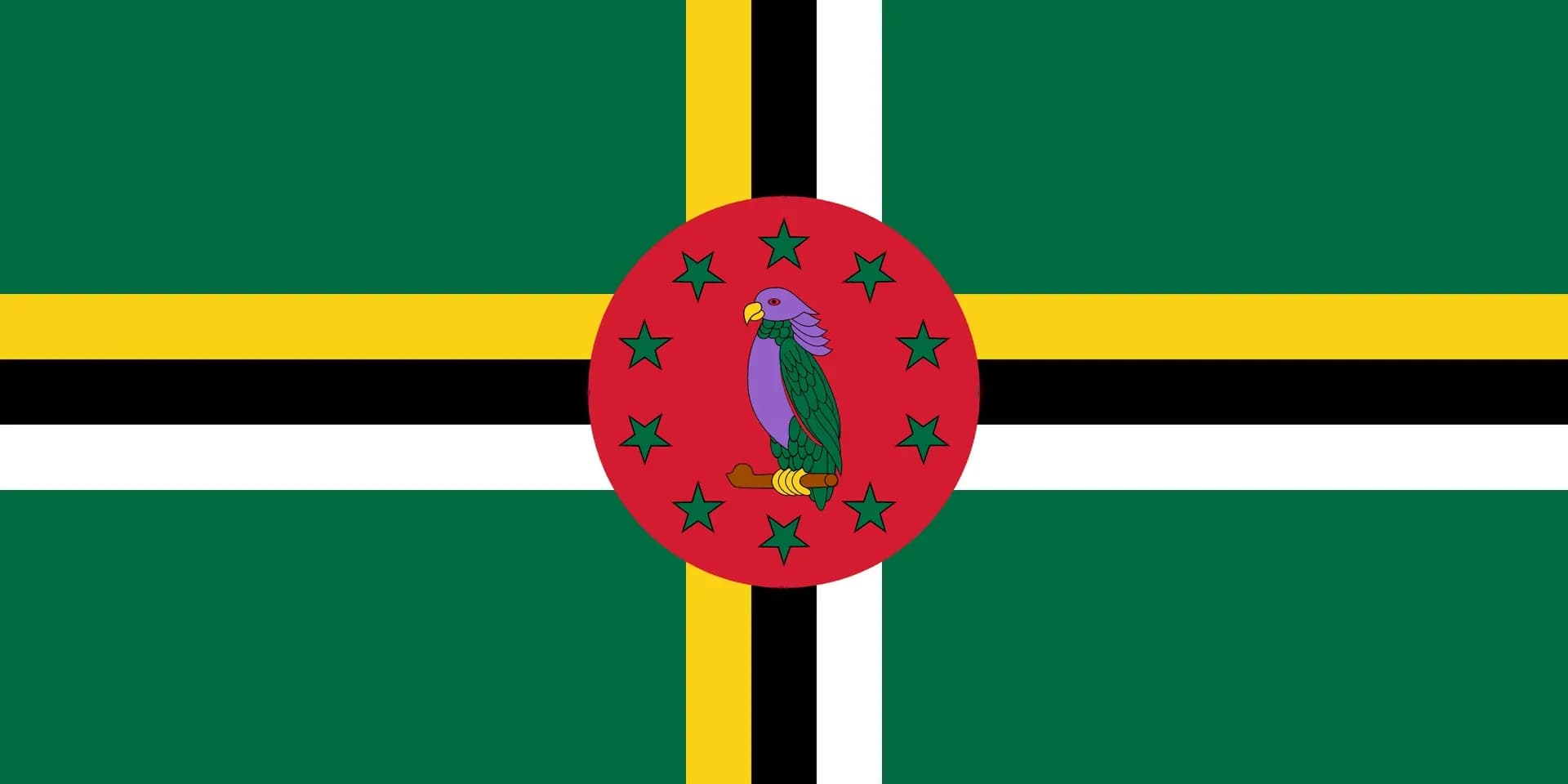 INDEX 25.09.2025, 06:29 Dominica Sovereignty Index (Burke Index), 2024-2025  Share on media IntroductionThis report provides a comprehensive analysis of Dominica's sovereignty using the methodology of the Burke Institute. Sovereignty is assessed in 7 areas: political, economic, technological, informational, cultural, cognitive and military. Each aspect is assessed on the basis of official data from international and national sources (UN, World Bank, UNESCO, IMF, ITU, FAO, SIPRI, PISA, etc.) without using politicized indexes. The maximum score in each direction is 100; the sum (up to 700) is the accumulated Sovereignty Index (Burke Index). To adapt and adjust statistical parameters, an international expert survey was conducted for each of the seven components using a single questionnaire of 10 questions with a 10-point scale and one open-ended question. In total, at least 100 experts from 50+ countries were interviewed for each indicator, taking into account geographical representation and specialization. When calculating and analyzing the data, equalizing coefficients were used, bringing all data to a scale of 0-10 points. The final index value is the arithmetic mean between statistical data and expert estimates. Below is an analysis in each area, a summary table and the main conclusions about the specifics of Dominica's sovereignty. Political sovereignty — 76.8Dominica is a member of the United Nations, WTO, World Bank, IMF, OAS, CARICOM, OECS, Commonwealth of Nations, ACP-EU, Island Alliance of Small States (SIDS), International Criminal Court (ICC), Francophonie. It actively cooperates with the EU, implements climate, infrastructure and trade agreements, and is a member of all regional structures of the Caribbean Community. The Constitution of Dominica enshrines the rule of national law, but interstate agreements (for example, on trade, human rights, transparency) are being implemented into national legislation — the World Trade Organization, the Paris Agreement, the Rome Statute of the ICC, and international conventions against corruption have been ratified. The Political Stability Index (World Bank, 2023) is 1.29 (on a scale of -2.5 to +2.5; global average is -0.06). Minimal risks of violence and coups, stable party and parliamentary system, traditionally high level of civic trust, absence of acute internal political conflicts. The Government Effectiveness index is 0.26 (2023), the 61st percentile in the world. This is above the regional average, but below the developed countries; in recent years, there has been an increase after 2022. EGDI (2024, UN) — 0.5445, 127th place in the world (average level for the Caribbean, H1 group, “high”); electronic public services and portals are being implemented on the initiative of the EU and the regional projects of the OECS. Trust in the government is consistently high against the background of the success of the Citizenship by Investment (CBI) program, GDP growth (4-4.2% in 2024-2025), successful climate and social policy; international indexes note a “high level of trust” and recognition of the internal and external legitimacy of the government. There are no foreign military bases or permanent foreign military contingents in Dominica. Only regional military exercises (short missions under the auspices of the United States, CARICOM) are allowed in the sphere. Dominica has fully ratified the Rome Statute (ICC, member since 2001); supports international appeals, actively introduces international norms through national laws. A fully centralized parliamentary system with 10 administrative parishes and a single national government vertical. Limited decentralization for municipal tasks, centralization of the budget and key powers. Intelligence and protection of the Prime Minister's person is in the format of a Police Special Branch; formal parliamentary responsibility, however, the system of civilian supervision is moderate, information on the activities of special services is not open (as in most Caribbean states). Data completeness assessment: the main indicators are available from international sources, the coverage is 88%. Economic sovereignty — 49.221,301 USD (2024 according to the World Bank, PPP); Trading Economics forecast — ~11,336 USD for the end of 2025 (the difference is related to valuation methods). 183.5 million USD (2023), incl. gold and foreign exchange reserves; World Bank data, Eastern Caribbean Central Bank. 99.9—104% of GDP (2023, downward trend after the COVID-19 recession; in 2022 — 104.3%, in 2023-99.9% of GDP). Dominica is among the countries with a moderate level of food insecurity, but 40-42% of the Caribbean region's population, according to the WFP surveys, experience various forms of food vulnerability (prices, access). In 2024, about 30% of Dominicans experienced a decrease in the quality of food and nutrition. At the final stage, the launch of a 10 MW geothermal power plant (end of 2025), which will cover up to 90% of all domestic energy consumption, will bring the island to the level of one of the Caribbean leaders in green energy. Currently, about 30% of the island's electricity comes from hydroelectric power plants, the remaining share comes from diesel and imports. Natural resources include fertile soils, forests (60% of the territory), dozens of rivers and lakes, valuable wood species (mahogany, cedar), developed marine fisheries, and the region's largest potential for geothermal generation. Dominica is one of the Caribbean's leaders in freshwater resources, the “Island of 365 Rivers”, the largest: Layou, Roseau, Pagua Rivers; Freshwater and Boeri lakes, more than 0.9 billion cubic meters of annual precipitation; hydropower resources provide up to 30% of domestic demand. The banking system is integrated into the region (Eastern Caribbean Automated Clearing House); the National Bank of Dominica (NBD) and other operators provide direct deposits, EFT, local and international transfers through the ECACH/ECSNet system, Merchant Services. The main currency is the Eastern Caribbean dollar (XCD), all domestic payments and public sector are in XCD only; foreign trade and tourist payments are in XCD and USD, national settlements account for 90-95% of transactions. The issuing center is Eastern Caribbean Central Bank (ECCB); Dominica does not issue its own currency, but participates in the regional issue, the credit policy and regulation of banks are determined by the ECCB, not the national government. Data completeness assessment: the main macroeconomic indicators are available from official sources (World Bank, IMF), coverage is 91% Technological sovereignty — 35.1There is no data on Dominica's regularly recorded expenditure on research and development (R&D) as a % of GDP; the country has historically been among the lowest performers on this indicator in the region. There are no industrial facilities or government programs aimed at import substitution or localized production of complex high-tech products and components in the country; Dominica is heavily dependent on imports. Post-secondary education is universal - most continue their studies at Dominica State College or private institutions immediately after school, but there are few local universities, and a significant percentage of graduates go to study abroad. At the beginning of 2025, Internet penetration was 83.8% of the population. National digital platforms are being created as part of the Digital Transformation Strategy 2022-2026, including e-government and the online service Work Online Dominica, focused on public services and employment. Import dependence is very high: The country is completely dependent on the import of the entire range of high-tech goods, equipment, software and complex electronic components. The modernization and digitalization of public services is underway ― a single platform for electronic procedures in interaction with the state is functioning, and a multifunctional online management system has been launched for business registration and government operations. Dominica lacks significant independent biotech R&D centers, industry and infrastructure in this area; the country is completely dependent on the import of biotechnologies and equipment. There are no industrial or research facilities for robotics; all equipment and infrastructure in this field are imported. Dominica does not produce its own chips or microelectronics and is completely dependent on imports and external supplies; there is no local development in this industry. Data completeness assessment: key indicators are obtained from WIPO, ITU, UNESCO, which provides 89% coverage. Information sovereignty — 52.7The National Cybersecurity Incident Response Center (CIRT) in Dominica has not yet been established, but assessments and training on ITU standards have been initiated as part of projects analyzing the readiness and immediate needs for the creation of CIRT. Dominica regularly participates in ITU expert events and cyber studies, but does not have a separate official certified CERT/CIRT. In 2012, the online exchange platform (IXP) DANIIX was registered and operates, created in cooperation with three major Internet service providers (FLOW, Digicel, Marpin). This significantly increased the internal traffic exchange and increased the stability of local networks. Dominica is an English–speaking country. All major media outlets broadcast in English; there are daily and weekly radio and news broadcasts in Creole (up to 2 hours per week). Sustainability is low: digital infrastructure and online services are based on ecosystems and services of large global companies (Google, Microsoft, etc.), there are no independent social networks and clouds. Most of the media content is local in the format of news and entertainment programs (radio, print media, local online media portals), however, for video content, TV series and movies, imports completely dominate. There is no large-scale industry of its own IT products and software. Dominica develops separate digital government services, but the market for independent national IT solutions is extremely narrow. Electronic public services are being implemented as part of the national digital strategy, digital literacy remains at an average level, and all localities have access to basic services, but the depth of digitalization is low. There are no national-level cloud platforms of their own, government services operate partly through local hosters, partly on foreign infrastructures. All mobile operators (FLOW, Digicel) are international brands; there is no national independent player in telecommunications, which excludes digital sovereignty in the mobile sphere. Dominica does not have a separate full-fledged law on the protection of personal data at the European or American level; issues are regulated in fragments within the framework of separate acts on cybersecurity and standards for public services. Data completeness assessment: infrastructure indicators are available from ITU, CIRA, OECD and specialized sources, coverage is 84%. Cultural sovereignty — 71.6Dominica has 1 UNESCO World Heritage Site, Morne Trois Pitons National Park, listed in 1997; an additional 3 sites are on the provisional list.: Fort Shirley, Morne Diablotine National Park and Soufriere Scotts Head Marine Reserve. Dominica is recognized as a place of preservation of the unique cultural heritage of the Caribbean region, including the Creole culture and traditions of the indigenous Kalinago people; the country actively participates in UNESCO programs for the preservation of intangible cultural heritage and regional cultural initiatives. Dominica has a system of national awards, including the Order of the Sisserou (Sisserou Award of Honor), the country's highest award for outstanding achievements in the field of culture, art and social activities. The cultural identity is based on Creole culture (Kweyol language, national costume Wob Dwiyet), traditional jing-ping music with accordion and bamboo instruments, quadrille and bele dances, as well as preserved traditions of the indigenous Kalinago people. The Government supports the indigenous people of Kalinago through the special Ministry of Environment, Rural Modernization and Development of Kalinago, as well as through the Department of Kalinago Affairs; international projects worth more than 5 million dollars are being implemented for the development of the territory of Kalinago. The main cultural sites include: the Dominica Museum, the Old Mill — Cultural Center and Museum, the Kalinago Tone heritage village, the catacombs of the Roseau Cathedral, the Makusheri distillery; there are about 5-7 official museums and cultural centers in total. Dominica participates in the Transcultura (2020-2023) program worth 15 million euros, aimed at the cultural integration of the Caribbean region and the EU; UNESCO projects on the preservation of intangible cultural heritage are also being implemented. National symbols are officially protected — the Wob Dwiyet costume, jing ping music, quadrille and bele dances; the Kalinago tourist brand is being developed to promote the culture of the indigenous people. The national cuisine combines Creole, African and European traditions with local ingredients; traditional dishes include mountain chicken, kallala soup, fish dishes; the Flavors of the World festival is held with the presentation of various culinary traditions. High level of participation in cultural events: national festivals (Mas Domnik Carnival, Creole Culture Day, Jazz and Creole Music Festival, World Creole Music Festival) attract almost the entire population; Creole is used by the majority of the population along with English. Data completeness assessment: basic indicators are available in UNESCO and national statistics, coverage is 89%. Cognitive sovereignty — 58.4Dominica's HDI as of 2025: 0.761 (high; 98th in the world). Government spending on education amounts to 4.66% of GDP (data for 2023). The literacy rate among adults (over 15 years old) is 94% (as of 2016). Dominica does not participate in the PISA international testing program, and there are no internationally comparable results. There is no exact official data; most students receive education in humanities and pedagogical specialties, but STEM programs are present at Dominica State College (the share of STEM is estimated by experts as less than 20%). A significant part of students study either through foreign partner programs (medical/clinical courses, online education), or go abroad for higher education, according to expert estimates, at least 25% of students are associated with foreign programs. The indigenous population is the Kalinago people; their language (Kalinago) is preserved only in individual communities, and the Creole culture is considered the main culture of small nations; the official language of the country is English. Formally, there are no government research centers specializing in fundamental sciences (physics, mathematics, chemistry); all research is conducted within the framework of Dominica State College, private medical schools and technical departments of ministries. There are few national platforms of their own; the online educational space is partially represented by local websites (DominicaStateCollege.dm), but foreign services (Google Classroom, Moodle, Zoom) dominate. The Government of Dominica implements annual grant and incentive programs for students and teachers, including the financing of scholarships for study abroad, support for young scientists through a section of the Ministry of Education; the amount of funding is small. Data completeness assessment: education indicators are available in the UNDP, UNESCO, OECD, coverage is 90%. Military sovereignty — 27.9Defense expenditures amount to ~1.4% of GDP; the budget is directed mainly to the needs of the police and coast guard, not to the regular army, since there are no permanent armed forces. Dominica has not had a regular army since 1981; internal and external security issues are provided by 500 police officers (including the coast guard — about 100 people). It is armed with only light small arms, 1 patrol boat and equipment for countering smuggling and rescue operations; all fixed assets are imported, technically simple. There is no own production of weapons and equipment — 100% of supplies are from abroad; modernization is carried out through international assistance. Maritime borders are controlled by the coast Guard in coordination with the RSS regional security system and with external support, there are no land borders as such (island state). There is no official reserve; in emergency situations, about 700 people are mobilized, mainly from the police and volunteers. Defense and security are provided taking into account the country's obligations within the framework of the Regional Security System (RSS) and with the support of partners (USA, UK); Dominica does not make decisions on military operations autonomously. There is no national military industry. Dominica does not possess nuclear weapons, does not have a stockpile of warheads; the country is a nuclear—weapon-free State. There is no national military program in space or its own intelligence infrastructure; intelligence and monitoring are conducted at the police level, through RSS and external partners. All parameters are reflected in the annual reports of SIPRI, UNODA, the Ministry of Defense, the official portals of state-owned companies (Embraer, IMBEL) and the UN/NGO industry databases - 93% coverage Final Summary Table
The main conclusionsStrengths. Environmental sustainability: The country is famous for its unspoiled nature, high levels of biodiversity and well-developed ecotourism. Cultural identity: strong Creole culture, support for traditions and cults of small nations, large-scale national festivals. Social stability and security: low crime rate and high involvement of the population in social and cultural life. International cultural integration: recognition of a UNESCO site, participation in major interregional projects (Transcultura, UNESCO). Simplicity of the tax regime and international scholarships: access to EU/US educational and investment programs and a variety of grants for talents. High literacy: adult literacy is 94%. Weaknesses. Minimal technological autonomy: almost complete dependence on high-tech imports, lack of a national IT industry and industry, weak STEM development. Lack of armed forces and military industry: there is no army, the reserve is limited, there is no military technology and intelligence. Poor development of R&D, scientific, cloud and digital platforms: low spending on science, lack of own research centers, educational platforms and cloud storage systems. Limited economic base: the economy depends on tourism and agriculture, a small domestic market, limited business and export capacities. Import dependence: the absolute absence of own production of weapons, equipment, high-tech, advanced biotech and robotics. No participation in International Education Tests (PISA); weak STEM orientation of education. Overall assessment. Dominica's cumulative sovereignty Index is 371.7 out of 700 possible points (average 53.1%), which places the country in the top 150 in the global top. Dominica has demonstrated notable success in social and environmental sustainability, cultural and ethnic identity, and creating a safe and attractive space for living and tourism. However, the country is significantly losing out in scientific, technological and military autonomy, as well as in the volume and quality of its internal economic base and modern governance, which significantly limits its sovereignty and development opportunities in the global technological and strategic context. The sovereignty profile indicates that Dominica is a country with strong cultural, political and social sovereignty, strong identity and stable internal structure. A significant lack of technological, scientific and military autonomy, complete import dependence on key infrastructures and a weak economic base limit the strategic potential of sovereignty and development in a global competitive environment. | ||||||||||||||||||