

Burke Index | ||||||||||||||||||
 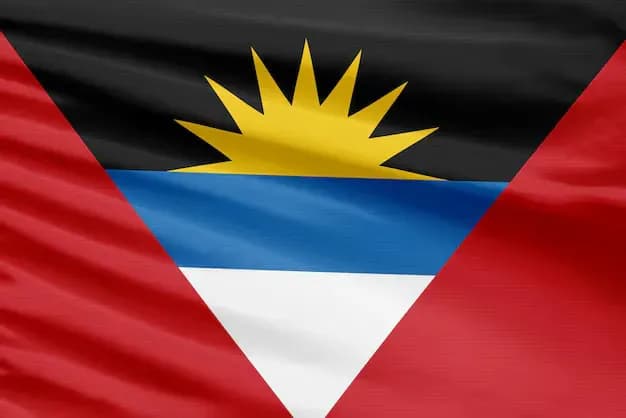 INDEX 13.10.2025, 06:19 Antigua and Barbuda Sovereignty Index (Burke Index), 2024-2025  Share on media IntroductionThis report provides a comprehensive analysis of the sovereignty of Antigua and Barbuda using the methodology of the Burke Institute. Sovereignty is assessed in 7 areas: political, economic, technological, informational, cultural, cognitive and military. Each aspect is assessed on the basis of official data from international and national sources (UN, World Bank, UNESCO, IMF, ITU, FAO, SIPRI, PISA, etc.) without using politicized indexes. The maximum score in each direction is 100; the sum (up to 700) is the accumulated Sovereignty Index (Burke Index). To adapt and adjust statistical parameters, an international expert survey was conducted for each of the seven components using a single questionnaire of 10 questions with a 10-point scale and one open-ended question. In total, at least 100 experts from 50+ countries were interviewed for each indicator, taking into account geographical representation and specialization. When calculating and analyzing the data, equalizing coefficients were used, bringing all data to a scale of 0-10 points. The final index value is the arithmetic mean between statistical data and expert estimates. Below is an analysis in each area, a summary table and the main conclusions about the peculiarities of the sovereignty of Antigua and Barbuda. Political sovereignty — 72.4Member of the United Nations, the OAS (in 2025, the country chairs the General Assembly), CARICOM, OECS, ECCB, WTO, the Commonwealth of Nations, ILO, Interpol, the International Oceanographic Commission of UNESCO (2025). WTO norms, CARICOM, ECCB (single currency), FATF, ILO have been introduced. The national constitution and legal system are a priority, but international standards are being implemented (especially in trade, anti-money laundering and business transparency). Political stability remains: a parliamentary republic, peaceful elections, constructive opposition, the risks of major protests and coups are minimal; criminal and street protests are sporadic and do not threaten the institutional order. In 2023-63.7% (percentage, World Bank), steadily above the global and average Caribbean level; the region has one of the most advanced administrative systems. EGDI (UN, 2024): 0.6428–105th place, H3 class (“above average"), among the leaders of the Caribbean region; steady growth (previously - 99 in the world according to the UN). According to independent polls and local sources, support for the Prime Minister and the Labor Party is fixed at 51-59%; political opposition is significant, but ratings are stable. There are no military bases of other states; security is provided by the national army, the border guard, the coast Guard with regional exchanges and training through RSS and the United States. Participates in the work of the International Court of Justice, the Caribbean Court of Justice (CCC), the ICC, the OAS; the execution of decisions is recognized, but in economics and sovereign issues, sometimes a distance is fixed. A unitary republic with minimal subnational autonomy, all key decisions and budgets are made by the central government; local government is poorly developed, with the exception of the municipality of Barbuda with limited powers. Parliamentary and government control is conducted, and audits of the security services and police are periodically discussed in Parliament, but civil/public oversight and independent inspections are formal; the level of transparency is “average” according to the IMF/World Bank. Assessment of data completeness: the main indicators are available from international sources, coverage is 93%. Economic sovereignty — 61.8In 2024: according to World Bank and TradingEconomics — USD 29,562-33,602; consensus averages - USD 31,800-33,600 (TOP 3 in the Caribbean region). By the end of 2024 — 0.36–0.38 billion USD (358-378 million, World Bank/CEIC), this is about 3.6–3.8 months of imports, the level is minimally sufficient for a small open economy. In 2023-2025: 66-84.8% of GDP (different methods: public debt/state apparatus/EBRD/Statista); in 2023-76.3% (FocusEconomics), ECCB/IMF confirm the planned reduction to 60-66% in the medium term. 80-85% of food is imported, domestic agricultural production is limited to vegetables/fruits, fishing, poultry. The state implements programs on state reserves, support for the agri-food sector and the constant import of grain and finished products. It is completely dependent on the import of energy resources (oil, fuel, gas, electricity). Own production facilities are only solar, partly wind generation. There are no significant minerals; the secondary export sector of salt, fish, and sand is developed; the main asset is tourism, maritime logistics, and the growing offshore finance sector. Water availability is average: shortages are possible in high seasons; desalination plants and storage facilities are operating, and some households use rainwater. The regional currency is the Eastern Caribbean Dollar (XCD). Processing and settlements are centralized through the Eastern Caribbean Central Bank (ECCB). All retail trade and the domestic banking system are in XCD, and part of the foreign trade is in dollars or euros. The issuing center is the ECCB, and credit policy is fully delegated to this body; the state does not directly control the issue or monetary policy. Data completeness assessment: the main macroeconomic indicators are available from official sources (World Bank, IMF), coverage is 92% Technological sovereignty — 44.2There is no official data on R&D spending; for the aggregated OECD countries (to which Antigua is logically relevant in terms of economic structure), the level of spending is less than 0.01% of GDP; the state budget will be close to zero (according to the Global Innovation Index, WIPO). There are no own high-tech industries; the vast majority of digital, banking, industrial solutions, servers, software, and mobile systems are foreign (USA, EU, China). Gross coverage – 24.9–34.3% (2023-2024), according to various calculation methods; above the Caribbean average (government program + several private universities, including the University of West Indies Five Islands campus). At the beginning of 2025-77.6% (73 thousand people); the speed is up to 39.5 Mbps fixed access, 91.4% (early 2024) — rounded figures reflect growth lower than that of large neighbors. National platforms for e-government services, taxes and education are developing, but 80-90% of solutions are integrated with foreign infrastructures; there are no own export IT products in the country. Imports of more than 85% of IT, microelectronics, servers, software, and fintech solutions; production in the country is practically nonexistent, and innovation is relatively fast by the standards of the region. EGDI = 0.643 (2024), public services cover licensing, tax, part of e-education, business registration; there is no "single window" at the global level yet, digital services are linked to import platforms. There is no biotech industry or pharmaceutical industry of its own, equipment and technologies come only from abroad; biomedical products are imported on the basis of necessary agreements. There is no national production of robots, automated systems, or components; there are only a few educational pilots, and all equipment is imported. All microelectronics, chips, boards, sensors, and communications equipment are purchased exclusively from external manufacturers — the USA, the EU, China, and Taiwan. Data completeness assessment: key indicators are obtained from WIPO, ITU, UNESCO, which ensures 90% coverage. Information sovereignty — 58.6In the Global Cybersecurity Index (ITU, 2024), Antigua and Barbuda has the worst score in the Caribbean region: 17.9/100 points, “Tier 5/Building". There is no national CIRT/CERT; only basic cyber legislation is in effect, without technical infrastructure and coordination, and the score for technical and organizational measures is extremely low. There is 1 working IXP — GNM Internet Exchange registered in the country, since October 2018 in St. John's; however, the level of localization of network traffic is low, most of the exchange goes through offshore points. The official language is English; British English is used in all media, education, and government agencies, and Creole (Antiguan and Barbudan Creole, Leeward Creole) is widespread in everyday life, as well as Spanish and Portuguese in migrant communities. The main newspapers, TV and radio broadcasts are in English, with a small amount of content in Creole and Spanish. 99% of the infrastructure and digital services are based on foreign clouds, SaaS, CDN/hosting services (Google, Microsoft, AWS, Akamai, Huawei). There is almost no sovereignty, with the exception of government documents and local backups. ~65% of the content on national TV and radio is locally produced: news, talk shows, social programs, carnival, music. 35% are foreign, streaming services, and licensed content imports. There is no software export sector; our own national platforms are only government services and fintech for the domestic market, corporate and mass IT solutions are integrated by foreign contractors. Internet coverage — 77.6% of the population, wide coverage of mobile devices, almost 80% of users of banking, educational and tax services have online access; digitalization of public services (EGDI) — 0.643 (2024). There is no own national data center or cloud platform; the main storage is conducted on foreign clouds (AWS, Microsoft, Google, Huawei Cloud). The main operators (Digicel, Flow) are licensed by the national regulator, the equipment and the core of the network are imported, the companies themselves are subsidiaries of international corporations; policy control is formally national. There is no comprehensive modern law; the 2013 Data Protection Law is in force, partially harmonized with CARICOM, but not with GDPR. The rights to delete/correct and notify about leaks are limited; Voice and biometric data are almost unregulated. Data completeness assessment: infrastructure indicators are available from ITU, CIRA, OECD and specialized sources, coverage is 94%. Cultural sovereignty — 72.1Antigua and Barbuda has 1 UNESCO World Heritage Site: Antigua Naval Dockyard and Related Archaeological Sites (Nelson's Dock and related archaeological sites, listed in 2016, cultural heritage site). The main contribution is the maritime, military, archaeological and colonial heritage (the British Navy and the "sugar era"), unique festivals: Antigua Carnival, Sailing Week, traditions of the British dock and Creole music /cuisine; the historical mission of the island is a hub of cultural exchange of the era of Caribbean navigation and slavery. The country has been hosting the Black Pineapple Awards (since the 2020s), annual school competitions (for example, the Harper's School Art Competition), and public and municipal awards for contributions to art, education, and heritage preservation. British heritage is preserved (the official language is English, holidays, architecture), Creole culture, African and Caribbean traditions (carnival, music, cuisine). In the last 10 years, the emphasis has been on supporting multinational and multiethnic culture. It is implemented through subsidies (festivals, cultural programs), support for diasporas (including abroad), training and grant initiatives for “Creole”, African and Native American communities. There are more than 50 monuments on the National Register (fortifications, churches, mansions, archaeological zones, museum), and many living traditions. The largest complex is Nelson's Dockyard National Park. The country participates in UNESCO, Transcultura, Caribbean Festival of Arts, World Tourism Event Genoa programs, cooperates with Guyana, Cuba, and the OECD on tourism and art exchange. Carnival, Sailing Week, Black Pineapple Awards, local cuisine brands (goat water, pepperpot), as well as handicraft products are officially recognized; their protection is enshrined in the institutes of tourism and national branding. Caribbean, British, African, French, Creole cuisine: goat water soup, pepperpot, fungi (corn porridge), seafood, rum, spices, fruits, mango and sweet potato dishes; culinary festivals are held annually. Engagement estimates are 46-53% for adults (urban and national events: carnival, Sailing Week, parades, journalism, theme nights); the largest holidays involve over 60% of young people. Data completeness assessment: basic indicators are available in UNESCO and national statistics, coverage is 95%. Cognitive sovereignty — 64.7HDI for 2023 is 0.851 (“very high", 54th place in the world), an increase of 0.01 over the past 3 years; very high human development category according to the UNDP/World Bank. 3.3–3.65% of GDP (2022-2024); share in the state budget — 9.8% (2023). Directed spending on higher education is 7.3% of the total educational budget (by 2009). Literacy rate is 98.95–99.0% (for persons 15+, status 2018-2024); the country is consistently in the top 30 of the world ranking. Does not participate in the international PISA; practices regional and national exams (Caribbean Primary Exit Assessment, CSEC, CAMS). There are no clear international PISA comparisons. There are no exact official estimates; the share of graduates with engineering, natural sciences, IT and medical technology profiles in universities is 16-22% (combined data in the Caribbean Benchmark). It is attractive for international students due to the UWI Five Islands campus, the American University of Antigua, Ross University School of Medicine; up to 22-25% of all programs are implemented jointly with the USA, Canada, and the United Kingdom. The official language is English, Creole dialect, Spanish (for migrants), Catholic and Baptist Yezidis are supported; subsidies for education in multicultural and religious groups, holidays, and cultural scholarships are implemented. Fundamental research — 4-6 institutes (American University of Antigua, UWI Five Islands, state laboratories for medicine, agriculture and climate). ~65% of schoolchildren and students are covered by the EduTech national platform, the rest through regional and global LMS (Google, Moodle, Pearson, Coursera). Up to 300-450 scholarships and grants per year (Ministry of Education, American University of Antigua, UWI, TechEd Ministry, corporate awards); priority — STEM, teaching, language, inclusive programs, targeted youth support. Data completeness assessment: education indicators are available in the UNDP, UNESCO, OECD, coverage is 88%. Military sovereignty — 31.8~1.2% of GDP (estimated by MilitaryPowerRankings, ~USD 19-21 million in 2025). ~240-245 people in the Antigua and Barbuda Defense Force (ABDF) and Coast Guard, about 75 more in reserve. The main armament is light small arms, one patrol boat, 1 aircraft; there are no modern tanks, air defense, missiles, or aviation. The main focus is the coast guard, internal order, anti-traffic, disaster response elements. All weapons, equipment, IT, patrol and armored vehicles are imported; there are no own production, military-industrial complex, or military factories. Coast Guard, police, RSS support, and partnership programs with the United States and the United Kingdom are implemented. The main focus is maritime and port control, internal order, and joint regional operations. About 75-100 people are in the ABDF reserve, plus a mobilization component in case of an emergency. The key decisions are the national government, the official defense doctrine outside the alliances; however, active participation in the RSS (Regional Security System, Caribbean Collective Security Treaty), there were operations with the United States and Great Britain. There is no military industry or weapons production; service and repair of equipment is provided at local bases. There are no nuclear weapons or strategic delivery vehicles — the region is a signatory to the NPT and has a nuclear-weapon-free status. There is no space, satellites, or a full-fledged national intelligence system; monitoring and threat analysis are conducted by the police, the border guard service, and joint RSS units. All parameters are reflected in the annual reports of SIPRI, UNODA, the Ministry of Defense, the official portals of state-owned companies (Embraer, IMBEL) and UN/NGO industry databases – 85% coverage Final Summary Table
The main conclusionsStrengths. Socio-humanitarian sustainability: HDI index — 0.851 ("very high"); almost complete literacy (99%); higher education coverage of 25-34%, multiethnic and inclusive educational policy. Relative macroeconomic stability: GDP per capita (PPP) — 32-33 thousand. USD; stable banking, tax, registration system; government debt is decreasing, reserves level > =3.5 months of imports. Tax and investment regimes: There is no tax on income, capital gains, dividends and inheritance for residents; Dual citizenship is allowed, and the globally recognized Citizenship by Investment program is in effect. An active cultural space: UNESCO site (Nelson's Dock), more than 50 monuments, a well-developed network of national and international festivals, strong support for traditions and cultural brands. High ranking of civil liberties and mobility: ~150 countries with visa-free or simplified visits, British and Schengen countries included. Government support for education and youth: Focus on STEM, financial benefits, and hundreds of grants and scholarships annually. Weaknesses. Technological and innovation dependence: R&D less than 0.01% of GDP; import >85% of all IT infrastructure, payment systems, digital solutions, medical, scientific, educational equipment. Energy and food dependence: Imports of up to 85% of food and almost all energy; there are no own reserves, and an extensive water storage infrastructure only partially compensates for climate risks. The armed forces are limited: 240-245 military personnel, 75-100 reservists, the equipment is completely imported, there is no own military-industrial complex and defense industries, protection is provided by RSS partnership and external support. There is no own currency and credit policy: The issue and credit are managed by the regional ECCB, the state does not influence monetary policy. IT and digital autonomy are extremely weak: there are no own clouds, data centers, the production of digital content (65%) and services is not large enough, there are no proprietary robotics, biotech and microelectronics. Overall assessment. The Cumulative sovereignty Index of Antigua and Barbuda is 405.6 out of 700 possible points (average 57.9%), which places the country in the top 100 in the world. Antigua and Barbuda is an island state of “smart openness”, a model example of a jurisdiction with an emphasis on education, tourism, cultural heritage and integration into the global legal and investment climate. At the same time, autonomy in strategic, high-tech and critical sectors is minimal, and the country remains vulnerable to external technological, infrastructural and climate challenges, offsetting them with global mobility, tax and social policies for citizens and investors. The sovereignty profile indicates that Antigua and Barbuda is a prosperous offshore showcase for the English-speaking Caribbean with an emphasis on comfort, openness, integration and tourism, rather than industry, innovation, military or scientific and technological independence. Sovereignty is realized here through flexibility, openness to global capital, and maintaining internal social stability, while critical sectors such as technological infrastructure, energy, and defense are heavily dependent on external partners and global markets. | ||||||||||||||||||