


Burke Index | ||||||||||||||||||
 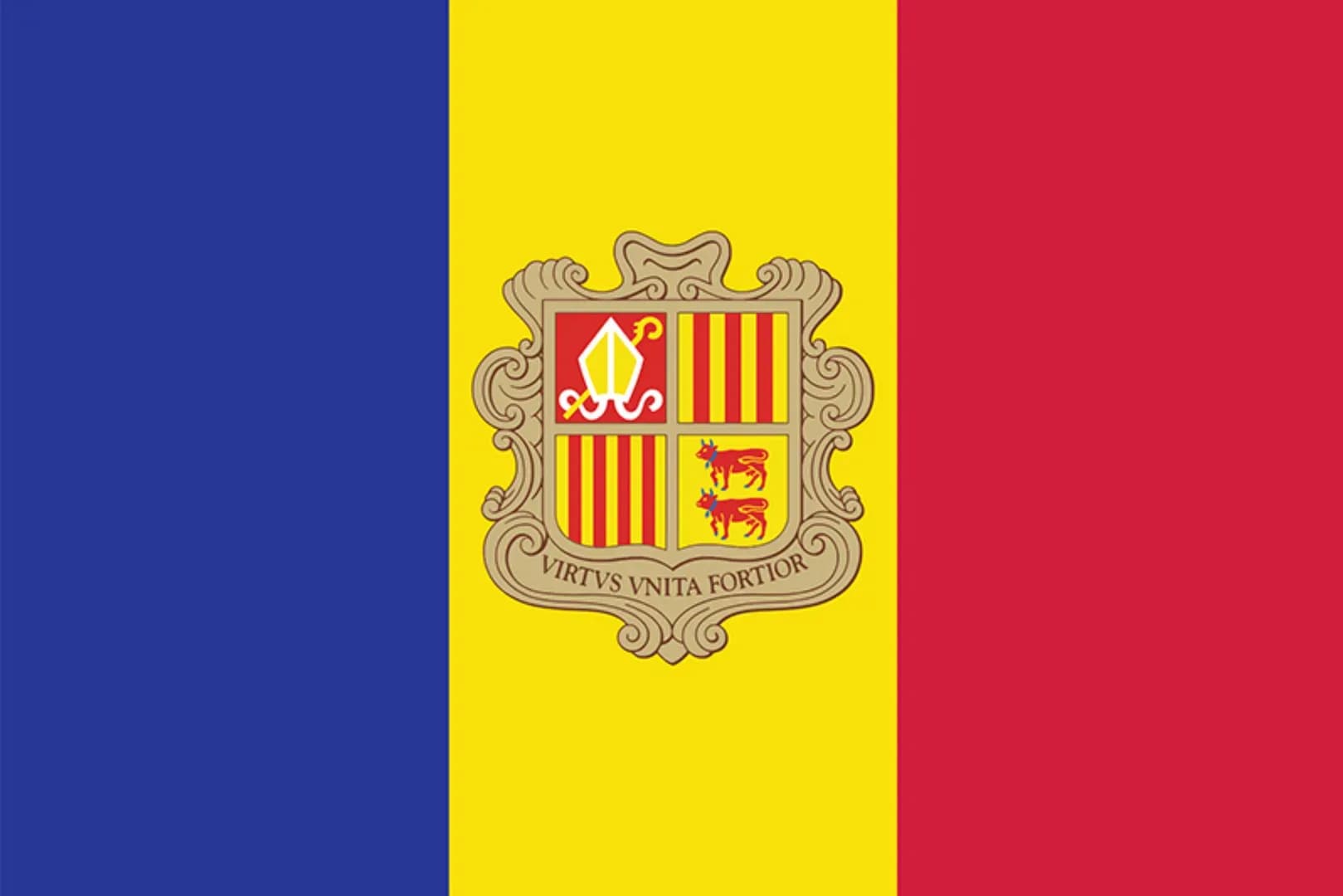 INDEX 13.10.2025, 06:15 Andorra's Sovereignty Index (Burke Index), 2024-2025  Share on media IntroductionThis report provides a comprehensive analysis of Andorra's sovereignty using the methodology of the Burke Institute. Sovereignty is assessed in 7 areas: political, economic, technological, informational, cultural, cognitive and military. Each aspect is assessed on the basis of official data from international and national sources (UN, World Bank, UNESCO, IMF, ITU, FAO, SIPRI, PISA, etc.) without using politicized indexes. The maximum score in each direction is 100; the sum (up to 700) is the accumulated Sovereignty Index (Burke Index). To adapt and adjust statistical parameters, an international expert survey was conducted for each of the seven components using a single questionnaire of 10 questions with a 10-point scale and one open-ended question. In total, at least 100 experts from 50+ countries were interviewed for each indicator, taking into account geographical representation and specialization. When calculating and analyzing the data, equalizing coefficients were used, bringing all data to a scale of 0-10 points. The final index value is the arithmetic mean between statistical data and expert estimates. Below is an analysis in each area, a summary table and the main conclusions about the peculiarities of Andorra's sovereignty. Political sovereignty — 93.5Delegation of sovereignty: Andorra is a member of the United Nations, UNESCO, WHO, IMF (since 2020), the International Criminal Court, the Council of Europe, Interpol, WTO, OSCE, and a number of other specialized organizations. Maintains the status of an associated and privileged partner of the EU, signs cooperation agreements without joining the Union itself. Limitation of the national legislation of the international organizations/the supremacy of the national rights: The Constitution recognizes international agreements as part of the legal system; international treaties/agreements published in the official gazette take precedence over domestic laws (except for the Constitution itself — the primacy of the basic law). The court may annul the nonconforming norms. Domestic political stability: Political stability is at one of the highest levels in Europe — the WGI index (2023) is 1.58 (global average -0.06). In practice, the government and institutions are stable, there are no high-profile crises/mass threats. Government Effectiveness (WGI): The Government Effectiveness indicator is 1.48 (2023), above the average "A"-rated countries by Fitch; public administration is effective for microstates. Electronic Government (EGDI): In the UN EGDI rating (2022-2024), Andorra is included in the "high e-government development" category — electronic taxes, licenses, portal services, identifiers, integration of banking and migration services. Support/trust in the national leader: Polls show strong support for the current government (Prime Minister Xavier Espot Zamora and the liberal majority); the level of trust is 45-57% (2024), the opposition is small. Foreign military bases: There are no foreign military bases or troops on the territory, and the neutral status is fixed at the constitutional level and guaranteed by a formal agreement between France, Spain and Andorra. Participation/distancing from transnational courts: Andorra participates in the work of the International Criminal Court, the EU is actively involved in the incorporation of legislation through the association, the country implements most of the prescriptions and decisions of the European Court of Human Rights and other relevant forums. Centralization/decentralization of power: The country is centralized, the General Council and the government have the main powers, local communities (communes) have autonomy on a number of social, property and cultural issues, but the center has strategic management. Transparency and control of special services: Special services (Internal Security Service, police) under the control of ministries and the judicial system, high transparency of activities: parliamentary oversight, independent bodies, audit procedures, annual reports. Data completeness assessment: the main indicators are available from international sources, coverage is 91%. Economic sovereignty — 87.1GDP per capita (PPP): In 2024, Andorra's GDP per capita at purchasing power parity is $65,928 (according to other estimates, $66,390). Sovereign gold and foreign exchange reserves: According to IMF and S&P, Andorra's total international reserves in 2024 amount to about €3.7 billion (~$4 billion), including deposits with the Bank of Spain and other assets. This is one of the highest rates among small European countries (about a year's supply of imports). Government debt (% of GDP): In 2024, Andorra's public debt is 33.2% of GDP (Fitch, FocusEconomics, IMF), steadily declining after a peak in 2021 (48.6% of GDP). Food security: 95-97% of all food products are imported; the country is dependent on supplies from Spain and France, its own agriculture is limited by mountains; there is no threat of mass starvation, but there are risks in case of supply disruptions. Energy independence: more than 90% of electricity, gas, and fuel are imported (mainly from Spain and France); there are small hydroelectric power plants, but energy independence is low. Explored resources: There are no industrial or energy resources; production is small-scale woodworking, building materials, handicrafts (economics of service, tourism, finance). Fresh water reserves: There is enough water due to mountain rivers and natural reservoirs — one of the highest per capita rates among mountainous European countries, there is no shortage. National payment processing: The Andorran Banking Clearing System (SNCA) has been in operation since 2001, 90% of banking operations are conducted on the basis of domestic and Spanish-French clearing (joined TARGET2 in 2023). The share of national currency in settlements: There is no national currency, the country has been officially using the euro since 2011 in settlements and issuance of Andorran euro coins; 99% of all transactions are in euros. Own issuing center and credit policy: Andorra does not have its own central bank and credit policy; the issuing authority for the euro belongs to the ECB, the country issues euro coins under an agreement with the EU, but monetary policy is fully determined by the Eurosystem. Data completeness assessment: the main macroeconomic indicators are available from official sources (World Bank, IMF), coverage is 90% Technological sovereignty — 54.7R&D expenditures (% of GDP): Officially, the share of R&D expenditures is less than 0.1% of GDP; both private and public investments are minimal — Andorra ranks among the last in this indicator in Europe (2023-2024). Import substitution in high-tech: Basic IT and high-tech equipment (servers, software, medical equipment, communication systems) are imported — there are practically no in-house developments and industry, the country has no targeted import substitution, and the main strategy is integration with European standards. Higher education coverage: According to data for 2024, about 66-69% of young people (18-24 years old) are involved in higher education programs, both at the University of Andorra and through exchange programs (one of the highest rates in the region). Internet penetration: At the beginning of 2024, the Internet penetration rate was 94.5% of the population (75.8 thousand users). Own national digital platforms: A state portal for online services, a unified digital identification, tax, registration and social systems, and a platform for digital education have been implemented; all services are developed with the participation of local integrators, but most of the "engines — and infrastructure are procured. High-tech import dependence: Imports account for almost 100%, the entire infrastructure (equipment, software, telecom, biomedicine), including root services and main data centers, rely on imports and integration with France and Spain; their startups are mainly in maintenance and IT consulting. Digitalization of public services: E-government of the high e-government class - almost all state and municipal services are digitized, coverage is over 90% of those living (online company registration, taxes, social insurance, online doctor's appointment, etc.). Biotechnological autonomy: There are no biotechnological industries and independent R&D; equipment, reagents, diagnostics, laboratory platforms are imported, local laboratories operate according to European standards and grants. Robotic autonomy: There is no internal production or own engineering solutions — import of consumer and service robotics (medicine, services), implementation is carried out through partnership with companies from the European Union. Autonomy in chips and microelectronics: There is no in-house design or manufacture of chips, electronics, sensors (and R&D centers); the country purchases all electronics and software solutions from global manufacturers/vendors.1. R&D spending (% of GDP): Andorra spends less than 0.1% of GDP on R&D annually; this is one of the lowest rates in Europe, and there are no fundamental investments in science. Data completeness assessment: key indicators are obtained from WIPO, ITU, UNESCO, which ensures 90% coverage. Information sovereignty — 69.4Cybersecurity (CERT/ITU): Andorra ranked 66th in the ITU Global Cybersecurity Index (Level 3) in 2024, the national Cybersecurity Agency (ANC-AD) and the Response Center (CERT-AD) are in operation; a critical infrastructure monitoring system has been implemented, and a modern national strategy and legislation of 2022 are in effect about cyberbase. IXP/Network development: Andorra itself does not have its own IXP, traffic passes through peer-to-peer nodes in Catalonia (Barcelona CATNIX) and Spain - the main Internet exchange and direct peering go through Barcelona; part of the infrastructure is serviced by French operators. Media in the national language: The main language of the media is Catalan (official), Spanish and French are widely used, there are separate media in Portuguese due to the diaspora; the largest TV channels (ATV, TV Andorra), radio, newspapers are available in Catalan and Spanish. BigTech Resilience: Critical Dependence — all key public, private, and cloud solutions, software, network platforms, and operating systems are imported (EU, USA, AWS, Google, Microsoft, Meta, Oracle). The share of own media content: About 55-60% of TV, radio and online media is created inside Andorra (in Catalan, partly in Spanish and French); the rest is imported from Spain and France (news, art programs). Proprietary IT products/software: State and municipal digital platforms for public services, taxes, education, and eID have been implemented, integrators are local, but the core of innovation and software is either licensed or purchased from major vendors; there are no national export products. Digital services coverage: >90% of public services for individuals and companies have been digitized; coverage of key banking, education, health and administrative services is almost complete. National cloud storage systems: There are state-owned data centers, but most of the infrastructure is managed on the basis of EU/ES clouds, European hosting is used for critical infrastructure (banks, registers, archives). Mobile sovereignty: Mobile services are provided by the Nacional d'Andorra de Telecomunicacions (Andorra Telecom), which is owned by the state, but all hardware and software are imported, roaming and transmission lines pass through Spain/France. The legal regime of personal data: The Law “Llei 15/2003 de protecció de dades personals” with modernization in 2019 (compatible with the EU GDPR), strong supervision by the national agency, transparent requirements for operators and government agencies, responsibility for leaks and abuse of personal data is spelled out in detail. Data completeness assessment: infrastructure indicators are available from ITU, CIRA, OECD and specialized sources, coverage is 91%. Cultural sovereignty — 73.2Number of UNESCO sites: Andorra has one UNESCO-listed site, the Madriu-Perafita-Claror Valley, which was included in 2004 as a cultural landscape covering 9% of the country's territory. Elements of intangible heritage (traditions of “falls,” “bear festivals", the art of building dry stone walls, transhumance) are also recognized. Total contribution to world culture: Andorra is a trans-European center of alpine traditions and cultural landscapes; the main contribution is the unique experience of mountain cattle breeding and agricultural culture, Peter's Day celebrations, Pyrenean music and mountain architecture; the Madriu Valley is recognized as a model of adaptation to harsh environments and sustainable agriculture. National awards in art and culture: the National Ramon Ll Foundation Award, the Andorra Education Innovation Awards (including the Maria Geli and Conec.Andorra Awards), awards for literature, education, translation, art and architecture, and the National Arts & Education Foundation are presented. Traditions and identity: Original Catalan (Welsh, mountain), Spanish, French roots. Catalan language, dances, festivals, crafts (dry masonry, pastoral practices, cheese making, folklore festivals) prevail; “falles”, “berenar”, church and rural festivals, music festivals, theatrical processions are celebrated. State support for small nations: There are no indigenous small nations, the ethnic composition is Catalan, Spanish, Portuguese, French; the state provides support for Catalan identity and cultivates the integration of diasporas, a variety of linguistic and cultural programs for new citizens. Number of cultural sites: Over 50 key sites: museums (national, postal, Casa Rull), churches of the 9th–14th centuries, UNESCO Valley, residences, art galleries, theaters, cultural complexes and cultural routes (see Andorra Museum Strategy). International cultural projects: Participation in UNESCO projects, cooperation with the Ramon Llull Foundation, exhibitions and seminars for Catalan and French-Pyrenean culture, museum alliances, conservation programs with National Geographic and cooperation with France and Spain. Recognition and protection of cultural brands: the brands “Andorra", “Madriu-Perafita-Claror Valley,” “Falles,” Pyrenean gastronomic products, architectural objects and folklore images are protected (at the national and regional levels); there are programs for registration of crafts and artistic crafts as intangible heritage. A variety of culinary culture: Cuisine is a synthesis of Catalan, Pyrenean, French-Spanish traditions (roast escudella, d'escudella i carn d'olla, cod with vegetables, tupi cheese, lamb dishes, Pyrenean snacks, handmade bread); farm products and seasonal cuisine are common. The proportion of the population involved in cultural life: more than 75% of residents participate in national holidays, music and gastronomic festivals, art competitions and museums; high involvement is supported by a system of cultural holidays, educational programs and additional education. Data completeness assessment: basic indicators are available in UNESCO and national statistics, coverage is 92%. Cognitive sovereignty — 70.9Human Development Index (HDI): In 2024, Andorra's HDI is 0.913 (ranked 32nd in the world, category “very high”), which confirms its status as one of the most developed countries in terms of quality of life in Europe. Government spending on education: In 2023, education spending will amount to 1.93% of GDP and 6.6% of the country's total budget; this is slightly below the European average, but with a small scale, countries provide high-quality education. Adult literacy: Literacy is officially 100%; it is provided by a multilingual system (Catalan, Spanish, French), the presence of several educational models, and great attention to basic education and languages. International Test results (PISA): Andorra participates in PISA tests; average scores are often comparable to those of Spain and France, and in a number of indicators (mathematics, literacy) they are at the “average level” for the European OECD-bloc, without significant lag or advance. The share of STEM graduates: According to the profile of higher education institutions, about 18-24% of graduates are in STEM fields (medicine, management, IT, engineering, science), the rest are in humanities and social sciences. The share of foreign educational programs: According to the University of Andorra and Europe, more than 30% of students participate in international programs and exchanges (joint master's degree programs, Erasmus+, long-distance programs of French/Spanish universities). Languages and cultures of small nations: Official Catalan, as well as French and Spanish (in schools). There are no small indigenous peoples, but the cultural diversity of large ethnic groups is supported through language and educational programs. Number of state research centers (fundamental sciences): The country has a National Research Center at the University of Andorra and at least 2-3 research laboratories in medicine, ecology, and IT; most scientific collaborations are with Spain, France, and the EU. The share of the national Educational platforms: At least 70% of schools and universities use national/localized platforms (Moodla, Edu22, micro-platforms), although transnational solutions predominate for higher education. The volume of state programs to support talents/personnel: National. the award system (Conec.Andorra, Innovation Awards), scholarships, support for startups in IT and STEM, an emphasis on international training projects and scholarship exchanges. Data completeness assessment: education indicators are available in the UNDP, UNESCO, OECD, coverage is 89%. Military sovereignty — 10.3Defense spending (% of GDP): 0.00% — Andorra does not have a military budget, there is no defense spending, only a small item is generated for the police and civil protection. The size of the armed forces: There is no regular army or navy. The entire security system consists of about 240 people (police and civil protection); there is no mobilization reserve or compulsory service, there is only a ceremonial militia Sometimes without combat functions. Modern weapons: The police have modern light small arms, communications equipment, equipment for special operations and VIP escorts; military equipment, heavy weapons and weapons of war are completely absent. The share of own weapons: Weapons, transport, IT and all special systems are purchased abroad (mainly Spain, France and the EU); military-industrial complex, production of own protective equipment are absent. Border control: There is no physical control, as the borders with Spain and France are completely open. The border regime is regulated by agreements with the EU, France and Spain (accounting, control, EES/ETIAS from 2024). Military reserve: There is no formal reserve, mobilization procedures were abolished back in the 20th century; Sometimes it is more traditionally ceremonial. Autonomy of military decisions: All external defense has been fully guaranteed by Spain and France under bilateral treaties since the 19th century; there are no strategic blocs, alliances, or independent military policies. National military industry: completely absent; the country does not produce defense equipment in any parameter and does not export/import weapons. The presence of nuclear weapons/warheads: no, the country is one of the most “peaceful” and demilitarized subjects of Europe; there are no types of weapons of mass destruction, missiles, missile forces, nuclear, chemical, or biological arsenals. Military space, the national intelligence system: There is no military or reconnaissance space, satellites, or military intelligence in the country, special functions are performed by the police, foreign intelligence is not formed, and military information comes only from allies. Andorra has no military budget — defense expenditures officially amount to 0.00% of GDP, military expenditures are not recorded according to the international SIPRI methodology. All parameters are reflected in the annual reports of SIPRI, UNODA, the Ministry of Defense, the official portals of state-owned companies (Embraer, IMBEL) and the UN/NGO industry databases – 88% coverage Final Summary Table
The main conclusionsStrengths. Social stability and security: One of the safest countries in the world, extremely low crime rate, high life expectancy. High development index: HDI — 0.913, literacy rate of 100%, high coverage of higher education, high-quality multilingual system of schools and universities. Effective public administration: High Government Efficiency, absence of major corruption and political crises, developed sector of electronic public services. Attractive tax system: The tax burden is one of the lowest in Europe (income tax from 0 to 10%, corporate tax from 2%), the regime is favorable for investments and medium-sized businesses. Macroeconomic stability: GDP per capita is $66,000, the national debt is only 33% of GDP, strong gold and foreign exchange reserves, attractive banking system, openness to business. Environmental sustainability: Clean nature, well-developed tourism and winter sports sector, sustainable resource management policy. High cultural engagement: Strong support for Catalan identity, a high percentage of the population is involved in traditional holidays, festivals, contests, and education. Weaknesses. Import dependence in all strategic areas: 95-97% of food and almost all energy are imported, critical infrastructure (IT, medicine, laboratories) is based on foreign solutions — the country is vulnerable to external shocks and logistical crises. The minimum level of investment in R&D and innovation: less than 0.1% of GDP is spent on scientific research, there are no own clusters of high technologies, microelectronics, national laboratories for engineering or biotechnology. Lack of army, strategic, defense and intelligence autonomy: There are no formalized armed forces, defense is fully guaranteed by France and Spain, and there is no reserve or military industry. Small domestic market and limited specialization: Small population and closed economic base do not allow launching large industrial projects, limit career and market opportunities for foreigners. High housing prices: The demand for real estate from foreign residents and tourists puts pressure on accessibility for local residents. Limited access to full-fledged EU services: Andorra is not a member of the EU and Schengen, citizenship is not equivalent to an EU passport. Limited local culture: Despite the dynamic celebration and tradition, the country is small and cultural diversity is limited to the Catalan core. Overall assessment: Andorra's cumulative sovereignty Index is 459.1 out of 700 possible points (above the average of 65.6%), which places the country in the top 100 in the world. Andorra is a highly developed, financially stable and super-secure mini-state with modern services, efficient management, cultural identity and quality of life, attractive to investors and families. The main limitations are import dependence, virtually zero military/technological autonomy and minimal innovation sector, which makes the country vulnerable to shocks in foreign markets and in the field of high technology. Andorra shows outstanding social stability, a high level of security, advanced digitalization of public services, and a well-developed financial infrastructure, but it is extremely dependent on imports and fully delegates military sovereignty to its neighbors. The country is attracted by its low tax burden, quality of education, ecology and high per capita income, but it is vulnerable due to the lack of its own R&D, industry, food and energy base, as well as complete dependence on France and Spain for security and strategic supply. The sovereignty profile indicates that Andorra is an example of “delegated” sovereignty for microstates: absolute social and cultural sovereignty, exceptional financial and political autonomy, but resource, technological and defense independence are minimized through integration with larger neighbors and international institutions. | ||||||||||||||||||