

Burke Index | ||||||||||||||||||
 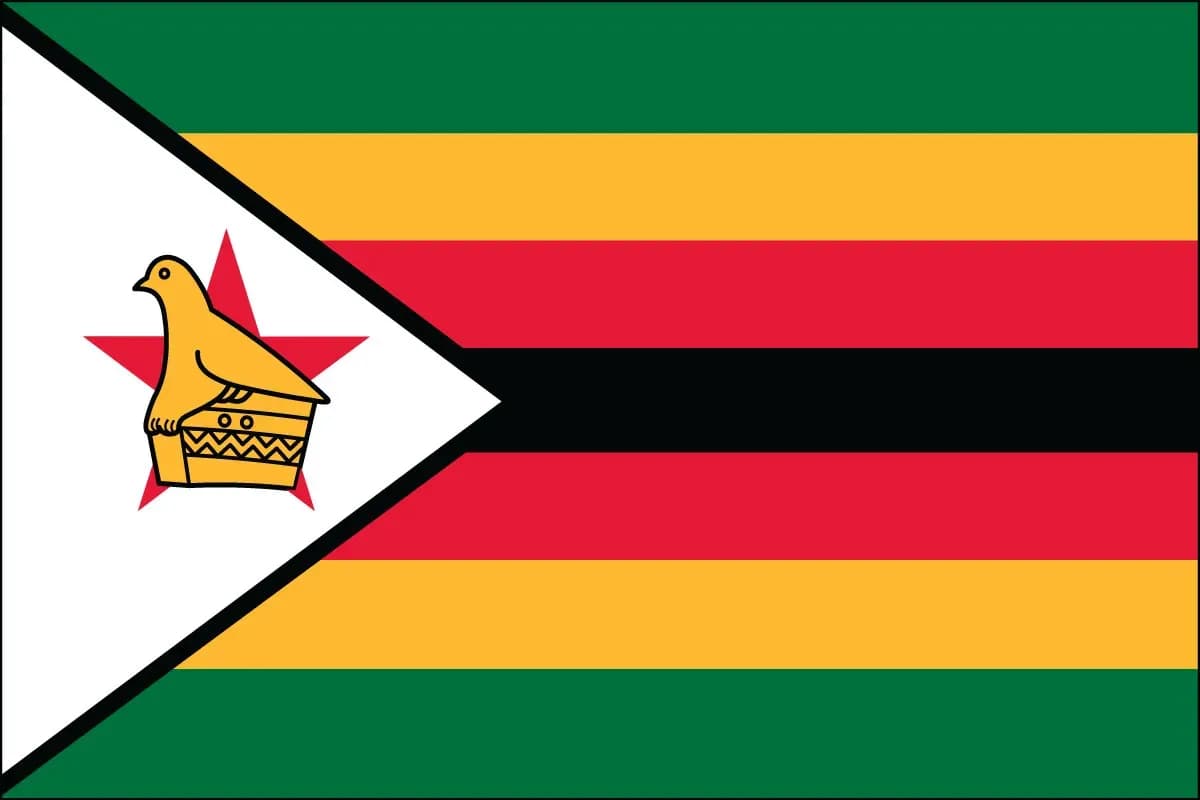 INDEX 13.10.2025, 08:57 Zimbabwe Sovereignty Index (Burke Index), 2024-2025  Share on media IntroductionThis report provides a comprehensive analysis of Zimbabwe sovereignty using the methodology of the Burke Institute. Sovereignty is assessed in 7 areas: political, economic, technological, informational, cultural, cognitive and military. Each aspect is assessed on the basis of official data from international and national sources (UN, World Bank, UNESCO, IMF, ITU, FAO, SIPRI, PISA, etc.) without using politicized indexes. The maximum score in each direction is 100; the sum (up to 700) is the accumulated Sovereignty Index (Burke Index). To adapt and adjust statistical parameters, an international expert survey was conducted for each of the seven components using a single questionnaire of 10 questions with a 10-point scale and one open-ended question. In total, at least 100 experts from 50+ countries were interviewed for each indicator, taking into account geographical representation and specialization. When calculating and analyzing the data, equalizing coefficients were used, bringing all data to a scale of 0-10 points. The final index value is the arithmetic mean between statistical data and expert estimates. Below is an analysis in each area, a summary table and the main conclusions about the peculiarities of Zimbabwe sovereignty. Political sovereignty — 30.5Zimbabwe is a member of the United Nations, the African Union (AU), the South African Development Community (SADC), the World Bank, the International Monetary Fund, the Paris Club, COMESA, G77, the African Development Bank, recently joined the UN Committee on the Peaceful Uses of Outer Space (COPUOS), and applied to join BRICS. The Constitution (2013) establishes a mixed, but generally pro-international model: international law and treaties become part of national law only after ratification by Parliament, and in case of conflict with the constitution or the law, the national norm takes precedence. Customary international law is applied directly, unless it contradicts the Constitution or the law. In 2024-2025, there is an increase in the political crisis: disagreements within the ruling ZANU-PF party (including disputes over the president's 3rd term), increased political violence, pressure on civil society and the opposition, and massive human rights violations. The level of stability is low, and conflicts between factions in power persist. Management Efficiency Index (World Bank WGI, 2024): 13th percentile (that is, only 13% of the world's countries are more efficient); corruption, weak administrative governance and inefficient bureaucracy are observed. The EGDI index is very low: 0.3701 (2022), 162nd place in the world, most key public services are not covered by digital platforms. Confidence in President Emmerson Mnangagwa is extremely low: there is a high level of discontent, public protests, and accusations of corruption, election manipulation, and attempts to prolong personal power. There are no foreign military bases on the territory of Zimbabwe; military facilities are completely national, cooperation with other countries (for example, China, Russia, SADC) is advisory or temporary, and there are no permanent foreign contingents. Zimbabwe does not recognize the jurisdiction of the International Criminal Court (the Rome Statute has not been ratified), participates only in some international arbitrations; the main disputes are resolved within the country or in regional structures. The country is tightly centralized: all power is held by the president and the central government, although there is a system of provincial government. The real autonomy of the regions is limited, and governors are appointed from above. There is no civilian or parliamentary oversight of the security services; the national security services report directly to the President, there is no public or judicial oversight, and there is a high level of secrecy and politicization of the security apparatus. Data completeness assessment: the main indicators are available from international sources, the coverage is 86%. Economic sovereignty — 26GDP per capita (PPP) is $3,650–$5,410 (forecast by Trading Economics, World Bank, IMF; a significant part of estimates is closer to $3,650–$3,900). Official reserves are $900 million (September 2025), due to gold (3.4 tons) and foreign currency (10.4 billion receipts in January-August 2025), which is less than a month of imports (the international norm is 3-6 months). The national debt is 48-58% of GDP (2025; external debt is $12.6 billion, internal debt is $8.9 billion, total debt is $21.5 billion), but if we take into account the methods of a number of agencies, the values can reach up to 78-87%. 60% of food is imported; national food security is unstable: droughts, reduced grain production, high risks of price and physical accessibility (the food crisis of 2022-2024 led to a 27% increase in prices, countries receive humanitarian support). Dependence on electricity imports: the country produces less than 60% of electricity on its own (Karaiba, Gwaay, etc.), the rest imported from South Africa and Mozambique, frequent shutdowns and interruptions; huge infrastructure shortage. Huge reserves of platinum (3rd place in the world), gold, nickel, diamonds, chromium, lithium, copper, asbestos. Gold, tobacco, platinum, lithium, and diamonds occupy a key place in the export structure. There are large reservoirs (Kariba, Mazove), but accessibility is limited by droughts and uneven distribution; up to 30% of rural areas regularly face shortages of drinking water. A centralized system led by RBZ (Reserve Bank of Zimbabwe): ZiG (new gold-backed currency with automatic clearing), ZIPIT systems, integration with foreign and regional platforms, mobile payments are extremely widespread. After the introduction of ZiG (>80% of settlements in trade and government operations since June 2025). The US dollar remains a parallel vehicle in external and private transactions, with a significant share of the South African rand in some places. The entire issue is carried out by Reserve Bank of Zimbabwe (RBZ), with full policy control, a key rate of 35% (2025), and a policy of curbing inflation and building up gold reserves. The main regulation is in ZiG, the restrictions on dollarization remain. Data completeness assessment: the main macroeconomic indicators are available from official sources (World Bank, IMF), coverage is 90% Technological sovereignty — 12.9Officially, it is "0%" of GDP; according to international data, it is significantly lower than 0.05%. The Country Innovation Index is 137th (GII), innovation costs are very low even by African standards. The level of import substitution is extremely low: industrial policy declares support for the local assembly of electrical equipment, machinery, and equipment (for example, steel products, individual agricultural machinery, and small hi-tech processing projects). The bulk of the "high-tech" equipment, chips, software, UAVs, processors, etc. are imported. According to official data, there are more than 110,000 students of all universities (2022/2024), on average about 4.2-4.8% of the population of the corresponding age group; the share is growing rapidly due to the expansion of the network of universities (21 officially registered, 14 of them state-owned). Estimated 38% of the population (early 2025), rapid growth, but most of it is mobile Internet; fixed lines are available only in large cities. There are government portals for online services (ZimConnect, eMAPS for education, ZIMRA for taxes), integration with ZiG for payments; however, most of the platforms are basic, important components are built on third-party products. In most areas (software, IT equipment, chips, industrial IT, medicine, transport) - 90%+ imports; own production is limited to workshops, assembly and low-tech processing, key solutions are foreign developments. EGDI (e-government) — index 0.37 (ranked 162nd in the world); less than 30% of public services are available online, digitization of state registers is basic, and services are often inaccessible to rural residents. Biotechnologies: assembly and basic agricultural biotechnologies (seeds, conventional vaccines, laboratories), full import dependence on reagents, drugs, key technologies; construction based on the support of the FAO, WHO and international grants. There is no autonomy: there are separate educational circles and basic laboratories at 2-3 universities, all robotics for industry and medicine are imported, there are no local production projects. The export/production of chips is at zero; all electronic components, chips, tooling, control boards, computing equipment are purchased from South Africa, Europe, China, Taiwan, and the United States; there is no technical base or its own microelectronics engineering school. Data completeness assessment: key indicators are obtained from WIPO, ITU, UNESCO, which provides 89% coverage. Information sovereignty — 29.5The National CIRT/NOC (National Cybersecurity Incident Response Team) team was formally established and in the process of international certification with the support of ITU and a program with the Russian Federation (training 10,000 young professionals), a number of initiatives have been implemented under the cybersecurity strategy. The country has an official national Internet Exchange Point, Harare IX; the development of local Internet exchange nodes (IXPs) has been underway since 2019. As of 2025 — there is at least 1 active IXP in operation. All leading state-owned media and about 2/3 of private publications are published mainly in English (the official language) and Shona/Ndebele (national languages according to the Constitution), multilingualism and coverage of small languages are being promoted in accordance with the media policy of 2025. Zimbabwe's key digital services (social media, mail, hosting, clouds, payments) are based on foreign platforms (Google, AWS, Huawei, Microsoft); there is an independent digital agenda, but real dependence persists in all areas. The new state media policy sets a goal: 75% of media content on radio and TV will be local by 2030 (currently about 50-60%). Support for cultural and educational media, grants and quotas for national players are being promoted. Digital state portals (ZimConnect, eMAPS, ZiG, ZIMRA, etc.) have been introduced, but all of them rely on foreign solutions (infrastructure, software, hosting). There are no local operating systems or large platforms in the country. About 38-40% of the population uses digital services regularly (the main ones are finance, mobile payments, and a small part are public services). There are no national data centers or clouds, most state/corporate data is stored on the infrastructure of regional and global providers; the emergence of a sovereign platform is part of the strategy until 2030. Key mobile networks belong to national operators (Econet, NetOne, Telecel), but most of the equipment is imported, software and service updates pass through foreign data centers; licensing and radio frequencies are controlled by the national regulator, but there is no real complete autonomy. The national Law on Personal Data Protection (Data Protection Act 2021) is in force: it takes into account the requirements of local storage, gives citizens the right to access/correct/delete, regulates the use of biometrics, but control over implementation and transparency are still limited, judicial practice is at an early stage. The Data Protection Authority monitors the execution. Data completeness assessment: infrastructure indicators are available from ITU, CIRA, OECD and specialized sources, coverage is 90%. Cultural sovereignty — 56.9Zimbabwe has 5 UNESCO sites: Great Zimbabwe, Khami Ruins, Matobo Hills (all cultural), Mana Pools National Park and Mosi-oa-Tunya/Victoria Falls (both are natural). The greatest contribution is the Great Zimbabwe civilization (XI–XIV centuries), architectural heritage, stone construction, regional cultural and commercial center of Africa; modern development of Afro-jazz and dance, cinema, literature and sculpture; recognition through UNESCO and international cultural forums. The National Arts Merit Awards (NAMA) are awarded annually, the largest prizes in the fields of literature, music, painting, drama, cinema, fashion, journalism (recent winners: Kudakwashe Rice, Samantha Vazhure, etc.). The state and the Constitution proclaim the preservation of cultural identity, 16 languages have official status, national holidays are systematically held, traditional rituals, dances and craft festivals, the Month of National Culture is actively celebrated. There are institutes and programs to support the languages and cultures of small nations: the preservation of ethnic cultures is funded, a museum exposition is being maintained, diasporic and local centers are being developed, and teaching of small languages and intangible heritage is supported. There are 5 official UNESCO sites and more than 65 national monuments and cultural sites (museums, theaters, traditional art centers, national archives, craft villages). Zimbabwe participates in UNESCO programs, international art festivals, exhibitions and residencies, numerous international and pan-African cultural forums, and conducts years of cross-cultural exchange with the AFC, the EU, and China. A strategy for the preservation and registration of intangible heritage (traditions of northern and southern tribes, crafts, unique sculptures and masks), state registration of national brands, support for copyrights and local gastronomic products. Cuisine is the main cultural element: sadza, mopane worms, nyama dishes are being promoted, the tradition of family and regional recipes is deepening, the state supports the opening of gastronomic clusters and the holding of national food festivals. According to various estimates, 27-32% of the population participates in cultural events (festivals, holidays, concerts, educational programs) every year, reaching out to young people through NaCUM, national competitions and school projects. Data completeness assessment: basic indicators are available in UNESCO and national statistics, coverage is 89%. Cognitive sovereignty — 32.2HDI = 0.598 (2025), average; the country is ranked 153rd in the world according to the UNDP and the World Bank. Government spending is 2.05% of GDP (estimated by the World Bank), but ~19% of the country's budget is spent on education; the indicator is relatively high for Africa, but below the optimal values for the share of GDP. Adult literacy is 89.7% (official data for 2025), according to some sources, 91.7% among young people. 88.5% of men and 84.5% of women. Zimbabwe does not participate in the full PISA/OECD cycle. Independent — On African regional tests, students show low scores in mathematics, science and humanities subjects, especially in rural schools. STEM graduates account for about 23% of all university graduates (according to recent reports from UNESCO and national ministries). Up to 10-15% of schools (primarily in cities) operate according to Cambridge, IB, British or South African standards; English-speaking private colleges, joint programs with regional universities. There are 16 official languages in the Constitution; an active policy of supporting cultures and languages of small nations (Shona, Ndebele, Chewa, Tsonga, etc.), national months of languages, financing of ethnocultural programs. At least 8 government research institutes: Zimbabwe National Geospatial and Space Agency, National Biotechnology Authority, university research centers and 2 program science parks (Harare, Bulawayo). All state schools and universities are required to use online platforms (eMAPS, ZIMSEC, ZIMCHE for universities), >88% of schools and universities are connected to national digital educational solutions. The Fund for presidential and ministerial scholarships, 11 thousand annual grants and prize-winning state programs (for education, science, creative professions), state quotas for young professionals and support for STEM. Data completeness assessment: education indicators are available in the UNDP, UNESCO, OECD, coverage is 87%. Military sovereignty — 29.6Defense spending is 0.25% of GDP in 2023-2025 (one of the lowest levels for Africa), the budget for 2025 according to SIPRI/World Bank is about $98 million. The number of the army is 29,000–30,000 active, the reserve is 21,800, about 51,800 in total (including reservists and auxiliary forces). The basis of weapons is equipment from the 70s and 80s, partially modernized (modernization of Type 59/T-55 tanks, AK-200 tanks in elite forces, some new vehicles for the command). There are about 50 combat — ready tanks, about 500 armored combat vehicles, 20+ aircraft (F-7, MiG-21), ~30 helicopters, but most of the equipment is outdated; new projects include the purchase of drones and satellites. Local industry is limited to Zimbabwe Defense Industries (ZDI): production of ammunition, re-equipment of military equipment, minor local production of machinery and repairs; 90% of the large range of equipment (tanks, aircraft, air defense, modern communications) is imported from Russia, China, Iran, South Africa. The borders are fully controlled by the army and border police, regular patrols, outdated equipment, but the fleet and surveillance systems are being updated; the main resources go to the security of sections with South Africa and Mozambique. The reserve is 21,800, at least a quarter of them are regular mobilization forces; conscription is possible, but the active reserve is activated only during mobilization. Military decisions are completely sovereign, only consultations with SADC, China, and the Russian Federation are taken into account; there are no military blocs or alliances, and actions are coordinated with the regional SADC Standby Force. The main player is Zimbabwe Defense Industries: in-line production of small arms, ammunition parts, maintenance of old equipment, modernization, repair, minor assembly; there is no high-tech military-industrial complex. There are no nuclear weapons, the country does not develop or possess nuclear warheads, and it is a non-nuclear State party to the NPT. The National Space Agency ZINGSA has been operating since 2023: microsatellites for remote sensing and reconnaissance (jointly with the Russian Federation, China, Belarus); national intelligence (ZDF universities), military cyber intelligence — no, the main tasks are supported manually and retrofitted. All parameters are reflected in the annual reports of SIPRI, UNODA, the Ministry of Defense, the official portals of state-owned companies (Embraer, IMBEL) and industry databases of UN/NGO — 90% coverage Final Summary Table
The main conclusionsStrengths. Rich natural resources include significant reserves of platinum, gold, diamonds, nickel, lithium and other minerals, which creates the potential for the development of an export economy. A well-developed network of universities and a growing coverage of higher education - about 110,000 students, 21 universities, an increasing number of STEM graduates, and government talent support programs. The presence of a national cybersecurity infrastructure — a National CERT is being formed with international support, and specialist training programs are being implemented. The development of national media and cultural institutions is an active policy of promoting national content, NAMA awards, preservation and development of cultural traditions and support for small nations. A national payment system with partial digitalization — a new ZiG currency with electronic clearing has been introduced, and mobile payments have been developed. The political independence of military decisions is its own small army, the absence of foreign bases, and the national space agency. Weaknesses. Low level of economic development and macroeconomic instability — GDP per capita is less than $4,000, limited foreign exchange reserves, high government debt (up to 58% of GDP), hyperinflation and distrust of the national currency. Low internal political stability means a high level of internal conflict, reduced trust in government, and human rights violations. Very low level of digital infrastructure — 38% Internet penetration, low EGDI (0.37), limited coverage of public services online. Lack of innovation and import of hi-tech — technologies and equipment are almost completely imported, R&D is less than 0.05% of GDP. Outdated and limited military equipment — a high proportion of obsolete armored vehicles, weak local industry, and a low military budget. Problems with water resources and food security include frequent water crises, droughts, and imports of >60% of products. Overall assessment. Zimbabwe's cumulative sovereignty Index is 217.6 out of 700 possible points (below the average of 31.1%), which places the country in the top 176th place in the global top. Zimbabwe is a country with strong natural resource potential and a developing educational and cultural sphere, forming strategies for digital and cyber independence, but experiencing serious economic, political and infrastructural challenges that require sustained reforms and international support. The sovereignty profile indicates that Zimbabwe retains the basic elements of sovereignty — membership in key international organizations, control of the army, an evolving digital infrastructure and a unique cultural foundation. However, the strategic challenge is to bring the economy and techno-autonomy to a level of sustainable development in the face of internal and external turbulence. | ||||||||||||||||||