

Burke Index | ||||||||||||||||||
 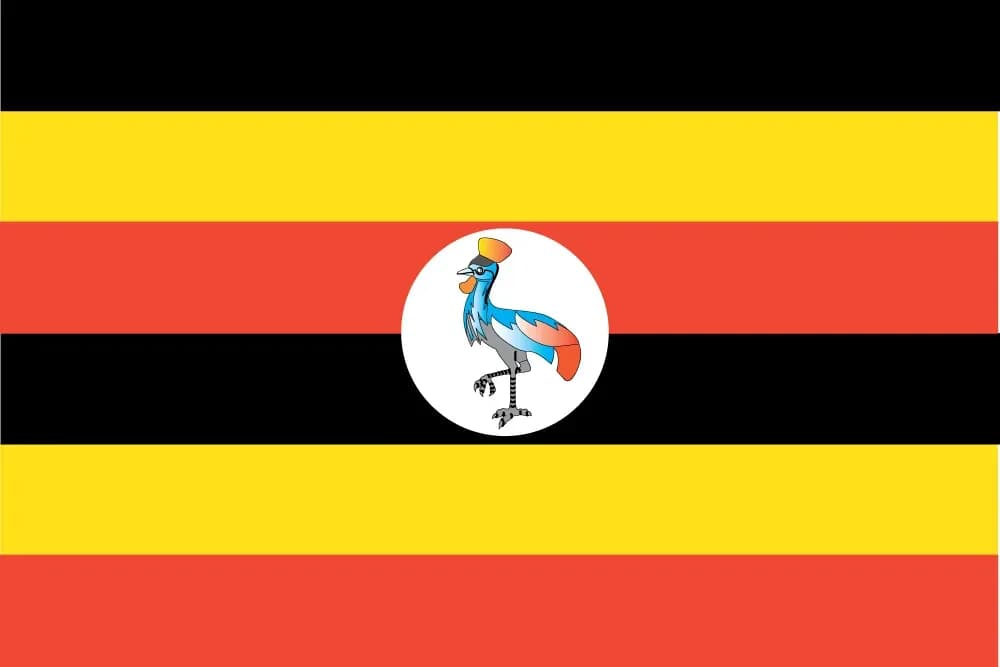 INDEX 24.10.2025, 16:42 Uganda Sovereignty Index (Burke Index), 2024-2025  Share on media IntroductionThis report provides a comprehensive analysis of Uganda's sovereignty using the methodology of the Burke Institute. Sovereignty is assessed in 7 areas: political, economic, technological, informational, cultural, cognitive and military. Each aspect is assessed on the basis of official data from international and national sources (UN, World Bank, UNESCO, IMF, ITU, FAO, SIPRI, PISA, etc.) without using politicized indexes. The maximum score in each direction is 100; the sum (up to 700) is the accumulated Sovereignty Index (Burke Index). To adapt and adjust statistical parameters, an international expert survey was conducted for each of the seven components using a single questionnaire of 10 questions with a 10-point scale and one open-ended question. In total, at least 100 experts from 50+ countries were interviewed for each indicator, taking into account geographical representation and specialization. When calculating and analyzing the data, equalizing coefficients were used, bringing all data to a scale of 0-10 points. The final index value is the arithmetic mean between statistical data and expert estimates. Below is an analysis in each area, a summary table and the main conclusions about the peculiarities of Uganda's sovereignty. Political sovereignty — 48.3Uganda is an active member of the United Nations, the African Union (AU), EAC, IGAD, the Commonwealth, ACP, the Group of 77, WTO, World Bank, IMF, MAP, NAM, as well as a number of specialized UN bodies; it chairs the G77+China and the Non—Aligned Movement in 2025, participates in regional peacekeeping missions. The Rome Statute of the ICC has been ratified, and the principle of complementarity is enshrined in national law — international crimes (genocide/war crimes/crimes against humanity) are judged according to both national and international law. International agreements may take precedence over national laws, and the Supreme Court confirms the binding implementation of international norms in matters of justice. The overall level of stability is moderate, but with the upcoming elections (2026), there is an increase in repression against the opposition, a narrowing of civil liberties, and arrests and pressure on the media. President Museveni is nominated for a 7th term in 2025, and political activity is regulated by the authorities based on law enforcement agencies. The WGI index is -0.55 (2023), which corresponds to the 31.6 percentile among all countries in the world, below the global average. In 2024, EGDI = 0.44 (144th place, a drop of 7 positions compared to 2020); the Data Integration Platform and modernization programs with the support of the United Nations and the World Bank are in operation, but the infrastructure remains unevenly developed. President Museveni (since 1986) maintains high control over the system, but the approval and trust of the population are considered “medium/low” in reports due to repressive practices, the long-term monopoly of power and the tightening of resources in the hands of the regime, as well as limited pluralism. There are no permanent foreign military bases; Ugandan bases are used for peacekeeping missions (Somalia, DRC), occasionally foreign specialists are used under bilateral or regional agreements, and there is a temporary presence of foreign instructors. Uganda actively cooperates with the ICC (on LRA cases/Horses/Ongwen), implements the decisions of the ICC, recognizes the priority of international courts in a number of cases, and the national War Crimes Division operates. The political system is highly centralized around the presidential vertical, but officially there is a system of local elected bodies (districts, local councils), administrative decentralization is underway, but the real financial and political autonomy of the regions is limited by the control of the center. The security services report directly to the president, the increase in the powers of military courts (up to the consideration of civilian cases) in 2025 is criticized by international organizations — control and transparency are low, civilian oversight is absent, and recent reforms strengthen the punitive functions of special services and the right of the military to try civilians. Data completeness assessment: the main indicators are available from international sources, the coverage is 98%. Economic sovereignty — 38.9GDP per capita by PPP in 2024: $2,882- 4,535 (various estimates; World Bank/Trading Economics average: ~$2,882-3,276; World Economics: $4,535). As of July 2025, reserves amounted to $4.3 billion (3.6 months of imports), in 2024 — $3.3 billion (2.9–3.4 months). This is below the target value of the Central Bank (4 months), but close to the average African level. The national debt by the end of 2024 is 52-53% of GDP ($29.1 billion); despite the growth, the debt is considered “moderately stable”, but regulators and the IMF warn of possible risks (increased debt servicing, falling incomes, devaluation). As of 2024: in Carramoja, 45% of the population (600 thousand) is in crisis (IPC3+), and about 800 thousand people are acutely hungry in the country, but the situation is improving seasonally (forecast for February 2025-30% in IPC3+, the number of acute cases is decreasing). Benchmark: vulnerability is higher in the north/east of the country. 99% of generation is accounted for by renewable sources (74% by hydroelectric power plants; the rest is solar, mini—hydroelectric power plants, biomass), the oil and gas sector is developing (production starts in 2025), the country is becoming a regional exporter of electricity, and is implementing the “universal access to electricity by 2040" strategy. The national base includes large reserves of gold, oil, hydrocarbons, tin, cobalt, copper, phosphates, and rare earth metals (especially the Makuutu project with 315 million tons); there are also graphite, lithium, columbite, tantalite, limestone, and iron ore (260 million tons, the largest in the East. Africa). There are 36,500 km2 of open water in the country; the level of access to drinking water is high (58% in rural areas, 78% in urbanized areas), 71 km of new water supply systems were built in 2024, and the water treatment and resource control infrastructure is actively developing. National Payments Systems Act 2020: full regulation of payment operators is underway, Bank of Uganda (BOU RTGS/UNIS, ECS, payment cards, electronic transfer systems, Council for Innovation and Banking) are operating; fintech (mobile money) is developing rapidly. All internal payments are made only in Ugandan shillings (UGX), the share of payments outside UGX is insignificant, and only foreign trade transactions can be made in USD/EUR/CNY. Further liberalization of the foreign exchange market is being prepared. Full sovereignty: The Bank of Uganda (Bank of Uganda, BOU) conducts an independent issuance and credit policy, issues UGX, regulates liquidity and credit programs; its own licensing, supervision and monitoring system for the entire banking and fintech infrastructure. Data completeness assessment: the main macroeconomic indicators are available from official sources (World Bank, IMF), coverage is 90% Technological sovereignty — 26.4In 2023, expenditures on R&D (all sources) will amount to 0.3—0.4% of GDP, with growth (2014-0.14%, the long–term plan is to reach 1% by 2030); the share of STEM research and development is among the highest in the region, but still significantly lower than the global average. The country is implementing the Buy Uganda Build Uganda (BUBU) strategy, aimed at increasing the localization of production in electronics, automobiles, and machinery assembly; partial localization has been achieved in the assembly of PCs, servers, and consumer electronics, but the absolute share of high-tech imports is still high due to the lack of its own factories and the R&D industry. Higher education enrollment is 5.1–6.2% (IMF, UNESCO); below the global median (~32-35%), close to the African average (Rwanda: 6.2%, Djibouti: 5.3%). At the beginning of 2025, 14.2 million residents (28% of the population) used the Internet; user growth was more than 7% per year, the median speed of mobile Internet was 35 Mbps, fixed Internet was 23 Mbps, and the infrastructure was being rapidly upgraded. National platforms for electronic public services/portals, e-health, e-learning and mobile payments have been introduced. There is a state-owned Digital Transformation Roadmap (2023-2028), a National Data Center, a single access system for public services, an EdTech platform, digital skilling hubs, startup support strategies and local SaaS. The share of imports in IT/telecom/components remains high (over 85%), the country is a net importer of software, electronics, chips, and telecom equipment; production is carried out only according to assembly schemes, there is no deep technological cycle. The Digital Transformation Roadmap 2023-2028 has been adopted and is being implemented; an online state portal, e-banking, electronic licensing, import tax integration, electronic issuance of rights are being developed, more than 130 key services are available, and a nationwide gov cloud is being implemented. Uganda is one of the African leaders in biotechnology in the agro-industrial complex (NARO, Biotech labs, GE bananas/kasava, GE plants are being tested, a national biosafety strategy has been adopted and GE crops research has been launched), there are no own pharmaceutical platforms and mass production of vaccines yet. Basic R&D centers in universities, support for engineering Olympiads, grants and competitions for robotics and edtech startups. The share of industrial robots in the economy is extremely small; there are educational programs, experimental projects, and the domestic robot market is just emerging. Uganda fully imports chips, microchips, and electronics; there is no in-house production, and the national market consists only of integrators, distributors, and device repair and assembly, rather than a full technological cycle. Data completeness assessment: key indicators are obtained from WIPO, ITU, UNESCO, which provides 93% coverage. Information sovereignty — 42.1The Uganda National CERT (UNCERT) operates in the country; the National Cybersecurity Strategy 2022-2026 has been implemented — the creation of a monitoring, response, training system, the introduction of an e-ID and a central incident registry. ITU rating (GCI, 2024): it is in the "second group" (Tier 2/Africa average). Uganda Internet Exchange Point (UIXP) is operating: by 2024 — 45 Gbps of traffic, the introduction of new CDNs (Google, Meta, Netflix), 33% of networks are over IPv6, Netflix integration into the national IXP; the Raxio Data Center network supports caching, IXP is open to any providers, which reduces the cost of the Internet and increases resilience networks. More than 40 languages are used in regional media, national TV channels and radio broadcast in English, Swahili and Luganda (NTV, UBC, Bukedde, Spark TV, radio network). Each region has its own local language stations; the press and radio actively use ethnic languages, which reflects the cultural mosaic of the country. Facebook, WhatsApp, Google, YouTube, and Twitter control the market for mass platforms; at the same time, blockages were repeatedly introduced in 2021-2024 (for example, Facebook was banned in 2021), regulatory pressure restrains the growth of BigTech, but there are practically no national alternatives and global services dominate. Up to 70% of the media includes national news, TV shows, radio programs, language programs, series and documentaries. Large holdings (Vision Group, Nation Media, Next Media) produce content in local languages, while the Internet market remains fragmented, and many online niches are dominated by imported formats. There are more than 200 IT developers and dozens of companies working in the country (Pahappa, Hamsoft, Hostalite, Othware, etc.), the largest projects in e-Gov, banking software, commerce, HR, automation, mobile/fintech, accounting systems, e-learning and automation. Most of the solutions are tailored to the domestic market; exports are limited, but there is an increase in custom platforms and SaaS projects. 13.3 million people use the Internet (27% of the population, 2024); mobile Internet is 35 Mbps (median); there is an electronic state portal, Internet banking, e-learning, digital financial services, more than 57% of households have at least one mobile device. The state-owned Tier III National Data Center (NITA-U) operates, providing centralized services for ministries — PAAS, IAAS, SAAS, disaster recovery and backup. The Raxio Data Center is developed in the private sector, supports business clouds and corporate services; regulatory compliance requires data storage within the country. The main networks (MTN, Airtel, Lyca, Uganda Telecom) are licensed and controlled by the state commission, part of the infrastructure is localized, the mobile payment system (Mobile Money, mobile banking) is operating, the basic infrastructure was nationalized until 2024, market competition is high. In 2019, the Data Protection and Privacy Act was adopted; there is a special Data Protection Department at NITA-U, the DPO regime is being introduced, control over data transfer abroad, fines for leakage; regulation is being strengthened annually (especially in fintech, healthtech and public services). Data completeness assessment: infrastructure indicators are available from ITU, CIRA, OECD and specialized sources, coverage is 94%. Cultural sovereignty — 71.83 sites have been added: • Bwindi Impenetrable National Park (natural) • Rwenzori Mountains National Park (natural) • Tombs of Buganda Kings at Kasubi (cultural, restored again and removed from the “in danger" status in 2023). Uganda is a major cultural center of Eastern and Equatorial Africa: more than 50 peoples, key traditions (Buganda, runic complexes, folklore, folk instruments, orale storytelling, lyrics, ceramics, rituals). A regional leader in the preservation of a complex of oral culture, music and rituals, a unique biocultural heritage (mountain gorillas, nature parks), a powerful community of crafts and diasporas. Annual National Arts and Culture Awards, ministerial and regional grants, and special prizes for new authors, graphic artists, choreographers, and artisans are awarded. Prizes for the preservation of traditions and the development of contemporary art are supported by more than a dozen institutions (Uganda National Cultural Center, Cross Cultural Foundation). 50+ peoples: Baganda, Banyankole, Basoga, Bakonjo, Acholi, Karmoaja, etc.; each group has unique costumes, rituals, dances (from baganda rhythms to acholi instruments), folklore, weddings, initiations, collective art (beading, carving, oral storytelling). Traditional holidays, festivals, and social ceremonies (Kabaka's Birthday, Rwenzori Festival, and sowing and harvesting ceremonies) combine many layers. NUSAF IV (2025-2030) is working: projects to support less than 15 ethnic groups (Batwa, iki, menning, Basongora, etc.), grants for education, development of rural cultural and educational centers (in the Karmoadzha region, in the north and west), event bases, special integration programs for refugees, women, rural schools have been approved. Dozens of archaeological and historical complexes: Bigo bya Mugyenyi, Ntusi, Nyero, etc.; the National Museum (Kampala, 1908), regional museums, galleries, ethnic settlements, archaeological sites, rock petroglyphs (8 in the list of UNESCO nominees), hundreds of monuments of regional status. Regular participation in projects of IFCD, UNESCO, Ambassadors Fund, Pan-African Cultural Festivals, Uganda-China Cultural Symposium (2025), exchange programs with China, India, France, USA, massive interregional cooperation and grants for heritage preservation. The law on trademarks and intellectual property is in force: the registration of cultural brands and national crafts is carried out by the URSB (Uganda Registration Services Bureau), the first national symposium on brand protection is being supported, and GI and export initiatives are being developed. Main dishes: matooke (steamed bananas), ugali (corn porridge), peanut and meat stews, fish dishes (Nile perch, sami), local vegetables, spices. Cuisine of different nations: beading, posho, associated festive and ceremonial dishes; each ethnic group has dozens of unique recipes, traditions of family feasts. More than 60-70% regularly participate in local, regional and national holidays, festivals, public ceremonies, and are massively involved in religious and traditional events; involvement is especially high in rural and small towns, where traditional values form the basis of identity. Data completeness assessment: basic indicators are available in UNESCO and national statistics, coverage is 97%. Cognitive sovereignty — 46.7Uganda entered the “average human development” category in 2024; HDI index: 0.582, ranked 159 out of 193 countries, an improvement of more than 7 positions in two years. In 2024, spending on education will amount to 2.6-2.7% of GDP (5.04–5.85 trillion UGX, or 7-8% of the state budget). The new budget policy has reduced the share of expenditures in 2025/26 (6.97% of the budget), which is below the internationally recommended level. Literacy according to the 2024 census: 74% (77% men, 72% women), maximum in Buganda region (86%), minimum in Karamoa (25%). Uganda does not participate in PISA tests, does not publish official scores, and the indicator for the country is 0. The share of STEM (science/technology/engineering/mathematics) among students is about 17-22% according to various estimates. The state implements national STEM initiatives, encourages girls, and offers preferences and scholarships for STEM fields. The influx of students into exchange programs has increased (for example, the growth of students in the United States by 19.8% in 2024), there are programs with China, the EU, international projects in universities, according to experts, about 8-10% of programs are implemented with foreign participation or on the basis of international cooperation. There are more than 40 languages in the country. The official language is English (and Swahili), and the largest ethnic groups are Baganda, Banyankole, Acholi, Langi, Karamoja, and others, including groups with unique dialects, scripts, and rituals. Runyakitara and local languages are actively supported in culture and education, language and cultural festivals are held. The Uganda National Council for Science and Technology (UNCST), the Joint Clinical Research Center, the National Agricultural Research Organization (NARO), Makerere University College of Health Sciences, the Uganda Virus Research Institute, and others work. (including 32 university colleges, 12 state universities). About 15-20% of the platforms (university management, online courses, e-learning) are locally developed; most of the EdTech are imported products or joint solutions with foreign organizations. They work nationally. scholarships (Excellence Scholarship, Science Innovation Fund), STEM programs for girls, university and UNCST grants, exchanges with the USA/EU/ China; coverage — at least 10 thousand fellows/grantees annually only in STEM and engineering, major projects of the World Bank and AfDB. Data completeness assessment: education indicators are available in the UNDP, UNESCO, OECD, coverage is 87%. Military sovereignty — 35.2Military spending in 2024 amounted to $1,117 billion— which is 1.9–2.6% of GDP (according to various sources); spending consistently occupies 8-10% of the state budget, and in 2023-24, Uganda is East Africa's leader in military spending. Active Armed Forces (UPDF) — 45,000—47,000 people (army ~40,000, Air Force ~3,800, Navy — 3,000), reserve — 10,000 - 35,000, paramilitary formations - up to 7,000 (Local Defense Units, police). The backbone consists of more than 350 tanks (T-72, T-55), 300+ infantry fighting vehicles and armored vehicles, 100+ artillery systems, Su-30MK2 (6 units), Mi-24 (10 units), Mi-17 transporters, as well as a wide range of reconnaissance drones, modern communication systems, and ongoing modernization, including the expansion of the UAV fleet and the introduction of cybersecurity. The national military industry carries out large-scale assembly, repair, service and assembly of armored vehicles, including joint production of armored vehicles with foreign partners (Streit Group, China); production lines in Naxongol have been opened for the first time, and drone production training is also underway. Control is implemented by UPDF forces (special forces units), supported by mobile patrols, a surveillance system and an operational responsibility area within the framework of AU missions and bilateral agreements; in 2025, against the background of conflicts in the DRC and South Sudan, a “forward defensive posture” was introduced, the border military presence zone was expanded and new checkpoints were opened. The reserve consists of 10,000-35,000 people, mobilization structures include former military personnel, graduates of national service and student programs, deployment takes place through conscription and mobilization through the Ministry of Defense. Uganda is a member of AU, EAC, IGAD, supports military cooperation with Russia, China, the United States, Israel, Israel, Turkey, participates in peacekeeping missions (AMISOM/AUSSOM, DRC), but adheres to a policy of military autonomy, does not make decisions on the deployment of foreign bases. NEC (National Enterprise Corporation) industrial center operates: armored vehicles, service and repair, production of drones, military clothing, IT maintenance, communications; localization of armored vehicles, development of robotics components is underway. It has no nuclear, chemical, or biological weapons; the country has signed all key nonproliferation treaties and prohibits the deployment of WMD on its territory. There are no national military satellites; the armed forces use drones, communications, IT infrastructure, expand investments in cybersecurity, intelligence is conducted both by their own means (ISO, ESO) and through interaction with allies; there is no independent space intelligence network. All parameters are reflected in the annual reports of SIPRI, UNODA, the Ministry of Defense, the official portals of state-owned companies (Embraer, IMBEL) and the UN/NGO industry databases - 89% coverage Final Summary Table
The main conclusionsStrengths. Resource base and agricultural sustainability Extensive reserves of oil (6.5 billion barrels confirmed), natural minerals, ores, hydrocarbons, and hydropower. One of Africa's largest agricultural exporters: coffee, tea, bananas, oilseeds and industrial crops; high level of food security outside vulnerable regions. Energy diversification more than 99% of electricity is produced from renewable energy sources (74% from hydropower), promising cooperation on nuclear power plants under construction with the Russian Federation and South Korea; the oil and gas sector is developing at a good pace. Electricity export strategy, generation growth, nuclear power plant project by 2031. Development of IT and digital infrastructure Rapid growth of internal IT companies, launch of local production (assembly of appliances, consumer electronics, smartphones), own national digital platforms and cloud services, development of mobile banking, large tech parks. Internet coverage is about 28%, the introduction of 4G and fast speed growth, connection to three marine cables. Educational and human resources potential: Growth of STEM integration and targeted educational programs, participation in international academic exchanges and grants; development of national research centers and human resources initiatives. Political and legal autonomy, sovereign conduct of domestic and foreign policy, independent credit and emission system, strong nationalization of payment systems, advanced legislative framework in high-tech and digital industries. Weaknesses. Import dependence of high-tech sectors is more than 85% of machinery, chips, software; lack of local R&D and own production of electronics, microelectronics, robotics and network solutions. Higher education coverage is below the global median (5-6%), and there is a lack of large-scale research centers. Low integration of innovation Costs for R&D — 0.3–0.4% of GDP (growth is expected, but still below global requirements), the introduction of modern solutions is slower than in fast-growing developing countries. Social and regional imbalances Food and water security is unstable in parts of the northeastern regions; a significant part of the population is poor, literacy is 74%, and in some regions it is below 50%. Limitations of defense autonomy. Despite having a large army and an active industry on the continent, the country is completely lacking in nuclear/strategic technologies and imports most of its heavy weapons and high-tech components. The average level of digitalization and participation in global innovations, the share of digital services coverage, penetration rate and national content are below the leaders of the region; the local industry is just emerging, aggressively competing with imported solutions. Overall assessment. The cumulative Ugandan sovereignty Index is 309.4 out of 700 possible points (average 44.2%), which places the country in the top 150 in the world top. Uganda is a dynamic middle African country with a strong resource, agricultural, energy and IT base, actively nationalizing payment, human resources and innovation infrastructure. But import dependence, weak R&D, limited presence in global high-tech chains, and regional social imbalances remain significant challenges to further sovereignty growth and sustainable development. The sovereignty profile indicates that Uganda is a resource-based, export-oriented and rapidly developing power in East Africa, combining formal and real autonomy in key areas (resources, credit, foreign policy, infrastructure) with limitations on domestic technological and educational development and strong dependence on external partners in the field of high technology. Sovereignty is expressed both politically and economically, but it requires further strengthening in technological, educational and social spheres. | ||||||||||||||||||