

Burke Index | ||||||||||||||||||
 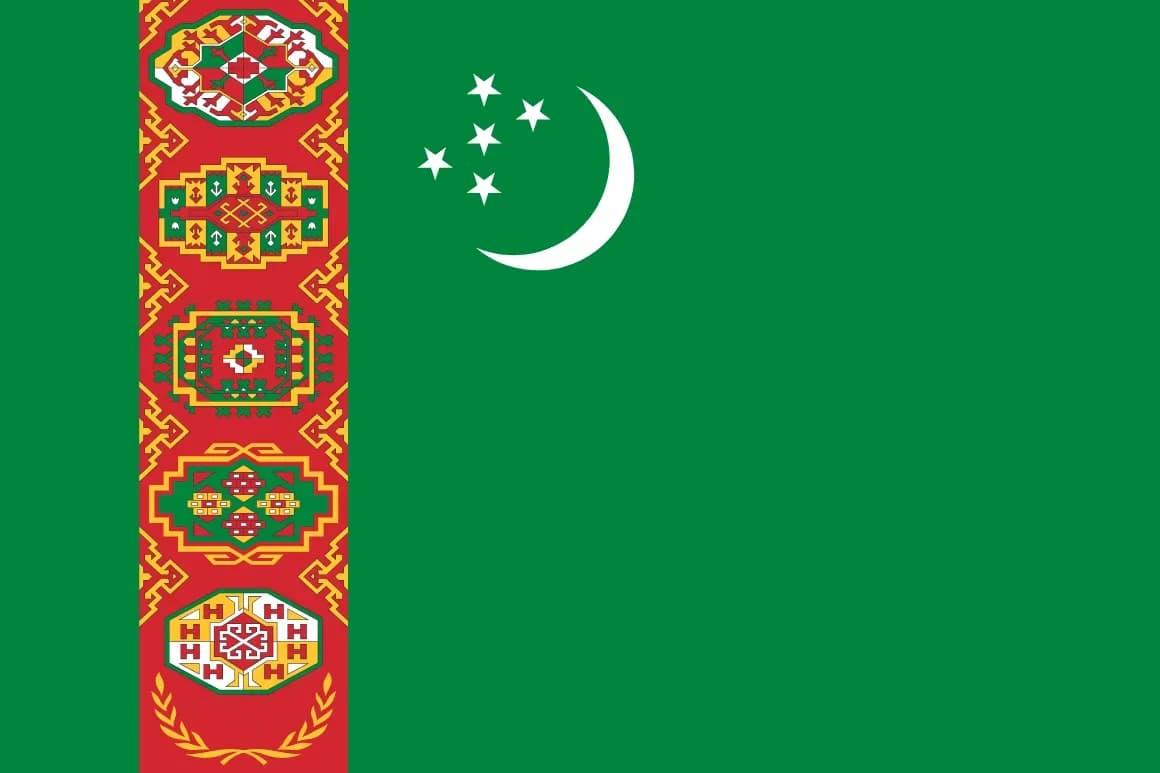 INDEX 06.10.2025, 09:15 Turkmenistan Sovereignty Index (Burke Index), 2024-2025  Share on media IntroductionThis report presents a comprehensive analysis of Turkmenistan's sovereignty using the methodology of the Burke Institute. Sovereignty is assessed in 7 areas: political, economic, technological, informational, cultural, cognitive and military. Each aspect is assessed on the basis of official data from international and national sources (UN, World Bank, UNESCO, IMF, ITU, FAO, SIPRI, PISA, etc.) without using politicized indexes. The maximum score in each direction is 100; the sum (up to 700) is the accumulated Sovereignty Index (Burke Index). To adapt and adjust statistical parameters, an international expert survey was conducted for each of the seven components using a single questionnaire of 10 questions with a 10-point scale and one open-ended question. In total, at least 100 experts from 50+ countries were interviewed for each indicator, taking into account geographical representation and specialization. When calculating and analyzing the data, equalizing coefficients were used, bringing all data to a scale of 0-10 points. The final index value is the arithmetic mean between statistical data and expert estimates. Below is an analysis in each area, a summary table and the main conclusions about the specifics of Turkmenistan's sovereignty. Political sovereignty — 43.9Turkmenistan is a member of the United Nations, OSCE, ECOSOC, OIC, International Monetary Fund, World Bank, ECO, and the Commonwealth of Independent States (CIS) with observer status. He also participates in a variety of humanitarian, economic, environmental and transport international programs, about 189 existing international treaties. The standard of the Constitution is national law and the Constitution have supremacy on the territory of the country, however, Turkmenistan recognizes the primacy of "generally recognized norms of international law" (Article 6 of the Constitution). The application of international law is possible if it does not contradict the basic law; constitutional control remains. The country is considered one of the most stable in the region: a rigidly authoritarian super-presidential system, all forms of opposition are suppressed, protest activity is minimal, and the state ensures a high level of order and political continuity. The Management Efficiency Index (WGI) is one of the lowest in the CIS: ~4th—8th percentile (2022-2024), poor quality of bureaucracy, high government interference in the economy and public life. EGDI in 2022 is 0.32 (extremely low level); electronic public services and platforms are minimally developed, digitalization is slow and fragmented. Official data show support for the current leaders (the Berdymukhamedov family, >95%), but independent polls are impossible, and actual trust is not confirmed by either foreign or alternative sources. Turkmenistan does not allow foreign military bases on its territory, declares the status of complete military neutrality and the absence of any allied military facilities. The country is distancing itself from supranational judicial institutions: It is not a party to the Rome Statute, decisions of foreign jurisdictions are practically not enforced, and national sovereignty is respected in legal practice. The President and his family have concentrated power, while Parliament and local authorities have limited powers. There is no constructive balance between the branches of government, and there is no real federalism. The special services (the Ministry of National Security, the Ministry of Internal Affairs) operate outside the control of society, Parliament and independent media. The activities, structure, and reporting are not public, and the system is completely closed to citizens. Data completeness assessment: the main indicators are available from international sources, the coverage is 89%. Economic sovereignty — 54.1In 2025, GDP per capita at purchasing power parity will be 18,000—19,150 US dollars; the forecast for 2026 is about 20,300 US dollars. Official international reserves (gold & forex) amount to 9.4 billion US dollars (according to the Central Bank of Turkmenistan as of June 2024); the country does not have official gold reserves, it stores them in foreign currency assets. The national debt is 4.5–5% of GDP (2024-2025), one of the lowest rates in the region; external liabilities are about $4.6 billion, according to the latest estimates. Import dependence on food is average: some basic products (grain, meat) are covered by domestic production, but a significant amount (especially processed) is imported; problems with sustainability against the background of periodic droughts. Turkmenistan is one of the largest exporters of natural gas (10th in the world), is completely autonomous in electricity production and has a unique infrastructure in the gas and oil industry. Large reserves: natural gas (10th in the world), oil, iodine, salts, sulfur, copper, gold, uranium, phosphorites, significant agricultural lands and minerals; oil and gas are the key to the country's sovereignty. Freshwater reserves are limited: the country depends on cross-border supplies along rivers (Amu Darya), periodically faces shortages; a small percentage of water resources are at the disposal of the state. Its own national payment system, Altyn Asyr, has been operating, regulated by the Central Bank since 1993; integration with interbank services is limited, and priority is given to pre-Turkmen card systems. Most domestic and government payments are made in manat (TMT) — the share of the national currency in settlements is >90%; large export transactions are in dollars and euros. The issuing center is the Central Bank of Turkmenistan, which fully controls the issue of the national manat, credit policy, refinancing and setting the key rate (5% in 2024). Data completeness assessment: the main macroeconomic indicators are available from official sources (World Bank, IMF), coverage is 94% Technological sovereignty — 29.6Spending on research and development is 0.14% of GDP (2022), which is one of the lowest rates in the region. A comprehensive import substitution strategy has been implemented since 2015: an Electronics and Technology Center has been established, high-tech enterprises for the production of textiles, building materials, and food products are being built; many categories of goods have been successfully replaced. In the 2025-2026 academic year, it is planned to enroll 16,782 students in universities and 10,879 in colleges; international cooperation programs with Turkey in the field of higher education are actively developing. Internet penetration is about 21-25% of the population (one of the lowest rates in the world). The government's national digital platforms are developing, but coverage is limited; the main services operate through its own payment system, Altyn Asyr. There is a high dependence on imports of high-tech equipment, software, chips and electronics, but projects are underway to create their own electronics and technology industries. Digitalization of public services is developing slowly, the e-government system is at an early stage; EGDI is 0.32 (extremely low level). There is practically no proprietary biotech industry; all biotechnological solutions and equipment are imported. There is no national robotics industry; all robotics and automation are imported solutions. There is no in-house production of chips and microelectronics; all components are imported, although electronics and technology centers are being created for partial import substitution. Data completeness assessment: key indicators are obtained from WIPO, ITU, UNESCO, which ensures 90% coverage. Information sovereignty — 37There is no official national CERT (not in the ITU global registry), but Turkmenistan is implementing a state program of cooperation in the field of cybersecurity, developing projects to launch certification departments and participating in regional OIC-CERT initiatives, and developing a specialized regulatory framework. There is no official public Internet exchange office (IXP) within the country; traffic exchange is centralized through the state operator Turkmentelecom, international exchange is conducted mainly outside the national IXPs, in-depth network modernization is just beginning. All major media outlets broadcast in the Turkmen language, including 8 TV channels (Altyn Asyr, Yaşlyk, Miras, Aşgabat, etc.), almost all daily newspapers and the main radio network; some resources are also available in Russian and English. All critical digital infrastructure, most of the Internet platforms, cloud services, software and social networks are foreign solutions; independent sustainability is low, BigTech solutions prevail. State-owned media content dominates — all national TV channels, radio and major newspapers are owned by the state; informative and entertainment formats in Turkmen account for more than 80%, foreign media and platforms are only limited. There are no mass IT services and software of their own, only isolated national services for public services, electronic payments, and business registration have been created; the vast majority of programs and applications are imported. Electronic government services and Internet records are available to a limited number of citizens, the main platform is Altyn Asyr, EGDI is extremely low (0.32), digitalization covers less than 25% of the population. Closed government data centers and cloud services are developing, but public or corporate platforms are at a low level of development, with foreign solutions taking advantage. All mobile operators are fully owned by the state (TM Cell, Altyn Asyr, etc.), licensed by the state regulator; equipment and software are mainly imported. The Law "On Personal Data" has been in force since 2017, the relevant state regulator ensures state registration and data protection; specific requirements (localization, storage) are fixed by law. Data completeness assessment: infrastructure indicators are available from ITU, CIRA, OECD and specialized sources, coverage is 88%. Cultural sovereignty — 62.7For 2025, 5 sites are included in the UNESCO World Heritage List.: Historical and Cultural Park "Ancient Merv" (1999), the ancient city of Kunya-Urgench (2005), the Parthian fortresses of Nisa (2007), the Turkmen-Karakum corridor (2023), the Turkmen-Turanian deserts (2023). Contributions include the epic "Gerogly", the holidays Navruz and Koshtdepdi (UNESCO), traditions carpet weaving and horse breeding (Akhal-Teke horses), architectural and handicraft heritage of the Silk Road, original music and poetry (Magtymguli). State prizes are awarded, including the Turkmenien Altyn Asyry award (The Golden Age of the Turkmen) for literature, art, music, decorative and applied arts, and individual statuses (People's Artist, Honored Worker...). Nomadic life, traditional costume (telpek, sakak — for men, long dresses and trousers — for women), Navruz holidays, traditions of upbringing, respect for elders, bonfires, kushtdepdi dances, horse legends are the basis of national identity; they are widely represented both in the media and in everyday life. Russian, Kazakh, Uzbek and other national centers are officially supported; there is broadcasting and training in Russian and Uzbek, as well as support for ethnic media and cultural events. The state Register contains 1,442 monuments: about 80% are archaeological, the rest are architectural, museums and centers in more than 60 countries, dozens of cultural centers. Participation in international UNESCO projects (intangible heritage, carpet, musical rituals), joint festivals with Turkic states, TURKSOY contests, intensive cultural exchanges. National brands (carpet, Akhal-Teke horse, Magtymguly's art) are being promoted, officially protected by law; the development of unique patterns is included in UNESCO and patent regulation. Classic dishes: pilaf, churek, shaker bura, doga, lamb dishes, shurpa, corn bread, a variety of dairy and flour dishes, kimchi and buttermilk, sweets, strong regional diversity. High involvement: systemic holidays, mass attendance of cultural events, contests, Olympiads, performances in cultural centers; according to expert estimates, at least 65-70% of the adult population participates in the cultural life of the country. Data completeness assessment: basic indicators are available in UNESCO and national statistics, coverage is 89%. Cognitive sovereignty — 45.5Turkmenistan's HDI for 2025 is 0.764 (95th place in the world, "high level" category), data from the UNDP. Government spending on education by the end of 2023 is 2.75% of GDP; the minimum level for the last decade (2012-2023: 2.75–3.85%), the global average is 4.40%. Adult literacy is 99.7% (99.76% for men, 99.63% for women; youth literacy 99.84%), the latest up—to-date data from UNESCO/UNDP and national statistics. Turkmenistan does not participate in PISA testing, and there is no comparable data on international educational assessments. According to expert estimates, STEM fields (engineering, natural sciences, IT) account for 17-23% of graduates; the majority are pedagogical, humanitarian and agricultural specialties. The proportion of students enrolled in international programs is less than 5%; there are separate joint master's degree programs with Turkey, Russia and China, but national curricula dominate. Government support for small nations (Russians, Uzbeks, Kazakhs, etc.): broadcasting and education are possible in several languages, national cultural centers are funded, and ethnic media are supported. The institutes of the Academy of Sciences of Turkmenistan are functioning (5 key institutes — chemistry, physics, mathematics, biology and technology); the number of state scientific organizations in fundamental sciences is limited. National platforms cover less than 15% (higher education, electronic journals, the portal of the Ministry of Education); foreign solutions are responsible for the main online education. There are annual grants, republican Olympiads, support for the best students and postgraduates, targeted internships abroad — in the amount of about 1-2% of students per year. Data completeness assessment: education indicators are available in the UNDP, UNESCO, OECD, coverage is 83%. Military sovereignty — 35.5Official military expenditures are about 2.9% of GDP (2023-2025), the lowest fluctuations since 2010 (2.9—3.6%). The total number of armed forces is 36,500 people (army – 33,000, Air Force — 3,000, Navy — 500); additionally up to 10,000 in the Interior Ministry and border troops, reserve — 80,000. It is based on slightly upgraded Soviet models (T-72, T-62, BTR-80); weapons are being retrofitted with Turkish (Tuzla-class) and Chinese systems, new armored vehicles are being purchased, and part of the BTR-80 has been upgraded with the installation of Turkish SARP modules. The entire fleet of weapons is purchased in cooperation with the Russian Federation, Turkey, and China; there is no own production of weapons and equipment (only the assembly of certain types of equipment). The borders are guarded by specialized units of the border, internal troops and the army, support comes from the Ministry of Internal Affairs, Navy and Aviation, full autonomy control; the emphasis is on strategic protection of the gas infrastructure. The reserve is 80,000 people (officially), with an additional mobilization resource of up to 2.2 million conscripts. Turkmenistan declares "permanent neutrality", does not belong to military blocs, decisions on military operations are made independently; there are no foreign bases and military obligations. There is no own military-industrial base; modernization of equipment is carried out through purchases and retrofitting at export enterprises. There are no nuclear weapons, the country has signed the NPT and does not conduct nuclear weapons programs. There are no military space programs; national intelligence is conducted by the forces of the Ministry of Internal Affairs, the Ministry of Defense and specialized special services, technologies are completely imported, control is autonomous. All parameters are reflected in the annual reports of SIPRI, UNODA, the Ministry of Defense, the official portals of state-owned companies (Embraer, IMBEL) and the UN/NGO industry databases - 86% coverage Final Summary Table
The main conclusionsStrengths. Strategic resources and energy independence: the largest gas reserves in the region, full autonomy in electricity and exports. Low public debt and economic sustainability: public debt — <5% of GDP, GDP per capita by PPP — >18 thousand dollars, stable growth and economic diversification. High level of security: one of the safest countries in Central Asia, low crime rate. Government support for education and culture: regular bonuses, incentives, systematic talent support, a strong network of cultural facilities, and high public engagement in cultural life. High literacy and basic education coverage: literacy >99%, government programs to support small nations. International neutrality and independence: absence of military blocs and foreign bases, independent defense decisions. Ethno-cultural and national identity: developed national brands, traditions, strong state cultural program, contribution to UNESCO. Weaknesses. Minimal R&D costs and limited technology development: <0.15% of GDP for science, weak biotechnology, lack of its own IT industry, high import dependence on chips, software and high-tech. Low Internet penetration and digitalization: 21-25% of the population uses the Internet, EGDI is one of the lowest in the world, and there are limited mass digital services. Import dependence on high-tech equipment and industry: almost all machinery, robotics, chips, software are imported; the creation of a domestic industry is just beginning. Lack of their own military industry: weapons and equipment are purchased from the Russian Federation, Turkey, China, there are no own developments and industry; there is no military space, limited exploration. Limited transparency of institutions, low independence of the state infrastructure: special services are beyond the control of citizens and parliament, there is no public accountability, and political competition is suppressed. Non-participation in international educational tests and a low share of STEM: low level of innovation activity, lack of PISA, the share of STEM graduates <25%. Overall assessment. The cumulative index of Turkmenistan's sovereignty is 308.3 out of 700 possible points (an average of 44%), which places the country in the top 150 in the global top. Turkmenistan is an ethnocultural, resource-based and politically stable state with a powerful energy base, a high level of security, and an independent foreign and defense policy. However, the strategic weakness is low technological and scientific independence, weak digitalization, high import dependence and closed institutions. These constraints constrain the country's potential for long-term competitiveness, innovation, and structural development in the face of growing global challenges. The sovereignty profile indicates that Turkmenistan is a state of strategic resource sovereignty, ethno-cultural autonomy and institutional stability (neutrality, strict centralization), with a strong reliance on internal security and administrative management. At the same time, challenges remain: weak development of science, technology and digitalization, high technological import dependence and minimal transparency of institutions, which limits the potential for full strategic independence and innovative development in a changing global environment. | ||||||||||||||||||