

Burke Index | ||||||||||||||||||
 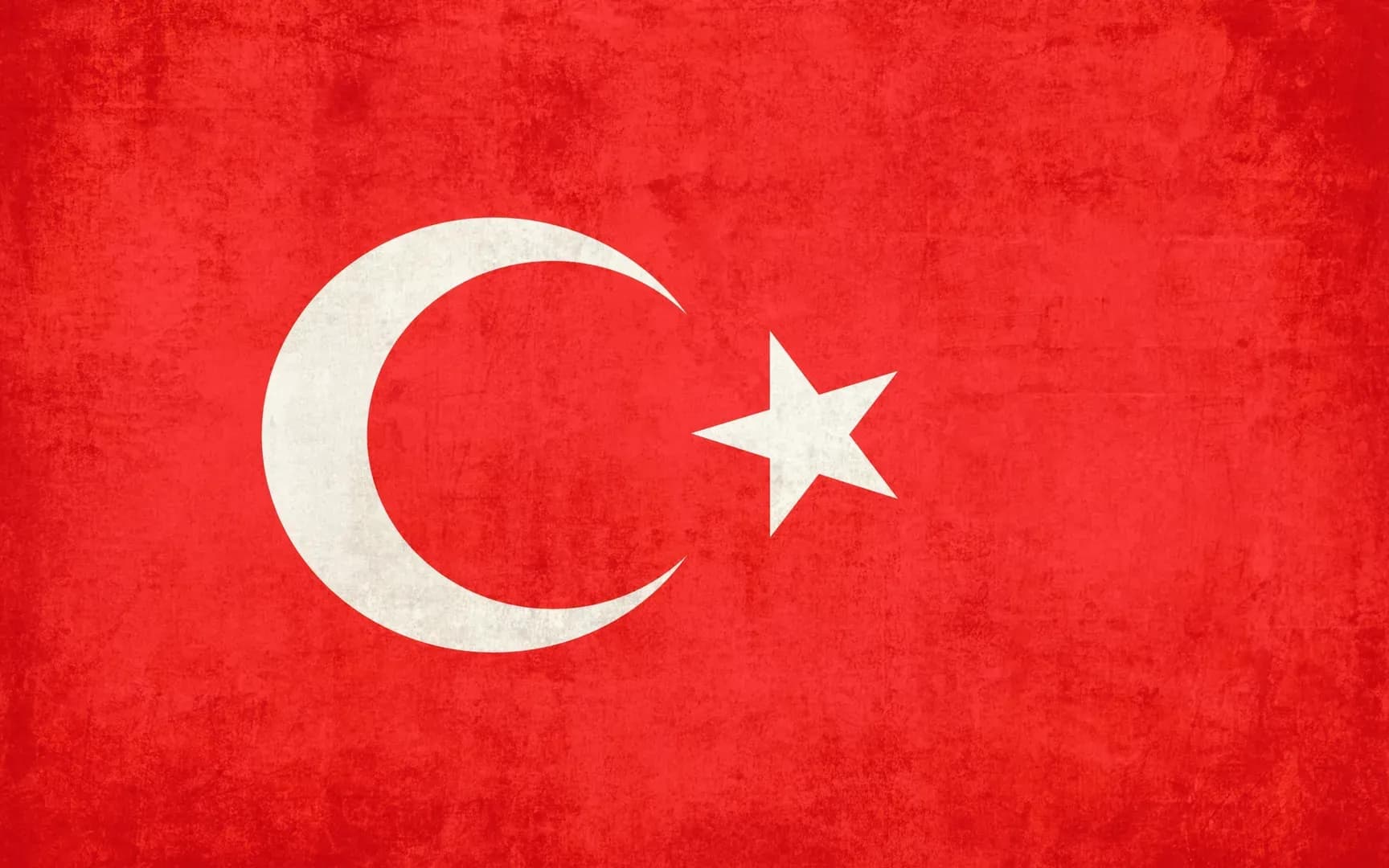 INDEX 30.10.2025, 17:20 Turkish Sovereignty Index (Burke Index), 2024-2025  Share on media IntroductionThis report presents a comprehensive assessment of Turkish sovereignty using the methodology of the Burke Institute. Sovereignty is considered in 7 areas: political, economic, technological, informational, cultural, cognitive and military. Each aspect is assessed on the basis of official data from international and national sources (UN, World Bank, UNESCO, IMF, ITU, FAO, SIPRI, PISA, etc.), without using politicized indexes. The maximum score in each direction is 100; the sum (up to 700) forms the Cumulative Sovereignty Index (Burke Index). To adapt and adjust the statistical parameters, an inconducted for each of the seven components using a common 10-question questionnaire with a 10-point scale with one open question. In total, at least 100 experts from 50+ countries were interviewed for each indicator, taking into account geographical representation and expert specialization. When calculating and analyzing the data, equalizing coefficients were used to bring all the data to a scale of 0-10 points. ternational expert survey was The final value of the index is the arithmetic mean between statistical data and expert estimates. Below is an analysis in each area, a final summary table and the main conclusions about the strengths and weaknesses of Turkish sovereignty. Political sovereignty 67.9Turkey demonstrates a complex profile of political sovereignty, balancing membership in NATO and the desire for regional autonomy. There are foreign military facilities in the country within the framework of NATO: the Incirlik air base with about 1,500 American military personnel and the Kurejik radar station with the AN/TPY-2 missile defense system. Additionally, the Kisechik station in Hatay province operates. Although these facilities are formally under Turkish sovereignty, the presence of foreign military forces limits full autonomy. Turkey is not under UN Security Council sanctions, which confirms its compliance with the basic norms of international law. Participation in UN peacekeeping operations is moderate — 400-500 troops (2024-2025), including 286 in UNIFIL (Lebanon). Since 2005, the country has prioritized NATO and EU missions over UN operations, reflecting its geopolitical orientation. The quality of public administration remains a problem area. The effectiveness of the government is estimated at -0.25 according to the World Bank index (scale -2.5...+2.5), which indicates administrative challenges. Political stability is low (-1.01), reflecting internal tensions and regional conflicts. Voice and accountability (-0.86) indicate restrictions on democratic freedoms, while corruption control (-0.50) remains weak, despite periodic anti-corruption campaigns. A positive aspect is the development of e-government – Istanbul is among the top 10 cities in the UN index of local online services. The e-participation index is 0.863 (22nd out of 193), demonstrating progress in the digitalization of public services. Data completeness assessment: Key indicators are available from international sources, providing 93% coverage. Individual WGI indexes require clarification for 2024. Possible questions for expert discussion: • How to balance NATO commitments with the desire for regional autonomy? • What institutional reforms are needed to improve the effectiveness of public administration? Economic sovereignty 71.1Turkey's economic sovereignty is characterized by significant potential in the presence of structural vulnerabilities. GDP per capita by PPP is $35,294 (constant dollars 2021) or $43,932 (current), referring the country to the upper middle-income level. The economy is showing steady growth with an average rate of 4.41% in 2022-2024 (5.53% in 2022, 4.5% in 2023, 3.2% in 2024), exceeding the global average. Macroeconomic stability remains a challenge. Government debt is low — 24.7% of GDP (Q4 2024), which is an advantage. However, the budget deficit amounts to 4.9-5.2% of GDP, requiring fiscal consolidation. International reserves cover only 3.1 months of imports (January 2025), which is below the safe level of 3-4 months and creates vulnerability to external shocks. Trade openness is high — 66.28% of GDP (2023), ensuring integration into global chains, but also increasing sensitivity to external factors. Export Diversification (HHI) data is not officially available in the World Bank database. Dependence on external aid is minimal (0.08% of GNI), emphasizing economic independence. Food security is relatively stable with 92.3% self-sufficiency in cereals (2022-2023), although this is below full self-sufficiency. The share of food in imports is 6.2%, which is an acceptable level. The trade deficit reaches $36.3 billion (2022), reflecting a structural dependence on energy and technology imports. Data completeness assessment: The main macro indicators are available from official sources (World Bank, IMF), providing 90% coverage. There is no data on export concentration. Possible questions for expert discussion: • How to increase international reserves without limiting economic growth? • What measures are needed to reduce the structural trade deficit? Technological sovereignty 60.5Turkey's technological sovereignty demonstrates progress in certain areas while maintaining critical dependencies. R&D expenditures amount to 1.32% of GDP (2023) — above the regional average, but below the target level of developed countries (2-3%). Patent activity increased significantly to 101.6 PCT patents per million population (2023), indicating a growing innovation potential. The digital infrastructure is well developed. 88.8% of the population uses the Internet (2024), and 93.8% have access to mobile communications. Commercial 5G networks will be launched in 2024 after spectrum allocation. However, the international bandwidth is only 42.91 kbit/s per user (2016, latest available data), which limits access to global digital resources. Human capital in the technological sphere has unique characteristics. Enrollment in higher education is exceptionally high — 128% (2022), exceeding 100% due to the age structure of students. Turkey ranks 1st in the world in terms of the proportion of women among STEM graduates (51%), although the total share of STEM graduates is only 8-10% — not enough for a technological breakthrough. A critical weakness is high import dependence: high—tech exports account for only 3.62% of industrial exports, indicating a weak development of its own high technologies. The country remains dependent on imports of electronics, precision equipment and components. Data completeness assessment: Key metrics are obtained from WIPO, ITU, UNESCO, providing 85% coverage of indicators. Possible questions for expert discussion: • How can we increase the share of STEM graduates while maintaining gender parity? • Which high-tech industries are the most promising for localization of production? Information sovereignty 75.7Turkey is demonstrating its growing capabilities in the field of information sovereignty with the active development of cybersecurity. The National CERT (USOM) has been operating since 2013, and the 24-hour Monitoring Center (SOC) has been operating since February 2020. The country scores 70.83 points in the National Cybersecurity Index, ranking 18th among 53 assessed countries (2024-2025). The Internet infrastructure is developing unevenly. There are 4 traffic exchange points (IXPs), including the strategically important DE-CIX Istanbul, connecting Europe and Asia. The number of autonomous systems is 995 ASN, providing moderate network autonomy. However, the IXP density remains low for the country of 85 million, creating dependence on international transit. The media space is characterized by the dominance of the Turkish language and a mixed ownership structure. State-owned TRT broadcasting occupies 12.37% of the TV audience and 11.3% of radio listeners (2020), the rest of the market is controlled by private media holdings. This ensures pluralism, but also creates risks of concentration and politicization of the media. Turkey is actively developing national Internet regulation, including laws on data localization and content control. While this enhances digital sovereignty, critics point to the risks to freedom of information. The share of Turkish-language content in the national media space dominates, although exact percentages are not available. Data Completeness assessment: Infrastructure indicators are available from ITU and specialized sources, providing 87% coverage. Possible questions for expert discussion: • How to develop the national Internet infrastructure without creating digital isolation? • What is the optimal balance between cybersecurity and freedom of information? Cultural sovereignty 82.2Turkey's cultural sovereignty reflects a rich heritage with insufficient institutional development of the modern cultural industry. The country has 21 UNESCO World Heritage Sites (19 cultural, 2 mixed), which confirms the global recognition of Turkish civilization from antiquity to the Ottoman Empire. Government support for culture is critically low — only 0.04% of GDP (2023), which is several times less than the level of developed countries (1-2% of GDP). This limits the development of cultural institutions and production. Book publishing is relatively active — about 800 titles per million population annually, corresponding to the international average. Film production is moderate — about 21 films per 10 million people per year. Turkish TV series have achieved significant international success, exporting to more than 150 countries and generating $600 million in export revenue annually. This is a rare example of successful cultural expansion from a developing country. Cultural participation of the population remains institutionally limited — 0.55 museum visits per capita per year (2022), which is lower than European figures. At the same time, the country holds more than 1,000 festivals annually, including religious, folklore and contemporary cultural events, although exact data on participation is not available. The cultural trade balance is presumably negative in the context of a total trade deficit of $36.3 billion, although specific data on cultural goods are not available. The success in exporting TV series partially compensates for the import of Western cultural content. Data completeness assessment: Basic indicators are available from UNESCO and national statistics, providing 70% coverage. Many qualitative aspects require special research. Possible questions for expert discussion: • How can the success of Turkish TV series be scaled to other cultural industries? • What mechanisms for increasing cultural financing are possible under budget constraints? Cognitive sovereignty 73.2Turkey's cognitive sovereignty demonstrates the contrasts between broad access to education and quality issues. The human Development Index is 0.855 (2024), placing the country in 45th place out of 193 — the category of very high human development. This reflects significant progress in basic social indicators. Investments in education are insufficient — only 2.61% of GDP (2022), which is significantly lower than UNESCO recommendations (4-6%) and the OECD average (5%). Adult literacy is high — 97% overall (99% men, 94.4% women), demonstrating the success of mass education. The coverage of higher education is exceptional — 128% (2022), one of the highest in the world. However, the quality of education lags behind quantitative indicators. In the PISA 2022 test, Turkish schoolchildren scored below the OECD average: mathematics — 453 (OECD: 489), reading — 456 (OECD: 476), science — 476 (OECD: 485). The country ranks 34-39 among 81 participants, although there is an improvement in all indicators. Brain drain is a serious problem — 47% of Turks express a desire to work or study abroad, especially among educated youth. Significant academic emigration has been documented, undermining scientific potential. The national curriculum is completely centralized — 95-98% of the content is determined by the Ministry of Education, ensuring unity but limiting flexibility. Data completeness assessment: Education indicators are available from UNDP, UNESCO, OECD, providing 92% coverage. Possible questions for expert discussion: • How can the quality of education be improved with massive higher education coverage? • Which talent retention measures are most effective in a globally competitive environment? Military sovereignty 69.0Turkey's military sovereignty reflects its status as a regional military power with growing defense autonomy. Military spending amounts to $25 billion or 1.9-2.09% of GDP (2024), depending on the methodology, ranking 17th in the world. There has been steady growth of +12% in 2023-2024 and +110% since 2015, reflecting geopolitical ambitions and modernization. The armed forces are significant — 355,200 troops or 4.15 per 1,000 population, the second largest in NATO after the United States. The ratio of reserve to active forces varies from 1.07:1 to 5.63:1, depending on the classification of reservists. This provides a significant mobilization potential. The key achievement is the development of the defense industry: 70-80% localization of production has been achieved (2024), a radical improvement from 20% in 2003. Turkey produces its own UAVs (Bayraktar), armored vehicles, ships and is developing the 5th generation fighter TF-X/KAAN. Arms exports increased by 103% in 2019-2024, putting the country in 11th place among exporters. Import diversification remains in place: Spain (34%), Italy (24%), and Germany (19%) cover 77% of imports, reducing dependence on a single supplier. Border control has been strengthened — 1,028+ km of protective walls have been built (34% of 2,949 km of borders), 211 observation towers, 37% of borders are under electronic surveillance. Data completeness assessment: SIPRI data from national sources provide 94% coverage of indicators. Possible questions for expert discussion: • How to balance defense autonomy and technological cooperation with NATO? • Which areas of the defense industry are the most promising for export expansion? Final Summary Table
The main conclusionsStrengths: military-industrial complex, mass education coverage, cybersecurity, cultural export (TV series). Turkey is showing impressive progress in defense autonomy (70-80% localization), becoming a significant arms exporter. Higher education enrollment (128%) and women's leadership in STEM (51%) create human capital potential. The National Cybersecurity Index (70.83 points, 18th place) confirms the development of digital protection. The export of TV series to 150+ countries ($600 million) demonstrates soft power. Weaknesses: the quality of public administration, technological dependence, brain drain, underfunding of education and culture. The WGI indices are negative in all parameters, especially political stability (-1.01) and voice/accountability (-0.86). High-tech exports account for only 3.62% of industrial exports. 47% of the population want to emigrate, undermining human capital. Spending on education (2.61% of GDP) and culture (0.04% of GDP) is critically low. International reserves cover only 3.1 months of imports. Overall assessment. Turkey's total sovereignty index is 499.6 out of 700 possible points (above the average of 71%), which places the country in the top50 segment of the global ranking. The evidence suggests that Turkey is a regional power with growing military autonomy, but facing institutional and technological challenges. The sovereignty profile points to an imbalance between military ambitions and civilian development. Priorities should include: institutional reforms to improve the quality of governance; increased investment in education to 4-5% of GDP with a focus on quality; development of high-tech industries to reduce import dependence; measures to retain talent through improved economic opportunities; increase international reserves for macroeconomic stability. The successful implementation of these measures will allow Turkey to transform its military and political weight into a stable comprehensive leadership in the region. | ||||||||||||||||||