

Burke Index | ||||||||||||||||||
 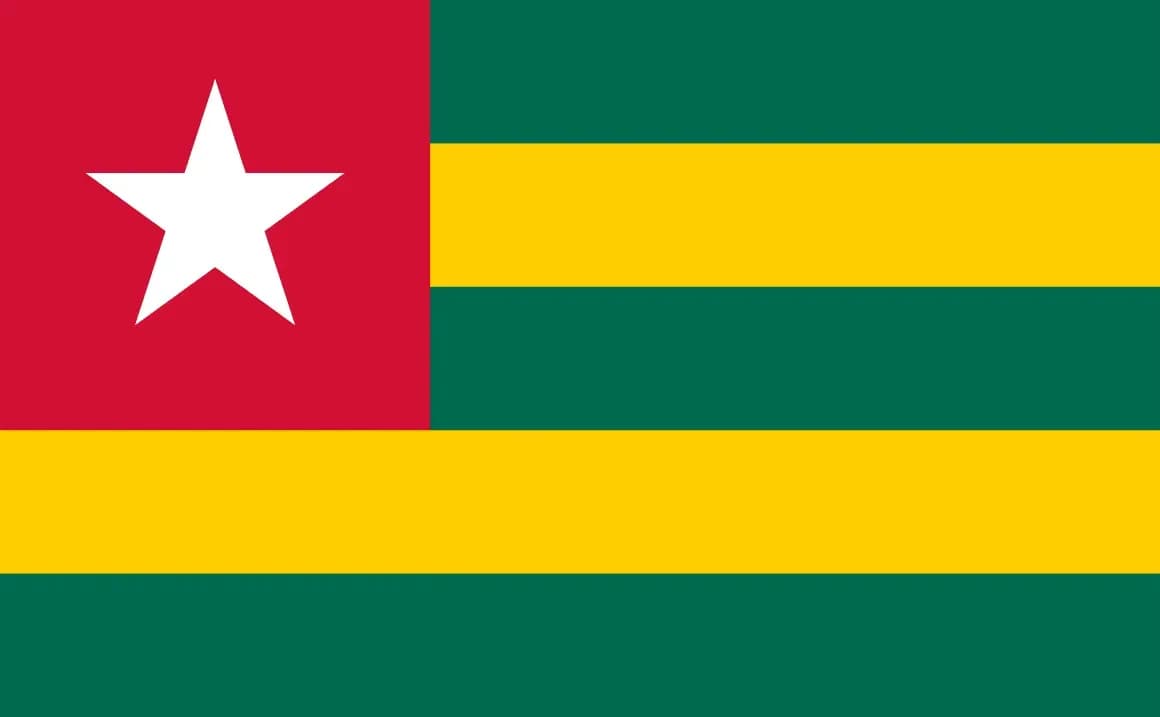 INDEX 24.10.2025, 16:24 Togo's Sovereignty Index (Burke Index), 2024-2025  Share on media IntroductionThis report presents a comprehensive analysis of Togo's sovereignty using the methodology of the Burke Institute. Sovereignty is assessed in 7 areas: political, economic, technological, informational, cultural, cognitive and military. Each aspect is assessed on the basis of official data from international and national sources (UN, World Bank, UNESCO, IMF, ITU, FAO, SIPRI, PISA, etc.) without using politicized indexes. The maximum score in each direction is 100; the sum (up to 700) is the accumulated Sovereignty Index (Burke Index). To adapt and adjust statistical parameters, an international expert survey was conducted for each of the seven components using a single questionnaire of 10 questions with a 10-point scale and one open-ended question. In total, at least 100 experts from 50+ countries were interviewed for each indicator, taking into account geographical representation and specialization. When calculating and analyzing the data, equalizing coefficients were used, bringing all data to a scale of 0-10 points. The final index value is the arithmetic mean between statistical data and expert estimates. Below is an analysis in each area, a final summary table and the main conclusions about the peculiarities of Togo's sovereignty. Political sovereignty — 46.1Togo is a member of the United Nations, the African Union (AU), the Economic Community of West African States (ECOWAS), the World Bank, the International Monetary Fund, the World Trade Organization (WTO), and the ITUC. The Constitution of Togo provides for the mandatory execution of international treaties after their ratification; however, the supremacy of international law over the Constitution is not recognized, in case of contradiction, the priority remains with the national law. In practice, the directives and norms of regional organizations (ECOWAS, AU) are being implemented into national legislation. Political stability index: -0.95 (2023; scale from -2.5 to +2.5, below the global average). In 2022-2025, the introduction of a state of emergency in the northern regions (countering terrorism) continued, and opposition control was limited by pressure from the ruling party. WGI Government Effectiveness: 30.19th percentile of the global ranking (2023), average, performance is improving compared to the previous decade. EGDI index (2022/2023): above the average for West Africa — there are electronic public services (tax, justice, business registration), the development of digital platforms is noted by international agencies. President Faure Gnassingbé and his UNIR party confirm their dominant majority after the 2024-2025 reforms (more than 95% of parliamentary seats), the opposition is weak, trust is divided along ethno-regional lines, official support is high, and real support is lower due to restrictions on freedom. As of 2025, there are no foreign military bases; joint missions and instructors from allied countries (USA, EU) are stationed in the northern regions (Savannahs) to combat extremism, but these forces do not have the status of bases. Togo is a party to the ICC (Rome Statute), is active in ECOWAS courts, and executes decisions primarily on human rights and regional regulation; precedents for distancing or blocking individual decisions are rare. The government is highly centralized: almost all key decisions are made by the president, the prime minister and their party. The regional government system is being formed, but there is no real autonomy for local authorities. The transparency of the security services is low; civil and parliamentary control is formal, the legal framework for transparency is weak, and there are no real control mechanisms. Data completeness assessment: the main indicators are available from international sources, the coverage is 90%. Economic sovereignty — 36.2GDP per capita by PPP in 2025: 2,850-3,240 USD (various estimates of global institutions). Official international reserves are not published separately because the entire reserve pool is centralized at the BCEAO level for WAEMU countries; estimates are USD 0.0 billion (officially) by financial aggregators. National debt: 65-69.5% of GDP (2025, with a downward trend compared to 2024). Much of the food is imported, and the country is vulnerable to external shocks; food security is provided partly through cotton exports and trade in the port of Lomé. Own electricity generation covers just over 50% of the needs — the rest is imported, mainly from Ghana and Nigeria; significant dependence on gas and electricity imports. Large reserves of phosphorites (export item No. 1), limestone; there are bauxite, manganese, iron ore; significant potential of the agricultural sector and fisheries. The availability of fresh water is higher than the regional average (Mono, Wu rivers, lakes, and artesian springs), but the central part of the country is prone to droughts; about 80% of the population has sustainable access to drinking water. There is no national independent payment system: all processing is carried out through the regional BCEAO/UEMOA system The CFA franc (XOF) is used in all domestic and regional settlements, but there is no real national control over the currency, the policy is dictated by the BCEAO and France. Togo does not have its own issuing center and credit policy: all decisions are made by the central bank of the region (BCEAO, DAKAR), monetary sovereignty is limited by the mechanisms of the UEMOA. Data completeness assessment: the main macroeconomic indicators are available from official sources (World Bank, IMF), coverage is 89% Technological sovereignty — 22.8R&D expenditures: 0.23% of GDP (World Bank, 2018 — latest available estimate, no relevant new data available). There is practically no import substitution: the vast majority of electronic equipment, software, and telecom equipment are imported from the national there is no production or assembly — technological dependence. Higher education coverage: about 11-15% (proportion of young people at the age of tertiary education, UNESCO/World Bank for 2025). Internet penetration: 37.0% of the population (January 2025, 3.56 million users). There are national platforms: E-Service Platform (portal.tg), DigiTogo, government digital document management, registration for public services, online payment of taxes. Absolute: almost all electronics, network equipment, industrial automation, and information systems are purchased from foreign suppliers. There is a noticeable increase: according to EGDI 2022-2023, Togo entered the top third of African countries in terms of digitalization — business registration, taxes, courts, healthcare — everything is available online for urban residents. National biotech enterprises and pharmaceutical production are virtually non-existent; all vaccines, modern biotechnologies, and most medicines are imported. There is no in-house mechanical engineering or robotics IT industry; all automation is implemented on the basis of imported solutions. There is no autonomy: the country is completely dependent on the import of the element base and all electronics, there are no factories and research institutes/design bureaus. Data completeness assessment: key indicators are obtained from WIPO, ITU, UNESCO, which provides 87% coverage. Information sovereignty — 38.4The National Cybersecurity Agency (ANCy) has been operating since 2021; there is a single incident reporting platform (Cyber Defense Africa, CDA), the country ranks 8th in Africa and 67th in the world according to the ITU Global Cybersecurity Index (GCI-2024, score 88.8), the best progress in the region. Togo has a national IXP — TGIX (Togo Internet Exchange Point), the only IXP fully implemented and integrated into the regional infrastructure; the network is actively developing. The media (radio, newspapers, TV channels) operate in French (official) and eight national languages: euwe, Cabre, Kotokoli, Minana, etc. The creation of digital content and training in local languages is actively developing (for example, online applications for the EWE language). The media and digital space in Togo is heavily dependent on global platforms (Google, Facebook, WhatsApp, YouTube), and there are no local alternatives or regulation of BigTech. More than 50% of radio and print media is generated by local editorial offices, while a significant part of video and digital media is external content; the situation is improving thanks to journalism professionalization programs. The government is developing DigiTogo platforms, e-Gouvernement (online recording, taxes, public services), as well as language-oriented applications; there are no large private commercial products. 37% of the population have regular Internet access, 24% use mobile Internet banking; public services and financial services are available online in all cities. There are no national cloud solutions: data centers serving government systems run on imported equipment; all critical data is stored in the country, but based on foreign IT. The main telecom operators are Moov Africa and Togocom, registered in Togo, but owned by international holdings, equipment and software are imported; the level of their own technological independence is average. The Data Protection Act (2020) complies with the minimum GDPR standards, liability for violations is provided, there is an authorized body (NAIPT/ANCy), but the level of readiness and application of the law is limited. Data completeness assessment: infrastructure indicators are available from ITU, CIRA, OECD, and specialized sources, with 85% coverage. Cultural sovereignty — 67.3One site on the UNESCO list: Kutammaku, the Land of the Batammariba (Koutammako, the Land of the Batammariba, incorporated in 2004, status extension confirmed in 2023-2025). Kutammaku and the architecture of tower houses, kente fabric (Ewe), unique dances and music of more than 40 ethnic groups, literature with a powerful oral tradition, festivals contribute to the intangible heritage and African culture; decorative and applied arts are recognized at international exhibitions. The annual National Arts & Culture Awards (NACA) has been officially awarded since 2018; the presentation in 2025 in Loma was noted as the largest national cultural event of the year. There are about 40 ethnic groups registered in the country (eve, Kabre, Teme, etc.), each with its own language, rituals, crafts and traditional architecture; most rituals and holidays are integrated into the modern cultural space. Programs to support small nations are implemented through the financing of festivals, language training, and cultural centers in the regions; ethnic and linguistic diversity is protected at the state level. One UNESCO site has been officially registered, and 4 more are on the preliminary list (the agglomeration of Aneho-Glidizhi, ancient iron ore mines, and others); dozens of museums and entertainment centers are located in major cities and regions. Togo participates in Expo 2025 (Japan), exchanges with France, Benin, UNESCO international photo exhibitions, as well as in African and world music and art festivals. Kutammaku and kente fabrics are legally recognized as intangible cultural heritage; a number of craft techniques are legally protected as national brands. The main dishes are fufu, jar, yam noodles, beans, various hot sauces, corn tortillas; each ethnic group has its own gastronomic traditions, street cuisine is actively developed. Approximately 60-70% of residents are regularly involved in holidays, festivals, sports and folklore events; this is especially active in villages and large cities. Data completeness assessment: basic indicators are available in UNESCO and national statistics, coverage is 88%. Cognitive sovereignty — 42.7HDI: 0.571 (2023/2024), 162nd place, the lowest threshold of the “average” according to the UN classification, the historical maximum for the country. Government spending on education: 3.8% of GDP (2022); 14.8% of the country's total budget (2023), the largest budget item in 2025 is CFA 183 billion francs (approximately 300 million dollars). Total adult literacy (2025): 67% (according to the latest data from UNESCO and the World Bank). Men — 78.3%; women — 55.3%. Togo does not participate in the International Comparative Assessments (PISA), and there are no official results. According to the World Bank and national analysis, about 22% of graduates of STEM universities, where engineering, medical, and agrotechnical specialties dominate. At least 30% of university programs are implemented with the support of foreign universities (France, Morocco, the EU) or in partnership through GPE, Erasmus+ and AfDB. 8 national languages are officially recognized in the education system, part of the school curricula is conducted in eva, kabra, minana, tema, moba, etc.; The culture of small nations is integrated through special courses and cultural centers. There are 2 national research centers in the country (Lomé University and the Institute of Agriculture), as well as several specialized laboratories at universities. The state centralized digital platform for secondary/higher schools has been deployed since 2022; the main part of distance education is based on external or hybrid solutions (Google Classroom, Moodle). In 2025, there is a government program to support strong schoolchildren and young scientists: more than 3,000 scholarships, special competitions, and Olympiads annually; the volume of state funding has been increased by a third compared to 2020. Data completeness assessment: education indicators are available in the UNDP, UNESCO, OECD, coverage is 89%. Military sovereignty — 30.1Official defense spending is 4.0—5.4% of GDP (2023-2025), in absolute terms — 195-276 million dollars (according to various estimates), the largest increase against the background of growing terrorist threats. The total number of law enforcement and military structures is about 10,000 (army — 8,800, Air Force — 650, Navy — 220, gendarmerie — 2,500); in fact, 8,550 — 9,300 active military personnel. As part of the army, Navy and Air Force, the main weapons are outdated, but from 2022 they will be retrofitted with Kasser II and Mbombe 4 MRAPs armored vehicles, artillery modernization, night vision equipment, regular purchases of equipment from Russia, China, South Africa and Turkey; the fleet and armored vehicles will continue to be updated. Almost 100% of the weapons are imported, there is no national defense production; only the maintenance equipment and light repair units are our own, heavy weapons and armored vehicles are completely foreign. Control over official borders and ports is stable, especially due to an increase in the military contingent from 2022-2025; measures against terrorists and smuggling have been strengthened in the north; EU and US assistance is available in the form of equipment and training. The size of the military reserve is up to 2,000 people; it is planned to increase according to mobilization scenarios. The country makes national decisions completely independently, but participates in international and regional operations and coordination with France, the EU, and ECOWAS. In 2025, the issue of joining the AGC (AES) bloc was discussed with the Sahel neighbors to enhance security, but no decision has been made. There is no national military industry, the main technologies and weapons are supplied from abroad (Russia, China, South Africa, France, Turkey); there is no own production. There are no nuclear weapons, delivery systems, or participation in nuclear programs; the country is completely non-nuclear. There is no space or orbital military infrastructure; intelligence is limited by conventional means (military intelligence, national security service), the technical base is modern, but relies on imports, not autonomous. All parameters are reflected in the annual reports of SIPRI, UNODA, the Ministry of Defense, the official portals of state-owned companies (Embraer, IMBEL) and the UN/NGO industry databases — 93% coverage Final Summary Table
The main conclusionsStrengths. Moderate political and legal stability: The country ranks in the top 30% in terms of government effectiveness in the region, ensures the stable functioning of institutions, relatively stable government and the preservation of basic territorial and institutional control. Developed cultural identity: Kutammaku (UNESCO site), rich multi-ethnic heritage, well-developed system of support for national languages and cultural brands, annual national awards and high involvement of the population in cultural life. Active digitalization: in recent years, the pace of the introduction of electronic public services, the development of DigiTogo digital platforms, the widespread use of mobile Internet banking, the launch of the national IXP — TGIX. Increase in the military budget and modernization of the army: in 2022-2025, defense spending reached 4-5.4% of GDP, army re-equipment (MRAPs) was initiated, border and anti-terrorist security measures were strengthened. Humanitarian policy and educational initiatives: The country spends about 3.8% of GDP on education, implements large-scale state programs to support talents, and integrates educational programs in national languages. The growth of the STEM and engineering education sector: up to 22% of graduates are STEM, priority is given to agro-, engineering and medical specialties. Weaknesses. Limited economic and monetary sovereignty: There is no own currency, all monetary and credit mechanisms and reserves are centralized through BCEAO, more than 50% of electricity and machinery are imported; pronounced import dependence. Political concentration and low transparency of security: All power is concentrated in the hands of the president and the ruling party, and the security services remain outside parliamentary control. Technological dependence: there is no full-fledged import substitution in high-tech, biotechnologies, microelectronics and robotics; All important IT systems and equipment are being imported. Military-industrial vulnerability: almost 100% of weapons are imported, there are no own defense enterprises. The autonomy of decisions is limited by regional and international interests in the fight against terrorism. Low human capital: Literacy is 67%, HDI has only reached the lowest level of the middle group, there is a regional gender gap and a low proportion of higher education enrollment (11-15%). The weakness of the biotech and innovation sectors: There are very few national innovation clusters, biomedical developments, and proprietary distance learning platforms; technological imports dominate. Overall assessment. The cumulative index of Togo's sovereignty is 283.6 out of 700 points (average — 40.5%), which places the country in the 158th place in the world top. Togo demonstrates stable institutional and cultural stability, relies on the modernization of the army, actively digitalizes public services and supports the development of education. The key limitations are technological and currency dependence, the narrowness of the industrial base, low transparency of security institutions, and insufficient economic diversification. Strengthening sovereignty is possible through the expansion of industrial, educational, digital and financial autonomous capabilities and the development of its own innovation sector. The sovereignty profile indicates that Togo's sovereignty is a combination of stable government structures, active cultural policy, progress in digitalization and significant investments in education and defense, against the background of strict centralization of decisions and continued dependence on imports in many strategic areas (currency, technology, high-tech, weapons). True independence is limited by monetary and technological vulnerability and the lack of a developed industrial base of its own, but cultural and institutional capital can become a growth point for building long-term national autonomy. | ||||||||||||||||||