

Burke Index | ||||||||||||||||||
 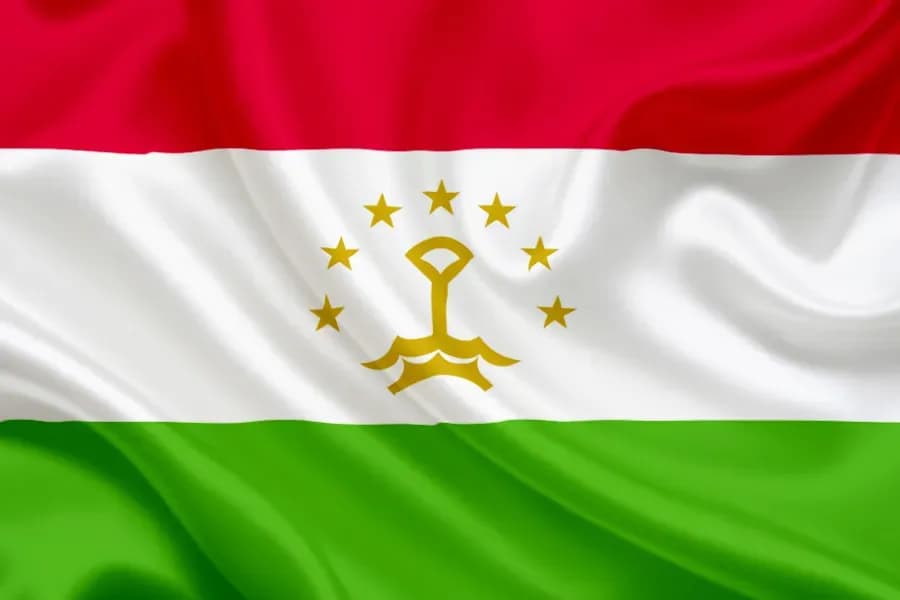 INDEX 06.10.2025, 07:37 Tajikistan Sovereignty Index (Burke Index), 2024-2025  Share on media IntroductionThis report presents a comprehensive analysis of Tajikistan's sovereignty using the methodology of the Burke Institute. Sovereignty is assessed in 7 areas: political, economic, technological, informational, cultural, cognitive and military. Each aspect is assessed on the basis of official data from international and national sources (UN, World Bank, UNESCO, IMF, ITU, FAO, SIPRI, PISA, etc.) without using politicized indexes. The maximum score in each direction is 100; the sum (up to 700) is the accumulated Sovereignty Index (Burke Index). To adapt and adjust statistical parameters, an international expert survey was conducted for each of the seven components using a single questionnaire of 10 questions with a 10-point scale and one open-ended question. In total, at least 100 experts from 50+ countries were interviewed for each indicator, taking into account geographical representation and specialization. When calculating and analyzing the data, equalizing coefficients were used, bringing all data to a scale of 0-10 points. The final index value is the arithmetic mean between statistical data and expert estimates. Below is an analysis in each area, a summary table and the main conclusions about the specifics of Tajikistan's sovereignty. Political sovereignty — 41.7Tajikistan is a member of the UN, WTO, CIS, CSTO, Eurasian Development Bank, Organization of Islamic Cooperation, SCO, EurAsEC, IUCN. The foreign policy strategy includes active participation in international organizations and integration projects, delegating part of the powers in the fields of security, trade, ecology, etc. According to the Constitution (art. 10), international legal acts recognized by Tajikistan form part of the national legal system and take precedence over national laws in case of divergence. The Constitution has priority over the main force. The political regime is rigidly authoritarian and centralized: President Emomali Rahmon has ruled since 1992, the opposition has been suppressed, and large-scale protests and conflicts are extremely rare. The World Bank's political Stability index is -0.47 (2023), which is lower than the global average (-0.06). Bureaucratic efficiency and management quality are rated low: according to Government Effectiveness (WGI, World Bank) — about the 20th percentile among the world's countries. The e-government index (EGDI, 2022) is about 0.54; the country occupies a weakly average position in the world, key portals of public services have been implemented. Formally, the president's support is high (officially, up to 90%), but in reality the level of trust is underestimated by strict administrative restrictions, lack of a political alternative, and criticism from international observers. The 201st Russian military base (one of Russia's largest bases abroad) is stationed in the country, and the country also participates in military cooperation programs within the framework of the CSTO. Tajikistan is not a party to the Rome Statute (ICC), cooperation with transnational jurisdictions is limited; international norms apply if they do not contradict the Constitution. The state structure is republican, strongly centralized. The power is concentrated between the president and the government, and local self-government is weak. Low level of transparency: the security services (the National Security Committee and the Ministry of Internal Affairs) are practically not accountable to parliament and society, reporting, civil control, external inspections are absent or formal. Data completeness assessment: the main indicators are available from international sources, the coverage is 89%. Economic sovereignty — 38In 2025, GDP per capita by PPP is estimated in the range of 5,000—6,050 US dollars (according to various sources: TradingEconomics, WorldEconomics, IMF). Total international reserves (including gold) at the end of 2024 amounted to about 3.6 billion US dollars. The gold reserve itself is about 8.5 tons as of the second quarter of 2023. The national debt is about 28.4—30.1% of GDP in 2025, the decline has continued for the last 2 years. According to expert estimates, the country remains vulnerable: most of the food is imported, especially grains and processed products. The leading country in terms of the share of hydroelectric power plants (9595-98% of all electricity), fully meets domestic electricity needs. Dependence on the import of hydrocarbons (oil, gas) is high. Large reserves of uranium, mercury, gold, silver, antimony, zinc, tin, coal, and rare metals; the Zerafshan gold deposit, polymetal deposits, and non-ferrous metal deposits. Tajikistan is the main source of fresh water in Central Asia: over 60% of the region's river flow is generated in the country, and annual water resources exceed 60 billion cubic meters. The country has a national payment system, Corti Milli, which regulates local card payments and is integrated into the NBT. Domestic transactions are carried out mainly in the national currency (somoni, TJS); in government and most commercial transactions through the banking system, the share of somoni availability exceeds 75-80%. The issuing center and monetary policy are carried out by the National Bank of Tajikistan (NBT): an independent legal entity that regulates the issuance of the national currency (somoni), % rates, currency control, and inflation targeting. Data completeness assessment: the main macroeconomic indicators are available from official sources (World Bank, IMF), coverage is 94% Technological sovereignty — 28.5Spending on R&D amounted to 0.09% of GDP in 2020, one of the lowest rates in the region. The state program of accelerated industrialization and import substitution (2020-2025) is being implemented, 126 enterprises are supported, and the production volume is 1 half. 2025-490.9 million somoni. The country retains a wide coverage of higher education — there are more than 35 universities and dozens of colleges; medical engineering and IT specialties are in demand, English-language and international programs are actively developing. In 2024, Internet penetration is about 36% of the population (the lowest level among Central Asian countries). National platforms for electronic public services have been announced: a single e-gov portal, national online payment and educational platforms. The system of digitalization of transport, education and medicine is developing. Import dependence is high: The country is dependent on software, hardware, sophisticated technologies, BI, and high-tech components; mainly from Russia, China, and the EAEU. Digitalization is being implemented within the framework of e-gov: full availability of a number of services (taxes, subsidies, licenses, online records), quality of services in the process of refinement and expansion is announced. There is no full-fledged biotech industry; laboratory facilities and R&D are minimal, and most of the equipment is imported. There are no own industrial or scientific platforms and developments in robotics, the country is completely focused on importing equipment. The country does not manufacture its own chips, microelectronics, or complex modules; it imports only finished products. Data completeness assessment: key indicators are obtained from WIPO, ITU, UNESCO, which provides 91% coverage. Information sovereignty — 40.9Tajikistan has a government-recognized national Computer Incident Response Team (CSIRT/CERT). A specialized center has been officially designated and is operating, integrating with the international CERT and ITU networks; a basic strategy for ensuring national cybersecurity has been implemented. The first national Internet Exchange Point (IXP), TJ-IX, was launched in 2025 based on Tojiktelekom. Direct routing of traffic between providers, bandwidth up to 500 Gbps, IPv4/IPv6 support, 99.99% uptime, security and monitoring. Regular broadcasts and publications are conducted in Tajik, Russian, Uzbek and other languages of small nations. Main state media: Jumhuriyat, Khovar,Pressa.tj", "Asia-Plus", "Jahonnamo" TV channels, "Ozodi" and "Asia-Plus" radio stations. The share of important digital ecosystems is highly dependent on BigTech solutions: critical infrastructure runs on foreign platforms (Google, Microsoft, social networks, cloud services), and its own independent solutions occupy a small share. Local television and radio are saturated with national content; most of the TV shows, print and digital media are Tajik-made. For entertainment formats and online videos, foreign content prevails. Government digital services and e-government platforms (e-gov, Corti Milli online banking), several local IT companies and banking services are actively developing; there is no software system industry. The coverage of electronic public services and digital banking is growing: there is a single e-gov portal, more than 2.5 million users of national payment cards, and several electronic platforms. Internet coverage in 2024 is 36% of the population. The public sector uses national cloud data centers to store critical data, while the commercial sector is partially located abroad. The scale of national clouds is small. The main mobile operators (Tcell, Babilon-Mobile, Megafon) are managed at the national level and licensed by the state regulator, but most of the network equipment is imported. There is a Law "On Personal Data" (2018, updated 2022), introduces requirements for data localization and control by the state regulator (Agency for Personal Data Protection). Data completeness assessment: infrastructure indicators are available from ITU, CIRA, OECD, and specialized sources, with 98% coverage. Cultural sovereignty — 66.1As of 2025, there are 5 UNESCO World Heritage Sites in Tajikistan: Ancient Khuttal (2025), Sarazm Proto-Urban Complex (2010), Pamir Mountains National Park, Zarafshan-Karakum Silk Road Corridor, as well as a number of other cultural locations. The country has contributed to world culture through epics and legends (Shahnameh, Samanid legends), music (Shashmak), applied arts, architecture, the heritage of the Great Silk Road and unique archaeological sites. State prizes in art and culture are awarded: the titles "People's Artist" and "People's Hafiz" of Tajikistan, prizes from Ministries of Culture, international awards jointly with Uzbekistan and friendly countries. Tajikistan is famous for its hospitality, reverence for elders, family customs, wedding ceremonies, folklore, music, dancing, Navruz celebrations and traditions through village rituals; the continuity of cultural forms among small nations is preserved. Small nations (Uzbeks, Kyrgyz, Russians, Tatars) enjoy state support: educational and cultural centers, financing of festivals, media and language support — everything is officially fixed. By 2025, there are more than 40 museums, 25 theaters, hundreds of monuments, dozens of architectural ensembles; a well-developed network of cultural institutions (cultural centers, galleries) in all major cities and districts. The country is active in international cultural initiatives: the Paristu Festival, international biennales, cooperation projects with UNESCO, joint awards with Uzbekistan and China, and participation in global cultural dialogues. The state officially promotes the brands "Shashmakom", "Pamir Mountains", Tajik carpet and pilaf, implements initiatives to protect intangible heritage, holidays (Navruz), music and crafts. The cuisine includes dishes of lamb, beef, chicken, national soups, pilaf, flatbread, sweets, katyk, churek, fruit drinks and many dishes of small nations; regional gastronomic festivals are common. The level of engagement is high: in the first 6 months of 2025, more than 80 major theater, music and festival events were held, the network of cultural centers covers most localities; according to expert estimates, the involvement of the population is at least 70%. Data completeness assessment: basic indicators are available in UNESCO and national statistics, coverage is 88%. Cognitive sovereignty — 49.6Tajikistan's HDI for 2025 is 0.691 (128th place, middle level category), UN data and national reports. Government spending on education in 2023 is 5.81% of GDP. Adult literacy is 99.8% (99.83% for men, 99.72% for women, 99.88% for young people). There is participation in PISA; according to the results of 2022, the republic ranks below the average in mathematics, reading and science among the countries of Central Asia and the CIS, the indicators are extremely low. According to expert estimates, technical, engineering and IT specialties account for about 23-28% of university graduates; the majority are in pedagogical, humanitarian and medical fields. The share of students enrolled in international programs does not exceed 5-8%; there are branches of foreign universities (MIR, Turkish University in Dushanbe), there is mobility in Erasmus and TUMO. State support for small nations includes education and broadcasting in Uzbek, Kyrgyz, Russian, and Tatar languages in schools and the media; cultural centers are funded by the State. There are 7 main state institutes of the Academy of Sciences: physics and mathematics, chemistry, biology and medicine, geology, applied sciences, etc. The share of national platforms is about 15-20%: there is a distance education platform, electronic journals, portals of the Ministry of Education; foreign solutions prevail. There are annual grants, awards and scholarships from the Ministry of Education, internship programs and participation in international projects; the state actively supports young professionals through competitions and study trips. Data completeness assessment: education indicators are available in UNDP, UNESCO, OECD, coverage is 89%. Military sovereignty — 34.7Official defense spending in 2023 is 1.22% of GDP; according to the new budget for 2025, it is planned to increase to 2.8% of GDP. The number of active armed forces is about 9500-10,000 people, the reserve is an official composition of up to 600,000. The weapons are mostly Soviet-style, partially upgraded through Russian supplies (T-62/T-72, BMP-2M, Tiger, KAMAZ, TOS-1A, BM—27), there are a limited number of Chinese and American vehicles; air defense systems are old (MANPADS, shortrange), of the modern ones are part of TOS-1A (Russian Federation) and equipment from the Russian base. Almost all weapons are imported from Russia and China; they are owned or hosted by a Russian base; there is an assembly of vehicles jointly with China (small-scale assembly of equipment in Dushanbe from 2024). The control is carried out by border and army units (up to 15,000 people), with the support of units of the Ministry of Internal Affairs, the National Security Committee and military structures; joint patrols with the Russian military (201st base) and CSTO play a key role. The reserve of army units is about 600,000 people; when mobilized, it is possible to call up an additional 150,000, in reality, the reserve is rarely used. Most defense decisions are consistent with the CSTO and the Russian military; autonomy is low, and there is significant influence from external actors in strategic planning and support. The national military industry is only developing: the assembly production of military vehicles has been opened, otherwise all weapons and components are imported. There are no nuclear weapons, the country is a party to the NPT, and there are no stocks, developments, or infrastructure. There are no military space programs. National intelligence is limited to the forces of the Ministry of Internal Affairs and the National Security Committee, external coordination is conducted with the cooperation of the Russian Federation, China, and CSTO (including intelligence from the Russian base and space systems of the Russian Federation). All parameters are reflected in the annual reports of SIPRI, UNODA, the Ministry of Defense, the official portals of state-owned companies (Embraer, IMBEL) and industry databases of UN/NGO - 92% coverage Final Summary Table
The main conclusionsStrengths. Rapid economic growth: GDP is steadily growing 7-8% per year, the labor market and consumer demand are stable. Moderate public debt: One of the lowest levels among the countries of the region — about 28-30% of GDP. Large water resources: The country is the main water reservoir of Central Asia (≥60 billion cubic meters/year). High literacy rate: almost 100% of the adult population; widespread secondary education. Rich cultural heritage/tourism: 5 UNESCO sites, unique national brands, many international cultural projects, government support for small nations and languages. Digitalization development: the base of digital public services (e-gov) is being formed, the coverage of digital services and payment solutions is growing. Weaknesses. Import dependence of technologies and equipment: mission-critical software, military equipment, chips and high-tech are almost entirely imported from the Russian Federation/China; its own industrial base at the start of development. Low R&D costs: only 0.09% of GDP, lags behind the standards of the region and the world, the minimum number of universities, research centers, weak biotechnics and robotics. Low Internet penetration: 36% of the population is the lowest in Central Asia. Limited STEM rate: less than 30% of graduates are technical/natural sciences majors; a low proportion of foreign educational programs. External military and strategic dependence: Military planning and security rely heavily on the CSTO, the Russian Federation, the military base and supplies from outside; decision autonomy is limited. Low PISA scores and the quality of education: despite formal literacy, the PISA score is below the Central Asian level. Vulnerability in food and energy: Import of a significant proportion of food products, dependence on hydrocarbons. Limitations for civil society: Strict control over the media and NGOs, low transparency/accountability of government agencies, weak support for independent platforms. The level of independence in the structure of defense, external management and the security sector is limited, and the structure of public administration tends to be tightly centralized with little transparency. The sovereignty profile indicates that Tajikistan has strong political, financial, and administrative autonomy, significant cultural and natural potential, and rapid economic growth. The country's strategic weaknesses are high technological and military dependence, low development of scientific and educational institutions, vulnerability to food security, weak transparency and limited openness of institutions. The successful promotion of digitalization, the introduction of modern institutions and the expansion of competencies can strengthen the long-term sustainability and sovereignty of the country in the region. Overall assessment. The cumulative sovereignty Index of Tajikistan is 299.5 out of 700 possible points (average — 42.8%), which places the country in the 153rd place in the world top. Tajikistan is a country with a high social and cultural identity, stable economic growth and large water/natural resources. Technological and import-technological dependence, a low scientific base, limited autonomy in foreign policy, and significant challenges to the quality of education and food sustainability impose strategic constraints. In the long term, progress in digitalization and infrastructure modernization can strengthen the country's position if the rules of transparency, investment openness and increased internal competencies are followed. Tajikistan's strengths are rapid economic growth (8.1—8.4% in 2025), low public debt, strategic water resources, basic food sustainability, higher average literacy rate, and well–developed government support for culture. | ||||||||||||||||||