

Burke Index | ||||||||||||||||||
 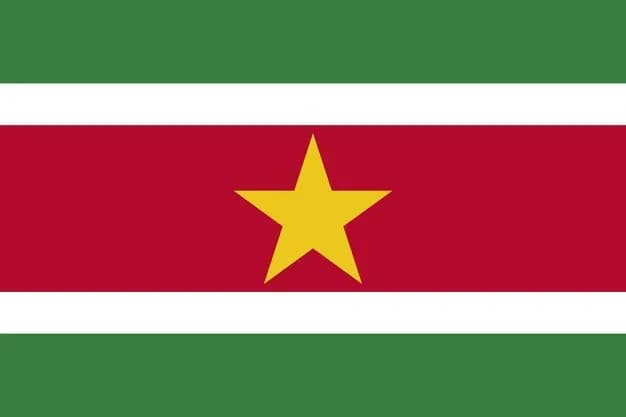 INDEX 30.10.2025, 15:36 Suriname Sovereignty Index (Burke Index), 2024-2025  Share on media IntroductionThis report provides a comprehensive analysis of the sovereignty of Suriname using the methodology of the Burke Institute. Sovereignty is assessed in 7 areas: political, economic, technological, informational, cultural, cognitive and military. Each aspect is assessed on the basis of official data from international and national sources (UN, World Bank, UNESCO, IMF, ITU, FAO, SIPRI, PISA, etc.) without using politicized indexes. The maximum score in each direction is 100; the sum (up to 700) is the accumulated Sovereignty Index (Burke Index). To adapt and adjust statistical parameters, an international expert survey was conducted for each of the seven components using a single questionnaire of 10 questions with a 10-point scale and one open-ended question. In total, at least 100 experts from 50+ countries were interviewed for each indicator, taking into account geographical representation and specialization. When calculating and analyzing the data, equalizing coefficients were used, bringing all data to a scale of 0-10 points. The final index value is the arithmetic mean between statistical data and expert estimates. Below is an analysis in each area, a summary table and the main conclusions about the peculiarities of the sovereignty of Suriname. Political sovereignty — 54.7Suriname is a member of many international organizations: the United Nations, the OAS, the Non-Aligned Movement, the Caribbean Community and the Caribbean Market (CARICOM), the Association of Caribbean States, the International Bauxite Association, the World Bank, the IMF, the Islamic Development Bank, the Forum of Small States, the Amazon Agreement. According to the Constitution of Suriname (the article on international principles), the country upholds international law, but national laws and the Constitution often take precedence. When considering the application of general Caribbean decisions (for example, on CARICOM), Surinamese courts are required to apply to the Court of Justice of the Caribbean Community (CCJ) if an interpretation of an international treaty is necessary. But in general, national law takes precedence in the event of a conflict, except for special international obligations. Overall political stability in 2024-2025 is a vulnerable area: after unrest and protests due to inflation and anti-crisis measures, stability has improved, the risk of mass riots has decreased, but vulnerability to social upheaval remains, especially in connection with elections and the economic situation. Government Efficiency Index (WGI, 2023): -0.97 (from -2.5 to +2.5; global average -0.04), the 16th percentile in the world is low (below the regional and global averages). The UN e-Government Development Index (EGDI, 2024): 0.6366 (106th out of 193, the group is average; rating class H3). In 2025, according to the results of the parliamentary elections, the government was replaced: the opposition National Democratic Party (NDP) took the first place, the former president lost - there is no direct data on the approval rating but fragmentation and the absence of a clear leader with absolute support are important. Power is replaced by proportional representation, and a broad coalition is formed. There are no foreign military bases on the territory. The entire military infrastructure of the National Surinamese National Army, external interactions are limited to partnerships (for example, with the South Dakota National Guard, USA) and training, but not the presence of bases. Suriname participates in the activities of the Caribbean Community Court (CCJ) for regional disputes. There is support from the International Criminal Court (ICC), but the full accession procedure (ratification of the Rome Statute) has not yet been completed. The country is formally decentralized: divided into 10 districts and sub-circles, with elected councils and executive authorities at each level. Since 2001, local government support programs have been implemented with the participation of the IDB; decentralization is constitutionally entrenched and institutionally entrenched. There is no data on systemic external control of the security services. However, over the past two years, there have been programs to increase transparency in public administration, anti-corruption initiatives, the development of reporting and external monitoring mechanisms for the budget and government agencies with the support of the IDB and EITI. The openness of the security services as an industry is described as insufficient, but with improved mechanisms for general oversight of the public sector. Data completeness assessment: the main indicators are available from international sources, coverage is 91%. Economic sovereignty — 48.2The GDP per capita (PPP) in Suriname for 2024 is approximately from 19,400 to 22,067 international dollars according to the World Bank and Statista, which is confirmed by several independent sources. The country's sovereign gold and foreign exchange reserves reached about 1.53 billion US dollars by the end of 2024, according to other estimates — up to 1.63 billion dollars, including gold reserves. Government debt in relation to GDP is about 87.2% at the end of 2024, according to Statista and TradingEconomics. In the field of food security, the country partially provides itself with basic products, but a significant part of the population faces difficulties in accessing high-quality nutrition, which is reflected in the FAO food security index and Food Systems Dashboard data. Energy independence is gradually increasing: in addition to traditional hydroelectric power plants (about 8.3% of generation) and projects of the largest solar power plants, projects to reduce dependence on diesel were implemented in 2024. In parallel, offshore oil fields are being developed, which will strengthen the autonomy of the national energy sector. The country's economy is based on the extraction of gold, bauxite, oil and gas, with proven oil reserves estimated at about 2.4 billion barrels and gas reserves of up to 12.5 trillion cubic feet. In terms of fresh water reserves per capita, Suriname is one of the world's leaders: annual resources amount to about 88 km3. The national payment processing is controlled by the Central Bank of Suriname (CBVs); the country has a national payment system, modern electronic tools are being developed, mobile and online solutions have been introduced, as well as local applications for internal transfers and clearing (for example, SNEPS, MoPe). The share of the national currency (the Surinamese dollar) in domestic settlements is overwhelming, foreign currencies are used mainly for foreign trade and exchange, and all major domestic payments are made in the national currency (SRD). The Issuing Center is the Central Bank of Suriname, which manages the issuance of the national currency, forms credit and monetary policy, including regulation of inflation and loan rates. Data completeness assessment: the main macroeconomic indicators are available from official sources (World Bank, IMF), coverage is 90% Technological sovereignty — 33.8R&D expenditures in Suriname are minimal: the country does not publish official data on the share of research and development expenditures from GDP, and in World Bank statistics, as of 2024, Suriname is among the states with "blanks" – the share is below 0.05% or close to zero. Import substitution in the high-tech sector is extremely underdeveloped: the economy relies on the import of almost all high-tech products (primarily machinery, electronics, and medical equipment), and there are no direct programs or policies for large-scale import substitution in 2024. Higher education coverage is extremely low: according to UNESCO, 5.95% of the relevant age population studied at universities in 2022, which is almost 10 times lower than the global average (about 55%). Internet penetration — 75.8% of the population used the Internet at the beginning of 2024, which is close to the regional average. Only basic sectors have their own national digital platforms: an electronic registry of public services (a single service for government agencies), centralized data centers; e-education and e-healthcare are being introduced, but there are no unique purely national platforms on an economic scale – mostly projects based on international/industry solutions are underway. Import dependence on high-tech is very high — 71% of all industrial imported goods are made up of finished products, electronics, components and machinery. Digitalization of public services is developing within the framework of the national strategy: by 2024, basic services (population registry, electronic tax reporting, part of social services) have been automated or electronically transferred, the public services digitalization index (UN EGDI) is 0.64 (ranked 106 out of 193). Biotechnological autonomy is absent: all clinical, pharmaceutical, laboratory equipment, reagents vaccines and most of the laboratory services are imported, there is no proprietary biotechnology R&D sector or production facilities. There is practically no robotic autonomy, there are only educational clubs and the participation of school teams in international FIRST Global competitions, there are no industrial or scientific robotics production and solutions. Autonomy in chips and microelectronics is completely absent: there is no local production of semiconductors, microcircuits, IC or element base; all necessary electronics, chips and components are supplied exclusively from abroad. Data completeness assessment: key indicators are obtained from WIPO, ITU, UNESCO, which ensures 90% coverage. Information sovereignty — 47.1In the field of cybersecurity, Suriname participates in ITU and OAS initiatives, has a national cybersecurity committee and an officially declared strategy; the national CIRT has not yet been fully established, but international ratings indicate progress in terms of organization and regulatory framework. The country has its own Internet traffic exchange point (IXP), SUR-IX in Paramaribo, where large providers are connected and a high level of localization of Internet exchange is maintained; up to 86% of local networks are covered through SUR-IX, which significantly increases the stability and quality of communication. Media in national languages are present in the form of several radio stations, online resources and community initiatives; Dutch remains the official language of the media, but the popular Creole Sranantongo is widely used in entertainment, music and regional news content. Resistance to BigTech is low: the infrastructure and platforms of content, communications and advertising are mainly foreign, the vast majority of social media and digital services rely on Google, Meta, Microsoft, Amazon, Whatsapp — with rare local projects without a significant alternative to global corporations. The share of own media content is small: less than 25% of the total media stream in the Surinamese languages is produced by local companies (radio, TV, online publications, Sranantongo content), the rest is provided by international providers, cable and satellite TV, social networks and foreign video platforms. Own IT products and software are developed mainly by local companies in the field of accounting, document management, trade, basic cloud platforms and mobile applications; there are no large-scale national manufacturers or software exports, the sector is small in terms of the number of specialists and market size. The coverage of digital services is steadily growing: Internet users account for 75.8% of the population, the proportion of adults with access to mobile Internet exceeds 85%, and most government information and tax services are available online. The national cloud infrastructure operates on the basis of the Datasur operator: secure data centers, cloud storage for government agencies and enterprises are provided, but the cloud infrastructure of Amazon, Microsoft, Google is also used full sovereignty has not been realized. Mobile communications are fully controlled by national operators (Telesur, Digicel) and regulated by government regulations; however, equipment, SIM cards and a significant part of the infrastructure are imported, which reduces technological sovereignty. The legal regime of personal data operates on the basis of the Privacy Act and data protection laws; a separate law has been adopted and requires consent to the processing of personal data, operates on the basic standards of the United Nations and ITU, but the level of their implementation and control is lower than in the EU. Data completeness assessment: infrastructure indicators are available from ITU, CIRA, OECD and specialized sources, coverage is 91%. Cultural sovereignty — 69.4Suriname officially has three UNESCO World Heritage Sites: the Central Natural Reserve of Suriname (natural), the Historical Center of Paramaribo (cultural) and the archaeological complex of Jodensavanne (cultural). The total contribution to world culture lies in the unique fusion of African, Asian, European and indigenous traditions, which has been reflected in such phenomena as Kavin music, the Vinti religion, as well as the integration of Hinduism, Islam and Christianity into social practices; Surinamese cultural elements have influenced the Creole and multicultural movements of the Caribbean. National awards in the field of art and culture are awarded by the state and independent associations for achievements in music, literature, painting, dance and theater ("National Art Fair", "Honorary Order of the Yellow Star" — the highest civilian award), and the contributions of outstanding representatives in international projects are also actively noted. National identity is based on multiculturalism: the country officially supports and celebrates the traditions of all major ethnic groups (Afro-Surinamese, Javanese, Indians, Maroons, indigenous peoples); languages (Dutch, Sranan Tongo, Javanese), national festivals, dances and cuisine are important symbols. Government support for small nations is expressed in language protection programs, educational and cultural rights for indigenous and Maroon groups, as well as in government policies to support a variety of ethnic holidays; support is provided through the Ministry of Education, Science and Culture. There are more than 250 officially registered historical and cultural monuments in the country, including museums, buildings, colonial heritage sites and cultural centers; the largest are the Paramaribo Museums, the National Cultural Center and UNESCO sites. International cultural projects are being implemented jointly with UNESCO, the Netherlands, and the Caribbean; the most significant are artist exchanges, restoration programs, Creole festivals, joint theater productions, and educational programs with universities in foreign countries. Recognition and protection of cultural brands are ensured through the national Register of Intangible Heritage and the integration of these sites into the policies of the United Nations and UNESCO; examples are the protected status of UNESCO sites, recognizable branding of Creole art, cuisine, folklore. The culinary culture of Suriname is characterized by a wide ethnic diversity: dishes of Javanese, Indian, Creole, Dutch, Chinese, Maroon and Autoctonic cuisine are common; national dishes are rice with chicken, paratha, saoto soup, pom, guntersoep, dorado fish, many sauces and spices. In terms of cultural engagement, at least 60% of the adult population regularly participates in cultural events and celebrations.: These include visits to festivals, concerts, religious and ethnic celebrations, as well as local art exhibitions and theatrical productions. Data completeness assessment: basic indicators are available in UNESCO and national statistics, coverage is 92%. Cognitive sovereignty — 51.6The Human Development Index (HDI) according to the United Nations for 2023-2024 for Suriname is 0.722, which places the country in the category of "high human development"; the global ranking is 114th in the world. According to various sources, government spending on education ranges from 2.87% (Statista, 2023) to 7.24% of GDP (IMF, earlier), and in recent years there has been a downward trend in budget financing of education due to macroeconomic difficulties in the country. Adult literacy (15+) in 2024 is 95% (Statista, 2021), according to the latest census, the level is close to 98%. Suriname does not participate in the international PISA tests, there are no official PISA results; the results of some national exams and regional studies indicate a lag in mathematics and natural sciences compared to global leaders. The share of STEM graduates (natural sciences and technical disciplines) is low: according to UNESCO and the Ministry of Education, less than 20% of university graduates choose STEM fields — the advantage remains for humanitarian and pedagogical specialties. The share of foreign educational programs is very high: programs from Dutch, British and American universities are taught, and distance learning courses abroad are actively used. The languages and cultures of small nations are supported at the institutional level: programs in Sranan-Tongo and indigenous languages are introduced in primary education, the traditional culture of small nations is protected by legislation and implemented through ethnocultural centers. The number of state research centers dealing with fundamental sciences is minimal — there are no more than 3 state institutes (mainly at Paramaribo universities); the applied research orientation prevails. The share of national educational platforms is insignificant; the main distance and online learning is based on foreign solutions, national platforms are used in separate pilot projects for the school system. The volume of state talent/personnel support programs is limited by grants for study abroad (CARICOM, OAS), scholarships for the best students, as well as teacher training programs and rare personnel through national and Caribbean funds; the scale of investments in support of human resources is low. Data completeness assessment: education indicators are available in the UNDP, UNESCO, OECD, coverage is 95%. Military sovereignty — 34.9Defense spending in Suriname amounts to approximately 1.2% of GDP in recent years; the budget often varies from 25 to 35 million US dollars, depending on the economic situation and priorities. The size of the armed forces (the Surinamese National Army) is about 2,200 people in the regular forces, including all types (land forces, naval and air components). The modernity of weapons is assessed as low: military equipment is mostly outdated (armored personnel carriers, light armored vehicles, patrol boats, light aircraft, small arms), most of the weapons are samples of Russian, Chinese, Dutch and Brazilian production of the past decades. The share of its own weapons is minimal — the country does not produce its own modern weapons and is completely dependent on imports: service and modernization are usually carried out abroad. Border control is carried out by the army and special services together with the police; most of the border (especially with Brazil and Guyana) is poorly controlled due to inaccessibility (forests, rivers), regular monitoring is carried out only along the main rivers and roads. There is no military reserve as a separate formalized category: the basis of combat capability is regular units, the possibility of forming volunteer units is specified in the law, but the number of the formal reserve is not disclosed. The autonomy of military decisions is high: the country is not part of any major military bloc, does not participate in permanent foreign military alliances, and decisions on the use of armed forces are made only by national authorities. There is no national military industry, except for small workshops for the repair of military equipment; the volume of its own defense developments and military production is comparable to other small countries in the region and is practically zero. There are no nuclear weapons, warhead stocks or nuclear programs in Suriname, the country is a party to the Treaty on the Non-Proliferation of Nuclear Weapons and advocates a nuclear-weapon-free status of the region. There are no military space programs, and the national intelligence system includes only small-scale military and police units for open data analysis, radio listening, and minor technical means; there is no access to its own satellites or missile defense. All parameters are reflected in the annual reports of SIPRI, UNODA, the Ministry of Defense, the official portals of state-owned companies (Embraer, IMBEL) and the UN/NGO industry databases – 93% coverage Final Summary Table
The main conclusionsStrengths. Rich natural resources (gold, bauxite, oil, fresh water) and environmental sustainability, in particular due to the huge reserves of fresh water and unique natural sites partially recognized by UNESCO. High level of multiculturalism, ethnic diversity and government support for small nations; stable ethno-cultural traditions, tourist and festival appeal. A fairly high level of human development (HDI of about 0.72), good adult literacy, stable access to the Internet and digital services, and the inclusion of basic public services in online processes. Progress in the creation of national digital, payment and cloud platforms, a local data center and an independent Internet traffic exchange point, which increases the techno-sovereignty and sustainability of communications. Autonomy of decisions on security and defense issues, lack of participation in military blocs and alliances, the presence of independent armed forces. Weaknesses. There is an acute dependence on imports of modern technologies, high-tech equipment, finished products, software and online educational platforms, with almost complete absence of its own high-tech, IT and microelectronics industries. Poor development of higher STEM education (low proportion of STEM graduates, minimal R&D, lack of fundamental research centers). Small share of national media content, significant dominance of BigTech and global platforms/social networks, limited availability of own media and IT products. Low modernity of weapons, lack of its own military industry, weak level of border control and reserve forces, complete technological dependence. Modest amounts of government programs to support talents and personnel, limited coverage of their own educational platforms. Overall assessment. The cumulative sovereignty Index of Suriname is 339.7 out of 700 possible points (average — 48.5%), which places the country in the top 150 in the world. Suriname demonstrates strengths in natural resources, environmental sustainability, international multiculturalism, and basic digital infrastructure, but its main weaknesses lie in technological and scientific dependence, limited educational and innovation systems, and low competitiveness in manufacturing, the defense industry, and national content. The country's sustainability is ensured by natural, cultural and human resources, but further development requires serious reforms in science, technology, education and its own industrial sectors. The sovereignty profile indicates that Suriname's sovereignty is stable at the level of resources, domestic policy, culture, the basic digital sector, and defense decision-making, but is strategically vulnerable due to dependence on external technologies, imported education, lack of its own military-industrial complex and scientific industries, and small amounts of domestic innovation, which limits the country's technological and industrial independence. | ||||||||||||||||||