

Burke Index | ||||||||||||||||||
 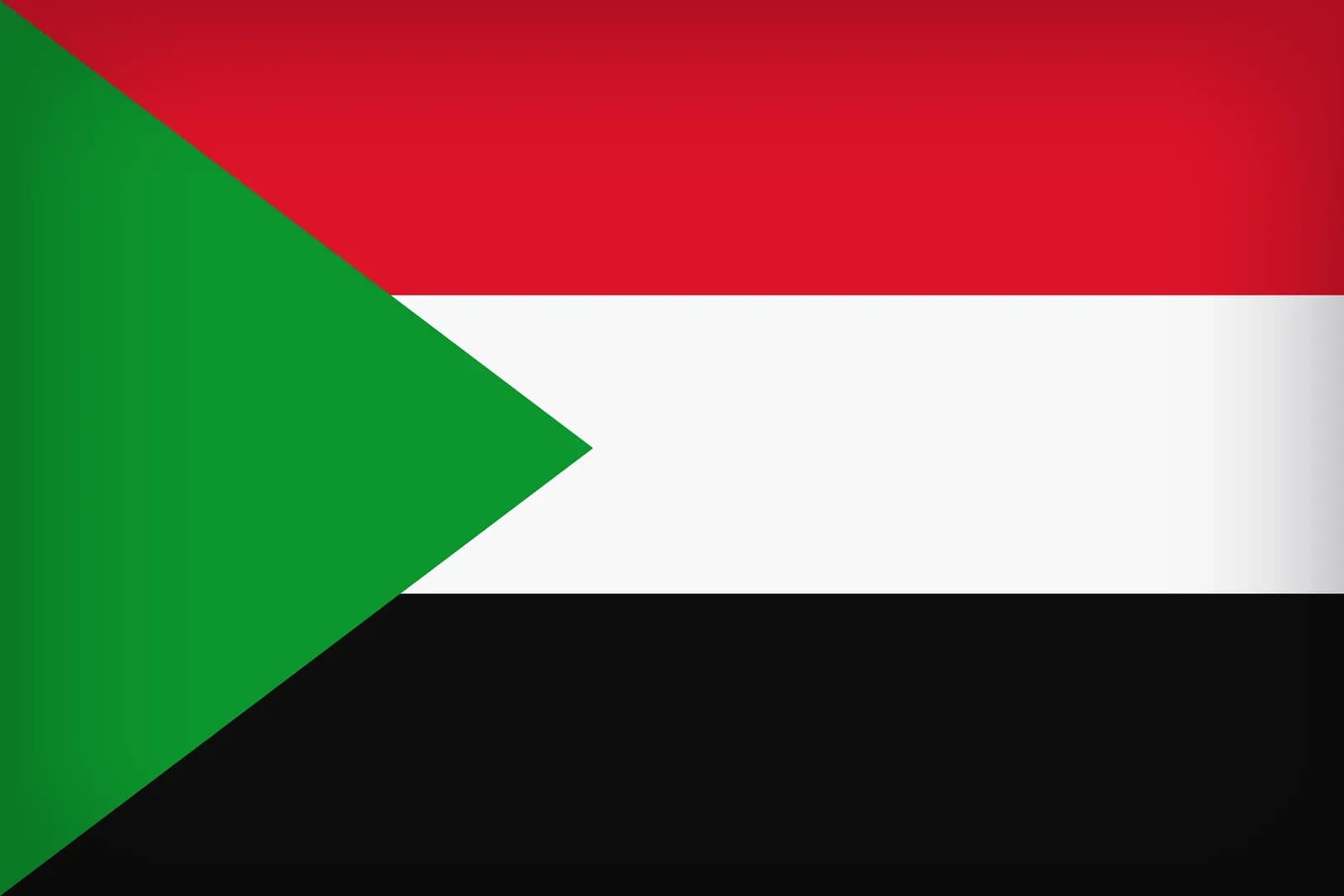 INDEX 06.10.2025, 07:26 Sudan Sovereignty Index (Burke Index), 2024-2025  Share on media IntroductionThis report provides a comprehensive analysis of Sudan's sovereignty using the methodology of the Burke Institute. Sovereignty is assessed in 7 areas: political, economic, technological, informational, cultural, cognitive and military. Each aspect is assessed on the basis of official data from international and national sources (UN, World Bank, UNESCO, IMF, ITU, FAO, SIPRI, PISA, etc.) without using politicized indexes. The maximum score in each direction is 100; the sum (up to 700) is the accumulated Sovereignty Index (Burke Index). To adapt and adjust statistical parameters, an international expert survey was conducted for each of the seven components using a single questionnaire of 10 questions with a 10-point scale and one open-ended question. In total, at least 100 experts from 50+ countries were interviewed for each indicator, taking into account geographical representation and specialization. When calculating and analyzing the data, equalizing coefficients were used, bringing all data to a scale of 0-10 points. The final index value is the arithmetic mean between statistical data and expert estimates. Below is an analysis in each area, a summary table and the main conclusions about the specifics of Sudan's sovereignty. Political sovereignty — 17.2Sudan is a member of the United Nations, the African Union (AU, since April 2023 — de facto/de jure suspension for violating the constitutional order), the League of Arab States, IGAD, the Organization of Islamic Cooperation, the WTO, and is developing ties through the Sino-African Forum and specialized UN agencies. The country participates in international peace conferences and summits despite the crisis. Sovereignty is strictly protected: IGAD and AU support the principle of non-interference, any peace initiatives are conditioned to “respect the sovereignty of Sudan,” and transnational norms are implemented only after ratification. National legislation takes precedence, and international agreements are often ignored in peak crises (for example, humanitarian law, ICC, and arbitration). The country is in a state of civil war: SAF (army) and RSF (Rapid Support Forces) are fighting for the capital, strategic cities and regions; 2024 is the peak of the return of army control over the capital, a long-term lack of stability, long-term fragmentation of power and regionalization of the conflict. The Government Effectiveness Index (WGI, 2024) is minus 1.59, one of the worst indicators in the world, against the background of the crisis and the collapse of institutions; corruption, a gap in the management contour, and a weak ability to provide basic services. EGDI (2022) — 0.22, one of the smallest indexes among African countries; basic services, registration and information are available in fragments, most public services have not been transferred online, digital transformation is significantly limited by military operations and infrastructural disruptions. The level of trust is extremely blurred: the head of the Sovereign Council (Al-Burhan) nominally governs the country, more than 50% of the population actually does not recognize the central government and supports regional leaders, the army or the RSF, a massive loss of trust by all groups. There are no official foreign military bases; there are military missions (AU, UN), observers and a local presence of UN forces (South Sudan/Darfur), the actual military influence is exerted by regional forces through the support of the conflicting parties, but there are no direct bases. Sudan officially distances itself from the ICC and other transnational criminal institutions, arbitration and participation in international courts are limited; ratification and real implementation of the requirements of international courts are regularly blocked by the State. The power vertical is broken: authority is blurred between the center, the army, the RSF, regional and ethnic groups, official centralization under the Sovereign Council does not work, and the regions are largely controlled by their own military/ethnic actors. The security services and the army are the most closed institutions, transparency is minimized, strict censorship, weak external audit, widespread accusations of abuses, violations of human rights and humanitarian law; there is no independent control. Data completeness assessment: the main indicators are available from international sources, the coverage is 92%. Economic sovereignty — 21.1GDP is $1,872–2,127 (2024, according to various sources), which is less than 12% of the global average — one of the lowest rates on the planet. Official gold and foreign exchange reserves are $0.18 billion (180 million USD, estimated with gold included), a critically low indicator, the country has been in a state of currency crisis since 2021. The national debt (2024) is 237-272% of GDP (estimates by IMF, World Bank, Statista, TradingEconomics); the absolute debt is over $270 billion, one of the highest levels in the world, and the repayment structure is partially frozen. The country has the potential for internal food independence (grains, vegetables, livestock, peanuts, cotton, sugar, fish), but massive military and climate crises, population displacement and supply disruptions lead to a market shortage of 20-40% of basic products; up to 8 million people are exposed to hunger. Up to 75% of electricity is generated domestically (hydroelectric power plants, thermal power plants, oil, gas), oil exports have declined since 2011; petroleum products, components, fuel and maintenance largely depend on imports and external investments. The country has reserves of gold, silver, copper, iron ore, oil, natural gas, uranium, as well as vast farmlands along the Nile and seasonally watered fertile lands. Water supply is a long—term strategic resource of the country; access to the Nile, groundwater, irrigation systems, but droughts and infrastructure destruction lead to regional disruptions, especially in the periphery. National payment processing is provided by the Central Bank of Sudan (CBOS), settlements are made in the Sudanese pound (SDG), however, the share of shadow and cash turnover is high, a significant part of the electronic infrastructure is decentralized and operates intermittently. The share of the Sudanese pound (SDG) in settlements is up to 90% for domestic transactions, international transactions and large contracts are increasingly being converted into foreign currency (dollars/euros/birr). CBOS is the official issuing center that issues, regulates the exchange rate, refinancing rates, reserve requirements and inflation, however, credit policy and financial control suffering from war and crisis; reserve requirement of 18% (2025). Data completeness assessment: key macroeconomic indicators are available from official sources (World Bank, IMF), coverage — 91% Technological sovereignty — 12.5The share of R&D expenditures is less than 0.07% of GDP (World Bank/UNESCO estimate of recent years); accurate new data are not available, the indicator is one of the lowest in the world. There is no import substitution: almost all high-tech goods (electronics, medical equipment, IT, software) are imported, while there are no national clusters or localized industries. Roughly 13-15% of young people have access to higher education, with a huge regional gap: in Khartoum, enrollment is up to 35-54%, in the regions of Darfur and Kordofan — 1-4%; the war of 2023/24 led to the temporary shutdown of most of the country's universities. 28.7% of the population (2024) has access to the Internet, or almost 14 million users; the average speed is 7.7 Mbit/s (mobile), 7.6 Mbit/s (fixed). Frequent mass outages, severe digital unevenness, and infrastructural disruptions. Public services, tax and educational services are extremely fragmented, the online infrastructure is poorly developed, and there are no national IT ecosystems of their own (there is no equivalent to “Public Services"). The import dependence is absolute — >98% of all electronics, computing equipment and complex medical solutions are purchased from abroad, and there is almost no internal software. EGDI (2022): 0.22 — one of the minimum levels in Africa. Only reference and selected services are available online, and the vast majority of services are not digitized. There is practically no autonomy: the research and production base is extremely weak, laboratories and industry exist only in the agricultural sector and under international control/financing. Robotics is practically not developing, there is not a single industrial cluster, local initiatives are only in the format of school STEM circles in the capital, but they stopped with the war. Completely absent: no production facilities, no development centers, no microelectronics development programs. Data completeness assessment: key indicators are obtained from WIPO, ITU, UNESCO, which provides 92% coverage. Information sovereignty — 19.2Sudan ranks 102nd in the ITU Global Cybersecurity Index (2023), 127th in the National Cyber Security Index (NCSI); a national CERT is in effect, but the level of security is low - there is no systemic policy, critical vulnerability to cyber threats, and weak implementation of national standards. There is 1 Internet exchange node (IXP) in the country - the Sudanese Internet Exchange Point (SIXP, Khartoum), which limits the localization of traffic; the infrastructure is stable, but the coverage is low and is tied to a small number of operators. The official languages of the media sphere are Arabic and English; more than 85% of national newspapers, radio channels and TV audiences are Arabic-speaking, English-language media serve national and international segments, Indian and African languages account for less than 5% of broadcasts. Dependence on global platforms and IT corporations remains very high: critical public, private, and educational services are based on foreign solutions (Google, Meta, Microsoft), and there are no analogues of their own. National content by media resources is about 55% (news, radio, television), the rest is foreign films, streaming services and networks. The small high-tech sector has virtually no exported solutions, and the entire private sector relies on imported software and services. Internet coverage is 28.7% of the population in 2024, most government services are missing, coverage in cities (up to 40%) is many times higher than in regions (5-7%). There is not a single large national cloud system: all solutions are built on foreign platforms and server infrastructures, the public sector uses hybrid solutions with hosting abroad. The main operators (Zain, Sudatel, MTN Sudan) belong to foreign holdings (Kuwait, South Africa); the technical infrastructure, equipment, GPRS/4G are completely imported. There is no national data protection law; regulation is based on general civil, criminal and communications law, formal regulators are either paralyzed or inactive from 2023-2024. Overall assessment: infrastructure indicators are available from ITU, CIRA, OECD and specialized sources, coverage is 91%. Cultural sovereignty — 48.23 World Heritage sites: • Gebel Barkal and the Sites of the Napatan Region (2003) • Archaeological Sites of the Island of Meroe (2011) • Sanganeb Marine National Park and Dungonab Bay – Mukkawar Island Marine National Park (2016) • 15 sites on the tentative list. Sudan is the cradle of the ancient civilization of Kush and the pyramids of Meroe (larger than in Egypt), rich archaeological heritage, traditional music, Islamic and Christian architecture, unique folklore and crafts. The place of interaction between African (Nubian, Cushitic) and Middle Eastern cultures. There are state awards in the country: the Order of the Republic, the Order of the National Flag, as well as specialized awards and competitions for achievements in art, literature, music, traditional crafts; museum and archaeological awards. Traditions are based on a mixture of Arab and African (Nubian, Beja, Darfurian) cultures, the Islamic calendar, rituals, music (tabla, darabuka, udu), dances, folk festivals, cuisine, initiation ceremonies, complex family hierarchies, a unique system of folklore and folk beliefs. The state officially recognizes small nations (Nubians, Beja, Darfurians, Fur, Mazalit, etc.), there are language preservation programs, support for crafts, archaeological expeditions, museum and educational projects, but these programs are limited due to the war. Dozens of key monuments (monuments of Kush, temples, museums — including the Archaeological Museum of Khartoum, more than 150 sites of national and regional importance), three UNESCO sites, numerous complexes by region. Regular participation in UNESCO programs, the African World Heritage Fund, international archaeological, musical and educational exchanges (despite the war, great activity until 2022 and local support projects in 2023-2025). Brands (Kushite heritage, Sudanese cuisine, Nubian style of music, Sudanese pyramids, traditional silver, local fabrics) are protected by domestic and international laws, and the illegal export of historical artifacts is being combated. The cuisine is the result of an Afro-Arabic synthesis: ful, kisra, mluhiya, taamiya, Sudanese pies, dishes based on beef, lamb, an abundance of spices and grains, dairy and legume products; national drinks (khilba, ardak, Sudanese tea). Before the war in 2023, about 45-50% of residents are involved in cultural holidays, festivals, and rituals. Coverage has been significantly reduced during the war, but traditional rituals and celebrations remain in large cities. Assessment of data completeness: basic indicators are available in UNESCO and national statistics, coverage is 87%. Cognitive sovereignty — 25.2HDI = 0.511 (2025), which places Sudan at 176th place in the world, a low level according to the UNDP classification. The share of government spending on education is 1.2–2.2% of GDP (different estimates for 2018-2024), significantly lower than the regional and global average. Literacy — 60.7% (2024, World Bank/UNESCO estimate); men - 65.4%, women - 56.1%. Youth literacy is higher, but regional and gender gaps persist. Sudan does not participate in PISA, and standardized international assessments are not conducted. Domestic test scores are significantly lower than the African average; coverage problems, massive disruptions due to the war. The share of graduates of STEM universities (science, technology, engineering, mathematics) is less than 11% (recent estimates, the highest concentration in Khartoum); humanities and pedagogical areas dominate. It does not exceed 4%, and there are separate franchises of Arab, Turkish, and European universities, as well as academic exchanges through UNESCO, World Bank, EU, and Turkish programs. 30+ ethnic groups officially recognized in the Constitution, 74 languages: program support before the war, museums, educational initiatives, support for languages and cultures, the implementation of programs was sharply reduced after the outbreak of the war. Before the 2023/24 war: 4 large university centers (University of Khartoum, Medical Institute, agricultural center), 10+ laboratories, most closed due to military operations. Less than 10% of students use national educational portals (online access is limited by infrastructure and military risks, some services are unavailable outside cities). Government support programs have been minimized: in 2022-2023, 12-16 thousand young professionals were supported, budgets were cut after the war, and most projects were suspended. Data completeness assessment: education indicators are available in the UNDP, UNESCO, OECD, coverage is 89%. Military sovereignty — 22.3Defense spending is 0.92—1% of GDP according to official statistics, but independent estimates (SIPRI, 2024) indicate real costs at 2-4% of GDP due to large–scale financing of the war (the exact percentage varies greatly by source). Total strength: 200,000–300,000 (before the war), including 109,000 army, 100,000–150,000 RSF (Rapid Support Forces), special services, air defense and Navy, 20,000+ reserve; during the war, the structure changes, there is mass mobilization and paramilitary formations. The technopark is represented by Soviet, Chinese, Iranian, Turkish, Russian, Ukrainian and Western models. T-55/62/72 tanks, BTR-60/80 armored personnel carriers, artillery (D-30, self-propelled guns), rocket systems, MANPADS, drones, armored cars, Su-25/MiG-29 aircraft, Mi-24/Mi-8 helicopters, boats and air defense. In 2023-2025, large shipments of new weapons supplies from China, Turkey, the Russian Federation, and the United Arab Emirates were registered. Licensed assembly and production of ammunition, small arms and equipment is underway (the El Shajara military industrial complex, GIAD, Nyanya), but there are no modern heavy weapons of their own production, there is an absolute dependence on aviation, electronics, missile and large-caliber weapons. Sudan ranks 3rd in Africa in terms of military-industrial complex after Egypt and South Africa (Small Arms Survey, 2023). The real control is fragmented: the army and/or RSF hold the borders depending on the balance of power in each region. There are military border missions, surveillance systems, in cooperation with Chad, Egypt, Ethiopia and South Sudan. At least 20,000 are in reserve, mobilization is underway against the background of the war, mass involvement of militia /popular formations, a significant part of the forces in the regions are not formally integrated into the SAF. Strategies and tactics are developed alone — the country is not part of alliances, conducts an independent policy, but depends on military supplies from China, Turkey, the United Arab Emirates and the Russian Federation, and also receives external support from regional players (Chad, the United Arab Emirates, Egypt in different periods). The Sudanese Military Industrial Complex (Military Industry Corporation, GIAD) produces small arms, ammunition, some armored cars and repairs equipment. Modern aircraft, UAVs, armored vehicles are imported; the main achievements are El Shajara plant, GIAD Complex, small private factories. There are no nuclear weapons, the country fully complies with the non-proliferation regime (NPT), no warheads or strategic stocks have been recorded. It is absent; intelligence is carried out by the military and special services (NISS), offline and electronic networks, internal and external informants are supported; the country does not have space surveillance systems and satellites. All parameters are reflected in the annual reports of SIPRI, UNODA, the Ministry of Defense, the official portals of state—owned companies (Embraer, IMBEL) and the UN/NGO industry databases - 87% coverage Final Summary Table
The main conclusionsStrengths. Military-strategic autonomy and military-industrial complex potential: Sudan is one of the largest armies in Africa (up to 300,000 men, including RSF and reserve), with real military experience, mass mobilization and operational structure. Own defense industry: production of ammunition, small arms, armored vehicles for the domestic market and export; the industrial cluster of El Shajara and GIAD is developed. A unique geostrategic position (the Red Sea, the Middle East); high military potential, independent policy outside the blocs, but with the support of partners from Russia, China, Turkey, and the United Arab Emirates. Resource security and basic energy independence: Rich reserves of gold, oil, copper, uranium, iron, fertile lands, access to water resources (Nile). Up to 75% of electricity is generated domestically (hydroelectric power plants, thermal power plants, oil plants), and there is a real potential for regional energy exports. Cultural and historical uniqueness: 3 UNESCO sites, the contribution of the ancient civilization of Kush, unique archaeological and ethnocultural heritage, traditional cuisine and a rich diversity of peoples. Sovereignty of the payment and currency infrastructure: Own issuing center (CBOS), national currency (SDG), high share of settlements in domestic currency, payment system control. Weaknesses. Internal political instability and fragmentation of power: The state has actually lost centralization: civil war, parallel power structures (SAF and RSF), regional autonomy of ethnic groups, general lack of governance, inability to provide basic services. Economic vulnerability and debt crisis: GDP per capita ($1,900) is at one of the lowest levels on the planet; catastrophic external and internal debt (237-270% of GDP); reserves of less than $0.2 billion, financial control is under threat, high inflation and an unstable exchange rate. The crisis of education and R& D, minimal spending on science: Government spending on education — 1.2–2.2% of GDP; adult literacy — 61%; extremely low enrollment in higher education (13-15%), STEM — ~ 11%, national educational platforms are inaccessible, research centers are either closed against the background of the war, or degraded. Digital/technological weakness and absolute import dependence, up to 98% of high-tech products are purchased abroad, Internet penetration is 29%, cybersecurity is extremely low, and all cloud and mobile services depend on external players. Uneven access to food and water: Loss of food self-sufficiency: up to 8 million hungry people, water shortages in the periphery, gender and regional gaps, weak infrastructure. Limited legal protection of data, weak regulation: There is no National Data Protection Law, regulators are paralyzed; high risk of abuse, high secrecy of intelligence agencies and institutional censorship. Overall assessment. The cumulative sovereignty Index of Sudan is 165.7 out of 700 possible points (below the average of 23.7%), which places the country in the top 150 in the world. Sudan has impressive military and resource potential, a unique culture, and basic monetary autonomy, but is critically underdeveloped in terms of internal stability, education, R&D, technological independence, digitalization, food security, and financial governance. The country needs large-scale structural reforms in governance, economy, and humanitarian policies to preserve its residual sovereignty in the face of a severe military, demographic, and financial crisis. The sovereignty profile indicates that Sudan retains fragmented sovereignty: a powerful army, its own military-industrial complex, unique resources, and historical and cultural heritage in a number of areas; however, resilience is critically weakened by massive fragmentation of power, large-scale internal warfare, and the crisis of education, technology, finance, and digital industries. Resource-based and military-strategic autonomy is partially implemented in the country, but most civil and humanitarian functions operate only in certain regions or in a disrupted format. Sudan's sovereignty is a balance between strong defensive positions and the deepest internal and economic structural crises. | ||||||||||||||||||