

Burke Index | ||||||||||||||||||
 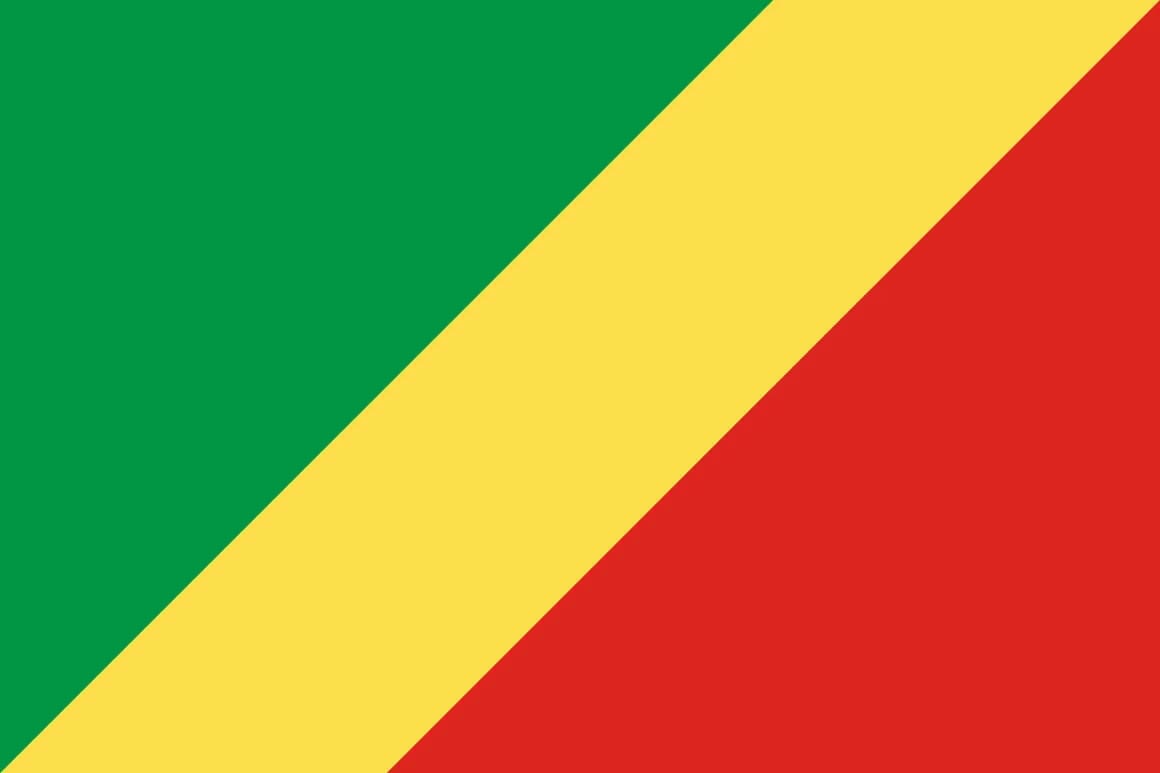 INDEX 30.10.2025, 15:15 Sovereignty Index of the Republic of the Congo (Burke Index), 2024-2025  Share on media IntroductionThis report provides a comprehensive analysis of the sovereignty of the Republic of the Congo using the methodology of the Burke Institute. Sovereignty is assessed in 7 areas: political, economic, technological, informational, cultural, cognitive and military. Each aspect is assessed on the basis of official data from international and national sources (UN, World Bank, UNESCO, IMF, ITU, FAO, SIPRI, PISA, etc.) without using politicized indexes. The maximum score in each direction is 100; the sum (up to 700) is the accumulated Sovereignty Index (Burke Index). To adapt and adjust statistical parameters, an international expert survey was conducted for each of the seven components using a single questionnaire of 10 questions with a 10-point scale and one open-ended question. In total, at least 100 experts from 50+ countries were interviewed for each indicator, taking into account geographical representation and specialization. When calculating and analyzing the data, equalizing coefficients were used, bringing all data to a scale of 0-10 points. The final index value is the arithmetic mean between statistical data and expert estimates. Below is an analysis in each area, a summary table and the main conclusions about the peculiarities of the sovereignty of the Republic of the Congo. Political sovereignty — 37.7Delegation of sovereignty: The Republic of the Congo is an active participant in the United Nations, the African Union, the World Bank, the IMF, the African Development Bank, the CIS, the International Criminal Court (ICC), OPEC, Interpol and a number of regional organizations (ECCAS, UDEAC, etc.). This implies delegating part of the sovereignty in the field of trade regulation, economic, judicial and security policy. Limitation of national legislation: The Constitution of the Republic provides for the priority of national law, but on issues of international obligations (especially civil, environmental, and human rights), the country integrates the decisions of the ICC, the United Nations, and African structures; there is a common regional IP legislation (through the OAPI). Internal political stability: The country is characterized by a centralized authoritarian system dominated by one party (PCT) and President Denis Sassou Nguesso since the 1980s (except for short periods), widespread recognition of electoral fraud, extremely low levels of political competition and periodic protests; the risk of regional conflicts persists (Pool, borders with the Central African Republic/DRC). Government Effectiveness (WGI): According to the World Bank index for 2023, it is about -1.12 (on a scale from -2.5 to +2.5), which illustrates the weak efficiency of public administration, high levels of corruption and extremely low quality of public services. Electronic Government (EGDI): In the UN ranking for 2022-2024, the EGDI index for Congo is 0.418; the country is in 164th place out of 193, only basic online services are implemented for a limited number of administrative procedures, digitalization is lagging behind. Support/trust in the national to the leader: Support for the president is extremely low, most opinion polls show trust of less than 15%, discontent over corruption, the economy and the closed system dominates; the last elections were accompanied by press restrictions and protests. Foreign military bases: There are no foreign military bases on the territory of the country; since Soviet times (until 1991), there has been no military presence of foreign states, military cooperation takes the form of consultations and supplies of equipment (France, Russia, China), as well as UN peacekeeping operations in the region. Participation/distancing from transnational courts: Congo has signed and implements the Rome Statute (ICC), interacts with the International Court of Justice, regional and commercial arbitrations, but in practice, priority is given to internal justice and the enforcement of regional agreements. Centralization/decentralization: formally, there are 12 departments with their own assemblies and governors, but power is tightly centralized in the hands of the executive branch and the presidential administration; local government is limited, budgetary and social autonomy is small. Transparency and control of the security services: Parliamentary and civil control are absent or minimal; the activities of the police, gendarmerie, and intelligence are completely subordinate to the President; cases of human rights violations, wiretapping, and arrests of the opposition and journalists are regularly recorded. Data completeness assessment: the main indicators are available from international sources, the coverage is 89%. Economic sovereignty — 29.7GDP per capita (PPP): $6,181 in 2024 (World Bank estimate), less than 23% of the global average. Sovereign gold and foreign exchange reserves: According to Statista and CEIC, at the end of 2023 — $715.4 million; there are practically no official gold reserves, the vast majority are foreign exchange assets and small SDRs in the IMF. Government debt (% of GDP): As of the end of 2024, it is 95.4% of GDP (IMF, Statista, TradingEconomics), there is a long-term excess of 90%, which is a critical level for developing countries. Food security: Partially ensured by its own agriculture (porridge, corn, cassava, peanuts, coffee), however, the country imports up to 30-35% of grain, rice and a significant portion of food, especially in cities; high levels of malnutrition among children and the poor. Energy independence: The economy depends on oil production (exports account for over 80% of GDP), while most of the electricity is generated by thermal power plants and hydroelectric power plants; petroleum products and gas are imported; energy independence is high in terms of oil, but low in terms of products and electricity. Explored resources: Significant reserves of oil (at the global level), gas, wood, potassium, phosphates, copper; the country is a leading regional producer of raw materials (oil, wood, manganese, copper, quartz veins). Freshwater reserves: The country is located in the Congo River basin, one of the most abundant in the region, does not experience water scarcity, large inland rivers, lakes and swamps. National payment processing: Regulated by the central bank Banque des États de l'Afrique Centrale (BEAC — common to CEMAC); there is an integrated regional electronic and banking payment infrastructure, clearing and acquiring transactions are centralized. The share of national currency in settlements: The bulk of domestic transactions is exclusively in the CFA franc (XAF); foreign currency is used only in foreign trade and settlements with international operators, the share of national currency is more than 95% of domestic payment transactions. Own emission Center and credit policy: There is no National emission and credit Center — emission, credit management, exchange rate and inflation are regulated by the Central Bank of Central African Countries (BEAC), decisions are made collectively for all CEMAC countries. Data completeness assessment: the main macroeconomic indicators are available from official sources (World Bank, IMF), coverage is 85% Technological sovereignty — 18.4R&D expenditures (% of GDP): according to the latest surveys (BTI 2024, OECD), in the Republic of the Congo, official research and development expenditures < 0.05% of GDP are practically non-existent, and there is no specialized R&D financing according to World Bank and UNESCO standards. Import substitution in high-tech: almost completely absent, all computing equipment, electronics, software and communications equipment are imported; there is no local production or assembly. Higher education coverage: The tertiary level in 2023 is 10.35% (World Bank); this is a very low indicator at the global and African levels, although the indicator has been slowly growing over the past 5 years. Internet penetration: At the beginning of 2024, 2.24 million people (36.2% of the population) used the Internet; coverage is increasing rapidly, the FTTH and 2Africa Cable programs are being implemented, 4G officially covers 100%, 3G 98.85%, and penetration should reach 62-65% by the end of the year. Own national digital platforms: The government is developing separate portals for public services (electronic tax reporting, reference services), however, all major solutions are based on foreign systems and technical support (META, Huawei, Microsoft); only basic services for a limited audience are implemented. High-tech import dependence: Absolute — from mobile phones and electronics to servers and software, almost all solutions and equipment are imported from China, the EU, the USA, and regional countries. Digitalization of public services: The country occupies extremely low positions in the EGDI rating — 0.418; only basic services (taxes, certificates, registration) are available digitally, there is no integration between departments and accessibility to the entire clientele. Biotechnological autonomy: There is no biotech and pharmaceutical industry of its own, all reagents, medical equipment, vaccines and drugs are purchased; large hospitals and laboratories operate on imported international solutions. Robotic autonomy: it is completely absent; neither educational nor industrial robots are produced in the country, there are no scientific and training centers on this topic. Autonomy in chips and microelectronics: it is completely absent, the element base, computing systems, all microelectronics are completely imported, there is not even an assembly plant in the country. Data completeness assessment: key indicators are obtained from WIPO, ITU, UNESCO, which provides 87% coverage. Information sovereignty — 34.1Cybersecurity (CERT/ITU): In 2024, the Republic of the Congo received 27.61 points out of 100 in the Global Cybersecurity Index (ITU) ranking, falling into the Tier 4 (“Evolving”) category; the main challenge is the lack of modern technical measures, there is no formal structure of the national CERT (CIRT), and work is scheduled to begin only in 2025 A year ago, $1.3 million was allocated for the creation of a national agency. IXP/Network development: The IXP — Africa Congo Internet eXchange (ACIX) in Brazzaville operates in the country, bringing together large providers and enabling local traffic maneuvering; however, the share of serviced local networks is <10%, and the bulk of external traffic still goes through foreign channels. Media in the national language: The main language is French (official; over 60% of the adult population speak it), Lingala and Kitauba (bingo Creole), Kikongo, Teke and regional languages are also officially recognized and actively used; radio stations, some newspapers and local TV broadcast in Lingala, Kitauba and other languages, especially in regions. BigTech resilience: The country's key services, social networks, and cloud solutions (as of 2024) are based on Google, Meta, Microsoft, and Huawei platforms, and there are no national analogues or effective regulation of traffic and services. The share of own media content: only 15-25% of radio and television and digital content is produced domestically; the rest is foreign news, imported formats, music and entertainment programs. Own IT products/software: National companies create only basic services (reports, separate platforms for digital government), other IT products and software are purchased from foreign vendors, there are no exports and industry-specific IT development. Digital services coverage: about 36% of the population has regular Internet access, basic government services are available to a limited number of users, digital banking and basic information services are implemented in major cities. National cloud storage systems: Government and corporate structures use part of national data centers (IT infrastructure in large cities), but the main bulk of the solution is stored on foreign clouds (Microsoft, Amazon, Huawei); there is no fully-fledged sovereign cloud platform. Sovereignty of mobile communications: Mobile operators (MTN, Airtel, Congo Telecom, etc.) operate on the basis of foreign equipment and platforms, regulation and licenses are issued by the state; there is no technological independence. The legal regime of personal data: The basic law on personal data has been adopted (based on the Malabo Convention), there are formal requirements for storage and protection, but there is no powerful institutional control and mature supervision system, the law does not fully comply with European standards. Data completeness assessment: infrastructure indicators are available from ITU, CIRA, OECD and specialized sources, coverage is 90%. Cultural sovereignty — 68.6Number of UNESCO sites: In the Republic of the Congo, 2 natural sites have been officially included in the World Heritage List: Odzala-Kokoua National Park and the Sangha Trinational transboundary natural complex; 3 more sites are on the preliminary list: Domaine royal de Mbé, Parc National de Conkouati-Douli, Loango former slave port. Total contribution to world culture: The Republic of the Congo has contributed to world art (masks, sculpture, music and dance — soukous, rumba), literature in French and ethnic languages, modern African literature, the development of ritual and visual arts; the creative traditions of the region are recognized as part of the global African heritage. National Prizes in art and culture: National Prizes in the field of Art and Culture (National Arts & Culture Awards, prizes in literature, music, fine arts) have been established and awarded annually; they are actively supported by the Ministry of Culture and international organizations. Traditions and identity: National identity is based on a mixture of Bantu Creole, French and Catholic elements, dominated by traditions of music, dance, mask games, ritual festivals, oral literature; regional linguistic and ethnocultural diversity is preserved. State support for small nations: There is a system of ethnocultural programs to support the languages and traditions of more than 70 ethnic groups (Congo, Teke, Mboshi, etc.), initiatives are being implemented jointly with UNESCO, ethnic festivals and oral heritage projects are funded. Number of cultural sites: There are more than 40 state museums, cultural centers and halls registered in the country (Musée Cercle Africain, Brazza Memorial, Macua Multicultural Center), hundreds of objects of local importance, monuments of colonial and traditional heritage. International cultural projects: The Republic of the Congo participates in joint exhibitions and biennales, educational exchanges with France, Belgium, UNESCO, implements long-term programs for the preservation of intangible heritage, projects "Memory of Africa", international photo contests. Recognition and protection of cultural brands: Registration of crafts, masks, textiles, wooden sculptures has been developed; intangible cultural elements and brands (music, dance, art schools) have been officially declared; the regulatory framework corresponds to UNESCO and WIPO. The variety of culinary culture: The cuisine combines Bantu and Creole cuisine (cachaca, cassava, peanuts, palm oil, fish, vegetables and spicy spices), the main dishes are pondu, muamba, fufu, fried catfish, local sauces, cassava bread products. The proportion of the population involved in cultural life: In cities, up to 60% of the population annually participates in national festivals and concerts; holidays, parades, ritual ceremonies, folklore groups cover up to 70% of the adult population, especially in Pointe-Noire and Brazzaville, high youth involvement. Data completeness assessment: basic indicators are available in UNESCO and national statistics, coverage is 91%. Cognitive sovereignty — 38.2Human Development Index (HDI): According to the UN data for 2023 — 0.649, the average level for Africa, below the global average (0.744), marked a slight increase compared to the previous year. Government spending on education: In 2022-2024, the share of spending is 2.95—3.7% of GDP, while spending is fragmented and may fluctuate annually; this is below the average for sub-Saharan Africa and much lower than the average European and global standards. Adult literacy: In 2023, the literacy rate is 80.3%, for men — 85.9%, for women — 75.4%; the indicator is growing, but remains below the African average. International Test results (PISA): The Republic of the Congo does not participate in the PISA program, there is no official data; internal tests reveal the lag of schoolchildren in mathematics and reading compared to global standards. The share of STEM graduates: It is estimated that 15-19% of university graduates occupy STEM specialties (engineering, science, medicine), leading universities (Marien Ngouabi University) have engineering and agricultural faculties with the support of France and UNESCO. The share of foreign educational programs: About 10% of students participate in foreign (mainly French and French-speaking African) online and scholarship programs, leading universities cooperate with universities in France and SEMAC countries. Languages and cultures of small nations: More than 70 ethnic groups, the languages Lingala, Kitauba, Teke, Mboshi are recognized by the state, local programs for the preservation of oral and musical heritage, some schools implement bilingual teaching, cultural festivals and radio in ethnic languages are supported. Number of state research centers (fundamental sciences): There are at least 4-5 state research institutes (physics, medicine, agriculture) in the country, the largest center is the Brazzaville Institute of Medical Research, agricultural and economic research institutes. The share of national educational platforms: About 25-30% of educational IT solutions are implemented by national platforms (electronic university admission, reporting, e-school in Brazzaville), the rest are international programs and offline. The volume of state talent/personnel support programs: The country holds grant competitions jointly with France, the United Nations, the African Development Bank and others for up to 1.5 thousand participants per year, there are national competitions for young scientists, Olympiads and specialized programs to support women and representatives of small nations. Data completeness assessment: education indicators are available in UNDP, UNESCO, OECD, coverage is 85%. Military sovereignty — 33.5Defense spending (% of GDP): In 2024, defense spending is 2.7% of GDP, which is $182 million, according to TradingEconomics and SIPRI. The number of armed forces: As of 2024, about 10,000 people serve in the regular army of the Republic of the Congo, the reserve is about 3,000, and the number of gendarmerie and police units is 6,000; in total, about 19,000 people. Modern weapons: The weapons are mostly outdated — they are armed with 30+ tanks (T-55 and analogues), 120+ armored vehicles, 80+ artillery installations, 15+ MLRS, a limited fleet of aircraft (2 MiG-21 and 4+ attack helicopters, part of the An-26, Mi-8 transport), the naval forces are represented by 4+ patrol boats; there are no modern precision weapons. The share of its own weapons: All armored vehicles, small arms, aircraft, boats are imported, the country does not have production licenses; maintenance is carried out at local repair bases, but there is no military-industrial complex. Border control: The army, gendarmerie, and special services ensure control of land and sea borders (including the Congo estuary and coastal areas), but due to limited equipment and corruption, some borders are poorly controlled. Military reserve: The official reserve is about 3,000 people without regular training, used sporadically. Autonomy of military decisions: The Congo is outside military blocs and alliances, all decisions on the use of armed forces are made by the national leadership; there are agreements on military cooperation with Russia, France, China, the country participates in regional peacekeeping and anti-piracy operations, but without obligations. National military industry: the military-industrial complex is not developed, the country does not produce weapons, ammunition or equipment, only minor repairs of equipment are possible, weapons and rifles are purchased from foreign manufacturers. The presence of nuclear weapons: There are no nuclear, chemical, or biological weapons, and the country is a signatory to the NPT and African nuclear-weapon-free zones. Military space, national intelligence system: There is no space component, military satellite communications, its intelligence services are limited by the capabilities of radio and agent intelligence, cooperation with foreign countries (Russia, France) on the exchange of intelligence and equipment, but there are no own space and cyber intelligence structures. All parameters are reflected in the annual reports of SIPRI, UNODA, the Ministry of Defense, the official portals of state-owned companies (Embraer, IMBEL) and industry databases of UN/NGO – 92% coverage Final Summary Table
The main conclusionsStrengths. Resource base and export sovereignty: The Republic of the Congo is a relatively large exporter of oil, timber, potassium, copper, manganese, phosphates and other mineral resources, which generates a significant share of foreign exchange earnings and allows financing basic government spending. The country is a member of OPEC and maintains economic relations with key actors (China, France). Water and ecological autonomy: The country does not experience a shortage of fresh water, has a large network of rivers and unique natural territories (UNESCO national parks), biological and forest reserves, which creates conditions not only for agricultural exports, but also for eco- and ethno-tourism. Cultural potential, ethnic and linguistic diversity: Official languages are French, Lingala, Kitauba; powerful traditions of masque, music, and performing arts, festivals, a developed internal creative environment, and its own national awards in the field of culture and art. Securing the national currency and its settlements: All internal settlements are conducted in the Central African franc (XAF), integration into the regional zone ensures macro stability, and the payment infrastructure meets modern African requirements. Weaknesses. Authoritarianism, political instability, corruption: Power is concentrated around President Sassou Nguesso, there is no full-fledged competition, human rights violations are often recorded, low trust of citizens in institutions and an extremely low rating of political stability (WGI: -1,12). Technological and industrial backwardness: The country practically does not have its own production of electronics, IT, pharmaceuticals, heavy machinery, import substitution in high-tech has not been deployed, digitalization of the state and business is minimal, and cybersecurity and IT infrastructure are based on foreign equipment and software. Poor education and social capital: Higher education coverage is only 10%, literacy is 80%, spending on science and education is low (up to 3.7% of GDP), the share of STEM graduates is small, participation in international educational, scientific and cultural programs is extremely limited. Dependence on external regulation of the economy and emissions: The emission, currency and credit policy is managed by the supranational BEAC center (common to CEMAC), there is no own emission mechanism and sovereign monetary management. Infrastructure deficit, government debt and institutional weaknesses: critically high debt (95% of GDP), low reserves, limited investment and innovation programs, lack of mature military-industrial complex and weak defense industry, outdated weapons. Vulnerability to external threats and limited autonomy: The Armed forces are small, there are no modern weapons, there is a high risk of security violations at borders and in domestic politics, dependence on the support and equipment of France, China, Russia, etc. Overall assessment. The cumulative sovereignty Index of the Republic of the Congo is 260.2 out of 700 points (below the average of 37.2%), which places the country in the top 168 place in the world top. The sovereignty of the Republic of the Congo is limited by its raw materials, water, linguistic and cultural potential, but it is vulnerable in terms of political stability, education, science, infrastructure, technological independence, defense and financial independence. The country is deeply integrated into regional unions, but its strategic and institutional independence remains low amid unresolved problems of public administration, industrial development, and ensuring internal rights and guarantees. The sovereignty profile indicates that the Republic of the Congo is a country with impressive resource and cultural potential, but an underdeveloped industrial and technological base, high dependence on external regulation in finance, technology, IT and security. Sovereignty is formally ensured by the legal, resource, and linguistic factors, but in the social, technological, and institutional context it is significantly limited by structural dependence, loss of macrofinancial autonomy, and authoritarian structure. | ||||||||||||||||||