

Burke Index | ||||||||||||||||||
 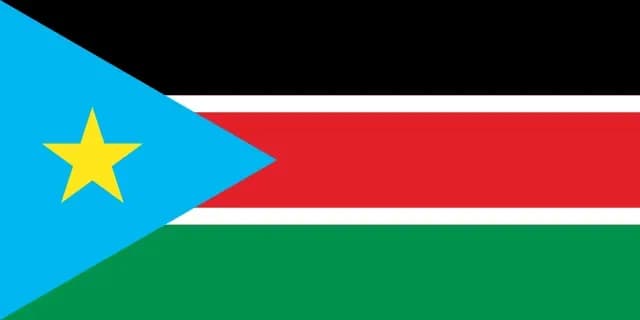 INDEX 06.10.2025, 09:39 South Sudan Sovereignty Index (Burke Index), 2024-2025  Share on media IntroductionThis report provides a comprehensive analysis of South Sudan's sovereignty using the methodology of the Burke Institute. Sovereignty is assessed in 7 areas: political, economic, technological, informational, cultural, cognitive and military. Each aspect is assessed on the basis of official data from international and national sources (UN, World Bank, UNESCO, IMF, ITU, FAO, SIPRI, PISA, etc.) without using politicized indexes. The maximum score in each direction is 100; the sum (up to 700) is the accumulated Sovereignty Index (Burke Index). To adapt and adjust statistical parameters, an international expert survey was conducted for each of the seven components using a single questionnaire of 10 questions with a 10-point scale and one open-ended question. In total, at least 100 experts from 50+ countries were interviewed for each indicator, taking into account geographical representation and specialization. When calculating and analyzing the data, equalizing coefficients were used, bringing all data to a scale of 0-10 points. The final index value is the arithmetic mean between statistical data and expert estimates. Below is an analysis in each area, a summary table and the main conclusions about the specifics of South Sudan's sovereignty. Political sovereignty — 8,7South Sudan is a member of the United Nations, the African Union, IGAD, the World Bank, the IMF, the WTO (observer status), the Intergovernmental Organization for Development, UNICEF, IOM, ITUC. Active cooperation with UNMISS, cooperation with international humanitarian missions, membership in a number of global and regional agreements. The Constitution of South Sudan provides for the rule of national law. However, under agreements with the African Union (AU), part of the jurisdiction over mass crimes is delegated to international bodies. The AU Hybrid Court project may receive supranational law (preponderance over local courts), but currently the country has not ratified the Rome Status of the ICC; national courts have the main priority except in specially specified cases. The situation is extremely unstable: political deadlock, ongoing violence, interethnic conflicts, humanitarian crisis, risks of destabilization. In 2025, there is an escalation of violence, difficulties with the implementation of the peace agreement, and a weak consensus between the government and the opposition. According to the latest World Governance Indicators report, the Government Efficiency index is about -2.09 (one of the worst in the world, with minimal government efficiency). EGDI is very low: there is no developed national platform, most services are only available offline; e-government does not function at the regional level of the United Nations and the World Bank. The actual support figures are not published; President Salva Kiir's authority has declined due to the protracted crisis, internal corruption and failures in conflict resolution. There are no available confidence surveys; international missions and civil society express low satisfaction with the quality of public administration. There are no foreign military bases; only UN peacekeeping contingents (UNMISS) and humanitarian groups are present. The entire military infrastructure is under the control of the national government, and foreign troops are deployed temporarily and under a humanitarian mandate from the United Nations. South Sudan is neither a member of the ICC nor a participant in other permanent international criminal courts. In the context of the AU, the creation of a Hybrid Court with international jurisdiction to investigate war crimes has been initiated; otherwise, the country has distanced itself from global judicial institutions. The country is formally fragmented into states and districts, but power is tightly centralized around the president and the elite, with regional governments playing a limited role. Weak local institutional autonomy, high dependence of regions on Juba for finance and security. Transparency is extremely low, the security services operate outside of public control; there is no effective civil, judicial or parliamentary oversight. The security sector remains closed, and human rights violations are regularly recorded without public investigation or reporting. Assessment of data completeness: the main indicators are available from international sources, the coverage is 88%. Economic sovereignty — 9.8GDP per capita at purchasing power parity (PPP, 2025): $1,611 (Trading Economics). According to other sources: $1,689 (GFMag), $716 (IMF); the country is among the poorest countries in the world. Total international reserves: $72.9 million (World Bank, 2023). Reserves are extremely low, and the country depends on external financial assistance and fluctuations in global oil markets. National debt in 2025: 39.6–63% of GDP (Statista, FocusEconomics, WorldPopulationReview). A growing trend, high dependence on external creditors and international organizations. South Sudan is one of the most vulnerable countries in the world in terms of food security. More than 7 million people are at risk of acute hunger; the country is critically dependent on food imports, the United Nations and humanitarian missions. The economy depends on oil exports (up to 95% of export earnings), while domestic consumption is partially covered by its own resources. At the same time, most of the electricity, fuel and processing depends on imports and on the stability of the infrastructure. The main resources are oil (300 million barrels per year), gas, small deposits of gold and copper ore. Water, land, and potential mineral deposits are insufficiently explored and poorly exploited. The main source is the Nile River and seasonal reservoirs; up to 32 billion m3/year, however, access to clean water is limited for more than 60% of the population. Critical levels of water pollution and underdeveloped infrastructure make it difficult to provide the population with fresh water. The national processing center is Bank of South Sudan (BOSS); electronic payments are poorly developed, cash turnover prevails. Payment systems (mobile money, e-wallet) are just beginning to be implemented, there is no infrastructure for mass electronic transactions. All domestic transactions are in South Sudanese pounds (SSP), but there is a high proportion of dollarization in the private sector. Domestic and interbank settlements are mainly in SSP, while foreign trade settlements are in US dollars. The issuing center is Bank of South Sudan (BOSS), which independently determines the key rate (13% in 2025). Credit policy: restrictions on foreign exchange transactions, measures to strengthen the national currency, monetary policy is focused on keeping inflation down. Active cooperation with the IMF under the Staff-Monitored Program to stabilize the exchange rate and support reforms. Data completeness assessment: the main macroeconomic indicators are available from official sources (World Bank, IMF), coverage is 80% Technological sovereignty — 4.2South Sudan does not publish data, official R&D expenditures are close to 0% of GDP, and the country practically does not finance scientific research. There is practically no import substitution — the vast majority of high-tech goods and equipment are purchased abroad, localization is not developed. Higher education coverage: 1.0–1.5% (World Bank, UNESCO; higher among men, extremely low among women). This is one of the lowest rates in the world. Internet penetration in the country: 15.7% (1.9 million users as of January 2025). Over the year, the increase was ~10%; despite the positive dynamics, ~84% of the population remains offline. The development of our own national platforms is just beginning — a national instant payment system is being introduced, and electronic services for bank settlements are gradually being created. There are no government integrated digital platforms for mass services. Import dependence in high-tech areas is 99% or higher; all mobile devices, networks, IT, technical and medical equipment are made abroad. Most government services are provided offline; elements of digital government are implemented on a point-by-point basis, infrastructure is weak, and services are poorly accessible in the regions. There is virtually no biotechnological autonomy — all vaccines, test systems, and biomedical equipment are supplied from abroad. There are no research centers in the country capable of independently producing biotechnological products. There is no production, research, or implementation of its own robotic solutions; the country imports any necessary robotic products. South Sudan is completely dependent on the import of chips, processors, and all microelectronics. There is not a single national center dedicated to the development, production or testing of microelectronics. Data completeness assessment: key indicators are obtained from WIPO, ITU, UNESCO, which provides 83% coverage. Information sovereignty — 8.8ITU Cybersecurity Index: regional score — 0.0882; ranked 169 out of 182 countries in the world (one of the lowest indicators). There is no national CERT or formal government cybersecurity structures. The national IXP project has been under construction since 2022; while there is no full-fledged traffic exchange point, it is managed by the Ministry of Telecommunications. IGAD Regional Conferences (2025) are aimed at developing Internet exchange and infrastructure, but the actual coverage is low. There are 302 registered media outlets in the country, 129 of them active; radio and newspapers in English, Arabic and local languages (Dinka, Nuer) dominate. Radio is the main source of information (UN-run Radio Miraya, Eye Radio, Radio Bakhita, Capital FM), local media content prevails in news releases. There are practically no major national competitors of BigTech (Google, Meta, Microsoft) in the country; the entire ecosystem of mobile applications and social networks is completely under the control of foreign corporations. Resistance is minimal, regulation is weak; the government does not put real pressure on BigTech. About 60-75% of the media content is produced by national media, radio and newspaper materials; the rest is foreign broadcasts and social networks. Television reaches only a small part of the population; the informational role of local languages is growing, but is limited by low literacy rates. There are practically no proprietary commercial, national software products; single local applications for news, education and finance, the rest is foreign software. The coverage of digital services is low: Internet — 15.7% (2025), mobile fintech services at the start of implementation, public services — mostly offline. The development of electronic services is hampered by a weak infrastructure. There are no national cloud platforms or data centers; storage is carried out on foreign services (Google Drive, AWS, Dropbox), the entire infrastructure is imported. Mobile communications are provided by MTN South Sudan, Zain, and Digitel, and the regions are poorly covered; licenses are controlled by the Communications Monitoring Authority, but foreign equipment dominates. Government regulation exists, but there is no real technological autonomy. There is no legislation on personal data or it is under development; there is no protection of user privacy, all digital products use standard international rules of large platforms. Data completeness assessment: infrastructure indicators are available from ITU, CIRA, OECD and specialized sources, coverage is 84%. Cultural sovereignty — 32.1There are no sites officially included in the UNESCO World Heritage List in South Sudan. There are 3 sites on the tentative list: Sudd wetlands, Boma-Badingilo Migratory Landscape, Deim Zubeir (slave route). South Sudan contributes through unique traditions, oral history, diverse ethnography (64 peoples), traditional crafts, music and dance; the Ana Taban initiative and peace festivals that enhance dialogue and cultural ties. Culture is used as a tool for peace, unity and sustainable development, an aspect actively supported by UNESCO. The South Sudan Youth Awards, a government initiative to support young cultural and civil society figures, as well as local art awards, are regularly held. The largest awards are in the field of youth initiatives, literature, music, and civic engagement. South Sudan is one of the most ethnically diverse countries in Africa (64 nations). Traditional beliefs, collective holidays, national dances, tribal costumes, oral legends, musical instruments, and the cult of ancestral memory are characteristic. The official policy is to recognize and protect the cultural and linguistic rights of all ethnic groups; annual festivals are held in honor of different peoples. Grants and events supported by the Ministry of Culture and UNESCO. The largest center is the Nyakuron Cultural Center in Juba, dozens of regional museums, galleries, exhibition venues, theaters, and holiday venues; there are about 15-20 officially registered facilities. Most of the objects are regional, resembling ethnographic museums and cultural centers. Projects under the auspices of UNESCO, UNICEF, Britain, Switzerland, and the USA include the development of dialogue, youth and women's initiatives, and the preservation of heritage. Participation in the International Day of Cultural Diversity, cooperation with cultural foundations of Africa and Europe. The country has signed the UNESCO Convention on the Protection of Intangible Heritage, but there is no law of its own on the protection of brands and GIS. Protection takes place through the state register under the Ministry of Culture, and work is underway to identify cultural sites. Main dishes: assada (corn porridge with vegetables and meat), vegetarian soup, fish and corn broth, roast goat meat, traditional tea/coffee. The cuisine reflects ethnic and geographical diversity, characterized by the use of local ingredients and techniques. High coverage: 60-80% of the population is involved in local celebrations, dances, art events, festivals, peace and unity events. Broad segments of society, especially youth and ethnic communities, are involved in cultural life. Assessment of data completeness: basic indicators are available in UNESCO and national statistics, coverage is 87%. Cognitive sovereignty — 10.4HDI for 2025: 0.388 (the lowest value in the world, 193rd place). The share of government spending on education: 5-11% of the total budget (differences by year and source). In 2025, a $58 million support program was launched with the participation of GPE, UNICEF, and Save the Children. Adult literacy: 34-35% (15+ years old); among women — ~29%, men — ~41%. South Sudan does not participate in PISA and other international standardized assessments. There is no official data; STEM fields are extremely limited, but the government declares the development of programs in technical and natural sciences. Foreign programs are mainly presented in the form of separate partnerships with GPE, UNICEF, and donor funds. It is estimated that no more than 5% of formal programs have foreign accreditation or methodological involvement. 64 ethnic groups and languages are officially recognized in the country; the State supports the preservation of cultural and linguistic rights, as well as education in local languages. Programs within the education and culture sector implement projects on language preservation and integration. There are less than 2-3 official state research centers in basic sciences; the key one is the University of Juba and separate departments under the Ministry of Education. The share of national digital educational platforms is <2%; almost all remote or digital work takes place offline, and individual pilots are launched with the support of donor organizations. The coverage of state programs to support personnel and talents is minimal; individual state—donor initiatives for up to 20,000 children (Accelerated Learning Program, Girls Education Accelerator). The programs are mainly focused on reaching marginalized and vulnerable groups, and are funded by international grants. Assessment of the completeness of the data: education indicators are available in the UNDP, UNESCO, OECD, coverage is 83%. Military sovereignty — 10 6.26% of GDP is one of the highest rates in the world. The military budget in 2024 amounted to $2.028 billion. 150,000–200,000 active military personnel (South Sudan People's Defense Forces, SSPDF), plus up to 20,000 reservists and 20,000 in militia/paramilitary units. The weapons are mostly outdated Soviet, Chinese, and some foreign designs; the fleet of armored vehicles, vehicles, and small arms is heavily worn out, and the latest purchases are limited due to the UN embargo. The army has a small number of helicopters (Mi-17) and light aircraft; it does not carry out large-scale modernization. There is no national production of weapons. Almost 100% of the weapons are imported, and a small amount of equipment is being repaired domestically. There are no military factories, and the entire industry is repair and assembly. Border control is incomplete: regular incidents, infiltration by armed groups, weak control in the border areas with Sudan, Central African Republic, Uganda and Ethiopia. The United States, the United Nations, and neighboring countries are involved in maintaining order on the border (peacekeepers, observers, and humanitarian missions). 20,000 reservists; mobilization potential is low due to weak organizational structure and civilian fragmentation. South Sudan is outside the military blocs; it makes decisions on the armed forces independently, based on internal political conditions and security. Agreements with Uganda and Ethiopia on mutual assistance, but strategic autonomy remains, and external influences are minimal. There is no military-industrial complex; separate workshops produce ammunition and repair weapons, there is no large-scale production and research on military technologies. There are no nuclear weapons or nuclear technologies in South Sudan. The country has not signed a treaty on the creation of a nuclear arsenal. There is no military space complex; exploration is limited to field units, internal security structures, and is sometimes supported by UN peacekeepers. No digital, satellite, or integrated zonal tracking systems have been created. All parameters are reflected in the annual reports of SIPRI, UNODA, the Ministry of Defense, the official portals of state-owned companies (Embraer, IMBEL) and UN/NGO industry databases - 85% coverage Final Summary Table
The main conclusionsStrengths. Cultural and ethnic diversity: a unique range of more than 60 ethnic groups, rich languages and traditions, strong communal identity, cult of family and collective upbringing. Preservation of traditions: the important role of initiations, dances, music, traditional wrestling, cattle breeding (special cultural significance among the Dinka people), rich folklore heritage, community law is preserved. Natural resources: vast oil reserves and vast territories of wild natural landscape (Sudd, national parks), potential for ecotourism. High level of involvement of the population in everyday cultural life: collective celebrations, rituals, ethnic music and dancing, participation of women and youth, community assistance system. International cultural initiatives, UNESCO support: active youth, peace-building and women's projects, festivals, state awards to support community initiatives. Weaknesses. Critical humanitarian and educational deficits: the lowest HDI in the world (0.388), adult literacy — 34-35%, higher education enrollment — less than 2%, catastrophic level of infrastructure and access to basic services, lack of results in international tests and digital educational platforms. Digital, technological and scientific dependence: almost complete absence of its own R&D, its own IT industry, biotechnologies, microelectronics, as well as any research centers and military production; all equipment is imported. Low political stability and efficiency of public administration: high level of conflicts, weak governance, corruption, de facto centralization, lack of transparent control and supervision. High defense spending with low efficiency: the military budget is 6.26% of GDP, weapons are outdated, there is no state production, reserves are small, borders are not fully controlled, security in some regions is not ensured, there are no military space or large intelligence structures. Digital and media lag: weak cybersecurity, no national CERT, low Internet coverage (15-16%), no proprietary digital platforms and cloud services, no legal framework for personal data protection. Overall assessment. The cumulative sovereignty index of South Sudan is 83.9 out of 700 possible points (Extremely low — 12%), which places the country in the top -194th place in the world top. South Sudan preserves a unique cultural and ethnic wealth, ecosystems and natural resources, and has a strong life tradition and collective identity maintained at the community level. The country demonstrates a high level of people's involvement in local rituals, holidays, traditional forms of management and everyday life, which forms a stable social fabric despite external challenges. At the same time, South Sudan is facing acute structural problems: lack of modern industries, extremely low level of development of education, science, technology, digital infrastructures, poor quality of public administration, critical vulnerability in terms of security and social security. The priority remains to develop the institutional framework, expand access to education, digital services and infrastructure, increase transparency and effective governance, as well as better integrate the country into international humanitarian, educational and technological initiatives. The sovereignty profile indicates that South Sudan has formal sovereignty and national institutions, representing one of the youngest but ethnically and culturally rich countries in the world. Political and economic independence is complicated by internal conflict, weak state mechanisms, low levels of human capital, high military costs with minimal technological autonomy. The stability of the population is ensured by a collective identity and preserved traditions, but full-fledged institutional sovereignty requires the development of infrastructure, education, digital and technological platforms, improving the quality of governance and expanding the economic base. | ||||||||||||||||||