

Burke Index | ||||||||||||||||||
 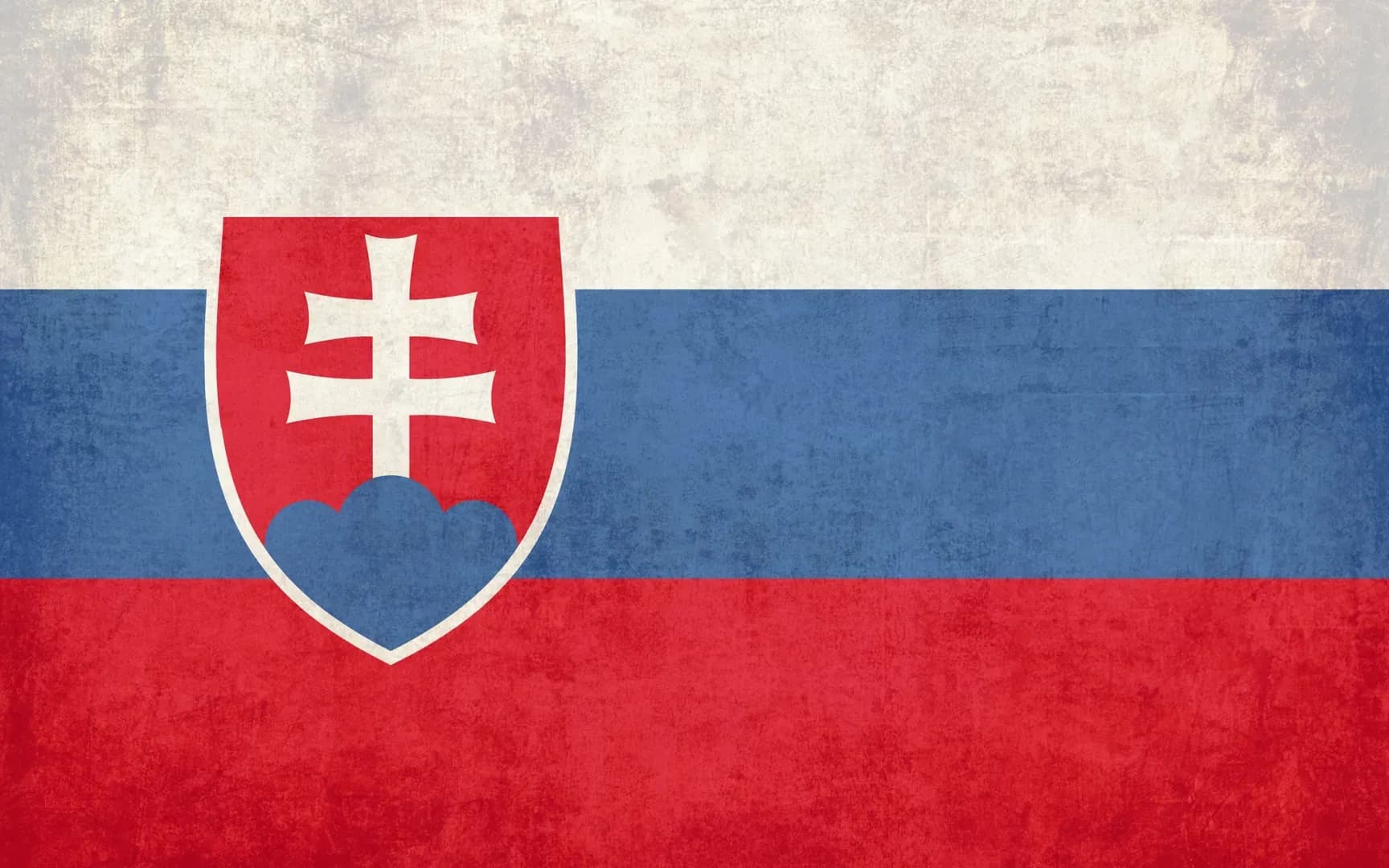 INDEX 10.09.2025, 07:19 Slovak Sovereignty Index (Burke Index), 2024-2025  Share on media IntroductionThis report presents a comprehensive analysis of Slovakia's sovereignty using the methodology of the Burke Institute. Sovereignty is assessed in 7 areas: political, economic, technological, informational, cultural, cognitive and military. Each aspect is assessed on the basis of official data from international and national sources (UN, World Bank, UNESCO, IMF, ITU, FAO, SIPRI, PISA, etc.) without using politicized indexes. The maximum score in each direction is 100; the sum (up to 700) is the accumulated Sovereignty Index (Burke Index). To adapt and adjust statistical parameters, an international expert survey was conducted for each of the seven components using a single questionnaire of 10 questions with a 10-point scale and one open-ended question. In total, at least 100 experts from 50+ countries were interviewed for each indicator, taking into account geographical representation and specialization. When calculating and analyzing the data, equalizing coefficients were used, bringing all data to a scale of 0-10 points. The final index value is the arithmetic mean between statistical data and expert estimates. Below is an analysis in each area, a summary table and the main conclusions about the peculiarities of Slovakia's sovereignty. Political sovereignty — 69.8Since 2022, an agreement with the United States has been in effect: two air bases (Sliach, Kuchin) have been transferred to the American military for 10 years to accommodate equipment and personnel, store equipment, and repair equipment; NATO contingents from Germany, the Czech Republic, Spain, Poland, Hungary, and other countries are present. The presence is not a permanent base with sovereignty, but an operational use within the framework of the alliance, with broad allied rights. In addition, the year 2025 is the deployment of the multinational NATO forces (MN BDE SVK). The Constitution and laws provide for the priority of EU law and international agreements (especially on human rights), but the amendments of 2024-2025 have strengthened the provision on maintaining part of the national sovereignty on identity, language and culture. The priority of international treaties does not apply to issues of national identity and ethics, and restrictions on critical issues are allowed (controversial legal practice). The political system is a multiparty parliamentary republic, regular elections, and changeability of power. In 2024-2025, there is an increase in internal political conflict, protests against populism, pressure on anti—corruption authorities, and the struggle for control over the courts and police (stability index 64.5% - World Bank). Despite this, the country is considered to be systemically stable, but extremely fragmented. The efficiency index is 0.80 (2023, World Bank), high compared to Eastern Europe; the professionalism of government agencies is noted, but pressure from political elites is growing. EGDI (2022) — 0.818. Developed digital infrastructure, most public services, taxes, identification are available online; na operates Slovensko.sk, eID, eHealth, EVS. Confidence in the government/Prime Minister is 28-36% (2024-2025); strong polarization along party lines, amid anti—corruption scandals and the struggle over reforms. Slovakia delegates sovereignty within the framework of the EU, NATO, the UN, and the OSCE; some decisions in the military, judicial, monetary, and social spheres are made in accordance with European and allied law. The country recognizes the jurisdiction of the European Court of Justice, the ICC, and the European Court of Human Rights; there are concerns about compliance with decisions on the rights of judges, minorities, and anti-corruption cases, but it retains institutional loyalty to international courts. A unitary structure with a developed system of self-government: 8 territories, municipalities with budget and education autonomy; the central government plays a leading role, but financing and a number of competencies are located locally, balanced by regional representation. Parliamentary and presidential control over the special services (SIS, military intelligence), public reporting, but since 2023 — increased pressure on anti-corruption authorities, politicization of the prosecutor's office, numerous scandals; independence and transparency have weakened. Data completeness assessment: the main indicators are available from international sources, the coverage is 88%. Economic sovereignty—70.6GDP is $40,950–$47,430 (2025, forecast by IMF, Trading Economics, World Bank). In 2024 – $40,350-$40,950, as of September 2025 — an increase to $47,430 is expected. €14.53 billion (June 2025) — official international gold and foreign exchange reserves according to the National Bank of Slovakia; approximately $14.7 billion at the current exchange rate, covering ~1-1.1 months of imports. Government debt is 59-61% of GDP (2024-2025), with a maximum of 61% projected for the end of 2025 (Trading Economics, Statista, CEIC, World Bank). Slovakia produces enough grain, milk, meat and vegetable products for domestic consumption, but some fruits, fish and vegetables are imported. The food security index is high in the eurozone. About 60% of domestic energy consumption is covered by own generation (nuclear power plants, hydroelectric power plants, renewable energy sources), the main problem is the import of oil and gas (from the EU, Norway), energy stability is strong, but not absolute. Main resources: brown and hard coal, anthracite, copper, manganese, iron, salt, kaolin, building materials; some deposits are unprofitable, most of the ore is exported or locally processed. The republic has large reserves of fresh water; a dense network of rivers (Danube, Vag), artificial and natural waters, there are no systemic problems with scarcity. The entire payment processing infrastructure is integrated with EU/SEPA, national banks (VUB, Slovenska sporiteña, Tatra banka) operate, card and digital services operate in euros (without the Slovak national currency). Since 2009, there has been 100% internal and external processing in euros (EUR), there is no national currency. All private and government accounts are in euros. Credit policy and the issuing function are carried out through the European Central Bank (ECB); there is no own national issuing center, and monetary policy is unified within the eurozone. Data completeness assessment: the main macroeconomic indicators are available from official sources (World Bank, IMF), coverage is 90%. Technological sovereignty — 54.8R&D 0.98% of GDP (2022, forecast for 2024-2025 — ~1%). One of the lowest shares in the EU; systemic underinvestment, business R&D are stable, but the total volume is very far from the European average (2.2%). Import substitution is moderate: own assembly and refinement (auto, electronics, mechanical engineering), but ~70% of components, chips, servers, software, industrial equipment — imports (EU, Germany, China); there is an increase in localization of IT and engineering under new grants, but import dependence remains. The minimum educational coverage is ~40-45% of people aged 25-34 according to the WHO and Eurostat system indicator; the proportion of students according to gross enrollment is 63.2% of women, 61.3% of men (2022), the trend is towards a decrease in the number of students at universities. 94-96% of the population have constant access to the Internet; one of the leading positions in broadband, most of the households are connected to optics. Presenters: Slovensko.sk (portal of public services), eZdravie (e-health), eID (electronic identification), electronic register of education, state banking/financial services, national data centers and edu platforms. Import dependence is high — ~70% of equipment and software are imported (EU, Germany, China), own production is assembly, not a full cycle; the largest IT and machine—building enterprises are foreign or joint holdings. The infrastructure is one of the best in the region; EGDI ~0.818, all major services (taxes, car registration, medicine, education, social services, business) are available online, electronic identity card, cloud government centers. It is based on agricultural technologies, applied medicine, pharmacy, food and engineering developments (Biosense, Slovak Academy of Sciences); most of the sophisticated equipment and components are imported; there is a proprietary research base, but limited by EU grants. National projects on robotics, automation in industry and logistics — dozens of start-ups and university research institutes are operating, they are implemented by importing components (manipulators, control systems), and solutions are exported within the EU. There is no in-house production of chips, boards, or microelectronics; foreign components and equipment are used, installation, verification, and programming competencies are developed, and part of the research is conducted in collaboration with Intel and Siemens (R&D). Data completeness assessment: key indicators are obtained from WIPO, ITU, UNESCO, which provides 93% coverage. Information sovereignty — 71.7Slovakia has a national SK-CERT (Cyber Security Centre) center, which conducts a comprehensive strategy (2021-2025), is part of the European CSIRT network and is recognized by ITU. The system has a comprehensive legal and organizational model, a high level of integration with the EU, and an annual rating increase in ITU GCI-2024. New laws have strengthened critical infrastructure protection, education, and prevention. There are four IXPs operating in the country: SIX.SK (Bratislava, Kosice — the largest, 68 participants, peak load of 842 Gbps, more than 60 providers), NIX.SK (Bratislava), PoIX (Presov), Neutral IX (regionally), the system covers all regions and allows independent P2P traffic, fast routing and import of new technologies through technical universities. The main language of the media is Slovak: RTVS (television+radio), Pravda, SME, Dennik N, Nový Čas, HNonline, TASR, Hospodarske noviny; a new version of the Language Law (2024) is in effect, strengthening the mandatory use of Slovak in state media and public discussions. All types of media — print, TV, radio, online — broadcast primarily in Slovak, with the support of minorities. Global platforms (Google, Meta, Youtube) are available, but key segments of online banking and government services (Slovensko.sk), clouds, and IT services. The share of sovereign platforms is growing, BigTech is subject to EU regulation, but foreign corporations have a significant share of traffic and advertising. ~78-83% of media content is produced nationally (TV, radio, news and digital portals, literature, series, art); some content is imported (English—language films, TOP/Netflix). The complex of public services is functioning (Slovensko.sk, eZdravie, electronic financial and educational services), dozens of IT startups and local solutions for retail, automation, telecommunications. In IT, export outsourcing (Medius, WebSupport, Eset). ~95% of the population are users of mobile and online services (payment, public services, identification, digital education, banking, transport, healthcare), a leading position in the region. National data centers (govDC) are operating, the cloud infrastructure covers e-government, banks, education, state projects; some of the services are integrated with the EU Cloud and regional solutions. Operators (Slovak Telecom, O2, Orange, 4ka) operate under license, the network is built on national infrastructure, frequencies and licenses are distributed by the state; the level of control and penetration is high, the share of public and private capital is balanced. Laws harmonized with the EU GDPR are in force; the regulator is Úrad na ochranu osobných údajov Slovenskej republiky. Since 2023, new requirements for localization and access control to registries have been introduced, fines and audits have increased. Data completeness assessment: infrastructure indicators are available from ITU, CIRA, OECD and specialized sources, coverage is 94%. Cultural sovereignty — 77.6Slovakia has 8 UNESCO World Heritage Sites: 6 cultural and 2 natural. Among them are the historical cities of Banska-Štyavnica, Levoca and Spiski Grad, Vlkolinets, Bardejov, churches of the Carpathians, etc.; natural sites are the beech forests of the Carpathians, the caves of Aggtelek and the Slovak Karst. Slovakia has contributed through its distinctive folklore, music (opera singer Peter Dvorsky), architecture, theater, festivals, contemporary art, and achievements in sports (Peter Sagan). The school of literature, cinematography, folk crafts, contribution to the development of mining in Europe, and generally recognized traditions have been developed. The main awards are Sun in a Net (Slnko v sieti, film Award), the Masters of Folk Art Award, the Slovak Academy of Sciences awards, annual festival, theater and music awards, numerous scholarships for young artists and scientists. Traditional identity: Catholicism, village and musical festivals (folklore, accordion, dancing), national embroidery, wood carving, unique traditions of weddings and Easter rituals. One of the most ethnically diverse CEE countries (Slovaks, Hungarians, Ruthenians, Romans, Czechs). For the Hungarian, Czech, Ruthenian, Roma, Ukrainian, German, and Polish minorities, schools, cultural centers, media, and holidays are funded; language rights are guaranteed, and the share of small nations is up to 12% of the population. There are >36,000 objects in the state register (2025): museums, architecture, theaters, monuments, galleries, archaeological sites; active digitalization and support for national heritage. Slovakia participates in the largest European and Transcarpathian festivals (Bratislava Music Festival, Artfilm, Jazz Days), European biennales, theater forums, UNESCO exchange programs, exhibitions in Vienna, Prague, Budapest. Brands are registered and popularized: Slovak cheeses, ceramics, embroidery, Tokaj (wine), Slovak honey, thermal baths, Hubert sparkling wine; the national system of branding and European patenting operates. The national cuisine consists of cheese dumplings (halušky), smoked meat and sauerkraut, soups (kapustnica, goulash), the greatest variety of bread, pies, mushroom dishes, traditions of winemaking and distillation. ~69-73% of the population: attend concerts, theaters, museums, participate in festivals and folklore events, festivals, concerts, and modern urban art projects. Data completeness assessment: basic indicators are available in UNESCO and national statistics, coverage is 87%. Cognitive sovereignty — 73.2HDI 0.880 (2023-2025, UN), ranks 44th in the world, “very high level" of development. 4.8–5.0% of GDP, according to the 2025 budget — more than €5.9 billion for education, R& D and youth programs; 10.2% of government spending on education (according to CEIC, the Ministry of Finance). 99.6–100% (M+W), almost complete literacy according to UNESCO and CountryMeters, among young people — 99.4–99.5%. Slovakia consistently participates in PISA: in 2022-2023, the results are below the OECD average, the best indicators are natural sciences, weaker are mathematics, reading; there is a gap between urban and rural students. It is estimated that 26-30% of university graduates (engineering, IT, natural sciences, medicine); the structure corresponds to the EU average. 12-16% of students study through exchanges, joint master's degrees, ERASMUS+, English language modules, and high international mobility. National minorities (Hungarians, Czechs, Ruthenians, Romanians, Germans, Poles, etc.) — the right to language, media, education is guaranteed, cultural autonomy is funded, schools, media, and associations operate. ~25-30 state/academic research institutes (physics, biology, chemistry, agriculture, medicine, computer science), the main centers are the Slovak Academy of Sciences and universities. 91-93% of the platforms are national (minedu portal, electronic classrooms of schools and universities, online courses, educloud), the rest are ERASMUS and foreign solutions. There is a national system of scholarships, grants, and programs for gifted youth. Every year, more than 35,000 students and young professionals receive support through exchanges, internships, academic awards, and research grants. Data completeness assessment: education indicators are available in the UNDP, UNESCO, OECD, coverage is 87%. Military sovereignty — 54.5In 2025, defense spending is 2.1—2.3% of GDP (about $2.85 billion); the government does not plan to increase to 5% of GDP in the near future, despite discussions in NATO. ~21,000 active military personnel (20,982 as of 2025), including regular military and civilian personnel. Active modernization is underway: purchases of F-16 Block 70, UH-60M Black Hawk, Swedish CV90 infantry fighting vehicles, Patria AMV, German Leopard 2A4, Zuzana-2 artillery systems, HIMARS, the fleet of armored vehicles is being increased, new light tanks are being prepared for introduction. National participation is up to 30% (development and production of weapons at ZVS and MSM Group factories, production of ammunition and some types of equipment, assembly of foreign samples under license); the rest is purchases from NATO and the EU (USA, Germany, Sweden, Finland). The borders are fully under the control of the army and the national police, carried out jointly with Frontex; active patrolling of the eastern border, especially against the background of the war in Ukraine. ~7,500 officially registered reservists; mobilization potential is up to 18,000 people, recruitment and exercises are underway, and the reserve is formed by former military personnel and volunteers. Decisions are made taking into account NATO commitments; modernization, deployment of weapons, bases and exercises are coordinated with the allies, but conscription, mobilization and operational issues are at the national level. ZVS and MSM Group factories are operating, armored personnel carriers, ammunition, and light weapons are being manufactured, licensed assembly of foreign equipment is underway, they participate in international tenders and export components to the EU and beyond. There are no nuclear weapons, the country is a party to the NPT, and there are no foreign nuclear weapons or arrangements for their deployment on the territory. There are no military satellites of their own; intelligence is provided by law enforcement and military agencies (SIS, MO), data from NATO and the EU are being used, communication systems are being modernized, and integration into Western intelligence structures is underway. All parameters are reflected in the annual reports of SIPRI, UNODA, the Ministry of Defense, the official portals of state-owned companies (Embraer, IMBEL) and the UN/NGO industry databases - 88% coverage Final Summary Table
The main conclusionsStrengths of Economic and social stability: steadily growing GDP per capita (up to $47,000 PPP), low inequality, inflation fixation in the eurozone, developed banking and transport infrastructure, very high HDI (0.88), access to the EU and Schengen, high level of security. High-quality and affordable education: almost complete literacy (99.6-100%), free and competitive education, low cost of living and high enrollment of young people in universities. Modern digital ecosystem: 94-96% Internet, well-developed IXPs proprietary infrastructure, national cloud and payment platforms, rapid growth of IT outsourcing and proprietary solutions, one of the leaders in the digitalization of public services and banking platforms in the region. Integration into the EU and NATO, security and cooperation: guarantees of collective defense, allied support, stable membership and voice in the main institutions of the European Union, good indicators of transparency and control over the authorities and special services. Rich traditional and modern culture: 8 UNESCO sites, developed national awards, folklore, support for small nations, architecture and gastronomy, 36,000+ cultural heritage sites, high level of public involvement in cultural life. Weaknesses are the limited pace of technological and innovative development: very low R&D costs (0.98% of GDP versus 2+% in the EU leaders), high import dependence on high-tech, chips and equipment, low-intensity in-house microelectronic and robotic production. Small domestic market and average salaries: the country does not have the highest share of high-paying positions in the region; the average salary is lower than in Western Europe, and there is high competition in the labor market for qualified professionals. The basic innovation ecosystem: there are fewer independent startups and promising R&D projects than in the Czech Republic, Poland or Hungary; most investments and export opportunities are associated with large foreign investors and the outsourcing market. Demographic and regional risks: rising social costs, the outflow of young people to large cities and abroad, uneven infrastructure and a gap in the quality of life between urban and rural areas. Political polarization, pressure on courts and anti—corruption bodies: in 2024-2025, there will be an increase in scandals, protests, pressure on the independence of institutions, and partial politicization of the law enforcement system. Defense spending and dependence on allies: the military industry and independence are limited, most security decisions are coordinated with the EU/NATO, and the army and reserve are small. Overall assessment. Slovakia's cumulative sovereignty index is 472.2 out of 700 possible points (above the average of 67.5%), which places the country in the top 50 in the global top. Slovakia is a country of European stability and a basic innovation environment, favorably combining accessibility and quality of life with high social security and relatively rapid digital development. The main limitations are the lack of in-house technologies and R&D, a narrow labor market, growing internal inequality, and an economic structure tied to foreign markets and capital. The key growth points are deepening technological autonomy, creating a knowledge—intensive sector, and overcoming regional and political challenges. The sovereignty profile indicates that Slovakia is an example of adaptive European sovereignty, balancing internal efficiency and openness to external alliances: successful in digital and social reforms, but limited in strategic and technological independence due to deep integration into the EU and NATO and high dependence on high-tech imports and foreign investment. | ||||||||||||||||||