

Burke Index | ||||||||||||||||||
 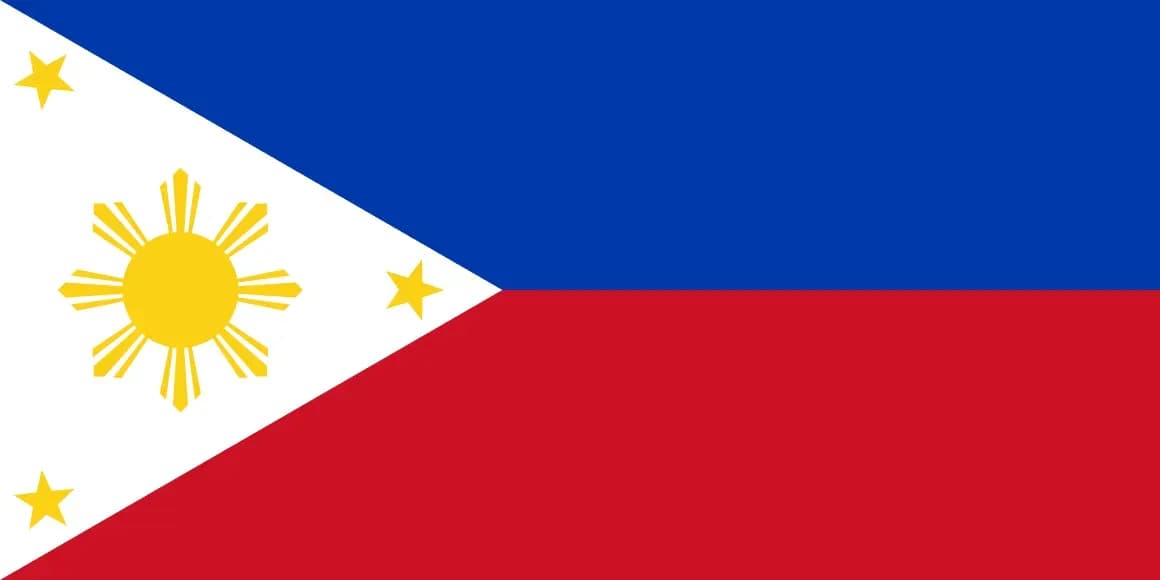 INDEX 06.10.2025, 09:20 Philippine Sovereignty Index (Burke Index), 2024-2025  Share on media IntroductionThis report provides a comprehensive analysis of Philippine sovereignty using the methodology of the Burke Institute. Sovereignty is assessed in 7 areas: political, economic, technological, informational, cultural, cognitive and military. Each aspect is assessed on the basis of official data from international and national sources (UN, World Bank, UNESCO, IMF, ITU, FAO, SIPRI, PISA, etc.) without using politicized indexes. The maximum score in each direction is 100; the sum (up to 700) is the accumulated Sovereignty Index (Burke Index). To adapt and adjust statistical parameters, an international expert survey was conducted for each of the seven components using a single questionnaire of 10 questions with a 10-point scale and one open-ended question. In total, at least 100 experts from 50+ countries were interviewed for each indicator, taking into account geographical representation and specialization. When calculating and analyzing the data, equalizing coefficients were used, bringing all data to a scale of 0-10 points. The final index value is the arithmetic mean between statistical data and expert estimates. Below is an analysis in each area, a summary table and the main conclusions about the peculiarities of Philippine sovereignty. Political sovereignty — 72.4There are no permanent foreign (sovereign) bases, but the EDCA (Enhanced Defense Cooperation Agreement) is in effect — extended US access (9 locations, including Subic Bay, Kalarian, Luzon, Palawan, Misamis, Batan). A number of new bases are being built jointly with the US and Australian Armies — sharing, without transferring sovereignty. The Constitution and the Supreme Court are the supreme power (doctrine of constitutional supremacy). Any international law/agreement is applied through senatorial ratification (doctrine of transformation); only generally accepted norms (custom international law) they are incorporated automatically. The political stability index (2023) is -0.57 according to WGI (global average, low stability), reflecting serious internal political conflicts between clans (Marcos vs. Duterte), internal party turbulence against their background, increased crises around the Senate/government; the parliamentary—presidential system is unstable, mass protests have been noted, risks to investments. The indicator is +0.03 (2023, WGI World Bank). The Philippines ranks 55-60 in the world among middle-income countries; efficiency is higher than the Asian average, but lower than developed countries. EGDI index (2022) — 0.654 (ranked 71st in the world, average level); active development of portals gov.ph, online registries, tax services, Smart Cities, but penetration in rural regions is below the average for the Asia-Pacific region. The support rating of President Marcos, Jr. is 58-63% (Q2—Q3 2025), according to Pulse Asia and SWS; support is higher among the urban population, lower among students and the southern regions (Mindanao). Member of the UN, WTO, ASEAN, APEC, East Asia Summit; major strategic alliances are the USA (MDT, EDCA), Australia, Japan, Canada. Recognizes the jurisdiction of the ICC, The Hague and international arbitrations, cooperates fully with the courts on UNCLOS (the case against the PRC in 2016), actively participates in the ICJ, a signatory to the Convention on Human Rights, ECHR decisions, WTO DSB. A decentralized unitary republic; LGUs (Local Government Units) are highly developed — provinces, cities, and municipalities have authority over finance, education, and healthcare. A multi—level system - from barrios (villages) to megacities. There is parliamentary, judicial and presidential oversight (Congress, Senate, Presidential Adviser); the Law on Access to Information (FOI Act) has been introduced, the Ombudsman mechanisms and the Human Rights Committee are in place. In reality, effective control is limited by corruption and political influence; there are independent investigations, but reporting institutions are imperfect. Data completeness assessment: the main indicators are available from international sources, the coverage is 92%. Economic sovereignty — 58.9GDP of $10,998–12,935 (international dollars, 2025, World Bank, IMF, Trading Economics, Statista) — depending on the source, the forecast for 2025 is in this range. Gold and foreign exchange reserves of $105.7–105.9 billion USD (July-August 2025, Central Bank of the Philippines, CEIC, BSFI, Statista); this is the 8th place in Asia, coverage is 7.6–8 months of imports. National debt is 63.1% of GDP (June — August 2025, Ministry of Finance, Trading Economics), the absolute amount is P16.68 trillion ($280-290 billion), a slight trend towards stabilization. The country provides itself with key products (rice, corn, fish, vegetables), but remains dependent on imports of wheat, fruits, and butter; every year there are problems with prices and supplies due to climate disasters and instability (taffuns, droughts). About 54% of the electricity generation is its own resources (gas, coal, renewable energy); the country imports part of the oil and gas, implements projects on LNG, hydropower, wind and solar energy, but is not an exporter. Reserves: natural gas (Malampaya), gold, nickel, copper, chromium, silver, oil. The availability of fresh water for megacities (Manila, Cebu, Davao) is high, but there are shortages and interruptions in arid areas; there is a large network of dams, reservoirs, and sewage treatment plants. The dominant system is Bangko Sentral ng Pilipinas (BSP), PesoNet/Instapay, major national banks BDO, BPI, Metrobank. Within the country, all payments are made in pesos; fast interbank transfer has been introduced, and a wide online processing card has been introduced. 96-98% of all domestic payments are in the Philippine peso (PHP). Foreign trade and individual contracts are in dollars/yen/yuan; domestic tax and business turnover are exclusively in pesos. BSP (Bangko Sentral ng Pilipinas) is a sovereign issuing center and monetary regulator. Determines the exchange rate, rate level, money supply, foreign exchange reserves and conducts an independent policy integrated with ASEAN+3. Data completeness assessment: the main macroeconomic indicators are available from official sources (World Bank, IMF), coverage is 90%. Technological sovereignty — 50.6R&D 0.32–0.33% of GDP (World Bank, PSA, ADB, 2025) — about $2 billion in absolute terms, the share is growing, but remains below the average level of the Asia-Pacific region (1%). The government has increased funding for DOST and innovation programs in 2023-2025. Import substitution in high-tech is developing pointwise: there is a state program for the production of electronics (automotive components, chips, assembly, aerospace), but the bulk of complex electronics and IT are imports, especially components and equipment for chips, servers, and industrial automation. By 2025, localization will increase in assembly, packaging, and software integration, but not in fundamental technologies. Enrollment in higher education is 39-44% of young people (2024-2025), one of the leaders in ASEAN; the state supports STEM and engineering through a network of universities and DOST campuses. Internet users account for 83.8% of the population (97.5 million users, January 2025). The average fixed Internet speed is ~94 Mbit/s, mobile — ~35-59 Mbit/s; rapid user growth and the introduction of 5G. Financial platforms have been created (PesoNet, InstaPay), public services on gov.ph: SSS, PhilHealth, LTO, BIR, eGov PH App. The first hyperscale data-cloud platform VITRO Sta has been launched. Rosa AI/Cloud, government registers are used in pilot regions. The Philippines is one of the leaders in global exports and imports of high-tech products (1st place in high-tech import, 2nd in exports as a share of trade). The share of imports is 78-85% (semiconductors, equipment, servers, IT), but local independence is growing. 63% of public services are available online (2025, DataReportal, gov.ph). The Smart Cities direction is developing rapidly, applications and portal integration are being launched (MyPhilSys, eGov PH App). Clusters for Life Sciences and a number of state institutes (Philippine Genome Center, PNRI, DOST-ITDI) are operating: biopharma is being developed for the domestic market, basic equipment and reagents are imported; the state program on vaccination and bioclusters has been increased in 2023-2025. Domestic robotics is developing on the basis of universities and technology parks, but independent production is based only on standard platforms (assembly, customization, IoT/AI robots for BPO, automation of farms, warehouses), the software is mostly local. All large—scale development of chips and microelectronics is import (components, wafers, materials); only packaging and test production (OSAT) and assembly are developed. The share of local design and R&D is growing, but critical autonomy is low — the country is the backbone for the global supply chain. Data completeness assessment: key indicators are obtained from WIPO, ITU, UNESCO, which provides 83% coverage. Information sovereignty — 64.3National CERT — National CERT PH/DICT, Cybercrime Investigation and Coordinating Center (CICC), the National Cybersecurity Plan -2023-2028 is in effect. GCI index (ITU, 2023) — ~0.73; 5th place in Southeast Asia, 48th in the world; major exercises and conferences are regularly held, government funding is growing. There are 12 active IXPs for 2025 (PhOpenIX, Vitro IX, GetaFIX, Maharlika IX, etc. in Manila, Cebu, Davao). The number of participants and bandwidth is growing on the background of new cables (Bifrost, TPU, Echo). The official language is Filipino (Filipino based on tagalog); more than 175 languages, a significant part of television, radio, and print are published in Filipino/Tagalog; English broadcasting is widely represented in leading media and educational content (2nd official). Schools support a bilingual model, and there are initiatives to preserve small languages. BigTech (Meta, Google, TikTok, YouTube, Microsoft) is the complete dominance in the communication and advertising market, more than 78% of the population uses social networks; mobile and cloud services are external. The settlement is based on the Data Privacy Act and international agreements (GDPR); there are few proprietary platforms in the public sector. 55-65% of on-air/online content is locally produced (news, entertainment TV, series, movies, YouTube bloggers); external formats (talk shows, K-pop, formats from the USA and Korea) occupy up to 45% of the market. The largest national products are PesoNet, InstaPay, gov.ph, eGov PH App, financial fintech services, platforms for Smart Cities, analytics in BPO; digital ecosystems are developing for transport, taxes, MSAP/Cloud. 77-81% of the adult population uses at least one digital state or financial service. Marketplaces, government registers, educational platforms, eID and eGov PH App are growing in reach. State repositories for public services (MSAP, CloudGov) have been created, and the largest hyperscale datacenter is VITRO Sta. Rosa (ePLDT); some of the systems are hosted on AWS/Azure/Google, but the share of national platforms is growing. Smart operators (PLDT), Globe, DITO; legislation 2022-2025 requires data localization, the infrastructure is mostly local, but international partners (Huawei, Ericsson, Cisco) supply equipment. Frequencies and licenses are regulated by DICT and NTC, and national control is maintained. The Data Privacy Act (RA 10173) is in effect; a National Data Protection Council has been established, GDPR-like mechanisms for operators have been implemented, and registration of SIM cards and platforms has been introduced. Fines for violations are high, but enforcement (especially in the regions) is not always effective. Data completeness assessment: infrastructure indicators are available from ITU, CIRA, OECD and specialized sources, coverage is 84%. Cultural sovereignty — 86.86 UNESCO World Heritage Sites: • Baroque Churches of the Philippines • Historic City of Wigan • Rice terraces of the Cordillera • The Puerto Princesa Underground River • Tubbataha Reef Natural Park • Hamiguitan Mountain Zoo and Nature Reserve. 19 objects are on the preliminary list. Contributions include the invention of yo-yo and arnis, the synthesis of Spanish, American, and Asian traditions, unique forms of architecture, decorative art, the OPM World center (Original Pinoy Music), theatrical forms (Sarsuwela, Bodabil), national films and festivals, and Asia's largest Catholic community. The intangible heritage is clearly expressed: epic songs, "Hudhud", “Darangen", listed by UNESCO. The main ones are the National Award "Order of National Artist", the annual "Ani ng Dangal" (Harvest of Honor, 2025-39 laureates), the Award of the Cultural Center of the Philippines, the National Book Awards. About 180 ethnic groups, 175 languages, a fusion of pre-colonial, Islamo—Malay, Spanish, American and Chinese influences; world centers of religious and secular holidays, a syncretic holiday system-“fiesta culture”, strong identification with family, community, “bayanihan” (mutual assistance), recognized practices of traditional medicine, a variety of folk costumes and collective practices. Official support for small nations and languages is guaranteed (Komisyon sa Wikang Filipino, National Commission on Indigenous Peoples, ethnic festivals, grants, publication of textbooks and dictionaries); state educational policy - multilinguism; ethnocultural centers are funded in all regions. >33,000 national cultural sites: monuments (vary by source), more than 3,000 historical buildings, thousands of museums, cultural, educational and exhibition centers; hundreds of theater groups, national archives and museums of ethnicity and art. The Philippines is one of the UNESCO centers, participates in Memory of the World, partners in many international festivals, collaborations with Japan, the EU, the USA, the UAE, Schola Cantorum, Venice Biennale, Shanghai World Expo, Frankfurter Buchmesse; actively participates in exchange programs. GI state registration (banig, tapuya, Manila gems), patent and brand system, Unesco intangible heritage protection, OPM promotion programs, National Copyright Office, export of ethnic art and design objects for the global market. Filipino fusion cuisine, more than 1000 authentic dishes (adobo, xingang, lepshon, karekare, halo-halo, pansit), regional cuisines (Spanish, Muslim, Creole, Chinese, Indian lines); the practice of family dinners, “morning merienda", street food; dozens of gastro festivals. 73-75% of the population participates in cultural, religious and artistic activities (according to NCCA, Pulse Asia, 2023-2025): participation in festivals, theaters, religious ceremonies, family and national holidays, cinema, literary and educational activities. Data completeness assessment: basic indicators are available in UNESCO and national statistics, coverage is 87%. Cognitive sovereignty — 68.1HDI 2023-0.720 (“high"), ranked 117th in the world; steady growth (0.714–2022, 0.720–2023). Metro Manila and a number of provinces have a “very high” HDI (0.74—0.80). State spending on education is 4.0% of GDP (2025), the UNESCO standard has been reached for the first time since 2026; budget is P1.22 trillion, this is 15-16% of the total state budget (the first item of expenditure). Literacy is 96-96.3% (2024, PSA, World Bank, UNESCO); men — 98%, women — 94.5–96%. FLEMMS/PSA scores — “basic literature" >90%. PISA 2022: • Mathematics — 355 (73rd place out of 81, below the OECD average) • Reading — 347 (76th place), Science — 356 (71st place). Academic performance is slowly growing, the country is ahead only of Indonesia in Southeast Asia. About 32-36% of university graduates are in STEM disciplines (engineering, mathematics, medicine, computer science, agronomics), a growing trend in undergraduate studies. 15-18% of university programs have dual degrees, exchanges or partnerships with the EU, USA, Japan, Australia; JICA, AUN, Erasmus Mundus, Fulbright and private exchange networks are expanding. 175+ languages are officially recognized, dozens are included in school curricula; active ethnocultural centers, grants, support for languages and holidays through KWF, NCCA and the Ministry of Education. 22 state and university R&D centers (basic sciences, biotechnology, climate, medicine, genomics, materials, agricultural research). DOST manages more than 15 profiled laboratories. 28-34% of all educational and LMS platforms are of local or hybrid (Gov, CHED, SEI, DepEd, TESDA) origin; the rest are Google, Coursera, Khan Academy and foreign, often with localization. ~₱51 billion ($890 million) in 2025 — CHED, DOST, Tulong Dunong, Gawad Patnugot scholarships, SEI grants, competitions, Olympiad programs, support for STEM and scientific personnel. The largest scholarships are CHED, DOST-SEI, S&T Scholarships. Data completeness assessment: education indicators are available in the UNDP, UNESCO, OECD, coverage is 83%. Military sovereignty — 54.21.25% of GDP (2023-2025, World Bank, Trading Economics, SIPRI), absolute budget — $4.38 billion (P256.1 billion). The increase in costs is related to the modernization of Horizon 3 (more than $35 billion until 2032). 143,000–150,000 contract (active), 80,700–131,000 reservists and ~1,400,000 mobilization reserve (estimates by Global Firepower, Datapandas, World Population Review). Army — ~85,000, Navy — 25,000, Air Force — 17,000. Large-scale modernization within the framework of the AFP Modernization Act and Horizon 1-3 programs: purchase of BrahMos, Javelin, Spike ER2, corvettes from South Korea, Black Hawk helicopters, AH-1S, FA-50, C-130; introduction of new air defense systems, a project to obtain submarines has begun. But heavy equipment, control systems, air defense and fighter jets are in the minority, the country is inferior to Indonesia/ Malaysia by this parameter. Own production is extremely limited: licensed production of small arms (UDMC, Ferfrans), assembly of armored vehicles, small armored vehicles, repair and upgrade of ships (Naval Shipyard), some naval modules; most heavy equipment is imported. Full sovereign control is implemented through the Philippine Coast Guard, Navy, and Army, but coverage of the entire archipelago (7,641 islands) is technically difficult, there are problems with maritime security in the South China Sea; joint operations are conducted with the United States, Australia, and Japan. The official reserve is ~131,000 (military personnel, contractors), the mobile reserve is up to 1.4 million (according to military plans, it is subject to accelerated accounting from 2024, reservists have annual fees). Most of the strategy, exercises, and procurement are coordinated with the United States (MDT, Visiting Forces Agreement, EDCA), Australia, and Japan. Defense policy is sovereign, but operates in close coordination with the US AUKUS allies and the Indo-Pacific Framework. There is no major military—industrial complex: a couple of state-owned factories, a Naval Shipyard, small arms assembly, repair/upgrade of ships and equipment, UAV pilot projects; everything high-tech (missiles, air defense, avionics, armor) is imported. The Philippines does not officially own or develop nuclear weapons; it is a signatory to the NPT, has 0 warheads, and lacks a scientific and production base for nuclear weapons. There are no military satellites of their own; Diwata/Maya projects for civilian intelligence are in operation, satellite monitoring is carried out in partnership with the United States, Japan, and Australia; military intelligence and cybersecurity are based on national and allied units, and part of the infrastructure is of a foreign (American) standard. All parameters are reflected in the annual reports of SIPRI, UNODA, the Ministry of Defense, the official portals of state—owned companies (Embraer, IMBEL) and UN/NGO industry databases - 85% coverage Final Summary Table
The main conclusionsStrengths. Economy and macro stability: Stable economic growth (GDP per capita PPP — $11-13 thousand), large foreign exchange reserves ($106 billion), improved budget management, significant industrial exports, a large share of international investment, dynamic fintech and Banco Central as an independent regulator. Humanitarian capital: High literacy rate (96%), high coverage of higher education (about 40%), a growing number of STEM graduates and the volume of educational investments (4% of GDP); developed government programs to support young talents. Technological modernization and numbers: Internet penetration is 84%, more than 77% of the population is covered by digital services, rapid growth of fintech, development of e-gov (63% of online public services), national cloud platforms. Cultural and ethnic wealth: 6 UNESCO sites, the growing international prestige of national art, support for multilingualism and cultural exchanges, high involvement of the population in cultural events (73-75%). Flexible foreign policy: A wide range of alliances (USA, Japan, ASEAN), recognition of international courts, tight integration into the global economy and global technological chains. Weaknesses. Limited political stability and corruption: Political Stability Index -0.57 (WGI), clan and regional conflicts (especially Mindanao, south), significant influence of corporatocratic families on politics; corruption and limited practical control of law enforcement agencies. Investment and technological dependence: 78-85% of components and technologies are purchased from outside, even despite the success of assembly, infrastructure and deep industrialization are hampered by a shortage of their high technologies, few national technology brands are concentrated in software and services. Vulnerability to external shocks: Frequent typhoons, earthquakes, seasonal shortages of water and food, risk of social upheaval (protests, inflation), high proportion of poverty, social inequality. Limited strategic autonomy: Strategic military policy de facto depends on the United States and ASEAN; the volume of its own military-industrial complex and high-tech automotive production is extremely small; military space, sophisticated intelligence and aircraft technology rely on partners. Low results of international education standards: PISA results below the OECD average; The level of basic school education is inferior to the countries of the Southeast Asian "tigers". Overall assessment: the Philippines' Cumulative sovereignty Index is 455.3 out of 700 possible points (above the average of 65%), which places the country in the top 100 in the global top. The Philippines is one of the most dynamic and open economic and humanitarian poles of Southeast Asia: a country with a strong cultural identity, a fast-growing economy, digital and educational sectors, but with systemic challenges in the institutional, scientific, managerial and infrastructural spheres. The key challenges are technological and industrial dependence, lack of strategic autonomy, vulnerability to natural disasters, and internal social inequality. Nevertheless, the combination of international openness, flexible policies and a strong cultural “core strength” allows us to maintain positive dynamics and integration into global processes. The sovereignty profile indicates that the Philippines is a sovereign island state with a stable financial and cultural base, domestic monetary, institutional and humanitarian sovereignty, but with a partial transfer of defense, intelligence and technological powers to global partners (USA, Japan), as well as significant import dependence in strategic industries. Integration into international alliances is combined with economic and cultural independence, which allows for flexibility in foreign and domestic policy. | ||||||||||||||||||