

Burke Index | ||||||||||||||||||
 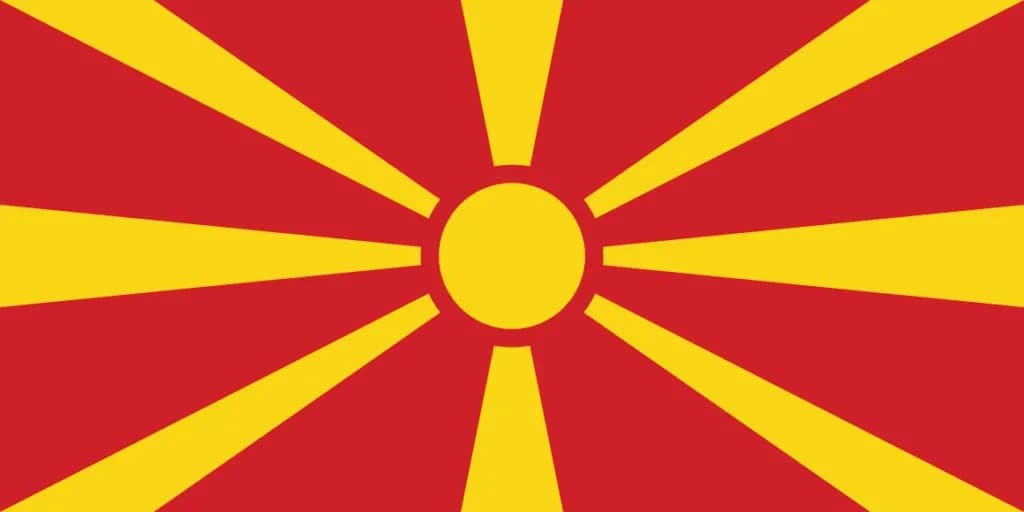 INDEX 24.10.2025, 09:06 North Macedonia Sovereignty Index (Burke Index), 2024-2025  Share on media IntroductionThis report provides a comprehensive analysis of the sovereignty of North Macedonia using the methodology of the Burke Institute. Sovereignty is assessed in 7 areas: political, economic, technological, informational, cultural, cognitive and military. Each aspect is assessed on the basis of official data from international and national sources (UN, World Bank, UNESCO, IMF, ITU, FAO, SIPRI, PISA, etc.) without using politicized indexes. The maximum score in each direction is 100; the sum (up to 700) is the accumulated Sovereignty Index (Burke Index). To adapt and adjust statistical parameters, an international expert survey was conducted for each of the seven components using a single questionnaire of 10 questions with a 10-point scale and one open-ended question. In total, at least 100 experts from 50+ countries were interviewed for each indicator, taking into account geographical representation and specialization. When calculating and analyzing the data, equalizing coefficients were used, bringing all data to a scale of 0-10 points. The final index value is the arithmetic mean between statistical data and expert estimates. Below is an analysis in each area, a summary table and the main conclusions about the specifics of the sovereignty of North Macedonia. Political sovereignty — 60.2The country is a full member of NATO (since 2020), actively conducts negotiations on joining the EU, is a member of the UN, Council of Europe, WTO, OSCE, CEFTA and other international organizations. In the areas of supranational regulation, North Macedonia strives for harmonization with EU law. The country undertakes to comply with the main decisions of the EU, NATO, as well as international courts; in general, the national constitution retains supremacy if it does not conflict with international treaties. The internal political situation is moderately stable: political crises are associated with the division of power between the Macedonian and Albanian communities. The country ranks 51st on the Global Peace Index (GPI), with corruption and personnel reforms, and delays on the reform path to the EU. Government Effectiveness (WGI) — 49% percentile according to the World Bank for 2023, that is, below the EU average, but above the Balkan median. The e-government Index (EGDI) is 0.62 (2024), it is in the middle of the world ranking, the state is actively expanding the coverage of digital public services. Support for the president and the prime minister after the 2024 elections is estimated to be moderate: trust ratings are 35-42%, and there is high polarization between political forces. There are no permanent foreign military bases; civilian and military infrastructure is used as part of NATO programs, and no foreign garrisons are deployed. North Macedonia is a member of the International Criminal Court and the European Court of Human Rights; the decisions of these instances are recognized and partially enforced, and supranational legal supervision is limited. The country is a unitary state with strong elements of decentralization: large ethnic communities have broad autonomy, municipal self—government operates; strategic decisions are made centrally in Skopje. The transparency of the work of the security services is ensured by parliamentary control and laws on publicity, but independent reports indicate a lack of institutional transparency and some corruption scandals. Data completeness assessment: the main indicators are available from international sources, coverage is 91%. Economic sovereignty — 46.7GDP per capita by PPP is USD 24,140 at the end of 2025. The gold reserve is 6.89 tons (2025), the volume of national reserves has been stable over the past years. The national debt is 54% of GDP (at the end of 2025), with an upward trend, but it is in the range of standards for Balkan Europe. It provides itself with basic products (grains, vegetables, fruits), while some products (especially imported categories and raw materials for processing) are purchased abroad. The country depends on energy imports (oil, gas, and some electricity), and domestic production covers less than 60% of national consumption; coal and hydropower are essential. It has deposits of coal, lignite, iron ore, copper, lead, zinc, manganese, and building materials; only some of them are being developed. Sufficient for the needs of the country: the largest rivers are Vardar, Dream, Black Drin; there is a network of lakes (Ohridskoe, Prespanskoe); access to water resources is stable. There is a national settlement system controlled by the central bank, all internal transactions and government payments pass through national banks. The national currency, the Macedonian denar (MKD), prevails; the share in domestic settlements exceeds 98%, and the eurodollar is used in external transactions. The national currency is issued by the National Bank of North Macedonia (NBRSM), which also regulates credit and monetary policy, interest rates and money supply. Data completeness assessment: the main macroeconomic indicators are available from official sources (World Bank, IMF), coverage is 95% Technological sovereignty — 33.8R&D spending is 0.35% of GDP (consistently one of the lowest percentages in Europe). Import substitution is weak: most of the equipment, industrial software, microelectronics, medical equipment and robotics are imported from the EU and China; local technological products are few in number. Enrollment in higher education is 43% (2020), of which about 35% of students have bachelor's degrees, and a significant proportion of young people enroll in local and foreign universities. Internet penetration is 82-83% of the adult population, mobile and fixed networks cover the entire country; broadband access is developed, eSIM and Wi-Fi are available even in rural areas. There is an e-government portal, education and municipal services platforms — the share of usage is growing, but the main mass services are focused on foreign solutions. Import dependence is very high: IT equipment, servers, software, industrial automation, all chips and components are imported. Public services are available online, from tax and registration services to doctor's appointments; the country's EGDI is 0.62, which corresponds to the EU average, and the population's coverage of digital services is constantly growing. There is no own biotechnological production; biomedical drugs, laboratories, and equipment are based on imported supplies, international grants, and cooperation with the EU. There is no own sector of industrial or domestic robots; demand is fully met by imports, and local projects for educational tasks are occasionally implemented. There is no in-house production of chips, processors and key microelectronics; all products are imported. Data completeness assessment: key indicators are obtained from WIPO, ITU, UNESCO, which provides 86% coverage. Information sovereignty — 57.2The national CERT (MKD-CIRT) is operating, cooperation with ITU is developing; the country regularly participates in regional cybersecurity exercises, rated as "average level" according to the international index. There is no major independent IXP in the country, but the main providers use traffic exchange points through neighboring countries; national content and network services are integrated with external channels. In North Macedonia, almost all media outlets (TV, radio, Internet, newspapers) broadcast in Macedonian, there are editorial offices in Albanian, Turkish and Serbian, and the national media space is developed. The digital services market is completely dominated by global platforms (Google, Meta, Microsoft); there are practically no local analogues, and the level of sustainability is low. The share of national media content on the air and on the Internet is 35-50%; state and private editorial offices produce their own news, talk shows, TV series, and documentaries. A number of national companies are developing industry-specific solutions for finance, e-government, education, and retail, but the mass sector relies on imported software. Online public services, banks, education and retail are available to ~70% of the population, the main growth is on mobile platforms, and the Internet covers most regions. There are practically no national cloud data centers, government data is mainly hosted on provider servers, and some critical services are hosted on foreign platforms. Mobile communications are provided by local (Makedonski Telekom, A1) and international operators; equipment, software and SIM/ESIM solutions are imported. It is regulated by national law, taking into account EU standards (GDPR), there is a national data protection agent, the ISSN registry, but transparency and control are lower than in the EU; the main regulation is government agencies and telecommunications providers. Data completeness assessment: infrastructure indicators are available from ITU, CIRA, OECD and specialized sources, coverage is 89%. Cultural sovereignty — 76.3For 2025, one object on the UNESCO main list is the natural and cultural heritage of the Ohrid region. There is also one facility in the international cross-border European Beech Forests Project (nominee). Contributions include the Ohrid archaeological and architectural complex, the Balkan church tradition, Macedonian literature, unique folklore motifs, folk music, national ornaments and textiles. Ohrid is called the "Jerusalem of the Balkans." There is a state Order of Merit for Macedonia, the Golden Crown Award (since 1966, international poet. the award) and a number of annual national prizes in painting, literature and theater. Macedonian identity is a combination of Slavic, Balkan, Turkish, and Albanian components; a special development of national costume, ornaments, language, folklore, family traditions, and religious (Orthodox and Muslim) holidays. Small nations — Albanians, Turks, Serbs, Romanians, Bosniaks — are officially recognized; linguistic and cultural rights are guaranteed, ethnocultural projects and educational programs are funded. Hundreds of historical monuments: churches, monasteries, museums, archaeological areas, ancient and medieval fortresses, the Skopje and Ohrid museums, old towns and ensembles. The country regularly participates in international festivals (music, poetry, dance, theater), works in UNESCO projects, Balkan culture days, cooperates with TURKSA, organizes festivals with the participation of EU countries and Turkey (for example, Hydirellez is recognized by UNESCO). Ohrid, Macedonian textiles, ornaments, silverware, wines, and folk music are recognized as national brands and protected by national and international (EU, UNESCO) legislation. Cuisine — Balkan, Slavic, Turkish, Albanian and Greek traditions: aivar, tavche-gravce, Macedonian wines, lamb dishes, fish (Ohrid trout), spices and vegetables, traditional sweets. About 20-30% of the population participates in cultural events, festivals, visits museums and takes part in religious and folklore festivals; urban coverage is higher than in rural areas. Data completeness assessment: basic indicators are available in UNESCO and national statistics, coverage is 88%. Cognitive sovereignty — 55.4HDI is 0.815 (data for 2023-2025), the country ranks 69th, the indicator is comparable to the Balkan and Southern European environment. Government spending on education is 3.5% of GDP, which is lower than the European average, but corresponds to the regional norm. Adult literacy is 97.8%; among young people, 98.6%, a consistently high rate for Europe. The country participates in PISA; the results are below the EU average, with scores of 390-420 points in mathematics, reading and natural sciences, and positive dynamics are noted. The share of STEM graduates among university graduates is about 16-18% (mathematics, computer science, engineering, technical fields). The share of foreign educational programs (Erasmus+, double—degree diplomas, exchanges) is 8-10%; the most active cooperation is with universities in the EU, Turkey, and the USA. Albanian, Turkish, Serbian, Bulgarian, and Gypsy are officially recognized, education and funding are provided in their native languages, and cultural representation is in place. There are about 10 national research centers in the country, most of which are based at leading universities (Skopje, Bitola, Stip) and the National Academy of Sciences. Our own digital platforms for distance learning cover ~20% of students, and foreign solutions (Google, Zoom, Moodle) are more widespread. The state annually awards scholarships and holds competitions for young scientists and teachers; the total amount of support is limited by the budget, and the key channel is national and international grants. Data completeness assessment: education indicators are available in the UNDP, UNESCO, OECD, coverage is 88%. Military sovereignty — 40.5Defense spending amounted to 0.9% of GDP ($225 million, 2022); the NATO target of 2% of GDP has not yet been achieved. The number of armed forces is approximately 8,000 military personnel, plus up to 4,850 reservists; paramilitary formations (police) — about 7,600 people. After the transfer of all heavy armored vehicles (tanks, attack aircraft) to Ukraine, the army is being formed around modern armored vehicles, drones, air defense systems, JLTV, Stryker, Mistral, complex supplies from the United States and Turkey; aviation is represented only by helicopters. Our own defense industry is minimal: individual components, small arms, repair and maintenance of equipment, the main weapons come from NATO countries and Turkey. The army and police provide border control jointly with the EU; there are coast guards on the Ohrid and Prespa lakes; modern surveillance systems are used at key checkpoints. The reserve is about 4,850 people, an organized light infantry brigade, with limited mobilization experience; there is no reserve of strategic forces. A NATO member country (since 2020); the autonomy of military decisions is limited by Alliance commitments, strategic procurement and exercises are coordinated with allies, and standardization principles are in line with NATO requirements. Own defense industry — single productions (small arms, ammunition), minimal exports, modern systems and UAVs are being purchased. There are no nuclear weapons; the country fully supports international non-proliferation agreements. There is no space, satellite, or independent electronic intelligence segment; intelligence is national, integrated with NATO, and modern electronic intelligence is developing slowly. All parameters are reflected in the annual reports of SIPRI, UNODA, the Ministry of Defense, the official portals of state-owned companies (Embraer, IMBEL) and the UN/NGO industry databases - 86% coverage Final Summary Table
The main conclusionsStrengths. Macroeconomic stability and moderate growth: GDP per capita ($24,140, PPP) and economic growth (3-3.4% in 2025) are supported by low corporate taxes (10%), export orientation, macroeconomic and monetary stability. Attractive investment environment: Easy company registration, low taxes, no restrictions on foreign ownership of real estate and businesses, open access to the EU, CEFTA, and Turkish markets. A stable, safe and peaceful country with a low level of street crime, a good climate and affordable housing. Cultural heritage, national identity, festivals and strong traditions: UNESCO site, developed literature and folklore, guaranteed support for small nations, preservation of ethnic and cultural diversity. High level of literacy and education: Literacy — 97.8%; higher education coverage — more than 40%, recognition and support of educational systems. Digitalization of public services and banking autonomy: National payment processing, its own issuing center, interest rates and credit policy under the control of the Central Bank; development of national digital platforms. Food and water resources security: the supply of fresh water is stable, the main products are provided by domestic production, agriculture is developed. Weaknesses. Import dependence in technology and manufacturing: weak import substitution in high-tech, almost all software, hardware, chips, robotics, and biotechnologies are imported. Limited government spending and low investment in R&D: spending on education — 3.5% of GDP, on science — 0.35% of GDP, the number of STEM graduates and research centers is below average European standards. Low autonomy of the defense complex: the army is small (8 thousand), its own industry is minimal, all modern systems are purchased, and the autonomy of military solutions is limited by NATO. External energy dependence: more than 40% of energy resources are imported, and vulnerability to external fuel and gas prices. Low share of own media content and IT: the mass sector of media content, cloud platforms, electronic services is foreign, local developments occupy up to 20-35% of the market. Average social and infrastructural indicators: HDI — 0.815 (high, but not top level), PISA results and the development of state talent support programs are below the European leaders. Limited military autonomy and resource base: the supply of weapons after the transfer of heavy equipment is limited, there are no strategic reserves, exploration and space are absent. Overall assessment. The cumulative sovereignty index of North Macedonia is 370.1 out of 700 possible points (average — 52.9%), which places the country in the top 150 in the world top. North Macedonia is a stable, open, secure Balkan country with low taxes, a strong cultural and historical heritage, and a focus on integration into the EU and NATO. The strengths are accessibility, tranquility, good natural resources, flexible migration policy, preservation of cultural identity and high literacy. Weaknesses include technological import dependence, limited spending on innovation and defense, the lack of large-scale national industries in the High-Tech and defense sectors, energy dependence, and an average level of government and digitalization by European standards. The sovereignty profile indicates that North Macedonia demonstrates stable basic sovereignty in political, legal, cultural and macroeconomic areas - thanks to its own monetary and financial system, support for national legislation, ethno-cultural animation and a high degree of security. Autonomy is significantly limited in technological, digital and defense aspects (high import dependence, dependence on the Alliance and foreign markets). The key potential is integration into international structures, the development of an innovative economy and institutional reform to gain greater independence and sustainability. | ||||||||||||||||||