

Burke Index | ||||||||||||||||||
 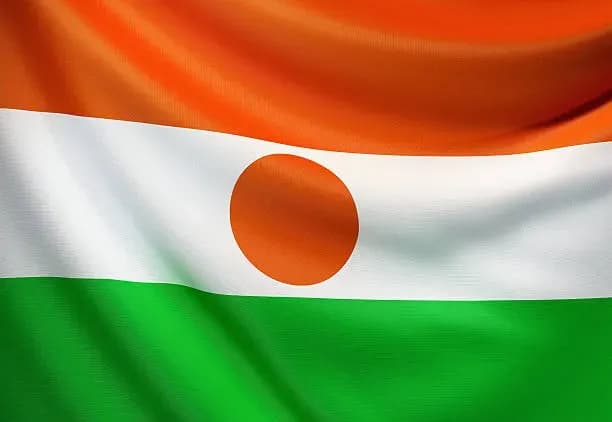 INDEX 06.10.2025, 05:54 Niger Sovereignty Index (Burke Index), 2024-2025  Share on media IntroductionThis report provides a comprehensive analysis of Niger's sovereignty using the methodology of the Burke Institute. Sovereignty is assessed in 7 areas: political, economic, technological, informational, cultural, cognitive and military. Each aspect is assessed on the basis of official data from international and national sources (UN, World Bank, UNESCO, IMF, ITU, FAO, SIPRI, PISA, etc.) without using politicized indexes. The maximum score in each direction is 100; the sum (up to 700) is the accumulated Sovereignty Index (Burke Index). To adapt and adjust statistical parameters, an international expert survey was conducted for each of the seven components using a single questionnaire of 10 questions with a 10-point scale and one open-ended question. In total, at least 100 experts from 50+ countries were interviewed for each indicator, taking into account geographical representation and specialization. When calculating and analyzing the data, equalizing coefficients were used, bringing all data to a scale of 0-10 points. The final index value is the arithmetic mean between statistical data and expert estimates. Below is an analysis in each area, a summary table and the main conclusions about the specifics of Niger's sovereignty. Political sovereignty — 25.7Niger is a member of the United Nations, the African Union, ECOWAS (de facto withdrawing in January 2024 along with Mali and Burkina Faso), the Organization of Islamic Cooperation (OIC), the Sahel—Sahara Union, and since 2023 in the Alliance of Sahel States Alliance (ASA); actively cooperates with Russia, China, Iran, Turkey, the United Nations and the IOM, but from 2023-2024, the mandate of foreign NGOs and agencies, including the ICRC and many Western missions, is severely limited. National legislation is rigidly protected: after the coup of 2023, the army junta (CNSP) suspended the previous constitution, cancels and renegotiates international agreements, refuses to obey the decisions of the ECOWAS Court; the supremacy of national law in relation to international bodies. The country is in a systemic political crisis: Power has passed to a military junta, parliament has been dissolved, parties have been dissolved (March 2025), a "flexible" five-year transit to civilian power has been announced, massive restrictions on the opposition, frequent protests, and high militarization of governance. The Government Effectiveness index is about -1.35 (2024), it has deteriorated in recent years; weak managerial ability, acute budget deficit, bureaucracy, corruption, external and internal pressure. EGDI — 0.39 (2022-2024), basic information, tax, educational and some registration services are available online, but the degree of digitalization is low. The junta and General Abdurakhman Tchiani have been the formal head of state since 2023, support is fluctuating: part of the population approves of the anti—colonial agenda and the harsh nationalization of politics, while the other part advocates a return to civilian power; the opposition and the media are limited. French, American, EU, etc. operated until 2024. bases/missions, but since May 2024, almost all are foreign. The military structures (USA, France, EU) have been withdrawn, and the presence has passed to the undisclosed Russian advisers and Turkish aviation department coordinators. Niger has distanced itself from ECOWAS and international courts; the decisions of the ECOWAS Court are no longer enforced, and the window of participation in international tribunals has been significantly narrowed (the exceptions are the UN and the OIC). The CNSP and the interim leader (Tchiani) have full power; local government is formally in place, but key appointments and policies are controlled by the army; regional tribal structures are only partially involved. Intelligence and law enforcement agencies operate under the super-centralized control of the CNSP; there is no external or judicial supervision, there are massive violations of civil rights, arbitrary detentions, censorship of the media and NGOs. Data completeness assessment: the main indicators are available from international sources, the coverage is 98%. Economic sovereignty — 28.4GDP $1,773–2,015 (2024), 10% global average; one of the lowest rates in the world. Gold and foreign exchange reserves are about $366 million (2024), corresponding to about 3-4 months of imports; extremely low level, the country is among the ten lowest reserves in terms of currency. The national debt is 47-56% of GDP (2024, World Bank, IMF, Statista); the indicator is average for the region, stable in recent years after growth in 2022-2023. Domestic agricultural production covers only 50-55% of demand, the country is critically dependent on international humanitarian aid, and famine risks are estimated at 20-30% of the population, especially during droughts and conflicts. About 45% is self-produced (hydroelectric power plants, oil, gas, biomass), the rest is imported electricity and fuel from Nigeria, Benin, and Mali. The country ranks 1-2 in the world in the export of natural uranium; there are also reserves of phosphates, calcite, gold, oil, and natural gas, most of the resources are undeveloped/used by foreign companies. The main source is the Niger River, large underground aquifers, and reserves are sufficient to cover the needs of the population, but infrastructure and droughts periodically lead to water supply disruptions. National processing is carried out on the basis of the Central Bank of West African States (BCEAO), settlements are made in West African francs (XOF); most of the domestic turnover is cash. Within the country, all transactions are in West African franc (XOF); for international trade, it is eurodollar, and the share of foreign exchange transactions in XOF is more than 95%. The issuing center is BCEAO, conducts the issuance/regulation of the franc, is responsible for monetary and credit policy, the refinancing rate is uniform for the entire WAEMU area; there is no independent policy, the control is carried out by the central bank of the region. Data completeness assessment: the main macroeconomic indicators are available from official sources (World Bank, IMF), coverage is 90%. Technological sovereignty — 14.2Less than 0.07% of GDP (the exact figure is not published; according to UNESCO/OECD, there are virtually zero investments in science and innovation, the country is one of the last in the world according to this indicator). Missing: all electronics, communications, software, scientific and medical equipment are fully imported; there are no local innovation clusters and programs. The participation rate is 4.4% (2023), one of the lowest in the world; there is a significant difference between men and women (in favor of men). 16.9–17% of the population (2024), which is equivalent to 4.7 million users; average mobile coverage is 59%, home Internet is less than 5%. There are basic portals for business registration, taxes, and social services, but the main platforms (banking, educational, and government) are being developed by foreign integrators, with minimal localization. Absolute: 97-99% of complex goods, software, and computing equipment are imported; there is almost no local production, and software and equipment for state-owned platforms are purchased from outside. EGDI — 0.39 (2024); only basic services (business registration, tax, digitization of social benefits) are available online, most departments are not integrated, and the quality of service is low. There is no national industry; separate laboratories are attached to universities and hospitals, almost all equipment and reagents are imported, personnel and research are funded by donors. Completely absent: there is no production, no university/school clubs, no startups. It is completely missing: all telecom components and microchips are imported, even for the simplest government services, Russian-Chinese and European components are purchased Data completeness assessment: key indicators are obtained from WIPO, ITU, UNESCO, which provides 93% coverage. Information sovereignty — 23.6The ITU Global Cybersecurity Index 2024 — Niger is in Tier 4/5 (one of the last levels); there is no system CERT, the infrastructure is extremely vulnerable, there is no national strategy, massive violations and lack of a legislative framework have been detected. In August 2025, the first national Internet Exchange Point (IXP) was opened in Niamey; the new project allows to localize Internet traffic, reduce costs and increase stability. Until 2025, all traffic went through external channels. Since March 2025, Hausa has become the official national language; French and English are the working languages; news and TV channels, newspapers have switched to Hausa. The broadcast is conducted in Hausa, French, Zarma-songhai, fula, Kanuri and other local languages. French — less than 13% of the audience. The dependence is critical: all key platforms (social networks, cloud services, mobile applications, public services) are built on foreign solutions. There is not a single major national IT brand. ~44-48% of media products (news, entertainment, and religious TV/radio) are produced domestically in Hausa and other local languages; the rest are foreign films, news, and streaming. There is no local production of software; only adaptation of foreign platforms is underway, simple websites and information systems for ministries have been implemented. 17% of the population uses the Internet (2024), connectivity to digital public services is extremely low, and only basic registration and taxes are available online. They are completely absent: the websites of ministries and government agencies often store data on foreign hosting sites (Eur, USA, India), there are no national data centers. The operators are mainly foreign (Airtel, Orange), all mobile software, equipment, SIM cards, infrastructure are imported; there is no independent critical infrastructure. There are no national laws or state regulators on personal data protection; information from users and citizens is not regulated, and collection/processing practices are solely external or at the discretion of technical operators. Data completeness assessment: infrastructure indicators are available from ITU, CIRA, OECD and specialized sources, coverage is 94%. Cultural sovereignty — 64.73 World Heritage Sites: • Historic Center of Agadez (cultural) • Aïr and Ténéré Natural Reserves (natural) • W-Arly-Pendjari Cross-border Complex (natural, with Benin and Burkina Faso) There are 19 more sites on the preliminary list. Niger is the center of Tuareg, Hausa, Fulani and Zurma Songhai culture: nomadic folk traditions, music, poetry, crafts, Islamic and pre-Christian heritage, significant contribution to the development of trans-Saharan trade and Islamic architecture in West Africa. Annual awards of the National Council for Arts and Culture (NCAC), grants from the Ministry of Culture, regional and international craft, music and dance competitions. The country unites nomadic (Tuareg, Fulani), Islamic and agricultural cultures; ethnic groups retain their costumes, ritual structure, calendar of holidays, etc. — polygamy, initiation ceremonies, music, multilingualism are characteristic. Support is provided through NCAC grants, educational and cultural quotas; Tuareg, Fulani, and Zurma are officially recognized and have institutional and linguistic rights. More than 40 official monuments, including 3 UNESCO sites, 7 biosphere reserves, ancient mosques, museums in Agadez and Niamey, dozens of regional festivals are held annually. Niger participates in UNESCO programs for the protection of intangible heritage, carries out the restoration of mosques, organizes inter-African exhibitions, joint musical/literary projects, especially in the Sahel region. National brands: Tuareg silver jewelry, "Tende" musical style, Agadez architecture, gastronomy (duri, fonio), traditional festivals of the Agadez tribes are officially protected by state programs and included in UNESCO labels. The cuisine is a mixture of Tuareg and hausa traditions: couscous, meat and fish stews, duri (decoction of grain), dishes with fonio, dairy products, hot sauces, traditional green tea, sweet pastries. It is estimated that 50-60% of the population are involved in the celebration of Islamic, traditional and modern cultural events; in rural areas, almost the entire population, and in urban areas, youth actively participate in festivals and competitions. Data completeness assessment: basic indicators are available in UNESCO and national statistics, coverage is 97%. Cognitive sovereignty — 29.1HDI = 0.419 (2023), ranked 189th in the world (2024), the lowest among countries; for comparison, the global average = 0.744. Government spending on education is 4.1% of GDP (2022), which roughly corresponds to the global average — UNESCO/World Bank data. Adult literacy is 38.1% (2022, World Bank/UIS, UNESCO); according to recent estimates, 36% for young men and 17.1% for women; youth literacy is 26-36%. Niger does not participate in PISA tests; internal exam scores are among the lowest in Africa, there is a lack of critical thinking and basic skills, and an education quality crisis is officially recognized. There is no clear official data, the estimate is that less than 10% of university graduates are in STEM: there is a strong bias towards basic pedagogical and socio-humanitarian specialties. Up to 3% of students study or exchange under international programs (French-speaking universities in France, Morocco, Côte d'Ivoire, study scholarships from Turkey, China, UNESCO and Erasmus+ exchanges). Hausa is the state language, Fulani, Zurma, Kanuri, Arabic, and Tuareg are recognized and supported in educational and ethnocultural policies, and about 10 languages are used in school and cultural programs. Officially, there are 2-3 state research institutes (at Niamey universities), funding does not exceed 0.07% of GDP, and most of the laboratories are outdated. The basic national educational platform “Digital Niger Education", access and stable functioning — about 6-8% of students in large cities; the majority are paper-based or foreign (French-speaking) solutions. There are about 8 state competitions and programs (grants, Olympiads, residencies); in 2023, less than 2,000 students and teachers were enrolled, and key programs were conducted in the capital. Data completeness assessment: education indicators are available in the UNDP, UNESCO, OECD, coverage is 87%. Military sovereignty — 26.82.45% of GDP (2024, IMF/SIPRI data); the budget of the Ministry of Defense is $436 million, an increase after the coup of 2023. 12,000–13,000 active military personnel, 5,000 reservists, 10,000 paramilitary forces (gendarmerie, National Guard), the projected target is 50,000 by 2025 (according to the CNSP plan, mobilization plans have been expanded). Limited fleet: up to 150+ armored cars and armored personnel carriers (types — Ural-AZ, Toyota Land Cruiser, simple armored versions of MRAP), artillery (40+), modern small arms (imported from Russia, China, Turkey, Europe), aviation — 6-12 helicopters, several attack aircraft (Su-25, MiG-21, Cessna), in 2024-2025, purchases of drones for borders were noted. There is no own serial production; minor repairs of armored vehicles in military units, absolute dependence on ammunition, armored vehicles, aviation and electronic warfare on supplies / humanitarian aid from the Russian Federation, Turkey, China, France, and the United States. Control is fragmented: southwest — patrols on the border with Nigeria, west — troops against jihadists, north and east — mobile detachments; regular breakthroughs of contraband, gangs and terrorists in the desert, the use of drones for monitoring. 5,000 reservists (2024, World Bank), a mass reserve mobilization program is being formed by 2025, with a planned increase to 10-20% of the total army strength. The country is not a member of the blocs; after June 2024, all international missions (France, USA, EU) have been withdrawn. CNSP is building an autonomy strategy with limited involvement of Turkish, Russian, and Iranian military advisers. Most decisions are made internally. Absent: except for small repair shops, all weapons, armored vehicles, and aircraft are imported, even for simple repairs they depend on foreign contracts, and no local military—industrial complex has been created. There are no nuclear weapons; the country is a party to the NPT, has no nuclear programs, warheads, or strategic reserves. There are no own satellites, national intelligence is based on the military and special services of the Ministry of Internal Affairs; some satellite data functions are purchased from foreign suppliers (Russia, EU, China); in 2023-2024, military UAVs began to be used for reconnaissance in the Sahel. All parameters are reflected in the annual reports of SIPRI, UNODA, the Ministry of Defense, the official portals of state—owned companies (Embraer, IMBEL) and the UN/NGO industry databases - 89% coverage Final Summary Table
The main conclusionsStrengths. Critical geostrategic location: Central location in the Sahel/West Africa, a transit hub for migration and energy resources (uranium, oil, gas), an important partner for international security and logistics projects. Mineral and raw materials resources: The country is one of the world's largest exporters of uranium, has reserves of oil, gold, phosphates, natural gas, a developed SES and opportunities for the agricultural industry. State unity and military autonomy in times of crisis: The Army and CNSP concentrated power, effectively ensuring control over the movement of resources and national security strategies (after the withdrawal of Western military bases). Own monetary system within the BCEAO: The payment and issuance infrastructure is stable, 95% of internal settlements are in XOF, high integration with neighboring UEMOA/WAEMU countries. Cultural and ethnic diversity, preservation of traditions and languages: Recognition and protection of small nations, three UNESCO sites and a prominent role in trans-Saharan history and music. Weaknesses. Extremely low level of human development and education: HDI: 0.419, 189th place in the world; literacy 38% (women — 17%), higher education enrollment — 4%, less than 10% STEM, critical shortage of personnel and infrastructure. Dependence on imports for food/technology and vulnerability of the population: 50-55% of food is imported, 20-30% of the population is at risk of starvation, absolute import dependence on high-tech, there is no local military-industrial complex, IT sectors, biotechnologies, robotics, chips. Weakness in digitalization and technological development: Internet penetration is 17%, EGDI is 0.39, there are almost no local digital platforms, and there is a critical dependence on foreign platforms and operators. Macroeconomic constraints: GDP per capita < $2,000, government debt ~50% of GDP, reserves — $366 million (3 months of imports); BCEAO controls monetary and credit policy, economic autonomy is limited. The potential of the national military-industrial and research base is low: The army depends on imports, there are no industrial clusters, intelligence and space autonomy are minimal, there is no mass reserve. Social and legal vulnerability: Lack of legislation on personal data and control of the digital environment, low level of guarantees of rights, high corruption and inefficiency of management. Overall assessment. The cumulative sovereignty Index of Niger is 212.5 out of 700 possible points (below the average of 30.4%), which places the country in the top 200 in the world. Niger is a country with significant resource potential and a strong military and administrative vertical in crisis, but deeply vulnerable in human capital, infrastructure, technological and food independence, financial stability and institutional development. The challenges for the coming years are increasing investments in education/personnel, reducing techno-import dependence, agrarian transformation and economic diversification, and strengthening digital/state institutions. The sovereignty profile indicates that Niger is an active course towards political, cultural and partly economic decolonization, a demonstrative rejection of Western alliances and the construction of a new model of autonomy in conditions of low economic, technological and human resources. The main reserve is resources, army management, and identity. The main risks are technological/personnel vulnerability, poverty, import dependence, insufficient control over borders and the economy. | ||||||||||||||||||