

Burke Index | ||||||||||||||||||
 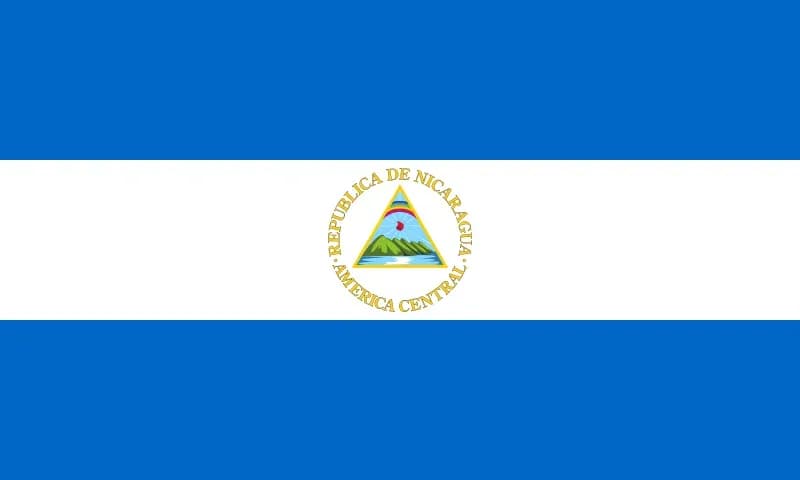 INDEX 06.10.2025, 05:58 Nicaragua Sovereignty Index (Burke Index), 2024-2025  Share on media IntroductionThis report provides a comprehensive analysis of the sovereignty of Nicaragua using the methodology of the Burke Institute. Sovereignty is assessed in 7 areas: political, economic, technological, informational, cultural, cognitive and military. Each aspect is assessed on the basis of official data from international and national sources (UN, World Bank, UNESCO, IMF, ITU, FAO, SIPRI, PISA, etc.) without using politicized indexes. The maximum score in each direction is 100; the sum (up to 700) is the accumulated Sovereignty Index (Burke Index). To adapt and adjust statistical parameters, an international expert survey was conducted for each of the seven components using a single questionnaire of 10 questions with a 10-point scale and one open-ended question. In total, at least 100 experts from 50+ countries were interviewed for each indicator, taking into account geographical representation and specialization. When calculating and analyzing the data, equalizing coefficients were used, bringing all data to a scale of 0-10 points. The final index value is the arithmetic mean between statistical data and expert estimates. Below is an analysis in each area, a summary table and the main conclusions about the peculiarities of the sovereignty of Nicaragua. Political sovereignty — 36.4Nicaragua is a member of the United Nations, IMF, WTO, World Bank, UNESCO, WHO, FAO, IAEA, International Development Bank, Central American Bank for Economic Integration, SICA, CELAC, ALBA, SARIKOM, etc. It has a rich history of resolving territorial disputes through the International Court of Justice (disputes with Honduras, Colombia, Costa Rica). The Constitution (Article 182) of the country recognizes the supremacy of national law; international treaties are considered valid only after ratification, and the Constitution always takes precedence. In recent years, Nicaragua has announced its withdrawal from the UN Human Rights Council, ILO, FAO and IOM, demonstrating disregard for international control mechanisms. The country is characterized by an authoritarian regime: since 2018, the opposition has been severely suppressed, hundreds of politicians, civil society activists and journalists have been arrested, and Ortega controls key branches of government. In 2025, a reform was introduced that further increased the concentration of power between the President and Vice President; protests were minimized, and stability was achieved by force. Government Effectiveness Index (WGI, 2023-24): -0.62 (below the global average, a drop from a decade earlier). Despite the administrative resources, low transparency and high corruption reduce the effectiveness of institutions. EGDI index (2024): 0.500 (120th out of 193 countries, closer to the bottom third of the ranking). The development of basic electronic public services, however, access is limited and integration is low. The credibility of President Daniel Ortega is not officially published; the ratings of independent organizations are extremely low (low support, mass discontent, emigration, and increased repression). Formal support mechanisms are controlled by the central administration. There are no foreign military bases; there is no presence of foreign armed forces. Nicaragua has actively used the International Court of Justice for territorial disputes, but in 2023-2025 it begins to distance itself from a number of international structures (UN Human Rights Council, ILO, IOM). The fulfillment of international obligations is now limited. 2025 — the constitutional reform was approved, which significantly increased centralization: the President is now the simultaneous coordinator of the legislative, judicial, electoral branches, regions and municipalities. The entire political system is as concentrated as possible around the Ortega—Murillo family. Transparency is minimal: the State Security service and the police are under the direct control of the President and Vice President, and there are no effective public or parliamentary oversight mechanisms. Repressions and violations of civil and political rights are often recorded. Data completeness assessment: the main indicators are available from international sources, the coverage is 90%. Economic sovereignty — 33.1Estimate for 2024-2025: $7,662–8,709 according to various methods (World Bank, IMF, Trading Economics). Forecast for the end of 2025: $7,930–8,700 with steady growth. Foreign exchange reserves: $6.77–7.01 billion (April — July 2025, the highest in the country's history). Estimated coverage is ~6.5 months of import. Public debt to GDP ratio: 38-39.1% (at the end of 2024-39.1%; forecast for 2025-38-38.4%). According to international estimates, the debt level is considered moderate and manageable. Nicaragua provides self-sufficiency in basic foodstuffs (corn, beans, coffee, sugar), but about 30% of the population is vulnerable to food insecurity during periods of drought and inflationary waves. Meat, vegetable oils, and some dairy products are imported, and the malnutrition rate is higher than the average in Latin America. 63% of electricity is provided by hydro, geothermal and wind sources (2018-2024); the country is successful in diversifying energy, although imports of petroleum products remain for transport and industry. The national energy system is stable; losses are minimal, but the infrastructure for gas and gasoline depends on imports. There are deposits of gold, silver, copper, lead, zinc (significant for export); the sector of extraction of building materials, hydro- and geothermal resources is developed. The country exports gold and coffee as its main commodities. One of the most water-rich countries in the region: the largest lakes in Central America (Nicaragua, Managua), rivers; freshwater resources are estimated at >180 billion m3/year. The problems are pollution of sources near large cities, but the country's drinking water supply is above the average in Latin America. The operator is the Central Bank of Nicaragua (BCN); there is a national clearing system, national standards of payment cards “Banpro", “LAFISE". Electronic payment tools are developed, and the government controls the entire infrastructure of domestic payments. >85% of all domestic transactions take place in Nicaraguan Cordoba (NIO); dollarization is quite high in the official sector, however, interbank, trade and currency transactions are predominantly denominated in NIO. The issuing center is the Bank of Central Nicaragua (BCN); the bank independently regulates the issue, liquidity, and setting of the key rate (the current level is 6.25%). The credit policy is strict, state regulation of the exchange rate, support for financial stability, and a gradual decrease in inflation. Data completeness assessment: the main macroeconomic indicators are available from official sources (World Bank, IMF), coverage is 90% Technological sovereignty — 22.9Latest current estimate: 0.11% of GDP (2015, according to World Bank/TheGlobalEconomy); no new data published, low dynamics. Import dependence is high: over 90% of all electronics, software, communications and sensors are imported; localization of individual segments (financial services, assembly of household appliances) is present, but the volume is small. The gross coverage ratio in 2023 is 29.5% (an increase from 19% in 2022); according to other sources, it is about 19-22% (differences in methodology and data for different years). Internet penetration at the beginning of 2025: 64.1% (4.47 million users); mobile connections — 125% of the population. Main: gosportal tramite.gob.ni, NicaBanco and Banpro banking web services, national portal of the tax service, online services of the Central Bank. Digital platforms for paying bills, taxes, and obtaining certificates have been launched. There are still 95-98% of high-tech imports for equipment, medical technologies, and industrial systems. The only exception is the consumer electronics assembly sector (on an offshore assembly basis) and local software for fintech/banking services. EGDI — 0.500 (120th out of 193): there are electronic services for basic operations (utility bills, taxes, licenses), but integration and coverage are limited, and mobile applications are developing. Biotechnologies are developed at a low level: full import of vaccines, test systems, equipment, only laboratory research in universities and the agro-industry. There is no state biotech industry/autonomy. There is no R&D or implementation at the production level; all industrial automation equipment is purchased abroad. There is no autonomy: chips, microchips, and specialized electronics are completely imported. Data completeness assessment: key indicators are obtained from WIPO, ITU, UNESCO, which provides 93% coverage. Information sovereignty — 38.7The National Cybersecurity Strategy for 2020-2025 has been officially adopted (2020), and includes the creation of a national CERT (state—owned TELCOR). The ITU GCI world ranking ranks 165th out of 182 (2022), the NCSI index is 107/175, which indicates a low level of security. CERT is being implemented, but it is not fully integrated into all government structures. There is 1 IXP (Managua IXP) in the country, covering the main providers, with the support of CARCIP-LACNIC-ISOC. The Regional Optics Expansion Program (CARCIP) develops nodes and integration with regional networks. The main media are television, radio, the largest newspapers and online resources in Spanish; a high proportion of national and local content, especially on radio and TV. Regional state media are programmed from Managua, some of the channels belong to the Ortega family. Critically dependent: the largest platforms (Google, Facebook, YouTube, WhatsApp) are the main channels of communication and information, and regulation is weak. There are no national analogues of large Internet platforms and social networks. More than 60-65% of the broadcast, radio content and news are local; the TV segment is dominated by broadcasts of international (Mexico, USA, Spain) production, as well as Russian and Venezuelan programs. On the Internet, ~35% are local platforms and websites. There is a local software sector: Internet banking (Banpro, NicaBanco banks), state portals, individual financial and logistics solutions; there is no mass or export IT product. Internet penetration is 64.1%; mobile services cover more than 125% of the population (including multi-communication). Public services are available online for a part of the population, but the coverage of official services is limited. There are no national cloud platforms in the classical sense; government data is stored mainly on local servers, some of the data is processed on the infrastructure of large foreign suppliers. The operators are Enitel (Claro/Nicacell), Movistar; licenses and standards are controlled by the national regulator TELCOR. The infrastructure is deployed nationally; the equipment is mostly imported, but management and tariffs are autonomous. In 2024, a new law “On Personal Data Protection” was adopted — it restricts cross-border data transfer, regulates the storage and processing of personal information in the interests of the state and citizens. A specialized service under the Ministry of Justice monitors the implementation of the law. Data completeness assessment: infrastructure indicators are available from ITU, CIRA, OECD and specialized sources, coverage is 94%. Cultural sovereignty — 66.21 UNESCO site: National Historical Park (Citadel, Sanssouci, Ramirez) — included in the World Heritage List in 1982 as a cultural monument. Haiti is the first independent black republic that played a key role in the world's anti—colonial history, the sources of Creole art, voodoo, original painting, Afro-Caribbean music, literature (famous poets, writers, musicians), and the human rights movement. National and large private awards: Prestigious Haitian Music Awards, Literary Excellence Award, art competitions, grants (20-30 categories annually in music, poetry, journalism, theater). Cultural matrix — African, European, Taino and Creole elements, powerful identity of the republic, voodoo traditions, mass carnivals, family rituals, belief in collective power, practices of magic, high involvement in oral and musical culture. Creole and French are officially recognized; support programs for ethno-cultural communities are being implemented; books and media in Creole are being published; grants, educational projects and cultural festivals are operating. There are about 20 national museums, a historical park, dozens of theater companies and galleries, hundreds of architectural monuments and monumental objects. Participation in UNESCO, Caribbean Festival of Arts, international grants and collaborations, participation in global exhibitions, music competitions, museums in Europe and the USA. Laws on the protection of cultural heritage and brands have been adopted, an IP system is in effect, national crafts are protected, geographical indications and copyrights are registered. Creole and Afro-Caribbean cuisine: griot (pork), acre (fried pies), rice with beans, stewed fish, dishes with spicy spices, an abundance of fruits and vegetables — the cuisine reflects a mix of African, Taino and French traditions. About 85% of the population actively participates in religious and mass celebrations (carnival, festivals, family rituals), and there is a steady involvement of all age groups in musical, theatrical, and artistic practices. Data completeness assessment: basic indicators are available in UNESCO and national statistics, coverage is 92%. Cognitive sovereignty — 38.4HDI for 2025: 0.706 (stable value, “high human development" level, 123-124 place in the world). The share of GDP is 3.8% (2022), the share of the budget is 17.7% (2023). In 2024, paid primary education programs were eliminated; state and international support for school meals, infrastructure, and personnel is in effect. Level: 82.6–83.2% of adults (2025; men — 82.4%, women — 83.2%). Youth literacy (15-24): 91-92%. Nicaragua does not participate in PISA tests; there are no official scores. According to indirect data, the share of STEM graduates is 8-12% of the number receiving higher education, mainly technical universities and engineering faculties. At the university level, 13-20% of programs have international accreditation or are implemented with foreign partnerships; donor, scholarship and exchange formats are common, especially for scientists and graduate students. The official language is Spanish, regional languages (Miskito, Rama, Mayanga) and mosquito are recognized; there is a law on multilingual education on the Atlantic Coast, cultural festivals and projects to support the preservation of identity. Officially: 3-5 state research institutes of fundamental sciences (universities, Institute of Agricultural Research, National Center of Biotechnologies). The share of national online educational platforms is 5-8% (the MINED school portal, distance learning programs at universities), the rest is foreign or mixed solutions. Support: 40-50 thousand students are covered annually by scholarships, grants, Olympiads, accelerator and preparatory programs (STEM, innovation, pedagogy); key programs are represented by MINED, MIFIC, universities, municipalities and foreign foundations. Assessment of the completeness of the data: education indicators are available in the UNDP, UNESCO, OECD, coverage is 91%. Final Summary Table
The main conclusionsStrengths. Ethnocultural diversity and identity: the country unites Spanish, Native American, Afro- and Creole heritage; traditions are alive, many festivals, dances, crafts, the important role of art and folklore (music, marimba, poetry, “naive” painting, oral creativity). The high level of involvement of society in the cultural and religious space: family values, the cult of communities, the system of patron cities, temple festivals, mass participation in fiestas. Macroeconomic stability: moderate government debt (38-39% of GDP), growing GDP per capita (RRR $7,600–8,700), gold and foreign exchange reserves for 6 months of imports, solid national currency and independent monetary policy. Energy diversification and access to water: more than 60% of energy comes from renewable energy sources (hydro, geothermal, wind turbines); some of the best freshwater reserves in the region, agricultural production based on basic crops ensures food sustainability. Education and digital services coverage: adult literacy ~83%, higher education coverage — 22-29%, Internet penetration 64%, active development of state portals and fintech, the share of own online platforms 5-8%. Centralized political and legal control: The Constitution guarantees the priority of national law; decisions on key issues are made nationally. Military neutrality: there are no military block obligations, the army is compact and modern for the region. Weaknesses. Low technological autonomy: R&D costs of about 0.1% of GDP, almost complete import dependence in the segments of chips, microelectronics, biotechnology, robotics and high-tech equipment. Limited development of high-tech industries: there are no own defense, IT, microelectronic and biotech sectors; research centers are rare, the share of STEM graduates is 8-12%. Authoritarian system of power: rigid centralization, minimal transparency, political repression, weak public control over law enforcement agencies. Limited channels for political dialogue and independent media: high concentration of control, part of the media is pro-government, BigTech is the main digital channels, there are no national competitors. Import dependence of military-technical and many industrial segments: 100% of the latest weapons, transport and IT are purchased abroad; the country maintains its own systems, but does not produce new products. A mixed level of educational and scientific achievements: non-participation in PISA, limited STEM/research trajectories, dependence on foreign programs and partnerships. The proportion of the vulnerable population in terms of food: about 30% of the population is vulnerable to food vulnerability in crisis years. Overall assessment. The cumulative index of Nicaragua's sovereignty is 267.3 out of 700 possible points (Extremely low — 38.2%), which places the country in the top — 166 in the world top. Nicaragua bases its sovereignty and sustainability on a deep cultural tradition, ethical and linguistic diversity, macroeconomic and monetary stability, and the development of food, water, and energy security. However, in order to strengthen real technological, scientific and political autonomy, the country needs the development of high-tech industries, institutional renewal, investments in education, transparency of management and the expansion of independent channels of information and innovation. The sovereignty profile indicates that Nicaragua has high formal and ideological sovereignty, both in the political, legal, cultural, and economic spheres. Its sustainability is based on centralized authority, strong macroeconomic control, resource advantages, and a broad cultural identity. The key limitations are technological and innovation dependence, poor development of research and military industries, lack of transparency and democratic control. The strategic challenge remains the further development of technology, access to innovation, institutional renewal, and openness to new models of governance and inclusion. | ||||||||||||||||||