

Burke Index | ||||||||||||||||||
 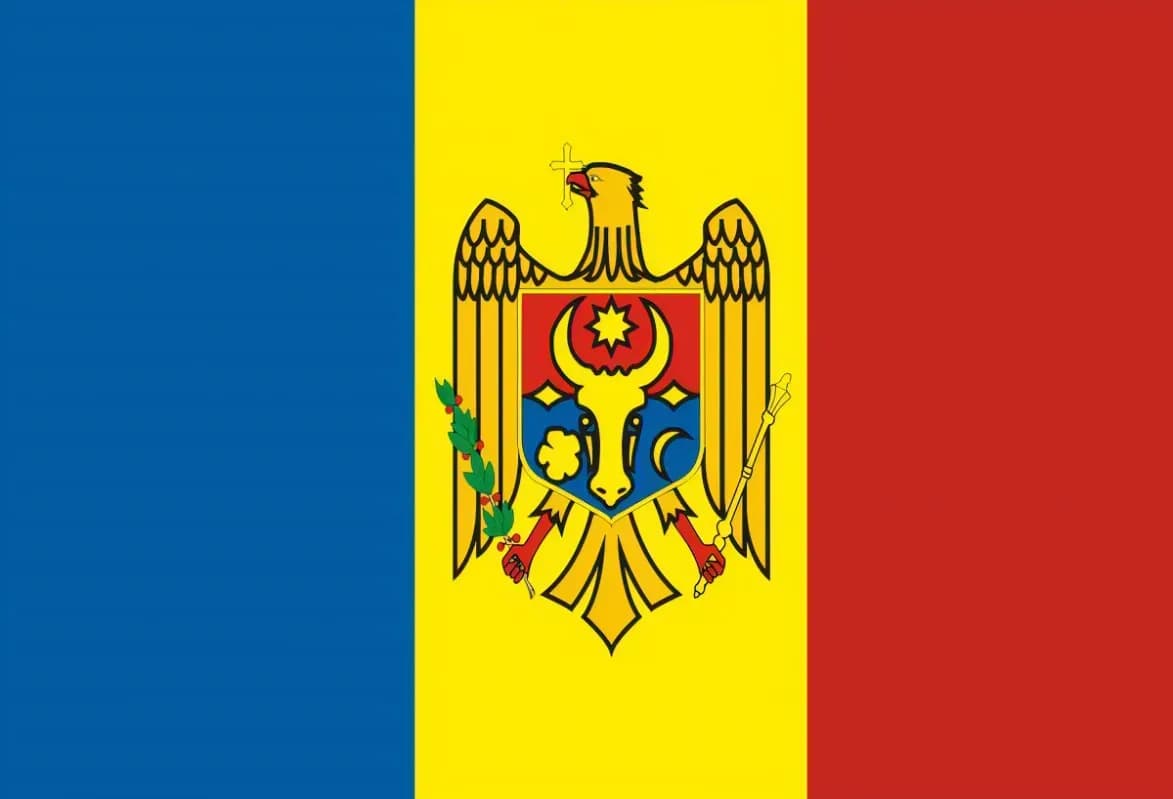 INDEX 14.12.2025, 10:28 Moldova's Sovereignty Index (Burke Index), 2024-2025  Share on media IntroductionThis report presents a comprehensive analysis of Moldova's sovereignty using the methodology of the Burke Institute. Sovereignty is assessed in 7 areas: political, economic, technological, informational, cultural, cognitive and military. Each aspect is assessed on the basis of official data from international and national sources (UN, World Bank, UNESCO, IMF, ITU, FAO, SIPRI, PISA, etc.) without using politicized indexes. The maximum score in each direction is 100; the sum (up to 700) is the accumulated Sovereignty Index (Burke Index). To adapt and adjust statistical parameters, an international expert survey was conducted for each of the seven components using a single questionnaire of 10 questions with a 10-point scale and one open-ended question. In total, at least 100 experts from 50+ countries were interviewed for each indicator, taking into account geographical representation and specialization. When calculating and analyzing the data, equalizing coefficients were used, bringing all data to a scale of 0-10 points. The final index value is the arithmetic mean between statistical data and expert estimates. Below is an analysis in each area, a final summary table and the main conclusions about the specifics of Moldova's sovereignty. Political sovereignty — 47.2There are no foreign military bases of official states on the territory of Moldova, except for the presence of Russian military (an Operational Group of Russian troops) and ammunition depots in the unrecognized Pridnestrovian Moldavian Republic (PMR). This is the main factor limiting the sovereignty of the country. The Constitution of Moldova establishes the priority of international treaties and agreements, including European legal norms and international conventions — they take precedence over national legislation (but not over the Constitution). The political situation is unstable due to the acute confrontation between pro-European and pro-Russian forces. Key risks: Russian influence, regional conflicts (PMR, Gagauzia), corruption, elite imbalance. Democratic elections are taking place in the country, but the influence of oligarchs and protest movements remains. Government effectiveness according to WGI data is 0.16, the 45th percentile (according to Fitch, 2025). This is an average indicator, below the level of the EU countries and neighboring Romania, reflecting the existence of institutional weaknesses. EGDI (UN E-Government Development Index) of Moldova — 0.674 (2022-2024), 67th place in the world; the level of service development is average, Internet penetration is growing, but the number of online public services is inferior to the EU countries. Confidence in the national leader (President Sandu) is 19-28% according to polls from 2023-2025, below the regional average. There is a significant split between the pro-European and pro-Russian electorates. The country delegates certain elements of sovereignty through cooperation with the EU (candidate for membership), NATO (partnership agreement, without membership), the United Nations; officially retains the status of a neutral state. Actual integration is limited by the lack of NATO umbrella guarantees. Moldova is a member of the European Court of Human Rights (ECHR), and the special competence to recognize international decisions is enshrined in national legislation. The country is actively integrated into the system of international courts and arbitrations. A unitary state with elements of decentralization (autonomy of Gagauzia, the actual autonomy of the PMR). Real power is concentrated in the center, but governance in certain regions is limited (there is no control over the PMR, partly over Gagauzia). Formally, there is parliamentary and civilian control over the security services (SIS, Interior Ministry), but the level of transparency is insufficient. The reporting system and control are being strengthened, but the risks of politicization, the influence of oligarchs and external actors remain. Data completeness assessment: the main indicators are available from international sources, the coverage is 88%. Economic sovereignty—39.7GDP per capita at purchasing power parity (PPP) is $17,000–18,700 international dollars (World Bank and Trading Economics estimate for 2025). This is significantly lower than the European average. Gold and foreign exchange reserves are $5.1—5.8 billion USD as of July 2025. Reserves amount to about 6 months of imports, low by European standards. Moldova's national debt is 37-39% of GDP (2024-2025). This is a moderate level, below the average for countries with a comparable rating. The country is partially dependent on food imports, the level of self—sufficiency is 65-70%; risks are droughts, supply instability. Government subsidies to farmers are being introduced, and the problem of poverty remains relevant for 20-22% of the population. Moldova is highly dependent on imports: gas and electricity are supplied from Romania, Russia and Ukraine; its own generation (HPP, CHP) covers only 20-25% of the demand. The risks are related to geopolitical instability. There are small reserves of oil, gas, brown coal, building materials (gravel, sand), suitable for regional use. Industrial-scale mining is limited. Moldova has 7 billion cubic meters of surface and underground freshwater reserves, including the Dniester and Prut basins; water quality is unsatisfactory in some places. Problems include contamination of sources, supply disruptions in remote regions. All payments within the country go through the National Bank of Moldova (BNM), the payment system is interbank processing. The local infrastructure covers Moldova, and currency transactions are carried out using SWIFT and euros through intermediaries. Payments in Moldovan lei (MDL) prevail within the country, salaries and most domestic payments are made only in the national currency. Corporate exports are in euros and dollars, but the local market is fully controlled by MDL. The National Bank of Moldova (BNM) issues MDL and determines the credit policy. Full control over the monetary issue, rates, reserve requirements. Data completeness assessment: the main macroeconomic indicators are available from official sources (World Bank, IMF), coverage is 96% Technological sovereignty — 36.4Spending on R&D is 0.22% of GDP (2023, World Bank); this is one of the lowest shares in Europe and the region. ICT and high-tech exports have grown (ICT exports amounted to USD 580 million, 7% of GDP), but import substitution is weak; significant amounts of software, hardware, chips, and network equipment are still imported, especially from the EU and China. Higher education enrollment (gross coefficient) is 64.4% (2022), with more than 81,000 students. Preference is given to engineering, IT and agro-areas. As of 2024-2025, 76-78% of the Moldovan population has access to the Internet. The proportion is very high in cities, low in rural areas. National platforms: MConnect, MPay, MNotify — integrated government solutions for payments, public services, notifications, and identification; their reach is gradually growing. Import dependence in the high-tech sector is high; software, microelectronics, communication equipment, and biotechnologies are purchased from abroad (EU, China, Israel). Basic public services — taxes, social benefits, medical registration, registries — are available online on MPay and MConnect platforms; the level of digitalization is on average inferior to the EU countries, but is actively growing. Biotechnologies are being developed through international cooperation (for example, an agricultural alliance with Israel), but critical technologies and equipment are imported, and there is no autonomy. Universities and technology parks are opening robotics laboratories, but there is no industrial production, and autonomy is low — the main components are purchased abroad. Moldova fully imports chips and microelectronics, there is no significant production, although personnel training and the development of the IT industry are underway. Data completeness assessment: key indicators are obtained from WIPO, ITU, UNESCO, which ensures 95% coverage. Information sovereignty — 44.9The Cybersecurity Agency (ASC) has been established, EU-NIS2 is being actively implemented; the national CERT-MD has been created, participates in the ITU Global Cybersecurity Index ranking (place — 67). Annual cyberforums and trainings for government agencies and businesses are conducted. RIPE NCC Days Chișinău (2025) is a key event for traffic exchange; IXP in Chisinau is the main hub for the whole country, supporting Internet service providers and major operators. Gigabit Internet coverage is ~90% of the population, 5G is developing, 3.86 million mobile connections (128% of the population), 98% 4G coverage. The official language is Romanian; most of the TV channels, radio stations, and online publications are in Romanian, while regional ones are Russian, Gagauz, and Bulgarian. "Romanian Language Day" is the main cultural holiday. Moldova is integrated with Google/Meta/Microsoft products, but public services are focusing on their own solutions (MConnect, MPay), and national platforms for identification and payments are actively developing. The law on cybersecurity has strengthened the requirements for data and infrastructure localization. Its own media content is 50-55% on TV and radio, the rest is foreign films, programs, and news. The share of local news portals and TV channels is significant, but English-language and Russian-language portals occupy a niche in large cities. They have their own IT companies: Simpals, Papergames, Babel SaaS and FinTech startups, and the MPay platform. The main national developments are corporate solutions, banking and payment software, as well as registry programs for government agencies. >70% of the population regularly uses at least one digital service: ID verification, payments, public services, medicine; integration of all services with mobile identification is expanding. The GOVCLOUD INFRASTRUCTURE is being created to store government data and registries; they comply with European standards, are hosted on local data centers, and data is delimited by access levels. Mobile operators — Moldtelecom, Orange, Moldcell — are all local companies, the infrastructure is national, covering almost 100% of the territory, frequencies are fully controlled by the state. Moldova applies the Law on Personal Data Protection (No. 133/2011), harmonized with the EU GDPR; there is a national regulator, registration of databases and notification of hacking are mandatory. Data completeness assessment: infrastructure indicators are available from ITU, CIRA, OECD and specialized sources, coverage is 93%. Cultural sovereignty — 65.2Officially, there is 1 UNESCO site: the Struve Geographic Arc point (transnational Arch, together with 9 countries). At the national level, there are 3 sites on the candidate list: Orheiul Vek (Old Orhei), Krikova (winery), and monastery complexes. Moldova is known for its developed musical and choreographic art, poetry (Eminescu), traditions of winemaking, wood carving, carpet weaving; a note in the world ballet and folk dance, circus art, ancient architecture of Moldovan monasteries. The culture of "Ia" — national costume is designed, international tours are regularly held. The National Prize in the field of Culture, Science and Art (100,000 lei, medal and diploma) is awarded annually. There are also competitions for architects, writers, musicians, trade union awards, museum and regional prizes. Moldova is an ethnocultural stable country: traditions of carpet making, weaving, holidays (Martsishor, Easter, Wine Day), Ia national clothes, folklore ensembles, Moldovan language and music have been preserved. Cultural and social conservatism is strong in society. The state supports Gagauz, Bulgarian, Russian, and Ukrainian projects, finances their schools, media projects, museums, holidays, and festivals, and allocates grants to preserve their identity. Over 15,500 registered cultural sites, including museums, theaters, monuments, monasteries, architectural complexes; the museum network includes 128 museums. Moldova implements joint projects with Romania, the EU, and Russia (festivals, tours, "Days of Moldovan Culture"), participates in European cultural forums (Europa Nostra, EUNIC Global), and wins international art competitions. Wine-making (Cricova, Mileștii Mici), carpet-making, cuisine, national costume "Ia" are recognized as the country's brands; legislative protection of the geographical brand of wine, support for artisanal production and export strategies. Moldovan cuisine combines Balkan, Slavic, Romanian, Turkish motifs: hominy, placinda, gazpacho, verduta, homemade wine; winemaking, cheese making, vegetable dishes and pastries are developed. 53-59% of the population attend/participate in cultural events annually: concerts, festivals, art exhibitions, educational programs, clubs and communities. The Government is implementing a strategy to expand access to culture. Assessment of data completeness: basic indicators are available in UNESCO and national statistics, coverage is 92%. Cognitive sovereignty — 52.9 Moldova's HDI is 0.785 (2023), ranked 86 out of 193 countries, category "high level". Government spending on education is 6.2–6.3% of GDP (2023), significantly higher than the regional average. Literacy of the population is 99.6% (2021, UNESCO), a historically stable high level. PISA data: the level in mathematics and natural sciences is below the OECD average (in the range of 415-435 points 2018-2022, there are no new official data for 2025), reading literacy is similar to the average in the CIS. The share of STEM graduates is about 36% (engineering, IT, agro, and biomedical specialties), with priority support from government programs. The share of foreign educational programs is 12-15% (English, French, German, Russian-language courses, international exchanges). General education schools are implementing programs in Gagauz, Bulgarian, Ukrainian, and Russian languages, and media channels and projects of small ethnic groups are supported. There are 23 state fundamental centers in the country for physics, medicine, agricultural sciences, chemistry, biotechnology, as well as 7 university research institutes. About 78% of online courses and distance learning programs are provided by national universities and platforms: for example, eLearning Moldova, EduMed, university LMS. 1.6–1.9 billion lei is allocated annually for state support of talents, Olympiads, scholarships, and study abroad, including special grants for small nations and vocational schools. Data completeness assessment: education indicators are available in the UNDP, UNESCO, OECD, coverage is 97%. Military sovereignty — 33.9Defense spending is 0.55% of GDP (2023-2025), which is extremely low by world standards; the budget is $110 million in 2024. The number of active forces is ~6,500–7,000 professional military personnel + 2,000 conscripts (as of 2025). The weapons are mainly Soviet-style: armored personnel carriers, small arms, outdated SAM systems (C-125 Neva-M1/SA-3 Goa). In 2025, deliveries of new air defense systems and military-technical assistance from the EU began (Western air defense systems, communications modernization, and training are expected). There is practically no own production of weapons, the main supplies are imports (Europe, Ukraine, USA), some are being upgraded at local enterprises, but there are no new production lines. The borders are officially controlled by the border guard service, but there is no real control over Transnistria (since 1992), there is a significant Russian military presence and armed formations in the region. The military reserve consists of 26,000 people on paper; real training is conducted irregularly, with annual five-day training camps for reservists (2025 - three cycles of exercises). The mobilization system is working, but the reserves are poorly prepared. Officially, it is a neutral country; decisions are made autonomously, but politically and technically it relies on the help of the EU and NATO (multilateral exercises, partner deployment of equipment, personnel, communications). There is practically no military industry: local maintenance of equipment, repairs, small production of sapper / engineering equipment at individual factories. Moldova does not have nuclear weapons. Warheads — 0. The country is completely non-nuclear, follows the international non-proliferation regime. Moldova does not have national military satellites, a space program, or space surveillance facilities; intelligence services operate only on the ground. In 2023-2025, integration with the European and American military intelligence community is underway. All parameters are reflected in the annual reports of SIPRI, UNODA, the Ministry of Defense, the official portals of state—owned companies (Embraer, IMBEL) and the UN/NGO industry databases - 87% coverage Final Summary Table
The main conclusionsStrengths. High level of basic literacy and education: Literacy >99%, education spending >6% of GDP, availability of developed STEM fields and talent support. Support for national culture and traditions: Ethno-cultural identity, rich cultural life, preservation and promotion of cultural brands, 15,500+ cultural heritage sites, support for small nations. Development of digital infrastructure and services: Internet penetration ~78%, integrated digital public services (MConnect, MPay), national cloud platforms, 70% coverage of digital services. Stable macroeconomics: Public debt ~38% of GDP, moderate gold and foreign exchange reserves ($5.8 billion), predictable budget and credit policy of the National Bank of Moldova. Political and legal reforms: European integration, legislative reforms, strengthening civil control of the EU-affiliated civil society, strengthening the independence of the courts. Agricultural potential: more than 45% of industrial activity is provided by the agricultural sector, 20% are employed in agriculture. The positive demographic dynamics of cities, the high role of the diaspora: Active migration, the influx of investments and knowledge from the EU through the diaspora. Weaknesses. Poor governance, corruption, weak political institutions: Government Effectiveness WGI — 0.16, the parliamentary and judicial systems suffer from institutional weaknesses and the influence of oligarchs. Internal political instability, split of the elites: Opposition to the EU/Russia, the contradictions between the PAS and the opposition, the protests of farmers, the weakness of the opposition parties. Weak technological development and import dependence: Spending on R&D — 0.22% of GDP, high dependence on imports of high-tech (software, chips), lack of autonomy in microelectronics and biotechnology. Energy and defense vulnerability: Almost complete dependence on gas/electricity imports, weak weapons (0.55% of GDP), no strong defense reserve fund, lack of a full-fledged military industry, lack of control over the PMR region. Economic stagnation: GDP growth in 2024 is only 0.1%, a record current account deficit of 26% of GDP, the external factor of war and logistical isolation exacerbate the situation. The absence of a nuclear and space sector, limited intelligence autonomy: Complete non-nuclear capability, no national military space, intelligence integration with the EU/West, but the absence of modern systems of their own design. Border risks, vulnerability to external interference: There is no control over the PMR, Russia's influence, and the security potential is limited by small resources and weak defenses. Overall assessment. The cumulative sovereignty index of Moldova is 320.2 out of 700 possible points (average — 45.7%), which places the country in the top 150 in the world top. Moldova is a country with strengths in education, cultural identity, agricultural potential, macroeconomic stability, digitalization and European integration. Nevertheless, sovereignty is limited by political/institutional instability, weak technological and defense capabilities, energy vulnerability, dependence on the import of high-tech goods, and problems controlling its own borders. The main challenges are to strengthen innovation, diversify the energy sector, strengthen defense, bring the economy out of stagnation, and modernize public administration. Moldova's sovereignty profile is characterized by pronounced external integration (EU/Romania), a strong cultural foundation and a basic financial and administrative structure, but suffers from dependence in the technological, strategic, energy and institutional spheres. Autonomy is limited both economically and politically, and structural challenges are compounded by demographic decline, economic stagnation, and weak control over the periphery. The key to sustainable sovereignty is investment in innovation, defense, and real diversification of governance and the economy | ||||||||||||||||||