

Burke Index | ||||||||||||||||||
 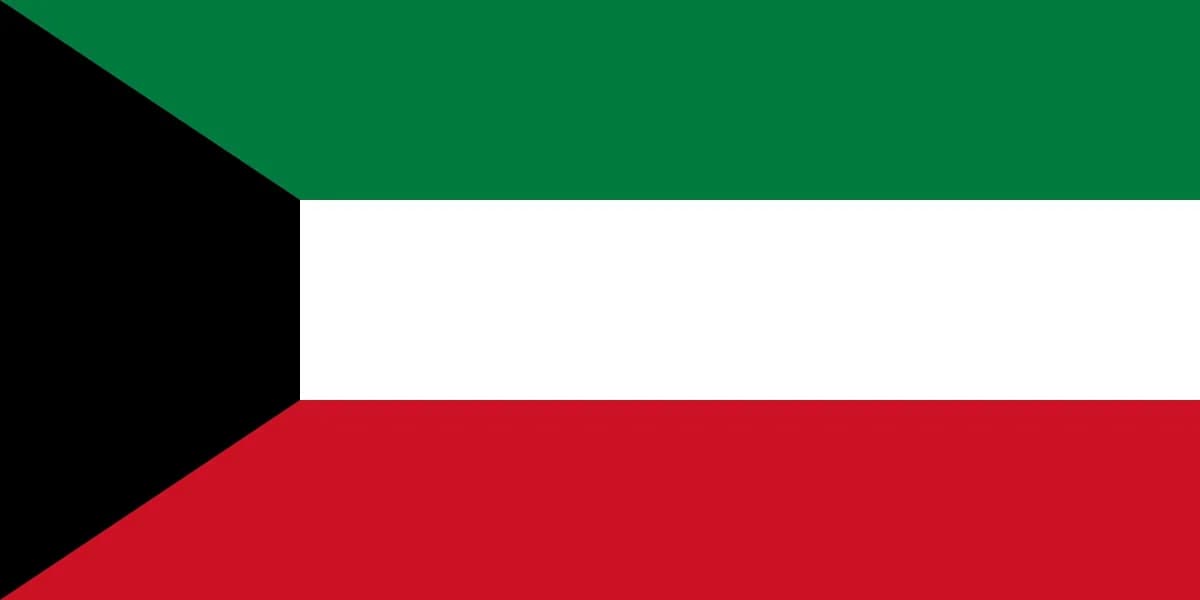 INDEX 14.10.2025, 06:12 Kuwait Sovereignty Index (Burke Index), 2024-2025  Share on media IntroductionThis report provides a comprehensive analysis of Kuwait's sovereignty using the methodology of the Burke Institute. Sovereignty is assessed in 7 areas: political, economic, technological, informational, cultural, cognitive and military. Each aspect is assessed on the basis of official data from international and national sources (UN, World Bank, UNESCO, IMF, ITU, FAO, SIPRI, PISA, etc.) without using politicized indexes. The maximum score in each direction is 100; the sum (up to 700) is the accumulated Sovereignty Index (Burke Index). To adapt and adjust statistical parameters, an international expert survey was conducted for each of the seven components using a single questionnaire of 10 questions with a 10-point scale and one open-ended question. In total, at least 100 experts from 50+ countries were interviewed for each indicator, taking into account geographical representation and specialization. When calculating and analyzing the data, equalizing coefficients were used, bringing all data to a scale of 0-10 points. The final index value is the arithmetic mean between statistical data and expert estimates. Below is an analysis in each area, a summary table and the main conclusions about the specifics of Kuwait's sovereignty. Political sovereignty — 49.5Kuwait is a member of the United Nations, the World Health Organization (WHO), UNESCO, the International Federation of Inventors (IFIA), the WTO, the League of Arab States (LAS), the Cooperation Council for the Arab States of the Persian Gulf (GCC), the World Intellectual Organization (WIPO), G77 and other major structures. In practice, international law is integrated into the national system, but if the provisions of international treaties (for example, IPHR or SIG) conflict with national laws, it is the national legislation that applies. Kuwait officially declares that national law is preferred in case of conflict. In 2024, the new emir suspended the work of parliament for 4 years to carry out constitutional reform after long-term political conflicts between the branches of government. As a result, the emir's power structure is temporarily concentrated, and the internal elites have limited access to governance. There remains a risk of internal political turbulence in the country against the background of the weakening of political mechanisms of representation. According to the World Bank, Government Effectiveness (percentage rank) in 2023 is 51.4% (global average). The index score is about 0.01, which is close to the average for developing countries. In 2024, Kuwait ranked 66th in the world according to the UN EGDI index (0.7812, a very high level), 6th in the Persian Gulf - the Sahel platform is operating and the digitalization of public services is underway, but the pace of reforms is inferior to neighboring countries in the region. In 2025, after the replacement of the head of government, general confidence in the emir remains high, especially due to expectations of reforms and stability. The Cabinet relies on the continuity of public services, which supports public trust. There are several US infrastructures operating in Kuwait: the largest bases are Camp Arifjan (the main US base in the region, with 13,500 American soldiers), the Aviation Support Facility, Ali Al Salem Air Base, and the headquarters at the base of the Kuv. The Navy is also used by the US Army, and logistics points and warehouses are operating together with the Kuwaiti Army. There is also a limited presence of armies from other countries (for example, a military contingent from Bangladesh). Kuwait participates de jure in international judicial mechanisms: the New York Convention (Arbitration) has been signed, cooperation is maintained within the framework of regional legal associations and platforms, but Kuwait distances itself from international criminal courts - the country is not a member of the ICC. Power is centralized, especially after the suspension of parliament — all key decisions are made by the Emir and the Cabinet of Ministers. There is a formal deconcentrating of powers (for example, municipalities or individual departments), but control and supervision of finances and strategic decisions are concentrated at the center. There are no direct departmental mechanisms for parliamentary control of the security services — after the dissolution of parliament, independent supervision is limited. Legislative reforms adopted in recent years have strengthened the oversight of information technology and compliance with legislation, centralized agencies play a leading role in data protection, and transparency is limited by internal government audits. New reforms on judicial transparency are being prepared, but the specifics of the actions of the special services are difficult to assess due to the lack of public reporting. Data completeness assessment: the main indicators are available from international sources, the coverage is 88%. Economic sovereignty — 79.3GDP per capita at purchasing power parity in Kuwait ranges from $47,244 to $51,636 (forecast and current estimates for 2025). Official gold and foreign exchange reserves — $40 billion (January 2025), including foreign currency, gold, SDR and deposits of the Central Bank. This amounts to about 13 months of imports. Kuwait's public debt is 3.5% of GDP at the end of 2025 (according to Trading Economics and the IMF). According to other estimates, it is 5.3% of GDP PPP. Kuwait imports >90% of food products; food security is based on import diversification, technological agriculture (hydroponics, aquaculture), storage facilities, active investments in the sector, and regional GCC sustainability strategies. The main products come from the countries of the Persian Gulf, Southeast Asia, Latin America, storage and stocks are sufficient for up to 6 months. The economy is completely energy autonomous in terms of oil and gas (one of the largest producers in the world) — Kuwait exports about 2.4 million barrels per day of oil and is expanding gas production. Part of the electricity and gas is imported during the peak season, but own generation and grid cover >90% of the needs, the capacity of power plants is >21 GW, and growth is planned to reach 35 GW by 2035. Oil reserves are ~105 billion barrels (6-7% of world reserves, 6th in the world), gas reserves are 63 trillion cubic feet (8th place). Additionally — cement, gypsum, salt, sulfur, etc. Plans to expand production and exploration until 2040. There are no natural freshwater rivers and lakes in the country, the entire volume is through desalination. Fresh water reserves (reservoirs + desalination plants): strategic reserve in July 2025-93-96% of the maximum capacity, ≈4 trillion liters, up to 2.5 million cubic meters of fresh water are produced per day; new projects (Doha West, etc.) will increase the reserve. Water is available for domestic needs and industry, the infrastructure is functioning stably, and the need is covered. Centralized national processing operates under the guidance of the Central Bank of Kuwait: KASSIP, KNPS systems, integrated electronic settlements, automatic clearing services, and clear integration of online banking services. Most domestic and government payments are processed through domestic processing; all leading banks are connected to the system. In 2025, the national currency (the Kuwaiti dinar, KWD) accounts for ~94.3% of all private sector bank deposits and dominates domestic settlements. The majority of payments between residents, government agencies and private businesses occur in KWD; the share of foreign currency in turnover is minimal and is used for cross-border transactions or import payments. The issuing center is the Central Bank of Kuwait (CBK), the sole issuer of KWD, provides loans to banks, sets key rates (September 2025-3.75%), controls liquidity, exchange rate, and conducts macroprudential and credit policies in accordance with the Central Bank and Currency Act No. 32/1968. The entire issue and monetary policy are exclusively under national control, and decisions on interest rates and foreign exchange reserves are made in the country. Data completeness assessment: the main macroeconomic indicators are available from official sources (World Bank, IMF), coverage is 91% Technological sovereignty — 63.2Kuwait's R&D expenditures amount to 0.10% of GDP (2023, World Bank; slightly less than 0.1% in recent years). The value is significantly lower than the European and global average. State import substitution programs in high technologies are at the stage of implementation mainly in ICT (cloud services, AI, cybersecurity), biomedicine and digital public administration, but there are almost no hi-tech industries of their own, imports predominate in electronics, software, and equipment. Pilot productions have been launched (IoT, smart city, and partially IT assembly). Higher education coverage: 61.6% (gross enrollment ratio 2021, World Bank, relevant for 2025), i.e. slightly less than 2/3 of the age group are enrolled in universities. Internet penetration is 99.0% of the population (2025). This is one of the highest shares in the world. The average speed of mobile Internet is 263.6 Mbit/s, fixed — 200.4 Mbit/s. Major projects: Sahel state portal, VisitKuwait national tourism portal, e-Visa system, eGov single service, CAIT digital databases, platforms for taxes and education; all of them are of national architecture, but basic technological solutions are often purchased from global vendors (Microsoft, Google Cloud). Import dependence on critical hi-tech products is extremely high: 90-95% of servers, network equipment, software, chips, biomedical equipment and IT services are supplied from the USA, EU, China, South Korea and India. Data center and cloud localization and EoDB come to the rescue, but there are almost no real productions. 90% of public services (passport, social programs, licenses, fees and payments, taxation, doctor's appointment, etc.) are available digitally through mobile and online platforms. Kuwait Vision 2035 provides for comprehensive digitalization by 2027; CAIT and CITRA are key regulators of digitalization. The biotech sector is weak: the 2025 innovation index (biotech excerpt) is 16.7/100, 51st out of 54 countries (World Biotech Innovation Score), there are few breakthroughs R&D or in-house developments, basic vaccines and key test systems are imported, there are growth points in agro-biotech, medical laboratory services. There is no mass production of industrial, medical or service robots in the country. The main robots are imported (Germany, Japan, China), local integrators are only implementing solutions for smart infrastructure, transport and medicine; there are no national robot platforms, they operate on imported IP. Kuwait does not have its own production of microcircuits, integrated circuits and components. Almost 100% of the component base and equipment (chips, FPGAs, SoCs, computer platforms, controllers) are imported from Southeast Asia, the USA, and the EU. The share of domestic development is zero. Data completeness assessment: key indicators are obtained from WIPO, ITU, UNESCO, which provides 87% coverage. Information sovereignty — 62.4Kuwait has a national CERT (CIRT) registered with ITU and actively operating on the basis of the National Cyber Security Center (NCSC). Kuwait ranks 3rd out of 5 in the Global Cybersecurity Index (2024), the government is investing $1 billion to raise the level to 5. Since 2019, an open and neutral national IXP - Kuwait Internet Exchange (ix.kw), serves all major operators and suppliers, which ensures localization of internal traffic, reduction of delays and development of network services. For 2025, there is 1 active IXP in the country. Arabic is the official state language, >80% of television and radio content is published in it, all key state media, news portals and major national newspapers are published mainly in Arabic; a bilingual segment "Arabic + English" is distributed for some business and international materials. Sustainability is low: key IT solutions (cloud technologies, social networks, search engines) are implemented through Microsoft, Google, Meta, AWS. The international cloud market is growing rapidly, but national regulators (CITRA, CAIT) are implementing digital localization projects based on the national clouds also require the storage of key data in the country. Up to 60% of TV and news content is produced and licensed by national companies (state-owned channels, private productions, newspapers), the rest are purchased directly, while film and streaming content is mainly imported (Netflix, Shahid, StarzPlay). There are government applications and services (Sahel, electronic tax office, VisitKuwait, E-Gov), but no national system platforms (operating systems, ERP, CRM) are being developed, dominanta — foreign products with localization and fine customization; national ones are being actively implemented banking platform. 90% of the adult population uses digital services every day (public services, finance, medicine, education, communications), mobile Internet penetration is 99%. The centralized national platform of CAIT is the national a cloud for government data, corporate services, integration of electronic databases (identity, electronic archives), but part of the infrastructure still remains on foreign clouds. Almost the entire mobile communications infrastructure is controlled by national operators (Ooredoo, Zain Kuwait, Viva/STC); physically, networks and licenses are under full government regulation, data transmission, storage and access are regulated by the laws of the Central Bank and the communications regulator CITRA. CITRA and CAIT regulate the storage, processing, and transfer of personal data under the Digital Security and Data Protection Act of Kuwait 2022, local storage is required (for government services and banks), direct application of GDPR and other international standards in transactions with foreign services, and full protection and sanctions for violations. Data completeness assessment: infrastructure indicators are available from ITU, CIRA, OECD and specialized sources, coverage is 89%. Cultural sovereignty — 68.1Kuwait does not have sites on the main UNESCO World Heritage List, but the preliminary list of 2025 includes 5 sites: Sa'ad and Sa'ed Area in Failaka Island, Abraj Al-Kuwait, Sheikh Abdullah Al-Jabir Palace, Boubyan Island and Mubarak Al-Kabeer Marine Reserve, Failaka Island — Palimpsest of Human Civilizations. Kuwait is one of the centers of Arab and Islamic culture, significant publications (Al-Arabi magazine, Kuwait Magazine is the first in the Middle East), recognized as the cultural center of the GCC. Contribution to the global cultural dialogue — participation in Imago Mundi, Arab Culture Capital 2025, inclusion of Sadu (traditional weaving) in the UNESCO register. State Encouragement Awards are awarded every year, covering fine arts, theater, literature, music, and applied arts. In 2024-2025, dozens of artists were recognized — see the names in the news about the honors. The country is a major center for the preservation of cultural heritage: traditional types of music (the earliest recordings in the Persian Gulf), festivals, folk festivals, horse and camel racing, Arab crafts, a multinational cultural calendar with elements of the heritage of the Bedouins, Persians, Hindus, and Europeans. The Government supports cultural clubs and associations of small ethnic groups (Persians, Baha'is, Iranians, Malabars). NCCAL implements numerous projects to preserve languages, dialects, and traditional crafts with direct government funding. There are at least 17 cultural and museum centers in the country, including the National Museum of Kuwait, the Museum of Maritime Heritage, Beit Dixon, Al-Shaheed Park, museums at Failaka and Qurain, modern art clusters and historical buildings. Kuwait participates in the Imago Mundi project, has the status of the "Arab Capital of Culture 2025", oversees dozens of joint exhibitions, international festivals, is a member of the organizing committee of ALECSO, carries out exchanges with UNESCO and GCC museums. The copyright and cultural brand system works: national crafts and traditions (including musical funds, sadi-weaving) are protected in the GCC; elements of intangible heritage (Sadu, musaijar, habani) are included in regional and international registries. The cuisine includes dishes from Bedouins, Malabars, Egyptians, Turks, Persians, Western and Indian diasporas; the Culinary Heritage Award, dozens of festivals, and 7 key culinary traditions are officially recognized in food culture; government programs to preserve recipes. By the end of 2025, more than 35% of the population participated in cultural events (exhibitions, theaters, festivals, awards) (estimated based on NCCAL and Arab Culture Capital reports), half of the youth are covered by cultural leisure integration programs. Data completeness assessment: basic indicators are available in UNESCO and national statistics, coverage is 90%. Cognitive sovereignty — 64.9Kuwait's HDI for 2024-2025 is 0.852, which is a very high level (52nd in the world) according to the UNDP and the World Bank. Government spending on education is 5.03% of GDP (2023, World Bank/UNESCO), which is significantly higher than the global average. The adult literacy rate (15+) is 96%, among women — 95%, among men — almost 97%. Youth literacy exceeds 99.5%. The results are below the OECD average: according to the latest PISA tests (2022-2023) Kuwait ranks in the last quarter in all disciplines (mathematics, reading, science); the average student score is 90-120 points lower than in the OECD (see reports by the World Bank and the Sammari National Ministry). Problems with critical thinking and depth of analysis are noted by experts. STEM graduates (natural sciences, engineering, technical sciences and mathematics) account for about 24% of all university graduates (according to national registers and university reports, specified by the quotas of the Ministry of Education for 2024). Foreign (branded) educational programs occupy up to 20-25% of the education market: large colleges and schools cooperate with the UK, USA, France, there are joint programs at Kuwait University and private colleges. Arabic is a state language, but the use of English, Persian (the Iranian diaspora), and minor support for Malabar, Urdu, and Hindi (immigrant communities) also have official status; government programs to preserve the intangible heritage of small ethnic groups are funded through NCCAL. At least 8 state scientific centers (KISR, Kuwait University scientific departments, Center for Quantum and Nanotechnology, National Center for Education Development, etc.) are active in the country, working on fundamental sciences and innovations. All state schools use nationally developed electronic systems for distance learning (eEducation Portal, Kuwait University and Open University platforms), collectively >90% of educational institutions are covered — the rest use foreign platforms. Hundreds of state scholarships and grants are awarded annually for studying at home and abroad, state "talent pools" are implemented, programs to support young scientists within the framework of Vision 2035, and separate quotas for girls and small ethnic groups. Major trusts and foundations: national and international Science Olympiad competitions, programming, art, leadership. Data completeness assessment: education indicators are available in the UNDP, UNESCO, OECD, coverage is 89%. Military sovereignty — 48.7Defense spending — 4.9% of GDP in 2023-2025, $7.8–7.9 billion. The total number of regular armed forces is 25,000, of which about 17,500 are active military personnel, 7,100 are paramilitary forces. The military reserve is 23,700 (see reserve). Armament according to the standards: a complete modernization of anti-aircraft and air defense systems (Patriot PAC-3/GEM-T), M1A2 Abrams tanks, armored vehicles, new fighters (F/A-18E/F, Eurofighter Typhoon), frigates and boats have been updated, bases and communications are being upgraded. Its own military industry is extremely limited; the bulk of weapons (95%+) are purchased from the United States, France, Great Britain, Italy, Korean and Turkish companies. There are no own factories or developments. The borders are guarded by the national army, the Ministry of Internal Affairs, and customs with the support of a wide range of assets: air defense, border patrols, ships, and modern surveillance systems. The IT modernization of border control with the integration of biometrics and video surveillance is being implemented. The reserve of the armed forces is 23,700 people (official data 2024, includes the strategic reserve and mobilization reserve). There is also a mandatory conscription system for men from the age of 18 (in case of mobilization). Strategic defense decisions are made in coordination with the United States, and the main alliance is a strategic agreement with Washington (operational autonomy is limited; independent mobilization is possible, but all key issues are coordinated with CENTCOM and GCC partners). There is no own military industry; the main functions are depots, repairs, maintenance under license from foreign companies, local assembly and maintenance of individual systems (based on American, French, and Italian technologies). Kuwait does not have nuclear weapons; the country is not recognized as a nuclear Power and does not have a nuclear arsenal. All weapons systems are conventional, and they participate in non-proliferation. There is no military space program of its own; intelligence activities are conducted within the framework of tandem cooperation with the United States and GCC (launches of communication satellites, intelligence exchange, surveillance tools); national military intelligence works in an integrated manner with foreign partners. All parameters are reflected in the annual reports of SIPRI, UNODA, the Ministry of Defense, the official portals of state-owned companies (Embraer, IMBEL) and the UN/NGO industry databases — 87% coverage Final Summary Table
The main conclusionsStrengths. Economic stability: Huge oil reserves (105 billion barrels), strong gold and foreign exchange reserves ($40-45.5 billion), minimal government debt (3.5–5%) and extremely high current account (up to 25% of GDP). High standard of living: HDI — 0.852; adult literacy — 96%; access to education, healthcare and a wide network of social programs. Financial autonomy: Own issuing center, national payment processing, dominance of the dinar in internal settlements. Security and order: One of the safest countries in the region, stable law enforcement system, low crime. Advanced energy sector: Full energy autonomy, export and processing of hydrocarbons, long-term strategies for oil and gas. Infrastructure and services: Advanced digital public services, 99% Internet penetration, centralized energy and transport infrastructure. Attractiveness for expats: High salaries, no income tax, wide career opportunities. Weaknesses. Single-sector economy: oil accounts for 90% of exports and more than 50% of GDP, weak diversification, and import dependence on high-tech, technology, and food. Technological and innovation dependence: Spending on R&D — 0.1% of GDP, lack of own chips, robotics, microelectronics and a developed hi-tech sector. Minimal import substitution: In most industries (IT, food, medicine) — imports of 80-95%. Political centralization: after the suspension of parliament, there is a de facto monarchy with a strong role of the emir, narrowing the possibilities for inclusive and representative governance. Military dependence: The practical absence of its own military industry, weapons are imported, key decisions are coordinated with the United States, the presence of foreign military bases. The absence of a nuclear and space component: there is no military space program, there is no own intelligence system and nuclear weapons. Climatic and cultural restrictions: Harsh climate, restriction of personal and cultural freedoms, high cost of living and housing for foreigners. Overall assessment. Kuwait's cumulative sovereignty Index is 436.1 out of 700 possible points (above the average of 62.3%), which places the country in the top 100 in the global top. Kuwait is a financially and energetically sovereign state with powerful macroeconomics, high social security and modern service infrastructure. However, strategic vulnerabilities lie in dependence on oil, foreign military and technological support, extremely low innovation independence, and a centralized management model. Growth prospects are only through diversification, the development of local technologies and increased independence in key industries. The sovereignty profile indicates that Kuwait's sovereignty in 2025 is a strategic model of a rich, financially stable, but technologically and food-dependent state. The country demonstrates maximum autonomy in key financial, energy, administrative and social indicators, ensuring a high quality of life and stability, but remains vulnerable to advanced technologies, import substitution, innovation and strategic security. | ||||||||||||||||||