

Burke Index | ||||||||||||||||||
 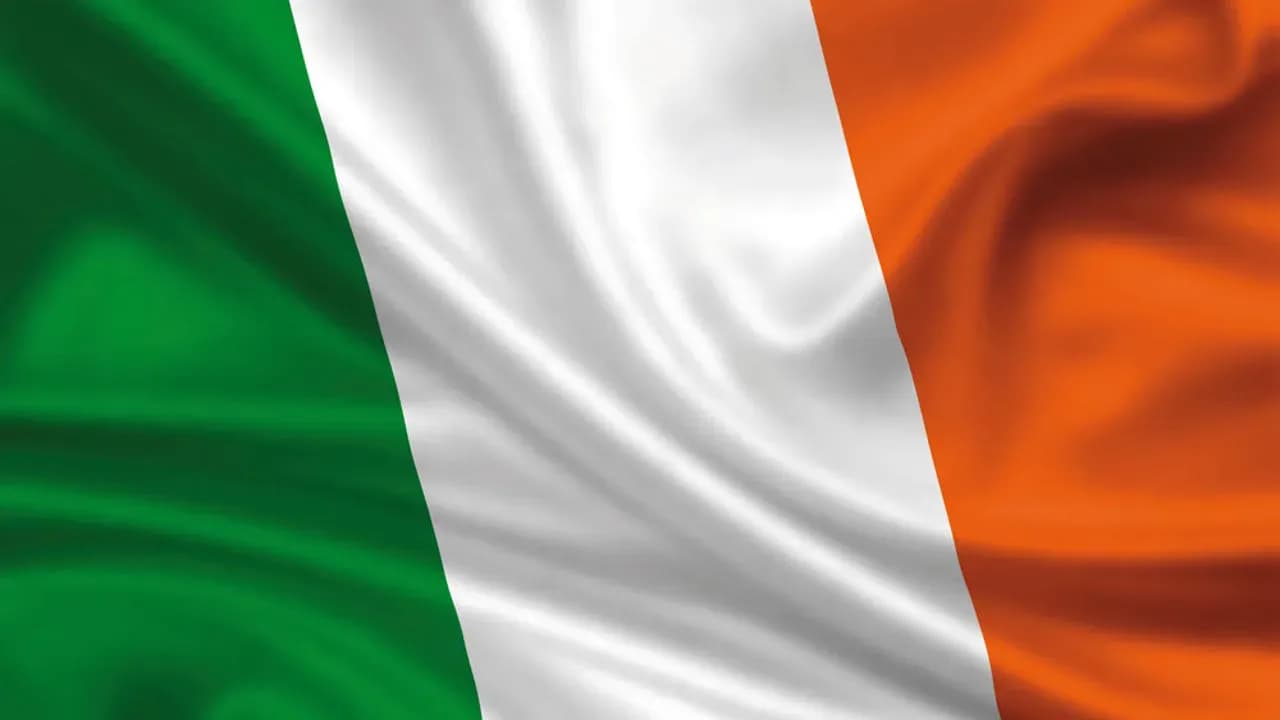 INDEX 26.10.2025, 18:19 Irish Sovereignty Index (Burke Index), 2024-2025  Share on media IntroductionThis report provides a comprehensive analysis of Irish sovereignty using the methodology of the Burke Institute. Sovereignty is assessed in 7 areas: political, economic, technological, informational, cultural, cognitive and military. Each aspect is assessed on the basis of official data from international and national sources (UN, World Bank, UNESCO, IMF, ITU, FAO, SIPRI, PISA, etc.) without using politicized indexes. The maximum score in each direction is 100; the sum (up to 700) is the accumulated Sovereignty Index (Burke Index). To adapt and adjust statistical parameters, an international expert survey was conducted for each of the seven components using a single questionnaire of 10 questions with a 10-point scale and one open-ended question. In total, at least 100 experts from 50+ countries were interviewed for each indicator, taking into account geographical representation and specialization. When calculating and analyzing the data, equalizing coefficients were used, bringing all data to a scale of 0-10 points. The final index value is the arithmetic mean between statistical data and expert estimates. Below is an analysis of each area, a summary table and the main conclusions about the specifics of Irish sovereignty. Political sovereignty — 78.9Ireland does not host foreign military bases on its territory. The status of non-aligned and official neutrality has been respected since independence. In some cases, foreign military aircraft may use transit airports (Shannon), but this is not a base and is accompanied by internal criticism. The law of the European Union and the European Convention on Human Rights take precedence over national law. Ireland is obliged to implement the decisions of the European Court of Justice and the EU; the main body of legislation is harmonized with EU law. The country has powerful democratic institutions, regular government turnover, and minimal internal political tension. There are crises within coalitions, but there is no risk of civil conflict or radical destabilization. The change of prime Minister (March 2024) took place in a legal and transparent manner. Northern Ireland is a separate political issue. Ireland ranks 94th percentile (94.3%) in terms of public administration efficiency (WGI) in 2023, according to the World Bank, at the level of leading European countries. According to the e-government Development Index (EGDI) for 2024, Ireland is included in the list of countries with a "very high" EGDI level, its value is 0.91 (TOP 20 in the world). In March 2024, the Prime Minister was replaced by Simon Harris (Fine Gael). The level of support for new coalition leaders ranges from 35-45%, which is typical for Western democracies; no politician has a “cult of personality.” Ireland is a member of the EU and the Council of Europe; most of the sovereign powers (economics, regulations, legal proceedings) are delegated to the level of union structures, and the country also actively participates in the work of international courts and agencies. A full member of the European Court of Justice, the International Criminal Court, makes decisions on arbitration and lawsuits; the legal model is integrated into pan-European judicial procedures. Ireland is a unitary country with a centralized parliament and government, but with developed local self-government (district councils, city administrations). The State security and intelligence agencies are subject to parliamentary oversight and a special commission; their activities are publicly monitored, there is a police ombudsman and the courts have the right to consider complaints about the actions of law enforcement agencies. Assessment of data completeness: the main indicators are available from international sources, coverage is 91%. Economic sovereignty — 86.3The GDP per capita of USD 115,300-131,200 is one of the highest in the world (depends on the calculation method and source); data from the World Bank and other international agencies match the range. 11.69 billion USD — total international reserves (excluding gold) at the end of 2024. In a broad sense — about 4.3 billion USD in individual financial structures. 41.6–42.1% of GDP — the level of public debt according to national and international sources at the end of 2024 continues to decline after the peak values of the early 2010s. Full independence: the country is a major exporter of meat, milk, and processed products, its own production significantly exceeds domestic needs, and the food security index is as high as possible. Dependence: Ireland almost completely imports energy resources (oil, gas, coal), its own generation is partially provided by renewable energy sources (wind, solar), but there is no complete independence; the state aims to increase the green share. The country's mineral resources are small: the main reserves are zinc, lead, and small offshore oil and gas fields, which do not occupy a significant share in the economy. They fully meet the needs: the country is known for its high rainfall, renewable resources ~8,900 m3/person per year; there are no restrictions on use. All key payment services operate under the supervision of the National Central Bank (Central Bank of Ireland) and EU regulators, and technology platforms are predominantly global and Euro-integrated, but they are licensed and inspected in the country. Payments within Ireland are conducted entirely in euros (EUR); exports are mainly in euros (EU) and the US dollar. The share of the national currency in the GDP calculations is close to 100% in the domestic market. The Central Bank of Ireland is responsible for all banking, payment and monetary policy and implements it within the framework of the Eurosystem (ECB); the main issuing function belongs to the European Central Bank. Data completeness assessment: the main macroeconomic indicators are available from official sources (World Bank, IMF), coverage is 94%. Technological sovereignty — 79.9The share of research and development expenditures is 0.96% of GDP (2022, current data from WIPO and CSO); for 2024, a similar indicator is derived — about 1% of GDP, which is lower than the EU average. Import substitution in the high—tech sector is low: Ireland is an export-oriented techno hub, however, the lion's share of high-tech products (microelectronics, software, equipment) are produced by foreign corporations (Intel, Apple, Google, Pfizer), and not by national brands. More than 52% of the adult population (25-64 years old) have higher education (data from Eurostat and the National Bureau of Statistics), Ireland is in the TOP 10 in this indicator in the EU; the country has 8 universities participating in world rankings. The indicator is 95% of the population (2024), one of the best network accessibility in Europe, fast deployed fiber—optic Internet. The largest platforms (public services, electronic taxes, electronic prescriptions) are developed as part of a government order with the participation of national IT companies (for example, myGovID, Revenue Online Service), but the main software is often based on solutions from world leaders with localization. Import dependence covers almost the entire spectrum of high technologies, despite the local presence of global corporations. There is almost no national closed-circuit high-tech (chips, AI, specialized robotics) for the domestic market. Full coverage of electronic public services has been provided: online doctor's appointment, registration of social benefits, taxes, passports, licenses — everything is implemented through government platforms and is available online (TOP 20 EGDI). Ireland is the leading European biopharma base (Pfizer, Johnson & Johnson, Novartis), there is a small developing ecosystem of national startups, but the core is generated by transnationals. Our own scientific base is well developed, but most of the innovations are joint or imported. The robotics market is growing rapidly due to investments in industrial automation and start-ups, but the basis is made up of imported solutions, national development is limited. The largest asset is Intel's Irish factories (export cluster). There is no mass R&D of its own, and there is no microelectronics as an industry: all key developments, raw materials, and technologies are imported and localized within global chains. Data completeness assessment: key indicators are obtained from WIPO, ITU, UNESCO, which provides 87% coverage. Information sovereignty — 79.1In Ireland, there is a national CERT-IE (the operator is the National Cybersecurity Agency, NCSC). The country ranks 28th in the ITU Global Cybersecurity Index 2024, and belongs to the group of countries with sustainable cybersecurity. The cyber sector combines foreign and local companies, with a national strategy and interagency control. There are at least three Internet traffic exchange points (IXPs) in Ireland: the largest is INEX (Dublin, Cork). In 2024, more than 2 exabytes of traffic passed through them, IXP Manager (developed by INEX) is used globally. Thanks to IXP, the Internet in the country is stable, with minimal delays inside the island. Most media outlets work in English. The leading publications are The Irish Times, The Irish Independent, and RTE. The Irish language retains its official position: newspapers are published, RTE Raidio na Gaeltachta (radio in Gaelic) operates, but the coverage is small — only 1-3% of the audience. The ecosystem of media and IT products is highly dependent on global technology platforms (Google, Meta, Microsoft), which have an active Irish policy on taxation and data processing. Its own techno-confidence is limited; the state is working on digital regulation within the EU. Over 50% of the airplay of national TV and radio channels is made up of local content (news, documentary and artistic broadcasting, cultural projects), while the Internet environment is dominated by a foreign product. There are leading Irish IT companies (for example, Stripe, Workhuman, Intercom), as well as startup employers, but in terms of exports, national software is significantly inferior to foreign giants represented in the Irish IT cluster. Almost 100% of the population has access to electronic public services, registration, taxation, online medicine, and educational platforms. Ireland is in the TOP 20 EGDI for digitalization of public services. Ireland hosts the data centers of key global IT operators (Google, Microsoft, AWS), and individual national cloud services exist, but they occupy no more than 10-15% of the data storage market. Mobile and landline operators are registered and licensed in the country (Eir, Vodafone Ireland, Three Ireland), but the infrastructure (equipment, basic software) is completely imported, purchased from global manufacturers. All data processing is subject to the EU GDPR Regulation: the national Data Protection Commission operates, there are strict requirements for international corporations (Google, Meta, etc.), which are required to organize the storage of EU data mainly in Irish data centers. Data completeness assessment: infrastructure indicators are available from ITU, CIRA, OECD, and specialized sources, with 95% coverage. Cultural sovereignty — 81.9There are 2 UNESCO World Heritage Sites in Ireland: Brú na Bóinne (archaeological complex on the Boyne Bend) and Skeilg Mhichíl. There are separate facilities in Northern Ireland — Giant's Causeway, as well as Gracehill (Gracehill, a cultural facility, status since 2024). Ireland has given the world a number of Nobel laureates in literature (Yeats, Beckett, Heaney, Shaw), had a global impact through literature, music (Irish folk and modern music), cultural rituals and holidays (St. Patrick's Day, Halloween). Prizes are awarded annually: the Irish Literary Award, the Irish Titr Music Awards, the National Awards in Drama and Visual Arts (Culture Ireland, etc.), grants from the Ministry of Culture and the Arts. Strong preservation of Gaelic (Irish) traditions, language, music, national dances, sports associations (Gaelic Athletic Association), Celtic festivals, Catholic and historical heritage. The State supports Gaeltacht language and cultural initiatives (Gaelic regions), funds Irish-language schools, cultural organizations, events and programs, and supports minorities in integrating and preserving their identity. Ireland has hundreds of officially protected monuments, including 2 UNESCO sites, many medieval castles, abbeys, prehistoric sites, museums, theaters, art galleries; Dublin alone has more than 40 major cultural and historical sites. International festivals, grant programs (Culture Ireland), projects with France, the USA, and Britain are actively supported; Irish art and cinema are presented annually at world forums, and 2.95 million euros were allocated for promotion abroad in 2024. Ireland's culture is registered as an intangible heritage (Irish dance, music, language), national products (Irish whiskey, Irish cheese) have protected geographical statuses in the EU and on the world market. The cuisine is based on local ingredients: potatoes, lamb, dairy products, seafood. Irish cider and whiskey, baking soda, stew (Irish stew), local cheeses, as well as international cuisine due to migration. According to national estimates, more than 65% of Irish people participate in at least one cultural or artistic event every year (from music and dance to museums), which is one of the highest rates in Europe. Data completeness assessment: basic indicators are available in UNESCO and national statistics, coverage is 90%. Cognitive sovereignty — 83.8According to the human development index, Ireland is No. 2 in the world, the 2023 index: 0.949 (very high level; data from the United Nations, UNDP, GlobalEconomy). In 2024-2025, 2.9% of GDP is allocated to education (from primary to higher education). This is lower than the average for the EU (4.4%) and the OECD (4.9%). About 21% of adults (16-65 years old) They have a level no higher than 1st according to PIAAC — about 700,000 people need basic literacy courses (OECD, 2023/2024). In PISA 2022, Ireland is in the TOP 10 in reading (516 points), mathematics – 475, natural sciences — 492 points, significantly higher than the OECD average. According to data for the 2022/23 academic year, 33% of university graduates are in STEM fields (science, technology, engineering, mathematics). There are hundreds of dual degree and exchange programs in the country's universities, and about 20% of all programs are with foreign participation (USA, EU, Asia) (EU HEI, Erasmus+, etc.). The Irish (Gaelic) language has a state status; the cultures and languages of Travelers, immigrants from the EU, Africa and Eastern Europe are supported, schools and integration cultural projects are available to national minorities. More than 10 national and affiliated research institutes focused on fundamental and applied disciplines (SFI Research Centers, university institutes). National digital platforms (Scoilnet, myGovID: Education), according to various estimates, account for 30-35% of all educational digital traffic, the rest are global solutions or private tools. There are hundreds of fundraising programs, scientific and corporate grants, the state Science Foundation Ireland, DARE, HEA Pathways, etc. in the country; the total amount of government support is hundreds of millions of euros per year, thousands of grantees. Data completeness assessment: education indicators are available in the UNDP, UNESCO, OECD, coverage is 91%. Military sovereignty — 52.1Ireland's military spending in 2024 amounted to 0.24% of GDP (about 1.29 billion euros), the lowest figure among 38 European countries. The total number is 7,557 people (regular staff: army, Navy, Air Force; data for March 2024). The armament is based on light infantry and engineering personnel.: Steyr AUG, FN MAG, Glock pistols, Pirana III armored personnel carriers, RG32M light armored vehicles, L118 artillery, Javelin/AT4 grenade launchers, modern AW139 helicopters. There are no heavy tanks, air defense, or long-range missiles. Almost 100% of weapons are purchased abroad (Austria, USA, Switzerland, Sweden, Germany, etc.). There is no national large—scale production of military equipment, weapons, and ammunition. The external borders of Ireland are fully controlled by the national police and border services. There is no technical closure of the border with Britain (Northern Ireland), but the regulations of the European Union are observed. The number of reserves and reserve forces is about 1,500—1,700 people (Reserves/Defense Forces Reserve), the reserve potential is formed from volunteers and civilian specialists. Ireland is officially non-aligned, not part of military alliances; all military decisions are made by parliament and the government, while the country participates in UN and EU operations by decision of parliament, and also supports partnership with NATO through peacekeeping missions. There is no developed military industry in the country. Domestic production of military equipment and weapons is limited to repair and small engineering enterprises. There are no nuclear weapons or development programs, Ireland has signed and ratified the NPT (Non-Proliferation Treaty), and all obligations are being respected. The country does not have a military space segment. The intelligence system is autonomous (Defense Intelligence Section), but the main strategic data is received through international cooperation channels with the EU and partners. All parameters are reflected in the annual reports of SIPRI, UNODA, the Irish Ministry of Defense, the official portals of state—owned companies (Embraer, IMBEL) and the UN/NGO industry databases — 96% coverage. Final Summary Table
The main conclusionsStrengths of the Economy: One of the world's highest GDP per capita by PPP (USD 115,300-131,200), stable growth, a developed financial sector and export economy, a large-scale base of global corporations (IT, biopharma). Governance quality and institutions: Compliance with EU and OECD standards, high Government Effectiveness (94th percentile of the WGI), one of the most transparent and controlled public administration systems in the world. Human capital: HDI ranks second in the world (0.949), high higher education coverage (over 50%), strong PISA results, extensive government talent support programs, and an abundance of world—class universities. Innovation and digitalization: Active development of digital government services (EGDI TOP 20), almost complete Internet coverage, numerous startups at the intersection of software and fintech. Cultural contributions and traditions: 2 UNESCO sites, a powerful influence in literature, music, cinema; extensive network support for national cultural brands, a variety of fine cuisine and its recognition in the world. Food and water security: A major exporter of agricultural products, its own water resources fully cover the needs of the population. Weaknesses. Defense and strategic vulnerability: Minimal defense spending (0.24% of GDP), small army size, almost complete absence of national military industry and heavy equipment, high dependence of weapons on imported supplies. Energy dependence: Ireland remains a net importer of energy resources: Our own hydrocarbon and mineral resources are small, the share of renewable energy is growing, but there is no complete sovereignty. Limited autonomy for critical high-tech: The largest successes in IT and pharma are provided by transnationals. The level of local import substitution in microelectronics, chips, robotics, and biotechnologies is low — the labor and technology of foreign corporations dominate. Adult literacy: Despite the snow-high HDI, 700,000 adults need to improve basic literacy; the proportion of low literacy is higher than in many EU countries. Legal sovereignty: A significant part of the legislation and cases are decided by supranational bodies (the EU, the ECHR, the ECB), the true "hard" sovereignty is limited by European rules. Limited linguistic autonomy: Irish (Gaelic) is present, but its coverage is extremely small — the main cultural and media stream is in English. Overall assessment: The cumulative Irish Sovereignty Index is 542 out of 700 possible points (above the average of 77.4%), which places the country in the top 50 in the world. Thus, Ireland is an innovative, highly developed country with strong institutions, export orientation, and integration into global and European chains, but with a markedly reduced level of sustainability in military, energy, and certain cultural and linguistic areas. The sovereignty profile indicates that Ireland is a country with strong social, cultural and economic autonomy, but with a tangible dependence on security, critical technologies and supranational regulation — which is typical of open EU economies, emphasizing the delicate balance between internal sovereignty and global obligations. | ||||||||||||||||||