

Burke Index | ||||||||||||||||||
 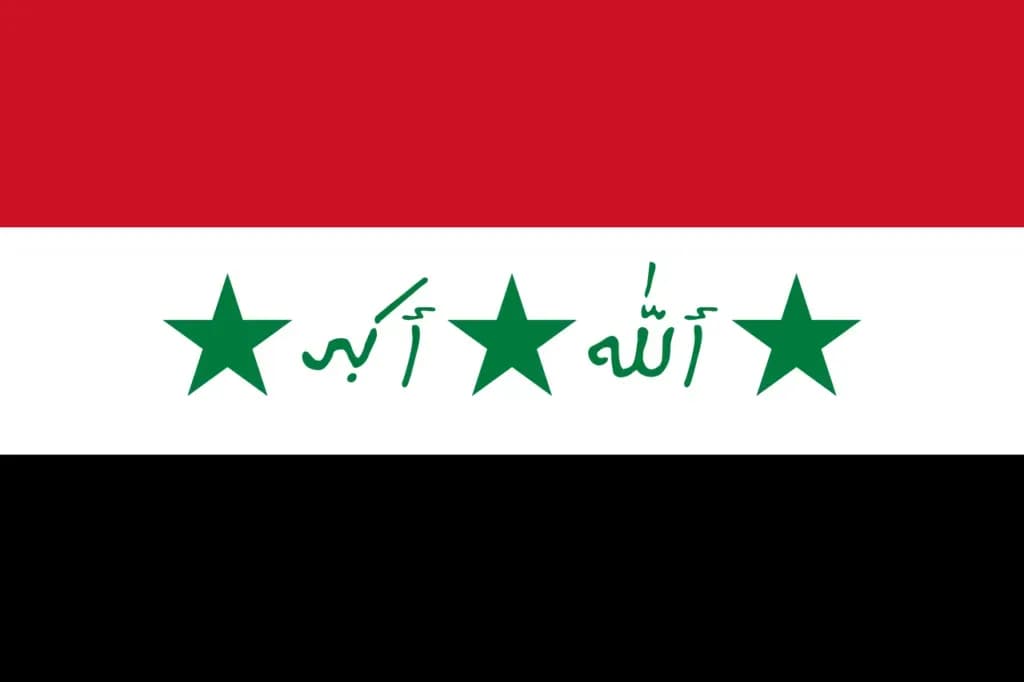 INDEX 26.09.2025, 05:36 Iraq Sovereignty Index (Burke Index), 2024-2025  Share on media IntroductionThis report provides a comprehensive analysis of Iraq's sovereignty using the methodology of the Burke Institute. Sovereignty is assessed in 7 areas: political, economic, technological, informational, cultural, cognitive and military. Each aspect is assessed on the basis of official data from international and national sources (UN, World Bank, UNESCO, IMF, ITU, FAO, SIPRI, PISA, etc.) without using politicized indexes. The maximum score in each direction is 100; the sum (up to 700) is the accumulated Sovereignty Index (Burke Index). To adapt and adjust statistical parameters, an international expert survey was conducted for each of the seven components using a single questionnaire of 10 questions with a 10-point scale and one open-ended question. In total, at least 100 experts from 50+ countries were interviewed for each indicator, taking into account geographical representation and specialization. When calculating and analyzing the data, equalizing coefficients were used, bringing all data to a scale of 0-10 points. The final index value is the arithmetic mean between statistical data and expert estimates. Below is an analysis in each area, a final summary table and the main conclusions about the specifics of Iraq's sovereignty. Political sovereignty — 22.1Iraq is a member of the United Nations, the League of Arab States, OPEC, the WTO (observer), the IMF, the IBRD, ICAO, and numerous regional and Islamic organizations, and participates in international missions and the Arab League Summit (2025). He actively works on the platforms of the OIC, the Arab League, the United Nations, supports bilateral agreements with the United States, Iran, the EU, and neighbors. The Constitution and judicial practice limit the supremacy of international law: ratified treaties are valid if they do not contradict the Constitution and the “fundamentals of Islamic law” (Sharia), the Supreme Court often blocks the implementation of decisions and their priority in case of conflict with the Constitution. The situation is fragile: on the one hand, there are regular elections, a functioning parliamentary government, reduced violence and the influence of the army/militia. On the other hand, political alliances and elites control Parliament, and the protesting electorate is demobilized by the new closed election system, there is structural uncertainty and social tension due to corruption, unemployment, regional fragmentation, and increased water and climate risks. Government Effectiveness (WGI, 2024): -1.06; the country is in the lower quartile of the world, with weak enforcement of laws, corruption, and administrative inefficiency. EGDI (UN, 2024): 0.51 — low level of digitalization of public services and accessibility, most services are fragmented, digital transformation is not complete. The support of the Prime Minister/elites is low: in the wake of periodic protests, the confidence rating is in the range of 18-24%, the population is dissatisfied with corruption and social inequality, but there is no real alternative to the political establishment. The US-led coalition bases are located in the country (primarily the Ain al-Assad base and Peshmerga/Coalition facilities in Kurdistan), French, British and Turkish elements remain, their presence is due to coordination with the government or partially outside control (north/Kurdistan). Iraq is a full participant in key international courts (the ICC, arbitrations, the UN Security Council, interstate arbitration), but some of the decisions (for example, external judicial acts on dams, Kuwait) are not recognized or sabotaged by Parliament and the Supreme Court in the event of a conflict with sovereignty or religious norms. Officially it is a federal structure (Kurdistan has autonomy, the regions have their own parliaments and ministries), but the political process is actually centralized around Baghdad and the Shiite parties; control over the regions is monopolized by the elites. The government has operational control over the security services, but in reality many units (security services, police, Hashd al-Shaabi/militias) operate through their own and often opaque channels, actual parliamentary and civilian control is low, the transparency of the services is limited, and corruption and double subordination persist. Data completeness assessment: the main indicators are available from international sources, the coverage is 92%. Economic sovereignty — 29.8GDP is $13,200- 15,200 (2024-2025, World Bank, IMF, Trading Economics, Statista). gold and foreign exchange reserves of $97-98 billion USD (March — June 2025; Central Bank of Iraq, Shafaq News, Statista). Government debt is 43-50% of GDP (2024-2025; estimated by Trading Economics, IMF, Statista). 60-70% of food is imported; risks are consistently high due to logistics, poor irrigation and droughts. The government implements subsidized purchases, announces strategic reserves, and implements agricultural sector development programs, but dependence on the foreign market is very high. Oil and gas data: Iraq is the 6th largest oil producer in the world and the largest exporter to OPEC. Gas is an important domestic resource, and there are imports (mainly from Iran), but export and production oil and gas autonomy is absolute. Huge proven reserves of oil (143 billion barrels) and gas (3.5 trillion cubic meters m), phosphates (5% of the world's reserves), sulfur, limestone, salt, marble, limited production of zinc and copper. Acute shortage: the level of supply depends on the Tigris and Euphrates rivers, significantly reduced due to dams in Turkey and Iran; reservoirs are 30-50% full, there are threats of shortage (especially in Central and Southern Iraq), more than 50% of consumption is external water. It is based on the Central Bank of Iraq (CBI), Rafidain and Rasheed, and has implemented a national payment system (Q-Card, Switch, YasirPay); integration with global payments has been developed in foreign trade, but cash remains the key payment method. The domestic market is settled in Iraqi dinars (IQD); oil contracts and exports of raw materials are USD, as well as partly euros; international trade transactions are always dollar—controlled, but the population prefers cash IQD. The main functions are performed by the Central Bank of Iraq (CBI): control over the issue of IQD, currency auctions, regulation of the credit burden, control over the volume of export petrodollars. Data completeness assessment: the main macroeconomic indicators are available from official sources (World Bank, IMF), coverage is 91% Technological sovereignty — 18.9R&D 0.04% of GDP (2021-2024, World Bank, UN; one of the lowest levels in the world, the global average is 1.25%). Import substitution is extremely low: less than 5% of hardware and software/equipment is localized; most of the corporate, banking, telecom and industrial innovations are imported. Officially, it is 15.5% (2024, World Bank/UNESCO), however, taking into account the exponential growth in the number of students at universities in recent years (data for 2022-2025 increased by 4.1% on average), the figure could reach 17-18%; coverage is significantly lower than the global average (31.2%). 81.7–82.9% (2025, DataReportal, Statista, state statistics); 38 million users, mobile coverage >100%, average mobile speed — 36.4 Mbit/s, fixed — 33.9 Mbit/s. There are government portals for e-Public services, payment platforms (YasirPay, Q-Card, Switch), and the national e-government platform (iraq.gov.iq) — covering 30-38% of the state/fintech/educational services market, the rest are foreign solutions. Import dependence on high-tech software reaches 90-96%: software, servers, electronics, biotech, robotics, chips, payment and cloud services (China, USA, EU, duplicate platforms through regional integrators). EGDI — 0.51 (2024, UN), public services, taxes, licensing are available online for a small proportion of citizens, the digital infrastructure is unevenly developed, the main focus is fintech and payments. Minimal: its projects are limited to applied medicine and the laboratory and analytical sector (without blue/green biotech). More than 92% of the equipment and reagents are imported. Local universities are conducting educational and applied (demonstration) projects, but there are no industrial solutions or mass implementation; components and algorithms are imported, and autonomy is <5%. Full import dependence; there are no own factories, assembly, R&D centers for high-end chips, only multinational chip and server supply companies operate on the market. Data completeness assessment: key indicators are obtained from WIPO, ITU, UNESCO, which provides 84% coverage. Information sovereignty — 26.4The national CERT — IQ-CERT team works, is officially recognized at the ITU level, participates in DEC-CERT and regional cyber studies, conducts incident management and educational campaigns; the national strategy, the NCSI and GCI index are the world average. From 2024-2025, the first national IXP — IRAQ-IXP powered by DE-CIX (Baghdad) is operating: 28+ networks, peak load of 180 Gbit/s, the 3rd largest IXP in the region, localization of content, exchange of the entire country through the Baghdad Connectivity Gateway, a significant increase in the share of local peer-to-peer. The official language is Arabic; the largest media outlets (Iraqi Media Network, newspapers, TV, radio, Inews, agency feeds) broadcast in Arabic, some media in Kurdistan in Kurdish; regional languages (Turkmen, Assyrian, Armenian) remain an important segment. Public services are national platforms; all mass communication, social networks, clouds, cloud software, search engines and mail are BigTech (Meta, Google, TikTok, SAP, Microsoft); in fintech-national solutions, but in the private and media segment, dependence on BigTech is 70-80%. ~52-55% of media content is produced domestically (television, news agencies, radio, portals); the rest is purchases from global networks, official aggregators, imported shows and films. The state-owned IT/banking and fintech segment accounts for about 35% due to Q-Card, Switch, YasirPay, and national e-Gov; the rest of the software, clouds, and high-load platforms are foreign or integration solutions. The Internet is 82%+ of the population, but the penetration of fully serviced public services/banking is 35-40%; almost everyone has mobile access, but the use of electronic government infrastructure is unevenly developed between the center, south and north. Since 2024, the Iraq Government Data Center (Baghdad) has been operating, state registers, part of banking and business data have been localized; large clouds are mainly on foreign platforms (AWS Common, Azure, Oracle, Google), the localization share is 25-30% of the market. Operators (Asiacell, Zain Iraq, Korek) with state participation, infrastructure under national licensing and local jurisdictional control, billing entirely within the country; however, the key components are imported. The law on personal data (2022) is in force, the regulator is the Ministry of Communications and the central bank for fintech; adaptation of GDPR/ITU/OIC standards, but enforcement and control are weak, transparency of data storage and handling is at an average level in the region. Data completeness assessment: infrastructure indicators are available from ITU, CIRA, OECD and specialized sources, coverage is 84%. Cultural sovereignty — 61.76 UNESCO World Heritage Sites: Hatra, Assur (Calat Sherkat), the archaeological city of Samarra, the Citadel of Erbil, the Marches of Southern Iraq (Ahwar), Babylon. 14 objects are on the inclusion list (Nineveh, Nimrud, Al-Ukhaidar, etc.). Iraq is the oldest world center: the birthplace of the Sumerians, Akkadians, Babylon, Assyria — the beginnings of writing, the state, and urban cultures. Contributions: clay tablets, the epic of Gilgamesh, architecture (ziggurats, arches), the first codes of law, medicine, the school of the Abbasids of Baghdad, Arabic philosophy and poetry, multicultural Christian-Islamic, Jewish, Assyrian strata. There are the Iraqi Creativity Award, the Ministry of Culture awards, ICESCO scholarships, the Baghdad Capital of Culture cultural brand, AFAC grants for visual and media arts, annual literary and academic competitions; Iraqi writers have been awarded international awards (Berlin Literature Prize, etc.). Multilevel identity: languages (Arabic/Kurdish/Assyrian, Turkmen), religions (Islam, Christianity, Yezidis, Sabeans), Bedouin and agricultural customs, rich oral and written traditions, national holidays Nowruz, Ashura, religious and secular festivals, ancient crafts, traditions of calligraphy, music, dance and arts and crafts schools. State programs to support official languages (Kurdish, Turkmen, Assyrian), quotas in parliament and ministries, support for religious and ethno-cultural holidays, national restoration funds, programs to help diasporas, protection of language and religious schools under the Ministry of Culture and Education. Over 500 sites: museums, archaeological parks, mosques, castles, fortresses, theaters, cultural centers, libraries, universities, art spaces, shrines and folklore houses in each region. Programs: Baghdad Capital of Islamic Culture 2026, the restoration of Mosul with the support of UNESCO/UAE, long-term ICESCO projects (calligraphy, manuscripts), exhibitions and theater tours, the work of the National Bureau in Paris (UNESCO), Refugee programs sponsored by the UN/EU, AFAC Grants. Legal protection of brands: Erbil Citadel, Babylon, Sumerian ziggurats, Iraqi carpet and calligraphy; the state cooperates with ICESCO and UNESCO on monument protection, anti-smuggling, digitization and "soft power" in international branding strategies. The cuisine is a mixture of Babylonian, Arabic, Kurdish, Assyrian, Turkoman, Persian traditions: masguf (fish), teak, kubba, tubsi, mansaf, hummus, soups, sweets, spices, rice/mutton, street food, rich culture of coffee and tea drinking. 25-31% of the adult population annually attends cultural events: festivals, concerts, theaters, libraries, art exhibitions, religious and folklore celebrations; in cities — higher, in provinces — lower. Assessment of data completeness: basic indicators are available in UNESCO and national statistics, coverage is 87%. Cognitive sovereignty — 32.6HDI 0.695–126th place in the world, “Medium" category (UNDP HDR 2025). Expenditure on education is 4.7–5.6% of GDP (various estimates for 2016-2025, World Bank, National Education Strategy); budget share is 10-11%, it is planned to increase to 16% by 2031 according to INES 2022-2031. Literacy data varies: • 85.6% (senior estimates by World Bank, UNESCO, Statista). • 2025: Iraqi Ministry of Planning — 15% illiterate, 85% literate (girls: ~74%, men: ~86%). Iraq participates in PISA — the results are consistently below the OECD average: the average score (2022-2023) in mathematics, reading and sciences is in the lower quarter of the ranking, experts note a small but steady progress in STEM programs, especially in Kurdistan. 19-22% of university graduates (bachelor's and master's degrees) study in STEM fields (the leading ones are engineering, medicine, IT, and agronomics). 3-6% of students participate in foreign programs (exchanges, English-language bachelor's degrees, studies in Turkey, Iran, Jordan, the EU; key universities: American University, Erbil International). Arabic and Kurdish languages are supported by the state, schools in Turkmen, Assyrian, Armenian, and Sabean are operating; state programs for the protection of small languages and traditions, quotas at universities, and cultural festivals. 8-12 research centers at state universities and ministries (Baghdad, Basra, Mosul, Erbil — agricultural sciences, medicine, petrochemicals, basic sciences). The share of national LMS, university e-portals, and government programs is 18-25% (the rest are foreign services, open courseware, and online universities). There are an estimated 6-10 major programs: state STEM grants, awards from the Ministry of Education, talents for IT, agro and medicine, Olympiads/hackathons, annual coverage of 11-15 thousand young professionals. Assessment of the completeness of the data: education indicators are available in the UNDP, UNESCO, OECD, coverage is 86%. Military sovereignty -35.2 Defense spending is 1.9–2.1% of GDP (2023-2025), the annual military budget is ~$6.2–6.3 billion dollars. 198,000 active military personnel (army — 160 thousand, Air Force — 33 thousand, Navy — 5 thousand), reserve — 50 thousand people; paramilitary forces (Popular Mobilization Forces/Hashd al-Shaabi) — up to 150 thousand. Modernization is underway: the army is equipped with T-90S, M1A1 Abrams, MRAP, K9 artillery systems, MLRS, aviation — F-16IQ, Su-25, CH-4 drones, Mi-17, Bell 412, L-159; replacement/upgrade of air defense is underway, purchase of Rafale and Korean Cheongung-II systems is being discussed the role of UAVs and their own modernization of technology is growing. Local production covers 7-12% of basic needs (repair, modernization, UAV assembly, service), strategic platforms — USA, France, Russia, China, Korea, Iran, Turkey. Border guards, special army guards, the Air Force and drones; part of the area (especially the Syrian and Turkish borders) remains vulnerable, in the north it is partially controlled by Kurdish forces and Turkey, Shahd al-Shaabi is involved in a number of regions. Reserve — up to 50 thousand people (active mobilization according to the laws of wartime); operational reserve — PMF (150 thousand), periodic training and conscription in case of emergency. Formally autonomous, but strategic decisions and operational control are often coordinated with the United States, NATO, Turkey, and Iran; joint operations, training, and advisers continue; and in 2025, a phased withdrawal of coalition bases is underway with the transition to bilateral agreements and "advisory" formats. There are factories for the repair and assembly of equipment, small arms; pilot projects on UAVs, IT, modernization are underway, Iran, China and the Russian Federation are involved; the share is low by world standards (7-12%). Iraq does not have nuclear weapons (0 warheads); after the destruction of the program in 1991, it adheres to the status of a non-nuclear country and signed the NPT. There is no military space program of its own; satellites were purchased for communications and navigation; intelligence and SIGINT/ELINT (special services, army intelligence, operational integration with the United States, Turkey, Iran) are developed, especially in Syria and the border. All parameters are reflected in the annual reports of SIPRI, UNODA, the Ministry of Defense, the official portals of state-owned companies (Embraer, IMBEL) and UN/NGO industry databases - 85% coverage Final Summary Table
The main conclusionsStrengths. The largest proven resources and energy sovereignty: Iraq is the world leader in oil reserves (143 billion barrels) and gas (3.5 trillion cubic meters), the country fully provides itself with fuel and occupies top positions in the export of oil and petroleum products, large foreign exchange reserves ($97-98 billion). Geostrategic and political influence: Iraq is the most important center of the Middle East, a member of OPEC, the Arab League, the United Nations, the largest political/military/economic player in the Arab and Shiite world, a window for regional balances between Iran, Saudi Arabia, the United States and Turkey. Multi-level cultural and civilizational base: 6 UNESCO sites, cultural heritage of world significance, the development of a unique combination of Arab, Kurdish, Turkic, Christian and ancient traditions, large-scale humanitarian initiatives of the United Nations/UNESCO. There is a large, younger demographic potential: the population exceeds 44 million, high domestic demand, and a significant reserve of labor for the reindustrialization and modernization of the education sector. Military-power autonomy and mobilization resource: Armed Forces ~ 200 thousand, reserve — 50 thousand, PMF — up to 150 thousand, partial independence in military planning (army, police, intelligence) has been implemented. Weaknesses. Systemic managerial and political-legal problems: low Government Effectiveness (-1.06 WGI), chronic corruption, weak elite control, inefficiency of the administrative apparatus, fragmentation of the federation, low transparency of special services, very high level of gray practices and double subordination of regions. Vulnerability to external pressure and lack of territorial integrity: foreign military bases (USA, Turkey), partial autonomy of Iraqi Kurdistan, frequent direct military interventions (strikes on borders with Turkey/Iran), a political system under pressure from external players. Critical dependence on imports of key technologies, food, and equipment: 60-70% of food is imported, import dependence on high-tech, software, and microchips is higher than 92-95%, and proprietary innovation and production are extremely limited. Very low R&D and innovation capacity of the economy: spending on R&D ~0.04% of GDP (one of the worst indicators in the world), extremely weak development of STEM and scientific fields, low enrollment in higher education (17-18%), weak positions in PISA. Problems with water/resource and climate security: shortage of fresh water, frequent droughts, heavy dependence on the Tigris/Euphrates river runoff, chronic risk of humanitarian crises due to extreme heat and destroyed infrastructure. Limited digitalization and opacity of data: EGDI — 0.51 (low level), proprietary CERT is formally present, but enforcement is weak, domestic IT and cloud solutions are inferior in scale and security to foreign platforms, control over personal data is medium/low. Overall assessment. The cumulative Iraqi sovereignty Index is 226.7 out of 700 possible points (below the average of 32.4%), which places the country in the top 200 in the world. Iraq is a country with a powerful resource, energy and cultural platform, military and demographic potential, but with pronounced institutional, technological, structural and humanitarian vulnerabilities. The main challenges are to overcome managerial fragmentation, modernize the economy and science, increase resilience to climate and regional risks, and restore transparent, responsible public administration and security systems. The sovereignty profile indicates that Iraq is a contradictory combination of formal controlled status in terms of international law, economic and energy self—sufficiency, and a large-scale cultural platform, but with deep structural and technological dependence, political fragmentation, and chronic managerial vulnerability. Risk factors include low institutional efficiency, external interventions, technological weakness, and climate challenges. | ||||||||||||||||||