

Burke Index | ||||||||||||||||||
 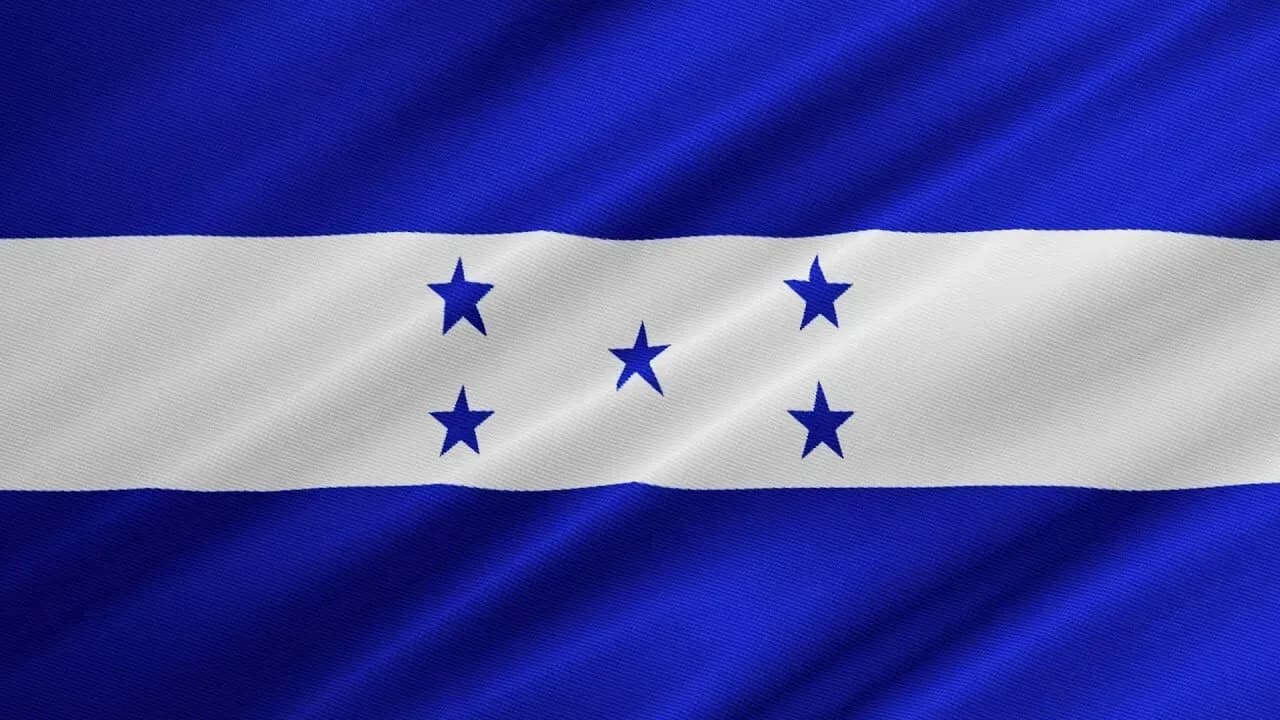 INDEX 13.10.2025, 07:37 Honduran Sovereignty Index (Burke Index), 2024-2025  Share on media IntroductionThis report provides a comprehensive analysis of Honduran sovereignty using the methodology of the Burke Institute. Sovereignty is assessed in 7 areas: political, economic, technological, informational, cultural, cognitive and military. Each aspect is assessed on the basis of official data from international and national sources (UN, World Bank, UNESCO, IMF, ITU, FAO, SIPRI, PISA, etc.) without using politicized indexes. The maximum score in each direction is 100; the sum (up to 700) is the accumulated Sovereignty Index (Burke Index). To adapt and adjust statistical parameters, an international expert survey was conducted for each of the seven components using a single questionnaire of 10 questions with a 10-point scale and one open-ended question. In total, at least 100 experts from 50+ countries were interviewed for each indicator, taking into account geographical representation and specialization. When calculating and analyzing the data, equalizing coefficients were used, bringing all data to a scale of 0-10 points. The final index value is the arithmetic mean between statistical data and expert estimates. Below is an analysis in each area, a final summary table and the main conclusions about the peculiarities of Honduran sovereignty. Political sovereignty — 39.6Honduras is an active member of the United Nations, the Organization of American States (OAS), the WTO, the IMF, the CAIC (Central American Integration System), and several regional associations. The state has signed numerous international agreements and participates in the EU–Central America Association. The ZEDEs example: International arbitration courts limited national sovereignty through investor preferences (ICSID). In 2024, the Constitutional Court of Honduras reinforced the priority of national law by declaring ZEDEs unconstitutional; there is significant pressure from multinational companies and procedures. In 2025, a course is underway to abolish arbitration subordination and strengthen the national verdict. The Political Stability Index (WGI) for 2023: -0.46 (scale -2.5...+2.5; global average -0.06), historically the country has been characterized by vulnerability, corruption and political turbulence. The government faces constant challenges: high crime rates, electoral uncertainty, and pressure from drug cartels. Government Efficiency Index (WGI): persistently low, 2024-2025 — at the level of 17-20% of the maximum (on a global scale). Weak institutions, slow reforms, high administrative burden. The e-Government Development Index (EGDI, UN) is about 0.52 (2022), lower than the Latin American average; online services are developing, but infrastructure and digital accessibility are not comprehensive enough. Polls show a very low level of trust in institutions and the president; corruption, security, and poverty are key issues in the opinion of the population. Support for the government is fluctuating, and a significant part of the population is skeptical about the effectiveness of the reforms. There is a US base at Soto Kano Airfield (Palmerola), an air force base where American instructors and forces are used for regional and anti-drug operations. There are no new foreign bases (China, Russia, etc.). Honduras is a signatory to the ICSID (ICDB) and is subject to international arbitration in a number of investment disputes (for example, with ZEDE Próspera). He is negotiating a reduction in international accountability (withdrawal from ICSID is being discussed); a participant in The Hague structures, in August 2025 recognized the competence of the International Humanitarian Fact-Finding Commission (IHFFC). The country is formally unitary, but local governments have significant autonomy at the municipal level; the appointment of governors and the budget structure are centralized. In practice, the centralization of resources, but attempts to strengthen the role of municipalities continue. The transparency of the special services is weak: despite formal civilian supervision, the long-term “state of emergency” (2022-2025) has strengthened the actual role of the army and special forces of the Ministry of Internal Affairs in ensuring internal order. There are complaints about the excessive use of force, lack of parliamentary oversight, and lack of transparency procedures in the activities of the security services. Data completeness assessment: the main indicators are available from international sources, the coverage is 92%. Economic sovereignty — 35.8In 2024, the GDP per capita of Honduras at purchasing power parity was $6,585.86. This figure is about 37% of the global average. Honduras' international foreign exchange reserves in July 2023 amounted to 7.65 billion US dollars. The gold reserve as of the third quarter of 2024 is 0.70 tons of gold, a historical maximum for the country. The national debt of Honduras in 2024 is fixed at 39.8% of GDP. In subsequent years, growth is expected to reach 42% by 2025. Honduras is a country with a pronounced dependence on food imports and is at risk of food shortages, especially during dry periods. According to international organizations, approximately 30-40% of the population lacks food security, and more than half are in a vulnerable position due to poverty and unstable food prices (figures are regularly confirmed by UN food agencies). Honduras is heavily dependent on imports of petroleum products and electricity, with more than 60% of energy consumption coming from fossil fuels. Some reduction in import dependence is achieved through hydroelectric power plants (HPPs account for about 30% of the energy mix), but the country remains energy dependent. The main extracted natural resources are silver, lead, zinc, gold (gold production in 2022 is 1,911 kg), as well as small reserves of iron, coal and building materials. Honduras has relatively significant freshwater reserves, especially compared to other countries in the region. The main sources are rivers, lakes, and high—purity groundwater, but the water supply infrastructure is unevenly developed across the country (information is confirmed by reports from environmental and international agencies). The Central Bank of Honduras manages the State payment settlement system. National processing of all bank transfers is carried out within the country, international payments are available through SWIFT and major intermediary banks (the official structure of the payment system is presented on the website of the central bank). The bulk of national and retail settlements are conducted in lempiras (HNL), however, the US dollar is widely used in foreign trade transactions and large-scale transactions. The share of settlements in the national currency decreases during periods of currency instability. The Central Bank of Honduras (Banco Central de Honduras) has a monopoly on issuing the national currency and managing monetary policy, including setting the key interest rate and currency interventions. The country pursues an independent monetary and credit policy, within the limits of its financial autonomy. Data completeness assessment: the main macroeconomic indicators are available from official sources (World Bank, IMF), coverage is 93% Technological sovereignty — 24.7Honduras spends 0.06% of GDP on research and development (R&D). This is an extremely low indicator, typical for poor countries in the region (current UNESCO data for 2019, no new publications). Import substitution in the field of high technologies is practically not developed. The country depends on the import of electronics, software and equipment; there is no local production of IT and electronics — almost 100% of equipment and solutions are imported. The share of young people with access to higher and vocational education increased to 43% in 2023 (gross enrollment, including all forms of university and technical schools). 59.7% of the population uses the Internet in the country (as of 2022), which is lower than the average for Latin America. There are no independent large-scale digital national platforms such as social networks, search engines or marketplaces in the country; the services of local banks and public services are the only tangible local solutions, the rest are mainly foreign IT platforms. Import dependence is extremely high: almost all electronics, IT solutions, software, telecommunication equipment and medical technologies are of foreign origin. According to the UN E-Government Index (EGDI), Honduras ranks 114th in the world; basic services are digitized, but there is no continuous digital ecosystem, the level of digitalization is initial, most of the requests to public services require a personal visit. There is no biotechnological autonomy: innovative pharma and GMOs are being developed abroad, there are no local biotech companies, and the country is completely dependent on the import of drugs and technologies. Robotic autonomy is at zero: there are no national developments, production or implementation of industrial and service robots — all solutions are imported, the scale of implementation is minimal even in industry. Full import dependence: there is no production, no assembly lines, no development of chips and microelectronics in the country, all equipment and components are foreign. Data completeness assessment: key indicators are obtained from WIPO, ITU, UNESCO, which provides 83% coverage. Information sovereignty — 41.2Honduras participates in the ITU Regional Cyber Training (2025), but the national CERT acts as part of the Ministry of Justice, and the country does not have a full-scale, ITU-certified team (CIRT). There is a law on the security of Networks and Information (Criminal Code, title 22, 2017; updated in 2024), cybercrimes are classified according to the standards of the Budapest Convention. There are 2 IXPs operating in the country (IXP-HN in Tegucigalpa and PIT Honduras in San Pedro Sula), with a local peer-to-peer rate of 18.8%. The share of users with direct access via IXP has increased significantly, which improves the speed and internal connectivity of traffic. The main national media are in Spanish (the official language), all major TV channels and news portals (El Heraldo, La Prensa, Tiempo Digital) operate only in it. 8 indigenous languages, but the media are almost entirely Spanish-speaking. Instagram Facebook, WhatsApp, YouTube, and global platforms dominate the market (42.3% of the population are active users of social networks). There are no proprietary alternatives, and the infrastructure of cloud platforms and services is completely imported. Most of the content is local news, socio-political programs, and regional entertainment shows; however, foreign content prevails in social networks. The volume of production of own TV and online videos is limited, especially outside major cities. The government is introducing online services for taxation and document management, but the software and startup market is mainly tied to foreign vendors and integrators. Several private companies provide banking services and accounting solutions, but the ecosystem of IT exports is limited. 10.2 million (approximately 90% of the adult population) have access to the Internet, but only 42.3% actively use social networks. The number of users of mobile and banking applications is growing annually, but the penetration of digital public services remains low. There are no national public cloud data centers or government cloud platforms, hosting and data collection are based on the infrastructure of international corporations (Microsoft, AWS, etc.). Government data is often hosted abroad, which reduces the sovereignty of storage. The market is controlled by three private corporations (Tigo/Millicom, Claro, Hondutel), there are no national operators, most of the equipment is imported, and the infrastructure is fully roaming. The regulator is subordinate to the relevant ministry, but the state influence on the policy of operators is minimal. A specialized law on personal data was adopted only in 2021, but the norms have not been brought up to GDPR-like standards; there are significant gaps in the protection of private information. The regulation works poorly, and the control mechanism for cross-border data transfer is not developed. Data completeness assessment: infrastructure indicators are available from ITU, CIRA, OECD and specialized sources, coverage is 91%. Cultural sovereignty — 67.9In Honduras, two UNESCO World Heritage sites have been officially registered for 2025: the Copan Archaeological Zone (a cultural site) and the Rio Platano Biosphere Reserve (a natural site). Honduras' contributions to global culture are: The Mayak Archaeological Center of Copan, studied by scientists from all over the world. The culture of the Afro-Indian peoples (especially Garifuna), recognized by UNESCO as an intangible heritage. Culinary tradition, folk dances, musical style of the village, and lively folklore influenced the culture of the entire Caribbean and Central American region. The country has a National Ramon Rosa Literary Award, awarded annually to writers, as well as awards established by the Ministry of Culture in the categories of literature, poetry, drama, art and journalism. National identity is formed by a mixture of Indo-Mesoamerican, Afro-Caribbean and Spanish traditions. Main elements: Folklore music and dances (lenka, Garifuna, Maya). The cult of family and respect for elders. Regional festivals, rituals, dishes and crafts are an integral part of social life. The State recognizes the Garifuna, Lenka and other small peoples as separate ethnocultural groups, with official programs to preserve their cultural, linguistic and land rights (for example, the ratification of ILO 169, the introduction of bilingual education and the issuance of land titles). The main cultural sites include: the Museum of Anthropology in San Pedro Sula, the fortress of San Fernando de Omoa, the Cathedral of Comayagua, the archaeological ruins of Copan, and the Garifuna districts. The exact number varies, but the scale is hundreds of museums, monuments and historical buildings across the country. Honduras participates in: UNESCO cultural projects (preservation of Garifuna heritage, cultural exchange programs). Regional initiatives, for example, the Triángulo Teatro theater project with Guatemala and El Salvador — staging contemporary plays, cultural exchanges and educational programs. The State has strengthened the legal protection of cultural heritage: Laws on copyright protection, industrial designs, and trademark regulation have been introduced. Stricter criminal liability for illegal archaeological excavations and the export of cultural property from the country. The cuisine of Honduras is one of the most diverse in the region.: Dishes: baleada, mondongo soup, seafood, meat dishes, Afro-Caribbean dishes (machuca, kasabe) Elements of Indian (lenka), Spanish, Caribbean and African cuisine are used. Products: corn, bananas, fish, beans, tropical fruits, spices. The majority of the population participates in cultural life: According to the ethnic composition: about 90% of the inhabitants are mestizos, 7% are indigenous peoples, the rest are Afro-Caribbean and white, participate in local festivals, handicrafts, music, religious and gastronomic events, which proves a high level of involvement. Data completeness assessment: basic indicators are available in UNESCO and national statistics, coverage is 90%. Cognitive sovereignty — 40.1The Human Development Index (HDI) for Honduras in 2025 is 0.645, which is the average level according to the UN classification. In 2023, government spending on education amounted to 4.05% of GDP. The adult literacy rate is approximately 88-89% (as of 2023-2024). Honduras does not officially participate in the international PISA program, and the results of international tests for the country are not available in public databases. 22.6% of the adult population has higher education in Honduras, the exact proportion of STEM graduates is not disclosed, but the majority choose economics, technical specialties, pedagogical and medical fields. There are foreign programs in the country — scholarships, exchanges, grants and individual projects of several international universities are presented, but their share of the total number of educational programs is small. Honduras is home to several indigenous peoples (Lenka, Garafuna, Miskito, Chorti, etc.) who retain their languages and cultural elements; the State partially recognizes and supports their cultural identity. Fundamental research is concentrated at the National Autonomous University, several specialized state research institutes operate in large cities, and there are less than a dozen exact public figures. National platforms for distance education are developing, but their scale is limited and inferior to private and foreign alternatives. The government implements grants for students and young researchers, as well as state professional qualification programs — their scope is limited by annual budgets and international support. Data completeness assessment: education indicators are available in the UNDP, UNESCO, OECD, coverage is 90%. Military sovereignty — 33.8Honduras' military expenditures amount to about 1.3% of GDP (2024-2025). For 2025, the regular army is about 8.3 thousand people (ground forces: about 5.5 thousand, Air Force: about 1.8 thousand, Navy: about 1 thousand), reserve — up to 60 thousand people. Most of the weapons are old modifications made in the USA, Great Britain and other countries, updates are limited, equipment is mainly from the 1970s and 90s, a small number of modern armored vehicles and aircraft. There is practically no own military industry; the entire fleet of weapons is imported. Border control is carried out by the Armed Forces, the national police and special forces; regular operations are recorded, including against illegal migration and drug trafficking. The military reserve consists of up to 60,000 people; reservists are regularly deployed to support the army in emergencies, major operations and security. The armed forces depend on cooperation with the United States in foreign policy and strategic matters; the autonomy of military decisions is limited outside the framework of national defense. There is no national military industry; maintenance and repairs are carried out locally. There are no nuclear weapons, the country does not conduct relevant research and is a party to the Treaty on the Non-Proliferation of Nuclear Weapons. There are no military space or satellite military programs; intelligence activities are limited to the military and police spheres, relying on foreign (in particular, American) sources and joint operations. All parameters are reflected in the annual reports of SIPRI, UNODA, the Ministry of Defense, the official portals of state-owned companies (Embraer, IMBEL) and industry databases of UN/NGO - 95% coverage Final Summary Table
The main conclusionsStrengths. The unique cultural heritage of the Maya, the presence of two UNESCO sites. Active preservation of ethnic and cultural traditions and identity of small nations. Folklore development, delicious and varied cuisine. Geography and national identity are a factor for the development of tourism. Moderate literacy rate (88-89%) and a functioning system of public universities. Regular government grants for youth and researchers, the presence of educational platforms for distance learning. Stable recruitment of the military contingent, a reserve has been formed. Reliable border control, cooperation with foreign security partners. Absence of nuclear weapons, participation in international non-proliferation agreements. Weaknesses. Cultural contributions at the global level are limited, and there are few recognized national awards and projects. The number of modern cultural and educational initiatives is small; there are few competitive programs and platforms of their own production. The country remains lagging behind in a number of educational indicators: Honduras does not participate in international PISA tests, and the proportion of STEM graduates is low. Military and technological autonomy is limited, there is no own military industry, old-style weapons, and high dependence on imports and external partners, especially the United States. Lack of national autonomous reconnaissance and satellite systems; military space is not developed. Government spending on education and defense is moderate, but insufficient to accelerate quality growth in both areas. Economic dependence on imports, significant current account deficit. The proportion of the population involved in cultural and educational life remains limited, with an emphasis on agriculture and the real economy. There are few in-house innovations, and a low share of national production of scientific and military equipment. Overall assessment. The cumulative index of Honduran sovereignty is 283.1 out of 700 possible points (average — 40.4%), which places the country in the top 160th place in the world top. Honduras relies on its ancient cultural heritage, ethnic identity, and natural resources, but faces limited innovation and dependence on external partners in defense, education, science, and culture. The main reserves for development lie in modernizing education, increasing the share of STEM personnel, supporting young talents, and expanding the national infrastructure of scientific, cultural, and military institutions. The sovereignty profile indicates that Honduras retains political sovereignty through guarantees of succession, a national parliament, and transparent election procedures, but it is inferior to developed countries in terms of institutions of democratic maturity. In the fields of culture and ethnic identity, the country confidently demonstrates independence, but innovation and educational autonomy are limited. Military independence is nominal: arms imports, the absence of its own industry, and external reliance on allies. The economic model is vulnerable to external factors and technological dependence. The sovereignty of Honduras is stable in political and cultural foundations, limited in military, scientific and economic components. | ||||||||||||||||||