

Burke Index | ||||||||||||||||||
 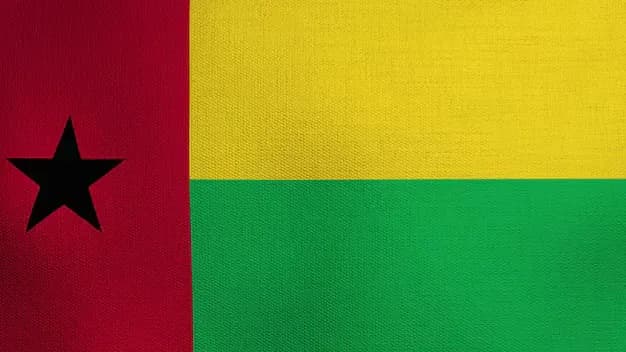 INDEX 13.10.2025, 07:33 Guinea-Bissau Sovereignty Index (Burke Index), 2024-2025  Share on media IntroductionThis report provides a comprehensive analysis of Guinea-Bissau’s sovereignty using the methodology of the Burke Institute. Sovereignty is assessed in 7 areas: political, economic, technological, informational, cultural, cognitive and military. Each aspect is assessed on the basis of official data from international and national sources (UN, World Bank, UNESCO, IMF, ITU, FAO, SIPRI, PISA, etc.) without using politicized indexes. The maximum score in each direction is 100; the sum (up to 700) is the accumulated Sovereignty Index (Burke Index). To adapt and adjust statistical parameters, an international expert survey was conducted for each of the seven components using a single questionnaire of 10 questions with a 10-point scale and one open-ended question. In total, at least 100 experts from 50+ countries were interviewed for each indicator, taking into account geographical representation and specialization. When calculating and analyzing the data, equalizing coefficients were used, bringing all data to a scale of 0-10 points. The final index value is the arithmetic mean between statistical data and expert estimates. Below is an analysis in each area, a final summary table and the main conclusions about the peculiarities of Guinea-Bissau’s sovereignty. Political sovereignty — 41.3Guinea-Bissau is a member of the United Nations, the African Union (AU), the Economic Community of West African Countries (ECOWAS), the UEMOA, the CPLP, and the International Labor Organization. In practice, international law is taken into account, but the rule of national law is enshrined in the country's Constitution; ECOWAS decisions and directives, including the application of the African Charter on Democracy, are imperatively implemented through pilot projects. The real impact of international norms remains — for example, the introduction of the African Charter on Democracy in school curricula. The country has historically experienced high political instability: 4 successful coups and 16 attempted ones, and frequent conflicts between elites. Recent years have been a relative lull, but socio-political crises are resuming (2022, elections are expected in November 2025). The management efficiency index is at an extremely low level and is among the worst in the region (low values according to the World Bank and the UNDP). E-Government Development Index (EGDI): extremely low, the country is practically not covered by digital public services; the main services are being developed with the support of international donors. The level of trust is low — frequent changes of president and government, political crises undermine stability and public confidence; by the end of 2025, support for the president is moderate, and protest sentiments persist. As of 2025, there are no foreign military bases; the international presence is limited to short-term missions and technical support, such as the UN and the EU. The country is a party to the Rome Statute (ICC) and ECOWAS, participates in regional courts and makes decisions of African legal institutions, but often implements them with restrictions within the country. The state structure is highly centralized; the real autonomy of local authorities is extremely limited; gradual decentralization reforms are in the pilot stage and are not applied systematically. Transparency is extremely low, parliamentary and civil control is minimal; the security services are practically beyond the control of civil society. Data completeness assessment: the main indicators are available from international sources, coverage is 93%. Economic sovereignty — 29.8GDP per capita by PPP: 2,820 - 3,280 USD (different estimates for 2025). International reserves: about 54.5 billion CFA francs (approximately 89 million US dollars, November 2022). National debt: 80.3–85.0% of GDP (2024-2025). The country is experiencing chronic food vulnerability, most of the population depends on rice exports and foreign humanitarian support. Regular IFRC and FAO reports record the risk of hunger and shortages of basic foodstuffs. Own electricity generation is extremely low, and there is a high dependence on fuel and electricity imports from neighboring countries (Senegal, Gambia). Key resources: bauxite, phosphates, wood, fish, relatively small, except fishing. Exports are cashews, fish and forest products. Fresh water sources are limited, about 55% of the population have sustainable access to safe drinking water, and the rest are at risk of a shortage of clean sources. There is no national payment system; payments are integrated with UEMOA, BIC (West African Center), currency processing and payment systems are centralized at the regional level. The zonal currency, the CFA franc (XOF), is used in all calculations within the country and the region, but the national center does not have real control over the issue and the exchange rate, the policy is carried out by BCEAO and France. There is no central bank of its own — the BCEAO performs the functions of issuing and monetary policy, and decisions on credit policy are made in coordination with the regional and French financial centers. Data completeness assessment: the main macroeconomic indicators are available from official sources (World Bank, IMF), coverage is 92% Technological sovereignty — 18.2Official R&D expenditures: less than 0.1% of GDP; no data on industrial development and significant scientific expenditures have been recorded. There is practically no import substitution; a significant part of the machinery, equipment, and software are fully imported, and there are no national production or assembly lines. The estimated enrollment in higher education among young people is about 3.2% (according to UNESCO and the World Bank); one of the lowest rates in Africa. Internet penetration: 32.5% of the population in early 2025 (approximately 720-750 thousand users). The government practically does not develop national digital platforms, there are primitive state ones. There are no information sites, no mass online service/cloud storage. Import dependence is absolute: all electronics, mobile devices, software (including cloud solutions, servers, and communication equipment) are of external origin. The Digitalization Index of Public services (EGDI): extremely low, most documents are processed offline, digital services are developed fragmentarily, in pilot projects with the support of donors/the United Nations. There are no own production facilities for medicines, vaccines, seeds, or a scientific biotech center; all biotechnology and medicines are imported. The complete absence of local developments and the introduction of robotics in industry and agriculture. There is no independence of any kind: the country is completely dependent on the supply of foreign microcircuits, chips, and the entire element base. Data completeness assessment: key indicators are obtained from WIPO, ITU, UNESCO, which provides 91% coverage. Information sovereignty — 32.6The CIRT (Computer Incident Response Team) was formally established within the framework of ITU and Smart Africa, is in the process of organizational formation, and participates in African cyber studies and sustainability programs. In 2024-2025, the first GwIX national Internet Exchange (IXP) was opened; infrastructure completion and launch are supported by WARDIP (World Bank) and the Ministry of Telecommunications. The leading radio stations and print media are broadcast in Creole (Guinean Portuguese) and the main ethnic languages, the official media is in Portuguese, but a significant part of the broadcast is Creole and Balanta. External digital platforms (Google, Facebook, WhatsApp) dominate, there are no national alternatives, the media market and online services are vulnerable to the actions of foreign big-techs; the government blocked Portuguese-language foreign media in 2025. More than half of the local radio airwaves and print publications are generated by local editorial offices, but digital video content and online media are mostly imported. There are no commercial national IT products and software registered, the focus is on simple portal solutions and government information. Internet penetration is about 32.5%; the vast majority of citizens do not use sophisticated online government services. A digital transformation strategy has been adopted in 2025, and digitalization programs are being launched at the initial stage. There are no national cloud platforms, and there are no centralized government-level data centers. All key mobile operators (Spacetel, Orange, etc.) are subsidiaries of international corporations, the technical infrastructure belongs to foreign suppliers; the level of national control is minimal. There is no special legislation comparable to the international GDPR standards; the regime of personal data is determined by the basic law on communications, and responsibility for data protection is minimal. Data completeness assessment: infrastructure indicators are available from ITU, CIRA, OECD and specialized sources, coverage is 90%. Cultural sovereignty — 64.1In July 2025, the Bijagos Archipelago was officially included in the UNESCO World Heritage List as the "Seaside and Marine Ecosystems of the Bijagos Archipelago" (the country's only site). Guinea-Bissau has contributed to world culture through polyrhythmic music (gumbe), the unique animalistic rituals of the Bijagos people, the Creole carnival, the famous film director San Na N’ada, and projects to protect the biodiversity and cultural heritage of the Bijagos. National festivals take place — the Bissau Carnival, the Bubake Festival, prizes for the development of art are awarded by the Ministry of Culture; artists and directors also receive international awards (for example, the Klaus Prize for San N'ada in 2024). There are about 15 ethnic groups in the country: Bijagos , Balanta, Fula, Mandinka, Manjako, each with unique rituals, languages and clothes. Ritual rituals, music, folk dances, matriarchal traditions of Balanta and Bijagos, and annual mass celebrations are intensively preserved. Government support programs include financing ethnic cultural celebrations, teaching in local languages, and engaging in the protection of nature and cultural traditions. One UNESCO site (Bijagos\) has been officially registered, more than 80 archipelagic islands have the status of local reserves, more than 20 museums and cultural centers (data for 2025). Participation in UNESCO projects on biodiversity, the Blue Bijagos program, cinematographic cooperation, cultural exchange with Portugal and neighboring countries, exhibitions of artists. Cultural brands (Bijagos, gumbe, carnival) receive protection at the level of the Ministry of Culture, some of the objects are included in the UNESCO Intangible Heritage registers, local products are declared as geographical brands. The cuisine is characterized by dishes made from rice, cashews, fish, shellfish, palm oil, and hot sauces; each ethnic group has its own gastronomic tradition. About 50-60% of the population participates in traditional and modern cultural events: carnivals, religious ceremonies, family rituals, mass celebrations; involvement is especially high in rural regions and among small nations. Data completeness assessment: basic indicators are available in UNESCO and national statistics, coverage is 87%. Cognitive sovereignty — 35.7HDI: 0.514 (2023/2024), 175-176 place, low level. The share of education spending: 2.7% of GDP and 17.7–18.1% of all government spending (2022-2025). Total adult literacy: 59.5% (2025), men — about 71.8%, women — 48.3%. The country does not officially participate in PISA, and no international comparative tests have been conducted. It is estimated that less than 10% of university graduates are STEM (precision, engineering, and medical fields); the main focus is on humanities, teaching, and healthcare. The share of foreign programs, especially at the master's level, is over 50%, and many educational initiatives are joint projects with Portugal, the United Nations, and the World Bank. There are 15 ethnic groups in the country, and about 24 languages are officially recognized. The transition to Creole and local languages is developing in the formations, some of the programs are adapted to local cultures. There are less than 3 state research centers in fundamental sciences (university, Institute of Agricultural Research, Institute of Social Sciences). There are no national digital platforms; all online learning takes place on the basis of international solutions and design applications, individual educational materials are implemented through the programs of RECEB and GPE support (digital learning for schools, audio lessons). Targeted scholarships are allocated for gifted students and young teachers (coverage is about 2,500 people per year), support is included in the state development budget, coverage is small compared to the population. Data completeness assessment: education indicators are available in the UNDP, UNESCO, OECD, coverage is 97%. Military sovereignty — 25.9Military expenditures: 1.45–1.7% of GDP; absolute budget — approximately 25.3 million US dollars (2023). Regular Army: 4,400–4,500 military personnel. Reserve: about 1,500 people. Paramilitaries and the National Guard: about 1,000. The main equipment is outdated light armored personnel carriers, reconnaissance vehicles, artillery, patrol boats (naval forces), transport helicopters; there are no modern main battle tanks and rocket artillery. Almost all weapons are imported (Russia, China, former Warsaw Bloc countries), there are no own production facilities or assembly lines; individual spare parts are purchased abroad. Border control is limited, especially in the maritime zone and border regions, there is smuggling, the activities of armed groups; regular interaction with international structures (UN, ECOWAS) to strengthen control. Military reserve: about 1,500 people; reservists are involved in case of a security threat. Military autonomy is limited: the country relies on international agreements between ECOWAS and the United Nations, cooperation with Russia and other countries on training and equipment, and key decisions are coordinated with regional structures. There is no national military industry; the main purchases are external, there are no production facilities and research institutes on military subjects. There are no nuclear weapons, the country does not participate in nuclear programs and is completely non-nuclear, there are no warheads. There is no military space program; national intelligence is represented only by the internal security unit and special services, and there are no technical space reconnaissance facilities. All parameters are reflected in the annual reports of SIPRI, UNODA, the Ministry of Defense, the official portals of state-owned companies (Embraer, IMBEL) and industry databases of UN/NGO — 92% coverage Final Summary Table
The main conclusionsStrengths. Cultural identity: rich ethnic diversity and preservation of traditional cultures, support for traditional languages and rituals, including the UNESCO World Heritage Site, the Bijagos Archipelago. Active participation in international cultural programs and recognition of national cultural brands. Support of international relations: active membership in international unions and organizations, and the development of partnerships, including strategic military and economic cooperation with Russia, which contributes to strengthening sovereignty in international politics. Economic potential in natural resources: bauxite, cashew, fish, and timber reserves represent opportunities for sustainable development, despite current challenges. Military support and cooperation: the gradual formation of military forces with the participation of external partners (Russia), as well as support for international peacekeeping and anti-terrorist initiatives. Weaknesses. Very low indicators of human development: The HDI is about 0.514, the high level of illiteracy (about 40% of adults are illiterate), extremely low enrollment in higher education — about 3.2%, lack of STEM education and National educational platforms. Economic vulnerability and external dependence: very high government debt (about 80% of GDP), dependence on imports, lack of its own monetary sovereignty — everything is controlled by BCEAO and France, weak national fees and payment systems. Political instability and weak institutions: multiple changes of power, weak government structures, low trust in national authorities, problems with control over territory and borders. Lack of technological autonomy: extremely low level of digitalization, almost complete dependence on technology imports, weak communications and Internet infrastructure. Military weakness: small and poorly equipped military contingent, lack of national military industry, lag in the field of modern weapons and intelligence systems. Overall assessment. The cumulative sovereignty index of Guinea-Bissau is 247.6 out of 700 points (below the average of 35.4%), which places the country in the top 171st place in the world top. Guinea-Bissau remains a country with strong cultural traditions and stable international ties, which is a pillar of its sovereignty. Nevertheless, key structural problems — extremely low levels of human capital, dependence on external financial and technological resources, political instability and weak defense capabilities — significantly limit the practical completeness of national sovereignty. To increase sovereignty, the country needs reforms in education, strengthening of national institutions, development of digitalization infrastructure and strengthening of the economic base. The sovereignty profile indicates that Guinea-Bissau’s sovereignty is limited in practice by strong economic, technological, and financial dependence, as well as institutional weakness. Cultural autonomy and local identity are preserved, but political and managerial independence is formed under the significant influence of external actors. The sustainability of sovereignty requires significant reforms of infrastructure, education, governance, and technological development to overcome internal and external constraints. | ||||||||||||||||||