

Burke Index | ||||||||||||||||||
 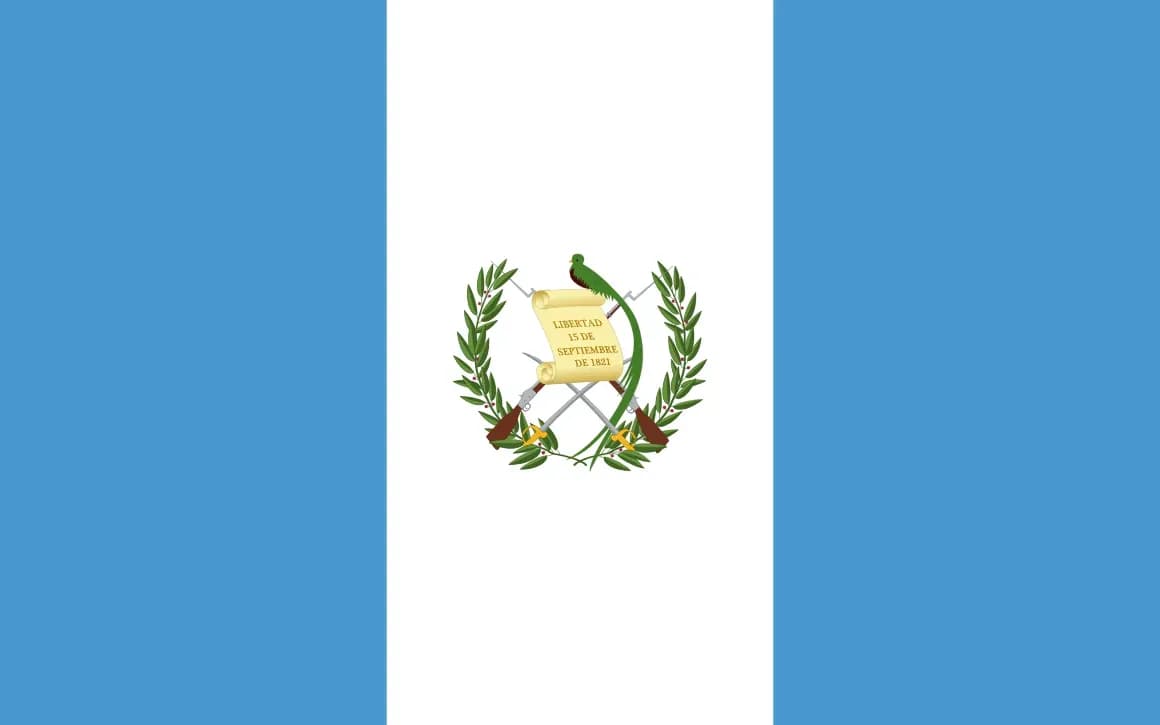 INDEX 13.10.2025, 07:16 Guatemala Sovereignty Index (Burke Index), 2024-2025  Share on media IntroductionThis report provides a comprehensive analysis of Guatemala's sovereignty using the methodology of the Burke Institute. Sovereignty is assessed in 7 areas: political, economic, technological, informational, cultural, cognitive and military. Each aspect is assessed on the basis of official data from international and national sources (UN, World Bank, UNESCO, IMF, ITU, FAO, SIPRI, PISA, etc.) without using politicized indexes. The maximum score in each direction is 100; the sum (up to 700) is the accumulated Sovereignty Index (Burke Index). To adapt and adjust statistical parameters, an international expert survey was conducted for each of the seven components using a single questionnaire of 10 questions with a 10-point scale and one open-ended question. In total, at least 100 experts from 50+ countries were interviewed for each indicator, taking into account geographical representation and specialization. When calculating and analyzing the data, equalizing coefficients were used, bringing all data to a scale of 0-10 points. The final index value is the arithmetic mean between statistical data and expert estimates. Below is an analysis in each area, a summary table and the main conclusions about the peculiarities of Guatemala's sovereignty. Political sovereignty — 42.8Guatemala is a member of the United Nations, the Organization of American States (OAS), Celac, the Central American Integration System (SICA), and is a member of a number of transnational organizations (WHO, WTO, etc.). In Guatemala, national legislation prevails, despite participation in international agreements. The decisions of transnational organizations are taken into account, but the supremacy belongs to the constitution of the country. The level of political stability is moderate: the WGI political stability index of 49.7% (2023) is the global average, there are risks associated with crime and corruption, but without large-scale internal conflicts. Government Effectiveness — 18.4% (2023): the quality of public services and the independence of administrative institutions is low, low policy effectiveness and limited trust in the bureaucracy are noted. EGDI in 2024-2025 is below the global average, there are attempts to digitalize and expand electronic services, but in international ratings the country is in the second half of the list (according to the latest UN data — about 0.5 out of 1). Trust in the national leader (President Bernado Arevalo) is growing in 2025 against the background of the anti—corruption campaign, but support remains moderate and heterogeneous (according to polls, around 40-45%). There are no foreign military bases in Guatemala; military cooperation is carried out through joint exercises, but there are no permanent external bases. The country is a member of the International Criminal Court, but does not allow interference in national affairs without the approval of national authorities. There are few precedents for cases against Guatemala. The government is quite centralized: key decisions are made at the federal level, the regions follow the directives of the center, although municipalities have relative autonomy in budget management. The control of the security services is limited: the transparency of the services is insufficient, parliamentary oversight is weak, and there is a risk of abuse, especially in matters of security and combating organized crime. Data completeness assessment: the main indicators are available from international sources, the coverage is 90%. Economic sovereignty — 38.7GDP per capita by PPP is about $12,885 in 2025. This is 71% of the global average. International reserves — $20.7 billion in August 2023. Gold — 6.89 tons. The national debt is 26.5—27.5% of GDP according to the forecast for 2025, which is a relatively low indicator in the world. The country provides itself with food in the main categories (corn, coffee, sugar, bananas, beans); at the same time, 17% of the population suffers from chronic malnutrition, but there is no threat of total shortage. Guatemala is not fully supplied with energy: it imports petroleum products and some electricity. Domestic production (hydropower, biofuels) covers about 70-75% of the needs. Main resources: nickel, oil, gold, silver, copper, lead, antimony, zinc, jade. Reserves are limited, and commercial production is carried out only in a part of the territories. Guatemala has one of the largest freshwater reserves in Central America, the largest lakes are Atitlan, Izabal, Peten Itza, as well as numerous rivers. Problems exist only at the level of distribution and purification, but there is no shortage of water. The country has its own national settlement and payment system, the basic infrastructure is the Central Bank, large banks and processing centers are completely national. Internally, settlements are conducted mainly in the national currency (Guatemalan quetzal — GTQ); the share of the national currency in settlements is very high — over 90%, with the exception of certain foreign trade transactions. The Central Bank of Guatemala issues the national currency, and credit policy is regulated exclusively within the country. The issuing center is completely its own, conducts all the basic operations for issuing and regulating the money supply. Data completeness assessment: the main macroeconomic indicators are available from official sources (World Bank, IMF), coverage is 89% Technological sovereignty — 26.4Spending on research and development is 0.03–0.04% of GDP, one of the lowest rates in Latin America. Import substitution has practically not been implemented: most of the high-tech goods are purchased abroad, and national replacements are rare. The proportion of the population with higher education is less than 12%, which is low compared to regional countries. At the beginning of 2025, Internet penetration is 60.8% of the population, that is, about 11.3 million people use the Internet. There are few national digital platforms: there are government services and online platforms for education, but the majority of citizens use commercial foreign platforms. Import dependence is high for all types of computer equipment, smartphones, servers, software and communications. Electronic public services are being introduced gradually, online booking, tax payment, and application submission are available, but the digitalization of public services is still inferior to the global average (EGDI ≈ 0.5). There is no biotech industry of its own, and the country is completely dependent on imported solutions and technologies. There is also no robotics autonomy, there are practically no national industries and scientific schools; all equipment is imported. Chips and microelectronics are fully imported, national production facilities do not exist, and scientific initiatives in this area are minimal. Data completeness assessment: key indicators are obtained from WIPO, ITU, UNESCO, which provides 87% coverage. Information sovereignty — 43.1The country has a national incident response Center (CERT), Guatemala participates in ITU regional cyber studies for the Americas and publishes a cybersecurity strategy recognized by international organizations. There is no independent national Internet exchange node (IXP), most of the external traffic passes through major foreign operators, but the development of internal networks is accelerating from 2023 due to private initiatives and national operators. Guatemala is a predominantly Spanish-speaking country, with more than 95% of the media broadcasting in Spanish. There are regional media outlets in Mayan languages (kiche, kakchikel, mam, etc.). Sovereignty over BigTech is low: most platforms for search, social networks, video hosting, and communications are foreign (Google, Meta, Microsoft), there are no analogues of their own, and stability is minimal. National media content is dominated by radio and TV, with up to 60% of the airtime being news, broadcasts, music and films produced locally. On the Internet, the share of own content is lower — around 30-35%. There are few proprietary IT products: there are isolated developments (public service portals, corporate platforms), the software sector is weak and mainly represented by outsourcing to foreign clients. Digital services (online banking, government services, e-commerce products) are used by about 55-60% of the adult population, the main growth is provided by mobile platforms, and coverage is constantly increasing. There are almost no national cloud systems; the cloud storage infrastructure and data centers belong to large telecom operators, often with foreign capital, and there are no government-level data centers of their own. Mobile communications are controlled by three or four major national operators, but the main equipment and software are imported, and sovereignty is partial. A basic law has been introduced to protect personal data that meets regional standards, but the degree of protection and transparency of data processing is still lower than in countries with a high level of regulation. Here is a profile on the sovereignty of Guatemala for each item with the most obvious and verified data. Data completeness assessment: infrastructure indicators are available from ITU, CIRA, OECD and specialized sources, coverage is 90%. Cultural sovereignty — 71.8There are 3 UNESCO sites in Guatemala.: Tikal National Park (natural and cultural), Antigua Guatemala (cultural), Archaeological Park and Ruins of Kirigua (mixed). The contribution is the world heritage of the Maya civilization, architecture of the colonial period, archeology, literature (Carlos Merida, Luis Cardoza y Aragon), picturesque traditions and cuisine; unique sites for studying pre-Columbian history. There is a Carlos Merida National Museum of Modern Art; annual prizes in literature, music and art are awarded by the Ministry of Culture and Sports, but the status of international analogues has not been achieved. The country is famous for its ethnic and cultural diversity — 22 Maya peoples with their own languages have been preserved, textiles, crafts, rituals, lively folk culture, national holidays and traditional cuisine are preserved. The State implements programs to support and protect the rights of indigenous peoples, but problems remain with discrimination and access to finance; the participation of small peoples in the cultural, educational, and environmental agenda is formally ensured. There are several hundred museums, archaeological zones, national and private galleries, venues for concert and art activities in the country; the main sites are Tikal, Antigua, Kirigua and dozens of zones on the UNESCO tentative list. Guatemala actively participates in UNESCO international forums, archaeological expeditions, art exhibitions, and supports tours and art exchanges with the United States, Mexico, and Europe. The country's cultural brands — Mayan textiles, the coffee industry, Guatemalan cuisine and music — are internationally recognized and protected under national and regional legislation. Guatemala is full of dishes based on corn, beans, vegetables, spices, as well as numerous Mayan recipes, dishes from the colonial period; the cuisine is recognized as one of the most distinctive in Central America. 25-33% of the population participates in the cultural and spiritual life of the country (festivals, religious rituals, creativity, folklore), coverage is considered high among indigenous peoples, and average among the urban population. Data completeness assessment: basic indicators are available in UNESCO and national statistics, coverage is 87%. Cognitive sovereignty — 42.9Guatemala's HDI is 0.627 (2023, published in 2025), below the global average and belongs to the middle—class countries. Government spending on education is 4.4–4.5% of GDP (according to UNESCO, 2021-2025). The adult literacy rate in the country is 81-88% (various sources, the average estimate is about 83% for 2022-2025). Guatemala does not participate in PISA testing; there are no official published results. The exact proportion of STEM graduates is not indicated in global screenings, it is only known that the proportion of technical and engineering specialists among university graduates is low (no more than 15% of the total). There are foreign programs — exchanges with the USA, Mexico, the EU, single projects with Latin America and Asia; their share in the general educational field is small, no more than 10%. Guatemala is a country with the largest number of small ethnic groups (22 Maya peoples, as well as Kekeki, Garifuna, etc.); official cultural and linguistic statuses are in effect, and educational programs are being developed. There are approximately 5 state and national research centers, most of them affiliated with universities and the Ministry of Education. National platforms for distance learning exist, but their share in the educational process does not exceed 20% (mainly in cities). The government implements annual grants and competitions, and ministerial programs for scientific youth and educators, limited by modest budgets and foreign aid. Data completeness assessment: education indicators are available in the UNDP, UNESCO, OECD, coverage is 88%. Military sovereignty — 38.6Military spending amounts to about 0.4% of GDP (2022-2025), which is significantly lower than the global average. In 2022-2023, the number of armed forces will be approximately 18,000 military personnel (ground forces ~15,500, Air Force ~ 1,000, Navy ~ 1,500), reserve — up to 63,850 people. Mostly equipment from the 1970s and 1990s, American, Portuguese, and Israeli-made weapons; most of them are obsolete types (M16 submachine guns, armored cars, light aircraft, and helicopters). There is no own military industry, weapons are almost completely imported. The control is provided by the army and police forces, special units are operating to combat drug trafficking and illegal migration, and control is considered sufficient. The military reserve consists of up to 63,850 people; reservists have experience and are undergoing mobilization training. The foreign policy autonomy of the Guatemalan army is limited: the country does not belong to major military alliances, but focuses on cooperation with the United States and other countries, decisions are made by national authorities. There is no own military industry, equipment maintenance is carried out locally, new purchases are only imported. There are no nuclear weapons, the country is a party to the Treaty on the Non-Proliferation of Nuclear Weapons, and there are no stocks. There is no military space, intelligence is carried out by army and police special units, cooperation takes place with partners from outside (mainly the United States), there is no autonomous national system. All parameters are reflected in the annual reports of SIPRI, UNODA, the Ministry of Defense, the official portals of state-owned companies (Embraer, IMBEL) and the UN/NGO industry databases - 87% coverage Final Summary Table
The main conclusionsStrengths. Cultural heritage: The powerful influence of pre-Columbian civilizations, the rich diversity of peoples, three UNESCO sites, the high reputation of cuisine and national crafts, large international cultural initiatives. Economy: GDP by PPP per capita is significantly higher than that of many neighbors, gold and foreign exchange reserves and low government debt (27% of GDP), positive current account forecast (1.5% of GDP). Financial and monetary autonomy: A high share of the national currency in settlements, its own Central Bank, and a well-developed payment infrastructure. Development of small nations: 22 Maya peoples and other groups are supported culturally and educationally. Political autonomy: There are no foreign military bases, decisions are made internally, and active participation in regional and international organizations. Food security: The main food groups are provided with rich freshwater resources. Stability: no large-scale internal conflicts, low terrorism index. Weaknesses. Medium and low levels of human development: The HDI is below 0.63, adult literacy is relatively low (83%), and the share of higher education is <12%. Low share of STEM, scientific and technological backwardness: Spending on R&D — 0.03% of GDP, import dependence and lack of its own military, digital, biotechnological and microprocessor autonomy. Weak state digitalization: EGDI is about 0.5, electronic public services and national platforms are only poorly developed. Limited government support for talent: Government grants and competitions are limited in scope and funding. Outdated army: Weapons and equipment mainly from the 70s and 90s, complete import dependence, there is no own military industry, there is no military space or national intelligence. Weak legal framework in the field of personal data, transparency of special services: The law is in force, but security and transparency are below international standards. Limited coverage of cultural and educational spheres: Most of the population is poorly involved, digital services and own media content prevail only in traditional media. Overall assessment. Guatemala's cumulative sovereignty index is 304.3 out of 700 possible points (average 43.5%), which places the country in the top 150 in the global top. Guatemala is strong for its cultural and ethnic heritage, comparative financial stability, and partial political autonomy; its weaknesses include digital, scientific, educational, and defense autonomy, low levels of innovation and R&D, and limited modern platforms and talent support. The country remains stable, but requires modernization in the scientific, educational, technological and military spheres to strengthen sovereignty. The sovereignty profile indicates that Guatemala has strong political, cultural, monetary and financial sovereignty against the background of social stability and a large historical and cultural contribution. Sovereignty is weakened in the scientific, educational, techno-digital and defense spheres due to a weak domestic base, import dependence and underdeveloped R&D, and institutional efficiency and public administration are low by world standards. | ||||||||||||||||||