

Burke Index | ||||||||||||||||||
 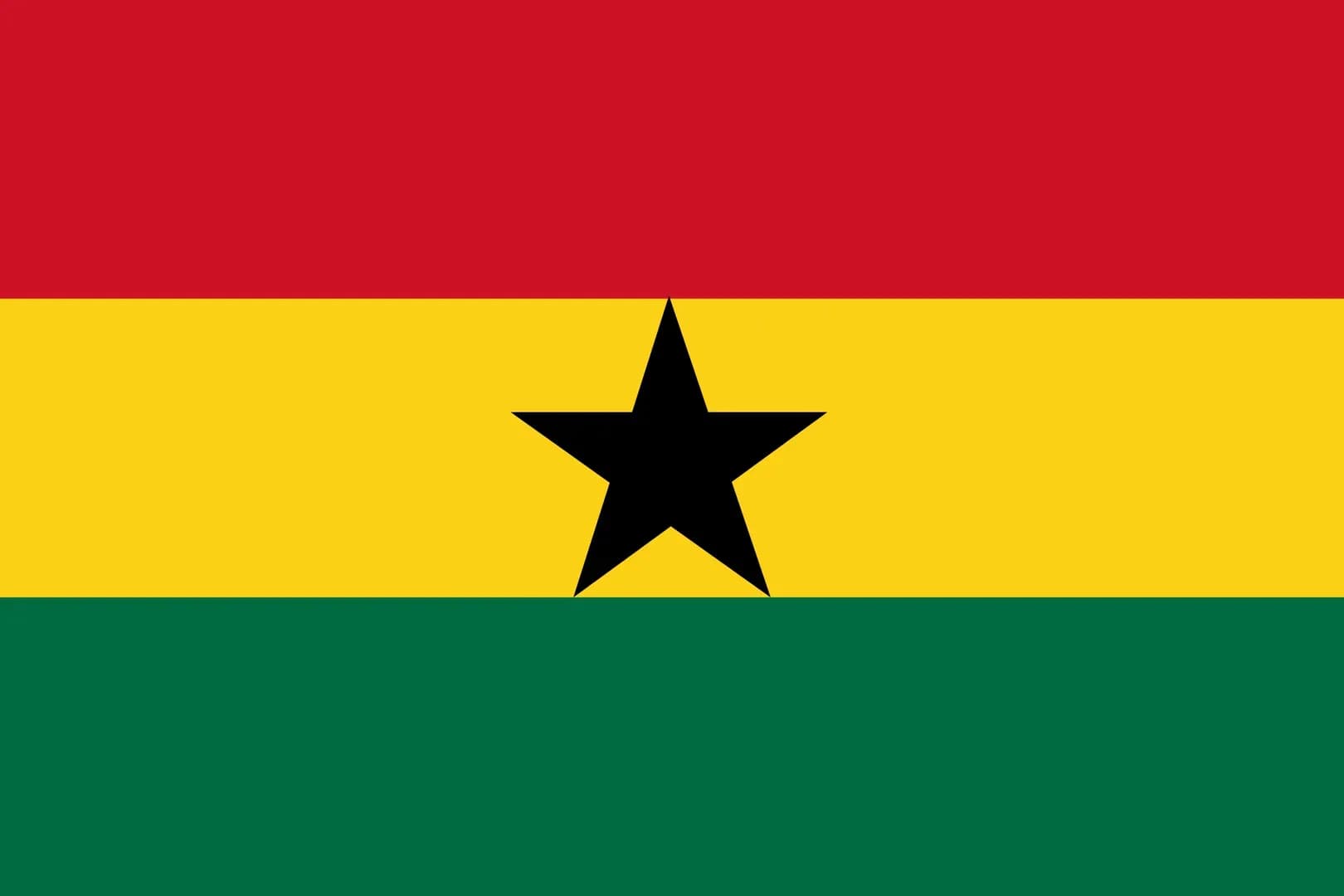 INDEX 20.10.2025, 08:37 Ghana Sovereignty Index (Burke Index), 2024-2025  Share on media IntroductionThis report provides a comprehensive analysis of Ghana's sovereignty using the methodology of the Burke Institute. Sovereignty is assessed in 7 areas: political, economic, technological, informational, cultural, cognitive and military. Each aspect is assessed on the basis of official data from international and national sources (UN, World Bank, UNESCO, IMF, ITU, FAO, SIPRI, PISA, etc.) without using politicized indexes. The maximum score in each direction is 100; the sum (up to 700) is the accumulated Sovereignty Index (Burke Index). To adapt and adjust statistical parameters, an international expert survey was conducted for each of the seven components using a single questionnaire of 10 questions with a 10-point scale and one open-ended question. In total, at least 100 experts from 50+ countries were interviewed for each indicator, taking into account geographical representation and specialization. When calculating and analyzing the data, equalizing coefficients were used, bringing all data to a scale of 0-10 points. The final index value is the arithmetic mean between statistical data and expert estimates. Below is an analysis of each area, a summary table and the main conclusions about the peculiarities of Ghana's sovereignty. Political sovereignty — 67.2Ghana is one of the most integrated countries in Africa. Member of the United Nations, African Union, ECOWAS, Commonwealth, WTO, World Bank, IMF, International Criminal Court (ICC), African law organizations, actively participates in agreements with the EU, USA, China, etc. The Constitution of Ghana has a dualistic approach: international law is part of the system only after ratification and implementation by Parliament. The Constitution, customary law and adopted statutes are given priority. International norms, including court decisions, are applied if they do not contradict the Constitution. Ghana has traditionally been considered one of the most stable and democratic countries in the region: there have been no military coups in the last 30+ years, regular free elections, and a high level of civil liberties. In the WGI Index, stability is ~45.5% percentile (2024), point conflicts in the north and crime problems persist. The government effectiveness indicator is 0.36 according to World Bank 2024 (72nd percentile of the regional rating, average level in Africa; progress from previous years). According to the UN EGDI index for 2024, Ghana ranks 108 (index — 0.632), is one of the third most digitalized countries in Africa; there is a single portal for public services, electronic interaction with citizens, eID, and a smart document system. Support/trust in the national leader: Polls (Global InfoAnalytics, September 2025): approval of President John Mahama is 67% (down from 73% in July), disapprove — 22%, 11% — neutrality; in all regions, the majority of the population supports the course of leadership, but there is an increase in public demand. Foreign military bases in the country: For 2025, there are no foreign military bases (USA, France); Ghana is building its own "forward operating bases" to strengthen the northern border, is increasing defense cooperation with partners, but is not deploying permanent foreign bases. Participation/distancing from transnational courts: Ghana is a formal member of the ICC and is recognized as an exemplary country in the implementation of the Rome Statute. He also actively uses the ECOWAS Court and the African Court of Human Rights, and supports the mechanism of international justice. Court decisions are executed — regular participation in cases. Centralization/decentralization of power: Ghana is a unitary state with a system of significant decentralization: powers are transferred to regions, districts, municipalities (taxes, budget, education, health), and elected local assemblies, but key strategic and personnel decisions are assigned to the central government. Transparency and control of intelligence agencies: The national security structure includes the national intelligence and police under parliamentary and presidential supervision. The Parliamentary intelligence committee is working, reporting is underway, and public control is being strengthened, but institutional transparency is limited by national security; corruption and abuses of power are regularly discussed in the media and in Parliament. Data completeness assessment: the main indicators are available from international sources, coverage is 94%. Economic sovereignty — 48.2GDP per capita (PPP): $7 062-8 027 (2024), World Bank/Trading Economics. Sovereign gold and foreign exchange reserves: $3.4–9 billion (World Bank, 2024: $3.4 billion; Trading Economics: $8.982 million). After the peak in 2022-2023, they decrease due to debt payments, but remain significant for the African region. Government debt (% of GDP): Officially 61.8–70.5% (2024), the dynamics is a moderate decrease over the year, the impact of restructuring and debt containment measures can be traced. Food insecurity: The FAO estimates that ~2 million people (out of 33 million) experience acute or severe food insecurity between June and August 2025. In general, the main crop is above average, food inflation is decreasing, and local shortages are observed in some regions. Energy independence: The country is implementing a long-term energy transition strategy, local generation (hydro, gas, a new NPP unit) covers at least 80% of domestic demand, 500 MW of new renewable energy facilities are being built, and it is planned to increase the share of renewable sources from 5% to 14% by 2025. Explored resources: The largest reserves of gold (Africa's leader), bauxite, manganese, diamonds, oil and natural gas. The service and processing industry in the resource sector is well developed, and the investment climate is one of the best in the region. Freshwater reserves: Total freshwater resources — 5% of the territory, large river systems (Volta, Freshwater zone, coast). Regional shortages and pollution are periodically observed, and there is a state plan for the protection of water resources and the development of hydroinfrastructure. National payment processing: The largest national system, GhIPSS (Ghana Interbank Payment and Settlement Systems), covers electronic and mobile payments, banking, and interbank clearing operations. All settlement systems are regulated by the Central Bank and the national operator. The share of national currency in settlements: The domestic market is dominated by transactions in national currency (GHS, Ghanaian sedi); almost 98% of domestic transactions are executed in GHS through electronic and mobile services. The share of dollars and euros in foreign economic activity is high, but the government encourages the use of its own currency. Its own issuing center and credit policy: The Central Bank of Ghana (Bank of Ghana, BOG) fully issues sedi, determines credit and monetary policy, rates, exchange rates, and assigns the development of all key decisions (absolute currency sovereignty). Data completeness assessment: the main macroeconomic indicators are available from official sources (World Bank, IMF), coverage is 90% Technological sovereignty — 37.9Official R&D expenditures amount to 0.3–0.4% of GDP (according to Statista, Knoema, world ranking ~115th place). The growth rate is moderate, long-term below the global average. Import substitution in high-tech: Insignificant: most of the machinery, electronics, and IT components are supplied from abroad (China, EU, Southeast Asia). Assembly plants (PCs, household appliances) are being opened, but localization does not exceed 10-15% of the segment; new zones of technoparks provide for the expansion of local assembly. Higher education enrollment: The proportion of university students is 22% (2023), according to UNESCO and the World Bank, a growing figure, but still 2 times lower than the global average (40%). Internet penetration: 69.9% of the population are regular Internet users (24.3 million in January 2025), the median fixed access speed is 46 Mbit/s. The growth rate is steady, but 30% of residents are without access. Own national digital platforms: The portal of public services operates Ghana.gov, there is a national GhIPSS electronic payment system, ehealth and EdTech projects (eCampus, mPower Learning, EU-education). Most platforms are being developed using foreign technologies, and there is an increase in the share of local programming. High-tech import dependence: In the segment of electronics, microelectronics, communications and software, over 85% of products and components are imported (from China, the European Union, the USA, India, Turkey and Southeast Asia). The EGDI index (2024) is 0.632 (ranked 108th in the world). The coverage of national digital services (taxes, state registration, procurement, payment of fines and utilities) is about 60% of the adult population. Biotechnological autonomy: Ghana is pursuing a policy of integrating biotechnologies in agriculture, the first commercial trials of GM crops (corn, cotton) have been completed, the KNUST biotech center is implementing research programs, but all genetic material and most of the equipment are imported; there is no national full-cycle company. Robotics is being implemented only in the form of educational and individual industrial pilot projects (university projects, maker startups). There is no domestic industry or end-to-end sector. Autonomy in chips and microelectronics: The sector is completely import-dependent, with no Ghanaian-based national production of microchips, circuitry, fabrication and design. Universities have separate laboratories at the training/prototyping stage, but not in production. Data completeness assessment: key indicators are obtained from WIPO, ITU, UNESCO, which provides 93% coverage. Information sovereignty — 55.8Cybersecurity (CERT/ITU): The National Center is Ghana National CERT (GhCERT), officially accredited in the FIRST international system and the AfriCERT African network. Place in the ITU Cybersecurity Index (GCI — 2023): 42, the best result in West Africa, the degree of maturity is average, good international cooperation and regular exercises are noted. IXP/Network development: There are 2 fully functional Internet Exchange Points in Ghana: GIX (Accra) and KIX (Kumasi), connecting more than 20 local operators, network and content providers; direct connections to underwater cables and cross-border African highways ensure high regional connectivity and reduced delays. Media in the national language: The main language of media broadcasting is English (the state language), broadcasts on ewe, akan, ga, Dagbani, etc. are also popular; major state and commercial TV channels and radio (GBC, TV3, Joy FM) conduct programs in several languages, the coverage of ethnic languages by population is about 75% in large cities. Mass media, almost 100% in regional radio and local TV channels. Resistance to BigTech: Ghana does not impose restrictions on the work of BigTech, but develops national platforms (Ghana.gov, GhIPSS, eCampus, MoMo — Mobile Money). The share of local startups and software in the banking market, payments, and the fast-growing EdTech/finTech sector is growing, but almost all critical services, cloud solutions, and social media are foreign. The share of own media content: On TV and radio — at least 65% of locally produced content (news, music, series, entertainment formats), in online media the share of local content is up to 40% (the load of YouTube, TikTok, Facebook, global OTT is much higher). Own IT products/software: A network of local fintech and EdTech startups is active: ExpressPay, eCampus, mPower, Zeepay, SOFTtribe, Hubtel, GTBank – many solutions are recognized as successful and exported to the region. The main government services support a local IT course in software procurement and startup support. Digital service coverage: More than 68% of the adult population regularly uses electronic payments, MoMo, Internet banking, online public services, EdTech platforms; mobile services cover 86% of adults (MoMo registration). National cloud storage systems: Main data centers (Accra Data Center, GDC, MainOne) with Ghanaian or mixed ownership, part of the public sector leases local clouds. However, up to 50% of the system data storage (corporate, banking, egov) is located in global clouds AWS, Azure, Google Cloud — under a government License Agreement. The sovereignty of mobile communications: MTN Ghana, Vodafone Ghana, and AirtelTigo operators are licensed by the NCSA (regulator), the main infrastructure and services are built by private international companies, but there is strict government regulation and a requirement for the placement of local subscriber and network data, independent certification of calls, SMS, and mobile data. Legal regime of personal data: Data Protection Act 2012, updated 2023: regulator — Data Protection Commission, consent regime, prohibition of unauthorized processing and cross-border transfer without verification, according to the GDPR and ECOWAS model. The real level of enforcement is average, major leaks have become less frequent, and there is a practice of fines. Data completeness assessment: infrastructure indicators are available from ITU, CIRA, OECD and specialized sources, coverage is 96%. Cultural sovereignty — 74.6Number of UNESCO sites: 2 World Heritage sites — "Forts and castles, the regions of Volta, Accra, Central and Western" (Atlantic Fort system, 1979) and "Traditional buildings of the Ashanti people" (Ashanti Traditional Buildings, 1980). The total contribution to world culture: Ghana is the birthplace of kent (fabric), high life and Afrobeat music, jollof dishes-rice and jar, the main country of the Atlantic Forts and the epicenter of Ashanti heritage. Ghanaian diasporas and their descendants have played a role in the formation of modern music, cooking and fashion. The world festivals PANAFEST, Afrochella, and Accra Fashion Week. National Awards in Art and Culture: The annual Ghana Arts & Culture Awards (GACA), recognized by the government and industry, award the best collectives, artists, musicians, designers, authors, architects. The official register of winners is published in the media, and the ceremonies are attended by the President. Traditions and identity: More than 100 nations, the largest: akan, ewe, mole dagbani, guy, guan, gourma, gra, anglon, fanti. A rich system of spiritual practices (for example, Homowo, Aboakyer, and Chale Wote festivals), community institutions, matrilinealism, crafts, polychrome ceramics, carvings, masks, and a stable cult of elders and ancestors. State support for small nations: Heritage programs, support for ethnolanguages, financing of ethnographic museums and festivals, partnership with UNESCO and PANAFEST, the Ministry of Tourism and Culture oversees grants for the preservation of languages and traditions. Individual projects include support for folklore groups, ethnic education, and restoration of material heritage sites. The number of cultural sites: In the national register there are more than 240 objects of special historical and cultural value. dozens of museums, archives, museum houses, royal residences, palaces, fortresses (Elmina, Cape Coast). 6 sites are awaiting entry into UNESCO. International cultural projects: PANAFEST, Afrochella, Ghana Diaspora Homecoming, Accra Fashion Week, FESTAC AFRICA are regularly held, major exhibitions in the USA, France and Great Britain are curated, diaspora exchanges, joint research projects with museums and archaeologists of the world. Recognition and protection of cultural brands: In September 2025, Ghana officially registered the Kente brand and a number of creative designs as national trademarks; there is an agency for the protection of traditional arts and crafts, relevant copyright legislation, WIPO agreements and regional organizations. A variety of culinary culture: Dozens of national and regional dishes: jollof-rice, jar, fufu, banana chips, eji, kenke, palmnut soup, tillapia grills, coco yam, waaki cottage cheese, shito, etc. Culinary festivals, exports of coffee, cocoa, palm wine, innovations of "gastronomic tourism". The proportion of the population involved in cultural life: According to national reports, more than 70% of adults participate at least once a year in festivals, rituals, celebrations, rituals or collective ceremonies. In cities and coasts, the participation rate is about 85%, and the vast majority of the population participates in national holidays. Data completeness assessment: basic indicators are available in UNESCO and national statistics, coverage is 88%. Cognitive sovereignty — 58.3Human Development Index (HDI): 0.628 (2023, UNDP), ranked 143rd in the world (2025), category — “average level". The value continues to grow, but below the global median (0.744). Government spending on education: 2.91–4% of GDP in 2022-2024. Official World Bank statistics give the latter value: 2.91% of GDP, alternative international platforms — up to 4%. The global average is 4.2–4.5%. Adult literacy: 76-80% according to the World Bank and the National Statistical Office (2025), men — 84%, women — 74%. In large cities, the level exceeds 90%, in rural areas — below 70%. International Test Results (PISA): Ghana is officially registered as a member of PISA (OECD). Piloting was carried out in 2022, mass participation is planned for 2025; data for previous cycles are not available. Regional tests record low scores in mathematics and science. The share of STEM graduates: 15% of the number of high school graduates (2023), is expected to grow to 24% in 2024 under the state STEM program. There is also an increase in STEM fields in universities; the share of students in engineering, mathematics, and IT is up to 18%. Share of foreign educational programs: Estimated 8-10% of university and postgraduate programs are implemented jointly with international universities (EU, UK, USA, India, China), including distance and exchange scholarships. Languages and cultures of small nations: More than 70 ethnolinguistic groups, 11 languages are officially recognized (>40 true small languages), active state language support programs, ethnocultural education, many inter-language and interethnic projects. The largest groups are akan, ewe, ga-dangme, mole dagbani, and gurma. The state supports the rotation of languages in schools, the media, and literature. Number of state research centers (fundamental sciences): There are more than 13 government research institutes: the main center is the Council for Scientific and Industrial Research (CSIR, founded back in 1968), plus institutes in agriculture, physics, biotechnology, and ecology. The share of the national educational platforms: the EdTech sector is developing rapidly (eCampus, mPower Learning, Open University), the total share of users at school and university age is about 20%, the rest use foreign and open platforms. The scope of state talent/personnel support programs: Government scholarships and accelerators (Ghana Scholarship Secretariat, National Science & Maths Quiz, STEM Challenge, Africa Talent Accelerator), academic and Olympic grants, international exchange programs, research awards, visa benefits for young professionals are allocated. Data completeness assessment: education indicators are available in UNDP, UNESCO, OECD, coverage is 89%. Military sovereignty — 41.7Defense spending (% of GDP): 0.39–0.45% of GDP according to the World Bank, SIPRI and IMF (2023-2024); global median — 1.6%, African — 1.5%. The total defense spending is about $260-270 million per year. Number of armed forces: About 15,500-16,000 (2024): Army, Air Force, Navy, gendarmerie (according to GFP and SIPRI), plus up to 5,000 additional reservists. Modern weapons: The main fleet consists of American, British, French and Chinese—made equipment; significant upgrades to the Air Force and Navy have been underway since 2022 (purchases of UAVs, armored vehicles, and aviation modernization). UAVs, armored vehicles, multipurpose boats, the introduction of communication and intelligence systems — all this has been purchased in the last 3 years. The share of own weapons: Legally, the share is minimal (up to 3%). Handicraft production is widespread (200,000 handguns per year on the secret market), but heavy and high-tech weapons are imported in full. Border control: The GIS Border Guard Service and the Joint Border Guard Unit (BGU) are subordinate to the army and the Ministry of the Interior, monitoring is based on ground patrols, mobile checkpoints, tracking systems and aviation; the main challenge is illegal migration, smuggling (especially in the north and in ports). Military reserve: Officially up to 5,000 reservists, regular training (assigned and mobilizable units), retraining — at least once every 2 years. There is also a volunteer reserve of students (university building). Autonomy of military decisions (accounting for blocs/alliances): The army is completely independent, participates only in UN and ECOWAS missions, does not make decisions within military alliances, there are no foreign bases, the main weapons and exercises are supported by partners, but without external command. National military industry: Defense Industries Holding Company (DIHOC) — a state-owned operator, produces uniforms, equipment, repairs machinery, there is a handicraft market for small arms (regulated), new projects for the production of boats and armored vehicles with foreign partners. The presence of nuclear weapons, the number of warheads, and the absolute reserve: It does not have nuclear weapons, the NPT has been signed and ratified, and nuclear weapons production, storage, and transit programs are prohibited. There are no reserves, infrastructure, or even a reserve for the future. Military space, national Intelligence system: There are no national military satellites, but intelligence units are being developed, UAVs have been introduced, and satellite monitoring is underway through partner programs (mainly the United States, the EU, and China). Centralized military headquarters — Directorate of Defense Intelligence, integration with civilian satellite monitoring. All parameters are reflected in the annual reports of SIPRI, UNODA, the Ministry of Defense, the official portals of state-owned companies (Embraer, IMBEL) and industry databases of UN/NGO – 94% coverage Final Summary Table
The main conclusionsStrengths. Political stability and effective governance One of the most stable and democratic countries in Africa: without military coups in three decades, stable electoral system, high level of civil rights, balance between central government and decentralization. International integration and recognition Member of the United Nations, African Union, ECOWAS, Commonwealth, IMF, WTO, ICC; maintains a high level of trust in international institutions, forms partnerships with the EU, USA, China and leading African powers. Macroeconomic independence and financial sovereignty Its own issuing center (Central Bank of Ghana), independent monetary policy, developed national payment processing GhIPSS, and the vast majority of domestic turnover are in cedis. Diversified resource base: the leader in reserves of gold, bauxite, manganese, diamonds, oil and gas, a powerful agricultural zone and a developed food industry, energy independence, active investments in renewable energy and hydrogenation are advancing. Cultural and ethnic wealth Two UNESCO sites, dozens of national awards, a unique synthesis of traditions and religions (the coexistence of Christianity, Islam and animistic cults), a well-developed system of local festivals, PANAFEST and Afrochella festivals are the largest on the continent. A qualitative leap in e-gov and fintech Digital services reach 60-70% of adults (MoMo, public services, EdTech), high level of development and proprietary platforms (eCampus, mPower, Zeepay), active banking and fintech community. Relatively high level of education and literacy: adult literacy is 76-80%, the introduction of mass STEM programs in universities and schools (the growth of STEM graduates to 18-24%), more than 13 state research institutes. Weaknesses. Import dependence in high-tech and science More than 85% of electronics, software, and communications are imported, spending on science is ~0.3% of GDP (the global average is 2.5%), localized assemblies in technology parks and biotechs are just being formed, and there is no full cycle of microelectronics and robotics. Limited defense budget and technological dependence: the military budget is ~ 0.4% of GDP, the army is relatively small (~ 16 thousand), modern weapons are supported by imports and foreign contracts, heavy and high-tech weapons are not produced, there are no nuclear weapons and military space. Social imbalances and vulnerability to inflation 2 million people are experiencing acute food insecurity, and inflation (especially grocery inflation) continues to put pressure on the poorest households. Regional imbalances and quality of education: there is an obvious gap between the city (literacy 90%+) and the periphery (<70%), not all children have access to STEM and IT education, up to 30% of the country is offline, and the share of international educational programs is still low. Law enforcement and military issues Border control is difficult due to illegal migration and cross-border crime, abuse of power and corruption in certain structures persist, as noted in international reports. Overall assessment. Ghana's cumulative sovereignty Index is 384 out of 700 points (average — 54.9%), which places the country in the top 100 in the global top. Ghana is one of the most stable, social and open African republics with strong state institutions, a rich socio-cultural heritage, a rapidly developing digital environment and relative financial independence. The main challenges are related to technological import dependence, the need to modernize science and the armed forces, and the fight against poverty and inequality between the region and the city. The sovereignty profile indicates that the stability of sovereignty is high — in terms of a combination of political, economic, cultural and educational parameters, and vulnerabilities lie in the areas of technological independence, weapons and social protection | ||||||||||||||||||