

Burke Index | ||||||||||||||||||
 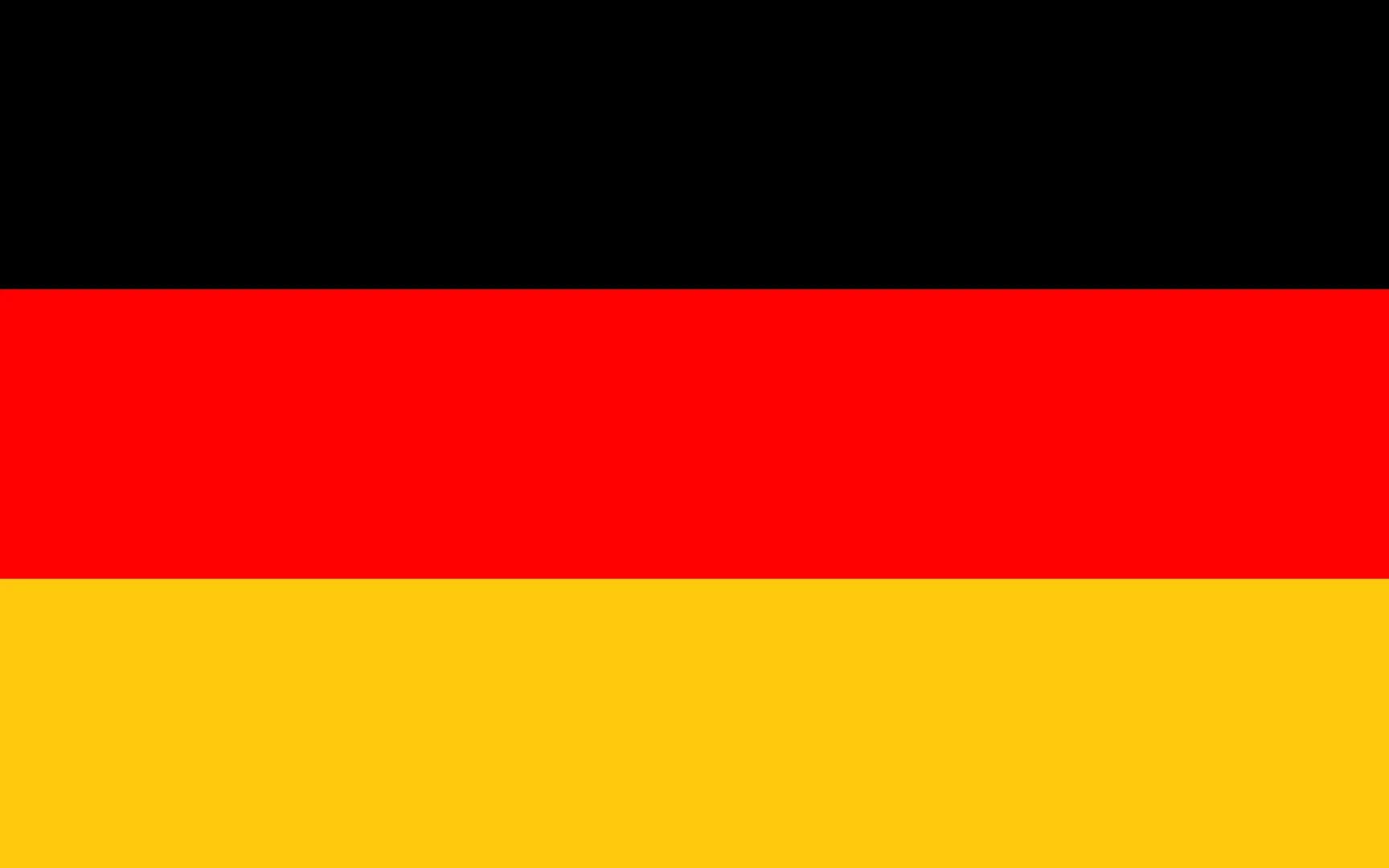 INDEX 26.10.2025, 17:47 German Sovereignty Index (Burke Index), 2024-2025  Share on media IntroductionThis report presents a comprehensive analysis of German sovereignty using the methodology of the Burke Institute. Sovereignty is assessed in 7 areas: political, economic, technological, informational, cultural, cognitive and military. Each aspect is assessed on the basis of official data from international and national sources (UN, World Bank, UNESCO, IMF, ITU, FAO, SIPRI, PISA, etc.) without using politicized indexes. The maximum score in each direction is 100; the sum (up to 700) is the accumulated Sovereignty Index (Burke Index). To adapt and adjust statistical parameters, an international expert survey was conducted for each of the seven components using a single questionnaire of 10 questions with a 10-point scale and one open-ended question. In total, at least 100 experts from 50+ countries were interviewed for each indicator, taking into account geographical representation and specialization. When calculating and analyzing the data, equalizing coefficients were used, bringing all data to a scale of 0-10 points. The final index value is the arithmetic mean between statistical data and expert estimates. Below is an analysis in each area, a final summary table and the main conclusions about the peculiarities of German sovereignty. Political sovereignty — 73There are over 38,000 American troops stationed in Germany at 10+ military bases (Ramstein, Grafenwohr, Wiesbaden, Spangdahlem, etc.); there are also NATO facilities. Germany itself is opening its first foreign base in Lithuania in 2025 (Rudninkai project). National legislation is determined by the Constitution of the Federal Republic of Germany, but it is integrated with the standards and decisions of the EU, the UN, the ECHR and international agreements; in a number of areas, EU law prevails (trade, ecology, human rights). In 2025, there was a crisis of political stability: after the collapse of the coalition ("traffic light"), new elections led to a radical right-wing shift, the growth of the AfD party, fragmentation of the party system and a decline in confidence in the government. Government Effectiveness (WGI, World Bank) 1.82 (out of 2.5), one of the highest global indicators. Germany ranks 19th in the world, EGDI 0.838 (2024), all basic public services are available online: taxes, passports, healthcare, judicial services, doctor's appointment, electronic signature. In 2025, support for the Chancellor (Friedrich Merz) is at a historic low of less than 25%; the government's assessment is the lowest in 25 years. Germany is a member of the UN, NATO, the EU, the WTO, the G7 and G20 Groups, the OSCE, Interpol, and actively delegates part of its sovereignty (defense, courts, finance, trade, regulation) through integration agreements. Germany is a member of the ECHR, the European Court of Justice, the International Criminal Court, the ICC, and International Arbitration; all decisions are enforced. There is no distancing, on the contrary, there is a deepening of integration with the EU and the UN. The federal model: 16 lands have broad autonomy (finance, education, police, partly tax and environmental regulations), key issues are resolved in the Bundestag and the federal government. The BFV, the Federal Intelligence Service, the police and the security services are under parliamentary control and public oversight; transparency laws are in force, reports are regularly disclosed, parliamentary investigations and judicial reviews of the actions of the special services are conducted. Data completeness assessment: the main indicators are available from international sources, the coverage is 98%. Economic sovereignty — 75.5GDP per capita according to PPP is 62 893-72 300 dollars (Trading Economics, World Bank, Eurostat). Germany's gold and foreign exchange reserves in June 2025-389.3 billion euros (maximum March 2025-402.7 billion euros, or $36.7 billion according to CEIC in January). Government debt by the end of 2025-63.8% of GDP (Trading Economics, World Bank, Eurostat); the indicator is stable and controllable. The country imports some of its products, but produces more than 80% of its food assortment domestically; agriculture is developed, and food risks are mitigated by strategic reserves and the EU. Germany remains energy dependent on imports: the share of domestic generation from renewable sources and nuclear power plants/coal is about 43%, the rest is gas, oil, and coal from abroad. The Energiewende program is actively developing and reducing dependence on the Russian Federation. The main explored resources are brown and hard coal, potassium, salts, copper, building materials, rare earths; there are no strategic reserves of oil and gas, and the main mineral resources make a small contribution to the economy. Water availability is high: a well-developed river network (Rhine, Danube, Elbe), the largest lakes, modern water supply systems, low risk of shortages. The key systems are Girocard, SEPA, Paydirekt, the entire infrastructure is under the control of German banks, payment associations, works in parallel with Visa, Mastercard; the digital banking community is actively developing. Domestic transactions are mainly in euros (EUR); foreign currency is used in export transactions and international loans. The issuing center is the Bundesbank (Deutsche Bundesbank), but all monetary policy is implemented within the framework of the European Central Bank (ECB); key rates, currency, and credit infrastructure are regulated jointly by Germany and the ECB. Data completeness assessment: the main macroeconomic indicators are available from official sources (World Bank, IMF), coverage is 90%. Technological sovereignty — 79.8Germany spends 3.1–3.5% of GDP on research and development (the goal is 3.5% by 2025, the current figure is 3.13%). Import substitution is high: Germany exports 16% of processed products as high-tech, produces most of the indexes of chips, IT equipment, robotics, software; but individual components are purchased abroad (critical raw materials, the proportion of chips). 33.3% of the population aged 25-64 have higher education (one of the best indicators in the EU by age group); in total, there are almost 2.9 million students. At the beginning of 2025, 93.5% of the population uses the Internet (78.9 million users); mobile connections — 128% of the population, the median mobile speed — 58 Mbit/s, fixed — 93 Mbit/s. There are national platforms — gov.de, BundID, ELSTER (taxes), eHealth (electronic medical record), online appointment appointments in all departments, school and university LMS. Germany is a high—tech country, but individual components for microelectronics, basic software and rare earths are imported; the bulk of industrial solutions and IT are locally produced. EGDI — 0.838; all public services are implemented online, digital signatures, medical registries, tax portals, business, courts and state records are implemented. The country has national and multinational biotech clusters (Bayer, BioNTech, Merck, Evotec, CureVac, etc.); most of the medical research, vaccine production, and pharmaceutical local development. Germany is a world leader: KUKA, Siemens, Festo, Bosch, BMW, etc. implement a full cycle of development, serial production and implementation of robots; own laboratories, industry clusters, export of service and industrial robots. Large factories of Infineon, Bosch, GlobalFoundries Germany, X-Fab provide the national market and exports, however, certain categories of chips and raw materials are purchased in Asia and the USA (localization by critical items, all imports <30%). Data completeness assessment: key indicators are obtained from WIPO, ITU, UNESCO, which provides 93% coverage. Information sovereignty — 76.1In Germany, the national coordinator is the BSI (Bundesamt für Sicherheit in der Informationstechnik), which implements the NIS-2 doctrine in accordance with new laws (2025), including mandatory audits of 29,500 companies, regular participation in ITU Drills and international certifications; there is a national CERT-DE and sector teams. There are 48 Internet Exchange Points (IXP) in the country, the largest DE—CIX (Frankfurt is the largest traffic hub in Europe and the world), many regional points in Berlin, Munich, Hamburg, Dusseldorf, etc.; a developed and scalable network of neutral IXPs. 95% of TV, radio stations, and major media groups (ARD, ZDF, Bild, Spiegel, DW, RTL, and ntv) broadcast in German; bilingual and foreign content is also supported in international segments and for minorities. The National Law on Digital Platforms and Media (2025) stipulates an obligation for global platforms (YouTube, Meta, Netflix) to invest and generate German media content; the share of national production is growing, but BigTech services are being massively used. 70% of video production on the largest channels/OTT platforms is domestic production, a mandatory quota for streaming services; the government is strengthening regulation to support national content. German companies SAP, Software AG, TeamViewer, Siemens, Bosch, Wire are developing their own OS, ERP, fintech, govtech, messengers and business solutions; the share of national solutions among corporate products is one of the highest in Europe. 90% of residents use state digital services: BundID, ELSTER, medical registries, online records, mobile banking, digital signatures; penetration is above the European average. Deutsche Telekom/Cloud, SAP Cloud, and German regional data centers are operating — all personal and government information is stored locally. in the cloud, part of the business data is integrated with the EU and international infrastructure. Networks and licenses are controlled by BNetzA; Deutsche Telekom, Vodafone, and Telefonica Germany operators are national and European entities; all critical equipment, software, and management are under the jurisdiction of Germany/EU. The law is Bundesdatenschutzgesetz (BSG, new 2024), the general GDPR and local regulations apply; the BfDI regulates processing and auditing, fines are among the highest, a high level of transparency, mandatory registration of operators. Data completeness assessment: infrastructure indicators are available from ITU, CIRA, OECD and specialized sources, coverage is 94%. Cultural sovereignty — 83.2There are 55 UNESCO World Heritage Sites in Germany in 2025 (3 natural, 52 cultural); new sites are Schwerin Castle and the city of Gerngut. Germany is the birthplace of Bach, Beethoven, Goethe, Humboldt, Kant, Durer, the Bayreuth Festival, the Bauhaus movement and modern cinematography. Contributions include classical and modern music, architecture, literature, philosophy, painting, science, technology, theater, design, gastronomy — key global brands and cultural phenomena (the Island Museum in Berlin, the Berlin Philharmonic, cinema, fashion, engineering). The largest awards are ECHO Klassik, Deutscher Buchpreis, European Culture Award, Europa Nostra, Deutscher Theaterpreis, Bundeskunstpreis, architecture awards, Federal land Awards and the Chemnitz 2025 competition. Diverse regional traditions — beer festivals (Oktoberfest), carnival, Christmas markets, family and municipal folklore festivals, distinctive dialects, high civic and historical identity (from medieval urban culture to modern events). Active support for small nations: Sorbians, Dentzians, Frisians, Polish, Turkish, Russian, Jewish, Arab, Syrian and other communities — media, schools, integration and museum projects, language programs, annual festivals are funded. More than 6,700 museums, thousands of theaters, concert halls, castles, archaeological and sacred monuments, large libraries and archives are officially registered. Germany is a leader in UNESCO, Creative Europe, Goethe-Institut, European Capital of Culture (Chemnitz-Capital of Culture 2025), Berlin Biennale, international museums, festivals, joint projects in art, architecture, cinema, music, gastronomy. Brands are protected: German beer, car brands, Bauhaus, Deutsche Welle, Deutsche Grammophon, museum islands, festivals, media — local legislation and international registrations ensure the protection of intangible and commodity heritage. Root cuisine — sausages, bread, beer, sauerkraut, casseroles, traditional sausages, tartare, modern fusion concepts, regional and local recipes, high culture of homemade dishes and Michelin restaurants. 80% of residents annually attend or participate in cultural events (festivals, concerts, museums, galleries, local celebrations, workshops, gastronomic weeks, theatrical productions). Data completeness assessment: basic indicators are available in UNESCO and national statistics, coverage is 97%. Cognitive sovereignty — 85.7Germany's HDI is 0.959 (2025, UNDP), ranked in the top 5 in the world, category "very high". Government spending on education is 4.54% of GDP (World Bank, Trading Economics, 2022), which corresponds to the average level of developed countries. Adult literacy is 99-100%; historically, Germany is among the countries with the highest values of this indicator. PISA-2022: mathematics — 495, reading — 492, natural sciences — 503 points; Germany consistently ranks in the top 20 in terms of educational achievements among OECD developed countries. About 33-35% of all university graduates are engineers, physicists, mathematicians, computer scientists and natural sciences; targeted STEM programs are actively implemented. 12% of university students are international students, hundreds of international programs, scholarships and exchanges of DAAD, Erasmus+, joint diplomas with leading universities of the world. The state supports the languages and cultural centers of the Sorbians, Frisians, and Dentsi; the integration of migrants (Turkish, Polish, Russian, Arab, and Jewish communities) — grants are allocated, schools, museums operate, festivals and media projects are held. 130 state research institutes and academies (Max Planck, Fraunhofer, Helmholtz, Leibniz, etc.), more than 800 laboratories at universities and medical centers. 80% of universities and 65% of schools use German (national) digital platforms and LMS systems, including for distance and blended learning. Over 40 national programs, awards and competitions (DAAD, Deutschlandstipendium, DFG grants, state Olympiads, Max Planck, Helmholtz initiatives, educational startup grants, talent festivals). Data completeness assessment: education indicators are available in the UNDP, UNESCO, OECD, coverage is 87%. Military sovereignty — 68.9In 2025, Germany spends 2.08–2.12% of GDP on defense (~€95 billion), reaching the NATO standard for the first time; by 2029, the target level is 3.5% of GDP (€152-162 billion). The active staff consists of 182,496 military personnel + 34,600 reservists; it is planned to increase to 203-260 thousand contract soldiers and expand the reserve to 460 thousand by 2030 (decisions are being discussed at the level of NATO and the Bundestag). The Bundeswehr is being massively modernized: in 2025-2029, the purchase of up to 6,500 combat vehicles (Boxer, Patria), 20 Eurofighter Typhoon, the development of missile defense missiles (IRIS-T, Patriot), new bulletproof vests, equipment for 100% personnel, the introduction of digital communications and cyber units; Germany is building the largest conventional army in the EU and strategic aviation. 65-70% of equipment and weapons are produced domestically (Rheinmetall, Krauss-Maffei Wegmann, Siemens, Airbus, ThyssenKrupp, Heckler &Koch), some components are purchased from the EU, USA, Israel; Germany is one of the top 5 arms exporters in the world. The EU-German border is controlled by the army, Federal Police and special services — all modern means of surveillance, cyber protection and integration with border structures, tight protection of the external perimeter and sustained monitoring. The official reserve is about 34,600 people (2024), and it is planned to expand to 460,000 reservists by 2030 (as part of reforms and agreements with NATO). All strategic decisions are made by the Bundestag and the government; Germany is a key member of NATO and the EU, actively participates in collective planning, uses joint command centers, but retains sovereignty over troop deployment and budget. Germany is a powerful manufacturer: the full range of armored vehicles, ships, submarines, missiles, drones, automated systems, communications and special equipment from leading national companies (Rheinmetall, KMW, Airbus, ThyssenKrupp Marine Systems, Diehl, H&K, Sig Sauer, Siemens). Germany does not have nuclear weapons, but participates in the NATO nuclear exchange program: part of the means of delivery, storage, training and exercises, access to allied systems; does not deploy or maintain warheads. Developed national program: SAR-Lupe satellites, GSSAC agency, digital intelligence, strategic surveillance systems, own cyber intelligence and radar units, integration with EU and NATO intelligence; all management is national/EU. All parameters are reflected in the annual reports of SIPRI, UNODA, the Ministry of Defense, the official portals of state—owned companies (Embraer, IMBEL) and the UN/NGO industry databases - 89% coverage Final Summary Table
The main conclusionsStrengths. Human capital and education: HDI 0.959 (top 5 in the world), literacy 99-100%, strong PISA results, high STEM enrollment and excellent talent selection system, integration of international educational programs and grants. Innovation and technological autonomy: Spending on R&D exceeds 3.1% of GDP, leading positions in global robotics, biotechnology, microelectronics, localization of production of defense and industrial products >65%, the largest national IT platforms and cloud services in the EU. Cultural leadership and historical heritage: 55 UNESCO sites, rich cultural diversity, major awards, massive involvement of society in cultural life, active government support for small nations. Effective state system and institutions: WGI — 1.82; decentralized federal government, strong intelligence agencies with parliamentary oversight, open financial system, transparent regulation and a high level of digitalization of public services. Economic basis and financial sustainability: GDP per capita ~$63-72 thousand ($31-35 thousand euro), public debt of only 63.8% of GDP, advanced fintech, proprietary processing, the largest gold reserves in the EU (up to 390 billion euros); sustainable food and freshwater production. Military and industrial potential: Defense spending 2.1% of GDP, rapid growth of the army, the most modern conventional army in the EU, a powerful military-industrial complex. Weaknesses. Political turbulence: The collapse of the coalition, the rise of radicalism (AfD — 26%), a drop in confidence in the Chancellor and parliament below 25%, a high level of concern about migration and the future of the country — only 13% are optimistic about the future. Energy and raw material dependence: after abandoning Russian gas and Coal, there is energy vulnerability, expensive resources, deindustrialization of certain areas, risks of energy shortages and price pressures. Import dependence in microelectronics and critical raw material categories: Although independence is high, individual IT components, semiconductors, and rare earth metals are imported from abroad. Slow economic growth: In 2024-2025— stagnation and growth of <0.5%, low export rates, investments are inferior to leading countries, some experts note a stable structural crisis. Demographic challenges and staff shortages: The demand for skilled migrants is high, domestic resources are limited, and increased social tensions affect long-term competitiveness. Overall assessment. Тhe cumulative German sovereignty Index is 542.2 out of 700 possible points (above the average of 77.5%), which places the country in the top 50 in the world. Germany remains a global center of science, engineering, and culture, with unique humanitarian and technological capital and effective institutions, but it faces structural challenges to political and energy stability, import dependence on a number of critical components, economic stagnation, and demographic obstacles. Welfare, innovation, cultural influence and strong institutions are the basis of German sovereignty. The sovereignty profile indicates that German sovereignty is secured through institutions, huge humanitarian, cultural, scientific and technological capital, a high degree of independence of strategic industries, but structurally limited by deep integration into European alliances, energy dependence, and internal political and economic challenges. The federal system and democratic institutions are the foundation of sustainability, strong defense and industry are the guarantor of national autonomy in global processes. | ||||||||||||||||||