

Burke Index | ||||||||||||||||||
 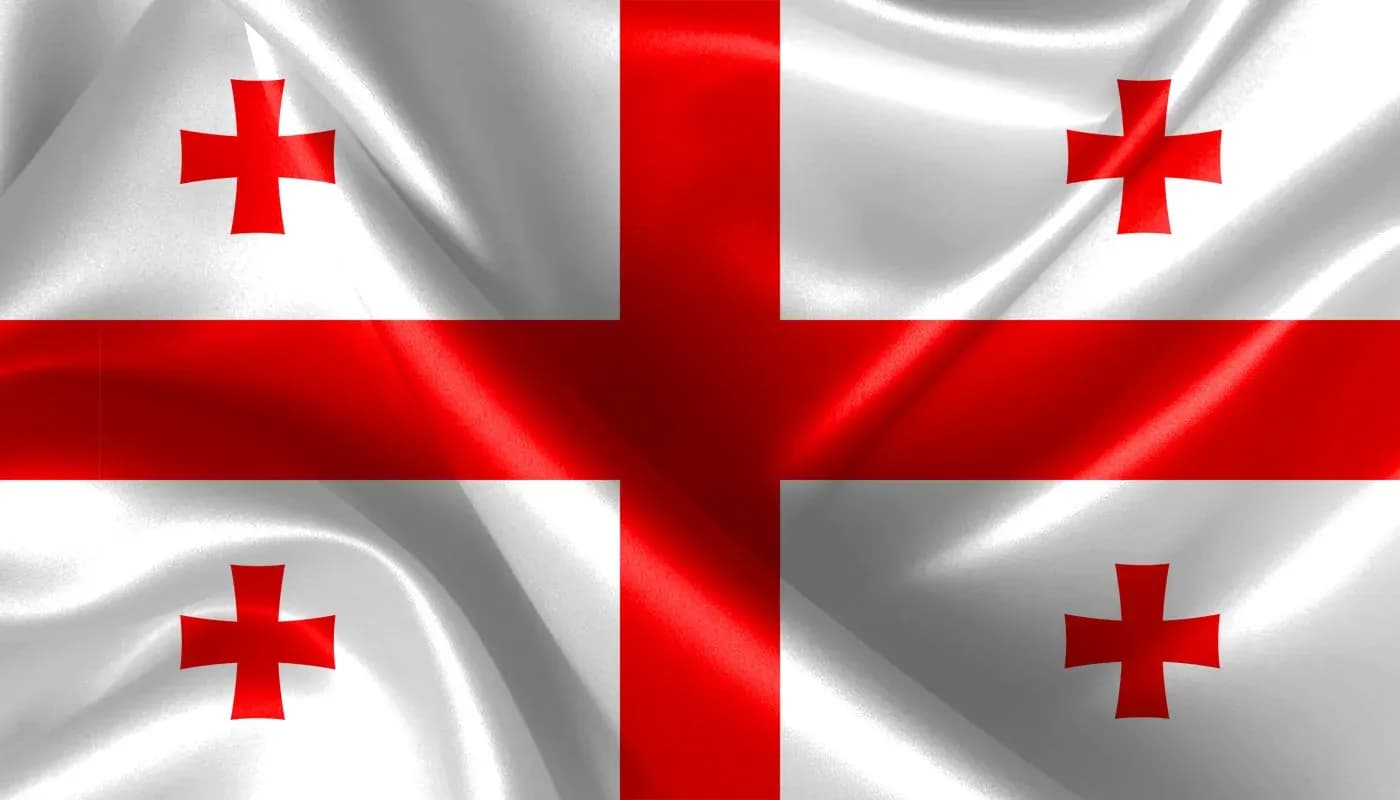 INDEX 10.09.2025, 06:41 Georgian Sovereignty Index (Burke Index), 2024-2025  Share on media IntroductionThis report presents a comprehensive analysis of Georgia's sovereignty using the methodology of the Burke Institute. Sovereignty is assessed in 7 areas: political, economic, technological, informational, cultural, cognitive and military. Each aspect is assessed on the basis of official data from international and national sources (UN, World Bank, UNESCO, IMF, ITU, FAO, SIPRI, PISA, etc.) without using politicized indexes. The maximum score in each direction is 100; the sum (up to 700) is the accumulated Sovereignty Index (Burke Index). To adapt and adjust statistical parameters, an international expert survey was conducted for each of the seven components using a single questionnaire of 10 questions with a 10-point scale and one open-ended question. In total, at least 100 experts from 50+ countries were interviewed for each indicator, taking into account geographical representation and specialization. When calculating and analyzing the data, equalizing coefficients were used, bringing all data to a scale of 0-10 points. The final index value is the arithmetic mean between statistical data and expert estimates. Below is an analysis in each area, a summary table and the main conclusions about the specifics of Georgian sovereignty. Political sovereignty — 60.4There have been no foreign military bases in Georgia since 2007; former Russian bases in Akhalkalaki, Gudauta (Abkhazia), Batumi and Vaziani have been withdrawn or are located in occupied territories not under the control of Tbilisi. In 2024-25, laws are being passed that strengthen control over NGOs and media with foreign participation (the "law on foreign agents"), despite the protests of the EU, the USA and the OSCE; the rule of national law. Human rights are being strengthened as international norms are increasingly ignored or suspended. Georgia is experiencing acute political instability: Since the fall of 2024, mass protests, disputes about the legitimacy of the elections, and increased repression against the opposition and civil society have continued. The management efficiency index according to the World Bank is -0.11 (from -2.5 to 2.5) for 2024, slightly below the global average, but at the level of the countries of the region. Georgia ranks 56th in the UN EGDI index, with a score of about 0.735, and is the leader in the South Caucasus in terms of electronic public services and the widespread adoption of digital platforms. Confidence in the ruling Georgian Dream party and Prime Minister Kabakhidze has been reduced to 20-28% by mid-2025; the majority of the population does not support the policy of rejecting integration with the EU and increasing isolation. Georgia is a member of the United Nations, the Council of Europe, the OSCE, and the Energy Community, and claims to integrate into the EU and NATO, but since 2024 it has been slowing down European integration and officially suspending negotiations on joining the EU until 2028. Georgia participates in the European Court of Human Rights, but some of the decisions are not being enforced, ties with the European Court, ICC and other international courts are decreasing, and distancing is growing. Georgia remains a unitary state with limited local self-government (weak fiscal decentralization), and key decisions are made by the center. The State Security Service (SSS) and the Interior Ministry are under the control of the ruling party; reporting and parliamentary oversight are formal, and after 2023-25, there are increasing trends of closeness, limited civilian control, and increased accusations of wiretapping and repression against the opposition. Data completeness assessment: the main indicators are available from international sources, the coverage is 95%. Economic sovereignty — 56.5 1.GDP per capita (PPP) GDP per capita at purchasing power parity (PPP) is 27,000 - 31,000 US dollars (different estimates: Trading Economics — $27,126, IMF — $30,750, World Bank ~ $28,400). As of July 2025, gold and foreign exchange reserves amount to over $5.0 billion (data from NBG and specialized analytical reviews). Government debt is 39-43% of GDP (Trading Economics — 39% by the end of 2025, World Bank — 43.4% by 2023), external debt is about 74% of GDP, but the public sector is only 24-32% of GDP. About 60% of food products are imported, which does not exclude short—term disruptions in the event of external shocks, but there is no massive shortage for 2025 - the state supports strategic reserves, implements agricultural programs and attracts donor assistance. Up to 80% of gas is imported (from Russia and Azerbaijan), and there is significant domestic generation (HPP) for electricity, but import costs increase in dry years; the country is integrated into regional energy networks. There are reserves of manganese, copper, gold, barite, coal, rare earths, building materials, as well as hydropower and mineral waters. Georgia has powerful renewable reserves: up to 220 billion cubic meters per year, the main ones are the Kura, Rioni, and Alazani rivers; fresh water is a strategic resource and an important export item (mineral waters). The key system is the Georgian Card, regulated by the National Bank, national mobile and online payment services are widespread, and Digital GEL is developing. Internal settlements are mainly in GEL, while foreign currency (USD/EUR) prevails in the real estate market, international trade, and large investments. The National Bank of Georgia (NBG) carries out independent issuance, monetary policy, sets the key rate (11% in 2025), and fully controls the banking and payment sectors. Data completeness assessment: the main macroeconomic indicators are available from official sources (World Bank, IMF), coverage is 98%. Technological sovereignty — 46Research and development costs — 0.25% of GDP (2023, World Bank, Trading Economics). This is below the global average (0.45%). The share of exports of high—tech products is 3.1% of industrial exports; almost all chips, electronics and software are imported, the main integrators are foreign (localization is minimal). In 2025, the number of students in the university system is 345,823 (according to the University System of Georgia); enrollment is about 67% of graduates enrolled in universities (an increase of +6% per year; according to national statistics, the enrollment rate is higher than the regional average). Internet penetration — 81.9–87.2% of the population (3.1–3.3 million users); rapid growth of mobile and fixed speeds, active introduction of 5G. National state portals are working — My.gov.ge, Public Service Hall, electronic business and real estate registration, digital platforms for education and medicine. Almost all chips, servers, PCs, a significant part of software and industrial equipment are fully imported; exports of IT and high-tech account for about 1.3% of GDP per year. Georgia is the region's leader: 97% of public services are available online through national platforms; most adults have electronic passports and digital signatures. Basic laboratories operate at institutes and universities (Kutaisi, Tbilisi), but critical components, equipment, and reagents are imported; in-house developments are limited to biopharmaceuticals and agrobiotechnology. Autonomy is minimal: the robotics sectors are represented by start-ups and university. laboratories, the development and assembly of complex robo-systems is carried out jointly with foreign companies, and components are imported. There is no in-house production; all chips and the platform are built on imports, there are integration and automation centers in the country, but the base is completely external. Data completeness assessment: key indicators are obtained from WIPO, ITU, UNESCO, which ensures 98% coverage. Information sovereignty — 62.3Georgia has a national CERT (Computer Emergency Response Team), a cybersecurity strategy is being developed in accordance with the EU NIS Directive and ITU standards; the country regularly participates in cyber training and strengthens cooperation with the EU in this area. There is at least 1 large Internet Exchange Point (GIX — Georgian Internet Exchange) in the country, with PoP in Tbilisi and Kutaisi; IXPs expansion projects are actively supported, the backbone network covers all major regions. The media sphere is fully functioning in the Georgian language, which is protected by the Constitution and national legislation — for Georgia, the preservation of language and identity is critically important (it is celebrated even on national holidays). Most of the IT infrastructure, platforms, and social networks are of foreign origin (Meta/Google). At the same time, the national sector is responsible for managing critical public services, and new laws severely limit foreign influence on independent media and NGOs. 80%+ of the largest TV and online media broadcasts are in Georgian; in recent years, there has been an increase in its own production, but foreign funding has been more limited since 2024, and a number of independent media outlets have been forced to go online and self-finance. National IT solutions are developing: state portals, corporate fin-techs, educational SaaS, and e-Gov platforms. However, in mass products (servers, OS, basic services), import and integration of foreign solutions prevail. About 97% of public services are available online: e-government, ID, taxes, judicial services, business registration. Commercial and government data centers are operating: some of the data from government agencies and companies is hosted in national data centers, and large businesses partially use foreign clouds. The mobile communications infrastructure and licenses are tightly controlled by the ECC (national regulator), the basic providers (Magticom, Silknet) are Georgian or with state participation; the main software/equipment is purchased abroad, but the management of services is local. The national law "On Personal Data" (revision 2023-2024) is in force, it is harmonized with international standards, and control is carried out by the Data Protection Inspector service under the Parliament and the Ministry of Justice. Data completeness assessment: infrastructure indicators are available from ITU, CIRA, OECD and specialized sources, coverage is 97%. Cultural sovereignty — 84.1There are 4 UNESCO World Heritage Sites in Georgia: • Gelat Monastery, • Historical monuments of Mtskheta, • Upper Svaneti, • Colchian rain forests and wetlands (the only natural one). Georgia is known for its unique polyphony (UNESCO), centuries-old tradition of winemaking (one of the oldest systems), architecture, rich epic, dancing, syncretism of Christianity and ancient crafts, international gastronomic brand, culture of hospitality and "supra". There is a Governor's Awards for the Arts and Humanities program (annually), awards from the Macon Arts Alliance, and awards from the Ministry of Culture and independent foundations for achievements in music, literature, fine arts, cinematography, and theater. Georgian identity is built around polyphony, national dances, holidays (Berikaoba, Alaverdoba), hospitality, clan values and the celebration of the "mother tongue Day", respect for ancient wisdom and living folklore traditions. The state finances programs for the preservation of linguistic and cultural heritage for Armenians, Ossetians, Azerbaijanis, and Abkhazians; implements projects for the rehabilitation of monuments, media support, and education; and a multicultural strategy is spelled out in the national cultural policy. There are hundreds of museums in the country, thousands of historical and architectural monuments (museums of Mtskheta, Svaneti, Tbilisi, ancient fortresses, monasteries, archaeological sites), 14 sites are on the UNESCO tentative list. Georgia actively participates in UNESCO and Creative Europe projects, implements festivals, exhibitions, and cultural exchange programs with the EU, the Caucasus countries, and the Diaspora. The Ministry of Culture promotes gastronomy, tourism, the art of sports, theater tours and joint exhibitions. Winemaking, folk craft, Georgian cuisine, polyphony, architecture, Saperavi and Kindzmarauli brands are protected by the national and international standards, part of it is in the register of Geographical indications and the UNESCO list. The cuisine is a unique blend of Europe and Asia: khinkali, khachapuri, satsivi, phali, grape varieties and wines, meat dishes, dozens of regional recipes, supra (traditional feast), a significant share of gastronomic tourism. 75% of the population participates in cultural events every year: concerts, festivals, gastronomic festivals, museum days and workshops; involvement is supported by both the state and independent organizations. Data completeness assessment: basic indicators are available in UNESCO and national statistics, coverage is 98%. Cognitive sovereignty — 62.5Georgia has a HDI of 0.844, belongs to the "very high" development group, and ranks 57th in the world (according to the UNDP). Government spending on education accounts for 3.74% of GDP (2023) and 12.2% of all government spending — sustainable financing, but below the European average. Officially, adult literacy is 100% (World Bank, 2022). However, independent studies indicate that about 16% of adults have a low level of functional literacy skills, which affects their quality of life. In PISA 2022 Georgia: mathematics — 389, reading — 384, natural sciences — 393 points, which is lower than the OECD average, but higher than a number of neighbors in the region, there is a positive trend. According to expert estimates, 17-20% of university graduates have engineering, natural sciences, mathematics and technical specialties; the data for the last year are consistent with the profile of universities. About 10-12% of students are involved in international educational programs: Erasmus+, double degrees, exchanges, study/internship abroad. The languages and cultures of Armenians, Azerbaijanis, Abkhazians, Ossetians, Russians and a number of other minorities are supported and developed in the country, media, schools and cultural centers in their native languages are officially funded. There are 13 national institutes of fundamental sciences (universities, Academies of Sciences, specialized research centers) and more than 30 laboratories/research institutes at universities. National platforms (EduPage, School.ge and others) cover more than 65% of schools and 70% of universities; integration into government digital solutions and distance learning is high. There are more than 20 state and international programs — grants, competitions, scholarships, exchanges, support for scientific youth, talent awards from the Ministry of Education, South Caucasian and European educational projects. Data completeness assessment: education indicators are available in the UNDP, UNESCO, OECD, coverage is 89%. Military sovereignty — 43.7Military expenditures will amount to 1.68% of GDP in 2023-2025, and the defense budget will amount to about $615 million (an increase compared to 2022). The number of armed forces is 20,650-26,000 (including ground forces, brigades, special forces, support and command staff for 2024-2025). The ground forces have at their disposal: 100 T-72 tanks, 46 BMP-2s, 80 Didgori armored vehicles, 65 Ejder armored cars, Javelin systems, the latest small arms and UAVs, modernization is underway with an emphasis on NATO standards, with the participation of partners from the United States (equipment updates before Agile Spirit—2025 maneuvers). Its own production is limited to Didgori, Cougar armored vehicles, and individual service plants; most of the armored vehicles, small arms, avionics, and air defense are imported, serviced, and repaired. The entire length of the borders (the Georgian Customs, the Border Police Service and the army) are controlled by state structures; the occupied regions (Abkhazia, South Ossetia) are actually outside Tbilisi's control. Reservists and mobilization list officially amount to about 55-70 thousand people (there is no clear public information, the basis is former military personnel and men under 45 years of age, mobile training annually). All decisions are made by the national government, but cooperation with NATO, the United States, Turkey, participation in multinational exercises (Agile Spirit—2025), integration of NATO standards. The share of external support and training is a key factor of sustainability. Production of Didgori armored vehicles is underway, as well as a service and partially repair base: ammunition production, repair of armored vehicles. The largest part of the equipment comes under contracts from the USA, Turkey, and NATO countries. Georgia does not have nuclear weapons, does not conduct any work in this area, and has signed all international nonproliferation initiatives. There is no space program, intelligence is based on the synergy of the military, the police, the State Security Service, the data is partially provided by NATO partners, sush. integration of satellite imagery and analytics; cyber intelligence, monitoring and data analysis (including nationalized tools) are developing. All parameters are reflected in the annual reports of SIPRI, UNODA, the Ministry of Defense, the official portals of state—owned companies (Embraer, IMBEL) and the UN/NGO industry databases - 86% coverage. Final Summary Table
The main conclusionsStrengths. A very high level of human development: HDI 0.844 (57th in the world), almost complete literacy, high educational coverage (67%), a growing STEM sector and well-known research institutes. Modern digital infrastructure: 97% of public services are available online, Internet penetration ~82-87%, strong national fintech and IT solutions, advanced payment system, high share of national usage. educational platforms. Well-developed cultural heritage and global image: 4 UNESCO sites, unique gastronomy and winemaking with international brands, victories at cultural festivals, the involvement of the population in culture exceeds 75%. Financial and emission independence: Own Central Bank, independent monetary policy, strong gold and foreign exchange reserves (>$5 billion), floating exchange rate, control of national settlements. Defense modernization: Advanced integration into NATO and US standards, 1.7% of GDP for the army, own production of armored vehicles, upgraded weapons parts, close military partnership with Western countries. Weaknesses. Political instability and lack of trust: Acute confrontation between the government and the opposition, mass protests, electoral crisis, falling confidence in the government (<30%). Restrictions on democracy and external control: Increased pressure on the media/NGOs and restrictions on external financing, reduced transparency and effective parliamentarism, problems with the implementation of decisions of international courts. Import dependence on technology and industry: R&D is below the Soviet average (0.25% of GDP), almost all high-tech, chips, key IT and equipment are imported, robotics, biotech, microelectronics are absent. Energy and food vulnerability: up to 80% of gas and a significant portion of food are imported, significant dependence on external supplies with regional and climatic risks. Partially occupied regions and external threats: The territories of Abkhazia and South Ossetia are controlled by the Russian Federation and local authorities, and the central government cannot ensure sovereignty there. Overall assessment. The cumulative sovereignty Index of Georgia is 415.5 out of 700 possible points (above the average of 59.4%), which places the country in the top 100 in the world. Georgia is a country with active digitalization, stable human potential, highly developed culture and financial system, implements modern defense standards and enjoys global support in the field of reforms. The main risks are political instability, technological import dependence, demographic and territorial vulnerability, as well as a structural conflict between the policy of integration into international alliances and growing internal administrative restrictions. The sovereignty profile indicates that Georgia's sovereignty is the rejection of external ideological bondage in favor of independence, internal responsibility and the preservation of a unique identity, while consciously moving towards security, peace and long—term pragmatic development without crossing the boundaries of national interests. The material and institutional foundations of this sovereignty are strong, but political instability, restrictions on democratic procedures, and territorial issues remain major challenges. | ||||||||||||||||||