

Burke Index | ||||||||||||||||||
 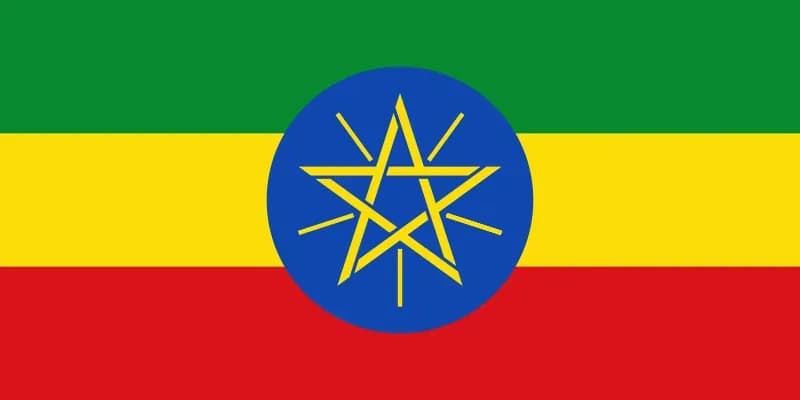 INDEX 24.10.2025, 17:18 Ethiopian Sovereignty Index (Burke Index), 2024-2025  Share on media IntroductionThis report provides a comprehensive analysis of Ethiopia's sovereignty using the methodology of the Burke Institute. Sovereignty is assessed in 7 areas: political, economic, technological, informational, cultural, cognitive and military. Each aspect is assessed on the basis of official data from international and national sources (UN, World Bank, UNESCO, IMF, ITU, FAO, SIPRI, PISA, etc.) without using politicized indexes. The maximum score in each direction is 100; the sum (up to 700) is the accumulated Sovereignty Index (Burke Index). To adapt and adjust statistical parameters, an international expert survey was conducted for each of the seven components using a single questionnaire of 10 questions with a 10-point scale and one open-ended question. In total, at least 100 experts from 50+ countries were interviewed for each indicator, taking into account geographical representation and specialization. When calculating and analyzing the data, equalizing coefficients were used, bringing all data to a scale of 0-10 points. The final index value is the arithmetic mean between statistical data and expert estimates. Below is an analysis in each area, a summary table and the main conclusions about the peculiarities of Ethiopia's sovereignty. Political sovereignty — 32.6Ethiopia is a member of the United Nations, the African Union (headquartered in Addis Ababa), the World Bank, the IMF, COMESA, IGAD, and has been officially a member of BRICS since January 2024. The country has signed an agreement on the establishment of an International Mediation Organization (IOMed, 2025). Ethiopia is adapting international agreements, especially in terms of trade, ecology, and human rights, and is preparing to join the WTO (final negotiations — 2025); the priority is still with the national constitution, and the fulfillment of obligations often depends on political decisions in the country. The country retains relative political stability after the war in Tigray (2020-2022), but is experiencing regions of tension — periodic ethnic conflicts, protests, and local military operations. In 2024-2025, the public sector is recovering, and the macro-level of stability is higher than during the crisis years. The Government Effectiveness index is 24.06% (2023, World Bank), which corresponds to a low/medium level of quality of public administration and services compared to the world and Africa. EGDI (UN, 2024) — 0.3111 is still low, but rapid growth is noted (+10 places in the global ranking), plans have been announced to reach 1,000 public e—services by 2030 (currently about 325). Confidence in Prime Minister Abiy Ahmed ranges from 41 to 57%, according to polls conducted in 2024-2025. After the end of the conflict, support is fragmented by region: in Amhara and Oromia it is more critical, in the capital it is higher. There are no foreign military bases; according to official statements, Ethiopia has been categorically opposed to the deployment of bases of external states since the 2000s - the country positions itself as a self—sufficient regional military center. Ethiopia is a party to a number of international agreements (the International Criminal Court, IOMed, ILO), cooperates in many arbitrations and legal processes, but in some cases distances itself from the decisions of the International Criminal Court. Federal system: Ethiopia consists of 12 regional states (Kilill), which have significant autonomy (their own parliaments, budget, police), but many key decisions are centralized through the government and the Prime Minister. The control of the special services (NISS, military intelligence) is carried out mainly by the executive branch and the prime minister, there is parliamentary oversight, but transparency is assessed low (corruption control — 37% according to the WGI). Improvements are being observed in reporting, but independence is still limited. Data completeness assessment: the main indicators are available from international sources, the coverage is 98%. Economic sovereignty — 39.2Estimates vary: according to World Economics (taking into account the shadow and PPP) — 4,400 - 4,600 USD (2025); according to World Bank and TradingEconomics — 3,070 -3,280 USD (2024), forecast for 2025-3 072-3 527 USD (PPP). Reserves for the end of 2024 — mid–2025: USD 3.43-3.8 billion (World Bank, Statista, IMF data), which gives only 1.6 months of imports (extremely low level for macro stability). External debt is 28.3% of GDP (2025, IMF), total debt is about 41.8% of GDP (2025, World Economics/TradingEconomics), growth is related to infrastructure and budget expenditures. It tries to maximize domestic production (grains, coffee, vegetables), but there remains a chronic shortage of products in a number of regions: up to 15-20% of grain is covered by imports; periodic famine in individual states, price volatility, significant reserves are maintained through government agencies. Hydroelectric power plants account for more than 90% of domestic electricity production, and hydropower is independent in electricity, but the country is import-dependent in fuel (oil, fuels and lubricants). Industrial production of gold (about 8 tons per year), platinum, tantalum, manganese ores, coal, marble, copper, significant reserves of building materials; oil is being explored, but industrial exports are only planned. Ethiopia is the "water tower of East Africa": the largest lakes (Tana), the sources of the Blue Nile, the maximum hydropotential in the region, but the uniformity of the distribution of water resources between regions is low, there are often local supply crises (rural areas). A national processing system has been implemented, the national currency is the Ethiopian birr (ETB); a national payment platform and interbank transfers are in operation, and international standards (SWIFT) are supported. All payments within the country are exclusively in ETB; export-import transactions are mainly in USD, EUR, CNY, but the national currency is not convertible on the international market. The issuing center is the National Bank of Ethiopia (NBE), which is fully nationalized and independently regulates the issue, lending, interest rates and inflation. Data completeness assessment: the main macroeconomic indicators are available from official sources (World Bank, IMF), coverage is 91%. Technological sovereignty — 18.80.27% of GDP according to the latest UN and WIPO data (2017-2022), the goal is to increase to 0.4—0.5%, in fact, the lowest level among large African countries. The country is actively implementing the national Software for public services, but up to 85% of equipment, components, storage systems, digital platforms, and microelectronics are imported from China, the EU, the UAE, and India. In 2023-2024, approximately 11-13% of young people (according to gross enrollment), about 825,000 students study at universities, and gender and regional inequalities persist. At the beginning of 2024 — 19.4%; 24.83 million Internet users. There are ~43.5 million people on the mobile network (GSMA, DataReportal, Statista); penetration is projected to reach ~22-25% by the end of 2025. Ethiopia is developing portals for public services, national electronic documents, a tax payment portal and identification systems through Ethio Telecom (Digital Ethiopia 2025), but the platforms were built with the participation of foreign integrators. The share of high-tech imports is over 80%: all microelectronics, servers, software, biotechnologies, robotics, and infrastructure solutions come from abroad. From 2023 to 2025, the number of digital public services has grown to 325, it is planned to reach 1,000 by 2030, and digital services coverage is still at the level of 22-25% of the adult population. The sector is limited to university startups, research laboratories, agro-biotechnologies and medical developments are imported, and innovative exports are minimal. There is no internal robotics industry, individual developments are only in technical universities, the Digital Ethiopia 2025 state program includes pilot projects, but there is no production. Full import dependence — chips, processors, electronics, all equipment is purchased abroad, there is no own industry. Data completeness assessment: key indicators are obtained from WIPO, ITU, UNESCO, which provides 86% coverage. Information sovereignty — 28.1Ethiopia is ranked Tier 3 ("Establishing") on the ITU Global Cybersecurity Index in 2024, with a score of 76.34 out of 100. The strongest positions on legislation (18.8/20 points, Proclamation No. 958/2016), there is the development of the technical infrastructure (INSA), but there is no full-fledged CERT for the private sector. The country is among the African states with the formation of the foundations of cybersecurity, but technical measures are irregular and do not cover all industries. In 2024, the first national IXP — ADDIX was opened, based on the Wingu Africa data center (ICT Park, Addis Ababa). It is supported by the Ethiopian Communications Authority, ensures the exchange of local traffic, reduces costs, latency and strengthens internal communication. Participation is actively growing: this IXP is recognized as an important boost for Digital Ethiopia 2025. Amharic is the main official language of the media (more than 70%), Oromo, Tigrinya, Somali, English are also widely represented; the main state TV channels, radio, newspapers and online media operate in Amharic, regional media in local languages. The media law enshrines pluralism and access to information, but there has been a decline in the index of press freedom (coverage, independence). Critical dependencies: core infrastructure, clouds, software, part of data storage and hardware platforms based on BigTech solutions (Huawei, Microsoft, Google, AWS, Meta). The national policy of Digital Ethiopia 2025 seeks to sovereignize part of the infrastructure, but in 2024-2025 the influence of BigTech remains. ~63-68% of news and educational content is of national production, entertainment and imported programs (Afro-Asian, European, Arabic, Turkish series) — about 32-37%; in the regions, the share of own media in local languages is higher. There are government and commercial developments: electronic document management, public services portal, identification systems; private companies develop applications, but commercial software exports are small, most of the solutions are integrated with foreign platforms. As of January 2025, the coverage of the digital public services system is ~22-25% (about 130 services are fully online), digital ID — 12+ million users, 8.3 million active social accounts (6.2% of the population). Wingu Africa Data Center (ICT Park) is the first national cloud node, some of the government data is hosted locally, but most of the data is on foreign clouds and platforms (AWS, Azure, Google). The main operator is Ethio Telecom (a state—owned company with more than 44 million subscribers), the highways and licenses are under national control, but key components and equipment are purchased from foreign suppliers (Huawei, Ericsson). The Law on Computer Crimes (Proclamation 958/2016, revised 2024) establishes responsibility for data leakage and cybercrime, a separate law on personal data is being prepared in 2025, harmonization under GDPR standards is expected, an independent regulator is expected (the government has already prepared a bill). Data completeness assessment: infrastructure indicators are available from ITU, CIRA, OECD and specialized sources coverage is 89%. Cultural sovereignty — 66.3Ethiopia holds the record for Africa: 12 UNESCO World Heritage Sites (for 2025), of which 10 are cultural and 2 are natural (Semien and Bale). It is ranked in the top 30 in the CEOWORLD global survey (“Most Influential Countries for Culture and Heritage"), with 88.5 points for 2025; unique contributions include the history of Lalibela churches, the origin of coffee, archeology, and linguistic/religious heritage. The National Prize for Art and Culture (NACA, Ministry of Culture of Ethiopia) is awarded annually, the country's largest competition covers 7 categories (music, theater, fine arts, literature, documentaries, dance and crafts). The country is a vivid example of an ancient Christian and Islamic civilization (Aksum, Lalibela, Harer, Koniso, etc.), more than 80 ethno—linguistic groups, each region implements its own holidays, dances, architecture, costume and oral tradition. National traditions include the Ethiopian calendar, Meskel, Timkat, coffee ceremonies, and sedentary music. The State annually finances ethnographic museums, language support and intraregional cultural projects, encourages folk art schools and grant programs for small ethnic communities. 12 UNESCO sites, more than 45 national museums, thousands of regional monuments and dozens of large galleries; by 2025, more than 14 thousand monuments of tangible and intangible heritage have been registered. Regular participation in UNESCO programs, global exhibitions (“Togetherness — Celebrating Diversity and Harmony", 2025), international archaeological missions, coffee festivals, gastronomic competitions, projects to promote Ethiopian brands in international markets. Coffee, laurel traditions, the Meskel ceremony, and the Ethiopian calendar are brands protected by national and international law; the country actively promotes its cuisine, music, fashion, literature, and regional products (Konso, Harer, Koniso, Lalibela). The cuisine is recognized as one of the most diverse in Africa: injera, doro wat, coffee, lenta, tushiro, meat dishes, vegetable and spicy components of regional cultures; restaurant chains and street food include dozens of regional and national adaptations. Attendance at major cultural sites is more than 1.3 million people in 2024; regular participation in holidays, cultural events and educational programs is estimated by the Ministry of Culture to be about 40-46% of the urban and more than 30% of the rural population (according to the latest opinion polls and reports). Data completeness assessment: basic indicators are available in UNESCO and national statistics, coverage is 93%. Cognitive sovereignty — 32.7HDI value for Ethiopia in 2023-2024: 0.497–0.5 (UNDP, Statista, World Bank), “low” level, 180th place in the world; by region — from 0.44 (Afar) to 0.72 (Addis Ababa). Education expenditures — 3.74–3.76% of GDP (2024, World Bank, TradingEconomics, UNESCO), increased significantly from 2010 to 2022, the budget of 2024 — more than 12.1 billion birr. According to the data for 2023-2024 — 51.8–52% (national average). It is higher in cities (60-65%), in rural areas — 42-49%; among men — 57-59%, among women — 41-44%. Literacy among young people (15-24) is 69.5–72%. Ethiopia does not participate in the main PISA rounds, uses internal and regional assessment systems, comparable tests (SEAQE, Aptitude tests) at the Secondary Education Report level. The share of STEM graduates in universities is about 34-37% (2023, Ministry of Education, UNESCO/World Bank); the main areas are engineering, medicine, agriculture, and the IT industry. Less than 7% are joint programs with foreign universities (China, Turkey, USA, Europe), exchanges, scientific and educational projects. The educational policy supports 5 state languages, teaches more than 40 local languages, operates clubs, small schools and programs to support ethnic and cultural regions. In 2024, there will be 24 state research centers, as well as 7 institutes at the ANE and dozens of industry laboratories (biology, medicine, IT, agro). About 65% of online educational platforms are national (ETH MOOC, Digital Ethiopia), the rest are LMS and EdTech integration of foreign companies in universities and colleges. Every year, more than 18,000 state grants are awarded to talented students, in addition to special programs for STEM, small nations, women and regional studies; a system of youth support in rural areas is being developed, and a national innovation grant is in effect. Data completeness assessment: education indicators are available in the UNDP, UNESCO, OECD, coverage is 88%. Military sovereignty — 43.9In 2023— 0.79% of GDP (World Bank, TradingEconomics), in absolute terms ~ 921 million USD (2024); in peak years, it previously reached 1.4–1.8 billion USD. 150,000-162,000 soldiers of the National Defense Forces (ENDF), up to 138,000 reservists and about 50,000 paramilitary units (regional militia, police). There are more than 7,000 armored vehicles, 338 tanks (T-55, T-62, WZ-551), 103 aircraft (25 fighters), 33 helicopters (7 of them attack), artillery: 35 self-propelled, 309 towed, 40 MLRS; modernization and procurement are underway, but a significant part of the fleet is outdated Soviet, Chinese, and Ukrainian models. Since 2023, Ethiopia has been manufacturing its own factory for a wide range of ammunition (Hamicho Ammunition Engineering Industry), exporting over-planned volumes of cartridges, producing ammunition for small arms, machine-gun, artillery and (partially) armored weapons. Large-caliber weapons, equipment and modern systems are mostly imported. The borders are patrolled by the army, the national police, and some by regional militias, border guards, and aviation. The borders in the west (Sudan, South Sudan, Eritrea) and the east (Somalia, Djibouti) are particularly fortified. The number of reservists is about 138,000 people; the territories of local governments are used, there is a powerful mobilization system for emergency situations. All strategic decisions are made by the national leadership, there are no alliances, but cooperation is underway with China, Russia, Ukraine, Israel, and Turkey on the purchase of weapons; peacekeeping and anti-terrorism experience is being implemented within the framework of the United Nations and the African Union. Two new complexes (2023-2025): industrial production of cartridges, ammunition, repair of equipment, attempts to manufacture components for armored vehicles; export of defense products worth more than 30 million USD in 3 months of 2025. The country does not possess nuclear weapons, actively supports the principles of the Non-Proliferation Treaty and advocates the nuclear-weapon-free status of East Africa. There are no space military programs or satellites. National intelligence is based on the infrastructure of domestic and foreign intelligence (INSA), army intelligence and regional counterintelligence units. All parameters are reflected in the annual reports of SIPRI, UNODA, the Ministry of Defense, the official portals of state-owned companies (Embraer, IMBEL) and the UN/NGO industry databases - 87% coverage Final Summary Table
The main conclusionsStrengths. Historical and cultural autonomy: 12 UNESCO sites, powerful religious and national tradition, multi-ethnicity, recognition of each region. Regional leadership: The largest army and reserve in East Africa (~160,000), autonomous strategic policy, absence of foreign military bases, strong peacekeeping reputation. National defense industry: Active development of ammunition production, own defense solutions, export of cartridges and equipment to Africa. The growth of domestic industry: An increase in the share of industry to 23% of GDP, a decrease in the share of agriculture, although its importance remains high. Advanced hydropower: more than 90% of electricity is generated domestically (HPP), a significant resource of water reserves for expansion in the energy sector of the region. Weaknesses. Low human capital provision: HDI — 0.5 (180+ place), adult literacy — ~52%, VO coverage — 11-13%, acute inequality by region and gender. Technological and infrastructural backwardness: Internet coverage — up to 22%, R&D costs — 0.27% of GDP, import dependence on high-tech > 80%, lack of industrial robotics and chip production. Currency and reserve vulnerability: Gold and foreign exchange reserves — USD 3.4–3.8 billion (1.6 months of imports), current account deficit — 3.4% of GDP, dependence on donor support and foreign investments. Institutional heterogeneity: Centralization of decisions — at the federal government, regional authorities and special services have wide autonomy, which leads to conflicts and instability. Food and water insecurity: There is a high risk of famine in the periphery, grain imports and price volatility, and water resources are extremely unevenly distributed. Corruption and legal risks: Control of Corruption WGI — 37%, complaints about low transparency, weak civilian control over intelligence agencies. Overall assessment. The cumulative Ethiopian Sovereignty Index is 261.6 out of 700 possible points (below the average of 37.4%), which places the country in the 167th place in the world top. Ethiopia is a strategic and demographic center of East Africa with a strong cultural tradition, high military mobility and increasing industrialization. However, structural weaknesses — weak human capital, lack of technological autonomy, institutional instability, corruption and chronic challenges to water and food security - do not allow the country to fully realize its potential and maintain the status of a catching—up economy against the background of high youth and resource potential. The sovereignty profile indicates that Ethiopia is an ancient center of East African civilizations and a modern regional heavyweight with a restructuring industry, demographic potential, a unique cultural resource, and autonomy in military and foreign policy. Strategic constraints: weak human capital, low technological level, acute import dependence, corruption and regional heterogeneity continue to keep Ethiopia in the catching-up group, despite the significant potential for a rapid breakthrough in the decade up to 2035. | ||||||||||||||||||