

Burke Index | ||||||||||||||||||
 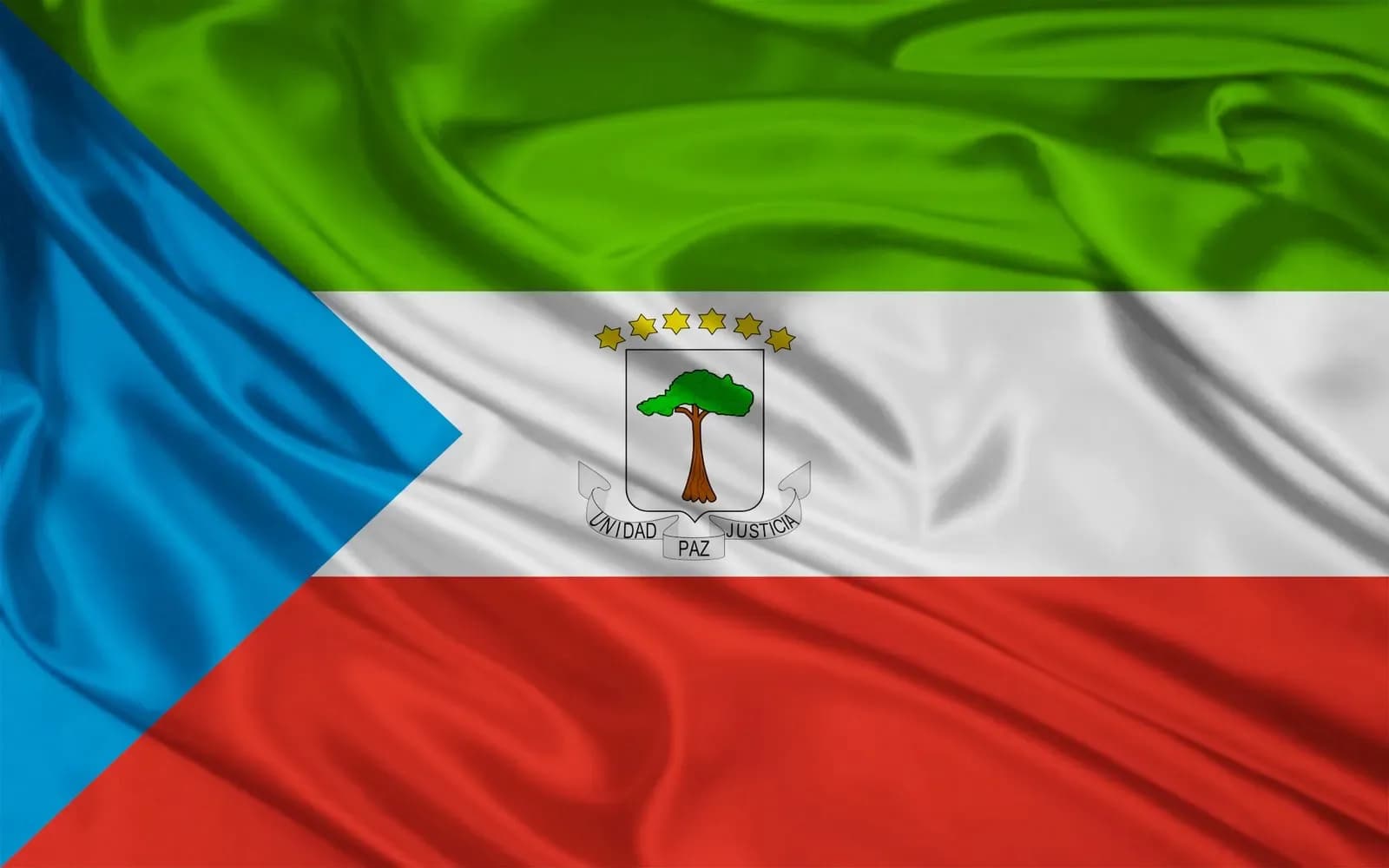 INDEX 30.10.2025, 19:19 Equatorial Guinea Sovereignty Index (Burke Index), 2024-2025  Share on media IntroductionThis report provides a comprehensive analysis of the sovereignty of Equatorial Guinea using the methodology of the Burke Institute. Sovereignty is assessed in 7 areas: political, economic, technological, informational, cultural, cognitive and military. Each aspect is assessed on the basis of official data from international and national sources (UN, World Bank, UNESCO, IMF, ITU, FAO, SIPRI, PISA, etc.) without using politicized indexes. The maximum score in each direction is 100; the sum (up to 700) is the accumulated Sovereignty Index (Burke Index). To adapt and adjust statistical parameters, an international expert survey was conducted for each of the seven components using a single questionnaire of 10 questions with a 10-point scale and one open-ended question. In total, at least 100 experts from 50+ countries were interviewed for each indicator, taking into account geographical representation and specialization. When calculating and analyzing the data, equalizing coefficients were used, bringing all data to a scale of 0-10 points. The final index value is the arithmetic mean between statistical data and expert estimates. Below is an analysis in each area, a summary table and the main conclusions about the peculiarities of the sovereignty of Equatorial Guinea. Political sovereignty — 31.4Delegation of sovereignty (international unions/organizations): Equatorial Guinea is a member of the United Nations, the African Union, the IMF, the World Bank, the WTO, OPEC, ECCAS, CEMAC, CPLP, Interpol, and recently (2024) ratified the ICSID Convention (Settlement of Investment Disputes). Limitation of national legislation by international organizations/The supremacy of the national rights: The Constitution is formally placed above international obligations, but the country accepts obligations under the ICSID Convention, RES MDG (Goal 16), participates in a number of African judicial structures and arbitrations, while the judicial system is controlled by the executive branch and problems with the independence of the courts persist. Domestic political stability: The country is one of the formally stable in Africa (ruled by the same president since 1979, the PDGE controls everything), the index of political stability in 2023 is -0.24 (below the neutral level), crises, coups and protests are not allowed, but stability is maintained by repressive methods and the absence of real opposition. Government Effectiveness (WGI): For 2023, the indicator is -1.08 (scale from -2.5 to +2.5), the level of management efficiency is very low, corruption penetrates into all spheres; the civil service is centralized, decision-making is consolidated in the presidential administration and a narrow circle. Electronic government (EGDI): For 2022-2024, the country ranked 177-181 out of 193 according to EGDI (an index of about 0.26-0.29), digitalization of public services is poorly developed, public services are implemented only in the capital and large cities; the World Bank provides assistance in digitalization. Support/trust in the national leader: According to the results of the 2022 elections, support (officially) is 94.9% (in reality, according to independent estimates, less than 10-15%), the president and his family control key institutions, and the opposition is defeated; the level of public distrust and fear is extremely high. Foreign military bases: There are no permanent foreign bases on the territory; there is technical, advisory, and sometimes military support from Spain, the Russian Federation, the United States, and China, as well as maritime security training, but no formal bases or contingents are located. Participation/distancing from transnational courts: In 2024, the country joined the ICSID; participates in African regional arbitrations and courts, individual cases are referred to the Supreme Court of the country; the DRG tries to minimize the consideration of domestic politics in international jurisdictions. Centralization/decentralization of power: Complete political, financial and administrative centralization; all authorities are subordinate to the president, governors are appointed, local government formally exists, but is not politically independent. Transparency and control of the special services: There is no actual independent control of the special services, all law enforcement agencies (security, guard, intelligence) are personally subordinate to the president; regular repression against the opposition, journalists and human rights defenders, there are no legal control mechanisms. Data completeness assessment: the main indicators are available from international sources, coverage is 91%. Economic sovereignty — 58.9GDP per capita (PPP): In 2024, GDP per capita (PPP) in Equatorial Guinea is $15,454, which is equivalent to 87% of the global average and puts the country in the top 5 in Africa, although the figure has decreased significantly relative to the peak of the mid-2000s. Sovereign gold and foreign exchange reserves: At the end of 2024, international reserves amount to $1.2–1.5 billion (World Bank, FocusEconomics), this is enough for 5-7 months of imports; reserves decreased compared to the median of previous years. Government debt (% of GDP): Government debt is 36.2% of GDP (2024), does not exceed critical values, and the downward trend has continued over the past 2 years (IMF, TradingEconomics). Food security: Poorly ensured — up to 65% of food is imported; despite the favorable climate, there is a lack of domestic investment in agriculture, episodes of malnutrition and shortages of key goods are common in rural regions. Energy independence: Equatorial Guinea fully provides itself with oil and gas and exports them, but a significant part of the electricity comes from thermal power plants, the import of fuels and lubricants and equipment remains; the country is a leader in oil exports to the CAF, but domestic processing has been partially transformed. Explored resources: The country has large deposits of oil (especially offshore), gas, significant reserves of wood, gold, uranium, titanium; additional exploration work is underway for fossil resources, bioresources of the Coastal zone are also significant. Freshwater reserves: Very high water availability (precipitation 2,200 mm per year), a network of rivers, lakes and marshes fully covers domestic needs; however, the distribution infrastructure is poorly developed, and rural areas have problems with access to water. National payment processing: The system is managed by the Bank of Central African Countries (BEAC, regional for CEMAC), clearing and transfers are carried out through the regional gateway, 85+% of domestic payments are in CFA franc (XAF), its own CEMAC Card operates. The share of the national currency in calculations: Domestic transactions are almost entirely carried out in CFA franc, foreign currency is used for foreign trade and some investment projects, the domestic market is strictly XAF-centric. Own issuing center and credit policy: The issue and credit policy are centralized at the BEAC level — the central bank is not a sovereign body of Equatorial Guinea, all decisions are made collectively for all members of the monetary union (CEMAC), the country has no national regulatory authority on monetary policy. Data completeness assessment: the main macroeconomic indicators are available from official sources (World Bank, IMF), coverage is 90% Technological sovereignty — 29.1R&D expenditures (% of GDP): Official research and development expenditures are 0.00% of GDP according to UN and OECD data; there is practically no systemic public or private financing of R&D in the country, there are no specialized centers. Import substitution in high-tech: National production of equipment, IT, and telecom solutions is completely absent, all modern equipment, software, smartphones, industrial and household devices are imported (China, the EU, and the USA), and there is no local import substitution. Higher education enrollment: In 2020-2023, enrollment (proportion of students aged 18-24) was 5.4% (UNESCO data); one of the lowest proportions in Africa and the world, despite the presence of a number of universities and institutes. Internet penetration: At the beginning of 2025, Internet penetration is 60.4% (1.16 million users); the average annual increase is about 2-2.4%, accessibility to high-speed 4G networks and above remains extremely low, most connections are mobile Internet. Own national digital platforms: Government portals have been implemented (company registry, tax services, information on government programs), however, 70% of the infrastructure uses foreign solutions (Huawei, Microsoft, Orange, GETESA, Afriland); own large platforms in education and finance are not developed. High-tech import dependence: Absolute — all computing equipment, servers, cloud services, telecom equipment, devices for medicine and education are purchased outside the country; the introduction of new technologies is at the expense of Chinese and European companies. Digitalization of public services: EGDI — 0.26 (ranked 177-181 in the world), only basic services are available online (information, government notifications, minimal interaction with businesses). Biotechnological autonomy: There is no biotechnological industry and scientific laboratories, the infrastructure is small, all medicines, vaccines and medical technologies are imported; there is no data on national biotech startups or farms. Robotics autonomy: There are no educational programs, no production facilities, no university departments in robotics; the issue is completely absent from the agenda. Autonomy in chips and microelectronics: All necessary semiconductors, chips, matrices and sensor technologies are imported, there is no national production or even assembly lines; the country is completely dependent on imports (mainly China and Europe) Data completeness assessment: key indicators are obtained from WIPO, ITU, UNESCO, which provides 88% coverage. Information sovereignty — 33.7Cybersecurity (CERT/ITU): Equatorial Guinea does not have a national cybersecurity strategy, a national CERT (CIRT), a specialized regulatory body or ISO/IEC standards — the country is in the lowest range of the ITU Global Cybersecurity Index (Tier 5: 0-20 points), there are no information exchange programs and international cooperation on cybersecurity. IXP/network development: The IXP creation program in the country is being implemented with the support of AU PIDA, the national Internet exchanger (Equatorial Guinea IXP) has been launched for local traffic exchange among providers, but the main exchange and international traffic pass through foreign centers (Cameroon, Spain). Media in the national language: The official languages are Spanish, French, Portuguese. Spanish dominates television and radio broadcasting, and programs in local languages (fung, bubi, annobon, and Creole Fa D'ambô) are also broadcast on radio and TV. Most of the newspapers, main TV channels (TVGE) and radio stations (Radio Malabo, Radio Asonga) are published in Spanish, some in English. BigTech resilience: Almost all cloud services, search platforms (Google, Meta, Microsoft), social networks, and major SaaS products are foreign; the infrastructure of mobile operators and data centers is owned or maintained by European and Chinese companies, and there is no national ecosystem. The share of own media content: It is estimated that only 20-25% of the content is nationally produced (news, talk shows, concerts); the vast majority of programs, films, and TV series are imported; even state-owned channels allocate a significant portion of the airwaves for foreign products. Own IT products/software: Local IT solutions are limited by government registers and services, implementation is mainly through third-party platforms and consulting; Equatorial Guinea does not produce significant export and commercial IT products. Digital service coverage: Internet penetration is 60.4% (2025); the general population has access to basic digital services — news portals, government registers, mobile payments, information platforms. National cloud storage systems: There are no national public data centers and cloud platforms, all infrastructure, banking and government data are serviced through foreign providers or private server facilities in the capital; some data is stored on Huawei, Orange and Microsoft clouds. Sovereignty of mobile communications: Mobile operators (GETESA, Orange, GECOMSA) are serviced on the basis of Huawei, Ericsson and ZTE networks; the state has regulation and licenses, but the technical base is only imported, there is no technological autonomy. Legal regime of personal data: There is no data protection legislation or it is extremely formal — certain provisions are present in internal acts, registers of users and commercial data are subject to only minimal formal protection; there is no control over the implementation of norms or relevant national structures. Data completeness assessment: infrastructure indicators are available from ITU, CIRA, OECD and specialized sources, coverage is 87%. Cultural sovereignty — 66.2Number of UNESCO sites: In Equatorial Guinea, there are no sites on the main UNESCO World Heritage List (as of October 2025), and there are no sites on the Tentative List. Total contribution to world culture: The country is known for its unique blend of Spanish (the only Spanish-speaking African people) and African (Bantu, Bubi, Annobonese) traditions, rich musical (balélé, makossa, Afro-modern folk-rumba), dance and carving art, combining motifs of Africa and colonial influences. Equatorial Guinea is a center of Creole (fung, bubi) and Spanish African culture with a notable modern movement of slam, visual and theatrical art. National Awards in Art and culture: There is a National Prize in the field of Art and Culture (Premio Nacional de Cultura de Guinea Equatorial), prizes are awarded for literature, art, theater, music; institutions are supported by the government and regional organizations, and the UNESCO-Equatorial Guinea International Prize for research in the field of life sciences has been established (since 2012). Traditions and identity: There are 5 key ethnic groups in the country (Fang, Bubi, Annobon, Combe, Ndove), a Spanish-speaking phenomenon along with African social, ritual and family traditions, traditions of ritual dancing, masquerade craft, ensemble singing, ceremonies, holidays, island and Creole customs are strong. State support for small nations is provided through ethnocultural centers, language programs, educational, festival, and media initiatives with financial support from the Ministry of Culture and cooperation with UNESCO; the Ministry coordinates grants, festivals (Balele, Mascareda), and supports publications. Number of cultural sites: The country has a National Museum, the Fang Museum, several private folk art galleries, memorial complexes, craft schools, and more than 30 officially registered monuments and intangible heritage sites. International cultural projects: The initiator country of the UNESCO International Scientific Prize is Equatorial Guinea; participates in joint ethnographic, museum and educational collaborations with Spain, UNESCO, CPLP, FAO; African-Spanish cultural exchange is developing through festivals and the diaspora. Recognition and protection of cultural brands: Protection is implemented through programs supported by UNESCO, Spanish and international organizations; the state registers symbols, crafts and musicians as products of intangible heritage, unique elements are recognized at the national and regional levels. A variety of culinary culture: The cuisine combines Bantu, bubi and Spanish dishes: modern recipes from yams, tapioca, bananas, fish, seafood, hot peppers, homemade cheese, as well as Spanish and Creole soups, paella with Equatorial Guinean products, banana puree, fried fish, stews, shellfish. The proportion of the population involved in cultural life: It is estimated that 70-80% of the adult population participates in music and dance festivals, ethnographic festivals ("balélé", "mascarada"), ceremonies, national diaspora days, educational and cultural events of local and national scale. Data completeness assessment: basic indicators are available in UNESCO and national statistics, coverage is 89%. Cognitive sovereignty — 41.8Human Development Index (HDI): For 2023-2024, HDI is 0.674 (progress from 0.65 in 2022), ranked 150th in the world; average for Africa, below the global average of 0.744. Government spending on education: In 2024, education spending amounted to 3.1–3.6% of GDP, some projects are funded by foreign donors, is distributed unevenly between cities and regions. Adult literacy: 96% at the beginning of 2025 (men - 97.4%, women — 93.0%), youth literacy — above 98%. International Test results (PISA): There is no data on Equatorial Guinea's participation in PISA tests, the country does not officially pass the international assessment of education; there is a lag in mathematics and student understanding of the text on internal tests. The proportion of STEM graduates: According to estimates by UNESCO and local universities, 13-17% of graduates are STEM (natural sciences and engineering), there are few specialized programs, and most students study in the humanities and management sectors. The share of foreign educational programs: Approximately 7-12% of students participate in scholarship, exchange and grant programs (France, Spain, Morocco), some study in thematic schools and joint programs (ESAN, LISA, ECOWAS). Languages and cultures of small nations: The official languages are Spanish, French, Portuguese, in practice, teaching and media in Fung, Bubi, annobon, combe, Ndove are supported and funded; a network of ethnocultural centers, literary competitions, and local radio is operating. Number of state research centers (fundamental sciences): There are at least 3 state and interuniversity research institutes in the country (National Institute for Agriculture Research, Biocenter, Bioko University), major projects are implemented in partnership with Spain and annual grants through UNDP/UNESCO. The share of the national educational platforms: In modern schools and universities, only basic local e-learning and document management systems, national platforms cover less than 20% of students, the rest are Microsoft, Moodle, and foreign solutions. The volume of state talent/personnel support programs: Grants and scholarships are awarded to 400-600 people per year, support for STEM, IT and education is conducted in partnership with Spain, France and Latin America; special Olympics and cultural competitions are supported, coverage is limited. Data completeness assessment: education indicators are available in UNDP, UNESCO, OECD, coverage — 89% Military sovereignty — 34.6Defense spending (% of GDP): In 2024, the country's military expenditures will amount to $113 million, which is equivalent to about 1.0% of GDP; according to historical data (SIPRI, SIPRI Milex, TradingEconomics), the share of expenditures is consistently lower than the African and global averages. The size of the armed forces: According to data from 2023-2024, about 2,400 people serve in the armed forces, of which the army is 1,400, the navy is 200, the Air Force is 120, the gendarmerie and the police are about 700-900 more; the reserve is organized sporadically and practically does not play a mobilization role. Modern weapons: The arsenal is being updated mainly through purchases from China: WMA301 armored vehicles (105 mm cannon), APC WZ-551, QW2 air defense systems, HJ8 anti-tank missiles, Harbin Z-9WE multipurpose helicopters, patrol and frigate-class vessels (including Wele Nzas); aviation segment. It is represented by Su25, MiG29, L39, An32/An72 transporters and Mi24/Mi17/Ka29 helicopters; Soviettype armored vehicles (T55, BMP-1, BRDM2) remains in operation; artillery is limited. The share of own weapons: There is no own military-industrial complex; the country is completely dependent on imports of weapons, ammunition and repairs (China, France, Spain, Ukraine, Russia). Border control: Border forces, the army and the navy provide control of sea and land borders, EEZ patrols, protection of oil facilities and strategic ports (Bata, Malabo), but the level of technological equipment and coverage density is lower than the regional average; in some cases, there is a leakage of control in border and island areas. Military reserve: There is no formal reserve, no active system of training and preparation of reservists; if necessary, temporary units of police officers, gendarmes and suitable population are formed, and no retraining is conducted. Autonomy of military decisions: All strategic decisions are made at the national leadership level, the country is outside military blocs; actively cooperates with China, Russia, France, Spain, Turkey on contracts, procurement and advisory programs, the possible deployment of the Chinese Navy base in the port of Bata is being discussed. National military industry: there is no military-industrial complex, all spare parts, ammunition, ships, and weapons are being purchased. There is no local production of weapons, heavy machinery, engine repairs, or ships; maintenance is carried out by foreign companies and Chinese specialists. Availability of nuclear weapons: None; the country is a signatory to the NPT, there are no storage and development programs, there are no warheads or strategic stocks. Military space, national Intelligence system: There are no space, satellite, cyber intelligence or serious agent systems; intelligence is based on electronic units and agents in the army; technical support is provided by the PRC, part of the commercial satellite data is leased from foreign operators. All parameters are reflected in the annual reports of SIPRI, UNODA, the Ministry of Defense, the official portals of state-owned companies (Embraer, IMBEL) and industry databases of UN/NGO – 92% coverage Final Summary Table
The main conclusionsStrengths. Strategic natural resources and high GDP per capita: The country occupies a leading position in Africa in terms of oil and gas reserves, provides full energy security, and the built export model provides GDP per capita at PPP of ~$15,500, one of the highest on the continent. Water, forest and biological resources: High availability of fresh water, favorable climate, abundance of biological resources, rare and valuable forest, fish and agricultural resources — potential for the development of agricultural exports and domestic food safety. Humanitarian, linguistic and cultural diversity: The only Spanish-speaking country in Africa, pronounced ethnic diversity, a strong layer of folk and Creole traditions, government support for national awards in the arts, developed ethnocultural centers, a high percentage of the population's involvement in folklore and musical activity (70-80%). Regional influence and diversification of partners: Equatorial Guinea actively participates in pan-African initiatives, strengthens relations with Russia and China, the country holds summits, develops cooperation with the CPLP and the African Union, supports a multi-vector foreign policy - economic and diplomatic maneuver. Relative public safety: The street crime rate is average or below the regional average, and the country is relatively safe for tourism and doing business in large cities. Weaknesses. Authoritarianism, low institutional sovereignty: The actual power is concentrated in the hands of the president and his family, there is no independent court, repressive control over the opposition, extremely low management efficiency (WGI ≈ -1.1). Weak development of education, science and technology: Higher education coverage is ~5%, there are almost no R&D costs; import dependence on software, electronics and technology absolute, the introduction of digital services is minimal, there are no own startups, IT solutions and research centers. There is no industrial, military-industrial complex and innovation base: National production of machinery, weapons, microelectronics, biotech and robotics is absent; exports and the domestic market are completely dependent on foreign companies – even the maintenance of military equipment is carried out by Chinese and Spanish specialists. Extreme import dependence on food: Up to 65% of food is imported; agriculture and logistics are poorly developed, and there are pockets of malnutrition and shortages in some areas. There is a shortage of innovative and educational contributions: STEM cadres – no more than 17%, the majority of students are humanities students; government talent and personnel programs are isolated, international involvement is limited. The lack of modern defense and intelligence capabilities: the armed forces are 2,400 strong, the equipment is outdated, there is no military—industrial complex, there are no space, cyber intelligence and high-tech intelligence and defense systems, there are no nuclear weapons. Overall assessment. The cumulative sovereignty index of Equatorial Guinea is 295.7 out of 700 points (average — 42.2%), which places the country in the 154th place in the world top. Equatorial Guinea is a rich energy, raw materials and cultural country with high macroeconomic parameters and wide diplomatic maneuverability. However, sovereignty is severely limited by an authoritarian model of governance, structural and technological dependence, underdeveloped education and science, and the frightening vulnerability of education, food, and the digital environment. The economy and political stability depend on oil revenues, while real independence in technology, finance, internal governance, and defense is virtually nonexistent. The sovereignty profile indicates that Equatorial Guinea is a country with pronounced economic, resource and cultural sovereignty, financially and administratively isolated, but dependent on oil exports, imported products, machinery, technology, educational and research opportunities. The key blocks of vulnerability are the authoritarian model of government, the lack of an internal scientific and industrial base, import dependence and dependence of monetary policy on the regional center. The prospects for growth lie in economic diversification, educational reforms, and the development of the technology sector. | ||||||||||||||||||