

Burke Index | ||||||||||||||||||
 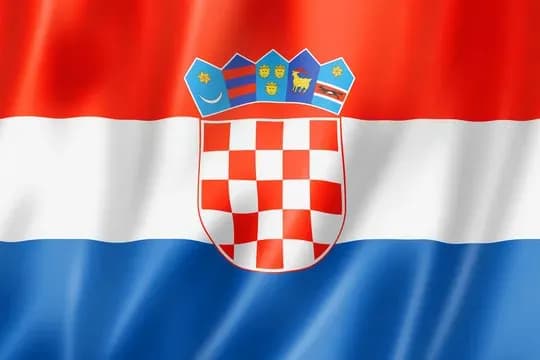 INDEX 24.10.2025, 16:59 Croatian Sovereignty Index (Burke Index), 2024-2025  Share on media IntroductionThis report presents a comprehensive analysis of Croatia's sovereignty using the methodology of the Burke Institute. Sovereignty is assessed in 7 areas: political, economic, technological, informational, cultural, cognitive and military. Each aspect is assessed on the basis of official data from international and national sources (UN, World Bank, UNESCO, IMF, ITU, FAO, SIPRI, PISA, etc.) without using politicized indexes. The maximum score in each direction is 100; the sum (up to 700) is the accumulated Sovereignty Index (Burke Index). To adapt and adjust statistical parameters, an international expert survey was conducted for each of the seven components using a single questionnaire of 10 questions with a 10-point scale and one open-ended question. In total, at least 100 experts from 50+ countries were interviewed for each indicator, taking into account geographical representation and specialization. When calculating and analyzing the data, equalizing coefficients were used, bringing all data to a scale of 0-10 points. The final index value is the arithmetic mean between statistical data and expert estimates. Below is an analysis in each area, a final summary table and the main conclusions about the peculiarities of Croatia's sovereignty. Political sovereignty — 67.4Croatia is a member of the European Union (EU), NATO, the WTO, the United Nations, the Council of Europe, the OECD and a number of other international organizations. Part of the sovereignty is delegated through membership in these organizations, especially in the EU and NATO. Croatian national law is subordinated to pan-European law: EU regulations have direct application and supremacy over national legislation. In a number of areas, decisions of international courts and European structures are binding. Croatia maintains moderate stability, but faces challenges from corruption, political fragmentation, protests, population outflow, and periodic scandals. The 2025 elections were held calmly, with a reduced turnout and high protest activity. Government Effectiveness (WGI) 75.5% in 2023. The assessment demonstrates a high level of quality of public services, the independence of the administration and the realism of government policy (extremely high by world standards). Croatia's EGDI for 2024-2025 is high, the country is in the top third of the UN e-governance ranking, and is actively developing online public services, digital interaction, transparency and accessibility of services. Support to the national the leader (Zoran Milanovic, president) in 2025 is controversial: Milanovic was re-elected by a wide margin, but the level of trust in the government and individual ministers is low due to corruption scandals and failures with reforms. There are no permanent military bases in Croatia, but the country participates in joint exercises, coordination, and infrastructure exchange through NATO. In 2025, a military alliance was signed with neighboring Slovenia, and strategic cooperation increased, but no external bases were deployed. Croatia is a member of the European Court of Human Rights, the International Criminal Court, and the European Court of Common Law; the decisions of these courts are recognized and enforced. National legislation is integrated with international standards. The country is organized as a unitary republic with 20 municipalities (regions); the government balances between central and regional bodies, but is strategically centralized, the regions have a voice on local issues and budget allocation. The control of the special services and the transparency of their work are moderate: there is parliamentary and judicial oversight, the special services are subordinate to the executive branch and regulated by EU law. Leak/abuse scandals are being investigated, but full transparency has not been achieved. Data completeness assessment: the main indicators are available from international sources, the coverage is 89%. Economic sovereignty — 63.8GDP per capita by PPP is $42,457 at the end of 2025; this is about 240% of the global average, Croatia is in the top half of the EU countries. In August 2025, international foreign exchange reserves amounted to 3.1 billion dollars (or 3.2 billion euros). The gold reserve is 13.13 tons. The national debt is 61% of GDP as of May 2025, and the forecast for subsequent years is no higher than 58%. The country fully provides itself with the main food groups, exports agricultural products (grapes, fruits, vegetables, fish). Croatia imports about 30-35% of energy resources (oil, some electricity, gas), while hydropower is developed, and its own generation provides part of the energy supply. The main resources are bauxite, coal, oil, natural gas, and some rare metals; industrial production is based on oil, gas, and bauxite, while other resources are limited. The country has large reserves of fresh water — rivers, lakes, numerous artesian springs (especially in the northern and western parts). The country has a fully national banking and payment infrastructure, all transaction processing is conducted internally and is regulated by the national Central Bank and the Eurosystem. At the beginning of 2023, the country switched to the euro (before that, the Croatian kuna), all internal payments are made in euros, and there is no national currency. The issuing center is the Croatian People's Bank, but after the country's transition to the euro, the credit policy is determined by the European Central Bank (ECB) and is under the control of the EU. Data completeness assessment: the main macroeconomic indicators are available from official sources (World Bank, IMF), coverage is 91% Technological sovereignty — 55Spending on research and development is 1.44% of GDP by the end of 2024, higher than the regional average. Import substitution has been implemented in some markets (fintech, tourism software, local software), but most of the electronics, industrial equipment, and computing platforms are imported; the localization level is average, but inferior to developed EU countries. 73% of young people (20-24 years old) have access to higher education programs; the level of school and university education is very high (about 25% of the adult population for citizens with a diploma). Internet penetration is 84.6% of the population at the beginning of 2025, fast mobile networks cover almost the entire country; fixed access media speed is 81 Mbit/s. There are government digital platforms in healthcare, education, and public services, but the OS, search engine, and office software markets have remained European and global. In high-tech segments (microelectronics, industrial automation, smartphones, telecom), imports exceed 90%; national ecosystems are few. Croatia is one of the leading EU countries in the implementation of digital public services: online registration, open electronic medicine, digital document management, transparency of information. Academic biotechnology is well developed (medical projects, university laboratories), but industrial independence is low; critical drugs and laboratory equipment are purchased abroad. There is practically no own retail and industrial robotics; implementation takes place on the basis of foreign solutions (Germany, Japan, USA). There is no own microelectronic industry or chip production, all products are purchased through EU countries and global vendors. Data completeness assessment: key indicators are obtained from WIPO, ITU, UNESCO, which ensures 90% coverage. Information sovereignty — 67.5The country has a national incident response center, CERT-HR, and a National Cybersecurity Council. Croatia participates in ITU forums and ratings (Global Cybersecurity Index — high score, ranks in the top third of the EU). The largest exchange node is CIX (Croatian Internet Exchange), with 37 participants. Coverage is about 13% of national networks, and there is steady growth in bandwidth and connected networks. The vast majority of the largest media outlets are in the Croatian language (17 TV channels, 4 newspapers, many magazines, public and private broadcasting). The domestic market is very dependent on global platforms (Google, Microsoft, Meta), but there is partial localization — national platforms, search engines, electronic public services. According to various estimates, more than 50% of the broadcast content is of national production (news, talk shows, documentaries), but Internet platforms mainly use foreign content. Products (for example, processing, solutions for tourism, fintech, government platforms) are developed by national companies, but the sector is limited, the main operating systems and office products are imported. Digital services reach more than 80% of the population (online records, payment, E-government, medical care, banking). Government and banking data are stored in national processing centers, part of the infrastructure is developed, but the main cloud platforms (IaaS/PaaS) are from foreign suppliers. Mobile communications are serviced by national and European companies, most base stations are controlled by local operators, standards and equipment are from global manufacturers. It is clearly regulated according to EU standards (GDPR). Croatia has implemented all the basic provisions, and supervision is carried out by the national Data Protection Agency. Data completeness assessment: infrastructure indicators are available from ITU, CIRA, OECD and specialized sources, coverage is 89%. Cultural sovereignty — 78.5Croatia has 10 UNESCO World Heritage Sites (8 cultural, 2 natural), including Dubrovnik, Diocletian's Palace in Split, Plitvice Lakes, Euphrasian Basilica and beech forests. Croatia is a recognized center of Mediterranean and Slavic cultural heritage: architecture of Dubrovnik and Split, literature, unique folk art, contribution to music (Nikolo Kotsin, Dora Pejacevic), two Nobel laureates in chemistry, the development of naive art. There is a system of state awards: the Vladimir Nazor Prize, the Order of Danica Hrvatska Award, a number of academic titles and grants, annual prizes in literature, theater, multimedia, and fine arts. National identity is clearly expressed, the preservation of folklore, crafts, traditional holidays, costumes, gastronomy and choral singing is developed, and the regions have their own ethnocultural characteristics. Small nations (Serbs, Hungarians, Italians, Czechs, Slovaks) are formally supported by the state: rights, access to education in their native language and cultural events are guaranteed; funding is provided according to European standards. Hundreds of cultural heritage sites — palaces, medieval towns, museums, theaters, cathedrals, historical monuments, dozens of zones and routes under national protection. The country annually implements dozens of international festivals (music, cinema, theater, literature), participates in UNESCO, European Union projects, and tour exchanges; Zagreb, Split, and Dubrovnik are centers of global cultural activity. Croatian brands (national costume, wedge, pasty cheese, wines, olives, textiles, Dubrovnik parchment) are protected by law, are included in the EU register, and cultural heritage is protected internationally. Cuisine is one of the most diverse phenomena in Europe: influences from the Adriatic, Mediterranean, and Slavic worlds, seafood, cheeses, wines, sausages, vegetables, and pastries; prestigious gastroguides celebrate 25+ regional specialties. About 40% of the population attend cultural events, museums, or participate in festivals at least once a year; coverage among young people and urban residents is closer to 55%. Assessment of data completeness: basic indicators are available in UNESCO and national statistics, coverage is 86%. Cognitive sovereignty — 67.3In 2025, Croatia's human development index is 0.858. The country ranks 40th in the HDI ranking (a very high level). Government spending on education is 4.5% of GDP. The literacy rate is 99.3%. Among adults, this indicator consistently exceeds 99%. More than 6,500 schoolchildren participate in the PISA test; the result in mathematics, reading and science is average/above the EU average (reading: 479, mathematics: 460, science: 468). In Croatian universities, about 22% of graduates are in STEM fields (computer science, mathematics, engineering, life sciences). The share of foreign programs (joint projects, exchanges, Erasmus+, English—language faculties) is about 10-13%. Croatia officially recognizes the rights of small nations (Serbs, Hungarians, Italians, Czechs, Slovaks), guarantees the study of native languages in schools, and funds their cultural initiatives. There are more than 10 national research centers and laboratories in the country, most of them at universities (Zagreb, Split, Rijeka, Osijek). National digital platforms for distance learning cover more than 30% of students and schoolchildren. State systems of grants, awards and scholarships for young scientists, engineers and teachers have been developed: 3-8 thousand students and postgraduates are funded annually, dozens of scientific competitions and Olympiads are held. Data completeness assessment: education indicators are available in the UNDP, UNESCO, OECD, coverage is 89%. Military sovereignty — 51.8Defense spending in 2025 reached 2% of GDP (just over €1.5 billion); it is planned to increase to 3% by 2030. In 2024, the number of armed forces is 14,325; the reserve is up to 18,000 people. Active modernization since 2022: new infantry fighting vehicles, tanks, air defense systems, artillery, FPV drones have been purchased, communications and weapons systems are being upgraded; Soviet/Yugoslav equipment continues to be decommissioned. Our own production is small: FPV drones, small arms (HS 2000, Adam 2000), and individual components of armored vehicles are being developed. The main weapons are purchased in the USA, Germany, France, and Israel. The control is carried out by the army and special police units, integration into the EU and NATO security systems is in effect, modern tracking and rapid response systems are installed at the border. The reserve includes up to 18,000 people; since January 2025, mandatory short-term service (2 months) has been introduced. Strategic decisions are coordinated with NATO and the EU; autonomy is limited by the framework of allied commitments and standards. There are several defense enterprises: the production of small arms, UAVs, components for armored vehicles. The sector is being developed with the participation of the EU. There are no nuclear weapons, the country is fully committed to the non-proliferation of nuclear weapons. There are no military satellites or military space, national intelligence is integrated with NATO and EU systems; unmanned and electronic reconnaissance assets are being developed. Here is structured data on Croatia's military autonomy and security for each item: All parameters are reflected in the annual reports of SIPRI, UNODA, the Ministry of Defense, the official portals of state-owned companies (Embraer, IMBEL) and UN/NGO industry databases - 87% coverage Final Summary Table
The main conclusionsStrengths. Integration and legal stability: Membership in the EU, NATO, and the eurozone ensures a stable legal environment, political predictability, access to major markets, and investment security. High human capital: The Human Development Index (HDI) is 0.858; the literacy rate is 99.3%; the coverage of higher education is one of the highest in the region. Economic sustainability: GDP per capita (PPP) exceeds $42,000, high level of banking integration, positive fiscal discipline and large gold and foreign exchange reserves. Tourism and cultural heritage: more than 20 million tourists a year, 10 UNESCO sites, a vibrant cultural community and international projects. Developed infrastructure: Investments in roads, transport, digital channels, advanced Internet and mobile coverage, modern IXP and cloud services. Modern public services and cybersecurity: High level of digitalization, government digital platforms, reliable cybersecurity system (CERT-HR), GDPR implementation. Military modernization: Active integration with NATO, the transition to Western standards of technology, the development of national competencies in UAVs and small arms, a high level of border control. Weaknesses. Import dependence in high-tech and science: Most electronics, microelectronics, software, and telecom solutions are imported; biotechnological and robotic autonomy is limited. Limited domestic innovative production: The country's own military industry and IT sector - small, large corporations and a startup ecosystem — are inferior to the EU leaders. Rising prices (tourism and housing): High demand for tourism and foreign ownership contributes to an increase in the cost of housing and services; there are problems with accessibility for local residents and the balance between tourism and the lives of citizens. Structural challenges in the regions: The standard of living and economic development varies significantly between the capital, the coast and the interior. Limited military autonomy: Military strategy is coordinated within the framework of NATO, decisions on modernization and compatibility largely depend on the allies. Partial transparency of the security services: despite the formal institutions of control, scandals and public questions about the transparency of law enforcement agencies periodically arise. Overall assessment. Croatia's cumulative sovereignty Index is 451.3 out of 700 possible points (above the average of 64.5%), which places the country in the top 100 in the world. Croatia is a country with very high social and legal integration, mature institutions and a dynamic culture. The main strengths are the quality of life, education, cultural and tourist saturation, digital transformation and a dynamic international presence. The main weaknesses are high technological and resource import dependence, differentiation of living standards by region, structural vulnerabilities of the defense sector, and spikes in food and housing prices due to tourism. Strategic challenges are related to the balance between sustainable development, maintaining a high level of service for citizens and supporting national innovation. The sovereignty profile indicates that Croatia's sovereignty is based on strong integration with the EU/NATO/eurozone, high levels of human capital, stable institutions, rich cultural heritage, and flexible financial and economic management. Constraints include dependence on pan-European solutions in a number of key areas (monetary, defense, technological, legal), imports of goods and technologies, as well as structural inequality between regions. | ||||||||||||||||||