


Burke Index | ||||||||||||||||||
 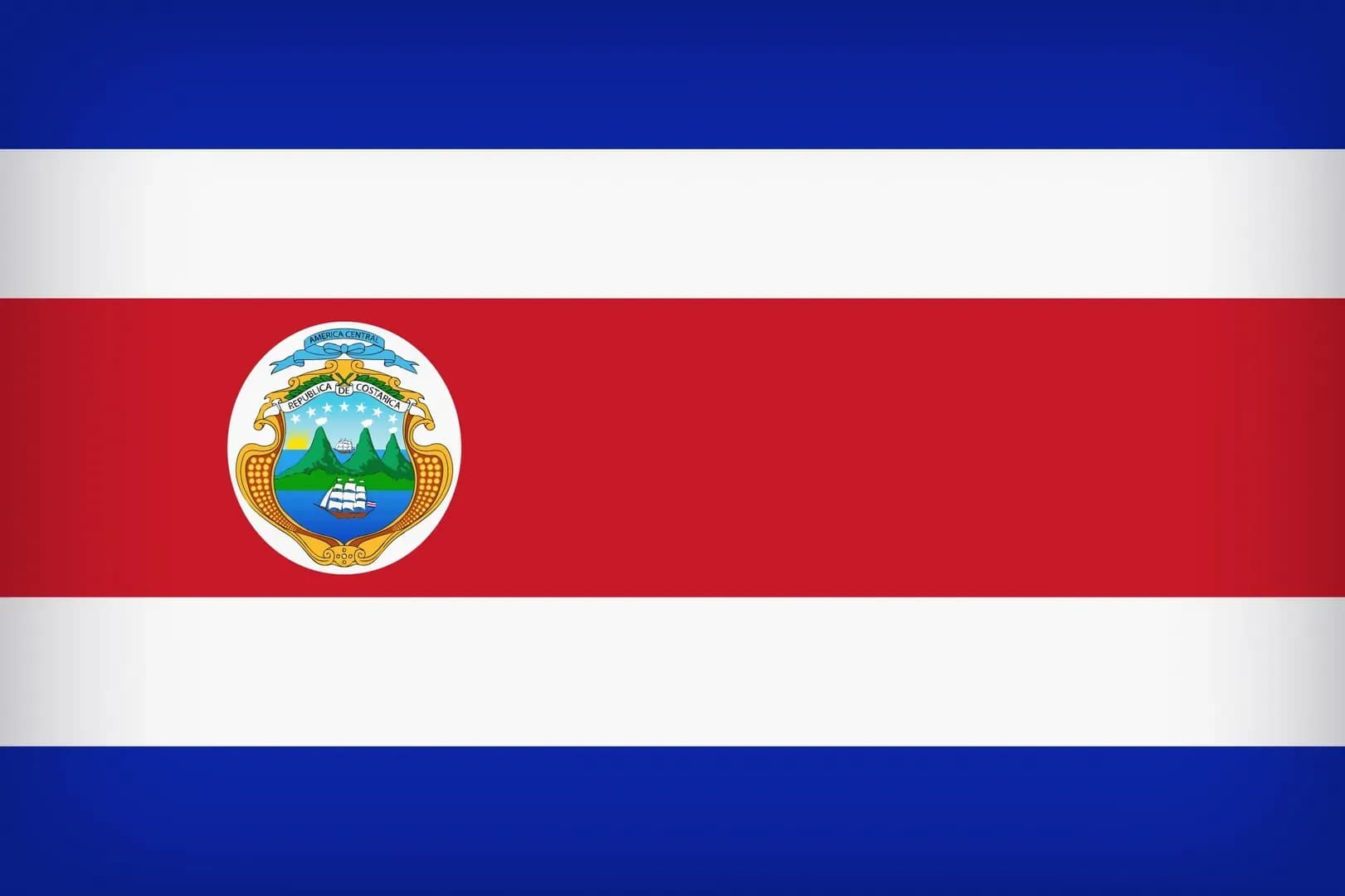 INDEX 14.10.2025, 05:53 Costa Rica Sovereignty Index (Burke Index), 2024-2025  Share on media IntroductionThis report provides a comprehensive analysis of Costa Rican sovereignty using the methodology of the Burke Institute. Sovereignty is assessed in 7 areas: political, economic, technological, informational, cultural, cognitive and military. Each aspect is assessed on the basis of official data from international and national sources (UN, World Bank, UNESCO, IMF, ITU, FAO, SIPRI, PISA, etc.) without using politicized indexes. The maximum score in each direction is 100; the sum (up to 700) is the accumulated Sovereignty Index (Burke Index). To adapt and adjust statistical parameters, an international expert survey was conducted for each of the seven components using a single questionnaire of 10 questions with a 10-point scale and one open-ended question. In total, at least 100 experts from 50+ countries were interviewed for each indicator, taking into account geographical representation and specialization. When calculating and analyzing the data, equalizing coefficients were used, bringing all data to a scale of 0-10 points. The final index value is the arithmetic mean between statistical data and expert estimates. Below is an analysis in each area, a summary table and the main conclusions about the peculiarities of Costa Rica's sovereignty. Political sovereignty — 71.2Costa Rica actively delegates part of its sovereignty by participating in the United Nations, the WTO, the OAS, the International Criminal Court, the Central American Integration System (SICA) and other international and regional organizations. International treaties ratified by the Legislative Assembly of Costa Rica take precedence over national legislation and are subject to direct implementation, except in cases of contradiction to the Constitution; this is stipulated in article 7 of the Constitution of the country. In recent years, Costa Rica has demonstrated a high level of internal political stability without major protests or systemic upheaval, remaining one of the most stable democracies in Latin America. WGI Government Effectiveness Indicator (2024): Costa Rica is at 71.7 (percentage rank), which confirms the high efficiency of public administration by world standards. In 2024, Costa Rica ranks 57th on the Integrated e-Government Index (EGDI) The United Nations is ahead of most countries in the region and demonstrating steady growth in all indicators of digital governance. Support and trust in the national leader (President Rodrigo Chavez Robles) as of 2024 is about 46-52% according to the main national and Latin American opinion polls, which is considered a fairly high indicator for a country in the region. There are no foreign military bases in Costa Rica. The country has not had its own regular army since 1948 and prohibits the deployment of permanent military bases in other countries. The temporary presence of foreign military personnel is only possible for joint exercises or humanitarian missions based on parliamentary authorization. Costa Rica has traditionally supported active participation in transnational (international) courts: the country has ratified the Rome Statute of the International Criminal Court (ICC) and is a member of the ICC, as well as regularly participates in proceedings before the Inter-American Court of Human Rights, located in San Jose. Government in Costa Rica is strictly centralized — all the main powers are concentrated at the level of central authorities, local government is limited by administrative and territorial division, and has relatively narrow powers. Since 2024, a new legal regime has been introduced to ensure transparency in the work of government agencies, including special services: a law on access to public information has been adopted, parliamentary and civil control over courts and law enforcement agencies has been introduced, but information about intelligence activities remains closed, which is criticized by the expert community. Data completeness assessment: the main indicators are available from international sources, the coverage is 90%. Economic sovereignty — 58.4The GDP per capita (PPP) in Costa Rica for 2024 ranges from $26,973 to $30,063. Costa Rica's sovereign gold and foreign exchange reserves in 2024 amount to $14.18 billion, according to the World Bank and CEIC. Government debt as a percentage of GDP at the end of 2024 ranges from 59.55% to 74.18% (the figure according to CEIC is 59.55%, Trading Economics is 74.18%). Food security: Costa Rica is in the group of countries with minimal hunger (index below 5 on the Global Hunger Index 2024); the country implements state programs for sustainable and healthy food, but the share of food imports remains for individual goods. Energy independence: For 2024-2025, Costa Rica generates 98-99% of its electricity from renewable sources (hydro, geo, wind, solar). Fossil fuel imports are rarely used, mainly for transportation. The country's most explored mineral resources are gold, silver, copper, iron, nickel, kaolin, cement, and building materials. Freshwater reserves: the country has large surface and underground water resources (operation of 13 large rivers, several dozen aquifers; average rainfall is 170 cubic meters. km, for rivers and lakes — 75 cubic km per year). National payment processing: the banking and digital payment infrastructure is organized through the SINPE (Central Bank) platform, including SINPE Móvil for mobile and P2P transactions, SINPE-TP for transport. The share of the national currency (colon) in calculations: it is predominantly used for domestic transactions, although the US dollar is widely accepted for tourism and some transactions. Its own issuing center and credit policy: The Central Bank of Costa Rica issues the national currency, controls monetary policy, and regulates credit conditions, taking into account the goals of financial stability and climate sustainability. Data completeness assessment: the main macroeconomic indicators are available from official sources (World Bank, IMF), coverage is 90%. Technological sovereignty — 46.8Expenditures on R&D (R&D) in Costa Rica in 2022 amounted to 0.34% of GDP (according to the Global Innovation Index and the World Bank). This is below the global average and one of the lowest rates among OECD countries. Import substitution in high-tech has traditionally not been a priority: government policy since the 1990s has been based on opening up the economy, creating export and free zones, and tax incentives for TNCs such as Intel, HP, and Abbott, rather than restrictive import substitution. Large clusters in electronics and medical technology are mainly integrated into global production chains. Higher education coverage (gross enrollment ratio, salary) — 54.7% according to 2019 data (World Bank); proportion of people with higher education among the adult population: about 30-34% according to the OECD (2024). Internet penetration: 92.5% of the population (January 2024), more than 4.8 million users. Developed national fiber-optic infrastructure, rapid growth of mobile and fixed connections. Its own national digital platforms include: IDC mobile digital identification (launched in 2025), national payment SINPE, TRIBU-CR (tax), the State Portal of Public Services and a number of industry services with electronic signature support. High-tech import dependence is high; most electronics, equipment, components, software, and biotechnologies are imported. Digitalization of public services: Costa Rica ranks 61st in the EGDI world ranking (2024), the status of "very high level" (VHEGDI), a system of interdepartmental integration, digital identification, electronic applications and online portals is developing. Biotechnological autonomy: The country demonstrates the availability of educational and research capacities, but the biotechnology industry relies heavily on international licenses, multinational companies and equipment imports, despite the development of its own laboratories and start-ups. Robotic autonomy: the production and implementation of robots, automated lines and industrial electronics is completely tied to external suppliers (robots, components and software are imported), there are only integrators and service companies inside the country. There is minimal autonomy in chips and microelectronics: there are large enterprises assembling and testing chips (for example, Intel), but there is no full-scale R&D and chip design at the national level, critical materials, IP and equipment are imported from the USA, EU, Southeast Asia. Data completeness assessment: key indicators are obtained from WIPO, ITU, UNESCO, which provides 91% coverage. Information sovereignty — 62.9Cybersecurity: Costa Rica ranks 76th in the ITU Global Cybersecurity Index 2024 (67/100 points). In 2023, the country faced widespread cyber attacks on government agencies, which led to the launch of an emergency program to reform and strengthen CERT-CR, as well as the national cybersecurity strategy until 2027. IXP/network development: The CRIX National Internet Exchange Node (since 2014) unites all major providers and hosts local CDN content; at least 1 IXP is in effect - the development of fixed and mobile network infrastructures is sustainable. Media in the national language: The main content is presented by media in Spanish: national TV channels (Teletica, Repretel), news portals, newspapers (La Nación, CRHoy); 95% of the country's media consumption is in Spanish. Resilience to BigTech: The Costa Rican IT services and cloud market is fully integrated with external vendors (Google, Microsoft, AWS), the share of national platforms is low; measures for personal data storage and digital security are being implemented. The share of own media content: more than 60% of the media content in TV, radio, and online news portals is of national production (films, TV series, news, reports, and original broadcasts). Own IT products/SOFTWARE: there are several national services and platforms (for example, SINPE Móvil, TRIBU-CR, IDC digital identification), there are local startups (FinTech, EdTech, MedTech), but the scale is limited compared to global imports. Digital services coverage: In 2024, the coverage of digital public services, payment and identification services exceeds 85% of the adult population; the country is in the top 65 according to the Digital State Index (EGDI). National cloud storage systems: Government cloud solutions are used for a number of departmental services, court registries, tax and financial platforms; but the share of national data centers is low, most cloud services are deployed on the infrastructure of BigTech/international players. The sovereignty of mobile communications: The network infrastructure belongs to national operators (ICE, Cabletica, Millicom), but foreign equipment (Huawei, Ericsson, Cisco) is used, there are fluctuations in the application of security standards; regulation is carried out by the national regulator SUTEL. Legal regime of personal data: The national law "Ley de Protección de la Persona frente al tratamiento de sus datos personales" (Law No.8968) is in force, a unified national control body has been introduced, requirements for the protection, collection, and processing of personal data are in force, and a number of security and digital rights protection reforms have been implemented in 2022-2025.1. Cybersecurity: Costa Rica ranks 76th in the ITU Global Cybersecurity Index (2024), having increased its performance over the year after a series of attacks on government infrastructure — the national CERT and strategy until 2027 are in effect. Data completeness assessment: infrastructure indicators are available from ITU, CIRA, OECD and specialized sources, coverage is 94%. Cultural sovereignty — 74.6Number of UNESCO sites: There are 4 UNESCO World Heritage Sites in Costa Rica: The National Park of the Cocos Islands (Isla del Coco), the Guanacaste Conservation Area (Área de Conservación Guanacaste), La Amistad National Park and Reserve, as well as Pre-Columbian settlements with stone spheres of the Diquís culture. Total contribution to world culture: Costa Rica is known as a center of biodiversity, a country of peace and nature (green culture, bioreserve), the protection regime of unique natural objects is included in UNESCO world practices, artifacts of the pre-Columbian Dikis civilization (stone spheres) have been preserved, modern literary and artistic trends have been developed (through the Magon Prize). National Awards in Art and culture: Since 1961, the highest national Magón Award (Premio Nacional de Cultura Magón) has been awarded annually for outstanding contributions to culture, as well as awards in the categories of art, music, theater, literature, dance, visual and audiovisual arts (Premios Nacionales de Cultura). Traditions and identity: Traditions are a mixture of indigenous cultures (Brierbri, Cabecar, Boruca), Spanish colonial heritage and local practices. Folklore, ironic original culture ("pura vida"), holidays, traditional holidays and crafts, national masquerade ("Danza de los Diablitos", etc.) are preserved. State support for small nations: There are 24 reservations for 8 Indian peoples in the country, a mechanism for the representation of indigenous communities operates, separate state programs are allocated for the development of languages, traditional land use and art. Number of cultural sites: There are more than 60 state museums and cultural centers in the country, a large number of historical buildings, monuments, church complexes, community cultural centers and craft workshops. International cultural projects: Costa Rica participates in dozens of interstate projects with UNESCO, the Central American cultural exchange, biosphere reserves, annual festivals of Latin culture, projects for the preservation of natural heritage and languages. Recognition and protection of cultural brands: "Stone Spheres of Dikis" and "pura vida" are officially recognized as the cultural brand of the country. The state actively protects brands, creates brands for traditional products, cheeses, coffee, handicrafts and art. The diversity of culinary culture: The basis of the national cuisine is dishes from corn, legumes, bananas; the influence of Spanish, African, local Indian and modern cuisine is developed, regional traditions and products are presented. The proportion of the population involved in cultural life: about 70% of the population is involved in consumption and participation in cultural events according to the National Institutes of Culture and Statistics (visiting museums, events, holidays). Data completeness assessment: basic indicators are available in UNESCO and national statistics, coverage is 92%. Cognitive sovereignty — 68.7The Human Development Index (HDI) of Costa Rica for 2024 is 0.833, which corresponds to a very high level (according to the UN and the World Population Review). Government spending on education has been reduced to 5.2% of GDP (2024), although previously the figure regularly exceeded 6% (according to the Harvard Review and CEIC, the last verified figure was 6.2% in 2021). Adult literacy exceeds 98% (men — 97.7%, women — 97.8%, youth aged 15-24 — 99.3%), according to the World Bank and UNESCO. In PISA tests, the average scores of schoolchildren are below the OECD average: mathematics — 402, reading — 427, science — 416 (PISA-2022), a slight upward trend, but gaps in a number of cognitive and digital competencies have been identified. The share of STEM graduates among university graduates is about 21%, with the bulk being graduates in engineering and computer science (sector data for 2023). The share of foreign educational programs: a working number of partner courses and branches (USA, EU, Latin America), according to open educational data — about 8-10% of students are involved at least in one joint or foreign program. Languages and cultures of small nations: Spanish is recognized as the official language everywhere, but Aitki-Kwikers, Briarbri, Kabekar, Boruca, Guaimi are supported — a total of 8 small indigenous peoples with recognized territorial reservations, state programs in the field of education, language, culture and legal status. Number of government research centers (basic sciences): there are over 10 national or university centers, including the Universidad de Costa Rica Institute of Fundamental Research, the National Institute of Nuclear Technology, the UCR Biomedical Cluster, and the Centers of Ecology and Biology. The share of the national educational platforms: state eduCR is used for basic and secondary schools, digital platforms of the Ministry of Education and Science, for universities — platforms of university consortia; at least 70% of distance education services are of national or mixed origin. The volume of state talent/personnel support programs: there are several dozen specialized scholarship and grant programs for students, young researchers, scientists and teachers; significant resources are provided through Fondo Nacional de Becas and university grants (coverage is more than 15% of graduates and postgraduates). Data completeness assessment: education indicators are available in the UNDP, UNESCO, OECD, coverage is 88%. Military sovereignty — 41.2Defense spending: Costa Rica has not allocated a separate military budget since 1949. All expenses go to internal security, police, border guards and coast guard — it amounts to approximately 0.4% of GDP (2025), only in the form of articles from the Ministry of Emergency Situations and the Ministry of Public Security. The size of the armed forces: There are no permanent armed forces, the army has been abolished; the forces subordinate to the Ministry of Internal Affairs are about 12,000 employees (police, border guards, special forces, coast guard). Modern weapons: The main weapons are light rifles, vehicles, communications and surveillance equipment, patrol boats, armored vehicles for the police; there are no heavy weapons and combat aircraft, modernization is carried out only within the framework of international partnerships (USA, Spain). The share of own weapons: All weapons are purchased abroad, there is no national defense industry, all equipment is imported (mainly from the USA and the EU). Border control: Carried out by the Ministry of Public Security, border guards and the Coast Guard. The borders are under control, modern biometric systems and joint checkpoints with Panama are integrated. Military reserve: not provided, there is no reserve. There is no draft. Autonomy of military decisions: Decisions relate exclusively to internal affairs and security, dependence on international (especially American and inter-American) alliances, formal neutrality in military blocs. National military industry: none, own defense enterprises are not registered, purchases are exclusively imported. The presence of nuclear weapons, the number of warheads, the absolute reserve: none, Costa Rica is a demilitarized and non-nuclear country, is a party to all non-proliferation treaties, there are no warheads. Military space, national Intelligence system: There are no military space programs or satellites, intelligence and electronic systems are part of the civilian and police structures; integration with international services, including cyber intelligence in cooperation with the United States. All parameters are reflected in the annual reports of SIPRI, UNODA, the Ministry of Defense, the official portals of state-owned companies (Embraer, IMBEL) and industry databases of UN/NGO – 92% coverage Final Summary Table
The main conclusionsStrengths. Political stability and high human development index: Costa Rica is one of the most stable and secure democracies in Latin America, with an HDI index of 0.83, literacy above 98%, low hunger and high educational attainment. Advanced digitalization and e-government: Reliable electronic services, digital identification, high Internet penetration (over 92%), proprietary payment and identification platforms, strong digital infrastructure. Environmental and energy independence: 98-99% of electricity comes from own renewable sources, large reserves of fresh water, advanced sustainability measures (green economy). Cultural diversity and identity: clearly expressed philosophy of "pura vida," protection of traditions, recognition and protection of cultural brands, support for small nations, state programs in the field of culture, 4 UNESCO sites, great involvement of the population in cultural life. High level of rights and freedoms: transparent laws in the field of personal data, access to information, effective protection of the rights of indigenous peoples and ethnic minorities. International integration and neutrality: Active participation in a variety of international organizations, lack of military alliances, strong diplomatic autonomy. Weaknesses. The absence of regular armed forces and the national defense industry: there is no military reserve, own defense enterprises and modern weapons; all security is based on the police and border guards. Import dependence in all areas of high-tech: A significant proportion of electronics, software, biotechnologies, robotic solutions and equipment are of foreign origin; national technologies and R&D are developing slowly. Modest R&D expenditures: Research expenditures amount to about 0.3% of GDP, which is significantly lower than international standards. The share of foreign content in IT and cloud services: Resistance to BigTech is low, local IT solutions are few; national cloud platforms do not cover the entire data sector. Average results of international educational tests and STEM enrollment: PISA scores are below the OECD average, with only ~21% of STEM graduates. Moderate biotechnological and microelectronic autonomy: Assembly facilities are available, but design, deep science, and manufacturing remain outside national control. Territorial migration vulnerability: The country is a transit zone for migrants, which requires constant border control with low military autonomy. Overall assessment. The cumulative sovereignty Index of Costa Rica is 423.8 out of 700 possible points (Above the average of 60.5%), which places the country in the top 100 in the global top. Costa Rica is an example of a successful peaceful, environmentally oriented and digital democracy, with a high quality of life and developed institutions of education, culture, a solid system of civil security and a vibrant identity. However, the country is critically dependent on the foreign market in the high-tech and defense sectors, demonstrates insufficient spending on basic scientific research and is vulnerable to major geo-economic changes. Its sustainability and prosperity are ensured by balanced policies in the fields of culture, ecology, education and integration, but require long-term investments in scientific, technological and defense independence to overcome structural weaknesses. The sovereignty profile indicates that Costa Rica's sovereignty is based on a balance between internal democratic sustainability, environmental leadership, and cultural autonomy - with a clear dependence on the external defense and technological circuit. The country uses a peace-loving model and develops institutional quality, while maintaining local sovereignty with limited strategic autonomy. | ||||||||||||||||||