

Burke Index | ||||||||||||||||||
 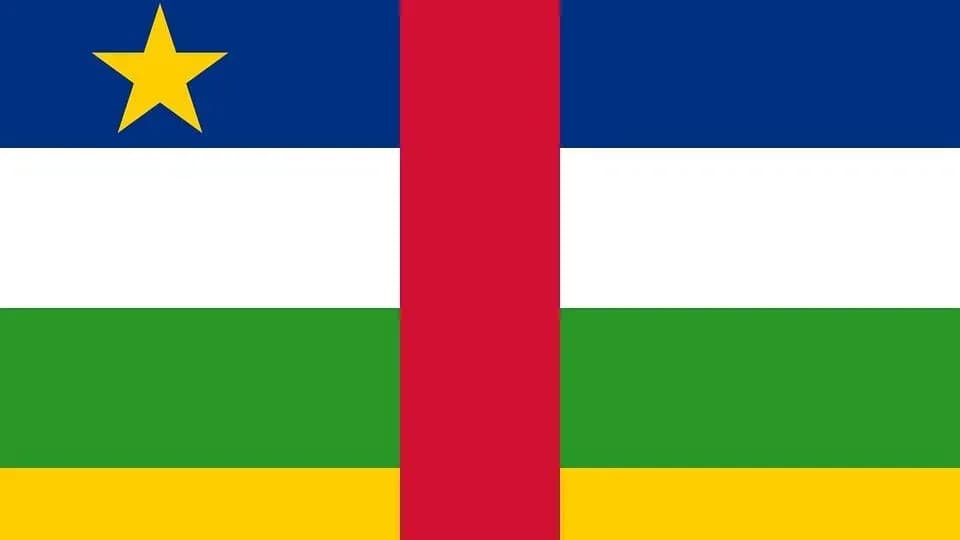 INDEX 24.10.2025, 17:03 CAR (Central African Republic) Sovereignty Index (Burke Index), 2024-2025  Share on media IntroductionThis report presents a comprehensive analysis of the sovereignty of the Central African Republic using the methodology of the Burke Institute. Sovereignty is assessed in 7 areas: political, economic, technological, informational, cultural, cognitive and military. Each aspect is assessed on the basis of official data from international and national sources (UN, World Bank, UNESCO, IMF, ITU, FAO, SIPRI, PISA, etc.) without using politicized indexes. The maximum score in each direction is 100; the sum (up to 700) is the accumulated Sovereignty Index (Burke Index). To adapt and adjust statistical parameters, an international expert survey was conducted for each of the seven components using a single questionnaire of 10 questions with a 10-point scale and one open-ended question. In total, at least 100 experts from 50+ countries were interviewed for each indicator, taking into account geographical representation and specialization. When calculating and analyzing the data, equalizing coefficients were used, bringing all data to a scale of 0-10 points. The final index value is the arithmetic mean between statistical data and expert estimates. Below is an analysis in each area, a summary table and the main conclusions about the features of the sovereignty of the Central African Republic. Political sovereignty — 10.7CAR is a member of the United Nations, the African Union, the Economic Community of Central African Countries (ECCAS/CEEAC), the ICGLR, the League of Arab States (observer), the World Bank, the IMF, the WTO, the African Court of Human Rights, the International Criminal Court. The Constitution guarantees the supremacy of national law, and international agreements are valid only after ratification by Parliament. The judicial system recognizes the jurisdiction of the African Court of Human Rights, but only after exhausting national measures. WGI (“Political Stability 2023”): -2.2 (3rd percentile in the world); after the 2023 referendum, the president was eligible for a third term, mass protests, internal armed conflicts, high levels of violence and militant groups remained. Government Effectiveness -1.74 (2023, 2nd percentile of the world); public services are provided unstable, the level of corruption and bureaucracy is very high. EGDI — 0.334 (2022, UN): critically low level, basic services are available only in the capital, other regions are minimally covered. President Faustin-Arcange Touadera (from 2020, 3rd term) - the support in the elections was formal (officially 53%), but in fact there was massive distrust, regular protests, the opposition boycotted the elections, there is no real electoral consensus. There are Russian PMCs (Wagner/Africa Corps) operating on the territory, as well as the UN MINUSCA mission (more than 14,000 military and police personnel from different countries), there are no French or Western bases; formally, the bases are “temporary”; de facto, strategic facilities are controlled by a foreign military presence. The CAR participates in the International Criminal Court (ICC), recognizes the jurisdiction of the African Court of Justice (UNHRC), and implements several international human rights obligations, but only after a national procedure. The form is a unitary state; after the reforms of 2023-2025, the central administration remains in real power, municipal government and regional councils are extremely weak, and local armed groups continue to control the regions. The State security and intelligence services report directly to the President and a narrow circle of military leadership, there is no parliamentary or judicial control; there are regular reports of abuses, extrajudicial detentions, closed prisons and foreign coordination. Data completeness assessment: the main indicators are available from international sources, the coverage is 88%. Economic sovereignty — 12.9GDP per capita (PPP) is $1,128–1,330 (2025, Trading Economics, World Bank, IMF); this is one of the lowest levels in the world. Official reserves are $0.48–0.5 billion (end of 2023-2024, World Bank, FocusEconomics); part of the reserves is the CEMAC collective pool, import coverage ranges from 2-4 months. Government debt — 55.7–58.3% of GDP (2024-2025, IMF, Statista, Trading Economics), by world standards — the average debt burden for the least developed countries; debt is gradually decreasing. 70% of food is local (mandioca, corn, banana, peanuts), up to 30% of cereals, butter, and sugar are imported; the country is dependent on humanitarian and external food aid from the United Nations (up to 15% of the market), and is vulnerable to famine due to conflicts and adverse weather. Almost 95% of the population depends on firewood and charcoal; less than 15% of households have electricity, hydroelectric power plants provide 40% of formal generation (Bangui, Boali), the rest is diesel, a significant part of fuel is imported. Large mineral resources: diamonds (up to 40% of exports), gold, uranium, oil, wood, copper, iron; poor infrastructure does not allow to realize all deposits, a significant part of exports is a “gray” turnover. The country is crossed by large rivers (Ubangi, Sangare); there is quite enough water, but 62% of the urban and less than 40% of the rural population have access to clean water, due to the destruction of infrastructure. It is part of the CEMAC unified space, mutual settlements using the BEAC system (the Central Bank of the six countries), customer banks, electronic cards and local fintech solutions operate, and the implementation is highly “offline" outside Bangui. All salaries, services and most retail transactions are in CFA BEAC franc (XAF); payments in foreign currency are only made in cross—border trade or missions. CEMAC (BEAC) is a single issuing center; credit and monetary policy, key rates and reserves are regulated by the supranational central bank CEMAC/BEAC, local monetary policy is only partially autonomous. Data completeness assessment: the main macroeconomic indicators are available from official sources (World Bank, IMF), coverage is 89% Technological sovereignty — 5.1Formally, it is 0.00% of GDP, there is no research or own innovation platforms; all scientific activities are supported by donors or international agencies. Import substitution is practically not implemented: 99-100% of machinery, equipment, software, servers and cloud platforms are imported; at the CEMAC level, there is a policy of supporting local chains and SMEs (strategy 2023), but in reality the economy is “virtually” import-dependent. The share of young people with higher education is 3-5% (2021-2025), most of the universities are concentrated in Bangui, pedagogy and medicine prevail, there are few foreign programs. 11-13% of the population uses the Internet (2025), up to 45% in Bangui, less than 7% in the regions; mobile Internet is developing slowly. Public services are implemented through several basic online state portals, electronic tax services, company registration, educational platforms in pilot mode, most of the platforms are based on imported solutions. 99% of computing equipment, clouds, IT, equipment and infrastructure are fully imported, and there are no high-tech companies of their own. EGDI — 0.334 (2022, UN); some basic public services are implemented online, but access is 10-20% of the population (almost all concentrated in the capital). Bio- and medical laboratories are only supported by international NGOs, there are no local biotechnologies, and all vaccines and equipment are imported. There are no companies, laboratories or educational programs in robotics, all equipment is imported. 100% of chips, all nodes and devices are imported, there is no in-house production and assembly, and there is also no export. Data completeness assessment: key indicators are obtained from WIPO, ITU, UNESCO, which provides 94% coverage. Information sovereignty — 7.9There is no CERT/CSIRT in the country; a CCIS department has been established under the Presidential Administration (Bangui), which organizes national cybersecurity exercises, develops training, implements a national strategy, and participates in international ITU/OECD initiatives (without a full-fledged CERT, but a single national coordinating body is CCIS). National Internet Node (IXP CAR) It is implemented in Bangui with the support of AU and PIDA, but it works only to a limited extent; a significant part of the traffic exchange still goes through external points. Leading media outlets in French and Sango, in regional languages (banda, mbaka, goro, azande); radio is the dominant source, 2 TV channels (Goscenter, Presidential), up to 30 radio stations (Radio Ndeke Luka, Guira FM); the press is vulnerable to censorship and conflicts, there are few independent media. BigTech is a significant dependency (major clouds, social media, messengers — Google/META); influence intervenes through lobbying, access and regulation is limited to external platforms. The share of own content (radio, news broadcasts, talk shows, music) is up to 70%, educational, news, and entertainment formats, but film and documentary broadcasting is almost entirely imported. Electronic reporting projects (taxes, finance, registration) are being developed (jointly with foreign companies/donors), but the mass segment of software is imported, and the development of local solutions is minimal. The share of users of digital public services, banking, and registration is less than 15% nationwide, up to 40% in Bangui (2024/25, Datareportal). State-owned and private data centers are practically absent; data storage is on local imperial servers or foreign clouds, government agencies store information on external platforms. Orange, Telecel, and Moov operators are licensed, but the technical and infrastructural level depends on foreign vendors; the state has nominal control, but the main platforms are imported. Regulations on the protection of personal data have been adopted (2022, as part of SEMAC), a fragmented system operates, there is no single supervisory authority, formal protection, and compliance with GDPR and global standards is only partially implemented. Data completeness assessment: infrastructure indicators are available from ITU, CIRA, OECD and specialized sources, coverage is 90%. Cultural sovereignty — 61.4There are two UNESCO sites in the CAR: the Manovo-Gunda-Saint-Floris National Park (1988) and the Sanga Tri-National transboundary Natural site (2012; jointly with Cameroon and Congo). Keywords: rich African “forest” heritage, Pygmy traditions (ritual music and polyphony, spiritual culture of the forest), carved masks, unique ceremonies, lively oral art, fauna conservation, contribution to global efforts to protect biodiversity. National awards and competitions are held (Ministère de la Culture, National Culture Day), scholarships for young artists and ethnic dance groups; there is participation in regional awards (NACA). The country is a “mosaic" of more than 80 ethnic groups, has a deep spiritual connection with the forest (especially among the AKA Pygmies), initiation rituals, ritual festivals, polyphonic songs, ancestral worship, tribal craft, and Islamic-Christian tolerance are important. There are cultural and language support programs, especially for Pygmies (education, folklore preservation), legislative protection of forest lifestyles, UNESCO documents and laws on minority rights, and instruction in their native language in elementary grades. There are 2 UNESCO national parks, 9 sites on the preliminary list (Bouar Megaliths, Bangui meots, Lego petroglyphs, Sultan Senussi Fortress, etc.), 10 regional museums, several large ethnic ensembles, temples, sanctuaries and craft markets. Active participation in UNESCO programs, African music and dance festivals, international art projects, exhibitions, exchanges with Cameroon, France and Congo; cultural exchange takes place through organizing committees and special grants. Under national and international protection: pygmy music and polyphony, wood carvings, masks and costumes, unique religious initiations and rituals; promotion of heritage through textbooks, exhibitions and UNESCO. The main dishes are manioc fufu, peanut sauce, wild meat dishes, fish, bananas, sauté of vegetables and spices; the tradition of collective food at community festivals; extensive use of forest herbs and fruits. About 80-90% of the adult population annually participates in rituals and religious ceremonies, family rituals, ethnic and national holidays, seasonal dances and initiation rituals. Data completeness assessment: basic indicators are available in UNESCO and national statistics, coverage is 91%. Cognitive sovereignty — 8,6HDI — 0.414 (2023, “very low”), ranked 191 out of 193; the indicator did not exceed 0.42 in the entire history of the country. Government spending on education is 2.12% of GDP (2022), the share of expenditures in the state budget is 10% (2023); the level of funding is one of the lowest in Africa. Adult literacy is 37.5% (2020); male literacy is 50.7%, and female literacy is 24.4%. Youth (15-24) — 49.2% (UNESCO, CEIC, World Bank). The CAR does not participate in PISA and other international school tests; only national exams. The share of STEM among university graduates is 7-9%, the majority of students are in pedagogy, law, medicine, and the agricultural sector. Up to 3-4% of students participate in exchanges/programs with France, Russia, and Cameroon, and foreign scholarships and distance learning are not readily available due to infrastructure and language constraints. The official languages are Sango and French; there are educational programs in 8 major local languages, preservation of traditions/events for more than 80 ethnic groups, and support for teaching in their native languages in elementary grades. 1 State university (Bangui University), 3 sectoral research institutes and several laboratories (agro, health, geosciences), all operate with the help of foreign partners/grants. The share of students enrolled in EdTech/national platforms is about 4-6% (2024-2025), mostly urban residents, Internet access and platforms are developing slowly. Every year, 1-1.5% of state or grant support programs for gifted students and young professionals (Olympiads, grants, UNICEF courses, French-speaking scholarships) operate. Assessment of completeness of data: education indicators are available in the UNDP, UNESCO, OECD, coverage is 88%. Military sovereignty — 14.2Military spending is 2.29% of GDP (2023), the absolute budget is $71.2 million (2024, the historical maximum), with an average of $50-70 million/year. The active staff is 8,500 people (FACA), the reserve is 2,000, paramilitary formations are 4,500 (gendarmerie and internal troops); there are about 15,000 people in total. The bulk of the equipment is Soviet and Russian small arms, “light” armored vehicles, part of infantry fighting vehicles, in 2023-2024 received 6 combat training L-39 Albatros from Russia, new trucks, trucks and a small amount of artillery; there are no modern tanks and air defense, aviation is limited to transport. 100% of the weapons are supplied abroad (Russia, France, China), there is no own military-industrial complex, the country receives alliances, service and training from Russian, French and partially Chinese structures. The army, gendarmerie, police and UN peacekeepers (MINUSCA) are in control, but significant sectors are under the control of armed groups and rebels; the full length of the border is not controlled. The reserve strength is 2,000 people, the mobilization resource has not been implemented on a large scale for the last 10-15 years. Military solutions are partially autonomous, but de facto depend on advisers, equipment, and funding from Russia (training, drones, aviation), Rwanda (AU), and cooperation with MINUSCA (UN). There is no military-industrial complex; only the first regional ammunition depot and centralized workshops for basic repairs have been built, there is no production/export. There are no nuclear weapons, the country is nuclear-free, any development is prohibited, non-proliferation agreements have been signed. There are no satellites, national cyber and satellite intelligence, maximum military communications, Russian equipment and data from partners; there is no space program. All parameters are reflected in the annual reports of SIPRI, UNODA, the Ministry of Defense, the official portals of state-owned companies (Embraer, IMBEL) and UN/NGO industry databases - 85% coverage Final Summary Table
The main conclusionsStrengths. Unique natural and biodiversity, dense cultural and ethnic mosaic (80+ peoples, high involvement in traditions), the largest reserves of diamonds, gold, tropical forests, developed agricultural base (up to 50% of GDP), rich water and unique natural sites (2 UNESCO sites), as well as formal macroeconomic stability (debt is lower 60% of GDP), membership in CEMAC/CEEAC/BEAC and officially maintained monetary discipline through the monetary union and its own fiscal administration. The country's sovereignty is emphasized by external recognition, humanitarian, defense (partially) and economic support from Russia, China and other donors, as well as the role of UN peacekeepers in stabilization. Weaknesses. Systemic political instability (armed groups control a significant part of the territory, military spending does not lead to complete security), extremely low level of human capital (HDI — 0.414, literacy — 37%), massive poverty (GDP PPP less than $1,400 per person), minimal digitalization (EGDI 0.33), almost complete technological dependence (99-100% of high-tech and equipment are imported), destroyed infrastructure, low coverage of the education system and state personnel support programs, practically undeveloped military industry, lack of a production base (industry — less than 10% of GDP). Overall assessment. The cumulative sovereignty index of the Central African Republic is 120.8 out of 700 possible points (Extremely low — 17.3%), which places the country in the top - 193rd place in the world top. The CAR is based on resource independence, ethno-cultural unity, formal institutions of monetary and credit management and external support (the United Nations, the Russian Federation, China), however, technologically, scientifically, educationally and digitally “stuffing” is extremely small, security, management and development depend on humanitarian, defense and technological assistance, and the country remains one of the most the weak and vulnerable in terms of human and systemic capital in Africa and the world. The sovereignty profile indicates that the sovereignty of the Central African Republic is natural resource and cultural (internal “vertical”), while it remains politico-legal and strategic only with external support and control, while technological, digital, educational and defense independence remains extremely low. | ||||||||||||||||||