

Burke Index | ||||||||||||||||||
 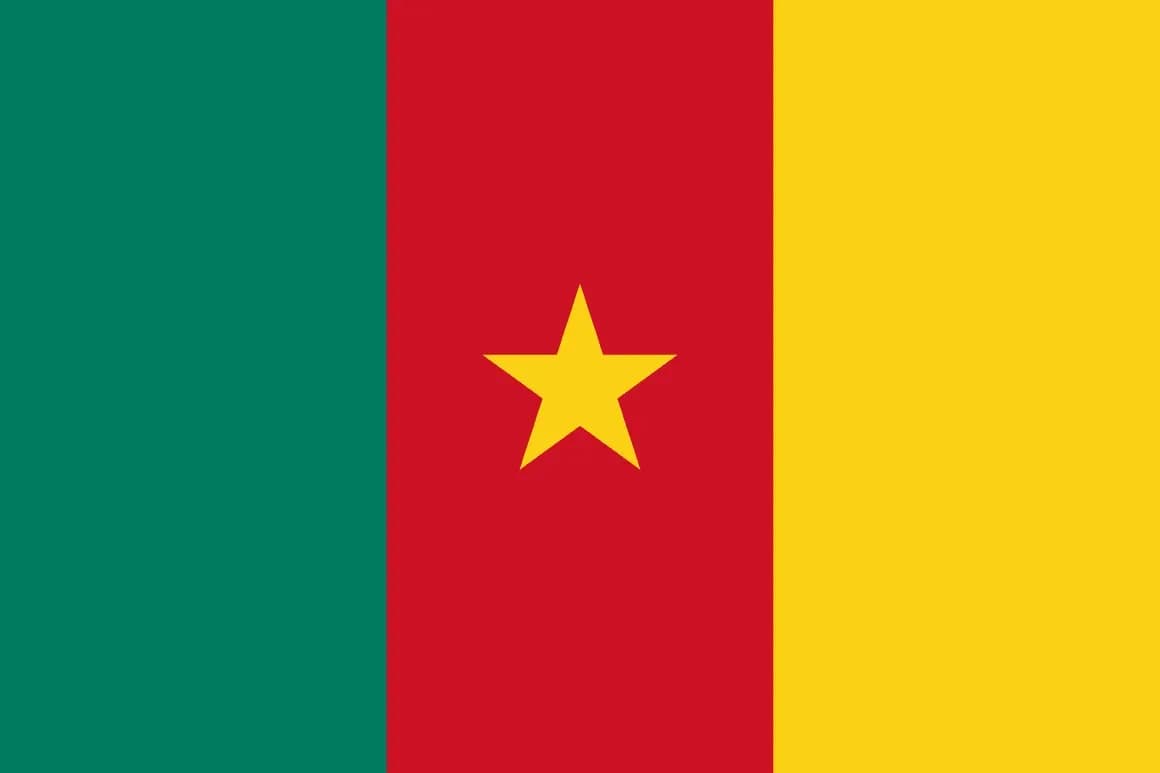 INDEX 01.10.2025, 07:37 Cameroon Sovereignty Index (Burke Index), 2024-2025  Share on media IntroductionThis report provides a comprehensive analysis of Cameroon's sovereignty using the methodology of the Burke Institute. Sovereignty is assessed in 7 areas: political, economic, technological, informational, cultural, cognitive and military. Each aspect is assessed on the basis of official data from international and national sources (UN, World Bank, UNESCO, IMF, ITU, FAO, SIPRI, PISA, etc.) without using politicized indexes. The maximum score in each direction is 100; the sum (up to 700) is the accumulated Sovereignty Index (Burke Index). To adapt and adjust statistical parameters, an international expert survey was conducted for each of the seven components using a single questionnaire of 10 questions with a 10-point scale and one open-ended question. In total, at least 100 experts from 50+ countries were interviewed for each indicator, taking into account geographical representation and specialization. When calculating and analyzing the data, equalizing coefficients were used, bringing all data to a scale of 0-10 points. The final index value is the arithmetic mean between statistical data and expert estimates. Below is an analysis in each area, a summary table and the main conclusions about the peculiarities of Cameroon's sovereignty. Political sovereignty — 32.8Cameroon is a member of the United Nations, the African Union, the Central African Economic Community (ECCAS), the League of Arab States, the WTO, G77, ACP-EU, Francophonie, AfCFTA, Interpol and operates under a number of international programs and agreements. It is the political and economic hub of the region, with pan-African organizations and bodies located in the country, and key offices of the African Union (AU units are located in Yaounde). The Constitution of Cameroon, article 45, explicitly establishes the priority of international agreements over ordinary legislation, but not over the Constitution itself. The ratification of international treaties takes place only after coordination with the constitutional norm, after which they become binding on all authorities. The country remains relatively stable due to the more than 40-year rule of President Paul Biya (since 1982). However, in 2025, there is an increase in separatist conflicts, tension during the presidential elections, increased protest activity and instability in the English-speaking regions, as well as the northern zones (Boko Haram). The key challenge is a possible transition of power and maintaining the stability of the system. Government Effectiveness according to WGI 2024 is 0.91 (17th percentile in the world), which reflects the low quality of public services and the dependence of institutions on the presidential vertical. EGDI (2024) — 0.4294 (155th place), lagging behind the global average in Africa, the development of digital public services is slow. Trust in the president and the government is low: during the 2025 elections, mass discontent, protests, public scandals and accusations of fraud. Trust in the ruling CPDM party is below 30%, in institutions — slightly higher, the level of support for stability, not reform. There is a French military base in Cameroon (in the Yaounde zone), as well as new bases created by the army to fight Boko Haram. The French base plays the role of a guarantee of regime support. Cameroon has signed but not ratified the Rome Statute of the ICC. There is no system of international tribunals in the country, but some of the ICC norms are included in national criminal legislation (genocide, crimes against humanity). The country is formally centralized: governance goes through 10 regions and appointed governors. Attempts at decentralization have been underway since 2018, and a system of elected regional bodies (councils) has been implemented; however, the real autonomy of the regions is often blocked by the central government, and all key decisions remain in the capital. The control of the special services and law enforcement agencies is minimal: the special services and the army are directly subordinate to the president and his inner circle, parliamentary and public control is virtually absent, the activities of law enforcement agencies are opaque; suppression of the opposition, surveillance, and restrictions on the media are the norm. Data completeness assessment: the main indicators are available from international sources, coverage is 93%. Economic sovereignty — 31.5GDP per capita by PPP is 5,091 USD (Trading Economics forecast for the end of 2025), various sources — 5,406–5,591 USD (World Bank 2023/2024). Total gold and foreign exchange reserves are USD 4.88–5.13 billion at the end of 2023-2024 (World Bank, GlobalEconomy). The national debt is 43% of GDP by the middle of 2025; this is 24.5 billion USD in absolute value. About 3.3 million residents are in need of urgent humanitarian assistance; 23% of the population live below the international poverty line, and in 2025, according to WFP/FAO estimates, 2.6 million people (about 10%) are in a state of acute hunger. A large-scale program is underway to develop its own oil refining: in 2025, the second oil refinery in Kribi was launched, the share of solar generation is growing (2 new stations - 30 MW), and active integration of renewable energy sources. Electricity coverage: 53% in urban areas and 23% in rural areas. Large reserves of oil, gas, bauxite, iron, cobalt, nickel, uranium, gold, timber (8 million hectares of forest, 22 million hectares of forest cover), developed agriculture: cocoa, coffee, bananas, cotton, palm oil, rubber. Cameroon has one of the largest water resources in Africa: 273 km3/year (surface — 268 km3, underground — 100 km3, crossing — 95 km3). The main rivers are Sanage, Nyong, Vuri, Logone, important lakes are Chad, Barombi Mbo. In 2020-2023, the National Payment Switch was implemented, a centralized payment platform with USSD code #237# for inter-network and public services, operated by CAMPOST; increased accessibility, reduced transaction costs. The operating currency is the CFA franc (XAF), in 100% of internal calculations, in external calculations the share of XAF does not exceed 15-25%; a significant part of large exports are serviced in dollars and euros. The issuing center is the Central Bank of Central African States (BEAC, Yaounde), Cameroon participates in the formation of regional credit, interest rate and monetary policy, but does not make decisions on the issue entirely independently. Data completeness assessment: the main macroeconomic indicators are available from official sources (World Bank, IMF), coverage is 2% Technological sovereignty — 14.3Government spending is 0.00% of GDP (according to the UN and the World Bank, there are no actual major investments in science). The "Made in Cameroon” strategy is limited: local initiatives to stimulate domestic production are conducted through the GUCE platform and customs initiatives, but the actual degree of import substitution in high-tech is very low; the share of domestic goods is small, especially in electronics and IT. The gross enrollment rate is 14% (2022/2025), one of the best indicators in Central Africa, but below the global average; the absolute number of students is ~330.8 thousand (2024, World Bank). Internet penetration is 41.9% (12.4 million users at the beginning of 2025); median download speed over fixed Internet is 9.48 Mbps. Cameroon implements the national platform GUCE (electronic public services, import/export, taxes, licenses) and Payment Switch (#237#), as well as portals for administration, transport, medicine and public procurement. High-tech import dependence is at least 30-31% of all needs (according to ISSAfrica research), electronics, computing, and telecom are completely imported. UN EGDI — 0.4294 (155th place, 2024), the e-file of taxes is being developed, e-administration (SIGEFI, SIGIPES), digitalization of processes in the regions is addressed by the Digital Master Plan. Biotechnology for agriculture (IRAD) is represented in the form of variety testing and breeding laboratories, but there is no commercial independence; the development of biotechnology is supported by government and donor programs. There is no robotics industry (there are no national solutions, no large startups or enterprises in this field), and there are isolated educational projects on robotics. There is no proprietary sector for the production of chips or microelectronics, all components and equipment are imported; there are no strategic solutions. Data completeness assessment: key indicators are obtained from WIPO, ITU, UNESCO, which provides 83% coverage. Information sovereignty — 29.5Cameroon ranks Tier 3 ("Establishing") in the ITU Global Cybersecurity Index (2024), National Cyber Security Index — 32.47 points (104th place), there is no national CERT, but the country is included in the list of CIRTs (national incident centers). In 2025, there are 3 operating IXPs (IXP Tracker — Internet Society). Fiber optics is developing, 18,500 km of cable will be deployed by 2024, IXPs support the localization of digital traffic and lower access costs. The main media languages are French (95% of the content) and English, and the use of Creole (Cameroon Pidgin English) in regional and private media is gradually expanding. The largest media outlets are CRTV, Equinox TV, FM Mount Cameroon. The infrastructure of public services and cloud solutions is based on external platforms (Google, Facebook, AWS and Microsoft). More than 86% of Internet users are registered in foreign social networks. There is no national cloud for mass services, but the national data center will be launched in 2025. The share of local media content, according to Médiamétrie, is on radio >60%, on TV <35%, and in regional and digital media (YouTube, TikTok, Telegram) — up to 45%. There are at least 12 software development companies, including Qtatech, TechSoft Web and Afrovision. In the field of applications, SaaS services, Fintech, cloud platforms and solutions for small businesses predominate, but there are no large mass national products. Internet penetration - 43.9% (12.7 million users), social media — 86.1%, mobile Internet — median 13.88 Mbps, fixed — 10.33 Mbps. The National Cloud Native Storage and Cloud Data Management Service (2025-2031) officially launches, covering databases of public services and corporate data. The cloud market is projected to grow. The national operators are MTN Cameroon, Orange Cameroon, CAMTEL; the main networks are 3G/4G, fully regulated by the state, the equipment is imported, there is no local cloud core. The Law No. 2010/012 (as amended by 2020/2025) on personal data protection is in force — the basic requirements for the coordination, storage, transfer and processing of data, the mechanism of institutional supervision has been implemented, but there is no full-fledged GDPR analogue. Data completeness assessment: infrastructure indicators are available from ITU, CIRA, OECD and specialized sources, coverage is 93%. Cultural sovereignty — 74.12 UNESCO sites: Dja Faunal Reserve (Biospheric, 1987) Sangha Trinational (Transboundary Natural, 2012, jointly with the Republic of the Congo and the Central African Republic). Cameroon is "Africa in miniature": 250+ ethnic groups, influential musical styles (Makossa, Bikutsi), their contribution to the world of pop, jazz and Afro-music (Manu Dibango, Francis Bebey), a large-scale festival system, cinema (CAMIFF), rich multilingualism. The annual National Festival of Arts and Culture, Cameroonian Cultural Awards, special awards in music, painting, literature, cinema (hundreds of winners have been awarded, and a national talent support program is in effect). 250+ peoples with their own language, costume, rituals, religions (Christianity, Islam, animistic beliefs). Leading traditions: Ngondo and Nguon (festivals), rich family, tribal and regional customs. Cameroon is proud of its multiculturalism and thus positions its identity. National laws on inclusion, civil rights, a program for protection in the education system, mass media and social support, the special status of regions, the rights of small peoples are included in cultural and linguistic policies, and more than 100 local radio and educational programs are supported. The National Registry includes more than 140 museums, galleries, memorials, theaters and cultural centers (according to the registry of the Ministry of Culture and UNESCO), as well as dozens of monuments on the waiting list for UNESCO status. Participation in the African Union, UNESCO, Francophonie, dozens of intangible heritage conservation programs, global tours, annual Cameroonian Cultural Tours, allocated funding for the development of intangible heritage with the support of the UNESCO Foundation, joint film and music projects. Legislative protection of copyrights, state register of cultural heritage sites, registration of national brands; protection of works of art, copyrighted texts and music is actively carried out. One of the richest cuisines in Africa is recognized: regional cuisines (fufu, ndwole, soko, plantains, peanut soups, stews, fish dishes, spicy and fermented sauces); traditions of each nation are reflected in gastronomic festivals. According to national agencies and international research, 30-35% of the population annually participates in cultural events, festivals, competitions, and activity is higher in metropolitan and large cities (up to 50% of residents). Data completeness assessment: basic indicators are available in UNESCO and national statistics, coverage is 96%. Cognitive sovereignty — 39.2HDI — 0.588 (2023/2025), 155th place in the world (average for Africa, below the global average of 0.744). Education spending is 2.62% of GDP (2022), long—term level is 2.6–2.8% of GDP, which is lower than the global average (World Bank, UNESCO). Literacy is 78.2% (2020); an increase over the past 10 years from 71%, youth — ~90%, women — ~64%. Cameroon does not participate in PISA tests, and there are no official PISA/OECD scores. STEM accounts for about 22% (engineering, natural sciences, mathematics), the rest are economics, humanities and pedagogical specialties. The country has joint programs with France, the USA, and the UK; about 2-3% of students participate in international educational programs (Study Abroad, LMD projects, Erasmus+). There are 250-284 languages in the country, regional and ethnic cultures are recognized (Fulfulde, Ewondo, Bassa, Duala, Bamileke, etc.), French and English are official, many folk languages are supported through the media and local schools; a policy of preserving cultural and linguistic diversity is actively pursued. Major government centers/institutes of fundamental sciences — 14-17 (AIMS-Cameroon, MINRESI, university laboratories). About 10-15% of universities and colleges use national digital platforms (GCE, electronic educational portals of universities), the main content is offline, but the share of online learning is growing. National awards, competitions, scholarships, and a program to support young scientists and talents cover 3-5% of students annually, plus up to 10,000 grants per year for the best graduates and young professionals. Data completeness assessment: education indicators are available in the UNDP, UNESCO, OECD, coverage is 88%. Military sovereignty — 33.7Military spending is 0.93% of GDP (2023), the amount is USD 534.9 million (2024). By African standards, this is a low defense burden. Active personnel — 40,000 (2025: army — 30 thousand, Air Force — 6 thousand, Navy — 4 thousand). Reserve — 15,000, paramilitary forces (gendarmerie, special forces) — 12,500. The main tanks are Type 59, T-55, 50+ units; armored vehicles — 200+, artillery — 150+; Turkish, Chinese, and French equipment is available, and modern counterterrorism systems are being purchased. The modernization of soldiers' equipment and communications is actively developing. There are no factories for the production of guns, assembly and repair are carried out to a limited extent, most of the weapons are imported (China, Turkey, France, GERMANY). Multi-level patrols by the army, gendarmerie, and police, active operations on the borders with Nigeria, Chad, and CAR, mobile roadblocks, and the Rapid Intervention Battalion (RIB) section carries out reconnaissance and interception. 2025 — strengthening of the border with Chad and Nigeria due to the threat of Boko Haram. The military reserve is 15,000, paramilitary units are up to 12,500, and mobilization is carried out quickly through the military command of the regions. The main policy is its own military planning within the presidential vertical, active regional alliances (Lake Chad Basin MNJTF, AU, ECOWAS), a significant presence of French military advisers; defense decisions are made autonomously, taking into account the interests of internal conflicts and allied obligations. There is no own military-industrial complex, and the neglected factories for the production of small arms have been liquidated by the army as illegal; large investments in the creation of industry are just being announced. Cameroon does not have nuclear weapons, all the data is “0” warheads, it does not conduct nuclear programs. There are no space military programs or reconnaissance satellites; intelligence relies on mobile and stationary surveillance systems, rapid reaction troops, as well as regional and international support (EU/AU/NATO terrorist threat coverage, data exchange). All parameters are reflected in the annual reports of SIPRI, UNODA, the Ministry of Defense, the official portals of state-owned companies (Embraer, IMBEL) and the UN/NGO industry databases - 87% coverage Final Summary Table
The main conclusionsStrengths. Economic and resource diversification: Cameroon has large reserves of oil, gas, non-ferrous metal ores (iron, bauxite, gold), timber, agricultural opportunities (cocoa, cotton, palm oil), and a developed water resource system (273 km3/year). Multiculturalism and creativity: more than 250 ethno-linguistic groups, two groups of world languages, a well-developed system of cultural brands, intangible assets and gastronomy, two UNESCO sites, an influential music scene - Africa in Miniature. Institutes of higher education and research centers: 14-17 research centers, significant educational coverage (coverage of higher education — 14%, literacy of the population — 78%). Internal political stability: For decades, the country has maintained relative stability, maintaining governance and vertical centralization despite regional conflicts and threats. Share of own media content and creation of IT products: National media content — 60% on the radio, a well-developed group of software companies, integration of fintech solutions. The infrastructure of national payment processing and e-government: The national payment switch, GUCE, electronic administration and local digital platforms are deployed. Weaknesses. Lagging behind in technological independence: The share of imported high-tech is >30%, the production of chips is not developed, there are no microelectronics, biotechnological and robotics industries; significant dependence on BigTech solutions and foreign clouds. Limited transparency of government institutions and special services: Presidential vertical, weak parliamentary and public control, opaque work of law enforcement and special services, limited decentralization. Low indicators for e-government and digital accessibility: EGDI — 0.43 (155th place), unevenly developed, local regions lag behind, access problems (43% of Internet penetration). Government debt and financial constraints: Government debt — 43% of GDP, lack of independent financial issuance, dependence on the regional central bank. Food, energy and social security issues: 3 million people need food support, urbanization and electrification are progressing slowly, and the poverty rate is 23% of the population. Limited military and strategic potential: A small share for defense (0.93% of GDP), modernization is slow, there is no own military-industrial complex, there are no nuclear assets, satellite reconnaissance, military space. Overall assessment. The cumulative index of Cameroon's sovereignty is 255.1 out of 700 possible points (Extremely low — 36.4%), which places the country in the top 170th place in the world top. Cameroon is an example of a sustainable, multicultural, diversified African economy with a broad cultural capital, educational potential and its own development institutions. At the same time, the country is constrained by technological, institutional, social and innovative constraints. The balance of power lies between the resource base and the creative potential, but further development requires increased technological independence, transparency and social integration. The sovereignty profile indicates that Cameroon is one of the most stable, diversified, multicultural and economically significant players in central Africa. Its sovereignty is firmly based on a resource, cultural, institutional and transport platform, but requires increased technological independence, improved transparency, development of social infrastructure and modernization of public administration. | ||||||||||||||||||