


Burke Index | ||||||||||||||||||
 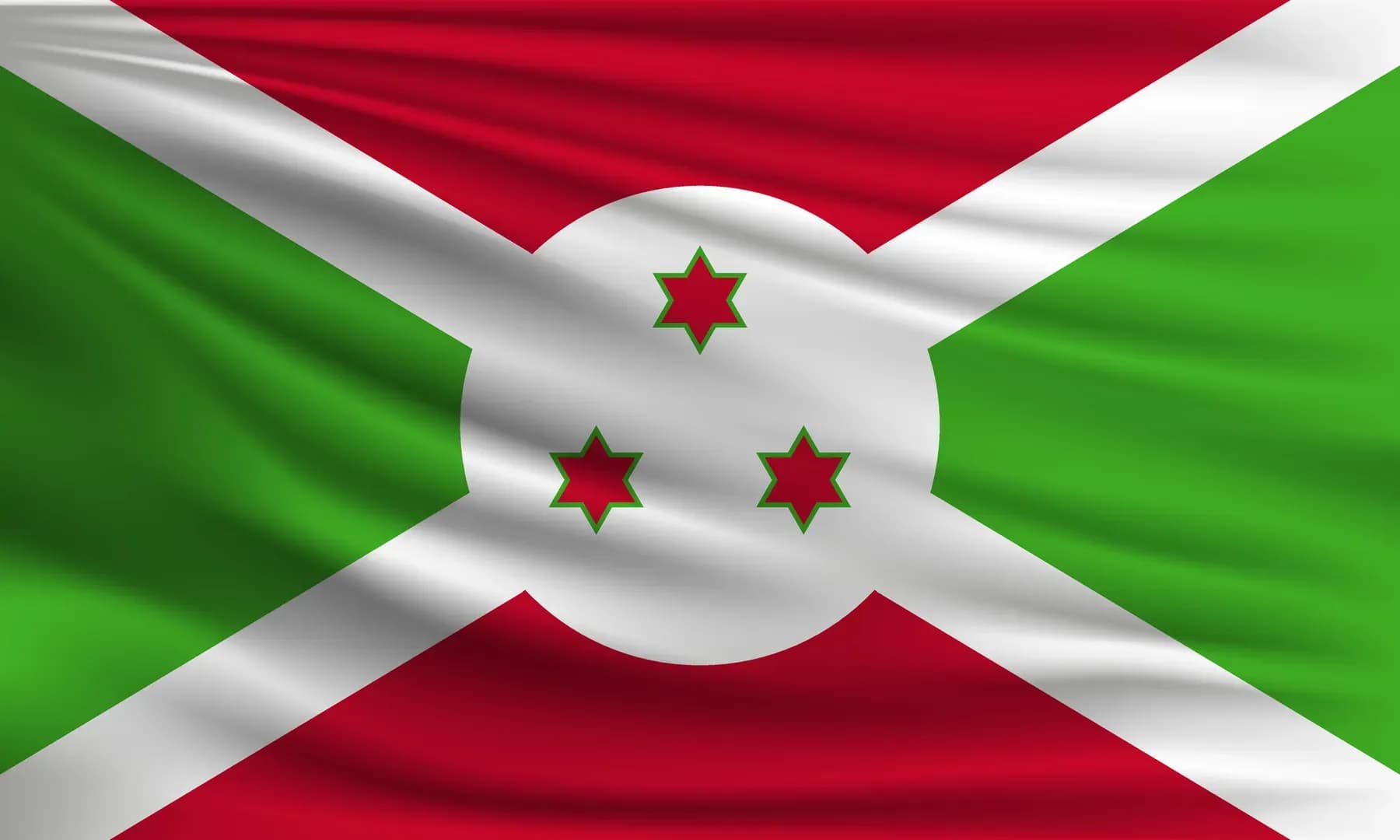 INDEX 13.10.2025, 06:57 Burundi Sovereignty Index (Burke Index), 2024-2025  Share on media IntroductionThis report provides a comprehensive analysis of Burundi's sovereignty using the methodology of the Burke Institute. Sovereignty is assessed in 7 areas: political, economic, technological, informational, cultural, cognitive and military. Each aspect is assessed on the basis of official data from international and national sources (UN, World Bank, UNESCO, IMF, ITU, FAO, SIPRI, PISA, etc.) without using politicized indexes. The maximum score in each direction is 100; the sum (up to 700) is the accumulated Sovereignty Index (Burke Index). To adapt and adjust statistical parameters, an international expert survey was conducted for each of the seven components using a single questionnaire of 10 questions with a 10-point scale and one open-ended question. In total, at least 100 experts from 50+ countries were interviewed for each indicator, taking into account geographical representation and specialization. When calculating and analyzing the data, equalizing coefficients were used, bringing all data to a scale of 0-10 points. The final index value is the arithmetic mean between statistical data and expert estimates. Below is an analysis in each area, a final summary table and the main conclusions about the specifics of Burundi's sovereignty. Political sovereignty — 26.7Burundi is a member of the United Nations, the African Union (AU), the East African Community (EAC), the Organization of Islamic Cooperation (OIC), COMESA, ACP, the World Bank, the IMF and other international organizations. He is actively involved in international and regional diplomatic initiatives, and in 2025 he confirmed his commitment to partnership for sustainable development. The Constitution enshrines the principle of supremacy (Article 48: "The Constitution is the supreme law"); however, in terms of human rights and basic agreements, ratified international conventions have the force of law and direct effect (Article 19). Other agreements require implementation, i.e. a combined system is used. Political stability is low — the WGI index (2023) is -1.17. The threat of ethnopolitical clashes persists, the opposition is suppressed, democratic standards are not respected, and 2025 is the year of electoral risks and the dominance of the ruling CNDD-FDD party. Government efficiency is extremely low: 4th percentile (WGI 2023); bureaucracy is weak, corruption is systemic, important decisions are made outside of public procedures. EGDI (2022) — 0.315, one of the lowest global indicators; key e-services have been partially implemented, and the digital infrastructure is poorly developed. Formally, President Evariste Ndayishimie has a high level of support (officially ~73%), but polls are not independent: actual trust is declining amid repression, pressure on the opposition, and the lack of free elections. There are no foreign military bases in Burundi; the country participates in African security missions (AMISOM, AU), but there are no permanent foreign garrisons. It cooperates with the African Court of Human Rights (ACHPR), participates in the East African Court of Justice, and has signed the Rome Statute, but real cases are rarely accepted and enforcement issues remain unresolved. De facto, it is an extremely centralized government: the president, the ruling party, and a narrow circle of loyalists control all levels of the executive, legislative, and judicial systems. The official model is a unitary state with elements of local self-government. Transparency is low; special services (SNR, military intelligence, police) operate without civilian control and without systematic reporting; human rights violations are recorded, and there is a tendency to increase repressive practices during the electoral cycle. Data completeness assessment: the main indicators are available from international sources, the coverage is 86%. Economic sovereignty — 28.4GDP per capita by PPP is $860-950 (2025), one of the five lowest rates in the world. Foreign reserves (including gold) — equivalent to $90.3 million (2023), as well as the latest data: 516 billion BIF (April 2025, about $180 million at the current exchange rate); gold reserves — 0.03 tons. Estimates vary: domestic debt is about 13-15% of GDP (officially), although the total national debt is estimated internationally at 43-80% of GDP (2024-2025), there is a large hidden debt and discrepancies between sources. 90% of food is produced domestically, but the level of chronic malnutrition (food insecurity) is 46% of households; high dependence on grain yields, vulnerability to climate/epidemics. More than 90% of electricity is hydro and biomass; the country is completely dependent on its own hydropower and small fuel imports; it is highly vulnerable due to the limited capacity of hydroelectric power plants and sharp fluctuations in water resources. Proven reserves of nickel, gold, tin, phosphates, natural gas, and tungsten; most of the resources are inefficiently exploited and suffer from corruption/political interference. There are huge freshwater resources — Lake Tanganyika (the deepest in Africa), numerous rivers; the total volume of water reserves is more than 12 km3/year. There is a national payment system (Bank of the Republic of Burundi, network POS, mobile money, local cards), the vast majority of internal payments are in the Burundian franc. Within the country, the share of the national currency (BIF) in settlements is more than 95%, the population has almost no access to the dollar/euro; for foreign trade, settlements are made in partner currencies. The issuing center is the Bank of the Republic of Burundi; has full powers to issue money, regulate the % rate, monetary and credit policy; conducts strict currency control, the refinancing rate is 12% (August 2025). Data completeness assessment: the main macroeconomic indicators are available from official sources (World Bank, IMF), coverage is 80% Technological sovereignty — 16.2Spending on R&D amounted to 0.21% of GDP (2018), and remains consistently low among the countries of the region. Import substitution is implemented in the food industry, but in high-tech and IT it is almost entirely dependent on imports; local import substitution strategies are starting, but their effect is limited. The proportion with higher education is extremely low: in 2024, by 11.8 million people, there will be about 50,000 students, that is, less than 0.5% of the population is studying at universities; the university admission rate is growing very slowly. 12.4% of the population uses the Internet (2023), one of the lowest rates in the world. Local digital services and websites (registration, taxes, public services, mobile finance) exist, but most are developed by foreign contractors and run on imported platforms. Import dependence is total: 98% of software, servers, computers, and telecommunications equipment are imported; the share of high-tech imports in trade is ~10%, while exports of high-tech are less than 1%. Entry-level digitalization: there are several disparate government electronic services, EGDI - 0.315; only basic functions (taxes, person base, references). All biotechnics (laboratories, reagents, diagnostics, equipment) are imported, and there are almost no proprietary innovation platforms or research. There are no robotics solutions or enterprises in the country; even in industry, automation and robots are imported and are found exclusively in large agro or medical centers. Full dependence on imports: there are no enterprises for the assembly/ design of chips, microelectronics and other basic technologies. Data completeness assessment: key indicators are obtained from WIPO, ITU, UNESCO, which provides 83% coverage. Information sovereignty — 29.8The implementation of the national CIRT/Burundi CERT with the support of ITU has been completed (formally established), but real activity and services are limited by weak infrastructure and a shortage of qualified specialists. The level of cybersecurity is one of the lowest in the world (NCSI 159th place). Since 2014, the national Internet Exchange Point (BDIXP) in Bujumbura has been operating, through which local traffic is routed; almost all major providers are connected, there are plans to further develop exchange nodes and attract new participants. State-owned media (Burundi National Radio and Television - RTNB), major radio stations and newspapers broadcast in Kirundi, French, Swahili and English. The media market is led by Radio Publique Africaine, RTNB, Radio Isanganiro, and others; most of the content is created locally. The dependence is very high: the key infrastructure, cloud platforms, electronic mail and messenger services are foreign, and there are no large proprietary solutions. In the case of blocking Western services, digital stability is minimal. About 70-80% of television and radio products are locally produced, while foreign/regional news aggregates predominate in the segment of print media, online platforms and social networks. There are no large national IT companies or software products. All key digital services are based on foreign solutions, and foreign software prevails. Basic government and financial services are available online in cities — less than 20% of the population uses them regularly; EGDI is 0.315, one of the lowest rates in the world. There are no national data centers or cloud solutions, and banks and government agencies primarily use foreign or regional cloud services. Mobile operators are partly national, partly multinational (ECONET, Africell), all subject to the ARCT regulator, the network and infrastructure are almost entirely imported. There is no specific law on personal data; the components of protection are scattered according to separate laws (on communications, on cybercrimes and banking regulation), and there is no comprehensive regime. Data completeness assessment: infrastructure indicators are available from ITU, CIRA, OECD and specialized sources, coverage is 84%. Cultural sovereignty — 64.2Burundi does not have UNESCO World Heritage Sites, but is represented on the List of Intangible Heritage (the staging of the Royal drums ritual was included in 2014); there are 10 sites on the preliminary list for World Heritage status, including the Royal Residence of Gishora, sacred landscapes, and national parks. The contribution is the ritual drum culture (the famous Royal Drums, UNESCO), the age-old practices of oral poetry, the art of ceramics and ornamental carving, unique dances (igisahura, umuganuro), Creole musical style and traditions of folk epic. Since 2007, there have been National Awards in the field of art and culture (National Arts and Culture Awards/NACA), there are public competitions, festivals, and awards presented by the Ministry of Culture and Tourism. The traditions are based on a synthesis of ethnic (Hutu, Tutsi, Twa) and regional forms, a unique system of oral transmission of knowledge, the cult of ancestors; at the center are collective dances, drumming, storytelling, harvest rituals and hospitality. All the peoples of the country (Hutu, Tutsi, Twa) are officially supported: quotas, cultural programs are implemented, folklore ensembles and language projects are funded; the government participates in the inventory of intangible heritage. Hundreds of cultural sites include: ritual drum sanctuaries, traditional "rugo" courtyards, chieftain residences, national parks, local museums and cultural centers; a significant part of the list is awaiting recognition. Burundi participates in the UNESCO program for the preservation of the drum ritual; an international Drum Festival is taking place, and cooperation is underway to nominate the Kibira and Rusizi National Parks for UNESCO site status. The ritual of the Royal drums (Royal Drummers of Burundi) is officially protected and promoted within the framework of UNESCO; special attention is paid to the protection of drumming traditions, festivals, crafts, gastronomy. The cuisine is dominated by dishes from corn, banana, sweet potato, beans; traditional meat stews, mashed potatoes "ugali", banana and bean beer, national mbande-fish, the influence of neighbors in spices and cooking methods; strong regional specificity. It is estimated that at least 60-70% of the adult population participate in mass cultural and ritual events, drum and dance competitions and religious ceremonies. Data completeness assessment: basic indicators are available in UNESCO and national statistics, coverage is 86%. Cognitive sovereignty — 31.9HDI in 2023-2025 is 0.439 (187th out of 193; very low level, minimum growth rate). Education spending is 4.82% of GDP (2022); about 15.7% of the state budget is spent on education in 2023 (previously up to 27-20%). Adult literacy (15+) — 75,5% (2022, UNESCO/World Bank); for youth (15-24) — ~87%, slightly lower for women, above 80% for men. The country does not participate in the international PISA testing. Comparative international data are not available. According to expert estimates, the share of STEM graduates (agro, natural sciences, IT, medicine) is about 11-14% (the majority are teachers, economists, less than 2% are IT specialists). The share of foreign and joint educational programs is extremely small (<3% of students), single grants and exchanges through Francophone and East African networks. The official languages are Kirundi, French, English; Hutu, Tutsi, and Twa ethnic groups have quotas, cultural and educational programs, curricula are adapted to traditions, and support for all. There are less than 5 universities with a fundamental scientific base, 2 state research institutes (biology, agricultural engineering), and separate laboratories at universities. National platforms (e-learning, remote) cover ~10% of the market, the main array is offline education, foreign online programs are insignificant. There are grant programs for gifted students, external internships and Olympiads, and less than 1% of schoolchildren and students are supported annually by state and international funds. Data completeness assessment: education indicators are available in the UNDP, UNESCO, OECD, coverage is 88%. Military sovereignty — 28.4Military spending is 3.66% of GDP (2023, World Bank/SIPRI), which is higher than the global average; nominally $172 million (2024). The total number of armed forces is 30,000 (Naitional Defense Force, FDNB), another 5,000 reservists and up to 21,000 in the paramilitary forces (police/gendarmerie). Most of the weapons are obsolete Soviet and Chinese (T-55, armored personnel carriers, cannons, mortars); the fleet is being updated with purchases of Egyptian Fahd-300 armored cars, South African Springbuck HD, light air defense systems, and is equipped with foreign modules (electronics, communications) as part of peacekeeping missions. Almost all weapons are imported (Russia, China, Egypt, South Africa, France), and there is no national military production. The control is carried out by the army (FDNB), special forces and gendarmerie, and the coast Guard (up to 3 patrol boats) on Lake Tanganyika. There is joint patrolling with neighbors within the framework of regional initiatives. Officially, the reserve is 5,000; mobilization of citizens is possible up to 80,000, but the actual reserve is small, the structure is formed according to operational necessity. Burundi is not a member of military blocs, is autonomous in defense decisions, but participates in African Union/UN peacekeeping missions (AMISOM, regional operations). Military production is reduced to minor repairs, maximum retrofitting (communication modules, purchase of armor), there is no full-fledged industry, all serious equipment is imported. There are no nuclear weapons, the country has signed the NPT, and it does not conduct any nuclear programs. There is no military space; national military intelligence is limited by the forces of the FDNB and special services, foreign partners often turn to foreign partners for technical support; information exchange with neighbors in the region. All parameters are reflected in the annual reports of SIPRI, UNODA, the Ministry of Defense, the official portals of state-owned companies (Embraer, IMBEL) and the UN/NGO industry databases - 87% coverage Final Summary Table
The main conclusionsStrengths. State identity and cultural integrity: their own rituals (drummers), collective tradition, support for Hutus, Tutsis, and Twa, and strong foundations of ethno-cultural identity. Food base and domestic agricultural production: 90% of the basic caloric ration is provided domestically, with a strong rooted agricultural sector. Low debt according to the national methodology: domestic debt is fixed in the range of 13-15% of GDP, which formally ensures stability (but there are hidden debts). Water and mineral resources: water reserves (Tanganyika, rivers) are among the best in the region, with proven deposits of gold, nickel, and phosphates. Autonomy in key sovereign decisions: there is its own issuing center, control over defense and finance. Weaknesses. Extreme poverty and low standard of living: GDP per capita — $742–$950 (2025), HDI in one of the last places in the world (0.439). Low literacy and poor education: 75% of the adult population is literate; less than 0.5% have access to higher education, and there are very low government programs to support talents. Total scientific, technological and industrial dependence: 98% of machinery, total software and IT imports, low R&D costs (0.2% of GDP), no independent industrial complexes. Weakness of institutions and state efficiency: 4th percentile of the WGI, low transparency, high corruption, centralized authoritarianism and lack of real control of intelligence agencies. Poor access to the Internet and digitalization: only 12% of the population uses the Internet, EGDI — 0.315. Vulnerability to internal conflicts and climate risks: high threat of internal instability, threats of interethnic conflicts, vulnerability to crop failures, climate shocks, epidemics. Military and industrial import dependence: fully imported weapons and equipment, there is no own military industry. Overall assessment. The cumulative index of Burundi's sovereignty is 225.6 out of 700 possible points (Extremely low — 32.2%), which places the country in the top 175 in the world. Burundi is a country with a strong cultural identity, a compact management system and a developed domestic production sector, but is deeply dependent on imports in all areas of technology, education, defense and finance. Its sovereignty is formal in traditional sectors, weak in critical modern parameters of sustainable development, digitalization and institutions.; Structural risks associated with poverty, the education system, and internal stability persist. The sovereignty profile indicates that Burundi retains fundamental political, administrative and resource autonomy, formally controls natural and financial flows, and relies on ethnocultural sustainability and domestic agriculture. The level of sovereignty is limited by the catastrophically low development of science and technology, the weakness of educational and public infrastructure, extreme import dependence and political vulnerability in conditions of internal tension and poverty; strategically functional sovereignty is realized only in traditional spheres and at the basic level of modern governance. | ||||||||||||||||||