


Burke Index | ||||||||||||||||||
 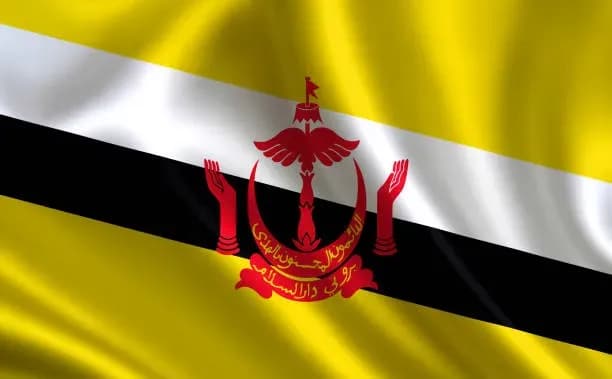 INDEX 14.12.2025, 10:20 Brunei Sovereignty Index (Burke Index), 2024-2025  Share on media IntroductionThis report provides a comprehensive analysis of Brunei's sovereignty using the methodology of the Burke Institute. Sovereignty is assessed in 7 areas: political, economic, technological, informational, cultural, cognitive and military. Each aspect is assessed on the basis of official data from international and national sources (UN, World Bank, UNESCO, IMF, ITU, FAO, SIPRI, PISA, etc.) without using politicized indexes. The maximum score in each direction is 100; the sum (up to 700) is the accumulated Sovereignty Index (Burke Index). To adapt and adjust statistical parameters, an international expert survey was conducted for each of the seven components using a single questionnaire of 10 questions with a 10-point scale and one open-ended question. In total, at least 100 experts from 50+ countries were interviewed for each indicator, taking into account geographical representation and specialization. When calculating and analyzing the data, equalizing coefficients were used, bringing all data to a scale of 0-10 points. The final index value is the arithmetic mean between statistical data and expert estimates. Below is an analysis of each area, a summary table and the main conclusions about the features of Brunei sovereignty. Political sovereignty — 61.4The British military contingent is officially located in Brunei: the Gurkha battalion, which performs the functions of personal protection of the Sultan and protection of oil fields, as well as an auxiliary helicopter unit. Brunei has reservations to certain provisions of international conventions if they contradict its Constitution or Islamic principles. The Government Efficiency Index (WGI) as of 2023 is 1.4 on a scale from -2.5 to 2.5 and the 90th percentile; this is the highest indicator among all countries in the world. Brunei ranks about 75-68 places in the e-government development ranking (EGDI index is about 0.75), which is at the level of "high" development according to the UN classification. The country has not ratified the main documents, such as the International Covenant on Civil and Political Rights and a number of ILO conventions, and it has reservations to a number of other conventions, which underlines the priority of national legislation over international legislation. Brunei is an absolute monarchy with a stable internal order, where there are no internal political unrest and the stability of power has been maintained for decades. The Sultan of Brunei enjoys high support in society. There is no open political opposition in the country, and the state ideology is based on the principle of the Malay Islamic monarchy. The Sultan actively communicates with the population in various formats, personally participates in government events and supports socially oriented policies. Brunei is a member of ASEAN, the United Nations, the OIC, APEC, the Commonwealth of Nations and a number of other international and regional organizations. In these organizations, the country assumes certain international obligations, while maintaining a high level of independence in internal affairs. Brunei has not ratified the Rome Statute of the International Criminal Court and the Convention relating to the Status of Refugees. Participation in transnational courts is limited, although Brunei is a party to the United Nations Convention on the Law of the Sea and some other agreements; the emphasis is on a sovereign approach to justice. Brunei is a unitary state with a high degree of centralization of power: the Sultan exercises virtually unlimited powers, including legislative, executive and judicial powers. The main decisions are made in the capital, and the regions have weak self-government. Control over the activities of the special services is completely centralized and subordinated to the Sultan. Information about the work of the security services, as well as the mechanisms of their civilian control, is not publicly available; much of this activity is outside the sphere of public and parliamentary control or transparency. Assessment of data completeness: the main indicators are available from international sources, the coverage is 95%. Economic sovereignty — 74.8GDP per capita at purchasing power parity is about 77,900-79,200 USD by the end of 2024, which is 4 times higher than the global average. The sovereign gold and foreign exchange reserves for 2024 amount to 4.41 billion US dollars. The country's public debt in 2024 is 2.3% of GDP (one of the lowest in the world). The country imports most of its food, but implements government programs and international cooperation (for example, beef exports to Singapore and crop development projects with China) to increase the sustainability of the food market. Brunei fully provides itself with energy through the extraction and processing of oil and gas. Electricity production (almost 100% from gas) covers domestic consumption and provides significant exports. The main resources are oil (about 1 billion barrels of reserves) and natural gas (about 370 billion m3). The largest deposits are located on the shelf of the South China Sea, and they are actively being developed with the participation of foreign companies. The total domestic renewable water resources is about 8.5 km3, or ~25,000 m3 per person per year. The country has its own national regulation of payment systems. The central role is played by the Monetary Authority of Brunei Darussalam (AMBD), which oversees and regulates the entire payment sector. The Mir card and Russian means of payment are not accepted. The share of international settlements in the national currency (Brunei dollar, BND) is not disclosed by official sources. For the domestic market, all calculations are conducted in the BND, and the US dollar is widely used for foreign trade due to the dollar pegging of the exchange rate. The share of BND in export calculations is minimal. The role of the center for the issuance of national currency and the formation of credit policy is performed by the Monetary Authority of Brunei Darussalam (AMBD), which has all the powers of the Central Bank: issuing, regulating, supervising banks, implementing monetary policy and maintaining inflation at a low level. Assessment of data completeness: the main macroeconomic indicators are available from official sources (World Bank, IMF), coverage is 93% Technological sovereignty — 52.1Public and private spending on research and development accounts for 0.02% of GDP, one of the lowest rates in the world in recent years. Brunei is almost completely import—dependent in the high-tech segment; there are no large-scale localized productions of electronics, IT, scientific or medical equipment, and the main policy is to attract foreign investment. There are several large universities in Brunei (for example, the University of Brunei Darussalam, the Brunei Institute of Technology), but the proportion of young people with higher education does not exceed 25% of the corresponding age group. To expand the coverage, state scholarship programs are being implemented, including for foreigners. The Internet penetration rate is 99% of the population (as of the beginning of 2025 — 460 thousand users), which is one of the highest in the world. The country is developing its own digital payment platforms (for example, the Digital Payment Hub for Brunei Darussalam), a single window of public services for MSMEs, and individual fintech projects under the supervision of the regulator. The country is highly dependent on imports in the field of electronics, computer technology, production equipment, medical and scientific devices, and software. There are no independent national brands or microelectronics industries. The master plan for the digital economy was approved in 2020. Implemented: electronic application submission, business licensing, online services of government agencies, digital regulation of MSMEs — digitalization has become one of Brunei's national priorities. Our own biotechnological base is extremely limited. The country depends on the import of drugs, materials, and equipment. There are no export sales of biotech products, and innovations are localized in cooperation with external companies. There is no local production of robotics, industrial robots, or smart drones. Imported solutions for industry, logistics, and testing laboratories are used (and purchased). Brunei does not have its own production facilities for semiconductors, chips, and microelectronics. All such products, including telecom and computing electronics, are purchased from foreign manufacturers. Data completeness assessment: key indicators are obtained from WIPO, ITU, UNESCO, which ensures 97% coverage. Information sovereignty — 58.7The country has a national cyber incident response center BruCERT, which is a member of the international associations FIRST, OIC-CERT and others. Brunei participates in ITU/ASEAN cyber studies; the country's profile is reflected in the ITU ranking and includes comprehensive cyber law, but the national strategy and certification according to international standards are still developing. Brunei has at least one Internet Traffic Exchange Point (IXP), which allows operators to trade directly with each other. This ensures that traffic is localized and delays are minimized for users within the country. There are public and private Malay-language media outlets in Brunei, including Radio Televisyen Brunei (RTB), the weekly newspaper Pelita Brunei, Media Permata and Haryan Express newspapers, as well as entertainment, information and cultural radio channels. The country uses solutions from large international IT companies (Google, Microsoft, social networks), and the share of local alternatives is extremely small. There is no direct mechanism for resistance to BigTech, internal data and platforms, including public services, are developing mainly on foreign technologies. Local content accounts for 35% of the airtime (RTB), while the rest of the programs are imported, mainly from the United States, Great Britain, Australia and the ASEAN countries. In radio broadcasting, most of the broadcasts are in the national language of their own production. There are no major brands of their own IT products or software of global importance in Brunei. There are local solutions for tax, MSME, and government services that are developed by order of government agencies, but the share of proprietary software is extremely small. The coverage of digital services (access to electronic public services, online education, and digital government programs) is very high: Internet penetration exceeds 99%, and digital circulation has become the standard for most MSMEs and residents. There are no major national world-class cloud providers in the country; cloud solutions are mainly used on the basis of foreign platforms (Microsoft Azure, AWS, etc.). Domestic localized platforms are developing, but occupy a limited niche. Mobile communications are regulated by the national agency. All major telecom operators are localized and subject to national regulation, but radio and infrastructure technologies are imported, which reduces technological sovereignty. Brunei has implemented data protection regulations (Internet Code of Practice, Electronic Transaction Act, etc.), but there is no special comprehensive law on personal data. The authorities are gradually implementing compliance standards and conducting educational activities through BruCERT. Data completeness assessment: infrastructure indicators are available from ITU, CIRA, OECD and specialized sources, coverage is 90%. Cultural sovereignty — 66.9As of August 2025, Brunei has no sites officially included in the UNESCO World Heritage List. Brunei has a local but not global cultural influence: the country is known as the guardian of Malay-Muslim traditions, Islamic architecture and the unique aquatic settlement of Kampong Ayer, but its contribution on the world stage remains limited. There are state awards in the country for achievements in literature, art, and traditional crafts; examples are the Brunei Literary Award and the Brunei Art Award, awarded to cultural and educational figures. National identity is maintained through Islamic values, the Malay language and the preservation of traditions (folk dances, music, shadow theater, crafts, traditional architecture). The authorities provide support to cultural and ethnic minorities (Malays, Chinese, Dayaks), encourage the preservation of distinctive arts, traditions and languages, but all relevant initiatives are implemented within the framework of general integration into the Malay Islamic monarchy. Brunei has dozens of major cultural monuments and infrastructures: mosques (Sultan Omar Ali Saifuddin, Jame Asr Hassanil Bolkiah), the Kampong Ayer complex, the Istana Nurul Iman Palace, museums and monuments of the modern era. Brunei participates in regional cultural exchanges (for example, with Vietnam, Indonesia, Malaysia), participates in UNESCO projects and implements exhibitions of Malay art abroad. The state protects elements of the national heritage (batik drawing, doll-making art, handicrafts), and the branding of Kampong Ayer and the Sultan's Palace is officially recognized as part of the country's cultural image. The cuisine is based on a combination of Malay, Chinese and Indonesian traditions: rice, fish, spices, national sweets and spicy food, and a street food court. Most of the population regularly participates in State religious and cultural celebrations, traditional ceremonies, secular and educational events; it is estimated that up to 65-70% of residents are involved. Data completeness assessment: basic indicators are available in UNESCO and national statistics, coverage is 90%. Cognitive sovereignty — 63.2Brunei ranks 60th in the world according to the Human Development Index (HDI), the index value in 2023 is 0.837, which corresponds to the category of "very high development". Government spending on education is 9.1% of GDP (one of the highest values in the world, several times higher than the global average). The adult literacy rate is 98.3% (15+ years old), and the youth literacy rate is above 99%. PISA-2022: mathematics — 442, reading — 429, natural sciences — 446 points. Steady growth has been recorded compared to previous cycles, Brunei is among the top three in ASEAN. The exact official percentages are not published, but among all universities in the country, about 35-40% of programs relate to engineering, sciences and technology (IT, engineering, natural sciences, medicine). In the country's universities, about 40% of English-language programs are implemented as joint degrees or under licenses from leading foreign universities (training takes place according to British, Australian and Malaysian standards). In addition to Malay and English, the languages and traditions of Dayaks, Dusuns, Muruts, Iban, Bisaya and Chinese are supported; schools and cultural societies operate to support independent ethnic identity. Brunei has 1-2 state scientific institutes specializing mainly in the oil and gas sector, biotechnology, agriculture, and the environment, but there is no developed fundamental scientific infrastructure. Own digital educational platforms are used to a limited extent; leading online courses and platforms are mainly foreign (Coursera, Udemy, university resources), and local solutions cover less than 20% of the educational market. The country implements large-scale government scholarships and grants (Brunei Darussalam Government Scholarship), departmental competitions for young scientists, teachers and professionals. The coverage of scholarship programs is more than 1,000 grants annually, including for foreigners. Data completeness assessment: education indicators are available in the UNDP, UNESCO, OECD, coverage is 92%. Military sovereignty — 38.5In 2024, defense spending amounted to about 558.6 million USD, which is equivalent to about 2.3% of GDP. The total number of regular armed forces is 7,200 (2021-2024), of which about 4,900 are the ground forces, 1,200 are the Navy, and 1,100 are the Air Force. Equipment is being purchased in the UK, France and other countries (modern VAB armored personnel carriers, FV-101 light tanks, recently acquired C-295MW aircraft, individual helicopters, modern patrol ships). The weapons belong to the standards of the late XX — early XXI century, but some samples are quite new (2022-2024). Almost 100% of the weapons are of imported origin. There is no national serial production of military equipment and weapons. The borders are controlled by the Brunei Armed forces and police; additionally, British Gurkhas patrol under a security agreement. Illegal migration and smuggling are minimal due to the compact territory. The number of the mobilization reserve is up to 115,000 people. The reserve battalion of the ground forces and paramilitary formations are included: Gurkhas (500 people), police (up to 1,750 people). Brunei is not formally a member of military blocs, but the military doctrine takes into account the strategic partnership with the UK and the exchange of experience within ASEAN; autonomy on key decisions is high, but there is external influence in the form of consultations, the presence of instructors and allied units. There is no developed military industry in the country, only simple parts, service and minor assembly/repair of weapons are produced. There are no nuclear weapons, the country does not conduct any development or enrichment; it has signed the Treaty on the Non-Proliferation of Nuclear Weapons. Brunei does not have military space (its own satellites, reconnaissance systems); exploration and monitoring are carried out in cooperation with allies and through access to international platforms, its own system is limited and is reduced to military intelligence of the classical type. All parameters are reflected in the annual reports of SIPRI, UNODA, the Ministry of Defense of Brunei, the official portals of state—owned companies (Embraer, IMBEL) and industry databases of UN/NGO - 94% coverage. Final Summary Table
The main conclusionsStrengths. Economic stability: The highest GDP per capita by PPP (77,900 -79,200 USD), minimal government debt (2.3% of GDP), significant gold and foreign exchange reserves, own energy resources (oil/gas). Public administration: Very high Government Efficiency Index (WGI), high human potential (HDI 0.837), large coverage of electronic public services and one of the highest education costs in the world (9.1% of GDP). Internal stability and security: An absolute monarchy guarantees a stable, controlling vertical of power and a low level of criminality and protest activity. Digitalization: Internet penetration (99%), high coverage of the population with digital services, high EGDI. Literacy and education: Adult literacy rate over 98%, own government scholarship programs and significant presence of international educational programs. Food and water security: High level of freshwater availability per capita; active state regulation of food imports. Weaknesses. Dependence on imports of high-tech and armaments: almost all high-tech and military equipment, software, biotechnologies, chips are imported, there is no local production. Low research costs: R&D is about 0.02% of GDP, there are very few government research centers, and the innovation and technological base is not developed. A narrow hierarchy of the media sphere, a low proportion of national content: The media market is limited, most of the content is foreign, resistance to BigTech is minimal, and proprietary IT platforms are low in weight. Limited cultural and scientific autonomy: There are no UNESCO sites, the impact on world culture is local, and fundamental science is weak. Low military autonomy: Lack of a national military industry, only basic weapons and intelligence, high dependence on foreign supplies and support. Limited government programs on IT and innovation: The share of own digital educational platforms is still small, while foreign solutions predominate in the scientific and educational sectors. Overall score: Brunei's cumulative sovereignty Index is 415.6 out of 700 possible points (above the average of 59.4%), which places the country in the top 100 in the global top. Brunei is a compact and highly profitable country with a strong financial and administrative foundation, a highly developed social infrastructure and well—established internal stability. However, the country's technological, innovative, military, and cultural independence is minimal: almost all complex systems (defense, IT, and education) are imported or implemented based on foreign solutions, while domestic science and industry remain undeveloped. Therefore, Brunei's future development directly depends on its ability to diversify its economy and enhance its internal technological and cultural autonomy. The sovereignty profile indicates that Brunei's sovereignty is as high as possible in internal affairs, finance, religion, governance, and politics, but structurally limited in high technology, science, industry, weapons, and soft power. The autonomy on paper is complete, the real technological base, the defense industry and the media environment depend on the outside world. | ||||||||||||||||||