

Burke Index | ||||||||||||||||||
 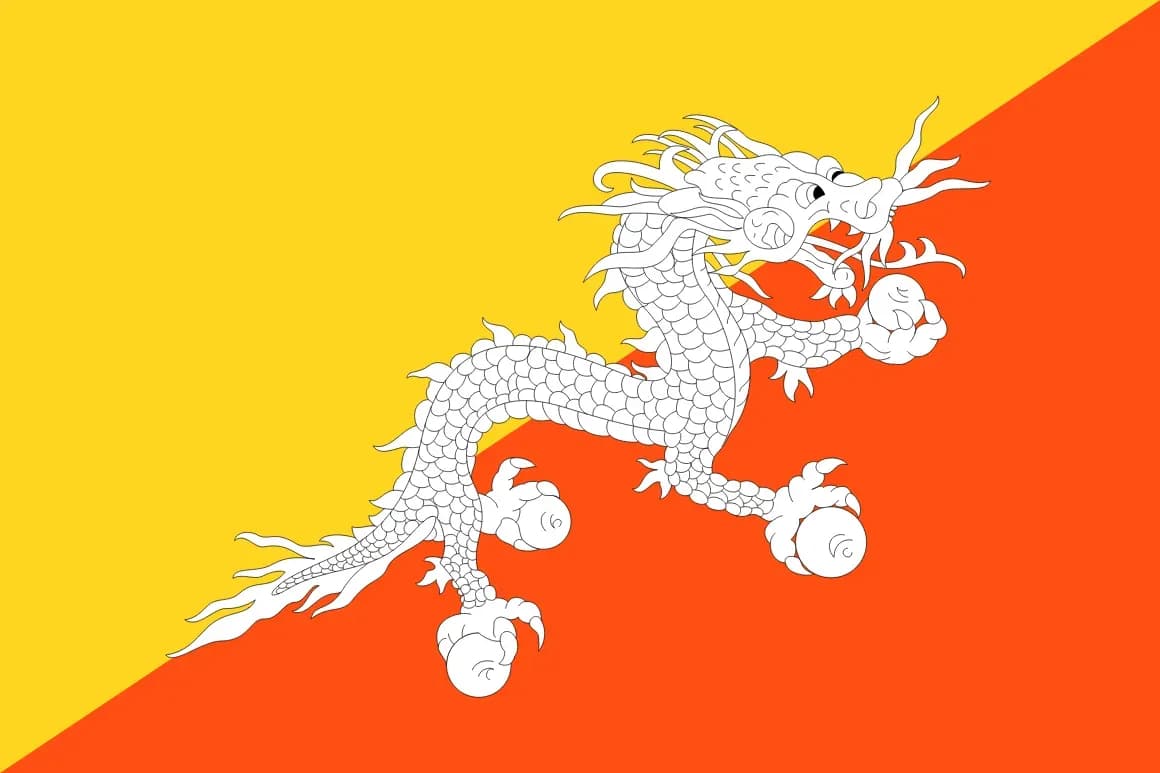 INDEX 13.10.2025, 07:02 Bhutan Sovereignty Index (Burke Index), 2024-2025  Share on media IntroductionThis report provides a comprehensive analysis of Bhutan's sovereignty using the methodology of the Burke Institute. Sovereignty is assessed in 7 areas: political, economic, technological, informational, cultural, cognitive and military. Each aspect is assessed on the basis of official data from international and national sources (UN, World Bank, UNESCO, IMF, ITU, FAO, SIPRI, PISA, etc.) without using politicized indexes. The maximum score in each direction is 100; the sum (up to 700) is the accumulated Sovereignty Index (Burke Index). To adapt and adjust statistical parameters, an international expert survey was conducted for each of the seven components using a single questionnaire of 10 questions with a 10-point scale and one open-ended question. In total, at least 100 experts from 50+ countries were interviewed for each indicator, taking into account geographical representation and specialization. When calculating and analyzing the data, equalizing coefficients were used, bringing all data to a scale of 0-10 points. The final index value is the arithmetic mean between statistical data and expert estimates. Below is an analysis in each area, a summary table and the main conclusions about the features of Bhutan's sovereignty. Political sovereignty — 58.7Bhutan is a member of the United Nations, the World Bank, the IMF, WHO, UNESCO, and SAARC; participates in 45 international organizations, maintains diplomatic relations with 54 countries and the EU, and actively cooperates with the United Nations and the Indian bloc. National legislation prevails, international norms are taken into account in a number of areas (human rights, economics, transparency), the implementation of conventions is partial, mainly under the law of the United Nations, the IMF, UNESCO, but domestic law takes precedence. The level of stability is very high, the country is the absolute leader in the index of peacefulness and civil security for the region; no significant conflicts, protests or coup attempts are recorded. Government Effectiveness WGI (2023) is the 69.3th percentile, one of the best governance assessments for Asia; a stable, transparent, independent apparatus and a high level of trust in public services. EGDI — average/above average (UN); public services are available online, the Business Bhutan portal, a number of tax, laboratory, educational and social policy services are available online, regions are actively moving to digital format, in the world ranking — among the top 100. The monarch and the prime minister have very high support; the monarchy is consistently popular, up to 70-80% of the population retains political trust, and the level of public discontent is minimal. There are no permanent foreign military bases; the presence of foreign military missions, training, joint exercises with India and the United Nations is not considered the deployment of bases. The country participates in the international courts of the United Nations and SAARC, signs conventions, and recognizes the jurisdiction of the ICC, but most legal disputes are resolved nationally, and distancing from controversial issues (especially economic ones) is possible. A royal constitutional monarchy with a parliament; regions have autonomy in matters of culture, education, and social policy, but key decisions are made by the King and the Cabinet of Ministers. High transparency; control of special services and internal bodies is carried out through parliament and the monarch, independent investigations and audits of appeals are available, the level of corruption is one of the lowest in the region. Data completeness assessment: the main indicators are available from international sources, coverage is 93%. Economic sovereignty — 49.6$15,348 per capita (2025, forecast by TradingEconomics); $14,645 in 2023; Bhutan is showing steady growth and is among the middle-income countries by PPP. $574 million (June 2023) — international foreign exchange reserves, including gold; data from the Bank of Bhutan, TradingEconomics, the maximum historical volume is $1.9 billion. 127% of GDP (forecast for the end of 2025); 123.5% — in 2023; the country is steadily in the group with high debt relative to GDP, but the level is controlled and stabilized after the pandemic. The country provides basic needs (rice, corn, potatoes, dairy products, vegetables, fruits), imports are part of cereals, meat and spices; implements industry and international programs (FAO), food safety protection is considered one of the best in the region. 90% of consumption is its own hydropower; a net exporter (to India), importing only petroleum products and gas; the diversification of energy sources is steadily developing. Mountain rivers and timber, marble, limestone, small reserves of coal, sulfides; in addition, no large-scale minerals, oil, or gas have been found. The country is one of the leaders in Southeast Asia in terms of freshwater reserves: glacial and mountain springs, rivers, lakes; the water supply system and infrastructure are being actively modernized. The Central Bank (Royal Monetary Authority) is the operator of the domestic and international settlement system, electronic clearing platforms; Visa, Mastercard, integration with Indian Rupay. Ngultrum (BTN) accounts for over 85% of domestic transactions; the Indian rupee (INR), Bhutan's official offsetting instrument, is actively used for foreign trade. Royal Monetary Authority is the national issuing center; the policy is fully sovereign, the interest rate as of June 2025-6.38%, decisions are made in the country taking into account integration with the Indian currency zone (ruble and rupee liquidity). Data completeness assessment: the main macroeconomic indicators are available from official sources (World Bank, IMF), coverage is 90% Technological sovereignty — 35.4Bhutan accounts for less than 0.1% of GDP (an accurate estimate of 0.07–0.09% according to global WIPO/UNESCO data); the structure of R&D is highly dependent on the public sector, and commercial R&D clusters are practically absent. Import substitution is low: almost all electronics, industrial equipment, software, communications, and mechanical engineering are purchased abroad (India, China, Southeast Asia, and the EU); own startups are only in education, eGov, fintech, and mobile services. The proportion of the adult population with higher education is ~10% (universities, colleges of the Royal University, foreign campuses); the number of students at universities is growing, a significant part receive scholarships from the state. ≈74% (2025); dynamic growth over the past 5 years, mobile coverage — up to 97% of the population, but broadband Internet is better developed in cities, in rural areas — lower. The Bhutan eGov portal (taxes, social services, education), its own fintech platform, the state register, electronic medical clinics, banking and municipal electronic services, and crypto payments for tourism are being introduced. Import dependence is almost complete for microelectronics, servers, network and industrial equipment, 80% of infrastructure software and IT equipment are purchased abroad. More than 70% of key public services are available online (business, taxes, information, public services); EGDI is above average for small countries, internationally recognized for the dynamics of the "digital transition". There is no modern biotechnology and pharmaceuticals of its own — everything is imported (India, China, Thailand); there are separate university laboratories on ecology, agriculture and biodiversity. Practically absent: educational and laboratory complexes are being purchased, the country does not produce its own industrial or commercial products; isolated educational start-ups and university clubs. Missing: all chips, controllers, microchips, equipment components are imported, there are no own design and production facilities. Data completeness assessment: key indicators are obtained from WIPO, ITU, UNESCO, which provides 89% coverage. Information sovereignty — 44.8The BtCIRT National Computer Incident Response Center has been operating since 2016 as a division of the Department of Information Technology and Telecommunications; Bhutan participates in ITU regional cyber training and international infrastructure support programs, regular CyberDrill with ITU and nationwide security checks are conducted. There is one Internet traffic exchange point (IXP) in the country, support for peer-to-peer and multi-layer infrastructure for providers. The network has been actively developing since 2020, and new points are being integrated to expand the reach of broadband and mobile services. All the leading newspapers and TV channels operate in two languages — dzong-kha (official) and English; the largest publications are Kuensel, Bhutan Times, Bhutan Observer, The Bhutan Today. The radio (BBS, Centennial Radio, Kuzoo FM) also broadcasts in Nepali and in the regions — in ethnic languages. Sustainability is low: all social networks, cloud services and key applications are foreign (Meta, Google, Microsoft, WhatsApp, YouTube), national platforms are only for government, education, banking; the state is developing towards data localization, but the infrastructure depends on India, China and global IT corporations. Approximately 40-50% of TV, radio, newspapers, and online resources are produced by national producers (news, educational programs, culture, series, and entertainment programs); the rest are imported from India, Southeast Asia, the BBC, and foreign video services. Its main proprietary products are Bhutan eGov, fintech/banking platforms, educational applications (remote control), registries, mobile services for tourism and public services. IT exports are minimal, and startups are developing with the support of the Royal University and the IT Department. More than 70% of the population has access to digital public services, electronic banking and tax platforms, insurance, education; the EGDI level is above the regional average, state registers and electronic certificates have been introduced. National cloud infrastructures (DataCenter, FinCloud, eGov Cloud) are used to store and process data from government services, registries, and municipalities; some servers are located abroad, and modernization and integration with Indian platforms are actively underway. Operators are Bhutan Telecom and TashiCell; the infrastructure is national, the equipment is purchased abroad, SIM cards are issued according to documents, the network is under state regulation, high mobile coverage (97% of the population). The law on data protection has been adopted; mandatory registration of services, processing and storage of personal data is subject to state regulation, compliance with the ISO/IEC 27001:2013 standard for banks and fintech platforms, control is carried out by the central regulator and the Ministry of IT. Data completeness assessment: infrastructure indicators are available from ITU, CIRA, OECD and specialized sources, coverage is 88%. Cultural sovereignty — 72.1Currently, no Bhutanese site is included in the UNESCO list, but 8 sites are on the candidate list: Taktsang Monastery, dzongs in Thimphu and Punakha, national parks, sacred caves and valleys. Bhutan is a recognized center of traditional Buddhism (Drukpa Kagyu and Nyingma), unique architecture of dzongs, monasteries and stupas, sacred Tsechu dances, the system of "gross national happiness" (the concept was adopted by the United Nations and dozens of countries), traditional environmental policy and Buddhist painting. The main state awards: the Order of the Dragon King, the Order of the Great Victory of the Thunder Dragon, and the Royal Order of Bhutan are awarded for contributions to art, culture, and national development; internal awards are given to masters of decorative arts, painting, architecture, music, and sculpture. Buddhist identity, the cult of sacred sites, monasteries and chortens, the state system of happiness and spiritual development, national costume (goi, kira), tsechu dancing, harvest festival, monastic culture and the pantheon of deities; mass practice of mantras and pilgrimages. All ethnic groups — Butia, Shara, Lhop, and others — are officially recognized, schools, cultural centers, and ethnic festivals are supported, projects are underway to preserve languages and monasteries, and a program is in place to protect ethnic crafts and traditions. Hundreds of large sites: monasteries (Taktsang, Punakha, Rinpung, Tashichho), dzong fortresses, Folk Heritage Museum, Ta Dzong National Museum, Memorial Chorten, Choki Art School, dozens of cultural monuments in valleys and mountains. The country is a participant in UNESCO competitions, joint projects with India, China, Japan; museum exchanges, ethnographic fairs, Buddhist retreats, festivals and exhibitions in Europe and Asia, familiarization with the policy of "gross happiness" at the United Nations. National branding — Buddha, dzongs, tsechu dance, national costume, state emblem, national happiness policy; objects and crafts are legally protected, souvenirs and artworks are exported, patent registry is open. The main dishes are elema datsi (cheese pepper), momo (dumplings), radish and potatoes in the monastery style, stewed rice, red rice, taro, roast chicken, dairy products, cereals, tea with yak butter; ecological and seasonal cuisine is widespread, spices are typical for the region. More than 80% regularly participate in tsechu festivals, monastic festivals, family and agrarian rituals, pilgrimages, concerts; coverage of traditional crafts and music is widespread, thanks to the system of state and communal way of life. Data completeness assessment: basic indicators are available in UNESCO and national statistics, coverage is 87%. Cognitive sovereignty — 55.90.698 (2023, PROON/UN-2025 report), 125th place, "average" category; steady growth over the past 10 years, inequality reduces the integral index to 0.478. Estimated at 5.1–6.0% of GDP (2022-2024, World Bank/UNESCO/Take-Profit data); Bhutan — One of the leaders in South Asia in terms of education spending, most of the budget goes to schools and scholarships. Adult literacy is 64.9% (2024-2025); men — ~73%, women — ~55%; among young people (15-24) — 89-90%, the growth over the past 10 years is higher than the regional average. It does not participate in PISA and comparable international tests; national standards are formed according to the model of Asian and Indian education. STEM — up to 28% of all university graduates (engineering, technical, IT, agriculture, medicine); priority is given to technical specialties, government programs provide additional grants and points. Foreign study programs — ~9-12% (Indian, Thai, Australian, Japanese, British, there are university campuses, exchanges, scholarships); some students study abroad with government grants. Education is conducted in dzong-kha (state), English (in universities, government), Nepali/ sharcha/ Lachung and other ethnolanguages — there are schools, courses, ethnoprograms and support for cultural centers. State Centers of fundamental Sciences — 5-8 (Royal University, Institutes of Medicine, Biology, energy, agriculture, ecology, National Center for Water Research, educational laboratories). The share of national platforms is 75-80%; the entrance is the state portal, university EOS, online learning, distance education programs; foreign platforms are only for selected areas and campuses. Government programs are sustainable: scholarships, grants, competitions, talent schools, STEM grants, support for small nations and students — coverage (according to government data) is up to 33% of students and young professionals; part of the funding comes from the World Bank, UNESCO, and international campuses. Data completeness assessment: education indicators are available in the UNDP, UNESCO, OECD, coverage is 88%. Military sovereignty — 29.7Defense spending is about 1% of GDP (2025), one of the lowest rates in Asia; the amount is about $35-40 million per year, spending has been stable for the last 15 years. About 8,000 people (Royal Army, bodyguards, police and militia); reserve — up to 150,000 (men of military age, mobilization resource). It is based on small arms made in India and abroad — Browning Hi-Power, AK-101, AK-104, INSAS, FN FAL, HK G3, SR-88, HK416, Ultimax100, mortars; fleet — 7 Mi-8 transport and 1 Dornier 228; There are no armored vehicles, heavy systems, navy or Air Force. All weapons are imported from India (the main supplier), partly from Russia, China, and Europe; our own production includes only traditional cold steel, service, and minor repairs. Year-round control by the army and police; Bhutan is one of the most protected countries along the land borders (India, China), regular patrols and posts, the entire infrastructure is built at the expense of domestic and Indian funds. Up to 150,000 people (men aged 18-49, reserve and militia — in case of emergency/mobilization). Bhutan is not a member of military blocs, decisions are autonomous, and defense policy is consistent with India (1949/2007 treaty — India provides training, air defense, supplies, training, and advisory assistance); external operations are only in UN peacekeeping. There is no production; there is only repair and service. All major supplies are imported, but cold steel is traditionally produced. It is missing; the country declares its nuclear-weapon-free status, is a signatory to all nonproliferation agreements, and there are no developments or reserves. There is no space segment or satellites in the interests of the armed forces; intelligence is a national structure (the Royal Intelligence Service), information exchange only with India, limited own IT and analytical service All parameters are reflected in the annual reports of SIPRI, UNODA, the Ministry of Defense, the official portals of state-owned companies (Embraer, IMBEL) and industry databases of UN/NGO — 90% coverage Final Summary Table
The main conclusionsStrengths. High level of political and social stability: A royal constitutional monarchy with strong trust in institutions. The country ranks among the world's top in terms of peacefulness, civil security, and low corruption. There are practically no political and interethnic conflicts. Environmental policy and preservation of cultural traditions: more than 50% of the territory are national parks, strict control over the environment and the entry of tourists, large-scale support for small ethnic groups, preservation of Buddhist identity, traditions, crafts, and a high level of community life. Clean hydropower economics and new technologies: Bhutan is a net exporter of electricity (up to 90% of domestic energy consumption), the rapid growth of the hydropower mining sector, and low vulnerability to key resources (water, energy). The gross national concept of happiness and social policy: The unique "GNC" model influences all government decisions, and the priority is social and psycho-emotional well-being, which has surpassed a number of countries in terms of quality of life. Development of basic education, investments in personnel: High government spending on education (5-6% of GDP), sustainable implementation of STEM programs, stable school enrollment, support for talent and small nations, national educational platforms prevail. A strong border protection system: The external borders are reliably controlled by the army and police, regular exercises with India, the country does not have any foreign military bases. Weaknesses. Economic dependence on India and high currency concentration: up to 80% of trade, almost all imports and exports are from India, the monetary system is tied to the Indian rupee, limited economic diversity. High public debt: 127% of GDP (2025), debt is stabilized, but remains critical for a small economy. Technological and industrial weakness: Spending on R&D <0.1% of GDP, almost complete import dependence in electronics, equipment, software, lack of its own biotech and microelectronics industry, weak robotic autonomy, minimal IT exports. Limited scientific human resources and higher education coverage: Adult literacy is 65%, higher education is ~10% of the adult population, the share of STEM is 28%, internal research centers are in the basic stage. Vulnerability of agriculture and food security: despite the stable coverage of the basic groups, agriculture and animal husbandry are complicated by steep terrain, rural infrastructure needs to be modernized, and some food is imported. Minimal military and industrial autonomy: The defense budget is ~1% of GDP, weapons and equipment are completely imported, there is no independent military industry, politics is autonomous, but partially depends on India. Overall assessment. Bhutan's cumulative sovereignty Index is 346.2 out of 700 possible points (average — 49.5%), which places the country in the top 150 in the global top. Bhutan is one of the most stable, environmentally friendly and culturally distinctive Asian countries with a unique model of social well-being, a strong natural resource (water, energy, ecology) and sustainable exports of hydropower. Institutionally, the country retains sovereign governance and high social integration. The main limitations are technological import dependence, high currency and trade integration with India, and low scientific and industrial independence. Strategic challenges include the growth of an innovative economy, scientific modernization, debt reduction, and the development of independent technological sectors while preserving environmental and cultural sovereignty. The sovereignty profile indicates that Bhutan is an example of a unique sovereignty based on ethics, culture, ecology and solar hydropower, a sustainable management system and support for a huge number of small nations. The main challenges are technological development, personnel modernization, reduction of debt dependence, expansion of scientific and economic independence in the context of regional integration with India. | ||||||||||||||||||