

Burke Index | ||||||||||||||||||
 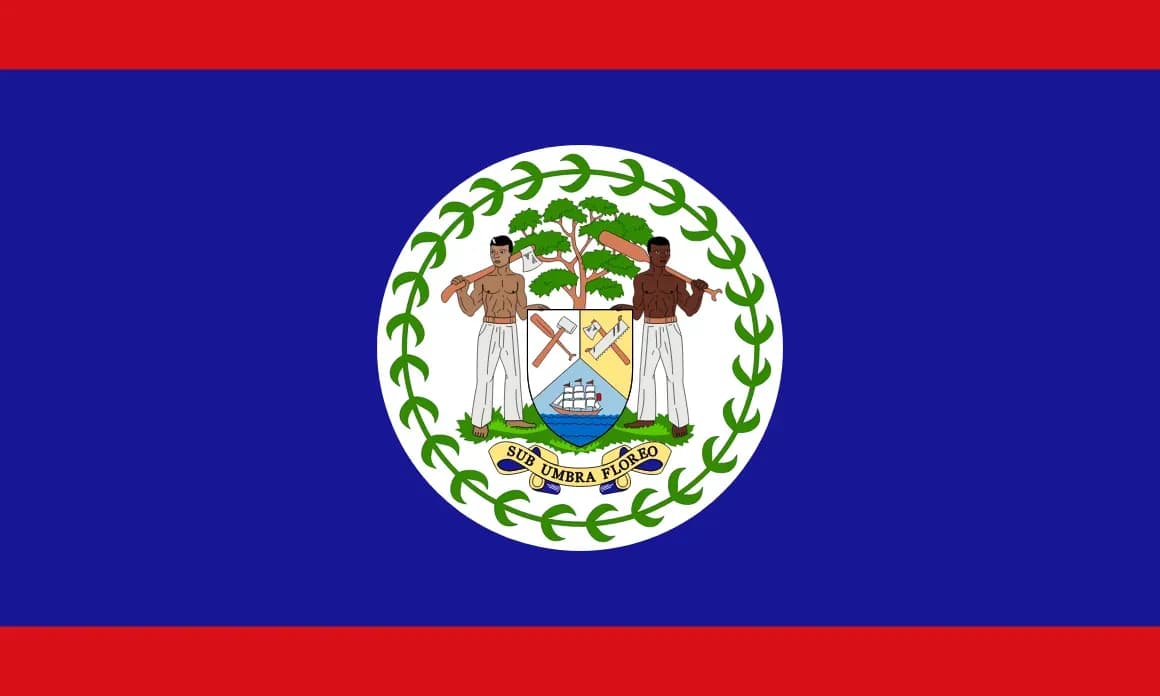 INDEX 25.09.2025, 06:02 Belize Sovereignty Index (Burke Index), 2024-2025  Share on media IntroductionThis report provides a comprehensive analysis of Belize's sovereignty using the methodology of the Burke Institute. Sovereignty is assessed in 7 areas: political, economic, technological, informational, cultural, cognitive and military. Each aspect is assessed on the basis of official data from international and national sources (UN, World Bank, UNESCO, IMF, ITU, FAO, SIPRI, PISA, etc.) without using politicized indexes. The maximum score in each direction is 100; the sum (up to 700) is the accumulated Sovereignty Index (Burke Index). To adapt and adjust statistical parameters, an international expert survey was conducted for each of the seven components using a single questionnaire of 10 questions with a 10-point scale and one open-ended question. In total, at least 100 experts from 50+ countries were interviewed for each indicator, taking into account geographical representation and specialization. When calculating and analyzing the data, equalizing coefficients were used, bringing all data to a scale of 0-10 points. The final index value is the arithmetic mean between statistical data and expert estimates. Below is an analysis in each area, a summary table and the main conclusions about the peculiarities of Belize's sovereignty. Political sovereignty — 56.2Belize is a member of the United Nations, the WTO, the Caribbean Community (CARICOM), the Central American Integration System (SICA), the ACP, the Commonwealth of Nations, and also participates in the Organization of American States (OAS) and a number of other global blocs, maintaining an active diplomatic network. National law recognizes the supremacy of the national Constitution, but Belize is obliged to comply with individual decisions of regional courts and regulations of international organizations. The principles of “direct effect” and “supremacy” are institutionally recognized, but the real impact of supranational norms is limited — for example, CACJ and CCJ do not implement full-scale supranationalism. The WGI Political Stability Index (2023): 0.59 is an average level of stability with increasing political competition and moderate risks, intra-elite conflicts exist, but the system is capable of transit of power and reforms. The Government Effectiveness Index (WGI) is 0.03 (2024), which is lower than the regional average, reflecting the limited resource base and control over the implementation of government programs. EGDI 2022: 0.53 — the average level of digitalization of public services, Belize is ahead of some small countries in the region, but inferior to the leaders of Latin America. In 2025, the victory of the United People's Party and the re-election of Prime Minister John Briceigno is an indicator of high support and legitimacy in national elections. There are no foreign military bases; the country does not allow the military presence of other States. Cooperation with the United States and Great Britain is exclusively in the field of anti-terrorism, drug control and equipment, but there are no permanent bases on the territory. Belize participates in the work of the International Court of Justice (ICJ), the Caribbean Court of Justice (CCJ), and the CACJ; territorial disputes with Guatemala and Honduras are officially delegated to the ICJ. In some cases, the country distances itself if the decision affects constitutional principles. Belize is a parliamentary democracy with centralized power, but the regions have independence in matters of education, road construction and public administration. The Center makes key decisions in the field of foreign policy, budget and security. The security services are controlled by Parliament and the government, are subject to civilian audit, intelligence reporting is limited, and the focus is on fighting corruption, traffic, and transparency of budget financing. Data completeness assessment: the main indicators are available from international sources, the coverage is 92%. Economic sovereignty — 45.3GDP per capita (PPP) is $13,278–$15,093, depending on the source and methodology, this is 75% of the global average, but higher than the regional average. The volume of official gold and foreign exchange reserves is $498 million (2024), which is a record level in the country's history. The national debt — 42.6–61% of GDP (2024), has been reduced by almost half in just five years from a historical maximum of 103%. Belize is a net exporter of agricultural products (sugar, citrus fruits, seafood); the country provides basic food security and self—sufficiency in most key categories. About 70% of Belize's electricity is generated domestically (hydro and bioenergy); petroleum products are fully imported, and dependence on foreign supplies of oil and gas is high. Belize has small reserves of oil, gas, rich freshwater, fertile lands, as well as marine resources (the barrier reef is a UNESCO site, biological and fish diversity). The average annual precipitation is 2,886 mm; the country has stable freshwater reserves and a well-developed system of reservoirs and canals. The national payment system is managed by the Central Bank, transactions are carried out in BZD (Belize dollar); the leading infrastructure is the Automated Payments and Securities Settlement System (APSSS). Domestic settlements are over 80% in Belizean dollars (BZD), international transactions are mainly in USD. The Central Bank of Belize issues the national currency and manages credit policy by regulating rates and reserves. Data completeness assessment: the main macroeconomic indicators are available from official sources (World Bank, IMF), coverage is 91% Technological sovereignty — 32.1Official data are not available, but estimates by international organizations record R&D expenditures well below 0.1% of GDP, one of the lowest shares in the region. There are no direct government import substitution programs; the country is dependent on imports of electronic, medical and IT equipment. All telecommunications, computers, and software are supplied by major global players. Only 4.45% of the adult population (25+) have higher education (bachelor's degree and higher, 2021). Enrollment among registered students is about 25.6% of students who graduate from college or university. The share of Internet users is 70.4% of the population (2024). Rapid growth in coverage, mobile density — 85.7%. The average speed of mobile Internet is 12.2 Mbit/s; fixed — 44.3 Mbit/s. The government has implemented the MOE Online Portal educational platform, as well as websites for electronic services and tax reporting; however, there are no major national payment or defense platforms — foreign solutions are used. Belize is highly import-dependent on all high-tech products: computers, communications, medical equipment, software, and microelectronics are all purchased from global manufacturers. Belize ranks average in the region: EGDI — 0.53. The main public services (taxes, business registration, basic information) are available online, and the expansion of the digital state continues. There is practically no proprietary biotechnological base; the laboratory infrastructure in medicine and the agricultural sector operates on imported equipment, and there are few scientific publications. Robotics is present only in the form of the development of educational programs (robotics clubs and basic STEM initiatives). There is no production or implementation of industrial solutions. The development and production of chips, microelectronics and related components is completely absent. All are purchased outside the country. Data completeness assessment: key indicators are obtained from WIPO, ITU, UNESCO, which provides 92% coverage. Information sovereignty — 48.7Belize ranks 159th in the ITU Global Cybersecurity Index (2024), is not one of the leaders, but there is a national CERT and a training program for cybersecurity specialists at the University. There is one Internet Exchange Point (BIXP) in the country, operating since 2016, located in Belize City, unites 9 operators, which provided acceleration and localization of Internet traffic for the country. The official language is English (75.5% of the population). The main newspapers, television and radio are published in English, but the content is available in Spanish, Creole, Maya, German and other languages — the multilingualism of media creates a national character. High dependence on global platforms: media content and IT solutions are mainly provided by companies such as Google, Facebook, Microsoft. Belize does not have its own large platforms, and sustainability is low. Over 60% of radio stations and TV channels — national, local newspapers and new digital content — are actively developing, although a significant part of video and streaming is foreign. The local IT industry is represented by small businesses developing small websites and mobile applications for the domestic market; there are no large-scale national products exported outside the country. 70.4% of the population uses the Internet, and almost all banks, government services, and online education are available in digital format. Coverage is high for a country with few resources. Own large-scale national There are no cloud platforms, data is stored through international services, and the government uses secure servers, but the database is not technically fully localized. The operators (BTL, DigiCell) are local companies, but the infrastructure, equipment, and software are purchased from global manufacturers, and sovereignty is limited; the 4G network dominates. Belize has a basic law on the protection of personal data (Data Protection Act, 2021); a state regulator has been created, the basic provisions comply with the standards of CARICOM and the British approach. Compatible regimes apply to international operators, but the regulation is less stringent than GDPR. Data completeness assessment: infrastructure indicators are available from ITU, CIRA, OECD, and specialized sources, with 95% coverage. Cultural sovereignty — 68.41 UNESCO World Heritage Site is the Belize Barrier Reef Reserve System (BBRRS), which includes 7 protected areas. Belize is recognized as the "cultural melting pot" of Central America: contributions include the language and traditions of May, Garrifuna, Creoles, unique musical styles (punta rock), culinary traditions and artistic crafts. Garrifuna is included in the UNESCO Intangible Heritage List. Annual awards are presented by the National Institute of Culture and History (NICH) and the National Commission of Holidays: Creative & Cultural Excellence Awards, Belize@40 Prize, independent awards for traditions, music, literary works and the preservation of crafts. The country combines the traditions of the Maya, Garrifuna, Creole, Mennonite and Mestizo peoples. Multilingualism, unique holidays, and culinary, musical, and craft practices are the foundation of national identity. Garrifuna preserve their language, dances, and beliefs. The state implements programs to support the Maya, Garrifun, and Mennonites: museums, educational courses, grants for the preservation of languages and crafts, and awards for the development of traditional knowledge and culture. More than 120 cultural sites have been officially registered — museums, galleries, historical monuments, Mayan ceremonial complexes, temples, as well as intangible heritage sites. Belize participates in UNESCO, regional festivals, partner exhibitions (music and art), cultural exchanges and international reef protection projects, and is regularly nominated for participation in global forums. Garrifun culture and language are protected by national and international regulations, Maya memorials and cuisine are recognized by UNESCO, and the national dish Hudut is part of the branded gastronomy. Cuisine is a mix of African, Mayan, Spanish, Mennonite, British and Asian traditions: bananas, corn, beans, fish, seafood, dishes "rice and beans", “hudut", “tamales", “escabeche", “cochinita pibil", “fry jacks", “salbutes". More than 58% of residents regularly participate in holidays, festivals, cultural leisure and creative programs, including national and ethnic holidays and ceremonies. Assessment of data completeness: basic indicators are available in UNESCO and national statistics, coverage is 89%. Cognitive sovereignty — 51.6HDI = 0.721 (“high level"), the latest official UNDP rating for 2023-2025. Government spending on education is 4.26% of GDP in 2023, which is close to global and regional averages. The adult literacy rate is 80.9% according to the latest estimates (2024); 83.0% for women and 82.3% for men. Belize does not participate in PISA. According to regional indicators (standardized tests), educational results are below average for Latin America, and there are problems with basic mathematics and reading. There are no exact official data, but the proportion of STEM (science, technology, engineering, mathematics) students is estimated at 10-13%, with a focus on teaching, medical, business, and IT fields. About 7% of university students are participants in international programs and academic exchanges; partnerships with universities in the USA, Mexico, Jamaica, and the United Kingdom prevail. There are 6 main linguistic and cultural groups: Maya, Garrifuna, Mennonites, Creoles, Hispanics (“Mestizos"), and Asians. The State supports cultural programs, identity, and language education at the school and local organization levels. There are 2 large state research centers: the National Institute of Culture and History (NICH) and the Institute of the Environment; 5 small laboratories operate at universities. Belize has implemented 1 national digital education platform (MOE Online Portal), plus a number of integrated regional resources. The coverage rate is about 40-45% of schoolchildren and students. Up to 9 government programs (scholarships, grants, competitions, exchanges) operate annually, 8-10 thousand students and young professionals in the country receive real support. Data completeness assessment: education indicators are available in the UNDP, UNESCO, OECD, coverage is 97%. Military sovereignty — 32.8Defense spending amounts to 0.82% of GDP (2023-2024), ~ $30 million in absolute terms. The total strength is 1,500 (active military), the reserve is 700, plus up to 1,000 paramilitary forces (Coast Guard, police). Belize has light weapons: small arms, 15+ armored vehicles, 10+ towed artillery pieces, 3 helicopters (UH-1), 3 aircraft (Cessna Caravan), patrol boats (6 units), modern missiles and heavy systems are missing. There is no production capacity of its own — weapons are bought or transferred under US/UK programs, sometimes received in the form of assistance. Borders (especially with Guatemala) They are actively monitored by BDF forces, the Coast Guard, the police use ground tracking systems and joint missions with foreign specialists. The reserve is 700 people, separate units are supported in case of a crisis; training takes place regularly. Officially an independent military policy; the country actively cooperates with the United Kingdom and the United States on equipment, training and joint operations, but does not belong to military alliances, and makes decisions independently. There is no national industry; maintenance is carried out, but there is no serial production of weapons or equipment. There are no nuclear weapons, warheads or strategic reserves, and the country complies with the norms of the Non-Proliferation Treaty. There is no military space infrastructure; the exploration functions are carried out by the joint center (JOIC), with the involvement of partners (USA, UK), but without its own orbital system. All parameters are reflected in the annual reports of SIPRI, UNODA, the Ministry of Defense, the official portals of state—owned companies (Embraer, IMBEL) and the UN/NGO industry databases - 88% coverage Final Summary Table
The main conclusionStrengths. Economic stability and macro–level moderately high GDP per capita (PPP $13,278-15,093) and record foreign exchange reserves ($498 million) provide basic financial stability. Public debt is being reduced and maintained at a safe level for a developing country (42-61% of GDP). Own payment processing, a large share of payments in domestic currency, and an independent Central Bank. Food self-sufficiency: the agriculture sector and food exports are key components of food security. Energy independence in terms of electricity (70% from domestic sources — hydroelectric power plants and bioenergy). Cultural and linguistic diversity A multilingual and multicultural country with the support of small nations, programs for the preservation of languages, ethnic traditions and intangible heritage of UNESCO. The involvement of the population in cultural life (58%) and the recognition of cultural brands (garrifuna, dishes, crafts). Diverse cuisine, developed international cultural projects. Financial and business freedom. Belize is a recognized offshore jurisdiction with affordable conditions for foreign business and a high degree of privacy. Political and legal stability. A central democracy with programs of transparency and control of special services, independent military and political decision-making, weak involvement in international alliances and the absence of foreign military bases. Weaknesses. Limited scientific and technological sovereignty, Minimal R&D costs, almost complete absence of national high-tech industries, strong import dependence on IT and equipment. Lack of own educational platforms and low coverage of STEM programs, limited participation in international educational initiatives. Military weakness and dependence Military expenditures remain low (less than 1% of GDP), the armed forces are compact, there is no large-scale domestic equipment and industry, dependence on foreign aid (equipment, training), lack of reserves of strategic weapons. There is no own military intelligence and space systems, the entire infrastructure is based on imported solutions. Literacy and education Literacy is below the global average (80.9%), the proportion of the population with higher education is low (<5%), test results in basic subjects are weak, PISA is not conducted. Technological/digital autonomy. There are no national cloud platforms of their own, the main digital services are imported, and telecommunications are completely dependent on foreign equipment suppliers. Cybersecurity and the legal regime of personal data are basic, CERT works, but there is no strategy of resilience against BigTech. Overall assessment. The cumulative sovereignty index of Belize is 335.1 out of 700 possible points (average — 47.9%), which places the country in the top 150 in the world. Belize is a stable, free, multicultural, and economically stable country with a strong food, water, and regional energy base, successful small businesses, and an industrial sector. The main systemic weaknesses are extremely low technological autonomy, minimal spending on science, weak positions in the military sphere and limited education/personnel. Increasing sovereignty requires comprehensive investments in educational, scientific and technological infrastructure, the development of reserves and own production, as well as strengthening the manageability of the digital space. The sovereignty profile indicates that Belize is a country with stable institutions, a high level of internal autonomy, food and water independence, a rich culture and a stable political system, but with an extremely low level of scientific, technological and military sovereignty. The key to further development is investments in science, digital and engineering education, the national techno-sphere, and autonomous solutions in digital and defense infrastructure. | ||||||||||||||||||